
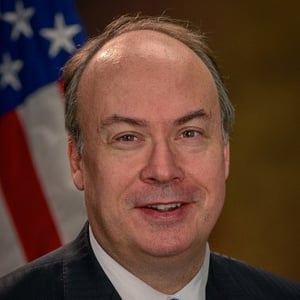
Assistant Attorney General, Environment and Natural Resources Division, U.S. Department of Justice
Jeffrey Bossert Clark was born in Philadelphia, Pennsylvania on April 17, 1967. He is a graduate of Harvard University (A.B. in economics and history, 1989), the University of Delaware (M.A. in urban affairs and public policy, 1993), and the Georgetown University Law Center (J.D., 1995).
Mr. Clark began his career working for the State of Delaware’s Department of Finance, Division of Revenue as an economics analyst in the field of tax policy. During his tenure from 1989 to 1992, he authored several white papers analyzing Delaware revenue sources. Delaware also selected Mr. Clark to submit an economic report and affidavit to the United States Supreme Court in the original jurisdiction case of Delaware v. New York, 507 U.S. 490 (1993).
He entered Georgetown’s law school in 1992 where he earned honors as an articles editor of the Georgetown Law Journal, an Olin Law & Economics Fellow, and a member of the Order of the Coif. From 1995 to 1996, Mr. Clark clerked for Judge Boggs of the U.S. Court of Appeals of the Sixth Circuit. Mr. Clark then joined the law firm of Kirkland & Ellis as an associate from 1996-2001. He worked as an appellate litigator on numerous Supreme Court and other appellate cases and developed expertise in administrative law, statutory interpretation, as well as antitrust, labor, environmental, and telecommunications law.
Mr. Clark went on to serve in ENRD from 2001-2005 as a Deputy Assistant Attorney General selected by Attorney General Ashcroft and Assistant Attorney General Tom Sansonetti. In that capacity, he supervised ENRD’s Appellate and Indian Resources Sections. He reviewed, edited, and contributed to virtually every brief that ENRD filed in the Courts of Appeals, including several cases of exceptional significance that he personally briefed and argued. During his service in the early 2000s, Mr. Clark argued and won numerous cases in multiple U.S. Courts of Appeals and worked on all Supreme Court cases arising out of ENRD’s work.
In 2005, Mr. Clark returned to Kirkland & Ellis LLP as a partner, where he litigated until his return to ENRD in 2018. There he worked on numerous multi-billion-dollar matters and continued to argue many appellate cases. His practice operated at all levels — appellate litigation, trial court litigation, agency proceedings, and regulatory and litigation counseling. He has been named a Super Lawyer for multiple years running, highlighted in the Legal 500, named to the “Legal Who’s Who for Environmental Law” in Corporate Responsibility Magazine, rated A.V. preeminent by Martindale Hubbell, and named a member of the National Association of Distinguished Counsel’s Nation’s One Percent. He also was named one of America’s Top 100 High Stakes Litigators.
President Trump nominated Mr. Clark to be the Assistant Attorney General of the Environment and Natural Resources Division (ENRD) on June 7, 2017. He was confirmed by the U.S. Senate on October 11, 2018 and sworn into office on November 1, 2018, followed by an investiture ceremony on November 15, 2018.
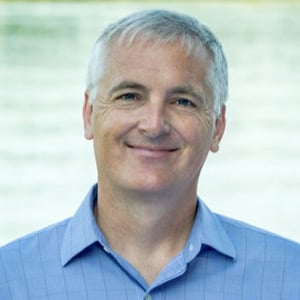
Partner, Donahue & Goldberg LLP
Sean H. Donahue's practice is focused on appellate litigation, including environmental cases in federal and state appellate courts, legal counseling, and helping clients communicate effectively to courts, agencies, and other audiences. He is a member of the bars of the District of Columbia and the State of California.
A 1992 graduate of University of Chicago Law School, Sean served as law clerk to Ruth Bader Ginsburg, then of the U.S. Court of Appeals for the D.C. Circuit, and to Justice John Paul Stevens. He entered private practice at Jenner & Block's Washington office, where he worked on civil matters including in telecommunications and First Amendment law. He then spent four years at the Department of Justice, Environmental and Natural Resources Division, Appellate Section, briefing and arguing cases in the United States Courts of Appeals, and state supreme courts concerning federal environmental and natural resources law, federal property law, takings, and Indian law.
Sean has argued approximately 50 cases in federal and state appellate courts. Since first establishing his own practice in 2002, he has represented environmental and public health organization parties in numerous major environmental and clean energy cases in the Supreme Court and the courts of appeals. His current practice includes representation of public interest organizations, governmental bodies, and private entities in environmental, energy, natural resources, and other cases. Sean has taught courses in environmental law, civil procedure, constitutional law and other subjects at Washington & Lee University School of Law, Iowa College of Law, and Georgetown University Law Center, and currently teaches climate change law and policy as a lecturer at Stanford Law School. He has given presentations at law schools including Berkeley, Columbia, Fordham, Harvard, Duke, Georgetown, Maryland, NYU, Northwestern, Stanford, University of Chicago, University of Florida, Vermont Law School, and Washington & Lee.
Senior Fellow, Center for Energy and Environment, Competitive Enterprise Institute
Marlo Lewis, Jr. is a Senior Fellow at the Competitive Enterprise Institute, where he writes on global warming, energy policy, and other public policy issues. Prior to joining CEI in April 2002, he served as Director of External Relations at the Reason Foundation in Los Angeles, California. During the 106th Congress, Marlo served as Staff Director of the House Government Reform Subcommittee on National Economic Growth, Natural Resources, and Regulatory Affairs.
His interests include the science, economics, and politics of global warming policy; the precautionary principle; environmentalism and religion; and the moral basis of free enterprise. Marlo has been published in The Washington Times, Investors Business Daily, TechCentralStation, National Review, and Interpretation: A Journal of Political Philosophy. He has appeared on various television and radio programs, and his ideas have been featured in radio commentary by Rush Limbaugh and G. Gordon Liddy.
Before joining CEI for his first tenure with the organization in 1993, Marlo served as Research Director for the grassroots organization, Citizens Against Government Waste. Earlier, he was a Staff Consultant to the House Foreign Affairs Subcommittee on International Economic Policy and Trade, a Special Assistant at the State Department Bureau of Inter-American Affairs and Bureau of International Organization Affairs, and a Visiting Assistant Professor of Political Science at Claremont McKenna College. He holds a Ph.D. in Government from Harvard University and a B.A. in Political Science from Claremont McKenna College.
Partner, Sidley Austin LLP
ROGER MARTELLA co-leads the Environmental practice group at Sidley Austin LLP. He rejoined Sidley Austin LLP after serving as the General Counsel of the United States Environmental Protection Agency, concluding 10 years of litigating and handling complex environmental and natural resource matters at the Department of Justice and EPA. In 2015, Roger was recognized by Who’s Who Legal as the environmental lawyer of the year globally.
Roger’s practice focuses on three primary areas. First, Roger advises companies on developing strategic approaches to achieve their goals in light of rapidly developing demands to addressclimate change, promote sustainability and utilize clean energy. Second, Roger handles a broad range of environmental and natural resource litigation and mediation. Third, Roger advises multinational companies on compliance with environmental laws in the United States, China, the European Union and other nations.
Roger counsels approximately 50 of the world’s leading conventional and renewable energy, industrial, transportation, agricultural, forestry, and technology companies on bet-the-company environmental issues, regulatory matters, and litigation including transitioning to an era of legal controls addressing greenhouse gas emissions, increasingly stringent pollutant controls, alternative and clean energy, hydraulic fracturing, and sustainability both in the United States and abroad.
Roger employs a strategic, forward-looking approach to solving emerging law and policy issues across the world that have the potential to create both opportunities and risks for domestic and multinational energy and manufacturing companies and industries. Roger’s approach is to build a collaborative and coalition-building framework that seeks the strongest possible results through up front coordination with government, industry, and NGO stakeholders, leveraging strong honest broker relations with government officials and understanding of government approach to realize resolutions that have led to extraordinary favorable resolutions offering significant regulatory relief to industries and pennies-on-the-dollar enforcement settlements for companies.
Roger was unanimously confirmed by the United States Senate as EPA General Counsel. In that role, Roger served as EPA’s chief legal advisor supervising an office of 350 lawyers and staff in Washington and 10 regional offices. In particular, Roger led the team responsible for developing for the first time under the Clean Air Act the federal government’s climate change legal framework and options in response to the landmark Supreme Court decision Massachusetts v. EPA, which held greenhouse gases to be air pollutants under the Clean Air Act.
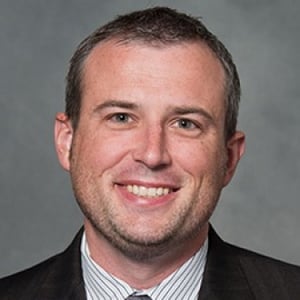
Professor of Law, Jacksonville University College of Law
Nathan Richardson is an Assistant Professor of Law at the University of South Carolina School of Law and a Visiting Fellow at Resources for the Future (RFF). Previously, he served as a Resident Scholar at RFF and managing editor of the blog Common Resources.
His areas of expertise and research encompass a wide range of environmental and energy issues, including U.S. climate policy (particularly regulation of greenhouse gases under the Clean Air Act), state and local regulation of oil and gas development (including hydraulic fracturing), the evolution of the electric utility sector, and the management of forests, particularly in the Southeast. Other interests include law and economics and European environmental and energy policy. His research has examined environmental liability, environmental federalism, and the relationship between law, regulatory institutions, and policy design.
Professor Richardson earned a B.S. from the Edmund A. Walsh School of Foreign Service at Georgetown University and earned his J.D. cum laude from the University of Chicago, where he served as Articles Editor of the Chicago Journal of International Law. Professor Richardson is licensed to practice law in California and the District of Columbia.
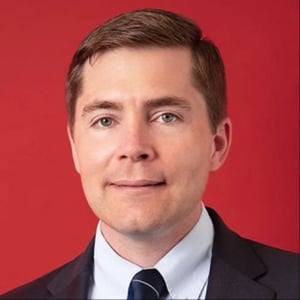
Senior Attorney, Pacific Legal Foundation
Damien Schiff is a senior attorney at Pacific Legal Foundation. He leads its environmental practice group, a unique initiative that draws broadly from PLF’s expertise and success in property rights and separation of powers litigation. Over the years, Damien has represented hundreds of landowners and property rights advocates to defend their liberties against heavy-handed and unwarranted environmental and land-use regulation. His litigation experience includes Sackett v. U.S. Environmental Protection Agency, a groundbreaking decision in which the U.S. Supreme Court upheld the right of landowners to challenge Clean Water Act compliance orders issued by EPA, and Contoski v. Norton, PLF’s successful effort to force the federal government to make good on its promise to delist the bald eagle from the Endangered Species Act.
Besides litigation, Damien has written academic articles on a variety of subjects, including the Endangered Species Act, the Clean Water Act, greenhouse gas torts, the duty to rescue, and international water law. He has appeared on a variety of television and radio programs and has been quoted in The New York Times, The Wall Street Journal, Harper’s Magazine, and The Economist, among other publications.
He obtained his law degree magna cum laude from the University of San Diego School of Law, and his undergraduate degree magna cum laude from Georgetown University. While at USD, he was a research assistant for Professor Bernard Siegan, a leading constitutional theorist and advocate for property rights and economic liberty. Immediately prior to joining PLF, Damien clerked for Judge (and former PLF attorney) Victor Wolski of the United States Court of Federal Claims. Damien credits the mentoring and examples of Professor Siegan and Judge Wolski for his decision to pursue a career in liberty-based public interest litigation.
Damien lives in Sacramento with his wife, two young sons, four chickens, and a cat named Princess. In his off hours he enjoys stamp collecting, Gregorian chant, and martinis—preferably at the same time.
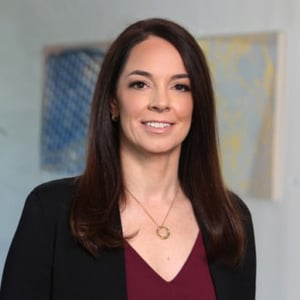
Partner, Hunton Andrews Kurth
A co-leader of Hunton Andrews Kurth’s environmental practice, Deidre is lauded in Chambers USA, 2016 as “extremely capable,” “very familiar with the regulations and agencies,” and excels at giving clients “good insight into getting an expeditious outcome.” Her practice focuses exclusively on environmental, energy and administrative law.
Deidre represents clients on permitting, compliance and litigation relating to the Clean Water Act (CWA), the Endangered Species Act (ESA), the National Environmental Policy Act (NEPA) and other environmental statutes. She frequently counsels clients on administrative rulemaking and policy, providing regulatory clarifications when necessary, and drafting federal and state legislation on myriad intricate issues. She is also well known for negotiating and obtaining permits for complicated energy and development projects. Her clients include development companies, oil and natural gas pipelines, electric utilities, agricultural interests, state and local agencies, and various trade associations.
Prior to entering private practice, Deidre served as assistant general counsel of the Army at the Pentagon, advising the secretary of the Army on environmental and land use issues involving the Corps of Engineers’ Civil Works and section 404 Regulatory program, as well as the Base Realignment and Closure (BRAC) program. Deidre has extensive experience with federal regulatory agencies, military departments and the US Department of Justice.
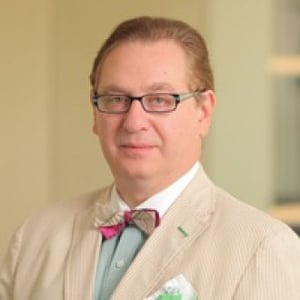
Partner, Baker Hostetler LLP
David Rivkin is a member of the firm's litigation, international and environmental teams and is co-leader of the firm's national appellate practice. He has extensive experience in constitutional, administrative and international law litigation and has been involved in numerous high-profile cases. With his prior experience in the government sector, David draws on a wealth of knowledge when providing compliance advice to companies and handling enforcement proceedings before government agencies on issues arising out of multilateral and unilateral sanctions, the Foreign Corrupt Practices Act (FCPA), anti-boycott issues, bankruptcy and financial fraud matters, and environmental and energy issues.
David has developed and implemented legislative, regulatory and litigation initiatives for two presidential administrations. Over the years, he has published hundreds of articles, op-eds, book reviews and book chapters on a variety of international, legal, constitutional, defense, arms control, foreign policy, environmental and energy issues for various newspapers and magazines, including The Wall Street Journal, The Washington Post, The New York Times, USA Today and The Los Angeles Times, and has been a frequent commentator and guest on TV and radio shows including ABC, CBS, NBC, CNN, Fox News, NPR and PBS.
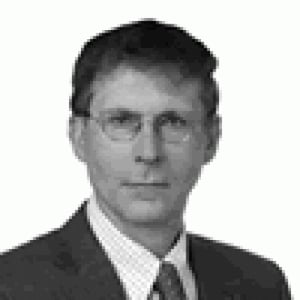
Partner, Baker & Hostetler LLP
Lee A. Casey focuses on federal environmental, constitutional and international law and Alien Tort Statute issues. He also advises clients on compliance issues under the Foreign Corrupt Practices Act (FCPA), U.S. trade sanctions regimes, and federal ethics requirements. Mr. Casey’s practice includes federal, district and appellate court litigation, as well as matters before federal agencies. Prior to joining BakerHostetler, Mr. Casey was an associate with Hunton & Williams, practicing in international, environmental and constitutional law. From 2004 through 2007 he served as an member of the United Nations Subcommission on the Promotion and Protection of Human Rights.
From 1986 to 1993, Mr. Casey served in various capacities in the federal government, including the Office of Legal Policy (1986-90) and the Office of Legal Counsel (1992-93) at the U.S. Department of Justice and served as Deputy Associate General Counsel at the U.S. Department of Energy (1990-92). The Office of Legal Counsel is responsible for advising the Attorney General and the White House on issues of constitutional law and statutory interpretation. The Office of Legal Policy served as a strategic “think tank” for the Reagan Justice Department and was responsible for reviewing candidates for appointments to the federal bench.
Before joining the government in 1986, Mr. Casey was an associate in the Los Angeles firm of Mitchell, Silberberg & Knupp, practicing in the litigation section, with an emphasis on copyright, contract and First Amendment issues. From 1984 to 1985, Mr. Casey served as Law Clerk to the Honorable Alex Kozinski, then Chief Judge of the United States Claims Court. From 1982 to 1984, he practiced at the Detroit firm of Dykema Gossett, focusing on corporate, securities, commercial and intellectual property litigation, and from 1990 through 1994, he served as an Adjunct Professor of Law at George Mason University School of Law in Arlington, Virginia.
Among the chapters, articles and papers that Mr. Casey has authored or co-authored are: “International Law and the Nation-State at the U.N.,” Reclaiming the Language of Freedom at the United Nations: A Guide for U.S. Policymakers, The Heritage Foundation (2006) (with David B. Rivkin, Jr.); “The Dangerous Myth of Universal Jurisdiction,” A Country I Do Not Recognize (ed. Robert H. Bork) (2005) (with David B. Rivkin, Jr.); “Leashing the Dogs of War,” The National Interest (Fall 2003) (with David B. Rivkin, Jr.); “The Limits of Legitimacy: The Rome Statute’s Unlawful Application to Non-State Parties,” 44 Va.J.Int’l L. 63 (Fall 2003) (with David B. Rivkin, Jr.); “Devil’s Advocates: The Danger of Judging Lawyers By Their Clients,” Policy Review (Feb. and Mar. 2002) (with David B. Rivkin, Jr.); “The Case Against the International Criminal Court,” 25 Fordham Int’l L.J. 840 (2002); “Europe in the Balance: The Alarmingly Undemocratic Drift of the European Union,” Policy Review (June and July 2001) (with David B. Rivkin Jr.); “Against an International Criminal Court,” Commentary, May 1998 (with David B. Rivkin, Jr.); “Federalism (Cont’d.),” Commentary, December 1996 (with David B. Rivkin, Jr.); “Presidents and War Powers: Another View,” Common Sense, Winter 1996 (with David B. Rivkin, Jr.); “How Binding Are Contracts?” The American Enterprise, Nov./Dec. 1993 (with David B. Rivkin, Jr.); and “Pirate Constitutionalism: An Essay in Self-Government,” 8 J. of L. & Politics 477 (1992).
Mr. Casey is a member of the California, Michigan and District of Columbia Bar Associations.
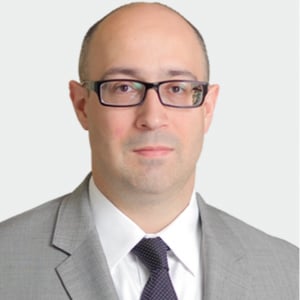
Partner, Baker & Hostetler LLP
Mark DeLaquil is a first-chair trial and appellate advocate who focuses on complex environmental and regulatory proceedings, First Amendment practice and political law.
Mark has been recognized by Chambers USA for environmental litigation (2015 to 2024) and has been named by Law360 as one of the "Top 5 Environmental Attorneys Under the Age of 40" on two occasions.

Greenhouse Gases: Massachusetts v. EPA Revisited
EPA's Cross-State Air Pollution Rule
Sackett v. Environmental Protection Agency: Compliance Orders and the Right of Judicial Review
Damien Michael Schiff
The United States Supreme Court’s decision in Sackett v. Environmental Protection Agency1 promises to be important...
Justice Kennedy's Analysis of Navigable Waters in Rapanos
Virginia S. Albrecht, Deidre G. Duncan
Five years ago in Solid Waste Agency of Northern Cook County v. Army Corps of...
EPA's NSR Enforcement Policy: An Improvident Regulatory Endeavor?
David B. Rivkin, Lee A. Casey, Mark DeLaquil
On November 1, 2006, the Supreme Court will hear oral argument in Environmental Defense v....