

Senior Supervising Attorney and Director, Justice First and Client Re-entry Projects, Center for Appellate Litigation
Claudia Trupp is founder and Director of CAL's Justice First Project, which received the New York State Bar Association's award for Excellence in Mandated Representation in 2015. Before joining CAL, she was a staff attorney with the Criminal Appeals Bureau of The Legal Aid Society in New York City. Claudia is a past recipient of an Outstanding Public Service Award from the New York County Lawyer's Association and the Reginald Heber Smith Award from the National Legal Aid and Defender Association. She is a board member of the New York State Association of Criminal Defense Lawyers (NYSACDL) and Vice-President of the NYSACDL Foundation. Claudia received her J.D., magna cum laude, from NYU School of Law, where she was Order of the Coif.She received her B.A., magna cum laude, from the University of Rochester.
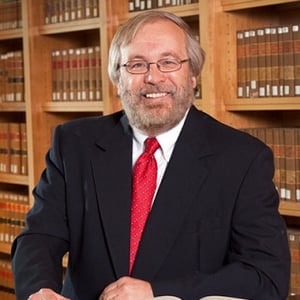
Welpton & Wise Professor of Law, University of Nebraska College of Law
Professor Rick Duncan is the Welpton & Wise Professor of Law at the University Of Nebraska College Of Law. He is a graduate of the Cornell Law School and served as an editor of the Cornell Law Review. He teaches Constitutional Law with a special emphasis on the law of religious freedom, free speech, and federalism. Duncan has written numerous books, articles, and commentaries on a wide variety of legal topics. His recent publications include an article on Justice Scalia’s legacy, another on Kermit Gosnell and Roe v. Wade, a piece on the Electoral College and Federalism, a 2019 piece on Masterpiece Cakeshop and the First Amendment, and three recent articles on the “no compelled speech” doctrine as a First Amendment defense against authoritarianism and tyranny. His most recent article, on School Choice and the First Amendment, will be published in 2023 in Case Western Law Review. He is also the co-author of a book on Secured Transactions under Article 9 of the UCC. He served as Chairman of the Nebraska Advisory Committee to the U.S. Commission on Civil Rights during the Reagan Administration. He also loves to speak at Federalist Society meetings around the country on life, liberty, and the pursuit of federalism.
Duncan has five children, five grandchildren, and a wonderful wife who help him pursue happiness. He loves lifting weights (particularly going heavy on the incline bench press), attending Broadway musicals and plays, including Hamilton: An American Musical which he has seen 12 times (possibly a Nebraska record). He regularly reads both the Bible and the New York Times because it is important to keep up with what both sides have to say. He loves following major league baseball, especially the San Diego Padres. And his favorite legal aphorism is “first come rights then comes government to secure those rights.”

Topics
Affirmative “Re-action”: How Are Major Bar Associations Responding to Students for Fair Admissions?
Last summer, the Supreme Court, in Students for Fair Admissions v. President and Fellows of...
Hemphill v. New York [SCOTUSbrief]
Claudia Trupp
Under New York law, a criminal defendant “opens the door” to evidence that would otherwise...
"The Tea Party's Constitution" The Movement to Amend the Constitution to Advance Federalism
Bar Watch Bulletin for August 9, 2011
Reporting live from the ABA Meetings in Toronto. House of Delegates Recommendation 10B, proposed by...
Barwatch Bulletin -- February 16, 2009
House of Delegates Considers RecommendationsThe ABA's House of Delegates met today to vote on recommendations...
Bar Watch Bulletin August 8, 2008
The American Bar Association's Annual Meeting will be taking place from August 7-12 in New...
Barwatch Bulletin February 13, 2008
CENTER FOR HUMAN RIGHTS LUNCHEONThe Center for Human Rights' House of Delegates Luncheon featured Albert...
Barwatch Bulletin from August 10, 2007
Late-Filed Recommendations to be Considered by the ABA House of DelegatesSeveral late-filed recommendations were submitted...
Bar Watch Bulletin February 12, 2007
Today, we report from the ABA House of Delegates Meeting. Most of the recommendations were...