
Publius comes from the pen name Alexander Hamilton, James Madison, and John Jay used when they wrote 85 publicly printed letters now known as the Federalist Papers. Hamilton chose “Publius” as a name that would represent friends of the newly proposed American republic - Publius Valeria Publicola was a Roman general who helped to found the Roman Republic. The Federalist Society continues the tradition of publishing things under the name Publius in celebration of our constitutional roots and recognition that author credit is not always necessary.
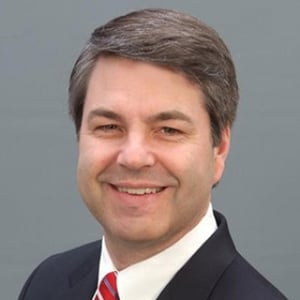
Partner and Co-Chair, Public Policy Group, Shook Hardy & Bacon LLP
Mark Behrens co-chairs Shook's Washington, DC-based Public Policy Practice Group and is a leading national expert on civil justice issues with over thirty years of experience. A substantial part of his practice is working to improve the civil litigation environment through state and federal legislation; in the courts through amicus curiae briefs; through legal scholarship and judicial education; and in the court of public opinion.
Mark is actively involved in civil justice reform efforts at the federal and state levels. He has testified before the U.S. Congress and most state legislatures on behalf of business and civil justice organizations. Mark also has an active amicus brief practice specializing in tort liability and civil justice issues. He has authored or co-authored over 150 amicus briefs in cases before the United States Supreme Court and federal and state appellate courts on behalf of business, civil justice, and defense lawyer organizations. In addition, Mark routinely files comments on behalf of business, civil justice, and defense lawyer organizations regarding potential changes to federal and state court rules. He chairs the International Association of Defense Counsel’s (IADC) Civil Justice Response Committee and serves on the Board of Directors of Lawyers for Civil Justice (LCJ).
Mark is a member of the American Law Institute (ALI). He received his J.D. in 1990 from Vanderbilt University Law School, where he was a member of the Vanderbilt Law Review. He received his B.A. in economics from the University of Wisconsin in 1987.

Partner, Bruning Law Group, LLC
Katie Spohn is a partner at Bruning Law Group in Lincoln, Nebraska. Prior to co-founding Bruning Law Group, Spohn served at the Nebraska Attorney General’s Office for 12 years, with the last 2 years serving as Nebraska’s Deputy Attorney General. In that role, she was tasked with handling the State’s most complex civil litigation cases, specializing in nationally-significant issues of constitutional law. Spohn was an integral part of numerous multi-state challenges to federal regulation and played a critical role in the states’ challenge to the Patient Protection and Affordable Care Act. In September 2014, Spohn led the victory in defending the constitutionality of a law regulating the Keystone XL pipeline before the Nebraska Supreme Court.
Prior to serving as Deputy Attorney General, Spohn was Section Chief for the Agriculture, Environment and Natural Resources Section and Special Counsel to the Attorney General where she gained extensive litigation experience prosecuting environmental violations and defending the constitutionality of state statutes on subjects ranging from a corporate farming prohibition to statutes seeking to protect unborn children.
Spohn earned her B.S. in Agri-Business and J.D. from the University of Nebraska-Lincoln. She is admitted to the Nebraska State Bar; the 8th, 11th and D.C. Circuit Courts of Appeals; and the United States Supreme Court. She lives on a farm outside of Lincoln, Neb., with her husband Scott and three children, Zach, Jacob and Valerie.

Nebraska Supreme Court Upholds Constitutionality of Felon Re-Enfranchisement
Publius
In State ex rel. Spung v. Evnen, the Nebraska Supreme Court rejected a constitutional...
2024 Civil Justice Update
Mark A. Behrens
This paper reviews key civil justice issues and changes in 2024. Part I discusses legal reform...
Keystone XL in the Nebraska Supreme Court - Podcast
Katie Spohn, J Ward
On January 9, 2015, the Nebraska Supreme Court held that the law dictating the potential...