
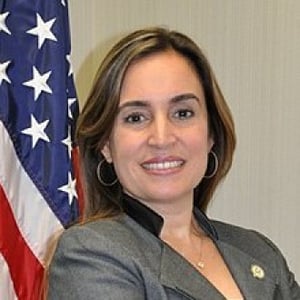
Chief Judge, Florida Eleventh Judicial Circuit
Chief Judge Ariana Fajardo Orshan was appointed to the Circuit Court of the Eleventh Judicial Circuit of Florida in April 2012 and was sworn in as the Court's Chief Judge in July 2025. She has also served as a judge in the Criminal Division. Prior to her appointment, Judge Fajardo Orshan was a partner in her law firm where she specialized in the area of Family and Matrimonial Law. Judge Fajardo Orshan began her legal career as an Assistant State Attorney in Miami-Dade County and also worked in the area of civil litigation with the firm of Wilson Elser Moskowitz Edelman & Dicker LLP.
Throughout her legal and judicial career, Judge Fajardo Orshan has been involved with numerous civic and professional organizations, and in many, she assumed leadership positions. She continues to remain involved with Big Brothers Big Sisters, the Cuban American Bar Association, the Dade County Bar Association, the Federalist Society and Kidside. As a member of the judiciary, Judge Fajardo Orshan is also involved with the Eleventh Judicial Circuit Professionalism Committee, the Florida Conference of Circuit Judges, the Florida Bar Family Law Rules Committee, and the Florida Supreme Court Steering Committee on Families and Children.
Judge Fajardo Orshan also enjoys grooming future lawyers as adjunct professor at Florida International University College of Law where she teaches Family Law.
Judge Fajardo Orshan has been a member of the Florida Bar since 1996 and is a member of the Federal Bar for the Southern District of Florida. Judge Fajardo Orshan graduated from Nova Southeastern University Shepard Broad Law Center and received a Bachelor's in Science degree from Florida International University.
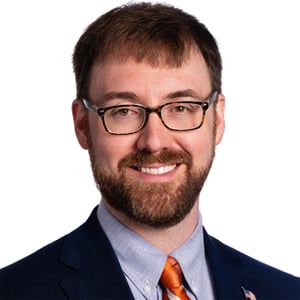
Senior Legal Fellow, Courts and the Constitution, Legal Policy Center, The Heritage Foundation
Zack is a Senior Legal Fellow of Courts and the Constitution at The Heritage Foundation.
He previously served for several years as an Assistant United States Attorney in the Northern District of Florida. Prior to that, he spent two years as an associate in the Washington, D.C. office of Cleary Gottlieb Steen & Hamilton, which he joined after clerking for the Hon. Emmett R. Cox on the United States Court of Appeals for the Eleventh Circuit.
Smith received his undergraduate, master’s, and law degrees from the University of Florida. During law school, Smith served as the Editor in Chief of the Florida Law Review and served on the executive boards of several student organizations, including the UF Chapter of the Federalist Society.

Chief Assistant State Attorney, Miami-Dade County State Attorney's Office
Stephen K. Talpins is a Chief Assistant State Attorney at the Miami-Dade County (Florida) State Attorney’s Office. He reports directly to the State Attorney and participates on the executive and other key teams. He is responsible for supervising the Felony Divisions in Unit IV, Gang Prosecutions Unit, Treatment Courts Unit, Community Outreach Division, and Media Team. He also serves as the office lead on Smart Justice programming.
Mr. Talpins is a nationally recognized author, advocate, and speaker on Smart Justice and other criminal justice related issues. He has worked collaboratively and diplomatically with public, private, and non-profit stakeholders, published dozens of articles, given well over 150 presentations, served on multiple expert panels, and participated on the Boards of three non-profit associations. His efforts have been recognized by numerous organizations and agencies, including Citizens Against Drunk Impaired Drivers, Mothers Against Drunk Driving, and the National Commission Against Drunk Driving. During the past decade, The Century Council identified Mr. Talpins as “One of the 20 People to Watch,” the National Highway Traffic Safety Administration gave him a Public Safety Award, the Office of National Drug Control Policy (the office of the United States Drug Czar) named him an Advocate for Action, and the International Association of Chiefs of Police recognized him as an Ambassador of the Drug Recognition Expert (DRE) Program. Most recently, the National Institute of Justice (NIJ) selected him as a member of the 2021 Law Enforcement Advancing Data and Science (LEADS) program cohort.
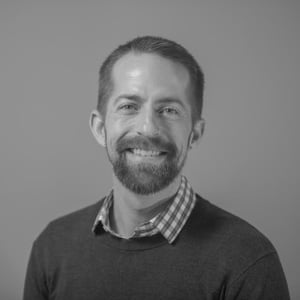
Legal Director, ACLU Florida
Daniel Tilley is legal director of the ACLU of Florida since April 2019. He joined the organization in 2012 as a staff attorney whose work primarily focused on the LGBT community. Among his other work, he served as lead counsel in the ACLU’s federal-court litigation that, as part of a pair of consolidated cases and a team of lawyers, brought marriage equality to Florida in January 2015. Daniel studied classical piano and German language and literature at New York University before returning to his home state for law school at the University of Georgia.
During law school, Daniel received the Spurgeon Public Interest Fellowship, was a member of the Georgia Law Review and the Order of the Coif, and interned in Arusha, Tanzania at the U.N. International Criminal Tribunal for Rwanda. Before joining the ACLU, Daniel clerked in Atlanta at the U.S. District Court for the Northern District of Georgia and in Washington, D.C. at the U.S. Court of Appeals for the Armed Forces. While in D.C., he served on the D.C. Lawyer Chapter board of the American Constitution Society.

Chief Policy Counsel, Council on Criminal Justice and Senior Advisor, Right on Crime
Marc A. Levin is the Chief Policy Counsel for the Council on Criminal Justice (counciloncj.org) and Senior Advisor for Right on Crime.
An attorney and accomplished author on legal and public policy issues, Marc began the Foundation’s criminal justice program in 2005. This work contributed to nationally praised policy changes that have been followed by dramatic declines in crime and incarceration in Texas. Building on this success, in 2010, Levin developed the concept for the Right on Crime initiative, a TPPF project in partnership with Prison Fellowship and the American Conservative Union Foundation. Right on Crime has become the national clearinghouse for conservative criminal justice reforms and has contributed to the adoption of policies in dozens of states that fight crime, support victims, and protect taxpayers.
In 2014, Levin was named one of the “Politico 50” in the magazine’s annual “list of thinkers, doers, and dreamers who really matter in this age of gridlock and dysfunction.”
Marc has testified on criminal justice policy on four occasions before Congress and has testified before legislatures in states including Texas, Nevada, Kansas, Wisconsin, and California. He also has met personally with leaders such as U.S. Presidents, Speakers of the House, and the Justice Commtitee of the United Kingdom Parliament to share his ideas on criminal justice reform. In 2007, he was honored in a resolution unanimously passed by the Texas House of Representatives that stated, “Mr. Levin’s intellect is unparalleled and his research is impeccable.”
Since 2005, Marc has published dozens of policy papers on topics such as sentencing, probation, parole, reentry, and overcriminalization which are available on the TPPF website. Levin’s articles on law and public policy have been featured in publications such as the Wall Street Journal, USA Today, Texas Review of Law & Politics, National Law Journal, New York Daily News, Jerusalem Post, Toronto Star, Atlanta Journal-Constitution, Philadelphia Inquirer, San Francisco Chronicle, Washington Times, Los Angeles Daily Journal, Charlotte Observer, Dallas Morning News, Houston Chronicle, Austin American-Statesman, San Antonio Express-News and Reason Magazine.
In 1999, Marc graduated with honors from the University of Texas with a B.A. in Plan II Honors and Government. In 2002, Marc received his J.D. with honors from the University of Texas School of Law. Marc was a Charles G. Koch Summer Fellow in 1996. He served as a law clerk to Judge Will Garwood on the U.S. Court of Appeals for the Fifth Circuit and Staff Attorney at the Texas Supreme Court.

Senior Vice President for Legal Studies, Cato Institute
Clark Neily is senior vice president for legal studies at the Cato Institute. His areas of interest include constitutional law, overcriminalization, civil forfeiture, police accountability, and gun rights. Neily is the author of Terms of Engagement: How Our Courts Should Enforce the Constitution’s Promise of Limited Government. His writing has appeared in the Wall Street Journal, Forbes, and National Review Online, as well as various law reviews, including the Harvard Journal of Law and Public Policy, George Mason Law Review, Georgetown Journal of Law and Public Policy, NYU Journal of Law and Liberty, and Texas Review of Law and Politics. Neily is a frequent guest speaker and lecturer for the Federalist Society, Institute for Humane Studies, and American Constitution Society.
Before joining Cato in 2017, Neily was a senior attorney and constitutional litigator at the Institute for Justice and director of the Institute’s Center for Judicial Engagement. He is also an adjunct professor at the University of Texas School of Law, where he teaches constitutional litigation and public-interest law.
Neily served as co-counsel in District of Columbia v. Heller, the historic case in which the Supreme Court held for the first time that the Second Amendment protects an individual right to own a gun for self-defense.
Neily began his legal career as a law clerk to Judge Royce Lamberth on the U.S. District Court for the District of Columbia. After that he spent four years in the trial department of the Dallas-based firm Thompson & Knight. Neily received his undergraduate and law degrees from the University of Texas, where he was Chief Articles Editor of the Texas Law Review.
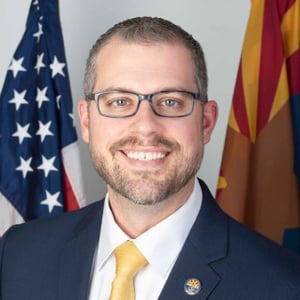
Pinal County Attorney, Pinal County, Arizona
Mr. Kent Volkmer has served as Pinal County Attorney since he was sworn in in 2017. Prior to serving as County Attorney, Mr. Volkmer spent many years operating his own law firm, Wallace, Volkmer, & Weagant PLLC, where he worked in a variety of fields, including in a variety of matters including Juvenile Law (both Delinquency and Dependency), Family Law, Guardianships and Conservatorships, Probate, Wills, Estate Planning, and Criminal Law. Prior to his time at Wallace, Volkmer, & Weagant, he worked as a general practice attorney at Cooper & Rueter LLP.
Mr. Volkmer graduated from the University of Akron, obtaining both a law degree, with a certificate in Litigation, and his M.B.A.
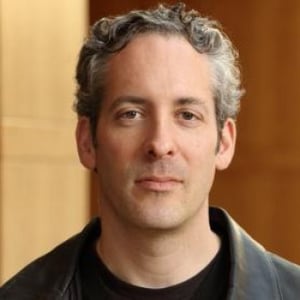
Justice Thurgood Marshall Distinguished Professor of Law, University of Virginia School of Law
Brandon L. Garrett joined the law faculty in 2005. His research and teaching interests include criminal procedure, wrongful convictions, habeas corpus, corporate crime, scientific evidence, civil rights, civil procedure and constitutional law. Garrett’s recent research includes studies of DNA exonerations and organizational prosecutions. The research web pages below provide data related to those studies.
Garrett’s recent book examining corporate prosecutions, titled “Too Big to Jail: How Prosecutors Compromise with Corporations,” was published by Harvard University Press in Fall 2014. Translations are forthcoming in Spain and Taiwan. A new book titled “End of its Rope: How Killing the Death Penalty Can Revive Criminal Justice,” examining the implications of the decline of the death penalty, is forthcoming in Fall 2017 from Harvard University Press. In 2011, Harvard University Press published Garrett’s book, "Convicting the Innocent: Where Criminal Prosecutions Go Wrong," examining the cases of the first 250 people to be exonerated by DNA testing. That book was the subject of a symposium issue in New England Law Review, and received an A.B.A. Silver Gavel Award, Honorable Mention, and a Constitutional Commentary Award. It was translated for editions in China, Japan and Taiwan. In 2013, Foundation Press published Garrett’s casebook, “Federal Habeas Corpus: Executive Detention and Post-Conviction Litigation,” co-authored with Lee Kovarsky. Garrett’s work has been widely cited by courts, including the U.S. Supreme Court, lower federal courts, state supreme courts, and courts in other countries, such as the Supreme Courts of Canada and Israel. Garrett also frequently speaks about criminal justice matters before legislative and policymaking bodies, groups of practicing lawyers, law enforcement, and to local and national media.
Garrett attended Columbia Law School, where he was an articles editor of the Columbia Law Review and a Kent Scholar. After graduating, he clerked for the Hon. Pierre N. Leval of the U.S. Court of Appeals for the Second Circuit. He then worked as an associate at Neufeld, Scheck & Brustin LLP in New York City.
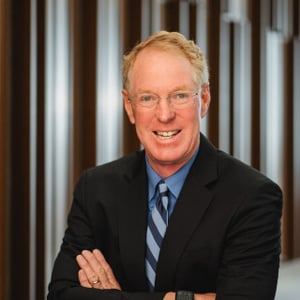
Ronald N. Boyce Presidential Professor of Criminal Law and University Distinguished Professor of Law, The University of Utah College of Law
Paul G. Cassell is an internationally recognized legal scholar on criminal and civil justice, crime victims' rights, constitutional law, evidence, judicial process, and other legal issues. Cassell received a B.A. (1981) and a J.D. (1984) from Stanford University, where he graduated Order of the Coif and was President of the Stanford Law Review. He clerked for then-Judge Antonin Scalia when Scalia was on the U.S. Court of Appeals for the D.C. Circuit (1984-85) and for Chief Justice Warren Burger of the United States Supreme Court (1985-86). Cassell then served as an Associate Deputy Attorney General with the U.S. Justice Department (1986-88) and as an Assistant U.S. Attorney for the Eastern District of Virginia (1988 to 1991). Cassell joined the faculty at the College of Law in 1992, where he taught full-time until he was sworn in as a U.S. District Court Judge for the District of Utah in July 2002. In November 2007, he resigned his judgeship to return full-time to the College of Law to teach, write, and litigate concerning issues relating to crime victims' rights and criminal and civil justice reform. Professor Cassell has also published numerous law review articles in journals such as the Stanford Law Review, the Michigan Law Review, the Harvard Journal of Law and Public Policy, and the Journal of Criminal Law and Criminology. He is a co-author of the nation's only law school textbook on crime victims' rights, Victims in Criminal Procedure (various editions, most recently in its fifth edition published in 2025). Professor Cassell has argued pro bono cases relating to criminal procedure and crime victims' rights before the United States Supreme Court, the 2nd, 4th, 5th, 6th, 7th, 8th, 9th, 10th, 11th, and D.C. Circuits (including the 5th and 11th Circuits en banc), several U.S. District Courts, the Utah Supreme Court, and the Arizona Supreme Court. In 2020, Cassell received the Ronald Wilson Reagan Public Policy Award - National Crime Victims' Service Award from the U.S. Department of Justice. Cassell is a member of the American Law Institute, a fellow of the American Bar Foundation, and an inaugural member of the Council on Criminal Justice. He is also an occasional blogger at The Volokh Conspiracy.

Amelia D. Lewis Professor of Constitutional and Criminal Law, Sandra Day O'Connor College of Law at Arizona State University
Erik Luna is the Amelia D. Lewis Professor of Constitutional and Criminal Law in the Sandra Day O'Connor College of Law at Arizona State University.
Professor Luna teaches and writes primarily in the areas of criminal law and criminal procedure. Luna has received two Fulbright awards. In 2000, he served as the senior Fulbright Scholar to New Zealand at Victoria University Law School (Wellington, NZ). In 2016-17, he was the Fulbright Distinguished Chair at the University of Birmingham (Birmingham, UK). Luna has also been a visiting scholar with the Max Planck Institute for Foreign and International Criminal Law (Freiburg, DE), a visiting professor with the Cuban Society of Penal Sciences (Havana, CU), a visiting professional in the Office of the Prosecutor of the International Criminal Court (The Hague, NL), and a research fellow with the Alexander von Humboldt Foundation (Bonn, DE). Prior to coming to ASU, Luna was the Sydney & Frances Lewis Professor of Law at Washington and Lee University, and before that, he was the Hugh B. Brown Chair in Law at the University of Utah. Luna is a member of the American Law Institute and an adjunct scholar with the Cato Institute. He graduated summa cum laude from the University of Southern California and received his J.D. with honors from Stanford Law School. Upon graduation, Luna was a prosecutor in the San Diego District Attorney’s Office and a fellow and lecturer at the University of Chicago Law School.
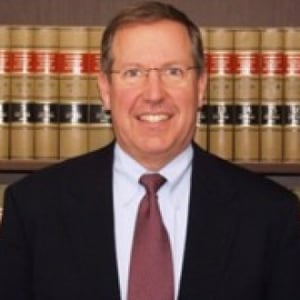
President and CEO, Association of Prosecuting Attorneys
Mr. David LaBahn is President and Chief Executive Officer (CEO) of the Association of Prosecuting Attorneys (APA), a national association representing elected and deputy or assistant prosecutors, and city attorneys. The association acts as a global forum for the exchange of ideas, allowing prosecutors to collaborate with all criminal justice partners, and conducts timely and effective training and technical assistance to improve the prosecutorial function. In addition, APA serves as an advocate for prosecutors on emerging issues related to the administration of justice, development of partnerships and implementation of problem-solving strategies.
Prior to forming APA, Mr. LaBahn was the Director of the American Prosecutors Research Institute (APRI) and the Director of Research and Development for the National District Attorneys Association (NDAA). In this dual capacity, he directed APRI’s Projects including editing and teaching in the areas of child and adult sexual assault and gang violence. He worked with other national organizations to lobby for the increase the funding to assist in the investigation and prosecution of child abuse as well as coordinate the efforts of these federally funded programs. He attended and spoke at numerous national conferences on NDAA’s behalf and applied for and received numerous federal grants to continue the Association’s efforts to support the nation’s district attorneys.
Before joining NDAA, Mr. LaBahn was the Executive Director of the California District Attorneys Association (CDAA). Appointed to this position in 2003, he had responsibility for all of the Association’s efforts and became the primary policy strategist and spokesperson for the organization. Much of his initial efforts involved working through a very difficult budget for the state and then the historic recall of Governor Davis caused a mid-term transition on the Governor’s Office. Throughout this tumultuous time, he managed to maintain and expand CDAA’s staff of approximately 50 full-time employees and annual budget of over $5 million. In 2006 he received the largest grant from the Governor’s Office of Highway Safety in Association history. During this time, he was involved in creating CDAA’s first Violence against Women Project, the Circuit Environmental Prosecution Project and the High Technology Prosecution Project. CDAA expanded its committee structure to include over 30 standing committees as new trends emerged like Community Prosecution, High Technology, Stalking, and Elder Abuse. He also lectured at state-wide MCLE programs on sexual assault and gang crime as well as edited the Legislative Digest to make certain that all prosecutors were aware of changes in the law. He personally staffed the Rural County Committee and taught at the Annual Rural Counties Conference in California.
Mr. LaBahn joined CDAA as the Deputy Executive Director in 1996 and at that time was responsible for the training and publications department, applying for and received state and federal grants, and lobbing the California State Legislature on criminal justice and budget matters. Mr. LaBahn was a former deputy district attorney in Orange and Humboldt counties in California (1987-96). He received numerous awards including being recognized with community service awards for his work with victims and the reduction of gang violence in the City of Westminster, CA.

Professor of Law, Antonin Scalia Law School, George Mason University
ILYA SOMIN is Professor of Law at George Mason University and the B. Kenneth Simon Chair in Constitutional Studies at the Cato Institute. His research focuses on constitutional law, property law, democratic theory, federalism, and migration rights. He is the author of Free to Move: Foot Voting, Migration, and Political Freedom (Oxford University Press, revised and expanded edition, 2022), Democracy and Political Ignorance: Why Smaller Government is Smarter (Stanford University Press, revised and expanded second edition, 2016), and The Grasping Hand: Kelo v. City of New London and the Limits of Eminent Domain (University of Chicago Press, 2015, rev. paperback ed., 2016), coauthor of A Conspiracy Against Obamacare: The Volokh Conspiracy and the Health Care Case (Palgrave Macmillan, 2013), and co-editor of Eminent Domain: A Comparative Perspective (Cambridge University Press, 2017). Democracy and Political Ignorance has been translated into Italian and Japanese.
Somin’s work has appeared in numerous scholarly journals, including the Yale Law Journal, Stanford Law Review, Northwestern University Law Review, Georgetown Law Journal, Critical Review, and others. Somin has also published articles in a variety of popular press outlets, including the New York Times, Washington Post, Wall Street Journal, Los Angeles Times, CNN, NBC, The Atlantic, USA Today, Boston Globe, US News and World Report, South China Morning Post, National Law Journal and Reason. He has been quoted or interviewed by the New York Times, Washington Post, Wall Street Journal, Time, Newsweek, The Economist, the Christian Science Monitor, the Financial Times, The Guardian, the Associated Press, CBS, MSNBC, NPR, BBC, Reuters, the Canadian Broadcasting Corporation, the Australian Broadcasting Corporation, Radio Free Europe/Radio Liberty, Al Jazeera, and the Voice of America, among other media.
Somin’s writings have been cited in decisions by the United States Supreme Court, multiple state supreme courts and lower federal courts, and the Supreme Court of Israel. He is co-counsel for the plaintiffs in VOS Selections, Inc. v. Trump, a case challenging the constitutionality of President Trump’s “Liberation Day” tariffs. Somin has testified on the use of drones for targeted killing in the War on Terror before the US Senate Judiciary Subcommittee on the Constitution, Civil Rights, and Human Rights. In 2009, he testified on property rights issues at the United States Senate Judiciary Committee confirmation hearings for Supreme Court Justice Sonia Sotomayor. Somin writes regularly for the popular Volokh Conspiracy law and politics blog, now affiliated with Reason magazine (previously affiliated with the Washington Post from 2014 to 2017). From 2006 to 2013, he served as Co-Editor of the Supreme Court Economic Review, one of the country’s top-rated law and economics journals.
Somin has served as a visiting professor at the University of Pennsylvania Law School. He has also been a visiting professor or scholar at the Georgetown University Law Center, the University of Hamburg, Germany, the University of Torcuato Di Tella in Buenos Aires, Argentina, Uriel Reichman University in Israel, and Zhengzhou University in China. He is a University Affiliate of the Schar School of Policy and Government at George Mason University, and an affiliated faculty member of the George Mason University Institute for Immigration Research. Before joining the faculty at George Mason, Somin was the John M. Olin Fellow in Law at Northwestern University Law School in 2002-2003. In 2001-2002, he clerked for the Hon. Judge Jerry E. Smith of the U.S. Court of Appeals for the Fifth Circuit. Professor Somin earned his B.A., Summa Cum Laude, at Amherst College, M.A. in Political Science from Harvard University, and J.D. from Yale Law School.
Associate Professor of Law, University of Baltimore School of Law
Bessler has taught at the University of Minnesota Law School and The George Washington University Law School. He clerked for U.S. Magistrate Judge John M. Mason of the District of Minnesota, and practiced law for many years in the area of civil litigation as a partner at the Minneapolis law firm of Kelly & Berens, P.A. He has written five books, four on the subject of capital punishment and one on the craft of writing. His undergraduate degree is in political science, while his master's degree is in international human rights law. His law review articles have appeared in the Indiana Law Journal, the Arkansas Law Review, the Hastings International and Comparative Law Review and elsewhere. John Bessler also teaches a capital punishment seminar as an adjunct professor at the Georgetown University Law Center.

Legal Director & General Counsel, Criminal Justice Legal Foundation
Kent S. Scheidegger has been the Legal Director of the Criminal Justice Legal Foundation since December 1986. He also served as Chairman of the Criminal Law Practice Group of the Federalist Society 2003 to 2005. His articles on criminal and constitutional law have been published in law reviews, national legal publications, and congressional reports. Legal arguments authored by Mr. Scheidegger have been cited and incorporated in several precedent-setting United States Supreme Court decisions.
After receiving a degree in physics with honors from New Mexico State University in 1976, Mr. Scheidegger served for six years in the United States Air Force as a Nuclear Research Officer. He took his law degree with distinction from the University of the Pacific, McGeorge School of Law in 1982 and practiced civil law in Northern California. He was general counsel of California Cooler, Inc. from 1984 until 1986, when he joined the Foundation.

Rogue or Righteous? Debating the Role of Prosecutors in Today's Legal Landscape
Ariana Fajardo Orshan, Zack Smith, Stephen Talpins, Daniel Boaz Tilley
Please join the Miami Lawyers Chapter for a panel event discussing the role of prosecutors...
Should We Heed Pleas for Plea Bargaining Reform?
Marc Levin, Clark Neily, Kent Volkmer
Although a right to trial is enshrined in the American Constitution, practically the nation’s criminal...
Criminal Justice Reform Discussion
Brandon Garrett, Paul G. Cassell, Erik Luna
Criminal justice reform has been a hot political topic for several years now, bringing together...
Compensation for the Wrongfully Imprisoned? - Podcast
David LaBahn, Ilya Somin
In recent years, there have been a growing number of cases where people have been...
Execution Methods and Deciding Implementation of the Death Penalty - Podcast
John Bessler, Kent Scheidegger
During oral argument in Glossip v. Gross, Justice Samuel Alito pointed to what he called "a...