

Associate Dean for Academic Affairs, Austin E. Owen Research Scholar & Professor of Law, The University of Richmond School of Law
Dean Kristen Jakobsen Osenga teaches and writes in the areas of patent law, antitrust, and legislation and regulation. Some of her recent scholarship focuses on standard development organizations, patent eligible subject matter, patent licensing firms, litigation and remedies for patent infringement, and patent law reform. She has written numerous law review articles on these and other topics, as well as book chapters and op eds on various aspects of patent law. Additionally, she has spoken on these issues at many academic conferences and bar events. Dean Osenga is Chief Policy Counselor for the Inventors Defense Alliance, as well as an active member of the Federal Circuit Bar Association and the American Intellectual Property Law Association.
Dean Osenga received a B.S. degree in Biomedical Engineering from the University of Iowa, an M.S. degree in Electrical Engineering from Southern Illinois University – Carbondale, and a J.D. from the University of Illinois College of Law, where she graduated magna cum laude. After law school, she practiced at the law firm of Finnegan, Henderson, Farabow, Garrett, & Dunner LLP, (now Finnegan) where she did patent prosecution and litigation. She then clerked for the Judge Richard Linn of the U.S. Court of Appeals for the Federal Circuit. After clerking, she entered academia, teaching first at Chicago-Kent College of Law and then at the University of Richmond, where she has been since 2006. She has also been a Visiting Professor at Emory University School of Law and at William & Mary School of Law.

Professor of Law, Southern Illinois University School of Law
Professor Mark F. Schultz joined the faculty in 2003. He teaches and writes primarily in the area of intellectual property.
Professor Schultz is a frequent author and speaker known for his work on the law and economics of the global intellectual property system. In one of his most influential projects, he worked with the Organization for Economic Cooperation and Development (OECD) to construct a groundbreaking global trade secret protection index (the TSPI). The TSPI is influencing policy discussions on this cutting-edge topic in capitals around the world. Other recent projects have included an empirical study that quantified for the first time the backlogs in patent offices worldwide, a report on how patented innovation is meeting global health challenges, and the construction of a new global index of copyright strength.
Professor Schultz is an influential voice in public policy debates regarding intellectual property. He has testified before the U.S. Congress on copyright law at the invitation of the House Judiciary Committee and has briefed the staff of the U.S. Senate Judiciary Committee on trade secret legislation. He speaks frequently around the world about the connection between secure and effective intellectual property rights and flourishing national economies and individual lives, with invitations from the U.S. Patent and Trademark Office, the U.S. Trade Representative, and the U.S. Copyright Office, as well as numerous academic institutions, think tanks, and industry groups. He served as an NGO delegate to the World Intellectual Property Organization (WIPO) for several years during the WIPO Development Agenda talks. He is also one of the organizers of an ongoing multilateral diplomatic dialogue on best practices in national trade secret laws, and is co-founder of the Center for Protection of Intellectual Property (CPIP) at George Mason University in Washington, D.C.
Among the awards and recognition he has received for his scholarship was the School of Law's Outstanding Scholar of the Year award in 2008. He has been a distinguished visiting scholar at the University of Botswana and a visiting professor at DePaul University College of Law.
Professor Schultz graduated with honors from the George Washington University School of Law. Following law school, he was a judicial clerk for the Hon. Daniel M. Friedman of the United States Court of Appeals for the Federal Circuit in Washington, D.C., and the Hon. Eric G. Bruggink of the United States Court of Federal Claims. Prior to joining academia, he practiced law for a decade, serving as outside general counsel to several tech startups and helping technology companies to expand their businesses and commercialize their intellectual property in dozens of countries. He holds a B.A. in International Economics from George Washington University and has done PhD level coursework in development economics at Southern Illinois University.
He is active in leadership roles in local and national organizations. He has served as chair of the Federalist Society's Intellectual Property Practice Group and the AALS Section on Internet and Computer Law. He is an officer of the American Bar Association's International IP Committee of the International Law Section and the American Intellectual Property Law Association’s Trade Secret Law Committee. He currently is chair of the Academic Advisory Board of the Copyright Alliance.
Professor Schultz teaches Copyright Law, Trade Secret Law, Trademark Law, and a senior seminar on Intellectual Property and Global Development. He established and directs both the Specialization in Intellectual Property Law and the IP Semester in Practice Externship Program. He also co-founded a Legal Globalization Class, offered every other year, that takes students to South Africa and Botswana after spending a semester learning about the legal system, culture, history, and politics of southern Africa. The popular course is a once-in-a-lifetime experience that introduces students to leading lawyers, judges, government officials, and human rights advocates, taking them from Cape Town to Johannesburg to Gaborone as well as many popular destinations including game reserves, national parks, the Cape of Good Hope, and the Cradle of Humankind.
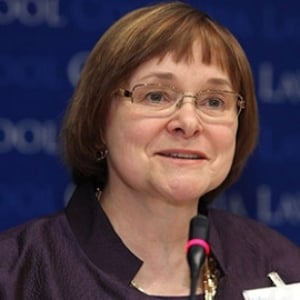
Lecturer in Law; Executive Director, Kernochan Center for Law, Media and the Arts, Columbia Law School
June Besek is the executive director and lecturer in law of the Kernochan Center for Law, Media and the Arts at Columbia Law School.
She teaches a seminar on authors, artists, and performers. Prof. Besek also co-teaches, a seminar on current issues in copyright.
Before joining Columbia in 1999, Prof. Besek was director of intellectual property at Reuters America Inc. She was formerly a partner at Schwab Goldberg Price & Dannay, where she focused on copyright, trademark, and other legal issues.
Prof. Besek is the chair of the copyright division of the American Bar Association’s intellectual property section, and also chairs the section’s copyright reform task force. Prof. Besek serves on the editorial board of the Journal of the Copyright Society of the U.S.A. and the board of advisors of the Columbia Journal of Law and the Arts.
She clerked for Judge Charles H. Tenney in the Southern District of New York.
Prof. Besek earned her J.D. from New York University in 1981 and received her B.A. from Yale.
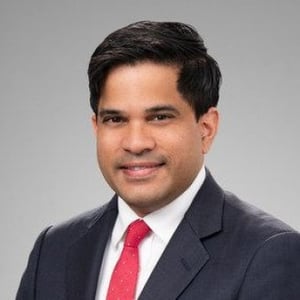
Partner, Latham & Watkins LLP
Sy Damle is one of the nation’s foremost practitioners in copyright law, with a particular focus on copyright rate-setting and software copyrights. Mr. Damle is a partner in the Washington, D.C. office of Latham & Watkins and a member of the Intellectual Property Litigation Practice. He also serves as an advisor to the American Law Institute’s Restatement of the Law, Copyright, and regularly writes and speaks about cutting-edge copyright issues. Mr. Damle focuses his practice on high-stakes copyright litigation and regulatory matters.
Mr. Damle joined Latham after serving as General Counsel and Associate Register of Copyrights at the US Copyright Office. In this role, Mr. Damle was responsible for the agency’s litigation, regulatory, and other legal work. While at the Copyright Office, Mr. Damle played a central role in every significant copyright case to reach the Supreme Court, addressing areas as diverse as software copyrights, fee awards in copyright actions, and the scope of the safe harbors in the Digital Millennium Copyright Act (DMCA). In addition, Mr. Damle led the Office’s first comprehensive regulatory revision effort in decades, concluding over 20 rulemakings, and helped lead two rulemakings under the anti-circumvention provisions of the DMCA. He was also responsible for overseeing the work of the Copyright Royalty Board (CRB), which establishes royalty rates and terms for major segments of the copyright industry. In that role, he wrote and issued binding opinions addressing novel questions of copyright law that govern CRB proceedings. Mr. Damle also regularly advised Congress on novel copyright issues, including by drafting and reviewing legislation.
Previously, Mr. Damle served as an appellate attorney for the Civil Division of the Department of Justice (DOJ). In his role at the DOJ, he appeared as lead counsel in more than 40 appeals, focusing on intellectual property, administrative law, and constitutional matters. He was responsible for the defense of rate-setting determinations of the CRB in the US Court of Appeals for the D.C. Circuit. He also wrote briefs in a number of high-profile Supreme Court cases, including Cable News Network v. CSC Holdings, addressing alleged copyright infringement by remote DVR services, and Ashcroft v. Iqbal, addressing pleading standards. Mr. Damle also served as senior counsel in the Consumer Financial Protection Bureau.
Mr. Damle’s work has been recognized by leading publications, including the National Law Journal, which has named him one of the top 40 Under 40 minority lawyers in the United States, and as one of DC’s Rising Stars.
Mr. Damle is a member of the Copyright Society of the USA, and serves on the board of the Edward Coke Appellate Inn of Court.
Mr. Damle earned his JD from the University of Virginia, where he graduated first in his class. He holds systems engineering and business degrees from the University of Pennsylvania, and was a software developer and information technology consultant prior to attending law school. He also served as a clerk for Judge Sandra L. Lynch of the US Court of Appeals for the First Circuit.
CoFounder, RightsClick
Steven’s extensive background in IP law and policy began as an attorney for the U.S. Senate Judiciary Committee, after which, he served as senior counsel for Policy and International Affairs at the U.S. Copyright Office and then as Chief Intellectual Property Counsel for the Global Intellectual Property Center of the U.S. Chamber of Commerce. Before co-founding RightsClick, he started the IP consultancy Sentinel Worldwide, and teaches copyright law at George Washington University Law School.
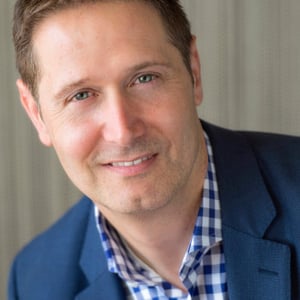
President, Recording Industry Association of America (RIAA).
Mitch Glazier is President, Recording Industry Association of America (RIAA).
Glazier guides the industry’s strategic policy initiatives and helps coordinate the activities of the association. In his more than 10-year tenure at the RIAA, Glazier has helped manage a variety of initiatives that have played a vital role in the music industry’s transition to the digital age. This includes the 2008 PRO-IP Act, which established the country’s first Intellectual Property Enforcement Coordinator in the Executive Office of the President, and the Higher Education Opportunity Act of 2008, which provided colleges and universities with meaningful tools to reduce the illegal downloading of copyrighted works on college campuses.
Glazier has also been instrumental in managing a variety of state initiatives that have helped the legal online marketplace for music to begin to prosper, including the enactment of laws in several states that ensure copyright protections extend to digital storage devices and subscription services. He has spearheaded the promotion and expansion of artist and industry programs such as RIAA’s sponsorship of a weekly “Monday Open Mic” night at Nashville’s iconic Bluebird Café to showcase emerging artists and songwriters.
Before joining RIAA, Glazier served as Chief Counsel for intellectual property to the Judiciary Committee in the U.S. House of Representatives. A native of Illinois, Glazier served as law clerk to the Honorable Judge Wayne R. Andersen, United States District Court for the Northern District of Illinois, and practiced law at the Chicago firm Neal, Gerber & Eisenberg as an associate in commercial litigation. He graduated from Northwestern University and Vanderbilt Law School. Glazier serves on the boards of Musicians on Call, the American Association of People with Disabilities, and the Internet Education Foundation.
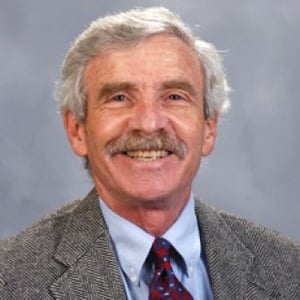
Robert Kavesh Professorship in Economics, Leonard N. Stern School of Business, New York University
Lawrence J. White has been with New York University Leonard N. Stern School of Business for more than 35 years. His primary research areas of interest include financial regulation, antitrust, network industries, international banking and applied microeconomics.
Professor White has published numerous articles in the Journal of Business, Journal of Economic Perspectives, Journal of Economic Literature, Journal of Political Economy, American Economic Review, Review of Economics and Statistics, Quarterly Journal of Economics, and other leading journals in economics, finance, and law. He is the author of The S&L Debacle: Public Policy Lessons for Bank and Thrift Regulation, among other books, and he is the co-editor (with John Kwoka) of the 6th of edition of The Antitrust Revolution. He contributed chapters to both of the NYU Stern books on the financial crisis - Restoring Financial Stability and Regulating Wall Street. He is the co-author (with Stern's Viral Acharya, Matthew Richardson, and Stijn Van Nieuwerburgh) of Guaranteed to Fail: Fannie Mae, Freddie Mac, and the Debacle of Mortgage Finance.
President, Recording Industry Association of America (RIAA).
Mitch Glazier is President, Recording Industry Association of America (RIAA).
Glazier guides the industry’s strategic policy initiatives and helps coordinate the activities of the association. In his more than 10-year tenure at the RIAA, Glazier has helped manage a variety of initiatives that have played a vital role in the music industry’s transition to the digital age. This includes the 2008 PRO-IP Act, which established the country’s first Intellectual Property Enforcement Coordinator in the Executive Office of the President, and the Higher Education Opportunity Act of 2008, which provided colleges and universities with meaningful tools to reduce the illegal downloading of copyrighted works on college campuses.
Glazier has also been instrumental in managing a variety of state initiatives that have helped the legal online marketplace for music to begin to prosper, including the enactment of laws in several states that ensure copyright protections extend to digital storage devices and subscription services. He has spearheaded the promotion and expansion of artist and industry programs such as RIAA’s sponsorship of a weekly “Monday Open Mic” night at Nashville’s iconic Bluebird Café to showcase emerging artists and songwriters.
Before joining RIAA, Glazier served as Chief Counsel for intellectual property to the Judiciary Committee in the U.S. House of Representatives. A native of Illinois, Glazier served as law clerk to the Honorable Judge Wayne R. Andersen, United States District Court for the Northern District of Illinois, and practiced law at the Chicago firm Neal, Gerber & Eisenberg as an associate in commercial litigation. He graduated from Northwestern University and Vanderbilt Law School. Glazier serves on the boards of Musicians on Call, the American Association of People with Disabilities, and the Internet Education Foundation.
Robert Kavesh Professorship in Economics, Leonard N. Stern School of Business, New York University
Lawrence J. White has been with New York University Leonard N. Stern School of Business for more than 35 years. His primary research areas of interest include financial regulation, antitrust, network industries, international banking and applied microeconomics.
Professor White has published numerous articles in the Journal of Business, Journal of Economic Perspectives, Journal of Economic Literature, Journal of Political Economy, American Economic Review, Review of Economics and Statistics, Quarterly Journal of Economics, and other leading journals in economics, finance, and law. He is the author of The S&L Debacle: Public Policy Lessons for Bank and Thrift Regulation, among other books, and he is the co-editor (with John Kwoka) of the 6th of edition of The Antitrust Revolution. He contributed chapters to both of the NYU Stern books on the financial crisis - Restoring Financial Stability and Regulating Wall Street. He is the co-author (with Stern's Viral Acharya, Matthew Richardson, and Stijn Van Nieuwerburgh) of Guaranteed to Fail: Fannie Mae, Freddie Mac, and the Debacle of Mortgage Finance.

Deep Dive Episode 47 – The Songwriting Industry and Antitrust Consent Decrees
Kristen Osenga, Mark F. Schultz
Most people would be surprised to discover that music is among the most regulated of...
Topics
Moving the (Over-Regulated) Music Industry into Modern Times
Music - whether it is pop, rock, country, rap, hip-hop, or any other genre –...
The ALI Copyright Project: Restatement or Revisionist?
June Besek, Sy Damle, Steven M. Tepp
The American Law Institute (ALI) is a familiar and trusted institution for jurists across the...
Topics
CLASSICS Act Provides Long Overdue Recognition for Legacy Recording Artists
A version of this essay originally appeared on the Center for the Protection of Intellectual...
Music Licensing
Mitch Glazier, Lawrence J. White
The system for licensing musical works in the U.S. and internationally is fractionalized, complex, regulated,...
Music Licensing
Intellectual Property Practice Group Teleforum
Teleforum