
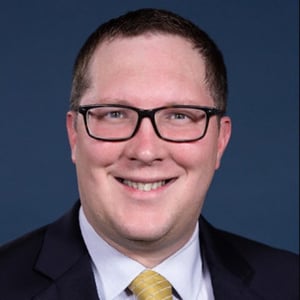
Attorney, Pacific Legal Foundation
Luke A. Wake is an attorney at the Pacific Legal Foundation. Prior to joining PLF, he was a senior staff attorney at the NFIB Small Business Legal Center.
Wake has particular expertise on environmental and land use issues, and has worked on numerous other constitutional issues and matters of importance to small business owners. He is an ardent defender of private property rights, which he believes are essential to the free enterprise system and the foundation of American liberty. As a strong advocate of individual rights and economic liberties, he has built his career defending small business interests.
Wake has focused on a whole host of issues, from employment law matters to regulatory compliance. In addition to serving as a resource for small business owners, Wake is committed to ensuring that the voice of small business is heard in the nation’s courts. As an appellate practitioner, Wake has focused particularly on informing the courts on matters of administrative law and on issues under the Fifth Amendment’s Takings Clause. He is also working to advance small business interests in law review articles, and was recently published in the Berkeley Journal of Law & Ecology. See R.S. Radford & Luke A. Wake, Deciphering and Extrapolating: Searching for Sense in Penn Central, 38 Ecology L.Q. 731, 746-747 (2011).
Before joining the Legal Center’s team, Wake completed a prestigious two-year fellowship as an attorney in the Pacific Legal Foundation’s College of Public Interest Law. Wake is a graduate of Case Western Reserve University School of Law in Cleveland Ohio, and is a member of the California Bar. He completed his undergraduate studies at Elon University in North Carolina in 2006 where he focused on political theory and corporate communications.
Senior Counsel, Vice President of Allied Legal Affairs, Alliance Defending Freedom
Brett Harvey serves as senior counsel and vice president of Allied Legal Affairs with Alliance Defending Freedom.
Since joining ADF in 2000, Harvey has coordinated the efforts of the volunteer network of attorneys who collaborate with ADF. In 2002, his role expanded to direct the grant program. To date, Harvey and his team have awarded approximately $54 million in grant funds to thousands of legal projects and cases, many of which have set national and multinational precedents.
Harvey leads the Allied Legal Affairs team, which is dedicated to creating opportunities for attorneys aligned with the ADF mission to actively engage in the protection and promotion of religious liberty. Harvey and his team focus on recruitment, professional engagement, and integration of allies into ADF’s advocacy efforts, including coordinating amicus efforts at state supreme courts, circuit courts, and the U.S. Supreme Court.
Harvey has also litigated in a variety of state and federal courts, focusing on the protection of life and religious freedom. Most notably, he successfully spearheaded a national litigation strategy culminating in Town of Greece v. Galloway, in which the U.S. Supreme Court upheld the freedom of Americans to pray at public meetings.
Harvey earned his J.D. in 1995 from the Walter F. George School of Law at Mercer University in Georgia. He is admitted to the bar in the states of Arizona, Colorado, Florida, Georgia, and Virginia. He has also been admitted to practice before the U.S. District Court in Colorado, the U.S. Courts of Appeals for the 4th, 6th, 9th, 10th, and 11th Circuits, and the U.S. Supreme Court.
Senior Counsel, Alliance Defending Freedom
Joel L. Oster serves as senior legal counsel with Alliance Defending Freedom at its Kansas City Regional Service Center in Kansas, where he plays a significant role in litigation efforts defending church autonomy. Before joining Alliance Defending Freedom in 2004, he earned his J.D. from the University of Kansas School of Law. Oster is admitted to the bar in Kansas, Missouri, Florida, and numerous federal courts, and has practiced law since 1997.

Minnesota Supreme Court Holds Municipality Cannot Revoke Right to Maintain an Existing Commercial Land Use
Luke A. Wake
A difficult and recurring question of municipal law is how, and when, can an existing land-use...
Who Said That?: A Simple Question That May Change the Way Courts View Legislative Prayer
Brett Harvey, Joel Oster
Related Opinions & Briefs: • Petition for Writ of Certiorari, Town of Greece v. Galloway:...