
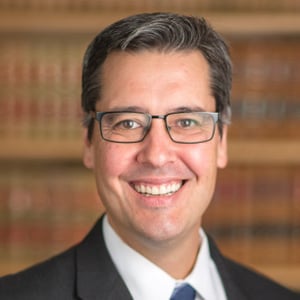
Associate Dean for Faculty; Charles W. Ebersold and Florence Whitcomb Ebersold Professor of Constitutional Law, The Ohio State University Mortiz College of Law
Professor Daniel Tokaji is an authority on the law of elections and democracy. He teaches courses on Election Law, Civil Rights, Civil Procedure, Comparative Law, Constitutional Law, Federal Courts, Legislation and Regulation, and the U.S. Legal System. His scholarship addresses questions of voting rights, racial justice, free speech, and the role of the courts in American democracy.
Professor Tokaji is the author of Election Law in a Nutshell (2d ed. 2016), and co-author of Election Law: Cases and Materials (6th ed. 2017) and The New Soft Money (2014). He has written numerous articles and book chapters on a wide variety of election and voting issues, including voting rights, voter ID, voter registration, redistricting, campaign finance regulation. Recent articles include “Gerrymandering and Association,” 59 William & Mary Law Review 2159 (2018), and “Denying Systemic Equality: The Last Words of the Kennedy Court,” 13 Harvard Law & Policy Review 539 (2019). His current research focuses on the challenges facing democracies around the globe, including the free speech issues surrounding digital disinformation and the need for trustworthy electoral institutions.
Media outlets frequently seek Professor Tokaji’s expertise on election and voting issues. He has been quoted in The New York Times, Los Angeles Times, The Columbus Dispatch, USA TODAY, and appeared on TODAY, FOX News, NBC News, and National Public Radio and many other media outlets.
A graduate of Harvard College and the Yale Law School, Professor Tokaji clerked for the Honorable Stephen Reinhardt of the U.S. Court of Appeals for the Ninth Circuit. Before arriving at Ohio State, he was a staff attorney with the ACLU Foundation of Southern California and Chair of California Common Cause.
Professor Tokaji has litigated many civil rights, civil liberties, and election law cases. He was lead counsel in a case that struck down an Ohio law requiring naturalized citizens to produce a certificate of naturalization when challenged at the polls. He also served as counsel in litigation challenging the state’s voting purges. He was also an attorney for plaintiffs in cases that kept open the window for simultaneous registration and early voting in Ohio’s 2008 general election, and that challenged punch-card voting systems in Ohio and California after the 2000 election.
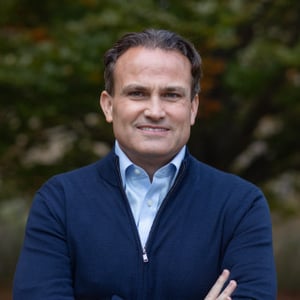
Professor of Law, University of Michigan Law School
Christopher J. Walker is a Professor of Law at the University of Michigan. Prior to joining Michigan law faculty in 2022, he spent a decade teaching at The Ohio State University Moritz College of Law. He previously clerked for Justice Anthony Kennedy of the U.S. Supreme Court, worked on the Civil Appellate Staff at the U.S. Department of Justice, and served on the Senate Judiciary Committee staff for the Gorsuch Supreme Court confirmation. Professor Walker’s research focuses on administrative law, regulation, and law and policy at the agency level. Outside the law school, he chaired the American Bar Association’s Section of Administrative Law and Regulatory Practice in 2020-21 and served as one of forty Public Members of the Administrative Conference of the United States from 2016-2022, and he continues to serve in both organizations in various capacities. He also works of counsel at the U.S. Chamber Litigation Center. In 2022, he received the Federalist Society’s Joseph Story Award.
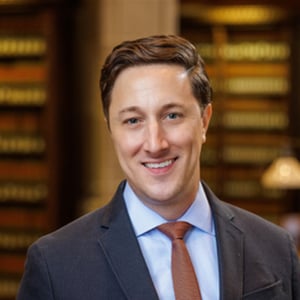
Professor of Law, Notre Dame Law School
Professor Derek Muller is a nationally-recognized scholar in the field of election law. His research focuses on the role of states in the administration of federal elections, the constitutional contours of voting rights and election administration, the limits of judicial power in the domain of elections, and the Electoral College.
He has published more than two dozen academic works, and his op-eds have appeared in the New York Times, the Los Angeles Times, and the Wall Street Journal. He has testified before Congress, and he is a contributor at the Election Law Blog. He is a co-author on a Federal Courts casebook published by Carolina Academic Press. He is also the co-reporter on a new Restatement of the Law, Election Litigation, an effort led by the American Law Institute.
Professor Muller teaches Election Law, Civil Procedure, and Evidence.
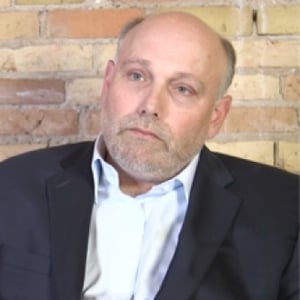
CEO, Ainsley Shea and Senior Consultant, National Popular Vote Campaign
Patrick Rosenstiel is a nationally recognized figure in the world of public affairs, international relations, public relations and market research. Having cut his teeth in the campaign world, including the Forbes for President campaign, Pat brings nearly two decades of senior level public affairs expertise to the table.
With a proactive philosophy toward public affairs, he has advanced initiatives related to defense, Social Security reform, Medicare Part D and drug re-importation. He has won impressive brand victories for Pfizer, Progress for America, Business Roundtable, Recombinetics, Inc., the United States Chamber of Commerce and countless Fortune 500 companies that compete in regulated industries.
As Executive Director of the Trade Alliance to Promote Prosperity (TAPP), Rosenstiel led a national public affairs, public relations and citizen lobbying effort against the Section 421 (Trade Act of 1974) petition asking the Obama administration to impose a 35% tariff on low-cost tires manufactured in China. As a direct result, the eventual tariff was reduced by 20 points and shortened.
As a political field director, Rosenstiel successfully directed grassroots efforts across the West and Midwest to garner Senate support for U.S. Supreme Court candidates John Roberts and Samuel Alito.
As a media relations professional, he has placed his clients in The Washington Post, Fox News, The New York Times, Business 2.0 and The Wall Street Journal, as well as hundreds of regional broadcast, local and trade media relevant to the geo-specific needs of the client.
In addition to his work as the CEO of Ainsley Shea, a Twin Cities-based public affairs firm with a worldwide impact, Rosenstiel presently serves as a senior consultant to the National Popular Vote campaign.
Associate Dean for Faculty; Charles W. Ebersold and Florence Whitcomb Ebersold Professor of Constitutional Law, The Ohio State University Mortiz College of Law
Professor Daniel Tokaji is an authority on the law of elections and democracy. He teaches courses on Election Law, Civil Rights, Civil Procedure, Comparative Law, Constitutional Law, Federal Courts, Legislation and Regulation, and the U.S. Legal System. His scholarship addresses questions of voting rights, racial justice, free speech, and the role of the courts in American democracy.
Professor Tokaji is the author of Election Law in a Nutshell (2d ed. 2016), and co-author of Election Law: Cases and Materials (6th ed. 2017) and The New Soft Money (2014). He has written numerous articles and book chapters on a wide variety of election and voting issues, including voting rights, voter ID, voter registration, redistricting, campaign finance regulation. Recent articles include “Gerrymandering and Association,” 59 William & Mary Law Review 2159 (2018), and “Denying Systemic Equality: The Last Words of the Kennedy Court,” 13 Harvard Law & Policy Review 539 (2019). His current research focuses on the challenges facing democracies around the globe, including the free speech issues surrounding digital disinformation and the need for trustworthy electoral institutions.
Media outlets frequently seek Professor Tokaji’s expertise on election and voting issues. He has been quoted in The New York Times, Los Angeles Times, The Columbus Dispatch, USA TODAY, and appeared on TODAY, FOX News, NBC News, and National Public Radio and many other media outlets.
A graduate of Harvard College and the Yale Law School, Professor Tokaji clerked for the Honorable Stephen Reinhardt of the U.S. Court of Appeals for the Ninth Circuit. Before arriving at Ohio State, he was a staff attorney with the ACLU Foundation of Southern California and Chair of California Common Cause.
Professor Tokaji has litigated many civil rights, civil liberties, and election law cases. He was lead counsel in a case that struck down an Ohio law requiring naturalized citizens to produce a certificate of naturalization when challenged at the polls. He also served as counsel in litigation challenging the state’s voting purges. He was also an attorney for plaintiffs in cases that kept open the window for simultaneous registration and early voting in Ohio’s 2008 general election, and that challenged punch-card voting systems in Ohio and California after the 2000 election.
Professor of Law, University of Michigan Law School
Christopher J. Walker is a Professor of Law at the University of Michigan. Prior to joining Michigan law faculty in 2022, he spent a decade teaching at The Ohio State University Moritz College of Law. He previously clerked for Justice Anthony Kennedy of the U.S. Supreme Court, worked on the Civil Appellate Staff at the U.S. Department of Justice, and served on the Senate Judiciary Committee staff for the Gorsuch Supreme Court confirmation. Professor Walker’s research focuses on administrative law, regulation, and law and policy at the agency level. Outside the law school, he chaired the American Bar Association’s Section of Administrative Law and Regulatory Practice in 2020-21 and served as one of forty Public Members of the Administrative Conference of the United States from 2016-2022, and he continues to serve in both organizations in various capacities. He also works of counsel at the U.S. Chamber Litigation Center. In 2022, he received the Federalist Society’s Joseph Story Award.
Attorney
Maya M. Noronha is a civil rights attorney.
As special counsel for external affairs at First Liberty Institute, Maya worked for the largest legal organization in the United States dedicated exclusively to defending religious liberty for all Americans.
Previously, Maya worked at the U.S. Department of Health and Human Services, as acting chief of staff of the Administration for Children and Families; principal advisor to the Commissioner of the Administration on Children, Youth, and Families; and senior advisor to the Director of the Office for Civil Rights and regulatory reform officer. She provided advice on federal civil rights laws that prohibit discrimination on the basis of conscience, religion, race, color, national origin, limited English proficiency, sex, disability, age, and health information in both health care and human services.
In the area of election law, Maya has advised officials elected to or candidates for President, U.S. Senate, U.S. House of Representatives, Governor, state legislature, city council, and magisterial district judge. She practiced law at Baker Hostetler LLP, where she was on the Political Law and Federal Advocacy Teams, advising clients on voting rights, redistricting, election integrity, campaign finance, financial reporting, ethics compliance, as well as conducting trial and appellate litigation. She also has delivered legislative testimony, planned continuing legal education conferences on election law, and published about voting rights and election administration.
In addition to addressing the Federalist Society, she has delivered remarks to the White House Initiative on Asian American Pacific Islanders, United States Senate, Women in Government Relations, Georgetown University, George Mason University School of Law, the Columbus School of Law at the Catholic University of America, and Arizona State University Cronkite School of Journalism.
Maya is in Phi Beta Kappa, a member of the Alpha Sigma Nu Jesuit Honor Society, and a John Carroll Scholar. Forbes Magazine recognized Maya as one of its 30 under 30 in Law and Public Policy.
She serves concurrently on the Federalist Society’s Free Speech & Election Law Executive Committee and the American Bar Association’s Standing Committee on Election Law.
Education
· J.D., Georgetown University Law Center, 2011
· A.B., Georgetown University, 2005
Associate Dean for Faculty; Charles W. Ebersold and Florence Whitcomb Ebersold Professor of Constitutional Law, The Ohio State University Mortiz College of Law
Professor Daniel Tokaji is an authority on the law of elections and democracy. He teaches courses on Election Law, Civil Rights, Civil Procedure, Comparative Law, Constitutional Law, Federal Courts, Legislation and Regulation, and the U.S. Legal System. His scholarship addresses questions of voting rights, racial justice, free speech, and the role of the courts in American democracy.
Professor Tokaji is the author of Election Law in a Nutshell (2d ed. 2016), and co-author of Election Law: Cases and Materials (6th ed. 2017) and The New Soft Money (2014). He has written numerous articles and book chapters on a wide variety of election and voting issues, including voting rights, voter ID, voter registration, redistricting, campaign finance regulation. Recent articles include “Gerrymandering and Association,” 59 William & Mary Law Review 2159 (2018), and “Denying Systemic Equality: The Last Words of the Kennedy Court,” 13 Harvard Law & Policy Review 539 (2019). His current research focuses on the challenges facing democracies around the globe, including the free speech issues surrounding digital disinformation and the need for trustworthy electoral institutions.
Media outlets frequently seek Professor Tokaji’s expertise on election and voting issues. He has been quoted in The New York Times, Los Angeles Times, The Columbus Dispatch, USA TODAY, and appeared on TODAY, FOX News, NBC News, and National Public Radio and many other media outlets.
A graduate of Harvard College and the Yale Law School, Professor Tokaji clerked for the Honorable Stephen Reinhardt of the U.S. Court of Appeals for the Ninth Circuit. Before arriving at Ohio State, he was a staff attorney with the ACLU Foundation of Southern California and Chair of California Common Cause.
Professor Tokaji has litigated many civil rights, civil liberties, and election law cases. He was lead counsel in a case that struck down an Ohio law requiring naturalized citizens to produce a certificate of naturalization when challenged at the polls. He also served as counsel in litigation challenging the state’s voting purges. He was also an attorney for plaintiffs in cases that kept open the window for simultaneous registration and early voting in Ohio’s 2008 general election, and that challenged punch-card voting systems in Ohio and California after the 2000 election.
Professor of Law, University of Michigan Law School
Christopher J. Walker is a Professor of Law at the University of Michigan. Prior to joining Michigan law faculty in 2022, he spent a decade teaching at The Ohio State University Moritz College of Law. He previously clerked for Justice Anthony Kennedy of the U.S. Supreme Court, worked on the Civil Appellate Staff at the U.S. Department of Justice, and served on the Senate Judiciary Committee staff for the Gorsuch Supreme Court confirmation. Professor Walker’s research focuses on administrative law, regulation, and law and policy at the agency level. Outside the law school, he chaired the American Bar Association’s Section of Administrative Law and Regulatory Practice in 2020-21 and served as one of forty Public Members of the Administrative Conference of the United States from 2016-2022, and he continues to serve in both organizations in various capacities. He also works of counsel at the U.S. Chamber Litigation Center. In 2022, he received the Federalist Society’s Joseph Story Award.
Professor of Law, University of Michigan Law School
Christopher J. Walker is a Professor of Law at the University of Michigan. Prior to joining Michigan law faculty in 2022, he spent a decade teaching at The Ohio State University Moritz College of Law. He previously clerked for Justice Anthony Kennedy of the U.S. Supreme Court, worked on the Civil Appellate Staff at the U.S. Department of Justice, and served on the Senate Judiciary Committee staff for the Gorsuch Supreme Court confirmation. Professor Walker’s research focuses on administrative law, regulation, and law and policy at the agency level. Outside the law school, he chaired the American Bar Association’s Section of Administrative Law and Regulatory Practice in 2020-21 and served as one of forty Public Members of the Administrative Conference of the United States from 2016-2022, and he continues to serve in both organizations in various capacities. He also works of counsel at the U.S. Chamber Litigation Center. In 2022, he received the Federalist Society’s Joseph Story Award.
Professor of Law, University of Michigan Law School
Christopher J. Walker is a Professor of Law at the University of Michigan. Prior to joining Michigan law faculty in 2022, he spent a decade teaching at The Ohio State University Moritz College of Law. He previously clerked for Justice Anthony Kennedy of the U.S. Supreme Court, worked on the Civil Appellate Staff at the U.S. Department of Justice, and served on the Senate Judiciary Committee staff for the Gorsuch Supreme Court confirmation. Professor Walker’s research focuses on administrative law, regulation, and law and policy at the agency level. Outside the law school, he chaired the American Bar Association’s Section of Administrative Law and Regulatory Practice in 2020-21 and served as one of forty Public Members of the Administrative Conference of the United States from 2016-2022, and he continues to serve in both organizations in various capacities. He also works of counsel at the U.S. Chamber Litigation Center. In 2022, he received the Federalist Society’s Joseph Story Award.
Attorney
Maya M. Noronha is a civil rights attorney.
As special counsel for external affairs at First Liberty Institute, Maya worked for the largest legal organization in the United States dedicated exclusively to defending religious liberty for all Americans.
Previously, Maya worked at the U.S. Department of Health and Human Services, as acting chief of staff of the Administration for Children and Families; principal advisor to the Commissioner of the Administration on Children, Youth, and Families; and senior advisor to the Director of the Office for Civil Rights and regulatory reform officer. She provided advice on federal civil rights laws that prohibit discrimination on the basis of conscience, religion, race, color, national origin, limited English proficiency, sex, disability, age, and health information in both health care and human services.
In the area of election law, Maya has advised officials elected to or candidates for President, U.S. Senate, U.S. House of Representatives, Governor, state legislature, city council, and magisterial district judge. She practiced law at Baker Hostetler LLP, where she was on the Political Law and Federal Advocacy Teams, advising clients on voting rights, redistricting, election integrity, campaign finance, financial reporting, ethics compliance, as well as conducting trial and appellate litigation. She also has delivered legislative testimony, planned continuing legal education conferences on election law, and published about voting rights and election administration.
In addition to addressing the Federalist Society, she has delivered remarks to the White House Initiative on Asian American Pacific Islanders, United States Senate, Women in Government Relations, Georgetown University, George Mason University School of Law, the Columbus School of Law at the Catholic University of America, and Arizona State University Cronkite School of Journalism.
Maya is in Phi Beta Kappa, a member of the Alpha Sigma Nu Jesuit Honor Society, and a John Carroll Scholar. Forbes Magazine recognized Maya as one of its 30 under 30 in Law and Public Policy.
She serves concurrently on the Federalist Society’s Free Speech & Election Law Executive Committee and the American Bar Association’s Standing Committee on Election Law.
Education
· J.D., Georgetown University Law Center, 2011
· A.B., Georgetown University, 2005
Associate Dean for Faculty; Charles W. Ebersold and Florence Whitcomb Ebersold Professor of Constitutional Law, The Ohio State University Mortiz College of Law
Professor Daniel Tokaji is an authority on the law of elections and democracy. He teaches courses on Election Law, Civil Rights, Civil Procedure, Comparative Law, Constitutional Law, Federal Courts, Legislation and Regulation, and the U.S. Legal System. His scholarship addresses questions of voting rights, racial justice, free speech, and the role of the courts in American democracy.
Professor Tokaji is the author of Election Law in a Nutshell (2d ed. 2016), and co-author of Election Law: Cases and Materials (6th ed. 2017) and The New Soft Money (2014). He has written numerous articles and book chapters on a wide variety of election and voting issues, including voting rights, voter ID, voter registration, redistricting, campaign finance regulation. Recent articles include “Gerrymandering and Association,” 59 William & Mary Law Review 2159 (2018), and “Denying Systemic Equality: The Last Words of the Kennedy Court,” 13 Harvard Law & Policy Review 539 (2019). His current research focuses on the challenges facing democracies around the globe, including the free speech issues surrounding digital disinformation and the need for trustworthy electoral institutions.
Media outlets frequently seek Professor Tokaji’s expertise on election and voting issues. He has been quoted in The New York Times, Los Angeles Times, The Columbus Dispatch, USA TODAY, and appeared on TODAY, FOX News, NBC News, and National Public Radio and many other media outlets.
A graduate of Harvard College and the Yale Law School, Professor Tokaji clerked for the Honorable Stephen Reinhardt of the U.S. Court of Appeals for the Ninth Circuit. Before arriving at Ohio State, he was a staff attorney with the ACLU Foundation of Southern California and Chair of California Common Cause.
Professor Tokaji has litigated many civil rights, civil liberties, and election law cases. He was lead counsel in a case that struck down an Ohio law requiring naturalized citizens to produce a certificate of naturalization when challenged at the polls. He also served as counsel in litigation challenging the state’s voting purges. He was also an attorney for plaintiffs in cases that kept open the window for simultaneous registration and early voting in Ohio’s 2008 general election, and that challenged punch-card voting systems in Ohio and California after the 2000 election.

Arthur Kaplan Professor of Law, Co-Director, Floersheimer Center, Benjamin N. Cardozo School of Law
Professor Michael E. Herz joined the faculty of the Benjamin N. Cardozo School of LAw from the Environmental Defense Fund, where he was a staff attorney for three years. Previously, he clerked for Associate Justice Byron R. White of the U.S. Supreme Court and for Chief Judge Levin H. Campbell of the U.S. Court of Appeals for the First Circuit. Professor Herz was Cardozo's Vice Dean from 2006 to 2009 and served as Senior Associate Dean from 1996 to 2000; he is currently the co-director of Cardozo's Floersheimer Center for Constitutional Democracy. He was a visiting professor at New York University School of Law from 2000 to 2001 and 2005 to 2006, has taught at Columbia and Princeton, and spent a year as a Fellow in Princeton's Program in Law and Public Affairs. Professor Herz is a former Chair of the ABA's Section of Administrative Law and Regulatory Practice and serves as a public member of the Administrative Conference of the United States.

George C. Dix Professor in Constitutional Law, Northwestern University Pritzker School of Law
John O. McGinnis is a graduate of Harvard College and Harvard Law School where he was an editor of the Harvard Law Review. He also has an MA degree from Balliol College, Oxford, in philosophy and theology. Professor McGinnis clerked on the U.S. Court of Appeals for the District of Columbia. From 1987 to 1991, he was deputy assistant attorney general in the Office of Legal Counsel at the Department of Justice. He is the author of Accelerating Democracy: Transforming Government Through Technology (Princeton 2013) and Originalism and the Good Constitution (Harvard 2013) (with M. Rappaport). He is a past winner of the Paul Bator award given by the Federalist Society to an outstanding academic under 40. He has been listed by the United States on the roster of panelists who may be called upon to decide World Trade Organization Disputes.
Dean and Robert Kramer Research Professor of Law, The George Washington University Law School
Blake D. Morant is the Dean of The George Washington University Law School and Robert Kramer Research Professor of Law. He assumed the deanship on September 1, 2014, after having served seven years as Dean of the Wake Forest University School of Law. Dean Morant is one of the nation’s best known and respected legal educators and scholars. He has served in numerous leadership positions in the Association of American Law Schools and the American Bar Association, and he regularly speaks across the country and abroad on legal education, diversity, and topics relating to his scholarly interests. He has taught at the law schools at American University, University of Toledo, University of Michigan, University of Alabama, and Washington & Lee. He has also been a visiting fellow of University College, Oxford. Prior to becoming a legal academic, he served in the Army’s Judge Advocate General Corps, as a senior associate with a Washington, D.C. law firm, and as an Assistant General Counsel for the Washington Metropolitan Area Transit Authority.
At Wake Forest, Dean Morant built a national reputation as an exceptional law school administrator, tireless advocate for students, and respected legal scholar. He has published extensively on his areas of scholarly focus, including contract theory, media law, and administrative law. Following many years of deep involvement at the committee level, Dean Morant was chosen to serve as President-elect of the Association of American Law Schools for 2014 and President in 2015. The AALS is an association of 176 law schools representing more than 10,000 faculty members in the United States. He also has served in numerous leadership positions for the American Bar Association (ABA), including as Vice Chair of the ABA Diversity Committee and as a site inspection team member for ABA law school accreditation. He was appointed to the Federal Judicial Center Foundation Board by U.S. Supreme Court Chief Justice John G. Roberts and by the Virginia Supreme Court to serve on a task force to study gender bias in the Virginia courts.
Among his many professional honors, Dean Morant was named the John R. Kramer Outstanding Law Dean by Equal Justice Works, was twice recognized by National Jurist magazine as one of the most influential people in legal education, and received the Chief Justice John Marshall Lifetime Achievement Award in 2012 from the Judge Advocates Association. He was twice named professor of the year by the Women Law Students Organization at Washington & Lee University and received five awards for outstanding teaching at the University of Toledo College of Law. In 2003, he was chosen as the first American to deliver the commemorative Thomas More address at St. Dunstan's Church, Canterbury, England. Dean Morant earned a BA with high distinction and Phi Beta Kappa honors and a JD, both from the University of Virginia. In addition, he received an honorary Doctor of Laws degree from Pepperdine University in 2010.
Executive Vice President and Senior Counselor to the President, The Federalist Society for Law and Public Policy Studies
B.A., Yale; J.D., University of Chicago. Lee Liberman Otis is the Executive Vice President and Senior Counselor to the President at the Federalist Society. She also serves as a member of the American Law Institute (ALI), a senior fellow of the Administrative Conference (ACUS), and as the co-chair of the National Constitution Center's Coalition of Freedom Advisory Board. She previously was a special assistant and an Associate Deputy Attorney General at the U.S. Department of Justice, General Counsel of the Department of Energy, an associate in the appellate section of Jones, Day, Reavis & Pogue, an associate counsel to President George H.W. Bush, and a law clerk to Associate Justice Antonin Scalia. She also served as an assistant professor of law at George Mason, where she taught legislation, federal jurisdiction, constitutional law, civil procedure, and appellate advocacy. Ms. Otis has been an important member of the Federalist Society team since the organization’s beginnings. Together with David McIntosh, she led the effort to start what became the Chicago chapter of the Society. She also helped organize the Society’s first conference at Yale, its second conference at Chicago, and its first Lawyers Division chapter in Washington DC, as well as the effort to incorporate the Society, recruit its permanent staff, and obtain its early funding. She was a Founding Director of the Federalist Society.
Associate Professor, University of Notre Dame Law School
Jeffrey Pojanowski joined the faculty and community of Notre Dame Law School in 2010. He teaches and writes in the areas of administrative law, jurisprudence, and torts. At present, his scholarship focuses on the legal theory of administrative action, as well as the philosophy and intellectual history of legal reasoning.
Prof. Pojanowski earned his A.B. in Public Policy with highest honors from Princeton University and graduated magna cum laude from Harvard Law School in 2004, where he was Articles Co-Chair for the Harvard Law Review. After law school, he served as a law clerk to then-Judge John Roberts on the United States Court of Appeals for the D.C. Circuit and then to Justice Anthony Kennedy on the Supreme Court of the United States. He then practiced law with Latham & Watkins in Washington, D.C., where he specialized in appellate litigation and administrative-law matters.
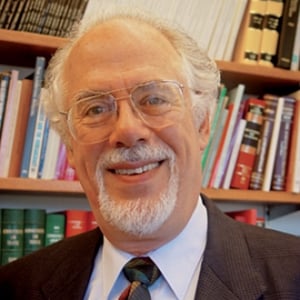
Betts Professor Emeritus of Law, Columbia Law School
Peter L. Strauss is the Betts Professor of Law at Columbia Law School. He teaches courses in administrative law, legal methods, and legislation. He joined the faculty in 1971, and has twice served as vice dean.
He received his LL.B. from Yale Law School in 1964 and his A.B. from Harvard College in 1961. Before joining the Law School, he clerked for David L. Bazelon and William J. Brennan in Washington, D.C.; spent two years lecturing on criminal law in the national university of Ethiopia; and three years as an attorney in the Office of the Solicitor General, briefing and arguing cases before the U.S. Supreme Court. During 1975 to 1977, Strauss was on leave from Columbia as the first general counsel of the United States Nuclear Regulatory Commission.
In 1987, the American Bar Association's section of administrative law and regulatory practice presented Strauss with its third annual award for distinguished scholarship in administrative law. From 1992 to 1993, he served as chair of the section. He has been a reporter for rulemaking on its APA and European Union administrative law projects, and was a member of its E-Rulemaking task force. In 2008, the American Constitution Society awarded him the first Richard Cudahy prize for his essay “Overseer or 'The Decider'? The President in Administrative Law.”
Strauss has been a visitor at the European University Institute, Harvard University, the Max Planck Institute for Comparative Public and International Law, and New York University, and has lectured widely on American administrative law abroad, including programs in Argentina, Australia, Belarus, Brazil, China, Colombia, England, France, Germany, Hong Kong, India, Italy, Japan, the Netherlands, New Zealand, Turkey, and Venezuela. During 2008 to 2009, he was Fernand Braudel Senior Fellow at the European Law Institute and Parsons Fellow at the University of Sydney Law School.
A life member of the American Law Institute, Strauss was elected in 2010 to the American Academy of Arts & Sciences. He has also long been a faculty member on the board of the Law School's Public Interest Law Foundation.
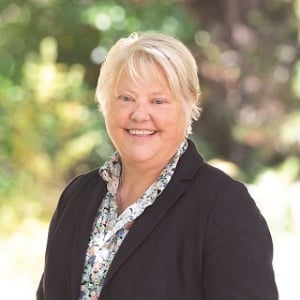
Chief Executive Officer, Association of American Law Schools
Kellye Y. Testy is the executive director and chief executive officer of the Association of American Law Schools which serves as the institutional membership organization for its 175 member law schools and as the learned society for the legal academy.
Prior to joining AALS, Testy served as the president and chief executive officer of the Law School Admission Council, where she led the organization in its committed efforts to advance law and justice by encouraging diverse, talented individuals to study law and by supporting their enrollment and learning journeys from prelaw through practice.
Testy served as dean and professor of law at University of Washington School of Law from 2009 to 2017 and at Seattle University School of Law from 2005 to 2009. She began her career as a law professor at the University of Puget Sound in 1992, which then became Seattle University. As a professor, Testy was an award-winning teacher and an insightful scholar who brought an equity lens to her focus on business and corporate law. Her areas of expertise include leadership, business and corporate law, gender and the law, and legal education. Testy earned her undergraduate degree in journalism from Indiana University in Bloomington, and her law degree from Indiana University Maurer School of Law—Bloomington.
In addition to her role at AALS, she serves on the boards of the Washington Law Institute and LSSSE and teaches law and leadership at a number of law schools across the country.
Professor of Law, University of Michigan Law School
Christopher J. Walker is a Professor of Law at the University of Michigan. Prior to joining Michigan law faculty in 2022, he spent a decade teaching at The Ohio State University Moritz College of Law. He previously clerked for Justice Anthony Kennedy of the U.S. Supreme Court, worked on the Civil Appellate Staff at the U.S. Department of Justice, and served on the Senate Judiciary Committee staff for the Gorsuch Supreme Court confirmation. Professor Walker’s research focuses on administrative law, regulation, and law and policy at the agency level. Outside the law school, he chaired the American Bar Association’s Section of Administrative Law and Regulatory Practice in 2020-21 and served as one of forty Public Members of the Administrative Conference of the United States from 2016-2022, and he continues to serve in both organizations in various capacities. He also works of counsel at the U.S. Chamber Litigation Center. In 2022, he received the Federalist Society’s Joseph Story Award.

Supreme Court Preview
What About the Electoral College?
What Is the Federalist Society?
The Lawmaking Power of Federal Agencies
Christopher J. Walker
What are the limits of the powers of federal agencies? Prof. Chris Walker of the...
Voter ID: A Debate - Podcast
Maya Noronha, Daniel P. Tokaji
Recent North Carolina, North Dakota, Texas, and Wisconsin court decisions have invalidated voter ID laws...
Voter ID: A Debate
TeleforumChevron Deference in the Circuit Courts: An Empirical Study
Recent opinions from the Supreme Court and policy debates within the halls of Washington have...
The Legacy of Justice Scalia’s Jurisprudence
Prosecutorial Discretion in Deportation Proceedings: U.S. v. Texas
Panel: The New Chevron Skeptics
Michael E. Herz, John O. McGinnis, Blake D. Morant, Lee Liberman Otis, Jeffrey Pojanowski, Peter L. Strauss, Kellye Y. Testy, Christopher J. Walker
When Chevron was first decided it was generally welcomed on the right side of the...