
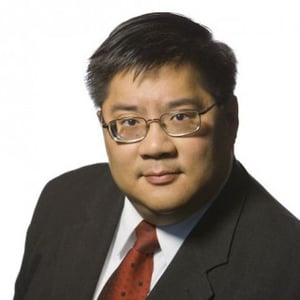
Senior Fellow, Potomac Institute for Policy Studies
Dean Cheng currently a Senior Fellow at the Potomac Institute for Policy Studies, specializing in the US relationship with China. Prior to being with the Potomac institute, he recently retired as the Senior Research Fellow for Chinese Political and Military Affairs at the Heritage Foundation. He is fluent in Chinese, and uses Chinese language materials regularly in his work. Previously, he worked with the China Studies Division (previously, Project Asia) at the Center for Naval Analysis, a Federally Funded Research and Development Center, where he specialized in Chinese military issues, with a focus on Chinese military doctrine and Chinese space capabilities. Before that, he worked for Science Applications International Corporation (SAIC), and as an analyst with the US Congress’ Office of Technology Assessment in the International Security and Space Division.
His published work includes the volume Cyber Dragon: Inside China’s Information Warfare and Cyber Operations (Praeger Publishing, 2016). He has testified before Congress, and spoken at the National Space Symposium, the US National Defense University, the USSTRATCOM Deterrence Symposium, Harvard, and MIT. He has appeared frequently in print and broadcast media to discuss Chinese space and military activities.
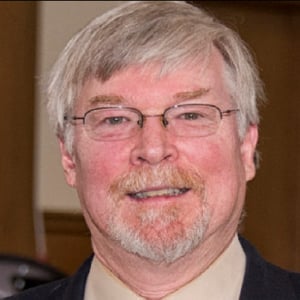
General Counsel, TechFreedom
James Dunstan serves as the General Counsel to TechFreedom. Jim has served as a Senior Adjunct Fellow to TechFreedom since its inception. Jim has more than 37 years of private practice experience in a technology-focused practice, including telecommunications, media, computer game, and outer space law. Jim spent 17 years at the telecom boutique firm Haley Bader & Potts (10 years in management), and headed the Telecommunications and Information Technology Group at Garvey, Schubert & Barer from 2000-2006. Jim founded his own firm, Mobius Legal Group, in 2010; he continues that private practice (on matters not in conflict with TechFreedom’s work) while serving as TechFreedom’s General Counsel.
Jim’s career includes being on the legal team that won the first cellular radio license for MCI in 1984, writing the constitutional challenge to the FCC’s Fairness Doctrine that took down the Doctrine in Syracuse Peace Council v. FCC, 867 F.2d 654 (1989), and helping shape the FCC’s children’s television rules on behalf of a client which produces the majority of educational programming for the major television networks. He litigated the first “virtual property” case and drafted and negotiated the first lease for a manned space station (Mir) as well as writing the first contract that was actually executed in outer space.
At TechFreedom, Jim’s substantive portfolio includes FCC regulation, the Children’s Online Protection and Privacy Act (COPPA), and all things outer space. As General Counsel, he oversees the entire legal team, and participates in TechFreedom’s robust appellate litigation team.
Jim was the 1978 Harry S. Truman Scholar from Arizona, is a graduate of Claremont McKenna College (1980), and the Georgetown University Law Center (1983). He is admitted to practice law in the District of Columbia and the Commonwealth of Virginia. Jim holds multiple patents for innovative computer input devices and has a number of patents pending in the field of computer game devices and methods. Jim is an avid musician, playing French horn in the Fairfax Wind Symphony, and with the Silver 5 Brass Quintet.
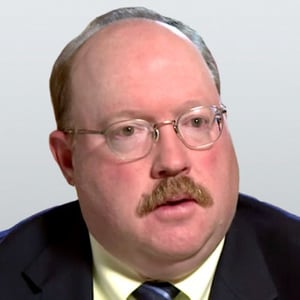
Senior Fellow, Asian Military Affairs, International Assessment and Strategy Center
Mr. Richard D. Fisher, Jr. is a Senior Fellow with the International Assessment and Strategy Center. He has previously worked with the Center for Security Policy, Jamestown Foundation China Brief, U.S. House of Representatives Republican Policy Committee, and The Heritage Foundation. Mr. Fisher has previously testified on aspects of China’s strategic challenge before the United States Senate, the House of Representatives and the U.S.-China Economic and Security Review Commission. He is the author of China’s Military Modernization, Building for Regional and Global Reach (Praeger, 2008, Stanford University Press, 2010, Taiwan Ministry of National Defense translation, 2012). His articles have been published in the Jane’s Intelligence Review, Jane’s Defence Weekly, Aviation Week and Space Technology, Armed Forces Journal, Far Eastern Economic Review, Asian Wall Street Journal, The Washington Times, The Sankei Shimbun, World Airpower Review and Air Forces Monthly. He received a B.A. (Honors) in 1981 from Eisenhower College.
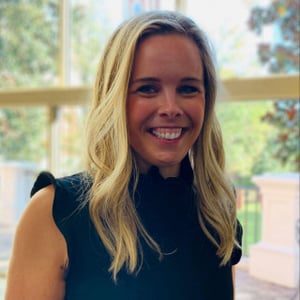
Senior Litigation Counsel, New Civil Liberties Alliance
Margaret Harker litigates for a public interest law firm. She has significant experience in government investigations and litigation, having served in the three branches of our government. Previously, she led complex Congressional investigations for the House Committee on Oversight and Government Reform—including the only government-wide investigation into federal agencies’ strategy (or lack thereof) to counter Chinese Communist Party political warfare against America.
Prior to her time on Capitol Hill, Harker served in the U.S. Department of Justice. She was an Assistant United States Attorney in both the Eastern District of Tennessee and the Eastern District of Virginia. She was a Trial Attorney in the National Security Division, Counterintelligence and Export Control Section, with an emphasis on the administration and enforcement of the Foreign Agents Registration Act.
Harker clerked for the Honorable Henry E. Hudson, U.S. District Court for the Eastern District of Virginia and the Honorable Randolph A. Beales, Court of Appeals of Virginia.
Earlier in her career, she studied in Beijing, China, and worked at the U.S. Chamber of Commerce’s China Center.
Senior Fellow, Potomac Institute for Policy Studies
Dean Cheng currently a Senior Fellow at the Potomac Institute for Policy Studies, specializing in the US relationship with China. Prior to being with the Potomac institute, he recently retired as the Senior Research Fellow for Chinese Political and Military Affairs at the Heritage Foundation. He is fluent in Chinese, and uses Chinese language materials regularly in his work. Previously, he worked with the China Studies Division (previously, Project Asia) at the Center for Naval Analysis, a Federally Funded Research and Development Center, where he specialized in Chinese military issues, with a focus on Chinese military doctrine and Chinese space capabilities. Before that, he worked for Science Applications International Corporation (SAIC), and as an analyst with the US Congress’ Office of Technology Assessment in the International Security and Space Division.
His published work includes the volume Cyber Dragon: Inside China’s Information Warfare and Cyber Operations (Praeger Publishing, 2016). He has testified before Congress, and spoken at the National Space Symposium, the US National Defense University, the USSTRATCOM Deterrence Symposium, Harvard, and MIT. He has appeared frequently in print and broadcast media to discuss Chinese space and military activities.
General Counsel, TechFreedom
James Dunstan serves as the General Counsel to TechFreedom. Jim has served as a Senior Adjunct Fellow to TechFreedom since its inception. Jim has more than 37 years of private practice experience in a technology-focused practice, including telecommunications, media, computer game, and outer space law. Jim spent 17 years at the telecom boutique firm Haley Bader & Potts (10 years in management), and headed the Telecommunications and Information Technology Group at Garvey, Schubert & Barer from 2000-2006. Jim founded his own firm, Mobius Legal Group, in 2010; he continues that private practice (on matters not in conflict with TechFreedom’s work) while serving as TechFreedom’s General Counsel.
Jim’s career includes being on the legal team that won the first cellular radio license for MCI in 1984, writing the constitutional challenge to the FCC’s Fairness Doctrine that took down the Doctrine in Syracuse Peace Council v. FCC, 867 F.2d 654 (1989), and helping shape the FCC’s children’s television rules on behalf of a client which produces the majority of educational programming for the major television networks. He litigated the first “virtual property” case and drafted and negotiated the first lease for a manned space station (Mir) as well as writing the first contract that was actually executed in outer space.
At TechFreedom, Jim’s substantive portfolio includes FCC regulation, the Children’s Online Protection and Privacy Act (COPPA), and all things outer space. As General Counsel, he oversees the entire legal team, and participates in TechFreedom’s robust appellate litigation team.
Jim was the 1978 Harry S. Truman Scholar from Arizona, is a graduate of Claremont McKenna College (1980), and the Georgetown University Law Center (1983). He is admitted to practice law in the District of Columbia and the Commonwealth of Virginia. Jim holds multiple patents for innovative computer input devices and has a number of patents pending in the field of computer game devices and methods. Jim is an avid musician, playing French horn in the Fairfax Wind Symphony, and with the Silver 5 Brass Quintet.
Senior Fellow, Asian Military Affairs, International Assessment and Strategy Center
Mr. Richard D. Fisher, Jr. is a Senior Fellow with the International Assessment and Strategy Center. He has previously worked with the Center for Security Policy, Jamestown Foundation China Brief, U.S. House of Representatives Republican Policy Committee, and The Heritage Foundation. Mr. Fisher has previously testified on aspects of China’s strategic challenge before the United States Senate, the House of Representatives and the U.S.-China Economic and Security Review Commission. He is the author of China’s Military Modernization, Building for Regional and Global Reach (Praeger, 2008, Stanford University Press, 2010, Taiwan Ministry of National Defense translation, 2012). His articles have been published in the Jane’s Intelligence Review, Jane’s Defence Weekly, Aviation Week and Space Technology, Armed Forces Journal, Far Eastern Economic Review, Asian Wall Street Journal, The Washington Times, The Sankei Shimbun, World Airpower Review and Air Forces Monthly. He received a B.A. (Honors) in 1981 from Eisenhower College.
Senior Litigation Counsel, New Civil Liberties Alliance
Margaret Harker litigates for a public interest law firm. She has significant experience in government investigations and litigation, having served in the three branches of our government. Previously, she led complex Congressional investigations for the House Committee on Oversight and Government Reform—including the only government-wide investigation into federal agencies’ strategy (or lack thereof) to counter Chinese Communist Party political warfare against America.
Prior to her time on Capitol Hill, Harker served in the U.S. Department of Justice. She was an Assistant United States Attorney in both the Eastern District of Tennessee and the Eastern District of Virginia. She was a Trial Attorney in the National Security Division, Counterintelligence and Export Control Section, with an emphasis on the administration and enforcement of the Foreign Agents Registration Act.
Harker clerked for the Honorable Henry E. Hudson, U.S. District Court for the Eastern District of Virginia and the Honorable Randolph A. Beales, Court of Appeals of Virginia.
Earlier in her career, she studied in Beijing, China, and worked at the U.S. Chamber of Commerce’s China Center.
Founder, Justice Legal Strategies PLLC
Jon Greenbaum, the founder of Justice Legal Strategies, is one of the top civil rights and voting rights lawyers in the country, having worked for over 25 years in key positions at the Lawyers’ Committee for Civil Rights Under Law and in the Civil Rights Division at the Department of Justice. Jon has litigated some of the most important and complex civil rights cases in this century. Jon also has two decades of experience as a manager of large legal teams and has collaborated closely with a variety of external partners. Jon brings his skills as a litigator, legal thinker, developer and implementer of programs, and manager of people and processes to help progressive legal organizations achieve greater impact through innovative and carefully considered strategies and the ability to create legal teams that thrive.
For nearly fifteen years as Chief Counsel at the Lawyers’ Committee, Jon managed a multi-unit legal department with as many as forty people, served on the Executive Management Team, and co-led teams with law firm partners and nonprofit leaders. Jon worked with staff lawyers and pro bono counsel, public policy teams, communications professionals, organizers, social scientists, clients, external partners, and others to craft multifaceted responses to civil rights issues.
Jon brings his skills as a litigator, legal thinker, developer and implementer of programs, and manager of people and processes to help progressive legal organizations achieve greater impact through innovative and carefully considered strategies and the ability to create legal teams that thrive.
Newsweek Senior Editor-at-Large, Syndicated Columnist, Host of "The Josh Hammer Show," Article III Project Senior Counsel, Newsweek, Salem Media, Article III Project, David Horowitz Freedom Center
Josh Hammer is the senior editor-at-large of Newsweek and host of "The Josh Hammer Show," a podcast, a syndicated radio show, and TV program on Salem News Channel. A syndicated columnist through Creators Syndicate, Josh is a frequent pundit and essayist on political, legal, and cultural issues. He is also senior counsel for the Article III Project and Internet Accountability Project, as well as a Shillman Fellow with the David Horowitz Freedom Center and a fellow with the Palm Beach Freedom Institute.
An outspoken conservative, Josh opines on conservative intellectual trends, contemporary domestic and foreign policy debates, constitutional and legal issues, and the intersection of law, politics and culture. He has been published by many leading outlets, including the Los Angeles Times, the New York Post, Daily Mail, Newsweek, the Claremont Review of Books, National Affairs, American Affairs, The New Criterion, The National Interest, National Review, RealClearPolitics, First Things, City Journal, Public Discourse, Law & Liberty, Tablet Magazine, Deseret Magazine, Compact Magazine, Chronicles Magazine, The Spectator, The American Mind, The American Conservative, The European Conservative, American Greatness, American Compass, The Federalist, Blaze Media, TomKlingenstein.com, Townhall, The Daily Wire, The Daily Signal, The Daily Caller, The Epoch Times, Anchoring Truths, Fortune, Fox Business, The Jerusalem Post, The Times of Israel, The Forward, Jewish Telegraphic Agency and the Jewish Journal. He has also had legal scholarship published by the Harvard Journal of Law & Public Policy and the University of St. Thomas Law Journal.
Josh is a college campus speaker through Young America's Foundation and the Intercollegiate Studies Institute, and a law school campus speaker through the Federalist Society. Prior to Newsweek and The Daily Wire, where he was an editor, Josh worked at Kirkland & Ellis LLP and clerked for the Hon. James C. Ho on the U.S. Court of Appeals for the Fifth Circuit. Josh has also served as a John Marshall Fellow with the Claremont Institute and as a Fellow with the James Wilson Institute. He is the former host of "America on Trial with Josh Hammer," a one-season daily podcast with The First that covered the unique legal issues surrounding the 2024 presidential election.
Josh graduated from Duke University, where he majored in economics, and from the University of Chicago Law School. He lives in Florida, but remains an active member of the State Bar of Texas.
Judge, United States District Court, Northern District of Alabama

Beauchamp Brogan Distinguished Professor of Law, University of Tennessee College of Law
Professor Reynolds is one of the most prolific scholars on the UT faculty. His special interests are law and technology and constitutional law issues and his work has appeared in a wide variety of publications, including the Columbia Law Review, the Virginia Law Review, the University of Pennsylvania Law Review, the Wisconsin Law Review, the William and Mary Law Review, the Southern California Law Review, the Harvard Journal of Law and Technology, The Columbia Human Rights Law Review, Law and Policy in International Business, Jurimetrics, the Journal of Space Law, and the High Technology Law Journal. Professor Reynolds has also written in the New York Times, the Washington Post, The Atlantic, the Washington Times, the Los Angeles Times, Road & Track, Urb, and the Wall Street Journal, as well as other popular publications. He was for many years a contributing editor at Popular Mechanics magazine, and today writes a regular column for USA Today. He is the co-author of Outer Space: Problems of Law and Policy, and The Appearance of Impropriety: How the Ethics Wars Have Undermined American Government, Business, and Society. His most recent books are The Social Media Upheaval, The Judiciary’s Class War, and The New School: How the Information Age Will Save American Education from Itself.
Professor Reynolds has testified before Congressional committees on space law, international trade, and domestic terrorism. He has been executive chairman of the National Space Society and a member of the White House Advisory Panel on Space Policy. A member of the UT faculty since 1989, Professor Reynolds has received the Harold C. Warner Outstanding Faculty Scholarship Award in W. Allen Separk Outstanding Faculty Scholarship Award, and the Carden Award for Outstanding Scholarship.
A songwriter and producer for such bands as Mobius Dick, The Nebraska Guitar Militia, and The Defenders Of The Faith, Professor Reynolds is a member of the American Society of Composers and Performers and a former member of the National Academy of Recording Arts and Sciences.
Professor Reynolds blogs at InstaPundit.com.

Professor of Law and Executive Director, Law and Economics Center, Antonin Scalia Law School, George Mason University
Donald Kochan is Professor of Law and Executive Director of the Law & Economics Center (LEC). Professor Kochan is an elected member of the American Law Institute (ALI) and serves as an Adviser to ALI's Restatement of the Law Fourth, Property project. Professor Kochan is a Nonresident Scholar at the Center for the Constitution at Georgetown University Law Center, where he was a Visiting Scholar in residence during Fall 2018. Before joining the Antonin Scalia Law School faculty, he was the Parker S. Kennedy Professor in Law at Chapman University’s Dale E. Fowler School of Law from 2004 to 2020. From 2003 to 2004, Professor Kochan was an Olin Fellow at the University of Virginia School of Law. During 2002-2003, he was a Visiting Assistant Professor of Law at George Mason’s Scalia Law School.
Professor Kochan’s scholarship focuses on areas of property law, constitutional law, administrative law, local government law, natural resources and environmental law, and law & economics. He has published several books and more than 50 scholarly articles and essays in well-regarded law journals. His work has been cited in more than a dozen state and federal court opinions, in more than 75 briefs filed in state and federal courts including more than 25 filed in the U.S. Supreme Court, in dozens of books and treatises, and in more than 800 scholarly articles.
Professor Kochan received his JD from Cornell Law School, where he was a John M. Olin Scholar in Law and Economics and managing editor of the Cornell International Law Journal. During law school, he also served as editor and executive editor of the Harvard Journal of Law & Public Policy symposium issues in 1997 and 1998. He received his BA from Western Michigan University, magna cum laude, with majors in both political science and philosophy, where he studied as the John W. Gill Medallion Scholar and was honored as the Presidential Scholar (awarded to the top graduate in the political science department).
After graduating from law school, Professor Kochan was a law clerk to The Honorable Richard F. Suhrheinrich of the United States Court of Appeals for the Sixth Circuit. Following his clerkship, Professor Kochan was an associate with the firm of Crowell & Moring LLP in Washington, D.C., where he specialized in natural resources & environmental law as well as tort, products, and consumer civil litigation & legislative affairs.

Executive Vice President, The Federalist Society
Dean Reuter is Executive Vice President at the Federalist Society for Law and Public Policy Studies. He has served in two federal government agency Offices of the Inspector General, as Counsel to the Inspector General and Deputy Inspector General, responsible for policing the use of federal funds granted and contracted through those agencies. As such, he helped conduct and oversee criminal investigations across the country. He is the principal author of the non-fiction book, The Hidden Nazi: The Untold Story of America's Deal with the Devil, and editor of Liberty’s Nemesis: The Unchecked Expansion of the State and Confronting Terror: 9/11 and the Future of American National Security. He was appointed by the President and served as Vice-Chairman of the Board of Directors of the Corporation for National and Community Service, and recently served as an appointee on the U.S. Commission on Presidential Scholars. He is a graduate of Hood College (BA with Honors) and the University of Maryland School of Law.
Partner, Schaerr Jaffe LLP
Gene Schaerr specializes in handling—and usually winning—civil appeals, writ proceedings and similar matters, both in appellate courts and in the law-focused proceedings at the trial-court or agency level that often determine success or failure on appeal. He has argued and won dozens of cases in a variety of forums—including the U.S. Supreme Court (where he has argued six cases), every federal circuit, and numerous federal district courts and state appellate courts. His win rate in the dozens of federal appeals he has argued in the past six years is over 75 percent.
He was a coordinator of Sidley Austin's appellate practice from 1993 until 2005, and from 2005 until 2014 was the chair of the nationwide appellate practice at Winston & Strawn—a practice he led to numerous recognitions in such publications as the Appellate Hot List. His personal practice successes have won him repeated recognition in such publications as Best Lawyers in Washington, D.C., Legal 500, D.C. Superlawyers, and Best Lawyers in America. In January 2014, Mr. Schaerr formed his own boutique litigation firm so that he could serve his clients without the conflicts and inefficiencies inherent in big-firm law practice.
Substantively, Mr. Schaerr's experience includes not only virtually every area of federal law, defamation, higher education law, immigration, insurance coverage, labor and employment, patent and trademark, privacy, product liability and warranty, statutory interpretation and tax.He has represented clients in virtually every sector, including automotive, communications, energy, financial services, health care, higher education, insurance, maritime, pharmaceuticals, technology and state and local government. He also teaches courses in Supreme Court litigation, religious freedom litigation and advanced litigation skills as an adjunct professor of law at the Brigham Young University law school.
Mr. Schaerr began law practice in 1987 following clerkships on the U.S. Supreme Court (for Chief Justice Warren Burger and Justice Antonin Scalia) and on the U.S. Court of Appeals for the D.C. Circuit (for then- Judge Kenneth Starr). He graduated in 1985 from the Yale Law School, where he was Editor-in-Chief of the Yale Journal on Regulation and Senior Editor of the Yale Law Journal. From 1991 to 1993, he served in the White House as Associate Counsel to the President, where he had responsibility for a wide range of constitutional and administrative-law issues, including those involving economic regulation, higher education, separation of powers, federalism and religious freedom. He serves as Chairman of the Constitutional Sources Project, a digital resource providing free public access to historical materials relevant to the U.S. Constitution.
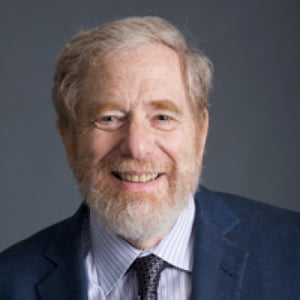
Carmack Waterhouse Professor of Constitutional Law, Georgetown Law
After graduating from Harvard Law School in 1971, Professor Seidman served as a law clerk for J. Skelly Wright of the D.C. Circuit and U.S. Supreme Court Justice Thurgood Marshall. He then was a staff attorney with the D.C. Public Defender Service until joining the Law Center faculty in 1976. He teaches a variety of courses in the fields of constitutional and criminal law. He is co-author of a constitutional law casebook and the author of many articles concerning criminal justice and constitutional law. His most recent books are Silence and Freedom (Stanford 2007), Our Unsettled Constitution: A New Defense of Constitutionalism and Judicial Review (Yale 2001) and Equal Protection of the Laws (Foundation 2002).
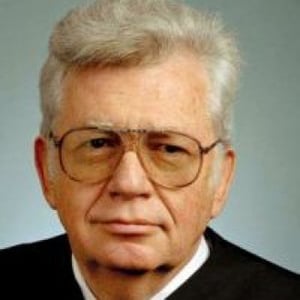
Judge, U.S. Court of Appeals, District of Columbia Circuit
Judge Sentelle was appointed United States Circuit Judge in October 1987, served as Chief Judge from February 11, 2008 until February 11, 2013, and took senior status on February 12, 2013. He is a 1968 graduate of the University of North Carolina Law School. Following law school, he practiced with the firm of Uzzell & DuMont until he became an Assistant U.S. Attorney in Charlotte, N.C. in 1970. From 1974 to 1977, he served as a North Carolina State District Judge but left the bench in 1977 to become a partner with the firm of Tucker, Hicks, Sentelle, Moon & Hodge. In 1985, Judge Sentelle joined the U.S. District Court, Western District of North Carolina, in Asheville, where he served until his appointment to the D.C. Circuit. Judge Sentelle was the Presiding Judge of the Special Division for the Purpose of Appointing Independent Counsels (1992-2006). He also served as the Chair of the U.S. Judicial Conference's Executive Committee (2010-2013). Judge Sentelle served for over 20 years as President of the Edward Bennett Williams Inn of the American Inns of Court.
Executive Vice President, The Federalist Society
Dean Reuter is Executive Vice President at the Federalist Society for Law and Public Policy Studies. He has served in two federal government agency Offices of the Inspector General, as Counsel to the Inspector General and Deputy Inspector General, responsible for policing the use of federal funds granted and contracted through those agencies. As such, he helped conduct and oversee criminal investigations across the country. He is the principal author of the non-fiction book, The Hidden Nazi: The Untold Story of America's Deal with the Devil, and editor of Liberty’s Nemesis: The Unchecked Expansion of the State and Confronting Terror: 9/11 and the Future of American National Security. He was appointed by the President and served as Vice-Chairman of the Board of Directors of the Corporation for National and Community Service, and recently served as an appointee on the U.S. Commission on Presidential Scholars. He is a graduate of Hood College (BA with Honors) and the University of Maryland School of Law.
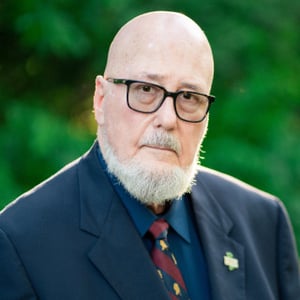
Senior Fellow, National Security Institute, Antonin Scalia School of Law, George Mason University; Retired Professor, Distinguished Fellow and Co-Founder, Center for National Security Law, University of Virginia School of Law (1987-2020)
Robert F. Turner holds both professional and academic doctorates from the University of Virginia School of Law. He co-founded the Center for National Security Law with Professor John Norton Moore in April 1981 and served as its associate director for 39 years, except for two periods of government service in the 1980s and during 1994-95, when he occupied the Charles H. Stockton Chair of International Law at the U.S. Naval War College in Newport, Rhode Island. He retired from UVA in January 2020 and currently serves as a non-resident senior fellow at the GMU National Security Institute. He also served briefly in 2020 as President of the Crime Prevention Research Center—one of the most respected pro-Second Amendment groups in the country—while its founder, Dr. John Lott, was on leave of absence.
A former Army captain and veteran of two tours in Vietnam, Turner served as a research associate and public affairs fellow at Stanford's Hoover Institution on War, Revolution and Peace before spending five years in the mid-1970s as national security adviser to U.S. Senator Robert P. Griffin, a member of the Senate Foreign Relations Committee (where Turner anticipated by seven years the Supreme Court’s landmark INS v. Chadha decision, striking down legislative vetoes). He also served in the executive branch during the Reagan administration as a member of the Senior Executive Service, first in the Pentagon as special assistant to the undersecretary of defense for policy, then in the White House as counsel to the President's Intelligence Oversight Board, and at the State Department as principal deputy and then acting assistant secretary for legislative affairs. In 1986, he became the first president of the congressionally established United States Institute of Peace.
A former three-term chairman of the ABA Standing Committee on Law and National Security (and for many years editor of the ABA National Security Law Report), Turner also chaired the Executive-Congressional Relations Subcommittee of the ABA Section on International Law and Practice and chaired or co-chaired the National Security Law Subcommittee of the Federalist Society’s International and National Security Law Practice Group for several years.
Turner taught undergraduate courses at Virginia on international law, U.S. foreign policy, the Vietnam War and foreign policy and the law in what is now the Woodrow Wilson Department of Politics. In addition, he co-taught National Security Law and advanced national security law seminars on the Indochina War and on war and peace with Moore at the Law School.
The author or editor of 18 books and monographs (including co-editor of the Center's 1,600-page National Security Law & Policy casebook, National Security Law Documents, and Legal Issues in the Struggle Against Terror) and numerous articles in law reviews and other professional journals, Turner has also contributed articles to most of the major U.S. newspapers, including The New York Times and USA Today. In an op-ed published in The International Herald Tribune in September 1990, he and Moore were the first to call for a war-crimes trial for Iraqi dictator Saddam Hussein and for international controls over Iraq's weapons of mass destruction, and the following month he wrote the lead story in The Washington Post Sunday Outlook Section, “Killing Saddam: Would It Be a Crime?,” arguing that Hussein would be a lawful target during Operation Desert Storm. (His reasoning contributed to the modern legal justification for drone strikes targeting specific terrorist leaders.) Three years before the terrorist attacks of September 11, 2001, Turner published an op-ed in USA Today entitled: “In Self-defense, U.S. Has Right to Kill bin Laden.”
In July 2007, he co-authored an article in The Washington Post with former U.S. Marine Corps Commandant General P.X. Kelley, “War Crimes and the White House,” criticizing the use of unlawful “enhanced interrogation techniques” by the Central Intelligence Agency. On the 40th anniversary of the fall of Saigon he authored an article in The Wall Street Journal, “Saigon’s Fall Still Echoes Today,” noting that after the war ended, Hanoi admitted it had made a decision in 1959 to open the Ho Chi Minh Trail and start sending troops, weapons and supplies into South Vietnam to overthrow its government — just as the United States had charged. In 2010 Turner received the first “person of the year” award from SACEI, a major Vietnamese-American human rights organization.
A frequent lecturer and debater, Turner has spoken at more than 100 law schools around the nation and in other fora — taking on as many as four opponents at a time. His debate opponents have included former or future deans of Yale, Stanford, the University of Chicago and Berkeley law schools. Following a 1987 debate against Dean Harlan Cleveland (Rhodes Scholar, U.S. Ambassador to NATO, and Presidential Medal of Freedom recipient) in which Turner defended the legality of U.S. support for the Nicaraguan contras during the Reagan Administration, the host student debating societies awarded Turner the victory by an 85-to-15 percent margin.
Turner has also written and lectured widely on University of Virginia founder and America’s third president Thomas Jefferson. In 2000-2001 he chaired the Jefferson-Hemings Scholars Commission. In his 2012 book Master of the Mountain, Jefferson critic Henry Wiencek described Turner as “Jefferson’s chief scholarly defender."
A former distinguished lecturer at the U.S. Military Academy at West Point, Turner is a member of the Council on Foreign Relations, the Academy of Political Science, the Committee on the Present Danger, The Heterodox Academy, and other professional organizations. He maintained a 4.0 gpa as a graduate student at Stanford in History and Political Science and in the UVA Department of Government and Foreign Affairs and was the first person admitted directly to the UVA academic law doctorate (SJD) program without first being required to earn an LL.M. master’s degree. He was selected for inclusion in Who’s Who in American Law less than two years after graduating from law school and Who’s Who in the World before he reached the age of 40. Turner has testified before more than a dozen different congressional committees on issues of international or constitutional law and other topics.
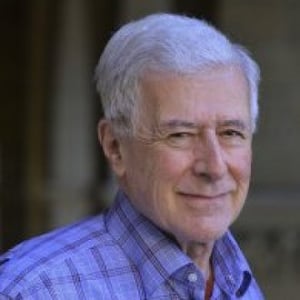
Visiting Scholar, Center for International Security and Cooperation, Stanford University
Leonard Weiss is a visiting scholar at Stanford University’s Center for International Security and Cooperation (CISAC). He is also a national advisory board member of the Center for Arms control and Non-Proliferation in Washington, DC. He began his professional career as a PhD researcher in mathematical system theory at the Research Institute for Advanced Studies in Baltimore. This was followed by tenured professorships in applied mathematics and electrical engineering at Brown University and the University of Maryland. During this period he published widely in the applied mathematics literature. In 1976 he received a Congressional Science Fellowship that resulted in a career change. For more than two decades he worked for Senator John Glenn as the staff director of both the Senate Subcommittee on Energy and Nuclear Proliferation and the Committee on Governmental Affairs. He was the chief architect of the Nuclear Nonproliferation Act of 1978 and legislation that created the Defense Nuclear Facilities Safety Board. In addition, he led notable investigations of the nuclear programs of India and Pakistan. Since retiring from the Senate staff in 1999, he has published numerous articles on nonproliferation issues for the Bulletin of Atomic Scientists, Arms Control Today, and the Nonproliferation Review. His current research interests include an assessment of the impact on the nonproliferation regime of nuclear trade with non-signers of the Nuclear Nonproliferation Treaty, and more generally the relationship of energy security concerns with nonproliferation.
President, Institute for Foreign Policy Analysis, Inc.
Dr. Pfaltzgraff is president of the Institute for Foreign Policy Analysis, Inc., which he cofounded in 1976. He is also Shelby Cullom Davis Professor of International Security Studies at the Fletcher School, Tufts University. He is an authority on issues of U.S. national security policy, including homeland security; proliferation and counterproliferation; alliance relationships with a focus on Europe and the Asia-Pacific area; regional security issues; crisis management; force planning; military transformation; the interrelationships of political, economic, and security policies; technology transfer; missile defense; international relations theory; U.S. foreign policy; and the implications of emerging trends in both regional and global security environments. He has held visiting appointments as George C. Marshall Professor at the College of Europe, Bruges, Belgium; as professor at the National Defense College, Tokyo, Japan; and as honorary professor at the University of St. Andrews in Scotland. He has advised key U.S. officials on such topics as military strategy, modernization, and arms control policy, and has contributed as a management consultant to industry clients in the United States and abroad. He serves on the International Security Advisory Board (ISAB), U.S. Department of State. He serves as co-chairman of the Independent Working Group on Missile Defense, which produced the 2009 report, Missile Defense, the Space Relationship, and the 21st Century.
Dr. Pfaltzgraff has lectured widely at government, industry, and academic forums in the United States and overseas, including at the National Defense University, the NATO Defense College, the Army War College, the Naval War College, the Armed Forces Staff College, the Air Command Staff College, and the United States Military Academy at West Point.
He holds an M.A. in international relations, a Ph.D. in political science from the University of Pennsylvania, and an M.B.A. in international business from the Wharton School at the University of Pennsylvania.
Senior Fellow, Potomac Institute for Policy Studies
Dean Cheng currently a Senior Fellow at the Potomac Institute for Policy Studies, specializing in the US relationship with China. Prior to being with the Potomac institute, he recently retired as the Senior Research Fellow for Chinese Political and Military Affairs at the Heritage Foundation. He is fluent in Chinese, and uses Chinese language materials regularly in his work. Previously, he worked with the China Studies Division (previously, Project Asia) at the Center for Naval Analysis, a Federally Funded Research and Development Center, where he specialized in Chinese military issues, with a focus on Chinese military doctrine and Chinese space capabilities. Before that, he worked for Science Applications International Corporation (SAIC), and as an analyst with the US Congress’ Office of Technology Assessment in the International Security and Space Division.
His published work includes the volume Cyber Dragon: Inside China’s Information Warfare and Cyber Operations (Praeger Publishing, 2016). He has testified before Congress, and spoken at the National Space Symposium, the US National Defense University, the USSTRATCOM Deterrence Symposium, Harvard, and MIT. He has appeared frequently in print and broadcast media to discuss Chinese space and military activities.
General Counsel, TechFreedom
James Dunstan serves as the General Counsel to TechFreedom. Jim has served as a Senior Adjunct Fellow to TechFreedom since its inception. Jim has more than 37 years of private practice experience in a technology-focused practice, including telecommunications, media, computer game, and outer space law. Jim spent 17 years at the telecom boutique firm Haley Bader & Potts (10 years in management), and headed the Telecommunications and Information Technology Group at Garvey, Schubert & Barer from 2000-2006. Jim founded his own firm, Mobius Legal Group, in 2010; he continues that private practice (on matters not in conflict with TechFreedom’s work) while serving as TechFreedom’s General Counsel.
Jim’s career includes being on the legal team that won the first cellular radio license for MCI in 1984, writing the constitutional challenge to the FCC’s Fairness Doctrine that took down the Doctrine in Syracuse Peace Council v. FCC, 867 F.2d 654 (1989), and helping shape the FCC’s children’s television rules on behalf of a client which produces the majority of educational programming for the major television networks. He litigated the first “virtual property” case and drafted and negotiated the first lease for a manned space station (Mir) as well as writing the first contract that was actually executed in outer space.
At TechFreedom, Jim’s substantive portfolio includes FCC regulation, the Children’s Online Protection and Privacy Act (COPPA), and all things outer space. As General Counsel, he oversees the entire legal team, and participates in TechFreedom’s robust appellate litigation team.
Jim was the 1978 Harry S. Truman Scholar from Arizona, is a graduate of Claremont McKenna College (1980), and the Georgetown University Law Center (1983). He is admitted to practice law in the District of Columbia and the Commonwealth of Virginia. Jim holds multiple patents for innovative computer input devices and has a number of patents pending in the field of computer game devices and methods. Jim is an avid musician, playing French horn in the Fairfax Wind Symphony, and with the Silver 5 Brass Quintet.
Senior Fellow, Asian Military Affairs, International Assessment and Strategy Center
Mr. Richard D. Fisher, Jr. is a Senior Fellow with the International Assessment and Strategy Center. He has previously worked with the Center for Security Policy, Jamestown Foundation China Brief, U.S. House of Representatives Republican Policy Committee, and The Heritage Foundation. Mr. Fisher has previously testified on aspects of China’s strategic challenge before the United States Senate, the House of Representatives and the U.S.-China Economic and Security Review Commission. He is the author of China’s Military Modernization, Building for Regional and Global Reach (Praeger, 2008, Stanford University Press, 2010, Taiwan Ministry of National Defense translation, 2012). His articles have been published in the Jane’s Intelligence Review, Jane’s Defence Weekly, Aviation Week and Space Technology, Armed Forces Journal, Far Eastern Economic Review, Asian Wall Street Journal, The Washington Times, The Sankei Shimbun, World Airpower Review and Air Forces Monthly. He received a B.A. (Honors) in 1981 from Eisenhower College.
Senior Litigation Counsel, New Civil Liberties Alliance
Margaret Harker litigates for a public interest law firm. She has significant experience in government investigations and litigation, having served in the three branches of our government. Previously, she led complex Congressional investigations for the House Committee on Oversight and Government Reform—including the only government-wide investigation into federal agencies’ strategy (or lack thereof) to counter Chinese Communist Party political warfare against America.
Prior to her time on Capitol Hill, Harker served in the U.S. Department of Justice. She was an Assistant United States Attorney in both the Eastern District of Tennessee and the Eastern District of Virginia. She was a Trial Attorney in the National Security Division, Counterintelligence and Export Control Section, with an emphasis on the administration and enforcement of the Foreign Agents Registration Act.
Harker clerked for the Honorable Henry E. Hudson, U.S. District Court for the Eastern District of Virginia and the Honorable Randolph A. Beales, Court of Appeals of Virginia.
Earlier in her career, she studied in Beijing, China, and worked at the U.S. Chamber of Commerce’s China Center.
Judge, U.S. Court of Appeals, District of Columbia Circuit
Judge Sentelle was appointed United States Circuit Judge in October 1987, served as Chief Judge from February 11, 2008 until February 11, 2013, and took senior status on February 12, 2013. He is a 1968 graduate of the University of North Carolina Law School. Following law school, he practiced with the firm of Uzzell & DuMont until he became an Assistant U.S. Attorney in Charlotte, N.C. in 1970. From 1974 to 1977, he served as a North Carolina State District Judge but left the bench in 1977 to become a partner with the firm of Tucker, Hicks, Sentelle, Moon & Hodge. In 1985, Judge Sentelle joined the U.S. District Court, Western District of North Carolina, in Asheville, where he served until his appointment to the D.C. Circuit. Judge Sentelle was the Presiding Judge of the Special Division for the Purpose of Appointing Independent Counsels (1992-2006). He also served as the Chair of the U.S. Judicial Conference's Executive Committee (2010-2013). Judge Sentelle served for over 20 years as President of the Edward Bennett Williams Inn of the American Inns of Court.

Race to a Moon Base—And Frontiers Beyond
Dean Cheng, James Dunstan, Richard D. Fisher, Margaret Harker
As Artemis II navigated around the far side of the moon, setting a new human...
Race to a Moon Base—And Frontiers Beyond
Dean Cheng, James Dunstan, Richard D. Fisher, Margaret Harker
As Artemis II navigated around the far side of the moon, setting a new human...
Race to a Moon Base—And Frontiers Beyond
Topics
Oral Arguments in Texas Supreme Court on Church Autonomy Doctrine
Recently, the Texas Supreme Court heard oral argument in Southern Methodist University v. South Central...
Daniel Webster Debate Series: Should the Court Overturn Bostock?
Jon Greenbaum, Josh Hammer, Corey Maze
The Federalist Society's Georgetown Law Chapter'sDaniel Webster Debate Series presents Daniel Webster Debate Series:Should the...
Topics
Article I: Interview with Prof. Schoenbrod on Congressional Degradation
As Professor Schoenbrod explains in this interview, Congress has an unhealthy fixation with three little words--"the Administrator...
Extraterrestrial Property Rights
Glenn Reynolds
Can you own a piece of property on a different planet? Professor Glenn Reynolds of...
The Role of the Courts in National Security
Houston, TexasHow Should the Courts Interpret Split Decisions?
Donald J. Kochan, Dean Reuter, Gene C. Schaerr, Louis Michael Seidman, David B. Sentelle
The Supreme Court occasionally renders plurality opinions, which may involve 4-1-4 decisions or any number...
Missile Defense and Space Security
Dean Reuter, Robert F. Turner, Leonard Weiss, Robert L. Pfaltzgraff
Space and U.S. national security are deeply entwined. The U.S. military is tremendously dependent upon...