
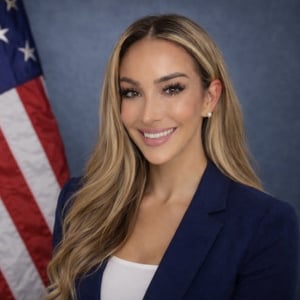
Senior Appellate Counsel, U.S. Navy
Stephanie Fisher recently completed six years as an active-duty Navy Judge Advocate and now serves in the Reserves. She will begin as a Trial Attorney in the Department of Justice’s National Security Division, Counterintelligence and Export Control Section, this summer (2026).
As a Judge Advocate, Stephanie served in numerous roles, including Senior Appellate Government Counsel, Legal Advisor to the Convening Authority for Military Commissions, Adjunct Professor of Law at the United States Naval Academy, and Trial Defense Counsel. She also completed temporary duty assignments with Naval Special Warfare Group 4, Submarine Squadron 6, and Commander, Navy Region Mid-Atlantic.
In her most recent role as Senior Appellate Government Counsel, she briefed and argued cases before the Navy-Marine Corps Court of Criminal Appeals and the Court of Appeals for the Armed Forces, where the courts affirmed more than 95% of the convictions she defended.
Before joining the JAG Corps, Stephanie clerked on the Arizona Supreme Court for the Honorable Justice William Montgomery. She earned her J.D. from Arizona State University’s Sandra Day O’Connor College of Law, where she served as a two-time Vice President of the Federalist Society student chapter. She earned her dual bachelor’s degree from the University of Michigan, where she was a four-year member of the varsity cheerleading team.
Stephanie currently serves on the DC Young Lawyer Chapter Board and the Armed Services Legal Network Executive Committee. In her free time, she enjoys skydiving, weightlifting, hiking, and traveling.
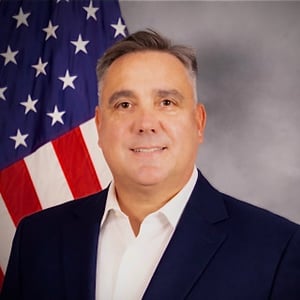
Deputy General Counsel, Office of the General Counsel, National Guard Bureau
Colonel Michael Mark Majors serves as Deputy General Counsel for the Office of the General Counsel, National Guard Bureau, with more than 27 years of military legal experience advising senior military leaders and government officials on military justice, administrative law, operational law, national security, and strategic policy. Throughout his career, he has served as a trusted legal advisor on complex issues spanning governance, risk management, compliance, homeland defense, and military operations.
As Deputy General Counsel, Colonel Majors advises senior National Guard leadership on legal and policy matters affecting more than 430,000 Soldiers and Airmen serving across the 54 states, territories, and the District of Columbia. In his primary role as Chief of the Strategic Engagement Division, he directs nationwide military legal professional development, accessions, and strategic engagement for more than 1,100 National Guard Judge Advocates and Legal Advisors. He develops and teaches National Guard legal education programs, authoring policy and regulatory guidance, and works closely with the Judge Advocate General's Corps, State Judge Advocates, and military legal organizations to strengthen legal readiness throughout the National Guard.
Colonel Majors has deployed in support of multinational operations in Bosnia-Herzegovina, Iraq, Bahrain, and Kosovo. His operational assignments include serving as Chief Deputy Legal Advisor for the NATO-led Kosovo Force (KFOR), advising senior commanders on the law of armed conflict, rules of engagement, international agreements, fiscal law, claims, and operational legal issues during a period of heightened regional instability following Russia's expanded invasion of Ukraine.
Colonel Majors is currently pursuing a Master of Laws (LL.M.) in Air and Space Law at the University of Mississippi School of Law, with a concentration in national security, space operations, commercial remote sensing, and international space law. He holds Master of Arts degrees in Defense and Strategic Studies from both the U.S. Army War College and the U.S. Naval War College, a Juris Doctor from Mississippi College School of Law, and a Bachelor of Science in Public Administration from Samford University.
He is admitted to practice law in the District of Columbia, Mississippi, and Alabama, as well as before the U.S. Court of Appeals for the Armed Forces and multiple federal courts. Colonel Majors serves on the Board of Directors of the Judge Advocate Association, is a Fellow of the Mississippi Bar, and is a frequent lecturer on military law, national security law, operational law, leadership, and emerging issues in air and space law. His military decorations include the Legion of Merit, the Defense Meritorious Service Medal (two awards), the Meritorious Service Medal (four awards), and the Combat Action Badge.

Director, International Legal Studies Program, Vanderbilt Law School
Michael Newton is an expert on terrorism, accountability, transnational justice, and conduct of hostilities issues. Over the course of his career, he has published more than 90 books, articles, op-eds and book chapters. He has been an expert witness in terrorism related trials and is admitted to the counsel list of the International Criminal Court, where, in 2018, he helped prepare the appeal of Jean-Pierre Bemba and participated in oral arguments in the Appeals Chamber. At Vanderbilt, he developed and teaches the innovative International Law Practice Lab, which provides expert assistance to judges, lawyers, legislatures, governments, and policy makers around the world. Professor Newton is most recently the editor of The United States Department of Defense Law of War Manual: Commentary and Critique, forthcoming from Cambridge University Press.
An authority on the law of armed conflict, Professor Newton served as the senior adviser to the Ambassador-at-Large for War Crimes Issues in the U.S. State Department from January 1999 to August 2002, during which he implemented a wide range of policy positions, including U.S. support to accountability mechanisms worldwide. He negotiated the “Elements of Crimes” for the International Criminal Court, and was the senior member of the team teaching international law to the first group of Iraqis who began to think about accountability mechanisms and a constitutional structure in November 2000. He shuttled to Baghdad repeatedly to aid international and Iraqi lawyers and jurists in drafting the Statute of the Iraqi High Tribunal while serving as the International Law Adviser to the Judicial Chambers from 2006 to 2008. He began assisting Iraqi officials, victims and civil society groups on legal issues associated with documentation and investigation of crimes committed by Da’esh on Iraqi soil days after Yazidi victims fled towards Mount Sinjar. He was the U.S. representative on the U.N. Planning Mission for the Sierra Leone Special Court and a founding member of its academic consortium. He is an elected member of the International Institute of Humanitarian Law and on the expert roster of Justice Rapid Response. In addition to teaching the Practice Lab, he develops and coordinates externships and educational opportunities for students interested in international legal issues, having supervised more than 150 such opportunities.
Professor Newton has served on the executive council of the American Society of International Law and as an invited expert for the Genocide Prevention Task Force established by the U.S. Holocaust Memorial Museum and the U.S. Institute of Peace. He is currently on the Advisory Board of the ABA International Criminal Court Project.
Professor Newton served in the U.S. Army more than 21 years, beginning with his commission from the U.S. Military Academy in May 1984 as an armor officer in the 4th Battalion, 68th Armor at Fort Carson, Colorado. After his selection for the Funded Legal Education Program, Newton served as chief of operational law with the Army Special Forces Command (Airborne) during Operation Desert Storm, and as the group judge advocate for the 7th Special Forces Group (Airborne). His deployments include Northern Iraq on Operation Provide Comfort to assist Kurdish civilians, and Haiti with 194th Armored Brigade (Separate), where he organized and led human rights and rules of engagement education for multinational forces, including police. He has taught international and operational law at the Judge Advocate General's School and Center in Charlottesville, Virginia, and taught international law at the United States Military Academy at West Point.
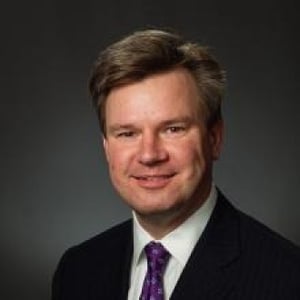
Senior Counsel & Director of the Center for Religious Schools, Alliance Defending Freedom
Gregory S. Baylor serves as senior counsel with Alliance Defending Freedom, where he is the director of the Center for Religious Schools and senior counsel with the Center for Public Policy.
Since joining ADF in 2009, Baylor has focused on defending and advancing the religious freedom of faith-based educational institutions through advice, education, legislative and public advocacy, and representation in disputes. He has testified about religious liberty issues three times before congressional committees and numerous times before state legislative committees.
Greg serves on the board of directors of the International Alliance for Christian Education, the board of directors of the Association for Biblical Higher Education, the board of directors of the Association for Christian Schools International, the board of advisors of the Museum of the Bible, and advisory board of the Center for Academic Faithfulness and Flourishing.
Greg earned his Juris Doctor in 1990 from Duke University School of Law, where he graduated Order of the Coif, with high honors, and served on the editorial board of the Duke Law Journal. He received his bachelor’s degree in Honors English in 1987 from Dartmouth College. Following graduation from law school, he served as law clerk to the Hon. Jerry E. Smith on the U.S. Court of Appeals for the Fifth Circuit. He practiced labor and employment law at two large international law firms for three years before joining the staff of Christian Legal Society’s Center for Law and Religious Freedom, where he served for 15 years prior to joining ADF. He lives in Northern Virginia with his wife (a medical doctor) and two daughters.
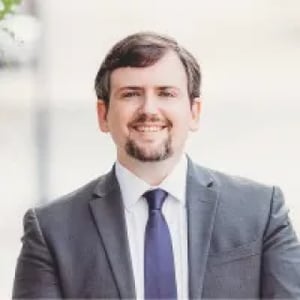
President, Alabama Center for Law and Liberty
Matthew Clark graduated from the Liberty University School of Law in 2012 in the top 10% of his class, and he had served on both the law review editorial board and moot court board. From 2013-2016, Clark worked on the Alabama Supreme Court, beginning as a law clerk but being promoted to a staff attorney after one year. From 2016 until 2021, Clark worked at the Foundation for Moral Law in Montgomery, practicing constitutional law and focusing on religious liberty, the right to life, and promoting a strict interpretation of the United States Constitution according to the intent of its framers.
After joining ACLL in March of 2021, Clark sued the Biden administration over its OSHA vaccine mandate, took it all the way to the United States Supreme Court, and won. Clark also successfully got UAB Health to rescind its vaccine mandate for its employees, guaranteeing that their jobs would be safe so that they could continue to provide much-needed medical services to those in need. Clark also successfully led a campaign of multiple legal and public policy organizations to pressure the Montgomery City Council to vote down an LGBT ordinance that would punish Christians with religious objections to endorsing, encouraging, or enabling conduct that they find sinful. Through his amicus advocacy, Clark has also asked the United States Supreme Court to overrule Roe v. Wade, protect the right of citizens to carry firearms for self-defense outside their homes, recognize the right of government employees to pray in public, and return Congress’s commerce power to the very limited role that the Framers intended for it to have.
Clark is admitted to the state bars of Alabama and Virginia. He is also admitted to the bars of the United States Supreme Court, the United States Courts of Appeals for the Second, Third, Sixth, Eleventh, and D.C. Circuits, and the United States District Courts for the Northern, Middle, and Southern Districts of Alabama. He is also a member of the Federalist Society’s Religious Liberty Executive Committee and an officer in his local Federalist Society Chapter. In 2021 and 2022, he was also a member of Alabama Secretary of State John Merrill’s Voter Fraud Task Force. He also occasionally lectures at Faulkner University on constitutional law.
Clark is married to his wife Laura, who is also an attorney, has an LLM in Alternative Dispute Resolution from the Thomas Goode Jones School of Law, and volunteers her time to assist ACLL. They have one child and are members of Vaughn Park Church in Montgomery.
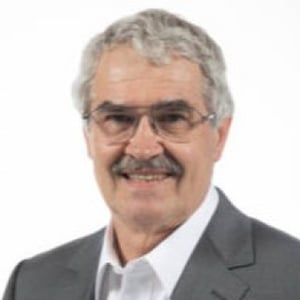
R. B. Price and Isabelle Wade & Paul C. Lyda Professor Emeritus of Law, University of Missouri School of Law
Carl H. Esbeck is R.B. Price Professor and Isabelle Wade & Paul C. Lyda Professor of Law emeritus at the University of Missouri. After attending Cornell University School of Law where he served as an editor on the Cornell Law Review, he held a judicial clerkship with the Honorable Howard C. Bratton, chief judge of the U.S. District Court in New Mexico.
Professor Esbeck publishes widely in the area of religious liberty and church-state relations. He is recognized as the progenitor of "Charitable Choice," an integral part of the 1996 Federal Welfare Reform Act, later made a part of the faith-based initiative and equal-treatment regulations under presidents George W. Bush and Barack Obama. In addition, he has taken the lead in recognizing that the modern Supreme Court has applied the Establishment Clause not as a personal right, but as a structural limit on the government's authority in disputes involving church governance. While on leave from 1999 to 2002, Professor Esbeck directed the Center for Law & Religious Freedom (CLRF) and later served as Senior Counsel to the Deputy Attorney General at the U.S. Department of Justice. While directing the CLRF, Professor Esbeck was a central part of the congressional advocacy behind the Religious Land Use and Institutionalized Persons Act of 2000 (RLUIPA). While at the Department of Justice one of his duties was to direct a task force to remove barriers to the equal-treatment of faith-based organizations applying for social service grants. He is the author of Disestablishment and Religious Dissent: Church-State Relations in the New American States, 1776 - 1833 (U. of MO Press, 2019).
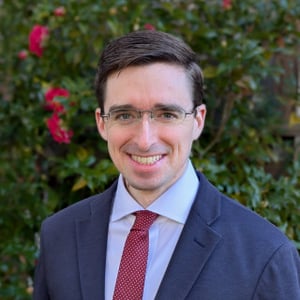
Solicitor General, Alabama Office of the Attorney General
Barrett Bowdre serves as solicitor general in the Alabama Attorney General’s Office, where he oversees the state’s appellate docket and helps defend the state’s interests in courts throughout the country. He previously served as principal deputy solicitor general and, before that, deputy solicitor general. He is a former law clerk to Judge Paul J. Kelly, Jr., of the U.S. Court of Appeals for the Tenth Circuit, then-Chief Judge W. Keith Watkins of the U.S. District Court for the Middle District of Alabama, and then-Chief Judge Ed Carnes of the U.S. Court of Appeals for the Eleventh Circuit. He holds a J.D., summa cum laude, from the University of Alabama School of Law and a B.A., cum laude, from Furman University. Before attending law school, he worked as a research assistant at the American Enterprise Institute, where he researched civic education initiatives and helped compile literary anthologies exploring the American character.
Sean Collins is a member of the University of Alabama School of Law class of 2024. After graduation, he will serve as a law clerk to Judge Allen Winsor of the U.S. District Court for the Northern District of Florida, then as a law clerk to Judge Robert Luck of the U.S. Court of Appeals for the Eleventh Circuit. Before attending law school, he graduated magna cum laude from Hillsdale College, where he studied Classics, Philosophy, and Religion and was a member of one of the only undergraduate Federalist Society chapters in the country.
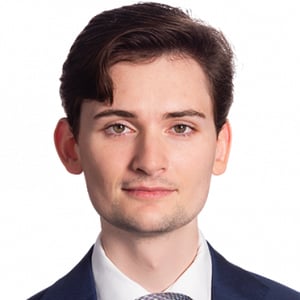
Principal Deputy Assistant Attorney General, Office of Legal Policy, United States Department of Justice
GianCarlo Canaparo serves as the Principal Deputy Assistant Attorney General in the Office of Legal Policy at the Department of Justice. He oversees the Office's regulatory work, assists the White House in the process of selecting nominees for federal judgeships and advises Department leadership on policy and legal matters.
Before joining the Department, Canaparo was a senior legal fellow at The Heritage Foundation’s Edwin Meese III Center for Legal and Judicial Studies where he researched constitutional law, administrative law, and civil rights.
Canaparo’s scholarship has appeared in various law reviews and periodicals. His research has been cited by Justice Neil Gorsuch and featured in the Wall Street Journal and Washington Post.
Canaparo co-hosted The Heritage Foundation’s SCOTUS 101 podcast, which followed the Supreme Court’s arguments and opinions and featured interviews with judges, advocates, and scholars.
After graduating Georgetown law, Canaparo spent three years at the law firm of Skadden, Arps, Slate, Meagher & Flom and two years as a federal law clerk. He earned his bachelor’s degree in economics from the University of California at Davis.
Canaparo is a classical pianist.
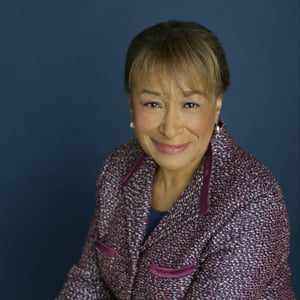
Judge, United States Court of Appeals, District of Columbia Circuit (ret.)
The Honorable Janice Rogers Brown was confirmed to the United States Court of Appeals for the District of Columbia Circuit on June 8, 2005. She retired from the court in 2017. From 1996 to 2005, she was an associate justice of the California Supreme Court. Prior to this, she served as associate justice of the Third District Court of Appeals in Sacramento and as legal affairs secretary to California Governor Pete Wilson. Earlier in her career, she served as Deputy Secretary and General Counsel for California’s Business, Transportation and Housing Agency after having worked in the criminal appellate and civil trial divisions of the California Attorney General’s Office. She currently chairs the Advisory Board of the New Civil Liberties Alliance, and serves on the Board of the Coolidge Foundation and the Association of College Trustees and Alumni. She is the Darling Foundation Jurist-in-Residence and visiting professor of Law at the University of California Boalt School of Law. Brown has been honored with the Jurisprudence Award of Claremont Institute’s Center for Constitutional Jurisprudence, the Baroness Thatcher Award of the Pacific Research Institute, the Edwin Meese III, Originalism and Religious Liberty Award from the Alliance Defending Freedom, the James Wilson Institute Leadership and the Law Award, and the 2019 Bradley Award. She earned her law degree from the University of California – Los Angeles School of Law, and a Master of Laws in judicial process from the University of Virginia School of Law.
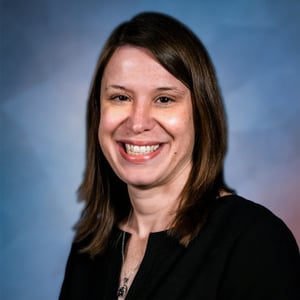
Senior Director of Strategic Partnerships, First Liberty Institute
Lisa Budzynski Ezell is the former Vice President and Director of the Federalist Society’s Lawyers Chapters. In this role, she managed a growing network of over 90 lawyers chapters nationwide, including oversight of leadership recruitment, chapter programming, state conferences, civics education outreach, and young lawyers activities. She holds a Bachelor of Arts degree from Saint Mary’s College in Political Science and History and a Master of Public Policy from George Mason University.

Judge, United States Court of Appeals, Third Circuit
Stephanos Bibas is a judge on the U.S. Court of Appeals for the Third Circuit. Judge Bibas was previously a professor of law and criminology at the University of Pennsylvania Law School. As director of the Penn Law Supreme Court Clinic, he argued six cases before the Supreme Court of the United States and filed briefs in dozens of others. He graduated summa cum laude and Phi Beta Kappa from Columbia University in 1989 with a B.A. in political theory and from Oxford University in 1991 with a B.A. in jurisprudence. He then earned his J.D. from Yale Law School in 1994.
After graduating from Yale Law, Judge Bibas clerked for Judge Patrick Higginbotham of the U.S. Court of Appeals for the Fifth Circuit and Justice Anthony Kennedy on the Supreme Court and was a litigation associate at Covington & Burling LLP in Washington, D.C. Thereafter, Judge Bibas served as an Assistant U.S. Attorney in the Southern District of New York, where he successfully prosecuted the world’s leading expert in Tiffany stained glass for hiring a grave robber to steal priceless Tiffany windows from cemeteries. Before his tenure at Penn Law, Judge Bibas taught at the University of Chicago Law School and the University of Iowa College of Law and was a research fellow at Yale Law School. He has published two books and seventy scholarly articles.
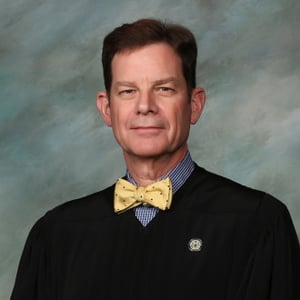
Judge, United States Court of Appeals, Fifth Circuit
Kurt D. Engelhardt was nominated for a seat on the United States Fifth Circuit Court of Appeals by President Donald J. Trump, confirmed by the Senate on May 9, 2018, and officially sworn in as a United States Circuit Judge on May 15, 2018. Judge Engelhardt is based in New Orleans, Louisiana, at the John Minor Wisdom U.S. Court of Appeals Building.
Judge Engelhardt was previously nominated for a seat on the United States District Court for the Eastern District of Louisiana by President George W. Bush, and upon confirmation, was officially sworn in as a United States District Judge on December 14, 2001. While a District Judge, Judge Engelhardt served by designation on nine different panels of the United States Fifth Circuit Court of Appeals. On October 1, 2015, he became Chief United States District Court Judge for the Eastern District of Louisiana, a position he held until joining the United States Fifth Circuit on May 15, 2018.
Judge Engelhardt attended Brother Martin High School in New Orleans, where he graduated with honors in 1978. He attended Louisiana State University in Baton Rouge, from which he graduated with a Bachelor of Arts in history in 1982. In the Fall of 1982, Judge Engelhardt commenced his legal education at the Paul M. Hebert Law Center at Louisiana State University, graduating in May of 1985.
Judge Engelhardt served a two-year clerkship with Judge Charles Grisbaum, Jr. of the Louisiana Fifth Circuit Court of Appeal, located in Gretna, Louisiana. From there, he became associated with the Metairie law firm of Little, Metzger and Lamz (APLC), and worked in the downtown New Orleans office of that firm in 1988-89. He then joined the law firm of Hailey, McNamara, Hall, Larmann & Papale, became a partner in July 1998, and practiced there until his confirmation to the federal bench in December 2001.
In 1995, Judge Engelhardt was nominated for a spot on the nine-member Louisiana Judiciary Commission, and was appointed by the Governor to serve a four-year term on that body. In 1998, he was elected by his fellow commission members to serve as Chairman, in which capacity he presided over the Commission’s trials of formal charges lodged against sitting state judges. His work on the Judiciary Commission has been cited for its excellence by the Louisiana Supreme Court.
Judge Engelhardt is a member of the Advisory Board of the New Orleans Chapter of The Federalist Society; a past member of the United States Judicial Conference Committee on Federal-State Jurisdiction; a member of the Board of Directors (and past president) of the New Orleans Chapter of the Federal Bar Association; a member of the American Judicature Society; and a member of the Federal Circuit Bar Association. He has served on the Fifth Circuit's Criminal Pattern Jury Instruction Committee, charged with updating and/or drafting pattern jury instructions for district judges within the jurisdiction of the United States Fifth Circuit. Recently, he was appointed by Fifth Circuit Chief Judge Carl Stewart to chair the Circuit's Judicial Impairment Protocol Committee, established to create a framework for the judiciary to internally address disabilities of all types which may impact a judge's ability to handle his/her docket.
Judge Engelhardt is also a member of the American Bar Association, Jefferson Bar Association, Louisiana State Bar Association, New Orleans Bar Association, and the Phi Alpha Delta Law Fraternity. Judge Engelhardt serves on the Board of Directors of the Cancer Association of Greater New Orleans.
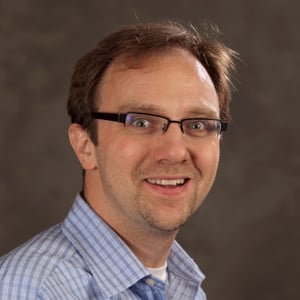
Associate Director of Litigation, National Immigrant Justice Center
Mark Fleming is the Associate Director of Litigation at the National Immigrant Justice Center (NIJC) located in Chicago, Illinois. Mr. Fleming focuses on litigation and public policy at the intersection of state and local law enforcement and civil immigration enforcement. He has litigated multiple class actions related to Immigration and Customs Enforcement’s (ICE) use of immigration detainers. Mr. Fleming provided technical expertise in the drafting and passage of Chicago’s Welcoming City Ordinance in 2012 and the Illinois TRUST Act in 2017. Mr. Fleming has been quoted in various national media outlets and appeared in a PBS FRONTLINE documentary on ICE enforcement and detention. Mr. Fleming graduated magna cum laude from the Georgetown University Law Center.
Director of Litigation, Immigration Reform Law Institute
Mr. Hajec joined the Immigration Reform Law Institute (IRLI) in 2017 as its Director of Litigation, and is responsible for overseeing IRLI’s public interest litigation. Previously, he has focused his career on constitutional and other civil rights law in the public interest, and has had an abiding concern about the many adverse effects of illegal and excessive legal immigration on American jobs and communities.
At IRLI, in addition to representing plaintiffs in immigration-related civil lawsuits, he has overseen the drafting and filing of nearly 100 briefs, mostly amicus curiae briefs in defense of the Trump administration’s immigration initiatives, which have been subjected to an unprecedented degree of legal assault by well-funded interest groups.
Prior to joining IRLI, Mr. Hajec was an attorney at the Center for Individual Rights (CIR), where he litigated a string of high-profile cases, including the defense of videographer James O’Keefe in suits brought by former ACORN employees, a class action suit on behalf of Asian American students discriminated against by the New York City public schools, and a case that resulted in the U.S. Court of Appeals for the Fifth Circuit’s striking down Texas’s psychologists licensing statute as an overbroad restriction on free speech.
Before CIR, Mr. Hajec was an officer in the Navy Judge Advocate General’s Corps, where he served as a defense counsel before courts-martial and then as Appellate Government Counsel, arguing over 100 appeals before the Navy-Marine Corps Court of Criminal Appeals and the Court of Appeals for the Armed Forces. He received the Navy Commendation Medal for his legal work, and also because of his poor handling of an emergency during a hurricane.
He received his law degree from the University of Pennsylvania Law School and his undergraduate degree, cum laude, from the University of Michigan. He has a Ph.D. in philosophy from the University of Miami, and studied philosophy and sociology at Oxford University.

Vice President, Edwin Meese III Institute for the Rule of Law, Advancing American Freedom
John G. Malcolm oversees Advancing American Freedom’s work to increase understanding of the Constitution and the rule of law as Vice President of the organization’s Edwin Meese III Institute for the Rule of Law. Malcolm brings to the challenge a wealth of legal expertise and experience in both the public and private sectors.
Prior to joining Advancing American Freedom in 2025, Malcolm was the Vice President of the Institute for Constitutional Government and the Director of the Meese Center for Legal and Judicial Studies at the Heritage Foundation. Prior to joining Heritage in 2012, Malcolm was general counsel at the U.S. Commission on International Religious Freedom, as well as a distinguished practitioner in residence at Pepperdine Law School. From 2004 to 2009, Malcolm was executive vice president and director of worldwide anti-piracy operations for the Motion Picture Association.
Malcolm served as a deputy assistant attorney general in the Department of Justice’s Criminal Division from 2001 to 2004, where he oversaw sections on computer crime and intellectual property, domestic security, child exploitation and obscenity, and special investigations. Immediately prior to that, he was a founding partner in the Atlanta law firm of Malcolm & Schroeder, LLP.
From 1990 to 1997, Malcolm was an assistant U.S. attorney in Atlanta, assigned to the fraud and public corruption section, and also an associate independent counsel, investigating fraud and abuse in the Department of Housing and Urban Development. He was honored with the Director’s Award for Superior Performance for his work in connection with the successful prosecution of Walter Leroy Moody Jr., who assassinated an 11th Circuit judge and the head of the Savannah chapter of the NAACP.
A graduate of Harvard Law School and Columbia College, Malcolm began his career as a law clerk to a federal district court judge and a federal appellate court judge, and as an associate at the Atlanta-based law firm of Sutherland, Asbill & Brennan (new Eversheds Sutherland).
Malcolm, who resides in Washington, D.C., serves on the Board of Trustees of the Washington National Opera and is a Senate-confirmed member of the Board of Directors of the Legal Services Corporation, the largest funder of civil legal aid in the United States.
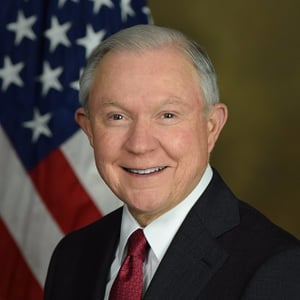
Former United States Attorney General
Jeff Sessions served as the 84th Attorney General of the United States from February 9, 2017 until November 7, 2018.
Prior to becoming Attorney General, Mr. Sessions served as a United States Senator for Alabama since 1996. As a United States Senator, he focused his energies on maintaining a strong military, upholding the rule of law, limiting the role of government, and providing tax relief to stimulate economic growth and to empower Americans to keep more of their hard-earned money.
Mr. Sessions was born in Selma, Alabama on December 24, 1946, and grew up in Hybart, the son of a country store owner. Growing up in the country, Sessions was instilled with certain core values – honesty, hard work, belief in God and parental respect – that define him today. In 1964, he became an Eagle Scout and thereafter received the Distinguished Eagle Scout Award. After attending school in nearby Camden, Sessions attended Huntingdon College in Montgomery, graduating with a Bachelor of Arts degree in 1969. He received a Juris Doctorate degree from the University of Alabama in 1973. Sessions served in the United States Army Reserve from 1973 to 1986, ultimately attaining the rank of Captain. He still considers that period to be one of the most rewarding chapters of his life.
Sessions’ interest in the law led to a distinguished legal career, first as a practicing attorney in Russellville, Alabama, and then in Mobile. Following a two-year stint as Assistant United States Attorney for the Southern District of Alabama (1975-1977), Sessions was nominated by President Reagan in 1981 and confirmed by the Senate to serve as the United States Attorney for the Southern District of Alabama, a position he held for 12 years. Sessions was elected Alabama Attorney General in 1995, serving as the State’s chief legal officer until 1996, when he entered the United States Senate.
Sessions and his wife, Mary Blackshear Sessions, originally of Gadsden, Alabama, have three children, Mary Abigail Reinhardt, Ruth Sessions Walk, and Sam. They have seven granddaughters, Jane Ritchie, Alexa, Gracie, Sophia, Hannah, Joanna, and Phoebe, and three grandsons, Jim Beau, Lewis, and Nicholas.

Professor of Law, Antonin Scalia Law School, George Mason University
ILYA SOMIN is Professor of Law at George Mason University and the B. Kenneth Simon Chair in Constitutional Studies at the Cato Institute. His research focuses on constitutional law, property law, democratic theory, federalism, and migration rights. He is the author of Free to Move: Foot Voting, Migration, and Political Freedom (Oxford University Press, revised and expanded edition, 2022), Democracy and Political Ignorance: Why Smaller Government is Smarter (Stanford University Press, revised and expanded second edition, 2016), and The Grasping Hand: Kelo v. City of New London and the Limits of Eminent Domain (University of Chicago Press, 2015, rev. paperback ed., 2016), coauthor of A Conspiracy Against Obamacare: The Volokh Conspiracy and the Health Care Case (Palgrave Macmillan, 2013), and co-editor of Eminent Domain: A Comparative Perspective (Cambridge University Press, 2017). Democracy and Political Ignorance has been translated into Italian and Japanese.
Somin’s work has appeared in numerous scholarly journals, including the Yale Law Journal, Stanford Law Review, Northwestern University Law Review, Georgetown Law Journal, Critical Review, and others. Somin has also published articles in a variety of popular press outlets, including the New York Times, Washington Post, Wall Street Journal, Los Angeles Times, CNN, NBC, The Atlantic, USA Today, Boston Globe, US News and World Report, South China Morning Post, National Law Journal and Reason. He has been quoted or interviewed by the New York Times, Washington Post, Wall Street Journal, Time, Newsweek, The Economist, the Christian Science Monitor, the Financial Times, The Guardian, the Associated Press, CBS, MSNBC, NPR, BBC, Reuters, the Canadian Broadcasting Corporation, the Australian Broadcasting Corporation, Radio Free Europe/Radio Liberty, Al Jazeera, and the Voice of America, among other media.
Somin’s writings have been cited in decisions by the United States Supreme Court, multiple state supreme courts and lower federal courts, and the Supreme Court of Israel. He is co-counsel for the plaintiffs in VOS Selections, Inc. v. Trump, a case challenging the constitutionality of President Trump’s “Liberation Day” tariffs. Somin has testified on the use of drones for targeted killing in the War on Terror before the US Senate Judiciary Subcommittee on the Constitution, Civil Rights, and Human Rights. In 2009, he testified on property rights issues at the United States Senate Judiciary Committee confirmation hearings for Supreme Court Justice Sonia Sotomayor. Somin writes regularly for the popular Volokh Conspiracy law and politics blog, now affiliated with Reason magazine (previously affiliated with the Washington Post from 2014 to 2017). From 2006 to 2013, he served as Co-Editor of the Supreme Court Economic Review, one of the country’s top-rated law and economics journals.
Somin has served as a visiting professor at the University of Pennsylvania Law School. He has also been a visiting professor or scholar at the Georgetown University Law Center, the University of Hamburg, Germany, the University of Torcuato Di Tella in Buenos Aires, Argentina, Uriel Reichman University in Israel, and Zhengzhou University in China. He is a University Affiliate of the Schar School of Policy and Government at George Mason University, and an affiliated faculty member of the George Mason University Institute for Immigration Research. Before joining the faculty at George Mason, Somin was the John M. Olin Fellow in Law at Northwestern University Law School in 2002-2003. In 2001-2002, he clerked for the Hon. Judge Jerry E. Smith of the U.S. Court of Appeals for the Fifth Circuit. Professor Somin earned his B.A., Summa Cum Laude, at Amherst College, M.A. in Political Science from Harvard University, and J.D. from Yale Law School.
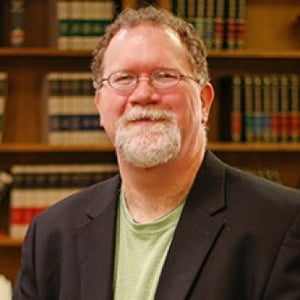
Chief Academic Officer & Vice Chancellor for Strategic Initiatives, State University System of Florida
Jason Jewell chairs the Department of Humanities at Faulkner University, where he directs online degree programs based on the Great Books at both the undergraduate and graduate levels. On campus he teaches courses in the humanities and social/behavioral science departments and the Great Books Honors Program.
He received a Ph.D. in humanities from Florida State University, an M.A. in history from Pepperdine University, and a B.A. in history and music from Harding University.
He is associate editor of the Journal of Faith and the Academy and a member of the editorial board of two other academic journals. He is a contributor to Christian Faith and Social Justice: Five Views (Bloomsbury, 2014) and The Inklings and King Arthur (2018), and he has contributed to six academic journals and five encyclopedias. His writing has also appeared in numerous magazines and popular journals..
In addition to directing honors students in the GBH program, Jacobs serves as a Faulkner Foundations teacher, a sponsor for Alpha Chi National Honor Society, and a sponsor for Images in Ink, an annual creative arts publication published by the university every spring. He also serves on the board of Cornerstone Classical Christian Academy, a private k-12 school that works with the same spiritual and academic mindset as guides him at Faulkner.
“I am convinced,” he says, “that learning centered around Christ and a classical or Great Books methodology promotes a more virtuous human being, allowing one to know God better and love His creation better, too. It is my deep hope to instill this sort of learning in future generations. One simply cannot argue with the sort of excellence and deep Christian charity such education promotes. As such, I can think of no better expenditure of my time than working among my fellow brothers and sisters in Christ and reading and discussing great books with as many and as varied students as possible.”
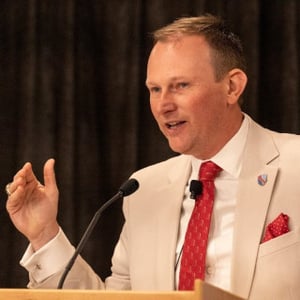
Senior Advisor and Research Fellow, The Heritage Foundation
Allen Mendenhall is a Senior Advisor for the Capital Markets Initiative and Research Fellow in the Thomas A. Roe Institute for Economic Policy Studies at the Heritage Foundation in Washington, D.C. Previously, he served as Associate Dean and Grady Rosier Professor in the Sorrell College of Business at Troy University, where he also directed the Manuel H. Johnson Center for Political Economy. He is also a Visiting Fellow at the Madden Center for Value Creation at Florida Atlantic University.
His books include Literature and Liberty: Essays in Libertarian Literary Criticism (2014), Oliver Wendell Holmes Jr., Pragmatism, and the Jurisprudence of Agon: Aesthetic Dissent and the Common Law (2017), Of Bees and Boys: Lines from a Southern Lawyer (2017), The Southern Philosopher: Collected Essays of John William Corrington (2017), Writers on Writing: Conversations with Allen Mendenhall (2019), The Three Ps of Liberty: Pragmatism, Pluralism, and Polycentricity (2020), Shouting Softly: Essays on Law, Literature, and Culture (2021), A Glooming Peace This Morning (2023, a novel), and Controversies Among Conservatives: Conversations on Conservatism, Vol. II (2024, edited with Marcus Witcher and Kevin Hughes). His monthly segment “Word to the Wise” appears on Troy Public Radio (WTSU 89.9, WRWA 88.7, WTJB 91.7), and he writes a weekly column for 1819 News, Alabama’s bold and innovative conservative news outlet.
Mendenhall holds a B.A. in English from Furman University, an M.A. in English from West Virginia University, a J.D. from West Virginia University College of Law, an LL.M. in transnational law from Temple University Beasley School of Law, and a Ph.D. in English from Auburn University.
From 2016 to 2020, he was Associate Dean and Founding Executive Director of the Blackstone & Burke Center for Law & Liberty at Faulkner University’s Thomas Goode Jones School of Law in Montgomery, Alabama. He edited Southern Literary Review for over a decade (2011–2022) and has served as a visiting scholar (2020) and trustee (2023) at the American Institute for Economic Research (AIER), an adjunct legal associate at the Cato Institute (2009), a Mises Canada Emerging Scholar with the Ludwig von Mises Institute Canada (2014), an elected member of the Mont Pelerin Society (2024), an associate of the Abbeville Institute (2011–present), a Humane Studies Fellow with the Institute for Humane Studies (2011–2012), a staff attorney for Chief Justice Roy S. Moore of the Supreme Court of Alabama (2013–2016), an Assistant Attorney General in the State of Alabama Office of Attorney General Luther Strange (2016), an AmPhil Fundraising Fellow with the Center for Civil Society of American Philanthropic (2023–2024), an Advisory Council Member of the Law & Liberty Circle at the Universidad Francisco Marroquín (2024–present), an elected member (2012) and former trustee (2018–2022) of the Philadelphia Society, an associated scholar at the Ludwig von Mises Institute (2017–present), a policy adviser for the Heartland Institute (2016–present), former president of the Alabama Association of Scholars (2017–2020), president of the Montgomery Lawyers Chapter of the Federalist Society (2013–present), and Chairman of the Board of Managers of the Alabama Center for Law & Liberty (2022–2024). In 2023, he was an inaugural recipient of the Freedom and Opportunity Academic Prize from the Heritage Foundation. In 2024, he was a Club For Growth Foundation Fellow and a Lincoln Fellow with the Claremont Institute for the Study of Statesmanship and Political Philosophy. Alabama Governor Kay Ivey appointed him to the 2025–26 State Textbook Committee of the Alabama Department of Education.
He has taught in university English departments, business schools, a humanities department, a law school, a Japanese private school (juku), and a penitentiary, and he serves or has served on numerous boards of organizations as wide-ranging as the Alabama Public Television Foundation Authority (2019–2025), the Young Professionals Board of the Alabama Humanities Foundation (2015–2016), the Society for Law and Culture (a division of the Russell Kirk Center for Cultural Renewal) (2017–present), Trinity Christian School (2017–2020), Ivy Classical Academy (2025–present), and the Philadelphia Society (2018–2022). He served on the advisory council of the Ludwig von Mises Institute’s Master of Arts degree and Certificate Program in Austrian Economics from 2021–2023. While in private practice in Atlanta, he represented non-profit corporations and litigated cases involving real property, contracts, collections, foreclosures, restrictive covenants, and real estate transactions. He graduated from Leadership Lee County (Alabama), the Alabama State Bar Leadership Forum (Class 14), and the Atlas Leadership Academy of Atlas Network. He has authored hundreds of publications, including fiction and poetry, and studied under the creative writers Gilbert Allen, Michael Blumenthal, William Aarnes, and Chantel Acevedo.
His academic writing has appeared or is forthcoming in such peer-reviewed journals as The Journal Jurisprudence, The Canadian Journal of Law and Jurisprudence, Public Choice, The Political Science Reviewer, Journal of Markets & Morality, Journal of Private Enterprise, The Texas Review of Law and Politics, European Journal of Pragmatism and American Philosophy, Contemporary Pragmatism, The South Carolina Review, Academic Questions, The Independent Review, Quarterly Journal of Austrian Economics, Modernist Cultures, The British Journal of American Legal Studies, and in law reviews published by Georgetown University Law Center, UC Berkeley School of Law, The University of Texas School of Law, Emory University School of Law, Indiana University Maurer School of Law, Texas A&M University School of Law, and Michigan State University College of Law.
His writing for popular media has appeared in Newsweek, Fox News, Fox Business, The Wall Street Journal, The Washington Times, National Review, The American Spectator, Pacific Standard, The Hill, The Los Angeles Review of Books, The American Conservative, City Journal, The Daily Caller, The Federalist, Public Discourse, Law & Liberty, The Epoch Times, The American Mind, The Freeman, Liberty, RealClearMarkets, The University Bookman, The Daily Signal, Chronicles, The Christian Lawyer, Writer’s Digest, The Conversation, and elsewhere. He has spoken at Harvard University, Brown University, Georgetown University Law Center, Francisco Marroquín University, Furman University, George Mason University, University of British Columbia, University of Nevada-Las Vegas, Auburn University, West Virginia University, the Alabama State Capitol, the Alabama Supreme Court, and other universities and locations.
He has been quoted or cited in Fox Business, Fox News, Forbes, The Washington Post, The Washington Times, The National Review, The Daily Caller, Le Monde, Times Higher Education, The College Fix, The Blaze Media, Campus Reform, Inside Higher Education, and U.S. News and World Report, and published by such organizations as the Ludwig von Mises Institute, the Ludwig von Mises Institute Canada, the Mercatus Center, the Foundation for Economic Education, the Intercollegiate Studies Institute, the American Institute for Economic Research, the Charlemagne Institute, the Independent Institute, the Rockford Institute, the Russell Kirk Center for Cultural Renewal, the American Ideas Institute, Atlas Society, the Heartland Institute, the Abbeville Institute, the National Association of Scholars, the James G. Martin Center for Academic Renewal, and the Libertarian Alliance. He frequently appears on radio and television on networks as wide-ranging as Fox News, Newsmax, Alabama Public Television, NewsNation, Al Jazeera, C-SPAN, Bill O’Reilly’s “No Spin News,” NTD News, The Daily Wire, Steve Bannon’s “War Room,” and BBC World News.
Chief Academic Officer & Vice Chancellor for Strategic Initiatives, State University System of Florida
Jason Jewell chairs the Department of Humanities at Faulkner University, where he directs online degree programs based on the Great Books at both the undergraduate and graduate levels. On campus he teaches courses in the humanities and social/behavioral science departments and the Great Books Honors Program.
He received a Ph.D. in humanities from Florida State University, an M.A. in history from Pepperdine University, and a B.A. in history and music from Harding University.
He is associate editor of the Journal of Faith and the Academy and a member of the editorial board of two other academic journals. He is a contributor to Christian Faith and Social Justice: Five Views (Bloomsbury, 2014) and The Inklings and King Arthur (2018), and he has contributed to six academic journals and five encyclopedias. His writing has also appeared in numerous magazines and popular journals..
In addition to directing honors students in the GBH program, Jacobs serves as a Faulkner Foundations teacher, a sponsor for Alpha Chi National Honor Society, and a sponsor for Images in Ink, an annual creative arts publication published by the university every spring. He also serves on the board of Cornerstone Classical Christian Academy, a private k-12 school that works with the same spiritual and academic mindset as guides him at Faulkner.
“I am convinced,” he says, “that learning centered around Christ and a classical or Great Books methodology promotes a more virtuous human being, allowing one to know God better and love His creation better, too. It is my deep hope to instill this sort of learning in future generations. One simply cannot argue with the sort of excellence and deep Christian charity such education promotes. As such, I can think of no better expenditure of my time than working among my fellow brothers and sisters in Christ and reading and discussing great books with as many and as varied students as possible.”
Senior Advisor and Research Fellow, The Heritage Foundation
Allen Mendenhall is a Senior Advisor for the Capital Markets Initiative and Research Fellow in the Thomas A. Roe Institute for Economic Policy Studies at the Heritage Foundation in Washington, D.C. Previously, he served as Associate Dean and Grady Rosier Professor in the Sorrell College of Business at Troy University, where he also directed the Manuel H. Johnson Center for Political Economy. He is also a Visiting Fellow at the Madden Center for Value Creation at Florida Atlantic University.
His books include Literature and Liberty: Essays in Libertarian Literary Criticism (2014), Oliver Wendell Holmes Jr., Pragmatism, and the Jurisprudence of Agon: Aesthetic Dissent and the Common Law (2017), Of Bees and Boys: Lines from a Southern Lawyer (2017), The Southern Philosopher: Collected Essays of John William Corrington (2017), Writers on Writing: Conversations with Allen Mendenhall (2019), The Three Ps of Liberty: Pragmatism, Pluralism, and Polycentricity (2020), Shouting Softly: Essays on Law, Literature, and Culture (2021), A Glooming Peace This Morning (2023, a novel), and Controversies Among Conservatives: Conversations on Conservatism, Vol. II (2024, edited with Marcus Witcher and Kevin Hughes). His monthly segment “Word to the Wise” appears on Troy Public Radio (WTSU 89.9, WRWA 88.7, WTJB 91.7), and he writes a weekly column for 1819 News, Alabama’s bold and innovative conservative news outlet.
Mendenhall holds a B.A. in English from Furman University, an M.A. in English from West Virginia University, a J.D. from West Virginia University College of Law, an LL.M. in transnational law from Temple University Beasley School of Law, and a Ph.D. in English from Auburn University.
From 2016 to 2020, he was Associate Dean and Founding Executive Director of the Blackstone & Burke Center for Law & Liberty at Faulkner University’s Thomas Goode Jones School of Law in Montgomery, Alabama. He edited Southern Literary Review for over a decade (2011–2022) and has served as a visiting scholar (2020) and trustee (2023) at the American Institute for Economic Research (AIER), an adjunct legal associate at the Cato Institute (2009), a Mises Canada Emerging Scholar with the Ludwig von Mises Institute Canada (2014), an elected member of the Mont Pelerin Society (2024), an associate of the Abbeville Institute (2011–present), a Humane Studies Fellow with the Institute for Humane Studies (2011–2012), a staff attorney for Chief Justice Roy S. Moore of the Supreme Court of Alabama (2013–2016), an Assistant Attorney General in the State of Alabama Office of Attorney General Luther Strange (2016), an AmPhil Fundraising Fellow with the Center for Civil Society of American Philanthropic (2023–2024), an Advisory Council Member of the Law & Liberty Circle at the Universidad Francisco Marroquín (2024–present), an elected member (2012) and former trustee (2018–2022) of the Philadelphia Society, an associated scholar at the Ludwig von Mises Institute (2017–present), a policy adviser for the Heartland Institute (2016–present), former president of the Alabama Association of Scholars (2017–2020), president of the Montgomery Lawyers Chapter of the Federalist Society (2013–present), and Chairman of the Board of Managers of the Alabama Center for Law & Liberty (2022–2024). In 2023, he was an inaugural recipient of the Freedom and Opportunity Academic Prize from the Heritage Foundation. In 2024, he was a Club For Growth Foundation Fellow and a Lincoln Fellow with the Claremont Institute for the Study of Statesmanship and Political Philosophy. Alabama Governor Kay Ivey appointed him to the 2025–26 State Textbook Committee of the Alabama Department of Education.
He has taught in university English departments, business schools, a humanities department, a law school, a Japanese private school (juku), and a penitentiary, and he serves or has served on numerous boards of organizations as wide-ranging as the Alabama Public Television Foundation Authority (2019–2025), the Young Professionals Board of the Alabama Humanities Foundation (2015–2016), the Society for Law and Culture (a division of the Russell Kirk Center for Cultural Renewal) (2017–present), Trinity Christian School (2017–2020), Ivy Classical Academy (2025–present), and the Philadelphia Society (2018–2022). He served on the advisory council of the Ludwig von Mises Institute’s Master of Arts degree and Certificate Program in Austrian Economics from 2021–2023. While in private practice in Atlanta, he represented non-profit corporations and litigated cases involving real property, contracts, collections, foreclosures, restrictive covenants, and real estate transactions. He graduated from Leadership Lee County (Alabama), the Alabama State Bar Leadership Forum (Class 14), and the Atlas Leadership Academy of Atlas Network. He has authored hundreds of publications, including fiction and poetry, and studied under the creative writers Gilbert Allen, Michael Blumenthal, William Aarnes, and Chantel Acevedo.
His academic writing has appeared or is forthcoming in such peer-reviewed journals as The Journal Jurisprudence, The Canadian Journal of Law and Jurisprudence, Public Choice, The Political Science Reviewer, Journal of Markets & Morality, Journal of Private Enterprise, The Texas Review of Law and Politics, European Journal of Pragmatism and American Philosophy, Contemporary Pragmatism, The South Carolina Review, Academic Questions, The Independent Review, Quarterly Journal of Austrian Economics, Modernist Cultures, The British Journal of American Legal Studies, and in law reviews published by Georgetown University Law Center, UC Berkeley School of Law, The University of Texas School of Law, Emory University School of Law, Indiana University Maurer School of Law, Texas A&M University School of Law, and Michigan State University College of Law.
His writing for popular media has appeared in Newsweek, Fox News, Fox Business, The Wall Street Journal, The Washington Times, National Review, The American Spectator, Pacific Standard, The Hill, The Los Angeles Review of Books, The American Conservative, City Journal, The Daily Caller, The Federalist, Public Discourse, Law & Liberty, The Epoch Times, The American Mind, The Freeman, Liberty, RealClearMarkets, The University Bookman, The Daily Signal, Chronicles, The Christian Lawyer, Writer’s Digest, The Conversation, and elsewhere. He has spoken at Harvard University, Brown University, Georgetown University Law Center, Francisco Marroquín University, Furman University, George Mason University, University of British Columbia, University of Nevada-Las Vegas, Auburn University, West Virginia University, the Alabama State Capitol, the Alabama Supreme Court, and other universities and locations.
He has been quoted or cited in Fox Business, Fox News, Forbes, The Washington Post, The Washington Times, The National Review, The Daily Caller, Le Monde, Times Higher Education, The College Fix, The Blaze Media, Campus Reform, Inside Higher Education, and U.S. News and World Report, and published by such organizations as the Ludwig von Mises Institute, the Ludwig von Mises Institute Canada, the Mercatus Center, the Foundation for Economic Education, the Intercollegiate Studies Institute, the American Institute for Economic Research, the Charlemagne Institute, the Independent Institute, the Rockford Institute, the Russell Kirk Center for Cultural Renewal, the American Ideas Institute, Atlas Society, the Heartland Institute, the Abbeville Institute, the National Association of Scholars, the James G. Martin Center for Academic Renewal, and the Libertarian Alliance. He frequently appears on radio and television on networks as wide-ranging as Fox News, Newsmax, Alabama Public Television, NewsNation, Al Jazeera, C-SPAN, Bill O’Reilly’s “No Spin News,” NTD News, The Daily Wire, Steve Bannon’s “War Room,” and BBC World News.
President of Alabama Citizen Actions Program (ALCAP)

Chief Policy Counsel, Council on Criminal Justice and Senior Advisor, Right on Crime
Marc A. Levin is the Chief Policy Counsel for the Council on Criminal Justice (counciloncj.org) and Senior Advisor for Right on Crime.
An attorney and accomplished author on legal and public policy issues, Marc began the Foundation’s criminal justice program in 2005. This work contributed to nationally praised policy changes that have been followed by dramatic declines in crime and incarceration in Texas. Building on this success, in 2010, Levin developed the concept for the Right on Crime initiative, a TPPF project in partnership with Prison Fellowship and the American Conservative Union Foundation. Right on Crime has become the national clearinghouse for conservative criminal justice reforms and has contributed to the adoption of policies in dozens of states that fight crime, support victims, and protect taxpayers.
In 2014, Levin was named one of the “Politico 50” in the magazine’s annual “list of thinkers, doers, and dreamers who really matter in this age of gridlock and dysfunction.”
Marc has testified on criminal justice policy on four occasions before Congress and has testified before legislatures in states including Texas, Nevada, Kansas, Wisconsin, and California. He also has met personally with leaders such as U.S. Presidents, Speakers of the House, and the Justice Commtitee of the United Kingdom Parliament to share his ideas on criminal justice reform. In 2007, he was honored in a resolution unanimously passed by the Texas House of Representatives that stated, “Mr. Levin’s intellect is unparalleled and his research is impeccable.”
Since 2005, Marc has published dozens of policy papers on topics such as sentencing, probation, parole, reentry, and overcriminalization which are available on the TPPF website. Levin’s articles on law and public policy have been featured in publications such as the Wall Street Journal, USA Today, Texas Review of Law & Politics, National Law Journal, New York Daily News, Jerusalem Post, Toronto Star, Atlanta Journal-Constitution, Philadelphia Inquirer, San Francisco Chronicle, Washington Times, Los Angeles Daily Journal, Charlotte Observer, Dallas Morning News, Houston Chronicle, Austin American-Statesman, San Antonio Express-News and Reason Magazine.
In 1999, Marc graduated with honors from the University of Texas with a B.A. in Plan II Honors and Government. In 2002, Marc received his J.D. with honors from the University of Texas School of Law. Marc was a Charles G. Koch Summer Fellow in 1996. He served as a law clerk to Judge Will Garwood on the U.S. Court of Appeals for the Fifth Circuit and Staff Attorney at the Texas Supreme Court.

Exploring the Landscape of Military Law and Best Practices for JAGs
Jesse Burbank, Stephanie Fisher, Mark Majors, Michael A. Newton
Military law encompasses a wide range of legal disciplines, including criminal law, national security, government...
2026 Alabama Legislative Review
Montgomery Lawyer Chapter
Montgomery, ALThe Respect for Marriage Act & Religious Liberty: At Odds or Unaffected?
Gregory Baylor, Matt Clark, Carl H. Esbeck
In December 2022, Congress passed and President Biden signed the Respect for Marriage Act (RFMA)....
State Court Docket Watch: Glass v. City of Montgomery
Barrett Bowdre, Sean Collins
Alabama’s constitution prohibits the legislature from enacting a “local law”—one that applies only in one...
State Court Docket Watch: State of Washington v. Haag
GianCarlo Canaparo
On September 23, 2021, the Washington Supreme Court decided State v. Haag and vacated the...
Address by Judge Janice Rogers Brown
Janice Rogers Brown, Lisa Ezell
On November 12, 2020, The Federalist Society hosted a virtual address by Judge Janice Rodgers...
Courthouse Steps Oral Argument Teleforum: Jones v. Mississippi
TeleforumThe Wisdom and Legality of Sanctuary Cities
Stephanos Bibas, Kurt Damian Engelhardt, Mark Fleming, Christopher Hajec, John G. Malcolm, Jefferson B. Sessions, Ilya Somin
On November 14, 2019, the Federalist Society's Criminal Law & Procedure Practice Group hosted a...
Justice versus Social Justice
Jason Jewell, Allen P. Mendenhall
On August 22, 2019, the Federalist Society's Montgomery Lawyers Chapter hosted an event at the...
Justice versus Social Justice
Jason Jewell, Allen P. Mendenhall
On August 22, 2019, the Federalist Society's Montgomery Lawyers Chapter hosted an event at the...