

Principal, Clark Hill Public Strategies & Attorney, Clark Hill PLC
Anthony P. Campau is Principal at Clark Hill Public Strategies and an Attorney at Clark Hill PLC, two related Clark Hill firm entities. Mr. Campau previously served as chief of staff and counselor at the Office of Information and Regulatory Affairs (OIRA) within the U.S. Office of Management and Budget (OMB), which oversees the development of most new federal regulations and guidance, sets and enforces federal privacy and statistical policy, and plays a leading role in new initiatives like the regulation of artificial intelligence and the development of bilateral regulatory cooperation agreements. He clerked for the Hon. Neomi Rao, Circuit Judge, U.S. Court of Appeals for the D.C. Circuit, was in-house counsel and assistant secretary of the board for a large university, and served as a regulatory fellow at a major think tank in Washington, D.C.

Director, GW Regulatory Studies Center & Distinguished Professor of Practice, Trachtenberg School of Public Policy & Public Administration, The George Washington University
Susan Dudley is the Founder and Director of the George Washington University Regulatory Studies Center, established in 2009 to raise awareness of regulations’ effects and improve regulatory policy through research, education, and outreach. She is also a distinguished professor of practice in the Trachtenberg School of Public Policy and Public Administration. She is past-president of the Society for Benefit Cost Analysis, a senior fellow of the Administrative Conference of the United States, and on the Regulatory Transparency Project Regulatory Practice Working Group. Her book, Regulation: A Primer, with Jerry Brito, is available on Amazon.com.
From April 2007 through January 2009, Professor Dudley served as the Presidentially-appointed Administrator of the Office of Information and Regulatory Affairs in the U.S. Office of Management and Budget and was responsible for the review of draft executive branch regulations under Executive Order 12866, the collection of federal-government-wide information under the Paperwork Reduction Act, the development and implementation of government-wide policies in the areas of information policy, privacy, and statistical policy, and international regulatory cooperation efforts.
Prior to OIRA, she directed the Regulatory Studies Program at the Mercatus Center at George Mason University, and taught courses on regulation at the George Mason University School of Law. Earlier in her career, Professor Dudley served as an economist at OIRA, as well as the Environmental Protection Agency and the Commodity Futures Trading Commission. She was also a consultant to government and private clients at Economists Incorporated. She holds a Master of Science degree from the Sloan School of Management at MIT and a Bachelor of Science degree (summa cum laude) in Resource Economics from the University of Massachusetts, Amherst.

Professor of Practice and Distinguished Scholar in Residence; Co-Director of the Legislative and Regulatory Process Clinic, New York University School of Law
Sally Katzen served in the Clinton administration as administrator of the Office of Information and Regulatory Affairs in the Office of Management and Budget (OMB), as deputy assistant to the president for economic policy and deputy director of the National Economic Council in the White House, and then as the deputy director for management at OMB. She served as the head of the Agency Review Group for the Obama/Biden transition with responsibility for the Executive Office of the President and all government-wide agencies. She has taught both undergraduates and at various law schools. She is a member of the American Law Institute and the National Academy of Public Administration, has served on multiple panels for the National Academy of Sciences, testified frequently before Congress, and is on the board of several non-profit organizations. Before joining the Clinton administration, Katzen was a partner in the Washington, DC, law firm of Wilmer, Cutler & Pickering, specializing in regulatory and legislative matters, while serving in leadership roles in the American Bar Association (including chair of the Section on Administrative Law and Regulatory Practice and as DC delegate to the ABA’s House of Delegates), as president of the Federal Communications Bar Association and as president of the Women’s Legal Defense Fund. She graduated from Smith College and the University of Michigan Law School, where she was the first woman editor-in-chief of the Law Review. She clerked for Judge J. Skelly Wright of the United States Court of Appeals for the District of Columbia Circuit and served in the Carter administration as the general counsel of the Council on Wage and Price Stability in the Executive Office of the President.

Partner, Mayer Brown
Andrew Olmem is a partner in Mayer Brown’s Washington DC office and a member of its Public Policy, Regulatory & Government Affairs, and Financial Services Regulatory & Enforcement practices. His practice focuses on complex financial services regulatory and public policy matters.
Andrew previously served as the Deputy Assistant to the President for Economic Policy and Deputy Director of the National Economic Council (NEC), where he oversaw the development and coordination of the administrations’ domestic economic policies, including for financial services, technology, telecom, energy, and infrastructure.
Earlier, he also served as the Republican Chief Counsel and Deputy Staff Director at the U.S. Senate Committee on Banking, Housing and Urban Affairs. Andrew began his legal career practicing corporate and securities law at Mayer Brown in New York City. Prior to attending law school, he served as an Assistant Economist at the Federal Reserve Bank of Richmond.
Principal, Clark Hill Public Strategies & Attorney, Clark Hill PLC
Anthony P. Campau is Principal at Clark Hill Public Strategies and an Attorney at Clark Hill PLC, two related Clark Hill firm entities. Mr. Campau previously served as chief of staff and counselor at the Office of Information and Regulatory Affairs (OIRA) within the U.S. Office of Management and Budget (OMB), which oversees the development of most new federal regulations and guidance, sets and enforces federal privacy and statistical policy, and plays a leading role in new initiatives like the regulation of artificial intelligence and the development of bilateral regulatory cooperation agreements. He clerked for the Hon. Neomi Rao, Circuit Judge, U.S. Court of Appeals for the D.C. Circuit, was in-house counsel and assistant secretary of the board for a large university, and served as a regulatory fellow at a major think tank in Washington, D.C.
Director, GW Regulatory Studies Center & Distinguished Professor of Practice, Trachtenberg School of Public Policy & Public Administration, The George Washington University
Susan Dudley is the Founder and Director of the George Washington University Regulatory Studies Center, established in 2009 to raise awareness of regulations’ effects and improve regulatory policy through research, education, and outreach. She is also a distinguished professor of practice in the Trachtenberg School of Public Policy and Public Administration. She is past-president of the Society for Benefit Cost Analysis, a senior fellow of the Administrative Conference of the United States, and on the Regulatory Transparency Project Regulatory Practice Working Group. Her book, Regulation: A Primer, with Jerry Brito, is available on Amazon.com.
From April 2007 through January 2009, Professor Dudley served as the Presidentially-appointed Administrator of the Office of Information and Regulatory Affairs in the U.S. Office of Management and Budget and was responsible for the review of draft executive branch regulations under Executive Order 12866, the collection of federal-government-wide information under the Paperwork Reduction Act, the development and implementation of government-wide policies in the areas of information policy, privacy, and statistical policy, and international regulatory cooperation efforts.
Prior to OIRA, she directed the Regulatory Studies Program at the Mercatus Center at George Mason University, and taught courses on regulation at the George Mason University School of Law. Earlier in her career, Professor Dudley served as an economist at OIRA, as well as the Environmental Protection Agency and the Commodity Futures Trading Commission. She was also a consultant to government and private clients at Economists Incorporated. She holds a Master of Science degree from the Sloan School of Management at MIT and a Bachelor of Science degree (summa cum laude) in Resource Economics from the University of Massachusetts, Amherst.
Professor of Practice and Distinguished Scholar in Residence; Co-Director of the Legislative and Regulatory Process Clinic, New York University School of Law
Sally Katzen served in the Clinton administration as administrator of the Office of Information and Regulatory Affairs in the Office of Management and Budget (OMB), as deputy assistant to the president for economic policy and deputy director of the National Economic Council in the White House, and then as the deputy director for management at OMB. She served as the head of the Agency Review Group for the Obama/Biden transition with responsibility for the Executive Office of the President and all government-wide agencies. She has taught both undergraduates and at various law schools. She is a member of the American Law Institute and the National Academy of Public Administration, has served on multiple panels for the National Academy of Sciences, testified frequently before Congress, and is on the board of several non-profit organizations. Before joining the Clinton administration, Katzen was a partner in the Washington, DC, law firm of Wilmer, Cutler & Pickering, specializing in regulatory and legislative matters, while serving in leadership roles in the American Bar Association (including chair of the Section on Administrative Law and Regulatory Practice and as DC delegate to the ABA’s House of Delegates), as president of the Federal Communications Bar Association and as president of the Women’s Legal Defense Fund. She graduated from Smith College and the University of Michigan Law School, where she was the first woman editor-in-chief of the Law Review. She clerked for Judge J. Skelly Wright of the United States Court of Appeals for the District of Columbia Circuit and served in the Carter administration as the general counsel of the Council on Wage and Price Stability in the Executive Office of the President.

Professor of Law, University of Minnesota Law School
Professor James W. Coleman is a scholar of energy law. He specializes in North American energy infrastructure, transport, and trade. He is also a nonresident senior fellow at the American Enterprise Institute focused on energy policy.
Professor Coleman has testified before Congress on steps to speed up energy infrastructure permits. He also worked with a team of experts as part of Alberta's Royalty Review to revise the Canadian province's management of its vast oil and gas resources.
Before joining Minnesota, Professor Coleman taught at Southern Methodist University's Dedman School of Law, the University of Calgary’s law and business schools, and Harvard Law School. Earlier, he practiced environmental and appellate law at Sidley Austin in Washington, D.C., and clerked for the Honorable Steven M. Colloton of the U.S. Court of Appeals for the Eighth Circuit.
Professor Coleman received two degrees from Harvard University—a J.D. (cum laude) and B.A. in biology (magna cum laude with highest honors in the field). As a result of his undergraduate thesis on butterfly genetics, which required fieldwork in Central Asia, a species of lycaenid butterfly was named after him—Agrodiaetus ripartii colemani.

Director, Climate & Clean Air Program, Natural Resources Defense Council
David Doniger has been at the forefront of the battle against air pollution and global climate change since he joined NRDC in 1978. He helped formulate the Montreal Protocol, an international agreement designed to stop the depletion of the earth's ozone layer, as well as several essential amendments to the Clean Air Act. In 1993, he left NRDC to serve on the White House Council on Environmental Quality, followed by key posts at the U.S. Environmental Protection Agency. He rejoined NRDC in 2001 and has since been working to defend the Clean Air Act from assaults in Congress. He is based in Washington, D.C.
Director, GW Regulatory Studies Center & Distinguished Professor of Practice, Trachtenberg School of Public Policy & Public Administration, The George Washington University
Susan Dudley is the Founder and Director of the George Washington University Regulatory Studies Center, established in 2009 to raise awareness of regulations’ effects and improve regulatory policy through research, education, and outreach. She is also a distinguished professor of practice in the Trachtenberg School of Public Policy and Public Administration. She is past-president of the Society for Benefit Cost Analysis, a senior fellow of the Administrative Conference of the United States, and on the Regulatory Transparency Project Regulatory Practice Working Group. Her book, Regulation: A Primer, with Jerry Brito, is available on Amazon.com.
From April 2007 through January 2009, Professor Dudley served as the Presidentially-appointed Administrator of the Office of Information and Regulatory Affairs in the U.S. Office of Management and Budget and was responsible for the review of draft executive branch regulations under Executive Order 12866, the collection of federal-government-wide information under the Paperwork Reduction Act, the development and implementation of government-wide policies in the areas of information policy, privacy, and statistical policy, and international regulatory cooperation efforts.
Prior to OIRA, she directed the Regulatory Studies Program at the Mercatus Center at George Mason University, and taught courses on regulation at the George Mason University School of Law. Earlier in her career, Professor Dudley served as an economist at OIRA, as well as the Environmental Protection Agency and the Commodity Futures Trading Commission. She was also a consultant to government and private clients at Economists Incorporated. She holds a Master of Science degree from the Sloan School of Management at MIT and a Bachelor of Science degree (summa cum laude) in Resource Economics from the University of Massachusetts, Amherst.

Vice President of Policy and Advocacy, Citizens For Responsible Energy Solutions
Charles Hernick is the Vice President of Policy and Advocacy at Citizens for Responsible Energy Solutions (CRES) in Washington DC. Charles leads CRES Forum’s policy work and executes strategies to advance clean energy solutions and innovative approaches to reducing carbon emissions.
Charles is an energy expert who understands emerging clean technologies, market barriers, and policies and regulations. For over a decade he has worked at the crossroads of economic development, energy, and natural resource management across the U.S. and on the ground in over a dozen countries in Africa, Latin America, and the Caribbean. Before joining CRES, he advised executive-level decision-makers at the U.S. Environmental Protection Agency and U.S. Agency for International Development on energy and environmental issues, and identified project-level opportunities for clean energy expansion.
He is also a climate change expert who has integrated climate change considerations into U.S. government programs and policies and has authored climate mitigation and adaptation best practice guidelines for over a dozen development sectors.
Charles was the Republican candidate for U.S. House of Representatives in Virginia’s 8th Congressional District in the November 2016 election. He routinely advises candidates seeking public office on energy and economic growth.
He is a frequent guest on radio shows and webcasts, in university classrooms, and at international workshops to discuss clean energy and associated economic, national security, and environmental issues. He conducts interviews in English or Spanish.
Charles as an M.A. in International Relations and Environmental Policy from Boston University and a B.S. in Ecology, Evolution, and Behavior from the University of Minnesota.

Vice President, Networks, The Federalist Society for Law and Public Policy Studies
Nathan Kaczmarek is Vice President for Networks at the Federalist Society. He began his legal career in Detroit representing nationwide clients in all phases of healthcare litigation and complex medical malpractice claims. He has since served as a Senior Legal and Policy Advisor in the U.S. House of Representatives and as Counsel for the Subcommittee on Regulatory Affairs and Federal Management in the U.S. Senate. Prior to overseeing the Networks, he was Director of the Practice Groups, the Regulatory Transparency Project, and the Article I Initiative for the Federalist Society.
Nathan holds degrees from Hillsdale College and Thomas M. Cooley Law School. He is a Liaison Representative for The Administrative Conference of the United States. He also serves as Vice President of the Associates of St. John Bosco, a Virginia based non-profit dedicated to Catholic high school and college students.
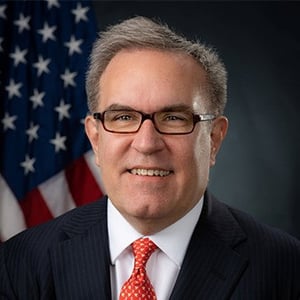
Holland & Hart, Partner
On February 28, 2019, the U.S. Senate confirmed Andrew Wheeler as the fifteenth Administrator of the Environmental Protection Agency. President Donald J. Trump had announced his appointment as the Acting EPA Administrator on July 5, 2018. Mr. Wheeler had previously been confirmed by the U.S. Senate as the EPA Deputy Administrator on April 12, 2018.
Mr. Wheeler has dedicated his career to advancing sound environmental policies. He began his career during the George H. W. Bush Administration as a Special Assistant in EPA’s Pollution Prevention and Toxics office.
He was a Principal and the team leader of the Energy and Environment Practice Group at FaegreBD Consulting, as well as Counsel at Faegre Baker Daniels law firm, where he practiced since 2009. He also served as the Co-chair of the Energy and Natural Resources Industry team across the entire firm.
Prior to his work with the firm, Mr. Wheeler served for six years as the Majority Staff Director and Chief Counsel, as well as the Minority Staff Director, of the Senate Committee on Environment and Public Works. Before his time at the full Senate EPW Committee, Mr. Wheeler served in a similar capacity for six years for the Subcommittee on Clean Air, Climate Change, Wetlands and Nuclear Safety.
Mr. Wheeler is the past Chairman of the National Energy Resource Organization (NERO) and a Stennis Fellow. Mr. Wheeler is also an Eagle Scout.
Mr. Wheeler is from Fairfield, Ohio. He completed his law degree at Washington University in St. Louis, his MBA at George Mason University, and his undergraduate work at Case Western Reserve University in English and Biology.
Professor of Law, University of Minnesota Law School
Professor James W. Coleman is a scholar of energy law. He specializes in North American energy infrastructure, transport, and trade. He is also a nonresident senior fellow at the American Enterprise Institute focused on energy policy.
Professor Coleman has testified before Congress on steps to speed up energy infrastructure permits. He also worked with a team of experts as part of Alberta's Royalty Review to revise the Canadian province's management of its vast oil and gas resources.
Before joining Minnesota, Professor Coleman taught at Southern Methodist University's Dedman School of Law, the University of Calgary’s law and business schools, and Harvard Law School. Earlier, he practiced environmental and appellate law at Sidley Austin in Washington, D.C., and clerked for the Honorable Steven M. Colloton of the U.S. Court of Appeals for the Eighth Circuit.
Professor Coleman received two degrees from Harvard University—a J.D. (cum laude) and B.A. in biology (magna cum laude with highest honors in the field). As a result of his undergraduate thesis on butterfly genetics, which required fieldwork in Central Asia, a species of lycaenid butterfly was named after him—Agrodiaetus ripartii colemani.
Director, Climate & Clean Air Program, Natural Resources Defense Council
David Doniger has been at the forefront of the battle against air pollution and global climate change since he joined NRDC in 1978. He helped formulate the Montreal Protocol, an international agreement designed to stop the depletion of the earth's ozone layer, as well as several essential amendments to the Clean Air Act. In 1993, he left NRDC to serve on the White House Council on Environmental Quality, followed by key posts at the U.S. Environmental Protection Agency. He rejoined NRDC in 2001 and has since been working to defend the Clean Air Act from assaults in Congress. He is based in Washington, D.C.
Vice President of Policy and Advocacy, Citizens For Responsible Energy Solutions
Charles Hernick is the Vice President of Policy and Advocacy at Citizens for Responsible Energy Solutions (CRES) in Washington DC. Charles leads CRES Forum’s policy work and executes strategies to advance clean energy solutions and innovative approaches to reducing carbon emissions.
Charles is an energy expert who understands emerging clean technologies, market barriers, and policies and regulations. For over a decade he has worked at the crossroads of economic development, energy, and natural resource management across the U.S. and on the ground in over a dozen countries in Africa, Latin America, and the Caribbean. Before joining CRES, he advised executive-level decision-makers at the U.S. Environmental Protection Agency and U.S. Agency for International Development on energy and environmental issues, and identified project-level opportunities for clean energy expansion.
He is also a climate change expert who has integrated climate change considerations into U.S. government programs and policies and has authored climate mitigation and adaptation best practice guidelines for over a dozen development sectors.
Charles was the Republican candidate for U.S. House of Representatives in Virginia’s 8th Congressional District in the November 2016 election. He routinely advises candidates seeking public office on energy and economic growth.
He is a frequent guest on radio shows and webcasts, in university classrooms, and at international workshops to discuss clean energy and associated economic, national security, and environmental issues. He conducts interviews in English or Spanish.
Charles as an M.A. in International Relations and Environmental Policy from Boston University and a B.S. in Ecology, Evolution, and Behavior from the University of Minnesota.
Holland & Hart, Partner
On February 28, 2019, the U.S. Senate confirmed Andrew Wheeler as the fifteenth Administrator of the Environmental Protection Agency. President Donald J. Trump had announced his appointment as the Acting EPA Administrator on July 5, 2018. Mr. Wheeler had previously been confirmed by the U.S. Senate as the EPA Deputy Administrator on April 12, 2018.
Mr. Wheeler has dedicated his career to advancing sound environmental policies. He began his career during the George H. W. Bush Administration as a Special Assistant in EPA’s Pollution Prevention and Toxics office.
He was a Principal and the team leader of the Energy and Environment Practice Group at FaegreBD Consulting, as well as Counsel at Faegre Baker Daniels law firm, where he practiced since 2009. He also served as the Co-chair of the Energy and Natural Resources Industry team across the entire firm.
Prior to his work with the firm, Mr. Wheeler served for six years as the Majority Staff Director and Chief Counsel, as well as the Minority Staff Director, of the Senate Committee on Environment and Public Works. Before his time at the full Senate EPW Committee, Mr. Wheeler served in a similar capacity for six years for the Subcommittee on Clean Air, Climate Change, Wetlands and Nuclear Safety.
Mr. Wheeler is the past Chairman of the National Energy Resource Organization (NERO) and a Stennis Fellow. Mr. Wheeler is also an Eagle Scout.
Mr. Wheeler is from Fairfield, Ohio. He completed his law degree at Washington University in St. Louis, his MBA at George Mason University, and his undergraduate work at Case Western Reserve University in English and Biology.
Director, GW Regulatory Studies Center & Distinguished Professor of Practice, Trachtenberg School of Public Policy & Public Administration, The George Washington University
Susan Dudley is the Founder and Director of the George Washington University Regulatory Studies Center, established in 2009 to raise awareness of regulations’ effects and improve regulatory policy through research, education, and outreach. She is also a distinguished professor of practice in the Trachtenberg School of Public Policy and Public Administration. She is past-president of the Society for Benefit Cost Analysis, a senior fellow of the Administrative Conference of the United States, and on the Regulatory Transparency Project Regulatory Practice Working Group. Her book, Regulation: A Primer, with Jerry Brito, is available on Amazon.com.
From April 2007 through January 2009, Professor Dudley served as the Presidentially-appointed Administrator of the Office of Information and Regulatory Affairs in the U.S. Office of Management and Budget and was responsible for the review of draft executive branch regulations under Executive Order 12866, the collection of federal-government-wide information under the Paperwork Reduction Act, the development and implementation of government-wide policies in the areas of information policy, privacy, and statistical policy, and international regulatory cooperation efforts.
Prior to OIRA, she directed the Regulatory Studies Program at the Mercatus Center at George Mason University, and taught courses on regulation at the George Mason University School of Law. Earlier in her career, Professor Dudley served as an economist at OIRA, as well as the Environmental Protection Agency and the Commodity Futures Trading Commission. She was also a consultant to government and private clients at Economists Incorporated. She holds a Master of Science degree from the Sloan School of Management at MIT and a Bachelor of Science degree (summa cum laude) in Resource Economics from the University of Massachusetts, Amherst.

Deputy Secretary of Transportation, US Department of Transportation
Steven G. Bradbury was sworn in as the Deputy Secretary of Transportation on March 13, 2025, following his confirmation by the U.S. Senate on March 11, 2025. In this role, he oversees the Department’s operating administrations and spearheads initiatives to ensure a safe, efficient, and modern transportation system that strengthens economic productivity and global competitiveness. Deputy Secretary Bradbury also assists Secretary Duffy in managing the Department’s activities, including its workforce of over 58,000 employees and an annual budget exceeding $109 billion.
Bradbury previously served as the 23rd General Counsel of the Department of Transportation from 2017 to 2021, as the Acting Deputy Secretary from 2019, and as Acting Secretary of Transportation in 2021. As General Counsel, he was the chief legal officer, advising on all legal matters and ensuring the integrity and compliance of the Department’s policies and programs.
Before rejoining DOT, Bradbury was a Distinguished Fellow at The Heritage Foundation from December 2022 to March 2025. He has extensive experience in the public and private sector, having served as Principal Deputy and Acting Assistant Attorney General at the U.S. Department of Justice and as a partner at Kirkland & Ellis LLP and Dechert LLP. Earlier in his career, he clerked for Justice Clarence Thomas and Judge James L. Buckley.
Bradbury holds a J.D., magna cum laude, from the University of Michigan Law School and a B.A. in English from Stanford University.
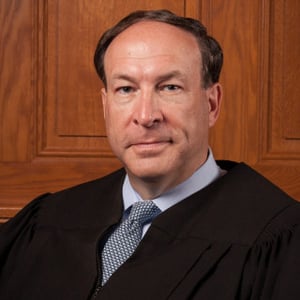
Judge, United States Court of Appeals, Seventh Circuit
Michael B. Brennan was confirmed and sworn in as a Circuit Judge for the U.S. Court of Appeals for the Seventh Circuit in May 2018.
He previously worked as a partner in the Milwaukee law firm of Gass Weber Mullins LLC, where he tried cases and handled appeals in federal and state courts, as a judge on the Milwaukee County Circuit, where he presided over a variety of criminal and civil calendars, and as an assistant district attorney in the Milwaukee County District Attorney’s office.
Brennan’s undergraduate degree is from the University of Notre Dame, and his law degree from Northwestern University School of Law, where he was an editor on the law review and the moot court champion. He served as a law clerk on the U.S. District Court for the Eastern District of Wisconsin and the U.S. Court of Appeals for the Seventh Circuit.

Edward B. Shils Professor of Law and Professor of Political Science; Director, Penn Program on Regulation, University of Pennsylvania Law School
Cary Coglianese is the Edward B. Shils Professor of Law and Professor of Political Science at the University of Pennsylvania, where he currently serves as the director of the Penn Program on Regulation and has served as the law school’s Deputy Dean for Academic Affairs. He specializes in the study of regulation and regulatory processes, with an emphasis on the empirical evaluation of alternative regulatory strategies and the role of public participation, negotiation, and business-government relations in policy making. His most recent books include: Achieving Regulatory Excellence; Does Regulation Kill Jobs?; Regulatory Breakdown: The Crisis of Confidence in U.S. Regulation; Import Safety: Regulatory Governance in the Global Economy; and Regulation and Regulatory Processes.
Prior to joining Penn Law, Coglianese spent a dozen years on the faculty at Harvard University’s John F. Kennedy School of Government. He also has taught as a visiting law professor at Stanford and Vanderbilt, founded the Law & Society Association’s international collaborative research network on regulatory governance, served as a founding editor of the peer-reviewed journal Regulation & Governance, and created and now advises the daily production of The Regulatory Review. The chair of the Administrative Conference of the United States' committee on rulemaking, he has led a National Science Foundation initiative on e-rulemaking, served on the ABA’s task force on improving Regulations.Gov, and chaired a task force on transparency and public participation in the regulatory process that offered a blueprint to the Obama Administration on open government. He is a co-chair of the American Bar Association’s administrative law section committee on e-government, past co-chair of the section's committee on rulemaking, and a past member of the section's Council. He currently serves as a member of a committee of the National Academies of Sciences, Engineering, and Medicine studying performance-based safety regulation and of an Aspen Institute dialogue on energy policy governance. He has served as a consultant to the Administrative Conference of the United States, Environment Canada, the Organization for Economic Cooperation and Development, the U.S. Department of Commerce, the U.S. Department of Transportation, and the U.S. Environmental Protection Agency.
Director, GW Regulatory Studies Center & Distinguished Professor of Practice, Trachtenberg School of Public Policy & Public Administration, The George Washington University
Susan Dudley is the Founder and Director of the George Washington University Regulatory Studies Center, established in 2009 to raise awareness of regulations’ effects and improve regulatory policy through research, education, and outreach. She is also a distinguished professor of practice in the Trachtenberg School of Public Policy and Public Administration. She is past-president of the Society for Benefit Cost Analysis, a senior fellow of the Administrative Conference of the United States, and on the Regulatory Transparency Project Regulatory Practice Working Group. Her book, Regulation: A Primer, with Jerry Brito, is available on Amazon.com.
From April 2007 through January 2009, Professor Dudley served as the Presidentially-appointed Administrator of the Office of Information and Regulatory Affairs in the U.S. Office of Management and Budget and was responsible for the review of draft executive branch regulations under Executive Order 12866, the collection of federal-government-wide information under the Paperwork Reduction Act, the development and implementation of government-wide policies in the areas of information policy, privacy, and statistical policy, and international regulatory cooperation efforts.
Prior to OIRA, she directed the Regulatory Studies Program at the Mercatus Center at George Mason University, and taught courses on regulation at the George Mason University School of Law. Earlier in her career, Professor Dudley served as an economist at OIRA, as well as the Environmental Protection Agency and the Commodity Futures Trading Commission. She was also a consultant to government and private clients at Economists Incorporated. She holds a Master of Science degree from the Sloan School of Management at MIT and a Bachelor of Science degree (summa cum laude) in Resource Economics from the University of Massachusetts, Amherst.

Segal Family Professor of Regulatory Law and Policy, New York University School of Law
Catherine Sharkey is the Segal Family Professor of Regulatory Law and Policy at NYU School of Law. She is a leading authority on torts, products liability, artificial intelligence in federal administrative agencies, public nuisance, punitive damages, and federal preemption of state tort law. She is a Senior Fellow of the Administrative Conference of the United States (ACUS), a member of its Roundtable on Artificial Intelligence in Federal Agencies, author of Algorithmic Tools in Retrospective Review (2023) and co-author of Government by Algorithm: Artificial Intelligence in Federal Administrative Agencies (2020). Sharkey is co-author of Cases and Materials on Torts (13th edition, 2024) and Business, Defamation, and Privacy Torts (1st ed., forthcoming 2025), and co-editor of Foundations of Tort Law (2nd edition, 2009). She is an elected member of the American Law Institute and an adviser to the Restatement Third, Torts: Liability for Economic Harm and Restatement Third, Torts: Remedies projects.
Senior Attorney, U.S. Commission on Civil Rights
Mr. Byrnes is a senior attorney at the United States Commission on Civil Rights and has served as an attorney to the Office of the Assistant Secretary for Civil Rights in the Department of Education.

Welcome & Plenary Session: Regulatory Review Reset?
Anthony Philip Campau, Susan E. Dudley, Sally Katzen, Andrew Olmem
Earlier this month, the White House released much-anticipated changes to federal regulatory practices, including a...
Deep Dive Episode 277 - Welcome & Plenary Session: Regulatory Review Reset?
Andrew Olmem, Anthony Philip Campau, Susan E. Dudley, Sally Katzen
Eleventh Annual Executive Branch Review Conference — EBRXITheme: Transparency, Accountability, and the Administrative State The White...
It Can Be Done Live: The Future of Our Earth
James W. Coleman, David D. Doniger, Susan E. Dudley, Charles Hernick, Nathan Kaczmarek, Andrew Wheeler
The creators of the award-winning documentary, They Say It Can't Be Done, in partnership with the...
Deep Dive Episode 138 – It Can Be Done Live: The Future of Our Earth
James W. Coleman, David D. Doniger, Charles Hernick, Andrew Wheeler, Susan E. Dudley
The creators of the award-winning documentary, They Say It Can’t Be Done, in partnership with...
Showcase Panel II: Balancing Insulation and Accountability of Agency Decisions
Steven Gill Bradbury, Michael B. Brennan, Cary Coglianese, Susan E. Dudley, Catherine M. Sharkey
Many federal government decisions that affect Americans’ day-to-day lives are made by agencies. Agency decisions,...
Executive Order 13583: Establishing a Coordinated Government-Wide Initiative to Promote Diversity
Christopher Byrnes
Note from the Editor: This article is about Executive Order (EO) 13583—Establishing a Coordinated Government-Wide...