
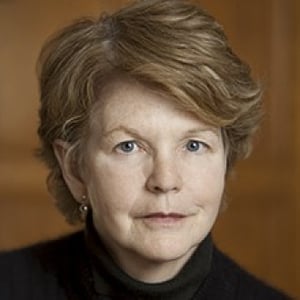
Howard M. Holtzmann Professor of International Law, Yale Law School
Lea Brilmayer is the Howard M. Holtzmann Professor of International Law at Yale Law School. In addition to teaching Contracts to first-year students, she also teaches Conflict of Laws and International Courts and Tribunals, as well as seminars on the laws of war and on African current affairs. Her degrees include a B.A. in mathematics and a J.D. from the University of California at Berkeley, as well as an LL.M. from Columbia Law School. Brilmayer has taught at a number of different law schools as either a professor or visiting professor, including the University of Texas, the University of Chicago, the University of Michigan, Columbia Law School, Harvard Law School, and the New York University School of Law (where she led a weekly seminar on International Jurisprudence.) She is a member of the Texas and Supreme Court bars. She has given numerous endowed lectures at other American law schools and has also taught twice at the summer session of the Hague Academy of International Law.
During her first decade of teaching, her writing interests mainly concerned conflict of laws (in particular, personal jurisdiction and choice of law); federal jurisdiction; and jurisprudence. Her conflict of laws writings have included one theoretical book on the subject and a leading casebook (in the more recent editions, co-authored with Jack Goldsmith). Together with a group of Yale student contributors, she published An Introduction to Jurisdiction in the American Federal System. Her writings on the conflict of laws have resulted in her being asked on a number of occasions to testify before Congressional committees, most recently on the Full Faith and Credit implications of same sex marriage. More recently, her interests have gradually turned to international law and international relations, and she is frequently cited for her academic writings about nationalism and the international legal status of secessionist movements. Her research in international jurisprudence has also led to two books, Justifying International Acts and American Hegemony: Political Morality in a One-Superpower World.
In addition to her academic interests, Brilmayer carries on an active life in interstate and international adjudication. In addition to contributing to amicus briefs, she has served as counsel of record before the United States Supreme Court and has been an expert consultant on many lower and intermediate appellate court cases. For the last decade she has served as lead counsel in several international public (state-to-state) arbitrations dealing with island sovereignty, maritime delimitation, land boundaries, and mass claims for violations of the laws of war.

Founding Partner, Cooper & Kirk PLLC
Charles J. Cooper is a founding member and the chairman of Cooper & Kirk, PLLC, “one of the Nation’s leading litigation boutiques” (Above The Law 2017). The National Law Journal recently wrote that Mr. Cooper’s “brilliant legal career has so far spanned five decades and thrust Cooper into the spotlight in some of the most historic moments of the country’s modern history.” He has argued nine cases before the United States Supreme Court and scores of appeals before each of the 13 federal courts of appeals and several state supreme courts. He has been lead trial counsel in numerous complex, weeks-long trials in federal courts throughout the country. Named by the National Law Journal as one of the 10 best litigators in Washington D.C., Mr. Cooper’s work has been reported in numerous press accounts, and he has been called a “powerhouse attorney” (Fortune 2015), “a hard-nosed litigator” (Washington Post 2017), and “one of the country’s most in-demand civil litigators and a Washington legal institution unto himself” (The American Spectator 2014).
After graduating from the University of Alabama School of Law in 1977, where he ranked first in his class and served as Editor-in-Chief of the Alabama Law Review, Mr. Cooper began his career as a law clerk to Judge Paul Roney on the Fifth Circuit Court of Appeals and to Justice William H. Rehnquist in 1978–79. He then practiced law in Atlanta for two years before joining the Civil Rights Division of the U.S. Department of Justice, where he served as the Deputy Assistant Attorney General in charge of, among other things, appellate matters. In 1985 President Reagan appointed him to the position of Assistant Attorney General for the Office of Legal Counsel, which is the office responsible for providing legal opinions and advice to the White House, the Attorney General, and Executive Branch departments and agencies on issues covering the full spectrum of federal constitutional, statutory, and regulatory law.
In 1988 he returned to private practice as a litigation partner in the Washington, D.C. office of McGuireWoods. From 1990 until the founding of Cooper & Kirk in 1996, he was a partner at Shaw Pittman (now Pillsbury Winthrop Shaw Pittman), where he headed the firm’s Constitutional and Government Litigation Group.
Mr. Cooper has represented a wide range of public and private clients in highly complex constitutional, civil rights, antitrust, healthcare, banking, intellectual property, elections, campaign finance, administrative, commercial, and government contract cases. He has led trial teams in cases that have won judgments and settlements valued in the billions of dollars and that have established ground-breaking constitutional precedents.
Much of Mr. Cooper’s practice has involved representing high-profile clients in nationally prominent matters, including: the State of Florida in a First Amendment suit brought by the Disney Company concerning its autonomous regulatory authority over its Disney World property; the Commonwealth of Virginia in a suit seeking to enjoin the removal of noncitizens from its voter rolls; 38 members of the Duke Lacrosse team falsely accused of rape by officials of Duke University and the City of Durham; Harper Lee in a copyright dispute with the heirs of Gregory Peck; high-ranking former government officials such as former Attorneys General John Ashcroft, Jeff Sessions, and William Barr, and Ambassador John Bolton; several Governors and United States Senators; over 100 Members of Congress; and many state, territorial, and local government bodies and officials. He has also represented and advised government officials and public figures in connection with sensitive private issues that needed to be, and were, resolved discreetly without becoming matters of public record.
In 1998 Chief Justice Rehnquist appointed Mr. Cooper to the Standing Committee on Rules of Practice and Procedure of the Judicial Conference of the United States, where he served for three terms. He also served as a Public Member, appointed by President George H.W. Bush, of the National Commission on Judicial Discipline and Removal. He is a member of numerous professional associations, including the American Law Institute (since 1993) and the American Academy of Appellate Lawyers (since 1996). He is also an active member of the Federalist Society and the Republican National Lawyers Association, which in 2010 named him Republican Lawyer of the Year and in 2016 honored him with its Edwin Meese III Award.
Mr. Cooper has published scores of articles and spoken extensively on constitutional and legal policy topics. He has appeared before congressional committees on 26 occasions, testifying as an expert on a wide variety of legal issues, including the Chevron doctrine of judicial deference to administrative agencies, the diversity of citizenship jurisdiction of federal courts, statehood bills for Puerto Rico and the District of Columbia, and the impeachment of President Clinton.

U.S. Court of Appeals, Seventh Circuit
Frank H. Easterbrook is a judge of the United States Court of Appeals for the Seventh Circuit and a Senior Lecturer at the Law School of the University of Chicago. He was Chief Judge from 2006–2013. Before joining the court in 1985, he was the Lee andBrena Freeman Professor of Law at the University of Chicago, where he taught and wrote in antitrust, securities, corporate law, jurisprudence, and criminal procedure. He has published The Economic Structure of Corporate Law (with Daniel R. Fischel) and about 100 scholarly articles. He served as Co-Editor of the Journal of Law and Economics from 1982 to 1991 and as a member of the Judicial Conference’s Standing Committee on Rules of Practice and Procedure from 1991 to 1997. Before joining the faculty of the Law School in 1979, Judge Easterbrook was Deputy Solicitor General of the United States. He holds degrees from Swarthmore College (B.A. with high honors, 1970) and the University of Chicago (J.D. cum laude, 1973), and is a member of the American Academy of Arts and Sciences, the American Law Institute, the Mont Pelerin Society, Phi Beta Kappa, and the Order of the Coif.
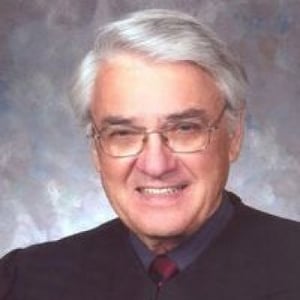
Senior Judge, United States Court of Appeals, Fifth Circuit
Patrick Errol Higginbotham is a federal judge on senior status with the United States Court of Appeals for the 5th Circuit. He joined the court in 1982 after being nominated by President Ronald Reagan.
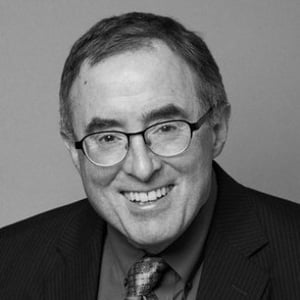
Contributing Writer, Vanity Fair
Michael Kinsley is a Contributing Writer for Vanity Fair, where his column appears monthly. Over a long career in the media, he has been Managing Editor of the Washington Monthly, Editor of the New Republic, and Editorial and Opinion Editor of the Los Angeles Times. He was the Founding Editor of Slate, one of the first on-line magazines. For over six years Kinsley was the liberal host of Crossfire, a CNN show where he sparred with Pat Buchanan five days a week. He played a similar role for many years with William F. Buckley on PBS’s Firing Line. He has written for The New Yorker, Conde Nast Traveler, and other publications.
U.S. Court of Appeals, Ninth Circuit
Stephen Roy Reinhardt is a federal appeals judge with the United States Court of Appeals for the Ninth Circuit in San Francisco. He joined the Court in 1980 after being nominated by President Jimmy Carter.
Born in New York City, New York, Reinhardt graduated from Pomona College with his Bachelor's degree in 1951 and later received a Bachelors of Laws degree, LL.B, from Yale Law School in 1954. Reinhardt served in the U.S. Air Force from 1954 to 1956 before becoming a law clerk for the Honorable Luther Youngdahl in the United States District Court for the District of Columbia until 1957. Reinhardt was a private practice attorney in the State of California from 1957 to 1980. Reinhardt was nominated to the United States Court of Appeals for the Ninth Circuit by President Jimmy Carter on November 30, 1979, to a new seat created by 92 Stat. 1629, which was approved by Congress. Reinhardt was confirmed by the U.S. Senate on September 11, 1980 and received commission on September 11, 1980.
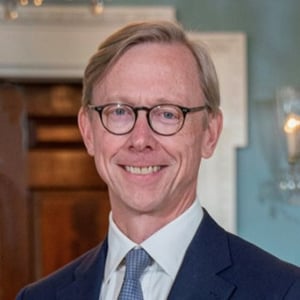
Founder, Latitude, LLC
Brian Hook is the founder of Latitude, LLC, an international strategic consulting firm based in Washington, DC.
Mr. Hook worked on the Romney campaign as senior advisor on foreign policy. He chaired the foreign policy and national security task forces of the Romney Readiness Project. From 2010-2011, he was the foreign policy director of Governor Tim Pawlenty’s presidential campaign.
Mr. Hook served in a number of positions during the Bush Administration, including Assistant Secretary of State for International Organizations; Senior Advisor to the U.S. Ambassador to the United Nations; Special Assistant to the President for Policy, Office of the Chief of Staff; and Counsel, Office of Legal Policy, at the Justice Department.
From 1999-2003, he practiced corporate law at Hogan & Hartson in Washington, D.C.
Before practicing law, he served as a policy advisor to Iowa Governor Terry Branstad and to U.S. Congressman James Leach.

Professor Emeritus of Law, Antonin Scalia Law School, George Mason University
Jeremy A. Rabkin is a Professor Emeritus of Law at the Antonin Scalia Law School, George Mason University. Before joining the faculty in June 2007, he was for over two decades a professor in the Department of Government at Cornell University. Professor Rabkin serves on the board of directors of the Center for Individual Rights, a public interest law firm based in Washington, D.C. Previously he was a board member of the U.S. Institute of Peace and the board of academic advisors of the American Enterprise Institute.
Professor Rabkin’s books include Law Without Nations? (Princeton University Press, 2005). He authored “If You Need a Friend, Don’t Call a Cosmopolitan,” a chapter in Varieties of Sovereignty and Citizenship (Sigal R. Ben-Porath & Rogers M. Smith eds., University of Pennsylvania Press, 2012). His articles have appeared in major law reviews and political science journals and his journalistic contributions in a range of magazines and newspapers, including the Washington Post and the Wall Street Journal.

Executive Vice President, Chief Legal Officer, Gates Corporation
Matthew R. A. Heiman joined the Company in May 2026 and has served as the Company’s Chief Legal Officer and Corporate Secretary since June 2026. As Chief Legal Officer, Mr. Heiman is responsible for all legal functions for Gates, including securities and corporate governance, M&A, litigation, commercial, regulatory, compliance, patents and trademarks, real estate, employment and labor, sustainability and environmental matters. Prior to joining Gates, Mr. Heiman held senior legal leadership roles at Waystar, where he served as Chief Legal & Administrative Officer from 2023 to 2025 and as General Counsel and Corporate Secretary from 2020 to 2023. Prior to that, he was with Johnson Controls, where he served as Vice President, Corporate Secretary, and Associate General Counsel. Mr. Heiman has been a Senior Fellow for the National Security Institute at George Mason University’s Antonin Scalia School of Law since 2018.
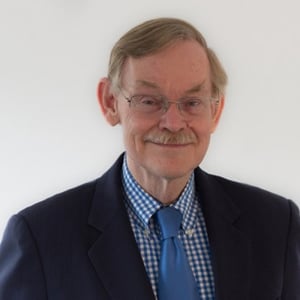
Senior Counselor, The Brunswick Group
Robert B. Zoellick is a Principal of Brunswick Group’s Geopolitical advisory offer and a Senior Fellow at the Belfer Center for Science and International Affairs at Harvard University’s Kennedy School of Government. In addition, Zoellick serves on the boards of Temasek, Singapore’s Sovereign Wealth Fund, and Twitter, Inc., and is on the Advisory Board of Swiss Re. He is a member of the boards of the Peterson Institute for International Economics and the Carnegie Endowment, chairs the Global Tiger Initiative, and is a member of the Global Leadership Council of Mercy Corps, a global humanitarian agency.
Zoellick was the President of the World Bank Group from 2007-12, U.S. Trade Representative from 2001 to 2005, and Deputy Secretary of State from 2005 to 2006. From 1985 to 1993, Zoellick served as Counselor to the Secretary of the Treasury and Under Secretary of State, as well as White House Deputy Chief of Staff.
Zoellick is a recipient of the Distinguished Service Award, the Department of State’s highest honor, the Alexander Hamilton Award of the Department of the Treasury, and the Medal for Distinguished Public Service of the Department of Defense. The German government awarded him the Knight Commanders Cross for his achievements in the course of German unification. The Mexican and Chilean governments awarded him their highest honors for non-citizens, the Aztec Eagle and the Order of Merit, for recognition of his work on free trade, development, and the environment.
Zoellick holds a J.D. magna cum laude from the Harvard Law School, a master's degree in public policy from Harvard's Kennedy School of Government, and a bachelor's degree from Swarthmore College.
Executive Vice President, Chief Legal Officer, Gates Corporation
Matthew R. A. Heiman joined the Company in May 2026 and has served as the Company’s Chief Legal Officer and Corporate Secretary since June 2026. As Chief Legal Officer, Mr. Heiman is responsible for all legal functions for Gates, including securities and corporate governance, M&A, litigation, commercial, regulatory, compliance, patents and trademarks, real estate, employment and labor, sustainability and environmental matters. Prior to joining Gates, Mr. Heiman held senior legal leadership roles at Waystar, where he served as Chief Legal & Administrative Officer from 2023 to 2025 and as General Counsel and Corporate Secretary from 2020 to 2023. Prior to that, he was with Johnson Controls, where he served as Vice President, Corporate Secretary, and Associate General Counsel. Mr. Heiman has been a Senior Fellow for the National Security Institute at George Mason University’s Antonin Scalia School of Law since 2018.
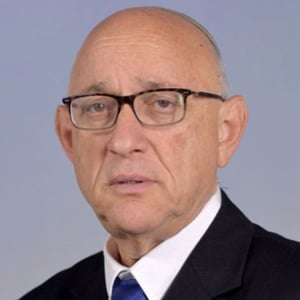
Senior Fellow, Foundation for Defense of Democracies
BG (Res.) Professor Jacob Nagel is a senior fellow at FDD and a visiting professor at the Technion Aerospace Engineering Faculty. Nagel was a career Israeli civil servant official (IDF, Defense Ministry and Prime Minister’s Office) for over 40 years.
From January 2016 to May 2017, Jacob served as the head of Israel’s National Security Council (NSC) and as Prime Minister Benjamin Netanyahu’s National Security Advisor (acting). He led the negotiations and signed the agreement for 38 billion dollar military aid to Israel from 2018 to 2027.
From May 2011 to December 2015, Jacob headed the Strategic and Defense Policy Directorate at Israel’s NSC, where he led the Israeli experts team working with the countries that negotiated the Joint Comprehensive Plan of Action (JCPOA), commonly known as the Iran nuclear deal.
From April 1996 to April 2011, Jacob held various positions at Israel’s Ministry of Defense, Directorate of Defense Research and Development, including the head of military R&D (acting), and Directorate’s Scientific Deputy, he headed the so-called “Nagel Committee,” which was responsible for Israel’s decision to develop Iron Dome as the nation’s short-range defense system.
From October 1979 to April 1996, Jacob served in several positions at the Israel Defense Forces (IDF), in the elite Israel SIGINT National Unit (known as Unit 8200).
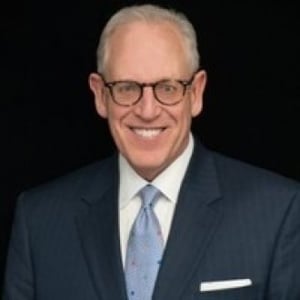
Senior Fellow, George Mason University National Security Institute
Bryan Smith is a Senior Fellow at the George Mason University National Security Institute.
Senior Fellow, CNA
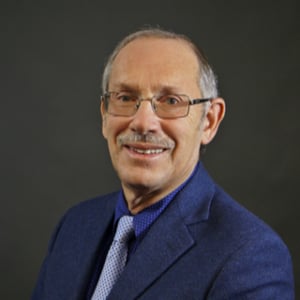
Dov Zakheim is an expert in defense strategy, programs and budgets, defense acquisition and contracting, defense-industrial collaboration, inter-agency process, Iraq, missile defense, and naval strategy, policy and organization. His research and analysis, as well as policymaking responsibilities, span the gamut of defense planning, programming and budgeting issues, wartime contracting and acquisition, and major developments in Europe, the Middle East, North Africa and East and Southeast Asia. He is also an Executive Advisor to the Chief of Naval Operations.
Previously, Zakheim was Senior Vice President of Booz Allen Hamilton, where he led the firm's support of U.S. Combatant Commanders worldwide. He also served as Under Secretary of Defense (Comptroller) and Chief Financial Officer for the Department of Defense, coordinator of DOD's civilian programs in Afghanistan, and Deputy Under Secretary of Defense for Planning and Resources in the Office of the Under Secretary of Defense (Policy). He is a member of the boards of several institutions, including the Atlantic Council, the Center for the National Interest, the Foreign Policy Research Institute and the Defense Business Board of the DOD.
Zakheim has a D.Phil. in Economics and Politics from St. Antony's College at the University of Oxford and a B.A. in Government from Columbia University. He speaks French and Hebrew.
Sterling Professor of International Law, Yale Law School
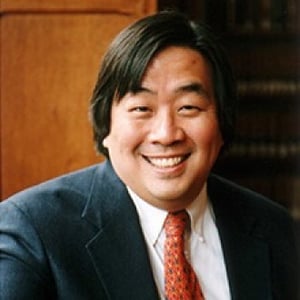
Harold Hongju Koh is Sterling Professor of International Law at Yale Law School. He returned to Yale Law School in January 2013 after serving for nearly four years as the 22nd Legal Adviser of the U.S. Department of State.
Professor Koh is one of the country’s leading experts in public and private international law, national security law, and human rights. He first began teaching at Yale Law School in 1985 and served as its fifteenth Dean from 2004 until 2009. From 2009 to 2013, he took leave as the Martin R. Flug ’55 Professor of International Law to join the State Department as Legal Adviser, service for which he received the Secretary of State's Distinguished Service Award. From 1993 to 2009, he was the Gerard C. & Bernice Latrobe Smith Professor of International Law at Yale Law School, and from 1998 to 2001, he served as U.S. Assistant Secretary of State for Democracy, Human Rights and Labor.
Professor Koh has received seventeen honorary degrees and more than thirty awards for his human rights work, including awards from Columbia Law School and the American Bar Association for his lifetime achievements in international law. He has authored or co-authored eight books, published more than 200 articles, testified regularly before Congress, and litigated numerous cases involving international law issues in both U.S. and international tribunals. He is a Fellow of the American Philosophical Society and the American Academy of Arts and Sciences, an Honorary Fellow of Magdalen College, Oxford, and a member of the Council of the American Law Institute.
He holds a B.A. degree from Harvard College and B.A. and M.A. degrees from Oxford University, where he was a Marshall Scholar. He earned his J.D. from Harvard Law School, where he was Developments Editor of the Harvard Law Review. Before coming to Yale, he served as a law clerk for Justice Harry A. Blackmun of the United States Supreme Court and Judge Malcolm Richard Wilkey of the U.S. Court of Appeals for the D.C. Circuit, worked as an attorney in private practice in Washington, and served as an Attorney-Adviser for the Office of Legal Counsel, U.S. Department of Justice.
David C. Baum Professor Emeritus, University of Illinois College of Law
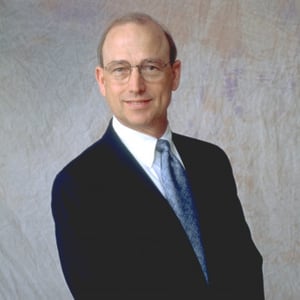
John Nowak graduated from College of Law in 1971, with the highest grade point average in the graduating class. During his third year at the College of Law, he served as the editor-in-chief of the University of Illinois Law Forum [now renamed as the University of Illinois Law Review]. Following graduation, John clerked for Justice Walter Schaefer of the Illinois Supreme Court. Professor Nowak joined the University of Illinois College of Law faculty in 1972; for thirty years he was what academics euphemistically call “a full-time professor.” He was the David C. Baum Professor at the College of Law from 1993 until his retirement in 2002; he received the “outstanding professor award” from three graduating classes of the College. As an emeritus professor, John taught courses at the College of Law from 2002 to 2008.
In 2008, Professor Nowak was the first professor appointed to the Raymond and Mary Simon Chair in Constitutional Law at Loyola University Chicago. He served in that position at Loyola from 2008-2014; he was awarded the “outstanding professor award” by the Loyola graduating class of 2011. In 2014, illness once again led Professor Nowak to retire. The Loyola University Chicago Board of Trustees awarded Professor Nowak the title of Professor and Raymond and Mary Simon Chair in Constitutional Law Emeritus.
Professor Nowak is the author, or coauthor, of more than a score of law review articles, including articles in the California, Columbia, Georgetown, Michigan, Northwestern, U.C.L.A., and Virginia Law Reviews, and the Supreme Court Review (published by the University of Chicago Press). With Jenner Professor Emeritus Professor Ronald D. Rotunda, Professor Nowak has coauthored: Concise Hornbook on Constitutional Law (4th edition, Thomson-West 2010); Constitutional Law (8th edition, Thomson-West 2010); and the six-volume Treatise on Constitutional Law: Substance and Procedure (5th ed., 2012-2013, West & Thomson-Reuters-Westlaw). Their multi-volume Treatise, which has annual supplements, also serves as the “conlaw” database on Westlaw. A chapter of Constitutional Law was translated into Korean by Professor Lee Boo-Ha, Yeungnam University College of Law and Political Science, and published in Korea as Nowak & Rotunda, Freedom of Speech and the American Constitution. Professors Nowak and Rotunda are also the editors of Story’s Commentaries on the Constitution (1987, Carolina Academic Press).
Professor Nowak has been a scholar in residence at the University of Arizona; a visiting professor at the University of Michigan; the Lee Distinguished Visiting Professor at the College of William and Mary, and the Williams Visiting Professor at the University of Richmond. He has presented lectures at several law schools; the National Conference of Law Reviews annual meeting; and at a variety of Federal Judicial Center programs. Professor Nowak served as Reporter for the National Center for State Courts’ Task Force on Courts in the American System of Government; Reporter for the Illinois Supreme Court’s Committee on Jury Instructions in Criminal Cases; Reporter for the United States District Courts for the Central and Southern Districts of Illinois Speedy Trial Act Planning Groups; and as a member of the Rules Committee of the United States District Court for the Northern District of Illinois.
Professor Nowak is a member of the American Bar Foundation, and a “life member” of the American Law Institute. He has served as a member of the Order of the Coif Triennial Book Award Committee; and as a member or a chairperson of the several committees of the Association of American Law Schools. Twice, Professor Nowak was elected to serve as the chairperson of the AALS Section on Constitutional Law. He served as the University of Illinois Faculty Athletic Representative to the Big Ten Conference and NCAA from 1981 through 1989; and a member of the NCAA’s Committee on Infractions from 1987 to 1990. Professor Nowak served as the “Interim Deputy Chancellor for Intercollegiate Athletics,” during the time when the University of Illinois Division of Intercollegiate Athletics replaced the University’s “Athletic Association,” and the campus did not have an Athletics Director.
Former General Counsel of the U.S. Immigration and Naturalization, Former United States Ambassador to East Timor
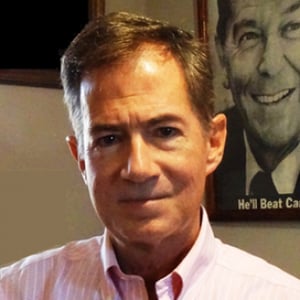
Grover Joseph Rees is a Louisiana native whose family has lived in the Breaux Bridge/Lafayette area since the 1700s.
His first job after college was as an assistant to Congressman Dave Treen (R-LA3), who had just been elected as the first Republican Congressman from Louisiana since Reconstruction.
Rees graduated with honors from LSU Law School, where he served as Editor-in-Chief of the Louisiana Law Review. While in law school he worked on Ronald Reagan’s 1976 presidential campaign and was a Reagan delegate from Louisiana to the Republican National Convention. He also served as a member of the Lafayette Parish Republican Executive Committee and as a board member of Acadiana Right to Life.
In 1979, when Congressman Treen ran successfully for Governor, he asked Rees to write his authorized biography. The book, Dave Treen of Louisiana, was read and discussed widely during the campaign and after Treen’s election.
In 1985-86 Rees served as Special Counsel for Judicial Selection in President Reagan’s Justice Department, working closely with Attorney General Ed Meese to reorganize the judicial selection process to make it more philosophically oriented. These efforts resulted in the appointment of over 100 federal judges and were widely credited with transforming the federal judiciary.
From 1986 through 1991 Rees served as Chief Justice of the High Court of American Samoa, an Article I federal judicial position.
From 1991 through 1993 he was General Counsel of the U.S. Immigration and Naturalization Service.
In 1995 Rees went to work for the new Republican Congress as staff director and chief counsel of the Subcommittee on International Operations and Human Rights. He worked with subcommittee chairman Chris Smith (R.-N.J.) to cut U.S. funding for the International Planned Parenthood Federation and other organizations that perform and promote abortions overseas. Rees also worked on the drafting and enactment of the International Religious Freedom Act, the Trafficking Victims Protection Act, and other legislation that has helped to bring U.S. foreign policy into closer alignment not only with our national interests but also with our values.
In 2001-2002 Rees worked for Congressman Henry Hyde (R.-Ill.), who was then serving as Chairman of the House International Relations Committee.
From 2002 until 2006 Rees served as the first United States Ambassador to newly independent East Timor.
From 2006 until 2009 Ambassador Rees was the United States Special Representative for Social Issues, responsible for representing the United States on issues relating to vulnerable persons and the family within the United Nations system.
Ambassador Rees retired from government service in January 2009 and returned to Lafayette. He is married to Lan Dai Nguyen Rees and is a member of St. Genevieve’s Catholic parish in Lafayette. He was recently elected to serve as a member of the Louisiana Republican State Central Committee.
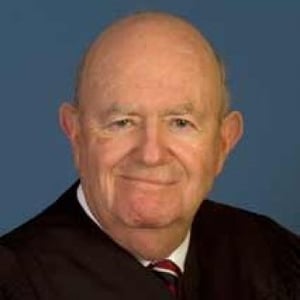
Judge, United States Court of Appeals, District of Columbia Circuit
LAURENCE HIRSCH SILBERMAN, senior circuit judge; recipient of the Presidential Medal of Freedom, June 19, 2008; born in York, PA, October 12, 1935; son of William Silberman and Anna (Hirsch); married to Rosalie G. Gaull on April 28, 1957 (deceased), married Patricia Winn on January 5, 2008; children: Robert Steven Silberman, Katherine DeBoer Fischer, and Anne Gaull Otis; B.A., Dartmouth College, 1957; LL.B., Harvard Law School, 1961; admitted to Hawaii Bar, 1962; District of Columbia Bar, 1973; associate, Moore, Torkildson and Rice, 1961–64; partner (Moore, Silberman and Schulze), Honolulu, 1964–67; attorney, National Labor Relations Board, Office of General Counsel, Appellate Division, 1967–69; Solicitor, Department of Labor, 1969–70; Under Secretary of Labor, 1970–73; partner, Steptoe and Johnson, 1973–74; Deputy Attorney General of the United States, 1974–75; Ambassador to Yugoslavia, 1975–77; President’s Special Envoy on ILO Affairs, 1976; senior fellow, American Enterprise Institute, 1977–78; visiting fellow, 1978–85; managing partner, Morrison and Foerster, 1978–79 and 1983–85; executive vice president, Crocker National Bank, 1979–83; lecturer, University of Hawaii, 1962–63; board of directors, Commission on Present Danger, 1978–85, Institute for Educational Affairs, New York, NY, 1981–85, member: General Advisory Committee on Arms Control and Disarmament, 1981–85; Defense Policy Board, 1981–85; vice chairman, State Department’s Commission on Security and Economic Assistance, 1983–84; American Bar Association (Labor Law Committee, 1965–72, Corporations and Banking Committee, 1973, Law and National Security Advisory Committee, 1981–85); Hawaii Bar Association Ethics Committee, 1965–67; Council on Foreign Relations, 1977–present; Judicial Conference Committee on Court Administration and Case Management, 1994; member, U.S. Foreign Intelligence Surveillance Act Court of Review, 1996–2003; Adjunct Professor of Law (Administrative Law and Labor Law) Georgetown Law Center, 1987–94; 1997; Adjunct Professor of Law, Harvard Law School, 1994-95, Adjunct Professor of Law, New York University Law School, 1995–96; Distinguished Visitor from the Judiciary, Georgetown Law Center, 2003–2019; co-chairman of the President’s Commission on The Intelligence Capabilities of the United States Regarding Weapons of Mass Destruction, 2004–05; appointed to the U.S. Court of Appeals for the District of Columbia Circuit by President Reagan on October 28, 1985.
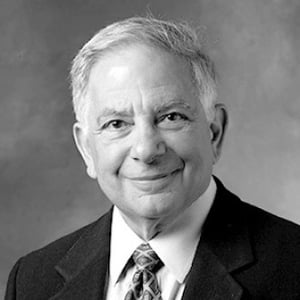
George P. Shultz Senior Fellow in Foreign Policy and National Security Affairs, Emeritus, Hoover Institution
Abraham D. Sofaer was appointed the first George P. Shultz Distinguished Scholar and Senior Fellow at the Hoover Institution in 1994. Named in honor of former US secretary of state George P. Shultz, the appointment is awarded to a senior scholar whose broad vision, knowledge, and skill will be brought to bear on the problems presented by a radically transformed global environment.
Sofaer's work focuses on the power over war within the US government and on issues related to international law, terrorism, diplomacy, and national security. His most recent books are Taking on Iran: Strength, Diplomacy, and the Iranian Threat(Hoover Institution Press, 2013) and The Best Defense?: Legitimacy and Preventive Force (Hoover Institution Press, 2010).
From 1985 to 1990, he served as a legal adviser to the US Department of State, where he resolved several interstate matters, including the dispute between Egypt and Israel over Taba, the claim against Iraq for its attack on the USS Stark, and the claims against Chile for the assassination of Orlando Letelier. He received the Distinguished Service Award in 1989, the highest state department award given to a non–civil servant.
From 1979 to 1985, Sofaer served as a US district judge in the Southern District of New York. From 1969 to 1979, he was a professor of law at Columbia University School of Law and wrote War, Foreign Affairs, and Constitutional Power: The Origins.From 1967 to 1969, he was an assistant US attorney in the Southern District of New York, after clerking for Judge J. Skelly Wright on the US Court of Appeals in Washington, DC, and the Honorable William J. Brennan Jr. on the US Supreme Court. He practiced law at Hughes, Hubbard and Reed from 1990 to 1994.
A veteran of the US Air Force, Sofaer received an LLB degree from New York University School of Law in 1965, where he was editor in chief of the law review. He holds a BA in history from Yeshiva College (1962). Sofaer is a founding trustee of the National Museum of Jazz in Harlem and a member of the board of the Koret Foundation.
His research papers are available at the Hoover Institution Archives.
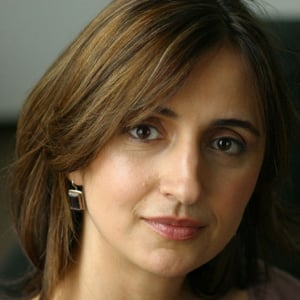
Author and Founding Member, Iran Human Rights Documentation Center
Roya Hakakian is a writer. Her opinion columns, essays and book reviews appear in English language publications like the New York Times, Wall Street Journal and NPR’s All Things Considered among many others. She has collaborated on over a dozen hours of programming for leading journalism units in network television, including CBS 60 Minutes. She currently serves as an editorial board member of World Affairs. An active thinker of foreign relations, Roya is a founding member of the Iran Human Rights Documentation Center. She has been featured in the Washington Post and the US News and World Report, among other publications. In the book, Political Awakenings by University of California at Berkeley’s Professor Harry Kreisler, she has been highlighted “among the most important activists, academics, and journalists of her generation.”
In 2008, she received a Guggenheim prize in nonfiction. It enabled her to complete the work on her most recent book, Assassins of the Turquoise Palace (Grove/Atlantic), about Iran’s terror campaign against exiled dissidents in Western Europe received the Asian American Literary Award for best non-fiction book in 2013. It was named a New York Times Notable Book in 2011, made Newsweek’s Top Ten Not-to-be-missed books and was among Kirkus Reviews Best Non-Fictions in the same year. Her account of the work of the German prosecutor of the case, a modern day Atticus Finch, moved the US Federal Bar Association to establish “the Rule of Law Award,” the first of which was bestowed upon that prosecutor in 2014 at the Daniel Moynihan Federal Courthouse in New York City.
Her memoir of growing up a Jewish teenager in post-revolutionary Iran, Journey from the Land of No: A Girlhood Caught in Revolutionary Iran (Crown) has been a celebrated Freshman Experience book at a number of colleges in the US. It was a Barnes and Noble’s Pick of the Week, Ms. Magazine Must Read of the Summer, Publishers Weekly’s Best Book of the Year, Elle Magazine’s Best Nonfiction Book of 2004, and was named Best Memoir by the Connecticut Center for the Book in 2005 and has been translated into several languages including German, Dutch, and Spanish.
She is currently at work on a new book at the The Woodrow Wilson International Center for Scholars where she has been awarded a fellowship in 2014. Talking to her readers is one of her great joys and she has addressed them at venues ranging from high schools on Native American reservations to the US Capitol and the CIA.
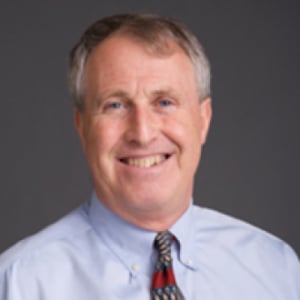
Professor of Law, Georgetown University Law Center
Professor Koplow specializes in the areas of public international law and national security law. He joined the Georgetown Law faculty in 1981. His principal courses have been International Law I (the introductory survey of public international law topics), a seminar in the area of arms control, non-proliferation and terrorism, and the pro-seminar for LLM students in national security law. In addition, he has directed a clinic, the Center for Applied Legal Studies, in which students provide pro bono representation to refugees who seek asylum in the United States because of persecution in their homelands. His government service has included stints as Special Counsel for Arms Control to the General Counsel of the Department of Defense (2009-2011); as Deputy General Counsel for International Affairs at the Department of Defense (1997-1999); and as Attorney-Advisor and Special Assistant to the Director of the U.S. Arms Control and Disarmament Agency (1978-1981). He is a graduate of Harvard College and Yale Law School and a Rhodes Scholar. Most of his scholarly writing concentrates on the intersection between international law and U.S. constitutional law, especially in the areas of arms control and national security and treaty negotiation and implementation.
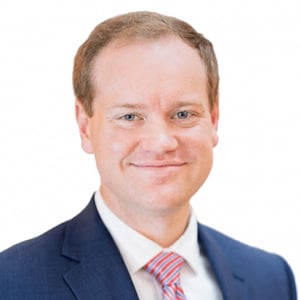
Legal Counsel, Global Religious Freedom, ADF International
Sean Nelson serves as Legal Counsel for Global Religious Freedom with ADF International, where he advocates on behalf of Christians and other religious minorities being persecuted for their faith around the world.
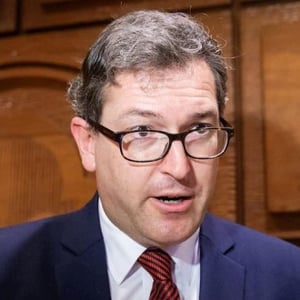
East Asia Team Leader, Christian Solidarity Worldwide
Benedict Rogers is a journalist and human rights advocate based in London. His work focuses mainly on Burma, North Korea and Indonesia. He is a regular contributor to The Wall Street Journal, The New York Times and The Huffington Post and has appeared on BBC, CNN, Sky, Al Jazeera and other television and radio stations. He is the co-founder and deputy chairman of the Conservative Party's human rights commission and the co-founder of the International Coalition to Stop Crimes Against Humanity in North Korea. He is also the East Asia Team Leader at Christian Solidarity Worldwide and the founder of Hong Kong Watch. He has written three books which focus on Burma, including A Land Without Evil: Stopping the Genocide of Burma's Karen People (Monarch, 2004) and Burma: A Nation at the Crossroads (2012), and co-authored two others on Christian human rights obligations.

Vice President for Legal Strategy, Stand Together
Casey Mattox is Vice President for Legal Strategy at Stand Together and Senior Advisor at
Americans for Prosperity. In these roles he advocates for and creates strategies and
partnerships to ensure a constitutionally limited government that protects the civil liberties of all
Americans. Prior to joining Stand Together and AFP Casey’s legal career focused on defending
the First Amendment rights of students, faculty, healthcare workers and religious organizations.
Casey has a J.D. from Boston College School of Law and an undergraduate degree from the
University of Virginia. You can find him on Twitter at @CaseyMattox_ and on LinkedIn at
@Casey-Mattox-ST.
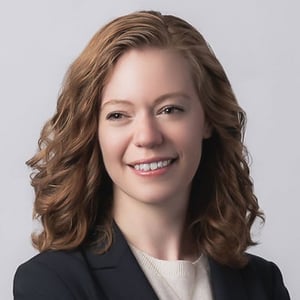
Associate, Wiley Rein LLP
Krystal represents and advises clients in a variety of complex litigation and appellate matters in state and federal courts. She has served in legal capacities in both public and private entities, including the U.S. Department of Justice and federal trial and appellate courts, and has extensive litigation experience ranging from pre-complaint investigations and discovery disputes to critical motions practice, trial preparation, and appeals. Krystal specializes in providing creative litigation solutions to give her clients a strategic advantage, both in and out of the courtroom.
Her experience spans a wide variety of practice areas, including government contracts, intellectual property, environment and product regulation, telecommunications, health care, as well as election law and government ethics. Krystal’s appellate work, including before the U.S. Supreme Court, has focused on significant First Amendment issues.
Krystal served as a law clerk for the Honorable Mark S. Davis on the U.S. District Court for the Eastern District of Virginia (the “Rocket Docket”). In addition, she served as a law clerk for the Honorable Alice M. Batchelder on the U.S. Court of Appeals for the Sixth Circuit.
Krystal also maintains an active pro bono practice, and for two consecutive years has won firm awards for her contributions. Most recently, she briefed and argued a multi-issue appeal of a trial verdict in the Ninth Circuit, and successfully obtained remand from the Board of Immigration Appeals after her client was denied protection under the U.N. Convention Against Torture.

Founding Partner, Boyden Gray & Associates
Ambassador C. Boyden Gray is the founding partner of Boyden Gray & Associates, a law and strategy firm in Washington, D.C., focused on constitutional and regulatory issues.
Mr. Gray worked in the White House for twelve years, first as counsel to the Vice President during the Reagan administration and then as White House Counsel to President George H.W. Bush. In the Reagan administration, he was Counsel to the Presidential Task Force on Regulatory Relief, for which he wrote the original Executive Order 12291 requiring cost-benefit analysis and White House review of regulations (later renumbered as current EO 12866). In the George H.W. Bush Administration, Mr. Gray was in charge of judicial selection and was also instrumental in the enactment of the Clean Air Act Amendments of 1990, the Energy Policy Act of 1992, and a cap-and-trade system for acid rain emissions. In 1993, he received the Presidential Citizens Medal. Under President George W. Bush, Mr. Gray was U.S. Ambassador to the European Union and U.S. Special Envoy to Europe for Eurasian Energy.
Mr. Gray practiced law for 25 years at the law firm of Wilmer, Cutler & Pickering and was chairman of the Administrative Law and Regulatory Practice Section of the American Bar Association from 2000 to 2002. Early in his career, Mr. Gray helped to develop the Business Roundtable and served as its first counsel. He is an adjunct professor at Antonin Scalia Law School and a former adjunct professor at NYU Law School (teaching energy and environmental law). Mr. Gray is on the Board of Directors of the Atlantic Council, the Federalist Society, Reason Foundation, and the Trust for the National Mall.
Mr. Gray earned his A.B. magna cum laude from Harvard, where he was an editor of the Crimson, and his J.D. with high honors from the University of North Carolina at Chapel Hill, where he was editor-in-chief of the Law Review. Mr. Gray served in the United States Marine Corps, and after law school, he clerked for Earl Warren, Chief Justice of the United States Supreme Court.

David McIntosh is a leader for the principles of limited constitutional government and individual freedom. He is president of the Club for Growth, the leading advocate for economic liberty.
Former Congressman David McIntosh represented Indiana's 2nd Congressional District in the United States Congress from 1995-2001. As a Freshman, David chaired the Subcommittee on Regulatory Relief. He passed the Congressional Review Act and held extensive oversight and field hearings to build a record of public support for regulatory relief initiatives in energy, biotechnology, pharmaceutical, healthcare, transportation and technology sectors. Another issue that he championed was the elimination of the marriage penalty in the Federal Tax Code.
David served during the Reagan administration as special assistant to Attorney General Edwin Meese III, and as special assistant to President Reagan for Domestic Affairs. During the first Bush administration, he served as executive director of the President's Council on Competitiveness and assistant to the Vice President. The Competitiveness Council coordinated the cost/benefit review of major regulations and promoted legal reform measures.
David is a co-founder of the Federalist Society for Law and Public Policy and serves on the Board of Directors. He remains active with several free market and conservative think tanks and grassroots organizations. David has also had stints at the Hudson Institute and as a Professor of Economics at Ball State School of Business.
Prior to the Club for Growth, David was a partner at Mayer Brown, LLP in Washington, DC.
David graduated from the University of Chicago Law School in 1983, and Yale University, BA, cum laude, in 1980. He and his wife, Ruthie, are the proud parents of Ellie age 17 and Davey age 13.
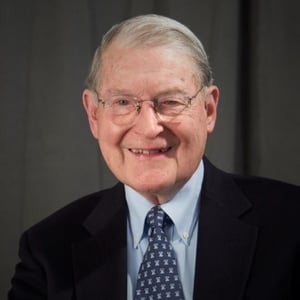
Chairman, Homeland Security Advisory Council
Judge William H. Webster is currently the Chairman of the Homeland Security Advisory Council (HSAC). Judge Webster was sworn in as director of the Central Intelligence Agency (CIA) on May 26, 1987. In this position he headed the United States intelligence community and directed the CIA until September 1991. Following his departure from the CIA, he joined the law firm of Milbank, Tweed, Hadley & McCloy, LLP in Washington, DC. Webster served as United States attorney for the Eastern District of Missouri from 1960 to 1961. In 1970, he was appointed a judge of the United States District Court for the Eastern District of Missouri and in 1973 was elevated to the United States Court of Appeals for the Eighth Circuit. During his service on the bench, Webster was chairman of the Judiciary Conference Advisory Committee on the Criminal Rules and was a member of the Ad Hoc Committee on Habeas Corpus and the Committee of Court Administration. He resigned on February 23, 1978 to become director of the Federal Bureau of Investigation, where he served for nearly a decade before moving on to lead all foreign intelligence agencies of the United States as CIA director.
On July 1, 1991 Judge Webster was presented the Distinguished Intelligence Medal and on July 25, 1991 he was awarded the Presidential Medal of Freedom and the National Security Medal. Webster earned bachelor’s degrees in history and political science, as well as an honorary Doctor of Laws degree, from Amherst College in Massachusetts. He received his law degree from Washington University, St. Louis, Missouri, in 1949. He served as a lieutenant in the United States Navy in World War II and again in the Korean War. He is a member of the Aspen Homeland Security Group.

Vice President, Edwin Meese III Institute for the Rule of Law, Advancing American Freedom
John G. Malcolm oversees Advancing American Freedom’s work to increase understanding of the Constitution and the rule of law as Vice President of the organization’s Edwin Meese III Institute for the Rule of Law. Malcolm brings to the challenge a wealth of legal expertise and experience in both the public and private sectors.
Prior to joining Advancing American Freedom in 2025, Malcolm was the Vice President of the Institute for Constitutional Government and the Director of the Meese Center for Legal and Judicial Studies at the Heritage Foundation. Prior to joining Heritage in 2012, Malcolm was general counsel at the U.S. Commission on International Religious Freedom, as well as a distinguished practitioner in residence at Pepperdine Law School. From 2004 to 2009, Malcolm was executive vice president and director of worldwide anti-piracy operations for the Motion Picture Association.
Malcolm served as a deputy assistant attorney general in the Department of Justice’s Criminal Division from 2001 to 2004, where he oversaw sections on computer crime and intellectual property, domestic security, child exploitation and obscenity, and special investigations. Immediately prior to that, he was a founding partner in the Atlanta law firm of Malcolm & Schroeder, LLP.
From 1990 to 1997, Malcolm was an assistant U.S. attorney in Atlanta, assigned to the fraud and public corruption section, and also an associate independent counsel, investigating fraud and abuse in the Department of Housing and Urban Development. He was honored with the Director’s Award for Superior Performance for his work in connection with the successful prosecution of Walter Leroy Moody Jr., who assassinated an 11th Circuit judge and the head of the Savannah chapter of the NAACP.
A graduate of Harvard Law School and Columbia College, Malcolm began his career as a law clerk to a federal district court judge and a federal appellate court judge, and as an associate at the Atlanta-based law firm of Sutherland, Asbill & Brennan (new Eversheds Sutherland).
Malcolm, who resides in Washington, D.C., serves on the Board of Trustees of the Washington National Opera and is a Senate-confirmed member of the Board of Directors of the Legal Services Corporation, the largest funder of civil legal aid in the United States.

Emanuel S. Heller Professor of Law, University of California at Berkeley; Thomas Smith Senior Research Fellow, The Civitas Institute, University of Texas at Austin
John Yoo is the Emanuel Heller Professor of Law at the University of California at Berkeley. He is also the Thomas Smith Senior Research Fellow, Civitas Institute, at the University of Texas at Austin. He is also a Nonresident Senior Fellow at the American Enterprise Institute.
His most recent book, The Politically Incorrect Guide to the Supreme Court, co-authored with Robert Delahunty, was published in 2023. Professor Yoo’s other books include Defender-in-Chief: Trump’s Fight for Presidential Power; Striking Power: How Cyber, Robots, and Space Weapons Change the Rules for War; Point of Attack: Preventive War, International Law, and Global Welfare; and Crisis and Command: A History of Executive Power from George Washington to George Bush.
He is a co-author of volumes 1 and 2 of R. Rossum, G. Tarr, V. Munoz & J. Yoo American Constitution Law (Routledge, 2026), and a co-editor of the eight-volume series on the 250th anniversary of the American Revolution, We Hold These Truths, with Yuval Levin and Adam White of the American Enterprise Institute.
Professor Yoo has published more than 100 articles in academic journals on subjects including national security, constitutional law, international law, and the Supreme Court. He also regularly contributes to the editorial pages of the Wall Street Journal, New York Times, Washington Post, Los Angeles Times, and National Review, among others.
Professor Yoo has served in all three branches of government. He was an official in the U.S. Department of Justice, where he worked on national security and terrorism issues after the 9/11 attacks. He served as general counsel of the U.S. Senate Judiciary Committee. He has been a law clerk for Supreme Court Justice Clarence Thomas and federal appeals Judge Laurence Silberman. He has been a visiting professor at the University of Texas at Austin’s School of Civic Leadership, Seoul National University, the Interdisciplinary Center Herzliya, Keio University, Trento University, the University of Chicago, and the Free University of Amsterdam.
Professor Yoo supervises the Public Law and Policy Program and the California Constitution Center. He also serves on the boards of Founding Forward, the Washington Legal Foundation, the Pacific Legal Foundation, the Ulysses Grant Institute, the Federalist Society’s Separation of Powers and Federalism Division, the Universidad Cientifica del Sur Law School, and the Asia-Pacific Law Institute at Seoul National University. He is a winner of the Federalist Society’s Paul Bator award and the Heritage Foundation’s Edwin Meese III Originalism Lectureship.
Professor Yoo graduated from Yale Law School and summa cum laude from Harvard College.
Executive Vice President, Chief Legal Officer, Gates Corporation
Matthew R. A. Heiman joined the Company in May 2026 and has served as the Company’s Chief Legal Officer and Corporate Secretary since June 2026. As Chief Legal Officer, Mr. Heiman is responsible for all legal functions for Gates, including securities and corporate governance, M&A, litigation, commercial, regulatory, compliance, patents and trademarks, real estate, employment and labor, sustainability and environmental matters. Prior to joining Gates, Mr. Heiman held senior legal leadership roles at Waystar, where he served as Chief Legal & Administrative Officer from 2023 to 2025 and as General Counsel and Corporate Secretary from 2020 to 2023. Prior to that, he was with Johnson Controls, where he served as Vice President, Corporate Secretary, and Associate General Counsel. Mr. Heiman has been a Senior Fellow for the National Security Institute at George Mason University’s Antonin Scalia School of Law since 2018.
Senior Fellow, Foundation for Defense of Democracies
BG (Res.) Professor Jacob Nagel is a senior fellow at FDD and a visiting professor at the Technion Aerospace Engineering Faculty. Nagel was a career Israeli civil servant official (IDF, Defense Ministry and Prime Minister’s Office) for over 40 years.
From January 2016 to May 2017, Jacob served as the head of Israel’s National Security Council (NSC) and as Prime Minister Benjamin Netanyahu’s National Security Advisor (acting). He led the negotiations and signed the agreement for 38 billion dollar military aid to Israel from 2018 to 2027.
From May 2011 to December 2015, Jacob headed the Strategic and Defense Policy Directorate at Israel’s NSC, where he led the Israeli experts team working with the countries that negotiated the Joint Comprehensive Plan of Action (JCPOA), commonly known as the Iran nuclear deal.
From April 1996 to April 2011, Jacob held various positions at Israel’s Ministry of Defense, Directorate of Defense Research and Development, including the head of military R&D (acting), and Directorate’s Scientific Deputy, he headed the so-called “Nagel Committee,” which was responsible for Israel’s decision to develop Iron Dome as the nation’s short-range defense system.
From October 1979 to April 1996, Jacob served in several positions at the Israel Defense Forces (IDF), in the elite Israel SIGINT National Unit (known as Unit 8200).
Senior Fellow, George Mason University National Security Institute
Bryan Smith is a Senior Fellow at the George Mason University National Security Institute.
Senior Fellow, CNA
Dov Zakheim is an expert in defense strategy, programs and budgets, defense acquisition and contracting, defense-industrial collaboration, inter-agency process, Iraq, missile defense, and naval strategy, policy and organization. His research and analysis, as well as policymaking responsibilities, span the gamut of defense planning, programming and budgeting issues, wartime contracting and acquisition, and major developments in Europe, the Middle East, North Africa and East and Southeast Asia. He is also an Executive Advisor to the Chief of Naval Operations.
Previously, Zakheim was Senior Vice President of Booz Allen Hamilton, where he led the firm's support of U.S. Combatant Commanders worldwide. He also served as Under Secretary of Defense (Comptroller) and Chief Financial Officer for the Department of Defense, coordinator of DOD's civilian programs in Afghanistan, and Deputy Under Secretary of Defense for Planning and Resources in the Office of the Under Secretary of Defense (Policy). He is a member of the boards of several institutions, including the Atlantic Council, the Center for the National Interest, the Foreign Policy Research Institute and the Defense Business Board of the DOD.
Zakheim has a D.Phil. in Economics and Politics from St. Antony's College at the University of Oxford and a B.A. in Government from Columbia University. He speaks French and Hebrew.

Panel V: The Conflict Between Text and Precedent in Constitutional Adjudication [Archive Collection]
Lea Brilmayer, Charles J. Cooper, Frank H. Easterbrook, Patrick E. Higginbotham, Michael Kinsley, Stephen Reinhardt
On April 3-5, 1987, the Federalist Society's Chicago Student Chapter hosted the sixth annual National...
Iran Snapback
Brian H. Hook, Jeremy A. Rabkin
Iran is in significant non-performance of its commitments under the Joint Comprehensive Plan of Action...
Book Review: America in the World: A History of U.S. Diplomacy and Foreign Policy
Matthew R. A. Heiman, Robert Zoellick
Ranging from Benjamin Franklin, Alexander Hamilton, and Thomas Jefferson to Henry Kissinger, Ronald Reagan, and...
Iran Turns East with China Partnership: Should the West Respond?
Matthew R. A. Heiman, Jacob Nagel, Bryan Smith, Dov S. Zakheim
As the United Arab Emirates and Israel agreed to establish diplomatic ties, Iran and China’s...
Iran Turns East with China Partnership: Should the West Respond?
TeleforumPanel III: The Treaty Power [Archive Collection]
Harold Hongju Koh, John E. Nowak, Grover Joseph Rees, Laurence H. Silberman, Abraham D. Sofaer
On November 6-7, 1987, The Federalist Society held a symposium at the Grand Hyatt Hotel...
Nuclear Arms Agreements and Human Rights
Roya Hakakian, David Koplow, Sean Nelson, Benedict Rogers
Governments that seek to acquire nuclear weapons, such as Iran and North Korea, are sometimes...
Courthouse Steps Oral Argument: USAID v. Alliance for Open Society International, Inc.
Casey Mattox, Krystal Brunner Swendsboe
On May 5, 2020, the Supreme Court will hear arguments in an important First Amendment...
Luncheon and Address by William H. Webster [Archive Collection]
C. Boyden Gray, David M. McIntosh, William H. Webster
On November 6-7, 1987, The Federalist Society held a symposium at the Grand Hyatt Hotel...
Executive Power v. Coronavirus
John G. Malcolm, John C. Yoo
The end of impeachment has not ended challenges to executive power. In the last few...