
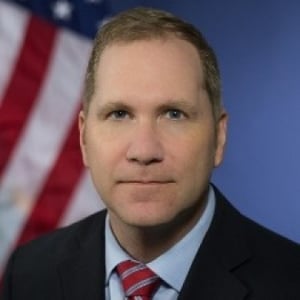
U.S. Attorney, Eastern District of Michigan, U.S. Department of Justice
Matthew Schneider is the United States Attorney for the Eastern District of Michigan.
As the United States Attorney, Mr. Schneider is the chief federal law enforcement official in the Eastern District of Michigan, which contains approximately 6.5 million people in 34 counties. The office is widely recognized for significant prosecutions involving international terrorism, violent crime, public corruption, environmental crime, financial fraud, drug trafficking, civil rights and numerous other criminal and civil matters. As the United States Attorney, Mr. Schneider manages more than 230 employees, including approximately 120 Assistant U.S. Attorneys in Detroit, Flint and Bay City.
Prior to his appointment, Schneider was the Chief Deputy Attorney General for the State of Michigan. In that position, he supervised the office’s 40,000 ongoing cases and managed a budget of over $100 million in taxpayer funds. He had previously served as Chief Legal Counsel for the Michigan Office of Attorney General, where he was the lead counsel representing the Governor and the State of Michigan in the City of Detroit federal bankruptcy case.
Schneider previously served as the Michigan Supreme Court’s Chief of Staff and General Counsel. Schneider provided overall direction for the administration of Michigan’s Judicial Branch of government and served as chief legal counsel to the Chief Justice and the Justices.
Schneider is a former Assistant United States Attorney in Detroit. He focused on prosecuting corrupt public officials and members of organized crime, as well as street gangs and outlaw motorcycle gangs. He also handled an anti-terrorism caseload.
Prior to becoming a federal prosecutor, Schneider served as Senior Advisor and Assistant General Counsel in the White House Budget Office. He previously practiced international law with the Washington, D.C. firm of Wiley Rein LLP, where he represented American companies in suits against foreign governments for unfair business and trade actions.
Schneider has been an adjunct law professor for several years and has spoken and written on numerous aspects of constitutional law and criminal procedure. He is a graduate of the University of Michigan Law School and Michigan State University’s James Madison College. He is originally from Frankenmuth, Michigan.
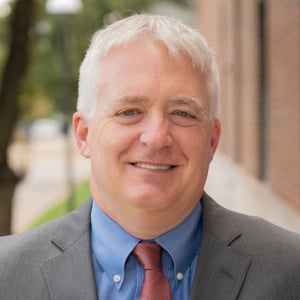
Vice President for Legal Affairs, Mackinac Center for Public Policy
Patrick Wright is Vice President for Legal Affairs at the Mackinac Center for Public Policy, where he directs the Mackinac Center Legal Foundation. He joined the Center in June 2005 after serving for three years as a Michigan Supreme Court commissioner, a post in which he made recommendations to the court concerning which state appeals court cases it should hear.
Prior to that, Wright spent four years as an assistant attorney general for the State of Michigan, where he gained significant litigation and appellate advocacy experience. He joined the state Attorney General’s Office after one year as a policy advisor in the Senate Majority Policy Office of the Michigan Senate. Wright also spent two years as a law clerk to Hon. H. Russell Holland, a United States district court judge in Alaska.
Wright received his law degree at George Washington University in Washington, D.C. He graduated with honors in 1994. He received his undergraduate degree in political science from the University of Michigan in 1990. In 2025, he was the first public interest attorney to receive the Federalist Society Michigan Lawyers Chapter Grano Award.
Aside from directly representing clients, Wright has filed numerous amicus briefs, including many to the United States Supreme Court. In 2018, the Supreme Court cited his brief on behalf of the Center in the Janus v. AFSCME decision. In addition to being featured in many state publications, he has been published nationally in The Wall Street Journal, The Washington Post, and The Hill. He has appeared on the Sean Hannity Show and was interviewed by Shepard Smith on Fox News.
Wright lives in Midland, Mich., with his wife and sons.
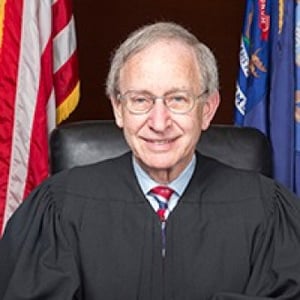
Justice, Michigan Supreme Court
Stephen Markman was appointed Justice of the Michigan Supreme Court on October 1, 1999. He served as the Chief Justice from 2017-2019. Before his appointment, he served as Judge on the Michigan Court of Appeals from 1995-1999. Prior to this, he practiced law with the firm of Miller, Canfield, Paddock & Stone in Detroit.
From 1989-1993, Justice Markman served as United States Attorney, or federal prosecutor, in Michigan, after having been nominated by President George H. W. Bush and confirmed by the United States Senate. From 1985-1989, he served as Assistant Attorney General of the United States, after having been nominated by President Ronald Reagan and confirmed by the United States Senate. In that position, he headed the Department of Justice’s Office of Legal Policy, which served as the principal policy development office within the Department, and which coordinated the federal judicial selection process. Prior to this, he served for seven years as Chief Counsel of the United States Senate Subcommittee on the Constitution, and as Deputy Chief Counsel of the United States Senate Judiciary Committee.
Justice Markman has authored articles for such publications as the University of Michigan Journal of Law Reform, the Detroit College of Law Review, the Stanford Law Review, the University of Chicago Law Review, the American Criminal Justice Law Review, the Barrister’s Law Journal, the Harvard Journal of Law & Public Policy, and the American University Law Review. He has also served as a contributing editor of National Review magazine, and has authored chapters in such books as “In the Name of Justice: The Aims of the Criminal Law,” “Still the Law of the Land,” and “Originalism: A Quarter Century of Debate.”
Justice Markman has taught constitutional law at Hillsdale College since 1993. He has served on the Board of Directors of the Western Michigan University Thomas M. Cooley Law School. He traveled to Ukraine on two occasions on behalf of the State Department, to provide assistance in the development of that nation’s post-Soviet constitution. He is a Fellow of the Michigan Bar Foundation, a Master of the Bench of the Inns of Court, and a member of the One Hundred Club. He has spoken before hundreds of youth, civic, charitable, and legal groups throughout Michigan and nationally, and has coached Little League baseball and basketball. He lives with his wife Mary Kathleen in Mason, and has two sons, James and Charles.
Justice Markman was re-elected to the Supreme Court in 2000, 2004, and 2012. His present term expires January 1, 2021.
Justice in Residence and Visiting Professor of Law, Ave Maria School of Law
Professor Taylor is a retired Chief Justice of the Michigan Supreme Court and served over 16 years as an appellate judge in Michigan. He is a graduate of the University of Michigan and received his J.D. from George Washington University Law School. After service as an officer in the US Navy, he began his legal career as an Assistant Prosecuting Attorney in Michigan and then practiced in a Lansing, Michigan, law firm, Denfield, Timmer and Taylor, for 19 years earning the highest ratings as to competence and character. He has lectured at law schools across the United States, been published in numerous law reviews and was the co-author of a three volume Michigan Practice Guide on Torts. He has served on the Board of Directors of the National Conference of Chief Justices, was a member, and then President, of the Michigan State Board of Law Examiners and served on the Board of Directors of the George Mason University Law School's Law and Economics Center.
Former Michigan Supreme Court Justice
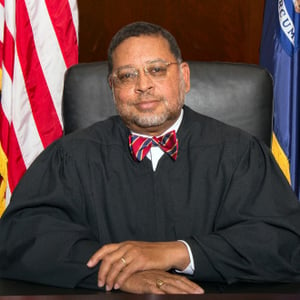
Robert P. Young, Jr., retired justice of the Michigan Supreme Court, promoted initiatives to measure judicial performance, track public satisfaction, adopt best practices, streamline court processes, and implement technologies that expand public access, increase efficiency, and boost productivity of trial courts. From 2018 to 2019 he served as vice president and general counsel at Michigan State University. Mr. Young previously served 18 years as a member of the Michigan Supreme Court, including as chief justice from 2011 to January 2017. Before that, he was a judge of the Michigan Court of Appeals. Mr. Young has served on the boards of many charitable groups, including the Detroit Urban League, United Community Services of Metropolitan Detroit, and Vista Maria, a resource center for abused and neglected young women and girls. A former commissioner of the Michigan Civil Service Commission, he was a trustee of Central Michigan University, University Liggett School, and the Grosse Pointe Academy. Mr. Young is a former chair of the Greater Detroit Chamber of Commerce Leadership Detroit. He had been an adjunct professor at Wayne State University Law School for more than 20 years and more recently taught at Michigan State University Law School.
General Counsel and Group Vice President, Ford Motor Company
Vice President for Litigation, Institute for Free Speech
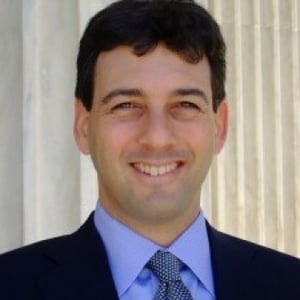
Alan joined the Institute for Free Speech as Vice President for Litigation in February 2021. In this role, Alan directs the Institute’s litigation and legal advocacy, leads our in-house legal team, and manages and works to expand our network of volunteer attorneys.
Prior to joining the Institute, Alan litigated complex federal matters for twenty years, in his own practice and as a partner in various Washington-area firms. He argued and won landmark constitutional cases in the United States Supreme Court and has appeared before numerous appellate and district courts throughout the country. Alan often speaks at law schools and continuing legal education seminars. He also teaches strategic/public interest litigation as an adjunct professor at the Georgetown University Law Center.
Alan began his career clerking for the Hon. Terrence W. Boyle, United States District Judge for the Eastern District of North Carolina. He has also served as a Deputy Attorney General for the State of California, a litigation associate at the Washington office of Sidley Austin, and as counsel to the United States Senate Judiciary Committee.
Alan earned his J.D. at Georgetown (1995) and his B.A. at Cornell University (1992). He is an active member in good standing of the Virginia, District of Columbia, and California bars, the Bar of the United States Supreme Court, and various federal appellate and district court bars.
U.S. Attorney, Eastern District of Michigan, U.S. Department of Justice
Matthew Schneider is the United States Attorney for the Eastern District of Michigan.
As the United States Attorney, Mr. Schneider is the chief federal law enforcement official in the Eastern District of Michigan, which contains approximately 6.5 million people in 34 counties. The office is widely recognized for significant prosecutions involving international terrorism, violent crime, public corruption, environmental crime, financial fraud, drug trafficking, civil rights and numerous other criminal and civil matters. As the United States Attorney, Mr. Schneider manages more than 230 employees, including approximately 120 Assistant U.S. Attorneys in Detroit, Flint and Bay City.
Prior to his appointment, Schneider was the Chief Deputy Attorney General for the State of Michigan. In that position, he supervised the office’s 40,000 ongoing cases and managed a budget of over $100 million in taxpayer funds. He had previously served as Chief Legal Counsel for the Michigan Office of Attorney General, where he was the lead counsel representing the Governor and the State of Michigan in the City of Detroit federal bankruptcy case.
Schneider previously served as the Michigan Supreme Court’s Chief of Staff and General Counsel. Schneider provided overall direction for the administration of Michigan’s Judicial Branch of government and served as chief legal counsel to the Chief Justice and the Justices.
Schneider is a former Assistant United States Attorney in Detroit. He focused on prosecuting corrupt public officials and members of organized crime, as well as street gangs and outlaw motorcycle gangs. He also handled an anti-terrorism caseload.
Prior to becoming a federal prosecutor, Schneider served as Senior Advisor and Assistant General Counsel in the White House Budget Office. He previously practiced international law with the Washington, D.C. firm of Wiley Rein LLP, where he represented American companies in suits against foreign governments for unfair business and trade actions.
Schneider has been an adjunct law professor for several years and has spoken and written on numerous aspects of constitutional law and criminal procedure. He is a graduate of the University of Michigan Law School and Michigan State University’s James Madison College. He is originally from Frankenmuth, Michigan.
U.S. Attorney, Eastern District of Michigan, U.S. Department of Justice
Matthew Schneider is the United States Attorney for the Eastern District of Michigan.
As the United States Attorney, Mr. Schneider is the chief federal law enforcement official in the Eastern District of Michigan, which contains approximately 6.5 million people in 34 counties. The office is widely recognized for significant prosecutions involving international terrorism, violent crime, public corruption, environmental crime, financial fraud, drug trafficking, civil rights and numerous other criminal and civil matters. As the United States Attorney, Mr. Schneider manages more than 230 employees, including approximately 120 Assistant U.S. Attorneys in Detroit, Flint and Bay City.
Prior to his appointment, Schneider was the Chief Deputy Attorney General for the State of Michigan. In that position, he supervised the office’s 40,000 ongoing cases and managed a budget of over $100 million in taxpayer funds. He had previously served as Chief Legal Counsel for the Michigan Office of Attorney General, where he was the lead counsel representing the Governor and the State of Michigan in the City of Detroit federal bankruptcy case.
Schneider previously served as the Michigan Supreme Court’s Chief of Staff and General Counsel. Schneider provided overall direction for the administration of Michigan’s Judicial Branch of government and served as chief legal counsel to the Chief Justice and the Justices.
Schneider is a former Assistant United States Attorney in Detroit. He focused on prosecuting corrupt public officials and members of organized crime, as well as street gangs and outlaw motorcycle gangs. He also handled an anti-terrorism caseload.
Prior to becoming a federal prosecutor, Schneider served as Senior Advisor and Assistant General Counsel in the White House Budget Office. He previously practiced international law with the Washington, D.C. firm of Wiley Rein LLP, where he represented American companies in suits against foreign governments for unfair business and trade actions.
Schneider has been an adjunct law professor for several years and has spoken and written on numerous aspects of constitutional law and criminal procedure. He is a graduate of the University of Michigan Law School and Michigan State University’s James Madison College. He is originally from Frankenmuth, Michigan.
Founder and President, American Civil Rights Institute
Ward Connerly is founder and President of the American Civil Rights Institute – a national, not-for-profit organization aimed at educating the public about the need to move beyond race and, specifically, racial and gender preferences. Mr. Connerly has gained national attention as an outspoken advocate of equal opportunity for all Americans, regardless of race, sex, or ethnic background.
Mr. Connerly is author of Creating Equal: My Fight Against Race Preferences and his new release Lessons from My Uncle James: Beyond Skin Color to the Content of Our Character. One part memoir, one part moral guide, Lessons from My Uncle James is a touching, funny and ultimately a philosophical book about living a principled and productive life regardless of skin color. Lessons illustrates how Mr. Connerly arrived at the ethics that have guided his life and is a new starting point for the discussion about character that America must have in order to move beyond race for good.
As a member of the University of California Board of Regents, Mr. Connerly focused the attention of the nation on the University's race-based system of preferences in its admissions policy. On July 20, 1995, following Mr. Connerly's lead, a majority of the Regents voted to end the University's use of race as a means for admissions. He was appointed to a 12-year term as UC Regent in March 1993.
In 1995, Mr. Connerly accepted chairmanship of the California Civil Rights Initiative (Proposition 209) campaign. Under his leadership, the campaign successfully obtained more than 1 million signatures and qualified for the November 1996 ballot. California voters passed Proposition 209 by a 55 percent to 45 percent margin.
Mr. Connerly also led the efforts to pass initiatives in the States of Washington, Michigan, Nebraska and Arizona that were patterned after California's Proposition 209, to require equal treatment under the law for all residents in public education, public employment and public contracting.
Mr. Connerly has been profiled on 60 Minutes, the cover of Parade magazine, the New York Times, Wall Street Journal, Newsweek magazine, and virtually every major news magazine in America. He has also appeared on The NewsHour with Jim Lehrer, Crossfire, Hannity & Colmes, Meet the Press, Dateline, NBC Nightly News, CNN, and C-SPAN.
Mr. Connerly is President and Chief Executive Officer of Connerly & Associates, Inc., a Sacramento-based association management and land development consulting firm founded in 1973. He is regarded as one of the housing industry's top experts, possessing a comprehensive knowledge of housing and development issues. He has been inducted as a lifetime member into the California Building Industry Hall of Fame and has been a member of the Rotary Club of Sacramento for over 15 years.

Co-Founder, XIV Foundation
Jennifer Gratz is a modern-day civil rights leader. In 1997 she challenged race preferences (also known as affirmative action) at the University of Michigan and was victorious at the U.S. Supreme Court.
Ms. Gratz was the lead plaintiff in the landmark case Gratz v. Bollinger which challenged affirmative action at the University of Michigan. On June 23, 2003 the U.S. Supreme Court ruled that Ms. Gratz was discriminated against and U-M’s admission policy was unconstitutional. However, in a companion case decided the same day (Grutter v. Bollinger), the Supreme Court allowed race preferences to continue at U-M’s law school. Ms. Gratz called the split decision flawed and continued the fight for equality in her home state. She spearheaded the Michigan Civil Rights Initiative (MCRI), a state constitutional amendment that made race and gender preferences unconstitutional in public education, employment and contracting. In Nov 2006 Michigan voters approved MCRI by a 16-point landslide.
At CPAC following the Michigan vote, Ms. Gratz was honored with the prestigious Ronald Reagan Award from the American Conservative Union for leadership. Jennifer has spent many years working to end programs that grant preferential treatment based on race or sex and because of Ms. Gratz’s leadership eight states have now banned race and gender preferences.
Recently, Ms. Gratz co-founded the XIV Foundation (XIV) and Equal Protection Advocates (EPA). XIV, named after the 14th amendment, is a not-for-profit 501c3 dedicated to teaching the personal and societal advantages of fair and equal treatment. EPA is a 501c4 dedicated to advocating for fair and equal treatment without regard to race or gender for all Americans.
Ms. Gratz’s story and work has been featured in nearly every major media outlet – Fox News, CNN, MSNBC, Dateline, 60 Minutes, The Today Show, Wall Street Journal, NY Times, Washington Post, Washington Times, LA Times, Detroit Free Press, Detroit News, National Review, US News and World Report, Newsweek, Time Magazine, People Magazine, Glamour Magazine – to name a few.
Publius comes from the pen name Alexander Hamilton, James Madison, and John Jay used when they wrote 85 publicly printed letters now known as the Federalist Papers. Hamilton chose “Publius” as a name that would represent friends of the newly proposed American republic - Publius Valeria Publicola was a Roman general who helped to found the Roman Republic. The Federalist Society continues the tradition of publishing things under the name Publius in celebration of our constitutional roots and recognition that author credit is not always necessary.

The Legacy of the Modern Michigan Supreme Court
Michigan Lawyers Chapter
Lansing, MIMichigan's Big Four: An Analysis of the Modern Michigan Supreme Court
Matthew Schneider
In May 2000, the Wall Street Journal featured an update on the Michigan Supreme Court that praised...
Michigan's Big Four: An Analysis of the Modern Michigan Supreme Court
Matthew Schneider
In May 2000, the Wall Street Journal featured an update on the Michigan Supreme Court...
Super-Tuesday for Equal Rights
Ward Connerly, Jennifer Gratz
When the Gratz and Grutter opinions were released in 2003, many believed that eliminating race...
The 9th Annual Joseph D. Grano Dinner
Dearborn, MichiganGoogle's Book Project
David McGowan
Is it better to ask forgiveness than permission? Google believes so. Its agents are copying...
2008 National Student Symposium
The People and the Courts
Ann Arbor, MIThe 2008 Presidential Election and the Role of the Supreme Court
Detroit, MichiganThe D.C. Gun Ban Case
Michigan Supreme Court Upholds Voter Photo ID Law
Publius
On July 18, 2007, the Michigan Supreme Court upheld a provision of Michigan election law...