

Vice President, Edwin Meese III Institute for the Rule of Law, Advancing American Freedom
John G. Malcolm oversees Advancing American Freedom’s work to increase understanding of the Constitution and the rule of law as Vice President of the organization’s Edwin Meese III Institute for the Rule of Law. Malcolm brings to the challenge a wealth of legal expertise and experience in both the public and private sectors.
Prior to joining Advancing American Freedom in 2025, Malcolm was the Vice President of the Institute for Constitutional Government and the Director of the Meese Center for Legal and Judicial Studies at the Heritage Foundation. Prior to joining Heritage in 2012, Malcolm was general counsel at the U.S. Commission on International Religious Freedom, as well as a distinguished practitioner in residence at Pepperdine Law School. From 2004 to 2009, Malcolm was executive vice president and director of worldwide anti-piracy operations for the Motion Picture Association.
Malcolm served as a deputy assistant attorney general in the Department of Justice’s Criminal Division from 2001 to 2004, where he oversaw sections on computer crime and intellectual property, domestic security, child exploitation and obscenity, and special investigations. Immediately prior to that, he was a founding partner in the Atlanta law firm of Malcolm & Schroeder, LLP.
From 1990 to 1997, Malcolm was an assistant U.S. attorney in Atlanta, assigned to the fraud and public corruption section, and also an associate independent counsel, investigating fraud and abuse in the Department of Housing and Urban Development. He was honored with the Director’s Award for Superior Performance for his work in connection with the successful prosecution of Walter Leroy Moody Jr., who assassinated an 11th Circuit judge and the head of the Savannah chapter of the NAACP.
A graduate of Harvard Law School and Columbia College, Malcolm began his career as a law clerk to a federal district court judge and a federal appellate court judge, and as an associate at the Atlanta-based law firm of Sutherland, Asbill & Brennan (new Eversheds Sutherland).
Malcolm, who resides in Washington, D.C., serves on the Board of Trustees of the Washington National Opera and is a Senate-confirmed member of the Board of Directors of the Legal Services Corporation, the largest funder of civil legal aid in the United States.

Emanuel S. Heller Professor of Law, University of California at Berkeley; Thomas Smith Senior Research Fellow, The Civitas Institute, University of Texas at Austin
John Yoo is the Emanuel Heller Professor of Law at the University of California at Berkeley. He is also the Thomas Smith Senior Research Fellow, Civitas Institute, at the University of Texas at Austin. He is also a Nonresident Senior Fellow at the American Enterprise Institute.
His most recent book, The Politically Incorrect Guide to the Supreme Court, co-authored with Robert Delahunty, was published in 2023. Professor Yoo’s other books include Defender-in-Chief: Trump’s Fight for Presidential Power; Striking Power: How Cyber, Robots, and Space Weapons Change the Rules for War; Point of Attack: Preventive War, International Law, and Global Welfare; and Crisis and Command: A History of Executive Power from George Washington to George Bush.
He is a co-author of volumes 1 and 2 of R. Rossum, G. Tarr, V. Munoz & J. Yoo American Constitution Law (Routledge, 2026), and a co-editor of the eight-volume series on the 250th anniversary of the American Revolution, We Hold These Truths, with Yuval Levin and Adam White of the American Enterprise Institute.
Professor Yoo has published more than 100 articles in academic journals on subjects including national security, constitutional law, international law, and the Supreme Court. He also regularly contributes to the editorial pages of the Wall Street Journal, New York Times, Washington Post, Los Angeles Times, and National Review, among others.
Professor Yoo has served in all three branches of government. He was an official in the U.S. Department of Justice, where he worked on national security and terrorism issues after the 9/11 attacks. He served as general counsel of the U.S. Senate Judiciary Committee. He has been a law clerk for Supreme Court Justice Clarence Thomas and federal appeals Judge Laurence Silberman. He has been a visiting professor at the University of Texas at Austin’s School of Civic Leadership, Seoul National University, the Interdisciplinary Center Herzliya, Keio University, Trento University, the University of Chicago, and the Free University of Amsterdam.
Professor Yoo supervises the Public Law and Policy Program and the California Constitution Center. He also serves on the boards of Founding Forward, the Washington Legal Foundation, the Pacific Legal Foundation, the Ulysses Grant Institute, the Federalist Society’s Separation of Powers and Federalism Division, the Universidad Cientifica del Sur Law School, and the Asia-Pacific Law Institute at Seoul National University. He is a winner of the Federalist Society’s Paul Bator award and the Heritage Foundation’s Edwin Meese III Originalism Lectureship.
Professor Yoo graduated from Yale Law School and summa cum laude from Harvard College.

Director of Litigation and Senior Attorney, Hamilton Lincoln Law Institute
Theodore H. Frank is director at the Hamilton Lincoln Law Institute and the Center for Class Action Fairness. Frank founded and ran CCAF as a non-profit, public interest law firm in 2009.
Frank has won several landmark appeals and tens of millions of dollars for consumers and other plaintiffs through his class action work. Adam Liptak of The New York Times calls Frank “the leading critic of abusive class action settlements” and the American Lawyer Litigation Daily referred to him as “the indefatigable scourge of underwhelming class action settlements.”
Previously, Frank clerked for the Honorable Frank H. Easterbrook on the Seventh Circuit Court of Appeals, and was a litigator at firms in Washington and Los Angeles and a resident fellow at the American Enterprise Institute. Frank is a frequent public speaker and has testified before Congress multiple times on legal issues. He has been profiled by The Wall Street Journal, Forbes, GQ, and the ABA Journal, among other publications.
In 2008, Frank was elected to membership in the American Law Institute. He also serves on the Executive Committee of the Federalist Society Litigation Practice Group. Frank graduated from The University of Chicago Law School in 1994 with high honors and as a member of the Order of the Coif and the Law Review. He is a member of the District of Columbia Bar and the state bars of California and Illinois.

Milton R. Underwood Chair in Free Enterprise, Vanderbilt University Law School
Brian Fitzpatrick is the Milton R. Underwood Chair in Free Enterprise and Professor of Law at Vanderbilt Law School, where his research focuses on class action litigation, federal courts, judicial selection, and constitutional law. He is best known for his empirical studies of class action settlements as well as his book The Conservative Case for Class Actions (University of Chicago Press, 2019). Professor Fitzpatrick joined Vanderbilt's law faculty in 2007 after serving as the John M. Olin Fellow at New York University School of Law. He graduated first in his class from Harvard Law School and went on to clerk for Judge Diarmuid O'Scannlain on the U.S. Court of Appeals for the Ninth Circuit and Justice Antonin Scalia on the U.S. Supreme Court. After his clerkships, Professor Fitzpatrick practiced commercial and appellate litigation for several years at Sidley Austin in Washington, D.C., and served as Special Counsel for Supreme Court Nominations to U.S. Senator John Cornyn. Before earning his law degree, Fitzpatrick graduated summa cum laude with a bachelor's of science in chemical engineering from the University of Notre Dame. He has received the Hall-Hartman Outstanding Professor Award, which recognizes excellence in classroom teaching, for his Civil Procedure and Federal Courts courses.

Professor of Law and Executive Director, Law and Economics Center, Antonin Scalia Law School, George Mason University
Donald Kochan is Professor of Law and Executive Director of the Law & Economics Center (LEC). Professor Kochan is an elected member of the American Law Institute (ALI) and serves as an Adviser to ALI's Restatement of the Law Fourth, Property project. Professor Kochan is a Nonresident Scholar at the Center for the Constitution at Georgetown University Law Center, where he was a Visiting Scholar in residence during Fall 2018. Before joining the Antonin Scalia Law School faculty, he was the Parker S. Kennedy Professor in Law at Chapman University’s Dale E. Fowler School of Law from 2004 to 2020. From 2003 to 2004, Professor Kochan was an Olin Fellow at the University of Virginia School of Law. During 2002-2003, he was a Visiting Assistant Professor of Law at George Mason’s Scalia Law School.
Professor Kochan’s scholarship focuses on areas of property law, constitutional law, administrative law, local government law, natural resources and environmental law, and law & economics. He has published several books and more than 50 scholarly articles and essays in well-regarded law journals. His work has been cited in more than a dozen state and federal court opinions, in more than 75 briefs filed in state and federal courts including more than 25 filed in the U.S. Supreme Court, in dozens of books and treatises, and in more than 800 scholarly articles.
Professor Kochan received his JD from Cornell Law School, where he was a John M. Olin Scholar in Law and Economics and managing editor of the Cornell International Law Journal. During law school, he also served as editor and executive editor of the Harvard Journal of Law & Public Policy symposium issues in 1997 and 1998. He received his BA from Western Michigan University, magna cum laude, with majors in both political science and philosophy, where he studied as the John W. Gill Medallion Scholar and was honored as the Presidential Scholar (awarded to the top graduate in the political science department).
After graduating from law school, Professor Kochan was a law clerk to The Honorable Richard F. Suhrheinrich of the United States Court of Appeals for the Sixth Circuit. Following his clerkship, Professor Kochan was an associate with the firm of Crowell & Moring LLP in Washington, D.C., where he specialized in natural resources & environmental law as well as tort, products, and consumer civil litigation & legislative affairs.
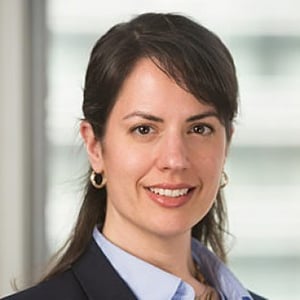
Counsel to Commissioner Hester M. Peirce, U.S. Securities and Exchange Commission
Thaya Brook Knight was associate director of financial regulation studies at the Cato Institute. She is an attorney with extensive experience in securities regulation, small business capital access, and capital markets. Before joining Cato, she co-founded and served as general counsel of CrowdCheck, a company providing due diligence and disclosure services in the online investing market. Following the recent financial crisis, she served as investigative counsel for the congressional oversight panel charged with overseeing the expenditure of Troubled Asset Relief Program funds. She also spent several years with the Washington office of the law firm WilmerHale, where her practice focused on securities litigation, securities enforcement defense, and corporate investigations.
She holds a BA from Middlebury College and a JD from the University of Michigan Law School.
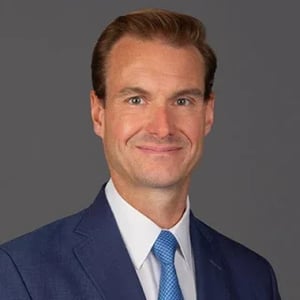
Partner, Kirkland & Ellis
Chris Michel is a litigation partner in the Washington, D.C., office and the leader of the Firm’s Supreme Court and appellate practice. He has argued 11 cases before the Supreme Court and dozens of appeals in federal and state courts. He is widely recognized for his command of issues facing clients in complex litigation, including in the areas of securities, antitrust, technology, administrative law, healthcare and foreign affairs. He has particular experience with constitutional and other appellate issues arising from public nuisance and mass tort cases, including in multidistrict litigation. In 2026 alone, The American Lawyer has recognized Chris five times for appellate victories, including a win before the Delaware Supreme Court in the largest compensation dispute in corporate history. He has also received national recognition from Law360, Chambers USA, Lawdragon and The Legal 500.
Chris has distinctive insight into the Supreme Court, having served over five years in the Office of the Solicitor General at the Department of Justice and clerked for both Chief Justice John Roberts and Justice Brett Kavanaugh. He has also served in the Office of the Attorney General, the White House Counsel’s Office and the White House Speechwriting Office, where he drafted more than 500 speeches (including five State of the Union addresses) for President George W. Bush. A native of the San Francisco Bay Area and a graduate of Yale College and Yale Law School, Chris has taught at Georgetown University Law Center and speaks regularly on the Supreme Court and appellate law.
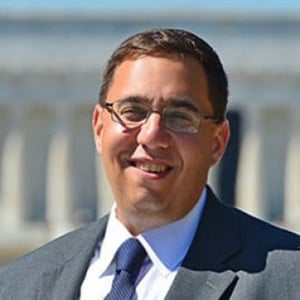
Partner, Consovoy McCarthy Park PLLC
Mr. Consovoy assists clients on a broad range of litigation and appellate issues primarily before the Supreme Court of the United States and federal appellate and district courts, as well as before federal agencies. Mr. Consovoy represents clients in cases involving constitutional issues, interpretation and enforcement of federal statutes, administrative law, civil rights disputes, and a variety of other civil litigation issues. Mr. Consovoy recently argued two cases—Spokeo v. Robbins and Evenwel v. Abbott—before the Supreme Court of the United States.
Mr. Consovoy is a former law clerk to Supreme Court Justice Clarence Thomas, Judge Edith H. Jones of the United States Court of Appeals for the Fifth Circuit, and the 17th Judicial Circuit of Virginia. Mr. Consovoy is a member of the Edward Coke Appellate Inn of Court and was named by Law360 as a “rising star” in appellate law for 2013. Since 2011, Mr. Consovoy has been the co-director of the Supreme Court Clinic at the Antonin Scalia Law School at George Mason University, where he also is the co-director of the Administrative Law Clinic.
Mr. Consovoy earned his B.A. from Monmouth University, and his J.D. magna cum laude from George Mason University School of Law. Mr. Consovoy is a member of the Virginia and District of Columbia bars.
Staff Attorney, Pacific Legal Foundation
Ralph Kasarda joined the Pacific Legal Foundation in July 2007. His primary legal interests are individual rights. He devotes the majority of his time to working on cases in PLF's Equality Under the Law Project.
Mr. Kasarda successfully defended California's ban on racial preferences, Proposition 209, by drafting and filing appellate briefs and presenting oral argument in Coal. to Defend Affirmative Action v. Brown, before the Ninth Circuit Court of Appeals. He also successfully argued against North Carolina's use of racial preferences in public contracting in H.B. Rowe Co., Inc. v. Tippett, before the Fourth Circuit Court of Appeals. He is currently litigating against California's use of racial qualifications for the selection of public officers in Connerly v. State of California. He continues to author and coauthor briefs against the government's use of race for filing in courts around the country, including the United States Supreme Court.
Mr. Kasarda received his B.A. in Physical Science and concentration in meteorology from San Francisco State University in 1981. He then served as an officer in the United States Marine Corps and left active duty in 1993. He received his Master of Arts in Education from George Mason University in 1994, and taught high school earth science and geography in Virginia. He returned to school and graduated from the Golden Gate University School of Law where for his academic excellence he received merit scholarships his final two years, and the Environmental Law Award.

Federalism, COVID-19, and the Administrative State
John G. Malcolm, John C. Yoo
Questions of vertical and horizontal separation of powers have risen sharply during the coronavirus pandemic. ...
Courthouse Steps Decision: Home Depot U.S.A., Inc. v. Jackson
Theodore "Ted" Frank
The Class Action Fairness Act permits "any defendant" to remove a class action to federal...
Courthouse Steps: Frank v. Gaos Oral Arguments
Brian T. Fitzpatrick
The case of Frank v. Gaos presents the question of whether and in what circumstances courts...
Municipality Lawsuit on Climate Change and Public Nuisance: Litigation Update
Donald J. Kochan
Should climate change responsibility be assessed in the courts or by the elected policymaking branches? ...
Courthouse Steps: D.C. Circuit En Banc Argument - Podcast
Thaya Brook Knight, Christopher G. Michel
The D.C. Circuit heard a rare doubleheader of en banc arguments on major structural separation...
Supreme Court Upholds Disparate Impact: Texas Department of Housing and Community Affairs v. The Inclusive Communities Project, Inc. - Podcast
William S. Consovoy, Ralph W. Kasarda
On June 25, the Supreme Court issued a 5-4 decision that the Wall Street Journal has...