

Partner, Ellinger and Associates, LLC
Stephanie Bell is a partner at Ellinger and Associates, LLC. Her practice focuses on election, regulatory, utility, gaming, tax and other governmental disputes. She represents individuals, businesses, associations, committees, and political subdivisions in a wide array of state and local government matters and has achieved a Martindale-Hubbell AV Preeminent rating.
Stephanie previously worked at Blitz, Bardgett, & Deutsch, LC, for almost a decade. Stephanie’s litigation practice includes representing clients before government agencies, the Administrative Hearing Commission, the Public Service Commission, circuit courts, and Missouri Appellate courts. She has litigated cases concerning constitutional and statutory amendments being proposed by initiative petition, challenges to agency rules, the Missouri Sunshine Law, professional licensing, and general business disputes.
Stephanie also regularly advises candidates, committees, political subdivisions, and other entities regarding campaign finance compliance. Stephanie has served as treasurer of multi-million dollar political action committees. She has successfully defended clients against Missouri Ethics Commission complaints.
Stephanie regularly advises clients in relation to highly regulated industries. She has represented political subdivisions and state agencies before the Missouri Public Service Commission in both water and electric rate cases, as well as certificate of convenience and necessity (CCN) cases. She also advises clients in relation to Missouri Gaming Commission matters.
Stephanie has also advised numerous entities during Missouri Department of Revenue audits. With respect to sales and use tax in refund cases and appeals from notices of assessments, Stephanie has represented clients from small businesses to nationwide corporations . She has also represented recipients of tax credits who have received penalty notices.
While in law school, Stephanie served as Symposium Editor of the Missouri Law Review and was a member of the Board of Advocates. She is the recipient of Academic Excellence Awards in Legislation, State Constitutional Law, Trial Practice and Advocacy & Government Agencies. She received the Fred L. Howard Prize for Excellence in the Advancement of Advocacy and was inducted into the Order of the Barristers. She also received the Stanley B. Botner Award for achievements in earning her Master of Public Administration in Public Policy at the Harry S. Truman School of Public Affairs.
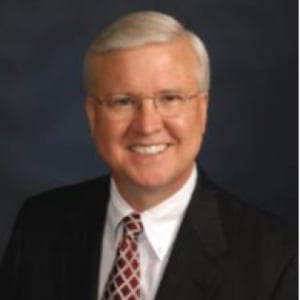
Partner, Shands, Elbert, Gianoulakis & Giljum, LLP
Mark Bremer has more than forty years civil litigation experience in federal and state trial and appellate courts, with an emphasis on business litigation, involving general commercial, antitrust, securities, bankruptcy, employment, education, civil rights and class action law and procedure. By way of illustration, Mr. Bremer served in a lead counsel capacity on behalf of two dozen suburban school districts in trying and ultimately settling the St. Louis School Desegregation Case, the longest-standing and most complex case in the St. Louis federal court. Mr. Bremer provides litigation representation and consultation to Fortune 500 businesses, educational institutions, employers of all types and other entities in a variety of specialized areas of law and practice.
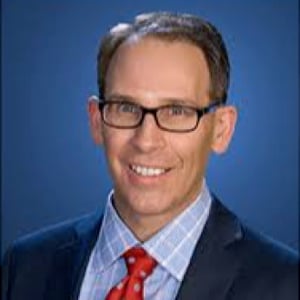
Judge, United States District Court, Eastern District of Missouri
Stephen R. Clark the chief United States district judge for the Eastern District of Missouri. He was appointed to the bench by President Trump in 2018 and became the chief judge in 2022. Prior to serving on the court, Judge Clark was the founder and managing partner of the Runnymede Law Group in St. Louis, Missouri, from 2008 to 2019. He also served as the president of the Federalist Society’s St. Louis Lawyers Chapter.
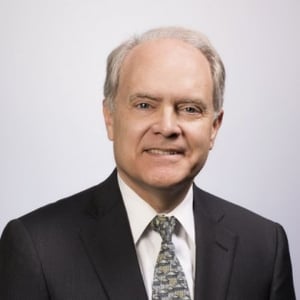
Of Counsel, Tueth Keeney Cooper Mohan Jackstadt PC
Jim Layton joined the firm in 2017 after serving more than 22 years in the Missouri Attorney General’s Office—nearly all of those as the State’s principal civil appellate lawyer, Solicitor General.
Jim practices in both appellate and trial courts, particularly in matters involving complex legal questions, including those arising under the U.S. and Missouri constitutions, Missouri school funding and other education statutes, discrimination laws, and Missouri tax laws. He represents both private and public entities.
In addition to handling cases at Tueth Keeney, Jim assists clients, in-house counsel, and counsel at other firms with appellate strategy, motions, briefing, and argument. In doing so, he relies on many years of intense appellate experience: Jim has argued more than 90 times before the Missouri Supreme Court, four times before the U.S. Supreme Court, and more than 100 times in other state and federal appellate courts. Since joining Tueth Keeney, Jim has been retained repeatedly to assist with applications to transfer appeals to the Missouri Supreme Court.
Jim’s experience in working with high-level government officials and state boards and commissions gives him special insight into government and regulatory decision-making. He has been consulted on a wide range of issues relating to Missouri laws regulating public and private entities.
An adjunct professor of law at the University of Missouri for 20 years, Jim is a frequent speaker on appellate practice, legal writing, constitutional law, and issues arising from new appellate decisions.
A long-time leader in the appellate bar, Jim serves as Co-Chair of the Appellate Practice Committee of The Missouri Bar. He was previously Chair of the American bar Association’s Council of appellate Lawyers, President of the Bar Association of the U.S. Court of Appeals for the Eighth Circuit, and President of the Elwood Thomas American Inn of Court. He serves on task forces for both the American Academy of Appellate Lawyers and the Missouri courts dealing with remote court proceedings and electronic filing.
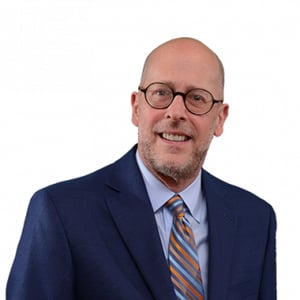
Office Managing Partner, Husch Blackwell LLP
Lowell has more than 30 years of experience navigating the intersection of business and government at both the state and federal levels.
A wide range of clients – including regulated businesses in manufacturing, aviation and healthcare; individual political candidates and political action committees (PACs); and political subdivisions – rely on Lowell’s extensive experience in administrative law; election law and political campaign finance law; as well as government contract and procurement matters. A trusted litigator, he has handled numerous cases in the federal and state courts challenging government action, and has made multiple appearances before the Missouri Supreme Court in employment and constitutional cases.
Clients appreciate Lowell’s deep background within and innate understanding of public policy. Lowell worked in Washington, DC, as a policy advisor to the Judicial Conference of the United States and as counsel to Bob Dole’s 1988 presidential election campaign. He also served as both Missouri’s Deputy Director of Revenue and general counsel to Missouri Governor Matt Blunt. Lowell has been a regular speaker on administrative law, tax and election law issues to groups such as the Associated Industries of Missouri (AIM), the Missouri Chamber of Commerce and Industry, and the Associated General Contractors (AGC) of Missouri. His proven collaborative and relationship-building skills move client goals forward.
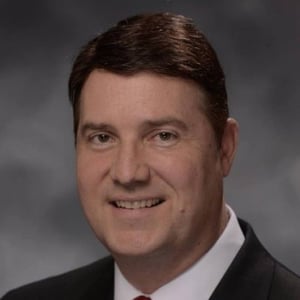
Speaker Pro Tempore, Missouri House of Representatives (MO-103)
Representative John Wiemann, a Republican, represents part of St. Charles County (District 103) in the Missouri House of Representatives. He was elected to his first two-year term in November 2014 and was re-elected in 2016, 2018, and 2020.
Born in St. Louis and raised in St. James, Missouri, Wiemann is a graduate of University of Missouri – Columbia, with a bachelor’s in business administration and a master’s in health administration.
He resides in O’Fallon with his wife, Yvette and two sons, Blake & Clayton. He is President and CEO of Midwest Physician Insurance Advisors and is a licensed insurance broker.
Wiemann is a member of O’Fallon and Cottleville Weldon Spring Chambers of Commerce, National Federation of Independent Businesses (NFIB) St. Charles County Lions Club, Assumption Catholic Church, Knights of Columbus, NRA, and Lewis & Clark Pachyderm club. Wiemann serves on the board of directors for the Junior GAC Youth Football league, State Legislative Leaders Foundation and the board of Trustees for Missouri State Employees’ Retirement System.
Wiemann was elected to serve as Speaker Pro Tem for the 100th and 101st General Assembly.

Sterling Professor of Law and Political Science, Yale Law School
Akhil Reed Amar is Sterling Professor of Law and Political Science at Yale University, where he teaches constitutional law in both Yale College and Yale Law School. After graduating from Yale College, summa cum laude, in 1980 and from Yale Law School in 1984, and clerking for Judge (later Justice) Stephen Breyer, Amar joined the Yale faculty in 1985 at the age of 26. He is Yale’s only living professor to have won the University’s unofficial triple crown — the Sterling Chair for scholarship, the DeVane Medal for teaching, and the Lamar Award for alumni service.
Amar’s work has won awards from both the American Bar Association and the Federalist Society, and he has been cited by Supreme Court justices across the spectrum in more than 50 cases — tops among scholars under age 70. According to both Fred Shapiro’s landmark 2021 study of lifetime scholarly citations and Heinonline’s most recent tabulation of lifetime law-review citations, Amar is America’s second most-cited legal scholar still under age 70. He is a member of the American Academy of Arts and Sciences and has written widely for popular publications, including The New York Times, The Washington Post, The Wall Street Journal, Time, and The Atlantic. He was an informal consultant to the popular TV show The West Wing and his scholarship has been showcased on many broadcasts, including The Colbert Report, Morning Joe, AC360, Velshi, Fox News @ Night with Shannon Bream, Fareed Zakaria GPS, Erin Burnett Outfront, and Constitution USA with Peter Sagal.
He is the author of more than a hundred law review articles and several books, including The Bill of Rights (1998 — winner of the Yale University Press Governors’ Award), America’s Constitution (2005 — winner of the ABA’s Silver Gavel Award), America’s Unwritten Constitution (2012 — named one of the year’s 100 best nonfiction books by The Washington Post), and The Constitution Today (2016 — named one of the year’s top ten nonfiction books by Time magazine). The first volume of his ambitious trilogy on American constitutional history from the Founding to the present, The Words That Made Us: America’s Constitutional Conversation, 1760-1840, came out in May 2021. The second volume, Born Equal: Remaking America’s Constitution, 1840-1920, will be published in September 2025 and is already available for pre-order. All together, his nonfiction books have won two starred reviews from Publishers Weekly and three starred reviews from Kirkus—tops, it is believed, among legal scholars under age 70. Together with Vikram David Amar (YLS ’88), he has a bi-weekly column on the Supreme Court on the distinguished website SCOTUSblog. Along with Andy Lipka, he co-hosts a popular and free weekly podcast, Amarica’s Constitution, whose listeners are eligible for CLE credit in most American jurisdictions. A wide assortment of his articles and op-eds and video links to many of his public lectures and free online courses may be found at akhilamar.com.

Patrick Hotung Professor of Constitutional Law, Georgetown University Law Center; Faculty Director, Georgetown Center for the Constitution
Randy E. Barnett is the Patrick Hotung Professor of Constitutional Law at the Georgetown University Law Center and is the Faculty Director of the Georgetown Center for the Constitution. After graduating from Northwestern University and Harvard Law School, he tried many felony cases as a prosecutor in the Cook County States’ Attorney’s Office in Chicago. A recipient of a Guggenheim Fellowship in Constitutional Studies and the Bradley Prize, Professor Barnett has been a visiting professor at Penn, Northwestern and Harvard Law School.
Professor Barnett’s publications includes thirteen books, more than one hundred articles and reviews, as well as numerous op-eds. His most recent book is Felony Review: Tales of True Crime and Corruption in Chicago (2026). His other books on the Constitution include: A Life for Liberty: The Making of an American Originalist (2024); The Original Meaning of the Fourteenth Amendment: Its Letter and Spirit (2021) (with Evan Bernick); An Introduction to Constitutional Law: 100 Supreme Court Cases Everyone Should Know (2019) (with Josh Blackman); Restoring the Lost Constitution: The Presumption of Liberty (2nd ed. 2013); Our Republican Constitution: Securing the Liberty and Sovereignty of We the People (2016); and Constitutional Law: Cases in Context (5th ed. forthcoming 2027) (with Josh Blackman). His books on contracts are The Oxford Introductions to U.S. Law: Contracts (2010) and Contracts: Cases and Doctrine (7th ed. 2021) (with Nate Oman). And he is the author of The Structure of Liberty: Justice and the Rule of Law (2nd ed. 2014).
In 2004, he argued the medical marijuana case of Gonzalez v. Raich before the U.S. Supreme Court. In 2012, he was one of the lawyers representing the National Federation of Independent Business in its constitutional challenge to the Affordable Care Act in NFIB v. Sebelius. He’s appeared in numerous documentaries and portrayed a prosecutor in the 2010 science-fiction feature film, InAlienable: The Movie. On X he is @RandyEBarnett

Former President & CEO, The Federalist Society for Law and Public Policy Studies
Eugene B. Meyer, former President and CEO of the Federalist Society, has served as Executive Director, CEO, and/or President of the organization for more than 40 years. He is responsible for shepherding the organization from a small group of law students to a community of 90,000 lawyers, law students, academics, judges, and others interested in the rule of law. The Society now includes a Student Chapter at nearly every ABA-accredited law school in the country and Lawyers Chapters in 220 major cities across the nation. Gene earned his B.A. in history at Yale in 1975 and his M.A. in political science from the London School of Economics in 1976. Gene currently serves on the boards of the U.S. Chess Center, the Holman Foundation, the Sarah Scaife Foundation, and the advisory board of the Adam Smith Society. He holds the title of International Chess Master.

Professor of Law, Georgetown University Law Center
Nicholas Quinn Rosenkranz teaches constitutional law and federal jurisdiction, and he writes articles for the Harvard Law Review and the Stanford Law Review.
He is currently developing a new theory of constitutional interpretation and judicial review. The first installment, entitledThe Subjects of the Constitution, was published in the Stanford Law Review in May of 2010, and it is among the most downloaded articles about constitutional interpretation, judicial review, and/or federal courts in the history of SSRN. The second installment, The Objects of the Constitution, was published in May of 2011, also in the Stanford Law Review. And the comprehensive version is forthcoming as a book by Oxford University Press.
Rosenkranz has served and advised the federal government in a variety of capacities. He clerked for Judge Frank H. Easterbrook on the U.S. Court of Appeals for the Seventh Circuit (1999-2000) and for Justice Anthony M. Kennedy at the U.S. Supreme Court (October Term 2001). He served as an Attorney-Advisor at the Office of Legal Counsel in the U.S. Department of Justice (November 2002 - July 2004). He often testifies before Congress as a constitutional expert—most recently before the House Financial Services Oversight Subcommittee, regarding the Obama Administration's use of bank settlement agreements to circumvent the Appropriations Clause. He has also filed briefs and presented oral argument before the U.S. Supreme Court. His most recent Supreme Court brief, in Los Angeles v. Patel, was cited by Justice Alito in dissent.
Rosenkranz is a member of the New York Bar and the U.S. Supreme Court Bar. He is a Senior Fellow at the Cato Institute. He serves on the Board of Directors of the Foundation for Individual Rights in Education (FIRE). He is a founding member of Heterodox Academy and a member of its Executive Committee. He also serves on the Board of Directors of the Federalist Society and as the faculty advisor to the Georgetown chapter.
Staff Director, Florida House of Representatives Health and Human Services Committee
Christa Calamas is a Florida lawyer. She was the former Secretary of the Florida Agency for Health Care Administration (ACHA). She was appointed by Jeb Bush. She also served as Assistant General Counsel to Governor Bush as well as the Assistant General Counsel at AHCA.
Calamas received her bachelors from Eckerd College, her Masters from Dundee University, and her Juris Doctorate from theUniversity of Florida.

Senior Fellow, Independent Institute
John C. Goodman is Senior Fellow at the Independent Institute, President of the Goodman Institute for Public Policy Research, and author of the widely acclaimed, new Independent book, A Better Choice: Healthcare Solutions for America, and the award-winning Independent book, Priceless: Curing the Healthcare Crisis. The Wall Street Journaland the National Journal, among other media, have called him the “Father of Health Savings Accounts.”
Dr. Goodman is frequently invited to testify before Congress on health care reform, and he is the author of more than fifty studies on health policy, retirement reform and tax issues plus ten books, including Living with Obamacare: A Consumer's Guide; Lives at Risk: Single Payer National Health Insurance Around the World(with Gerald Musgrave and Devon Herrick); Leaving Women Behind: Modern Families, Outdated Laws (with Kimberley A. Strassel and Celeste Colgan); and the trailblazing Patient Power: Solving America's Health Care Crisis, that sold more than 300,000 copies. His other books include The Handbook on State Health Care Reform, National Health Care in Great Britain: Lessons for the U.S.A., Economics of Public Policy: The Micro View (with Edwin Dolan), Fighting the War of Ideas in Latin America, and Privatization.
Dr. Goodman received his Ph.D. in economics from Columbia University, he has been President and Kellye Wright Fellow in Health Care at the National Center for Policy Analysis, and he has taught and completed research at Columbia University, Stanford University, Dartmouth College, Southern Methodist University and the University of Dallas. In 1988, he received the prestigious Duncan Black Award for the best scholarly article on public choice economics.
He regularly appears on television and radio news programs, including those on Fox News Channel, CNN, PBS, Fox Business Network and CNBC, and his articles appear in The Wall Street Journal, Investor’s Business Daily, USA Today, Forbes, National Review, Health Affairs, Kaiser Health News and other national publications. Dr. Goodman was also the pivotal lead expert in the grassroots public policy campaign, “Free Our Health Care Now,” an unsurpassed national education effort to communicate patient-centered alternatives to a government-run health care system. The initiative resulted in the largest online petition ever delivered on Capitol Hill.

14th Surgeon General of the United States
Antonia Novello was born Antonia Coello in Fajardo, Puerto Rico on August 23, 1944. She received her B.S. degree from the University of Puerto Rico at Rio Piedras in 1965 and her M.D. degree from the University of Puerto Rico School of Medicine at San Juan in 1970. She then completed her internship and residency in nephrology at the University of Michigan Medical Center in Ann Arbor. Novello remained at Michigan in 1973-1974 on a fellowship in the Department of Internal Medicine, and spent the following year on a fellowship in the Department of Pediatrics at Georgetown University. From 1976 to 1978, she was in private practice in pediatrics in Springfield, Virginia.
In 1978, Novello joined the Public Health Service Commissioned Corps, her first assignment being as a project officer at the National Institute of Arthritis, Metabolism and Digestive Diseases of the National Institutes of Health (NIH). She held various positions at NIH, rising to the job of Deputy Director of the National Institute of Child Health and Human Development (NICHD) in 1986. She also served as Coordinator for AIDS Research for NICHD from September, 1987. In this role, she developed a particular interest in pediatric AIDS.
During her years at NIH, Novello earned an M.P.H. degree from the John Hopkins School of Hygiene and Public Health in 1982. From 1976, she also held a clinical appointment in pediatrics at Georgetown University Hospital. Novello also made major contributions to the drafting and enactment of the Organ Transplantation Procurement Act of 1984 while assigned to the Senate Committee on Labor and Human Resources.
Antonia Novello was appointed Surgeon General by President Bush, beginning her tenure on March 9, 1990. She was the first woman and the first Hispanic to hold the position.
During her tenure as Surgeon General, Novello focused her attention on the health of women, children and minorities, as well as on underage drinking, smoking, and AIDS. She played an important role in launching the Healthy Children Ready to Learn Initiative. She was actively involved in working with other organizations to promote immunization of children and childhood injury prevention efforts. She spoke out often and forcefully about illegal underage drinking, and called upon the Health and Human Services Inspector General to issue a series of eight reports on the subject. Novello also similarly worked to discourage illegal tobacco use by young people, and repeatedly criticized the tobacco industry for appealing to the youth market through the use of cartoon characters such as "Joe Camel." A workshop that she convened led to the emergence of a National Hispanic/Latino Health Initiative.
Novello remained in the post of Surgeon General through June 30, 1993. She then served as the United Nations Children's Fund (UNICEF) Special Representative for Health and Nutrition from 1993 to 1996. In 1996, she became Visiting Professor of Health Policy and Management at the Johns Hopkins School of Hygiene and Public Health. Dr. Novello became Commissioner of Health for the State of New York in 1999.
Senior Fellow, Manhattan Institute
Avik Roy is a senior fellow at the Manhattan Institute. He is also the opinion editor at Forbes, and is advising Florida Sen. Marco Rubio on policy. In 2015, Roy was a senior advisor to former Texas governor Rick Perry; in 2012, he served as a health care policy advisor to Mitt Romney. He is the founder of Roy Healthcare Research, an investment research firm, and previously was an analyst and portfolio manager at Bain Capital and J.P. Morgan. Roy is the principal author of The Apothecary (the Forbes blog on health care policy and entitlement reform), as well as author ofTranscending Obamacare: A Patient-Centered Plan for Near-Universal Coverage and Permanent Fiscal Solvency (2014) and How Medicaid Fails the Poor (2013). His research interests include the Affordable Care Act, universal coverage, entitlement reform, international health systems, veterans’ health care, and FDA policy.
MSNBC’s Chris Hayes calls The Apothecary “one of the best takes from conservatives on that set of issues.” Ezra Klein, in the Washington Post, called The Apothecary one of the few “blogs I disagree with [that] I check daily.” In addition to his regular work for National Review, Roy’s work has appeared in the Wall Street Journal, The Atlantic, USA Today, Health Affairs, and National Affairs. He is frequently interviewed on TV, including on Fox News, Fox Business, NBC, MSNBC, CNBC, Bloomberg, PBS, CBS, and HBO. Roy serves on the advisory board of the National Institute for Health Care Management and cochaired the Fixing Veterans Health Care Policy Taskforce.
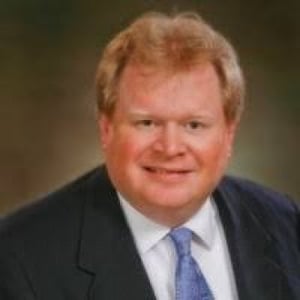
Principal Attorney, Woodring Law Firm
Mr. Daniel Woodring has lived in Florida for almost 30 years, but was born in Philadelphia, Pennsylvania. In Florida, he has lived and worked in Pensacola, Clearwater, Jacksonville, Gainesville and Tallahassee. His wife Jean, who is also an attorney, was born in Miami, and grew up in Ft. Myers. They have a son and a daughter.
Mr. Woodring is recognized as a Florida Super Lawyer, an honor given to fewer than 5% of Florida Attorneys, and holds an Avvo “Superb” rating. Mr. Woodring also has an AV Preeminent® Peer Reviewrating. AV®, AV Preeminent® are registered certification marks of Reed Elsevier Properties Inc., used in accordance with the Martindale-Hubbell certification procedures, standards and policies, and the ratings are explained at www.martindale.com/ratings.
Mr. Woodring is a member of the Florida and Georgia Bars, and is admitted to practice before the Florida Federal Southern, Middle and Northern District Courts, the Eleventh Circuit Court of Appeals and the U.S. Supreme Court. He has worked at the trial level on cases in many of Florida’s 20 judicial circuits, in addition to cases in state administrative tribunals. He has argued cases at the Florida Supreme Court and Florida District Courts of Appeal, and has briefed cases at the U.S. Supreme Court.
He graduated from the University of Florida, College of Law with a Juris Doctorate, Cum Laude, and received his B.A. degree from Clearwater Christian College, Summa Cum Laude.
After law school, Mr. Woodring was in private practice doing general civil and appellate work. He then left for a two year appellate clerkship at the First District Court of Appeal. During his time at the court, he worked on cases including, but not limited to: criminal; family law; administrative law; workers’ compensation; business and civil law; constitutional law.
Mr. Woodring next worked as a counsel in the Executive Office of the Governor, Office of the General Counsel. During his time in Governor Bush’s Legal Office he had diverse responsibilities, including oversight and strategic litigation management of significant legal matters at numerous Governor’s agencies, including the Department of Education, Department of Management Services, Department of Business and Professional Regulation, Department of Health, Agency for Health Care Administration, Department of Children and Families, Department of Community Affairs, Department of Elder affairs, Agency for Workforce Innovation, Department of Transportation, and the Department of State.
He was also legally responsible for topics as disparate as emergency operations; advising the Governor on the selection of judges; implementation of civil service reform; reform of workers’ compensation; budget and appropriation matters; Indian gaming law; and legally advising the Florida Cabinet sitting in its many capacities, such as the Florida Land and Water Adjudicatory Commission.
Mr. Daniel Woodring was then offered the opportunity to be General Counsel for the Florida Department of Education, which encompassed Pre-K though 12th grade, community colleges(now State colleges) and the Florida University System. He was also the first General Counsel for the Florida Board of Governors, when that Board was constitutionally created to manage the State University System.
During almost five years at the Department of Education, Mr. Woodring advised and litigated on matters including, but not limited to: constitutional challenges to Florida’s education programs, including Opportunity Scholarships and the charter school approval and appeal process; doing away with race as a preference in university admissions and state contracting; teacher and professional discipline cases; union, labor and employment matters; state procurement and bid protest proceedings; administrative rule challenges and rule making proceedings; IDEA and Section 504 proceedings; public records, government in the sunshine and ethical matters; contract negotiations and disputes.
Since 2007, Mr. Woodring has been back in private practice as the principal of the Woodring Law Firm, located in Tallahassee, Florida, but with a statewide practice, including Pensacola, Jacksonville, Gainesville, Tampa Bay, Orlando, West Palm Beach, Ft. Myers, Ft. Lauderdale, and Miami. He concentrates his practice on appeals; constitutional cases in both state and federal court; education law matters, including charter school represention; Business litigation; and state administrative matters, including state procurement, regulation and licensing, rule challenges and proposed rule making, although he also handles cases in many other areas.
Please look at the individual practice areas on the left menu for more information.
Mr. Woodring is a member of the Appellate, Administrative, and Governmental Lawyer sections of the Florida Bar and served as Chair of the Education Law Committee of the Florida Bar.
Patrick Hotung Professor of Constitutional Law, Georgetown University Law Center; Faculty Director, Georgetown Center for the Constitution
Randy E. Barnett is the Patrick Hotung Professor of Constitutional Law at the Georgetown University Law Center and is the Faculty Director of the Georgetown Center for the Constitution. After graduating from Northwestern University and Harvard Law School, he tried many felony cases as a prosecutor in the Cook County States’ Attorney’s Office in Chicago. A recipient of a Guggenheim Fellowship in Constitutional Studies and the Bradley Prize, Professor Barnett has been a visiting professor at Penn, Northwestern and Harvard Law School.
Professor Barnett’s publications includes thirteen books, more than one hundred articles and reviews, as well as numerous op-eds. His most recent book is Felony Review: Tales of True Crime and Corruption in Chicago (2026). His other books on the Constitution include: A Life for Liberty: The Making of an American Originalist (2024); The Original Meaning of the Fourteenth Amendment: Its Letter and Spirit (2021) (with Evan Bernick); An Introduction to Constitutional Law: 100 Supreme Court Cases Everyone Should Know (2019) (with Josh Blackman); Restoring the Lost Constitution: The Presumption of Liberty (2nd ed. 2013); Our Republican Constitution: Securing the Liberty and Sovereignty of We the People (2016); and Constitutional Law: Cases in Context (5th ed. forthcoming 2027) (with Josh Blackman). His books on contracts are The Oxford Introductions to U.S. Law: Contracts (2010) and Contracts: Cases and Doctrine (7th ed. 2021) (with Nate Oman). And he is the author of The Structure of Liberty: Justice and the Rule of Law (2nd ed. 2014).
In 2004, he argued the medical marijuana case of Gonzalez v. Raich before the U.S. Supreme Court. In 2012, he was one of the lawyers representing the National Federation of Independent Business in its constitutional challenge to the Affordable Care Act in NFIB v. Sebelius. He’s appeared in numerous documentaries and portrayed a prosecutor in the 2010 science-fiction feature film, InAlienable: The Movie. On X he is @RandyEBarnett
U.S. Court of Appeals, Ninth Circuit
Sandra Segal Ikuta was confirmed as a judge of the U.S. Court of Appeals for the Ninth Circuit on June 19, 2006. She filled a judgeship vacant since September 1, 2000, when Chief Judge Emeritus James R. Browning took senior status.
Before becoming a U.S. Circuit Judge, California Gov. Arnold Schwarzenegger appointed her to be deputy secretary and general counsel of the California Resources Agency in January 2004.
Prior to her political appointment, Judge Ikuta was a partner at the Los Angeles office of O'Melveny & Myers LLP. She joined the law firm in 1990 as an associate and became a partner in 1997. She specialized in environmental and natural resources law and co-chaired the firm's environmental practice group. She previously served as a law clerk for U.S. Supreme Court Justice Sandra Day O'Connor, 1989-90, and Judge Alex Kozinski of the U.S. Court of Appeals for the Ninth Circuit, 1988-89.
Prior to her legal career, Judge Ikuta took an unorthodox career path, which included serving as the first female editor-in-chief of a national martial arts magazine.
She received her J.D. from the University of California at Los Angeles School of Law and a Master of Science from Columbia University School of Journalism. She earned her undergraduate degree from the University of California at Berkeley in 1976.
In addition to her duties as an active U.S. Circuit Judge, Judge Ikuta was an appointed member of the Judicial Conference of the U.S. Advisory Committee on Bankruptcy Rules.
Kenneth and Harle Montgomery Professor of Public Interest Law and Co-Director, Supreme Court Litigation Clinic, Stanford Law School
A productive scholar and an award-winning teacher, Pamela S. Karlan is co-director of the school’s Supreme Court Litigation Clinic, where students litigate live cases before the Court. One of the nation’s leading experts on voting and the political process, she has served as a commissioner on the California Fair Political Practices Commission, an assistant counsel and cooperating attorney for the NAACP Legal Defense Fund, and a Deputy Assistant Attorney General in the Civil Rights Division of the U.S. Department of Justice (where she received the Attorney General’s Award for Exceptional Service – the department’s highest award for employee performance – as part of the team responsible for implementing the Supreme Court’s decision in United States v. Windsor). Professor Karlan is the co-author of leading casebooks on constitutional law, constitutional litigation, and the law of democracy, as well as numerous scholarly articles.
Before joining the Stanford Law School faculty in 1998, she was a professor of law at the University of Virginia School of Law and served as a law clerk to Justice Harry A. Blackmun of the U.S. Supreme Court and Judge Abraham D. Sofaer of the U.S. District Court for the Southern District of New York. Karlan is a member of the American Academy of Arts and Sciences, the American Academy of Appellate Lawyers, and the American Law Institute.
Executive Vice President and Director of Litigation, EdChoice Legal Advocates
Before founding a public interest law firm at EdChoice, Tom Fisher served as Indiana’s first Solicitor General from 2005-2023. Fisher has argued dozens of high-profile cases before both the Indiana Supreme Court and the Seventh Circuit U.S. Court of Appeals and five cases before the U.S. Supreme Court. A two-time recipient of the National Association of Attorneys General Best Brief Award, Fisher is a Fellow of the American Academy of Appellate Lawyers and a Sagamore of the Wabash. Fisher is a graduate of Wabash College and Indiana University Maurer School of Law, where he serves as an Adjunct Professor of Law.
Distinguished Professor and Lawrence A. Jegen III Professor, Indiana University Robert H. McKinney School of Law
Gerard N. Magliocca is a Distinguished Professor and the Lawrence A. Jegen III Professor at the Indiana University Robert H. McKinney School of Law. Professor Magliocca is the author of five books on constitutional law. His next book will be about Justice Robert Jackson’s landmark concurring opinion in Youngstown Sheet and Tube Company v. Sawyer. His biography of Justice Bushrod Washington won the Erwin N. Griswold Prize from the Supreme Court Historical Society.
Professor Magliocca received his undergraduate degree from Stanford and his law degree from Yale. He joined the faculty in 2001 after two years as an attorney and one year as a law clerk for Judge Guido Calabresi on the United States Court of Appeals for the Second Circuit. In 2008, Professor Magliocca held the Fulbright-Dow Distinguished Research Chair of the Roosevelt Study Center in Middelburg, The Netherlands. He was a Fellow at the Washington Library at Mount Vernon from 2019-2021.
Partner, Faegre Drinker Biddle & Reath LLP
Brian J. Paul is an appellate lawyer and leads law teams in high-stakes commercial litigation. He has briefed and argued everything from weighty abstract constitutional issues to dollars-and-cents business issues and everything in-between, both on appeal and in trial courts around the country. A member of the American Law Institute, recent past-president of the Seventh Circuit Bar Association and top-tier ranked Chambers appellate lawyer, Brian had one client say about him: “Brian is one of the most respected and skilled appellate lawyers, not only in Indianapolis but across the country. He is trusted to deliver timely guidance on complex issues.” Another said: “He is excellent. I enjoyed working with him. He is able to put things into layman’s terms and explains things really well. His written and oral advocacy are short, crisp and to the point.”
Clients hire Brian to digest the complex, and make the complex simple and compelling for busy, generalist judges. In his writing, he strives to cut through jargon and legalese, and distill things down to what’s important. In his oral advocacy, by intense preparation, he strives to be the advocate whom judges trust for the right answers. In the dozens of cases he has argued, Brian has helped clients win on both sides of the “v.” His recent representations include:

Tazewell Taylor Professor of Law and William H. Cabell Research Professor, William & Mary Law School
Jonathan H. Adler joined the William & Mary law faculty as the Tazwell Taylor Professor of Law and William H. Cabell Research Professor in 2025. Prior to joining the faculty, he was the inaugural Johan Verheij Memorial Professor of Law and the founding Director of the Coleman P. Burke Center for Environmental Law at the Case Western Reserve University School of Law.
Professor Adler is the author or editor of seven books, including Climate Liberalism: Perspectives on Liberty, Property and Pollution (Palgrave, 2023), Marijuana Federalism: Uncle Sam and Mary Jane (Brookings Institution Press, 2020), Business and the Roberts Court (Oxford University Press, 2016) and Rebuilding the Ark: New Perspectives on Endangered Species Act Reform (AEI Press, 2011).
His articles have appeared in publications ranging from the Harvard Environmental Law Review and Yale Journal on Regulation to the Wall Street Journal, New York Times, and Washington Post. He has testified before Congress a dozen times, and his work has been cited in the U.S. Supreme Court. A 2024 study identified Professor Adler as the seventh most cited legal academic in administrative and environmental law from 2019 to 2023.
Professor Adler is a contributing editor to Civitas Outlook and a regular contributor to the popular legal blog, The Volokh Conspiracy. A regular commentator on constitutional and regulatory issues, he has appeared on numerous radio and television programs, ranging from the PBS Newshour and National Public Radio to the Fox News Channel and Entertainment Tonight.
Professor Adler is a senior fellow at the Property & Environment Research Center in Bozeman, Montana. In 2018, Professor Adler was elected to membership in the American Law Institute and helped co-found the organization Checks and Balances. In 2024, Professor Adler was appointed a public member of the Administrative Conference of the United States.
Professor Adler clerked for the Honorable David B. Sentelle on the U.S. Court of Appeals for the District of Columbia Circuit.
Max E. Greenberg Professor of Contract Law, New York University School of Law
Professor Clayton Gillette joined the New York University School of Law faculty in 2000. For the prior eight years, he was the Perre Bowen Professor of Law at the University of Virginia School of Law. Professor Gillette began his teaching career at Boston University where he served as the Warren Scholar in Municipal Law and Associate Dean, and has been a visiting professor at the University of Michigan and the University of Virginia as well as at NYU School of Law.
Professor Gillette earned his J.D. from the University of Michigan in 1975 and a B.A. from Amherst College in 1972. After law school, he clerked for Judge J. Edward Lumbard of the United States Court of Appeals for the Second Circuit, and was associated with Cleary, Gottlieb, Steen and Hamilton in New York City.
Gillette's scholarship concentrates on commercial law and local government law. He is the author of casebooks on Local Government Law (with Lynn Baker) and Payment Systems and Credit Instruments (with Alan Schwartz and Robert Scott), and a textbook on Municipal Debt Finance Law (with Robert S. Amdursky). Gillette's numerous articles include studies of long-term commercial contracts, initiatives, relations between localities and their neighbors, privatization of municipal services, and judicial construction of contracts governing homeowners associations. He has also served as the Reporter for the ABA Intersectional Task Force on Initiatives and Referenda and has consulted in litigation ranging from the Agent Orange Products Liability Litigation to the default on municipal bonds by Orange County, California and the Washington Public Power Supply System.

Judge, United States Court of Appeals, District of Columbia Circuit
Judge Katsas was appointed to the D.C. Circuit in December 2017. He graduated from Princeton University and Harvard Law School, where he was an executive editor on the Harvard Law Review. Between 1989 and 1992, he served as a law clerk to Judge Edward Becker on the Third Circuit, to then-Judge Clarence Thomas on the D.C. Circuit, and to Justice Thomas on the Supreme Court. Between 1992 and 2001, he was an associate and then partner in the Washington office of Jones Day, where he specialized in appellate and complex civil litigation. Between 2001 and 2009, he served in many senior positions in the Department of Justice, including as Assistant Attorney General for the Civil Division and as Acting Associate Attorney General. In 2009, he returned to Jones Day. From January to December 2017, he served as Deputy Assistant to the President and Deputy Counsel to the President.
Before joining the bench, Judge Katsas argued more than 75 appeals, including three cases in the Supreme Court, 13 cases in the D.C. Circuit, and cases in every other federal court of appeals. By appointment of the Chief Justice, he served on the Advisory Committee on Appellate Rules from 2013 to 2017. In 2016, he was elected to membership in the American Academy of Appellate Lawyers.

George C. Dix Professor in Constitutional Law, Northwestern University Pritzker School of Law
John O. McGinnis is a graduate of Harvard College and Harvard Law School where he was an editor of the Harvard Law Review. He also has an MA degree from Balliol College, Oxford, in philosophy and theology. Professor McGinnis clerked on the U.S. Court of Appeals for the District of Columbia. From 1987 to 1991, he was deputy assistant attorney general in the Office of Legal Counsel at the Department of Justice. He is the author of Accelerating Democracy: Transforming Government Through Technology (Princeton 2013) and Originalism and the Good Constitution (Harvard 2013) (with M. Rappaport). He is a past winner of the Paul Bator award given by the Federalist Society to an outstanding academic under 40. He has been listed by the United States on the roster of panelists who may be called upon to decide World Trade Organization Disputes.
Carmack Waterhouse Professor of Constitutional Law, Georgetown Law
After graduating from Harvard Law School in 1971, Professor Seidman served as a law clerk for J. Skelly Wright of the D.C. Circuit and U.S. Supreme Court Justice Thurgood Marshall. He then was a staff attorney with the D.C. Public Defender Service until joining the Law Center faculty in 1976. He teaches a variety of courses in the fields of constitutional and criminal law. He is co-author of a constitutional law casebook and the author of many articles concerning criminal justice and constitutional law. His most recent books are Silence and Freedom (Stanford 2007), Our Unsettled Constitution: A New Defense of Constitutionalism and Judicial Review (Yale 2001) and Equal Protection of the Laws (Foundation 2002).
Patrick Hotung Professor of Constitutional Law, Georgetown University Law Center; Faculty Director, Georgetown Center for the Constitution
Randy E. Barnett is the Patrick Hotung Professor of Constitutional Law at the Georgetown University Law Center and is the Faculty Director of the Georgetown Center for the Constitution. After graduating from Northwestern University and Harvard Law School, he tried many felony cases as a prosecutor in the Cook County States’ Attorney’s Office in Chicago. A recipient of a Guggenheim Fellowship in Constitutional Studies and the Bradley Prize, Professor Barnett has been a visiting professor at Penn, Northwestern and Harvard Law School.
Professor Barnett’s publications includes thirteen books, more than one hundred articles and reviews, as well as numerous op-eds. His most recent book is Felony Review: Tales of True Crime and Corruption in Chicago (2026). His other books on the Constitution include: A Life for Liberty: The Making of an American Originalist (2024); The Original Meaning of the Fourteenth Amendment: Its Letter and Spirit (2021) (with Evan Bernick); An Introduction to Constitutional Law: 100 Supreme Court Cases Everyone Should Know (2019) (with Josh Blackman); Restoring the Lost Constitution: The Presumption of Liberty (2nd ed. 2013); Our Republican Constitution: Securing the Liberty and Sovereignty of We the People (2016); and Constitutional Law: Cases in Context (5th ed. forthcoming 2027) (with Josh Blackman). His books on contracts are The Oxford Introductions to U.S. Law: Contracts (2010) and Contracts: Cases and Doctrine (7th ed. 2021) (with Nate Oman). And he is the author of The Structure of Liberty: Justice and the Rule of Law (2nd ed. 2014).
In 2004, he argued the medical marijuana case of Gonzalez v. Raich before the U.S. Supreme Court. In 2012, he was one of the lawyers representing the National Federation of Independent Business in its constitutional challenge to the Affordable Care Act in NFIB v. Sebelius. He’s appeared in numerous documentaries and portrayed a prosecutor in the 2010 science-fiction feature film, InAlienable: The Movie. On X he is @RandyEBarnett
Ohio Attorney General
Richard Cordray was elected Ohio Attorney General in 2008.
Since his election, he has sought to use the power of his office to speak up for ordinary citizens and to battle the ills that weaken our society.
In the wake of the economic crisis, Cordray has taken action to hold Wall Street accountable for wrongdoing. His office is managing several major lawsuits against notable Wall Street firms such as AIG, Bank of America and Merrill Lynch, and these efforts have resulted in more than $2.5 billion in settlements to date.
Cordray aggressively pursues scammers who try to make a buck at the expense of Ohioans. He has filed dozens of cease and desist orders against foreclosure rescue scams, which exploit Ohio homeowners who are desperate for help. Ohio consumers filed a record number of consumer complaints with his office in 2009 - more than 30,000 of them - and the office responded by recovering millions in restitution, fines and other compensation. Cordray also opened the office's consumer complaint process to small businesses and nonprofits for the first time, providing new tools to protect them against vendors that do not play by the rules.
As one of Ohio's leading law enforcement officials, Cordray has stressed the importance of working with local law enforcement agencies to fight crime and protect Ohioans. Under his administration and with the help of local law enforcement agencies, Ohio became the first state in the nation to fully implement the sex offender registration provisions of the federal Adam Walsh Act. Through the office's Bureau of Criminal Identification and Investigation, Cordray and his staff have reduced the number of pending cases for laboratory and other tests that law enforcement officials and prosecutors rely on to make their cases and pursue justice for Ohioans.
A strong advocate for veterans, Cordray proposed a service bonus for veterans of the Persian Gulf, Afghanistan and Iraq wars. More than seven in 10 voters approved the bonus in November 2009.
During his accomplished legal career, Cordray has personally argued seven cases before the U.S. Supreme Court. Among them was a case he argued as attorney general in 2009, when he won a unanimous Supreme Court decision to reinstate the death sentence of a man convicted in a hate-inspired shooting spree that killed three people.
Cordray previously served as Ohio treasurer, Franklin County treasurer, state representative and as Ohio's first solicitor general. He also was a law clerk for U.S. Supreme Court Justices Anthony Kennedy and Byron White.
For his service to Ohioans, Cordray has been honored with numerous awards, including the National Community Reinvestment Coalition's Henry B. Gonzalez Award for partnering with community nonprofits to help traditionally underserved people build wealth and economic opportunity; the Ohio Children's Defense Fund's Children's Champion Award for fighting to ensure a level playing field for all children; the Vietnam Veterans of America Buckeye State Council's Presidential Citation Award for supporting veterans; the Better Business Bureau Serving Northwestern Ohio and Southeastern Michigan's Award of Appreciation for promoting an ethical marketplace; and the NeighborWorks America's Government Service Award as the foremost national leader in state government for working to prevent foreclosures.
Cordray earned a master's degree with first-class honors from Oxford University in England and a law degree from the University of Chicago Law School, where he was editor of the Law Review. He lives near Grove City with his wife, Peggy, and their twins. His earliest claim to fame was as an undefeated five-time champion on the "Jeopardy!" TV show.
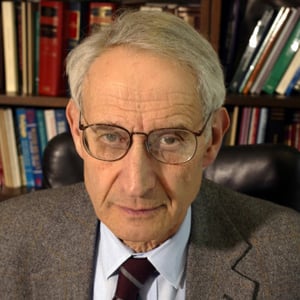
Beneficial Professor of Law, Harvard Law School
Educated at Princeton, Oxford and Columbia Law School, Charles Fried, the Beneficial Professor of Law, has been teaching at Harvard Law School since 1961. He was Solicitor General of the United States, 1985-89, and an Associate Justice of the Supreme Judicial Court of Massachusetts, 1995-99. His scholarly and teaching interests have been moved by the connection between normative theory and the concrete institutions of public and private law. During his career at Harvard he has taught Criminal Law, Commercial Law, Roman Law, Torts, Contracts, Labor Law, Constitutional Law and Federal Courts, Appellate and Supreme Court Advocacy. The author of many books and articles, his Anatomy of Values (1970), Right and Wrong (1978), and Modern Liberty (2006) develop themes in moral and political philosophy with applications to law. Contract as Promise (1980), Making Tort Law (2003, with David Rosenberg) and Saying What the Law Is: The Constitution in the Supreme Court (2004) are fundamental inquiries into broad legal institutions. Order & Law: Arguing the Reagan Revolution (1991) discusses major themes developed in Fried's time as Solicitor General. In recent years Fried has taught Constitutional Law and Contracts. During his time as a teacher he has also argued a number of major cases in state and federal courts, most notably Daubert v. Merrell Dow Pharmaceuticals, in which the Supreme Court established the standards for the use of expert and scientific evidence in federal courts.

Partner, Baker Hostetler LLP
David Rivkin is a member of the firm's litigation, international and environmental teams and is co-leader of the firm's national appellate practice. He has extensive experience in constitutional, administrative and international law litigation and has been involved in numerous high-profile cases. With his prior experience in the government sector, David draws on a wealth of knowledge when providing compliance advice to companies and handling enforcement proceedings before government agencies on issues arising out of multilateral and unilateral sanctions, the Foreign Corrupt Practices Act (FCPA), anti-boycott issues, bankruptcy and financial fraud matters, and environmental and energy issues.
David has developed and implemented legislative, regulatory and litigation initiatives for two presidential administrations. Over the years, he has published hundreds of articles, op-eds, book reviews and book chapters on a variety of international, legal, constitutional, defense, arms control, foreign policy, environmental and energy issues for various newspapers and magazines, including The Wall Street Journal, The Washington Post, The New York Times, USA Today and The Los Angeles Times, and has been a frequent commentator and guest on TV and radio shows including ABC, CBS, NBC, CNN, Fox News, NPR and PBS.

Judge, United States Court of Appeals, Eighth Circuit
David Stras became a judge on the United States Court of Appeals for the Eighth Circuit on January 31, 2018. Before serving on the Eighth Circuit, Judge Stras was an Associate Justice of the Minnesota Supreme Court, a position he occupied from July 1, 2010 until his appointment to the Eighth Circuit.
Prior to becoming a judge, Stras was a member of the faculty of the University of Minnesota Law School from 2004 through 2010. He taught and wrote in the areas of federal courts and jurisdiction, constitutional law, criminal law, and law and politics.
Judge Stras received his Bachelor of Arts degree, with highest distinction, in 1995 and his Master of Business Administration in 1999, both from the University of Kansas. He also received his law degree from the University of Kansas School of Law in 1999, where he served as Editor-in-Chief of the Criminal Procedure Edition of the Kansas Law Review.
Following law school, Stras clerked for The Honorable Melvin Brunetti of the United States Court of Appeals for the Ninth Circuit and then for The Honorable J. Michael Luttig of the United States Court of Appeals for the Fourth Circuit.
From 2001 to 2002, he practiced white-collar criminal and appellate litigation with the Washington, D.C., office of Sidley Austin Brown & Wood. Following his year in practice, he clerked for The Honorable Clarence Thomas of the Supreme Court of the United States.
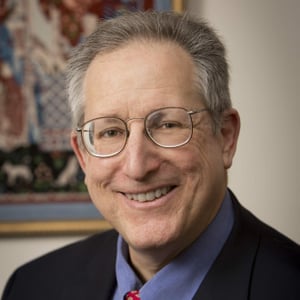
Knight Professor of Constitutional Law and the First Amendment, Yale Law School
Jack M. Balkin is Knight Professor of Constitutional Law and the First Amendment at Yale Law School. He is the founder and director of Yale’s Information Society Project, an interdisciplinary center that studies law and new information technologies. He also directs the Abrams Institute for Freedom of Expression, and the Knight Law and Media Program at Yale. Professor Balkin is a member of the American Academy of Arts and Sciences, and founded and edits the group blog Balkinization (http://balkin.blogspot.com/). He is the author of over 100 articles and the author or editor of eleven books. His scholarship ranges over many different subjects, including constitutional theory, technology and Internet law, freedom of speech, jurisprudence, cultural evolution, the theory of ideology, and musical and legal interpretation. His most recent books are Democracy and Dysfunction (University of Chicago Press, 2019)(with Sanford Levinson); Living Originalism (Harvard, Belknap Press, 2011), and Constitutional Redemption: Political Faith in an Unjust World (Harvard University Press 2011).
Patrick Hotung Professor of Constitutional Law, Georgetown University Law Center; Faculty Director, Georgetown Center for the Constitution
Randy E. Barnett is the Patrick Hotung Professor of Constitutional Law at the Georgetown University Law Center and is the Faculty Director of the Georgetown Center for the Constitution. After graduating from Northwestern University and Harvard Law School, he tried many felony cases as a prosecutor in the Cook County States’ Attorney’s Office in Chicago. A recipient of a Guggenheim Fellowship in Constitutional Studies and the Bradley Prize, Professor Barnett has been a visiting professor at Penn, Northwestern and Harvard Law School.
Professor Barnett’s publications includes thirteen books, more than one hundred articles and reviews, as well as numerous op-eds. His most recent book is Felony Review: Tales of True Crime and Corruption in Chicago (2026). His other books on the Constitution include: A Life for Liberty: The Making of an American Originalist (2024); The Original Meaning of the Fourteenth Amendment: Its Letter and Spirit (2021) (with Evan Bernick); An Introduction to Constitutional Law: 100 Supreme Court Cases Everyone Should Know (2019) (with Josh Blackman); Restoring the Lost Constitution: The Presumption of Liberty (2nd ed. 2013); Our Republican Constitution: Securing the Liberty and Sovereignty of We the People (2016); and Constitutional Law: Cases in Context (5th ed. forthcoming 2027) (with Josh Blackman). His books on contracts are The Oxford Introductions to U.S. Law: Contracts (2010) and Contracts: Cases and Doctrine (7th ed. 2021) (with Nate Oman). And he is the author of The Structure of Liberty: Justice and the Rule of Law (2nd ed. 2014).
In 2004, he argued the medical marijuana case of Gonzalez v. Raich before the U.S. Supreme Court. In 2012, he was one of the lawyers representing the National Federation of Independent Business in its constitutional challenge to the Affordable Care Act in NFIB v. Sebelius. He’s appeared in numerous documentaries and portrayed a prosecutor in the 2010 science-fiction feature film, InAlienable: The Movie. On X he is @RandyEBarnett
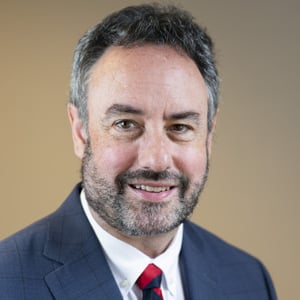
Research Director, Independence Institute
David B. Kopel is Research Director at the Independence Institute; Adjunct Scholar at the Cato Institute; and Senior Fellow at the University of Wyoming College of Law, Firearms Research Center. He received his B.A. in history with Highest Honors from Brown University and his J.D. magna cum laude from the University of Michigan Law School.
He is the author of over 20 books, including the textbook Firearm Law and the Second Amendment: Regulation, Rights, and Policy (Aspen Pubs. 4th ed. forthcoming 2026). His scholarship and briefs have been cited 7 Supreme Court cases--including Heller, McDonald, and Bruen--and in 140 lower courts opinions. He is the author of 120 scholarly articles. His shorter articles often appear on The Volokh Conspiracy blog, hosted by Reason magazine. His topics of interest include the right to arms throughout history, the Colorado Constitution, and law enforcement policy.
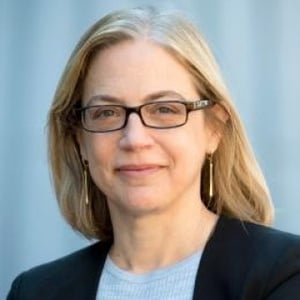
Harlan Fiske Stone Professor of Constitutional Law, Columbia Law School
A leading administrative and constitutional law scholar, Gillian Metzger ’96 writes and teaches in the areas of administrative law, constitutional law, and federal courts, with an emphasis on federalism and privatization. In 2023-2024, she served as Acting Assistant Attorney General and Deputy Assistant Attorney General in the Office of Legal Counsel in the Department of Justice.
Metzger's recent work covers topics ranging from constitutional attacks on the administrative state to appropriations, administrative law under the Roberts Court, and the role of administrative agencies in a polarized world. In 2015, Metzger won the American Bar Association Administrative Law Section Annual Scholarship Award for “The Constitutional Duty to Supervise,” which examined presidential control and oversight of the modern administrative state. She is a co-editor of Gellhorn & Byse’s Administrative Law: Cases and Comments, 13th ed. (Foundation Press, 2023), a seminal administrative law casebook.
Professor Metzger was recently elected to the American Academy of Arts & Sciences and is a Senior Fellow of the Administrative Conference of the United States. In 2020, she was awarded Columbia University's Faculty Mentorship Award and in 2014, the Law School’s graduating class awarded Metzger the Willis L.M. Reese Prize for Excellence in Teaching, recognizing, among many other accomplishments, her commitment to mentoring new generations of law students.
In 2012, Metzger helped launch Columbia Law School’s Center for Constitutional Governance (CCG)—where she now serves as faculty director—a nonpartisan legal and policy organization devoted to the study of constitutional structure and authority. CCG brings together a diverse group of constitutional scholars to explore policy areas such as health care, civil rights, immigration, financial regulation, and national security.
Metzger also has co-authored and filed numerous amicus briefs in major constitutional and administrative law challenges before the Supreme Court and other courts. Most recently, Metzger filed a brief in Seila Law Center v. CFPB, a separation of powers challenge, and in Kisor v. Wilkie, a case involving judicial deference to agencies. She has also filed briefs in cases involving reproductive rights and the Affordable Care Act, among others.
Previously, Metzger served as vice dean of intellectual life at Columbia Law School. Before joining the Law School, she worked as an attorney with the Brennan Center for Justice. Metzger also clerked for U.S. Supreme Court Justice Ruth Bader Ginsburg ’59 and Judge Patricia M. Wald of the U.S. Circuit Court of Appeals for the District of Columbia. In 2018, Metzger moderated a panel discussion with Justice Ginsburg on impact litigation at Columbia Law School.

Chairman and Founder, Institute for Free Speech; Josiah H. Blackmore II/Shirley M. Nault Designated Professor of Law, Capital University Law School
Managing Director, Alvarez & Marsal Healthcare Industry Group
With prior service as Deputy General Counsel of the U.S. Department of Health and Human Services and as Executive Vice President and General Counsel of Tenet Healthcare, he brings more than 20 years of experience in addressing challenging healthcare issues in government and private industry.
Mr. Urbanowicz regularly advises boards of directors, senior management, investors and lenders of health care organizations facing significant regulatory, compliance, financial or operating challenges. His clients include healthcare providers, payors and suppliers.
Recent engagements include: serving as a federally-appointed hospital restructuring and safety monitor; compliance and operational improvements for publicly-traded and not-for-profit Medicare Advantage plans, Medicare Prescription Drug Plans (PDP) and Medicaid managed care companies; renegotiating of government debt for a major hospital system; restructuring advisory services to the Medicaid program of a large state; numerous internal and government investigations involving healthcare providers including: academic health systems, medical device companies, pharmaceutical manufacturers, long term care hospital companies, hospice providers, dental services companies and disease management companies.
Mr. Urbanowicz also serves on the board of directors of Maxim Healthcare Services, one of the nation’s largest home health services companies, and chairs the company’s compliance committee.
As Deputy General Counsel of HHS, from 2001 to 2003, Mr. Urbanowicz served as the senior legal adviser to the Secretary of Health and Human Services on significant federal healthcare policy issues including Medicare and Medicaid provider payment and fraud and abuse enforcement policy. He was part of the team that drafted the historic Medicare Prescription Drug Act of 2003.
During his tenure at Tenet, Mr. Urbanowicz was responsible for successfully resolving several major federal criminal investigations and civil lawsuits facing Tenet by the U.S. Department of Justice, the Securities and Exchange Commission, and the HHS Office of Inspector General. Prior to his government service, he was a partner in the law firm of Locke, Liddell & Sapp.
Mr. Urbanowicz earned a bachelor of arts’ degree and a Juris Doctor degree from Tulane University. He is admitted to the bars of the District of Columbia, the U.S. Supreme Court and the Louisiana Supreme Court, and is a member of the American Law Institute.

Panel I: The Future of the Missouri Constitution: Constitutional Convention? Initiative Petition Reform?
Stephanie S. Bell, Mark J. Bremer, Stephen R. Clark, James Layton, Lowell Pearson, John Wiemann
On March 8, 2021, the Federalist Society's Missouri lawyers chapters held a statewide conference via...
Tenth Annual Rosenkranz Debate: Lochner v. New York
Akhil Reed Amar, Randy E. Barnett, Eugene B. Meyer, Nicholas Quinn Rosenkranz
RESOLVED: Lochner v. New York: Still Crazy After All These Years. The Tenth Annual Rosenkranz Debate was...
Federalism and Healthcare
Christa Calamas, John Goodman, Antonia C. Novello, Avik Roy, Daniel Woodring
This panel will move beyond the Obamacare discussion and address what the current problems in...
Debate: The Constitutionality of the Affordable Care Act
Randy E. Barnett, Sandra Segal Ikuta, Pamela S. Karlan, Michael Reynolds
This debate will focus on the constitutionality of the Affordable Care Act. While specific attention...
A Debate Over the Constitutionality of the Health Care Reform Act
Thomas M. Fisher, Gerard N. Magliocca, Brian J. Paul
On October 25, 2011, the Indianapolis Lawyers Chapter of the Federalist Society hosted a debate...
Panel II: Federalism and Interstate Competition
Jonathan H. Adler, Clayton Gillette, Gregory G. Katsas, John O. McGinnis, Lauren Prieb, Louis Michael Seidman
This panel will assess American federalism as a competitive institution that offers a marketplace of...
Litigation: Debating the Constitutionality of the Federal Health Care Legislation
Randy E. Barnett, Richard Cordray, Charles Fried, David B. Rivkin, David R. Stras
Prof. Randy E. Barnett, Carmack Waterhouse Professor of Legal Theory, Georgetown University Law Center Hon....
The Individual Health Care Mandate and Enumerated Powers
Jack M. Balkin, Randy E. Barnett, David B. Kopel, Gillian E. Metzger, Bradley A. Smith
Shortly after the health care reform bill was signed into law, the attorneys general of...
Constitutional Implications of an “Individual Mandate” in Health Care Reform
Dennis G. Smith, Peter Urbanowicz
The Federalist Society takes no position on particular legal or public policy initiatives. Any expressions...