

Senior Fellow in Constitutional Jurisprudence, Independence Institute
Professor Robert G. Natelson is a constitutional scholar and author.
Rob’s constitutional scholarship has been cited repeatedly by justices and parties at the U.S. Supreme Court—as well as by federal appeals courts, and at least 18 state supreme courts.
Rob’s research into the Constitution’s original meaning has carried him to libraries throughout the United States and in Britain, including four months at Oxford University. His books and articles span many different parts of the Constitution, including groundbreaking studies of the Necessary and Proper Clause, the Indian Commerce Clause, federalism, Founding-Era interpretation, regulation of elections, and the amendment process of Article V. He created the first-ever online bibliography for 18th century materials used in constitutional research. He is a contributing author to the Encyclopedia of the Supreme Court of the United States (on Magna Carta). He contributed eight essays to the third edition of the Heritage Guide to the Constitution: five on the amendment procedure and one each on the Guarantee Clause, the Postal Clause, and the Recess Appointments Clause.
U.S. Supreme Court justices have relied explicitly on Rob’s research in 41 citations in 13 separate cases.

Richard and Frances Mallery Professor of Law and Faculty Director, Constitutional Law Center, Stanford Law School
Michael W. McConnell is the Richard and Frances Mallery Professor and Faculty Director of the Constitutional Law Center at Stanford Law School, and a Senior Fellow at the Hoover Institution. From 2002 to 2009, he served as a Circuit Judge on the United States Court of Appeals for the Tenth Circuit. He was nominated by President George W. Bush, a Republican, and confirmed by a Democratic Senate by unanimous consent. McConnell has previously held chaired professorships at the University of Chicago and the University of Utah, and visiting professorships at Harvard and NYU. He teaches courses on constitutional law, constitutional history, First Amendment, and interpretive theory. He has published widely in the fields of constitutional law and theory, especially church and state, equal protection, and separation of powers. His book, “The President Who Would Not Be King: Executive Power Under the Constitution,” was published by Princeton University Press in 2020, based on the Tanner Lectures in Human Values, which he delivered at Princeton in 2019. His latest book, co-authored with Nathan Chapman, “Agreeing to Disagree: How the Establishment Clause Protects Religious Diversity and Freedom of Conscience,” was published by Oxford University Press in mid-2023. McConnell has argued sixteen cases in the United States Supreme Court, most recently Carney v. Adams (2020). defending a provision of the Delaware Constitution requiring political balance on that state’s courts. More recently, he was co-counsel in Gonzalez v. Google. He earned his B.A. from Michigan State University and his J.D. from the University of Chicago, and has received honorary degrees from Notre Dame University and Michigan State. He served as law clerk to Supreme Court Justice William J. Brennan, Jr. and D.C. Circuit Chief Judge J. Skelly Wright. He has been Assistant General Counsel of the Office of Management & Budget, Assistant to the Solicitor General of the Department of Justice, and a member of the President’s Intelligence Oversight Board. He is Senior of Counsel to the law firm Wilson, Sonsini, Goodrich & Rosati, and is co-chair of Meta’s Oversight Review Board.
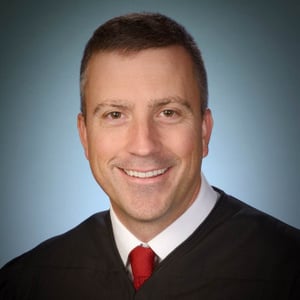
Judge, United States District Court, District of Columbia
Judge Trevor N. McFadden was appointed to the United States District Court for the District of Columbia in 2017. He received his B.A. in 2001 from Wheaton College, IL, magna cum laude. In 2006, he received his J.D. from the University of Virginia School of Law, where he graduated Order of the Coif and was an editor for the Virginia Law Review.
Following graduation from law school, Judge McFadden clerked for Judge Steven Colloton, U.S. Court of Appeals for the Eighth Circuit. He then joined the U.S. Department of Justice, where he served as Counsel to the Deputy Attorney General and as Assistant U.S. Attorney in the District of Columbia. Judge McFadden subsequently became a partner at Baker & McKenzie LLP in Washington, DC, where he focused on white collar investigations. He is also co-author of a treatise, Corporate Settlement Tools: DPAs, NPAs, and Cooperation Agreements.
After four years in private practice, Judge McFadden returned to the U.S. Department of Justice, where he was Deputy Assistant Attorney General and acted as the second-in-command of the Department's Criminal Division. As Deputy Assistant Attorney General, he managed the Division's Fraud and Appellate Sections.
Judge McFadden also has extensive experience in law enforcement. He served as an officer with the Fairfax County, VA, Police Department and as a deputy sheriff in Madison County, VA.
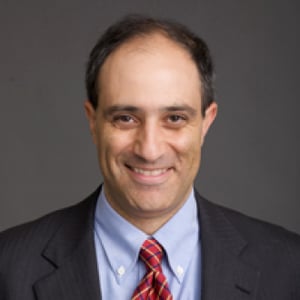
Carroll Professor of Jurisprudence, Georgetown Law
John Mikhail is the Carroll Professor of Jurisprudence at Georgetown University Law Center, where he has taught since 2004. He teaches and writes on a variety of topics, including constitutional law, moral psychology, moral and legal theory, and legal history. His recent scholarship has focused mainly on American constitutional history, including the original understanding of the Preamble, Tenth Amendment, and Emoluments, Ex Post Facto, and Necessary and Proper Clauses. Professor Mikhail received his B.A. from Amherst College, a Ph.D. in Philosophy from Cornell University, and his J.D. from Stanford Law School, where he was Senior Article Editor of the Stanford Law Review and Senior Submissions Editor of the Stanford Journal of International Law. Before coming to Georgetown, he was a Lecturer and Research Affiliate at MIT, an associate at Simpson, Thacher & Bartlett, and a judicial clerk to Judge Rosemary Barkett on the U.S. Court of Appeals for the Eleventh Circuit. Professor Mikhail served as the Law Center's Associate Dean for Research and Academic Programs from 2017 to 2020 and its Associate Dean for International and Transnational Programs from 2011 to 2013.

Sterling Professor of Law and Political Science, Yale Law School
Akhil Reed Amar is Sterling Professor of Law and Political Science at Yale University, where he teaches constitutional law in both Yale College and Yale Law School. After graduating from Yale College, summa cum laude, in 1980 and from Yale Law School in 1984, and clerking for Judge (later Justice) Stephen Breyer, Amar joined the Yale faculty in 1985 at the age of 26. He is Yale’s only living professor to have won the University’s unofficial triple crown — the Sterling Chair for scholarship, the DeVane Medal for teaching, and the Lamar Award for alumni service.
Amar’s work has won awards from both the American Bar Association and the Federalist Society, and he has been cited by Supreme Court justices across the spectrum in more than 50 cases — tops among scholars under age 70. According to both Fred Shapiro’s landmark 2021 study of lifetime scholarly citations and Heinonline’s most recent tabulation of lifetime law-review citations, Amar is America’s second most-cited legal scholar still under age 70. He is a member of the American Academy of Arts and Sciences and has written widely for popular publications, including The New York Times, The Washington Post, The Wall Street Journal, Time, and The Atlantic. He was an informal consultant to the popular TV show The West Wing and his scholarship has been showcased on many broadcasts, including The Colbert Report, Morning Joe, AC360, Velshi, Fox News @ Night with Shannon Bream, Fareed Zakaria GPS, Erin Burnett Outfront, and Constitution USA with Peter Sagal.
He is the author of more than a hundred law review articles and several books, including The Bill of Rights (1998 — winner of the Yale University Press Governors’ Award), America’s Constitution (2005 — winner of the ABA’s Silver Gavel Award), America’s Unwritten Constitution (2012 — named one of the year’s 100 best nonfiction books by The Washington Post), and The Constitution Today (2016 — named one of the year’s top ten nonfiction books by Time magazine). The first volume of his ambitious trilogy on American constitutional history from the Founding to the present, The Words That Made Us: America’s Constitutional Conversation, 1760-1840, came out in May 2021. The second volume, Born Equal: Remaking America’s Constitution, 1840-1920, will be published in September 2025 and is already available for pre-order. All together, his nonfiction books have won two starred reviews from Publishers Weekly and three starred reviews from Kirkus—tops, it is believed, among legal scholars under age 70. Together with Vikram David Amar (YLS ’88), he has a bi-weekly column on the Supreme Court on the distinguished website SCOTUSblog. Along with Andy Lipka, he co-hosts a popular and free weekly podcast, Amarica’s Constitution, whose listeners are eligible for CLE credit in most American jurisdictions. A wide assortment of his articles and op-eds and video links to many of his public lectures and free online courses may be found at akhilamar.com.

Judge, United States Court of Appeals, Eleventh Circuit
On March 20, 2018, Judge Elizabeth L. Branch (Lisa) was sworn in as a United States Circuit Judge for the Eleventh Circuit.
Judge Branch attended and graduated from Davidson College in North Carolina (B.A., cum laude, 1990), and Emory University School of Law (J.D., with distinction, 1994).
After graduating from law school, Judge Branch served as a federal law clerk to The Honorable J. Owen Forrester of the U.S. District Court for the Northern District of Georgia from 1994 to 1996. Following her clerkship, Judge Branch joined the litigation department of Smith, Gambrell & Russell, LLP in Atlanta as an associate and then a partner.
From 2004 to 2008, Judge Branch was a senior official in the Administration of President George W. Bush in Washington, D.C. She served first as the Associate General Counsel for Rules and Legislation at the U.S. Department of Homeland Security and then as the Counselor to the Administrator of the Office of Information and Regulatory Affairs at the U. S. Office of Management and Budget.
She returned to Smith Gambrell in 2008 as a litigation partner. Judge Branch then was appointed to the Court of Appeals of Georgia by Governor Nathan Deal, taking office on September 4, 2012, where she served until March 19, 2018.
Judge Branch is a member of the Board of Advisors of the Atlanta Lawyers Chapter for the Federalist Society for Law and Public Policy Studies.
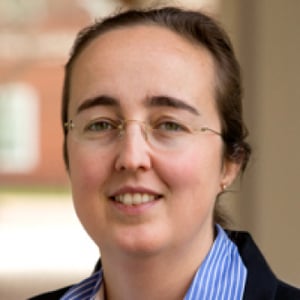
Assistant Professor of Political Science, Old Dominion University
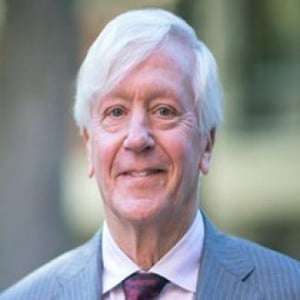
David and Mary Harrison Distinguished Professor of Law, University of Virginia School of Law
G. Edward White joined the Virginia law faculty in 1972 after a clerkship with Chief Justice Earl Warren of the Supreme Court of the United States and a year as visiting scholar at the American Bar Foundation. He was appointed John B. Minor Professor of Law and History in 1987, and held that chair until 2003, when he became David and Mary Harrison Distinguished Professor of Law. In 1992, he was appointed to a University Professorship, which he held until 2003. From 1990 until 1992 and from 2001-03, he was the Sullivan & Cromwell Research Professor; from 1994-97 the E. James Kelly Research Professor; and from 1999-2001 the Class of 1963 Research Professor. He has held visiting appointments at New York Law School, William & Mary School of Law, Brooklyn Law School, Arizona College of Law, the London School of Economics and Political Science, and Harvard Law School. He has been a Guggenheim Fellow, and twice a senior fellow of the National Endowment for the Humanities. He is a fellow of the American Academy of Arts & Sciences, a fellow of the Society of American Historians, and a member of the American Law Institute.He received the Roger and Madeleine Traynor Faculty Achievement Award in 2008.
White's 14 published books have won numerous honors and awards. These include final listing for the Pulitzer Prize in history, the Silver Gavel Award from the American Bar Association, the James Willard Hurst Prize from the Law & Society Association, the Littleton-Griswold Prize from the American Historical Association, the Scribes Award and the Association of American Law Schools' Triennial Coif Award. White's books have garnered 15 such honors and awards since 1976.
White was editor of the Studies in Legal History series for the North Carolina Press from 1980-85, and advisor on law manuscripts for Oxford University Press from 1986-96. He was on the editorial board of the Virginia Quarterly Review from 1980-2002. He has served on the Commission for Undergraduate Education in Law and the Humanities, and has taught summer humanities seminars for lawyers and judges under the auspices of the National Endowment for the Humanities.
White has delivered several endowed lectures, including the inaugural John Marshall Lecture, sponsored by the Boston Bar Association; the inaugural Jerome Hall Lecture at Hastings College of Law; the Swinford Lecture, sponsored by the University of Kentucky School of Law and the Kentucky Bar Association; the Keck Lecture at Amherst College, the Rosenthal Lectures at Northwestern University School of Law; the Neesima Lectures at Doshisha University, Japan; the Fulton Lecture at the University of Chicago School of Law and the Knowlton Distinguished Lecture at the University of South Carolina School of Law. His most recent lecture was the 2010 Hendricks Law and History Lecture at Washington & Lee Law School.
White's 1996 book, Creating the National Pastime: Baseball Transforms Itself, 1903-1953, reflects his life-long participation and interest in athletics. He lettered in four sports in college, formerly coached the Charlottesville High School girls soccer team, and has won a number of state- and citywide tournaments in doubles squash.
Senior Director of Strategic Partnerships, First Liberty Institute
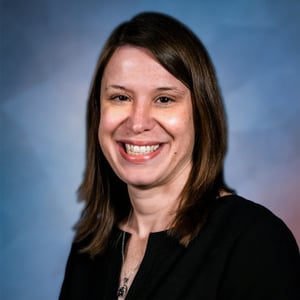
Lisa Budzynski Ezell is the former Vice President and Director of the Federalist Society’s Lawyers Chapters. In this role, she managed a growing network of over 90 lawyers chapters nationwide, including oversight of leadership recruitment, chapter programming, state conferences, civics education outreach, and young lawyers activities. She holds a Bachelor of Arts degree from Saint Mary’s College in Political Science and History and a Master of Public Policy from George Mason University.

Judge, United States Court of Appeals, Fifth Circuit
Andrew Oldham is a Circuit Judge on the United States Court of Appeals for the Fifth Circuit. Before ascending to the bench, Judge Oldham served as General Counsel to Texas Governor Greg Abbott, where he advised the Governor on a range of issues under federal and state law and managed litigation in which the Governor was an interested party. Before that he served as Deputy Solicitor General for the State of Texas, where he represented Texas in federal courts across the country, including twice before the United States Supreme Court. Before moving to Texas, Judge Oldham was an attorney at Kellogg Hansen Todd Figel & Frederick in Washington, D.C. His practice focused on appellate litigation in federal courts of appeals throughout the country. Before entering private practice, Judge Oldham served as a law clerk to Justice Samuel A. Alito, Jr., at the Supreme Court of the United States and to Judge David B. Sentelle of the U.S. Court of Appeals for the District of Columbia Circuit. He also worked as an attorney-adviser in the Office of Legal Counsel at the U.S. Department of Justice from 2006 to 2008. Judge Oldham earned a B.A. from the University of Virginia with highest honors, a Truman Scholarship for graduate school, an M. Phil., first class (with distinction), from Cambridge University, and a J.D., magna cum laude, from Harvard Law School.
Senior Fellow in Constitutional Jurisprudence, Independence Institute
Professor Robert G. Natelson is a constitutional scholar and author.
Rob’s constitutional scholarship has been cited repeatedly by justices and parties at the U.S. Supreme Court—as well as by federal appeals courts, and at least 18 state supreme courts.
Rob’s research into the Constitution’s original meaning has carried him to libraries throughout the United States and in Britain, including four months at Oxford University. His books and articles span many different parts of the Constitution, including groundbreaking studies of the Necessary and Proper Clause, the Indian Commerce Clause, federalism, Founding-Era interpretation, regulation of elections, and the amendment process of Article V. He created the first-ever online bibliography for 18th century materials used in constitutional research. He is a contributing author to the Encyclopedia of the Supreme Court of the United States (on Magna Carta). He contributed eight essays to the third edition of the Heritage Guide to the Constitution: five on the amendment procedure and one each on the Guarantee Clause, the Postal Clause, and the Recess Appointments Clause.
U.S. Supreme Court justices have relied explicitly on Rob’s research in 41 citations in 13 separate cases.

The Meaning of "Regulate Commerce" to the Constitution's Ratifiers
Robert G. Natelson
I. Previous Scholarship[1] A. Views of “Commerce”: Traditional and “Mega” The Constitution grants Congress power...
IV: Resolved: The Federalists Designed a Constitution of Plenary Federal Power (Debate)
Michael W. McConnell, Trevor N. McFadden, John Mikhail
One of the principal disagreements between the Federalists and Anti-Federalists surrounded the role of the...
II: The Anti-Federalists: Planting Seeds of American Populism (Panel)
Akhil Reed Amar, Lisa Branch, Michelle Kundmueller, G. Edward White
There is a folk wisdom that connects the American War of Independence’s “no taxation without...
Keynote Address: The Anti-Federalists: Behind the Masks
Lisa Ezell, Andrew Oldham
On January 25, 2020, the Federalist Society hosted its annual Western Chapters Conference at...
Why Constitutional Lawyers Need to Know Latin
Robert G. Natelson
Note from the Editor: This article discusses the role of the Latin language and other...