
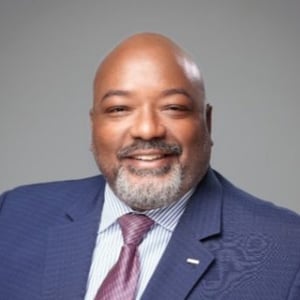
Senior Strategic and Global Intelligence Advisor, Lexpat Global Services
Darrell M. Blocker is the Senior Strategic and Global Intelligence Advisor at Lexpat Global Services. Among other things, Darrell is a globally-recognized subject matter expert on North Korea, the Islamic Republic of Iran, and counterterrorism, and serves as a strategic advisor to high net worth individuals and businesses operating in the defense, national security and international affairs sectors. He is active in the entertainment and nonprofit industries and as a creative consultant, keynote speaker, and ABC News contributor. He is also the founder of DMB Consulting Services, a strategic crisis management and executive advisory firm.
In his 32-year career in public service, Darrell served across six consecutive Presidential Administrations (from Reagan to Trump), including four years in the U.S. Air Force, followed by 28 years as a Central Intelligence Agency operative within their Clandestine Service. His traditional overseas assignments include the Republic of Korea (with the USAF), and Niger, Senegal, Morocco, Nigeria, Uganda, and Switzerland (with the CIA). His war zone assignments were to Panama (USAF), and then Somalia in the aftermath of Blackhawk Down, Burundi after the Hutu-Tutsi massacres, and Pakistan after 9/11 (CIA).
During his storied career, Darrell rose to the civilian rank equivalent to a 3-Star general (Lieutenant General/Vice Admiral). Along the way, his contributions to national security earned him several awards, including the Distinguished Career Intelligence Medal, the George H.W. Bush Award for Excellence in Counterterrorism, the Iraqi Campaign Citation for contributions to Operation Iraqi Freedom, the USAF Commendation Medal for Korea and the Expeditionary Campaign Medal for Panama. It has been widely reported that he later was on President Biden’s shortlist to become the Director of the CIA.
Darrell is a prolific speaker and contributor to public discourse on international security and effective operations. His speaking engagements include the Jewish Federation of Toronto, the Jewish Federation of Greater Los Angeles, the International Spy Museum in Washington DC., the CIA’s CulperCon 2022, and numerous international conferences on intelligence and security matters. His TEDx talk delivered in April 2022 entitled “LISTEN MORE, SPEAK LESS: LESSONS IN KINDNESS FROM A CIA OPERATIVE can be found here. Stories about Darrell have been featured in press and news articles by ABC News, the Wall Street Journal, the Jewish Telegraphic Agency, Fox News, CNN, the New York Times, the Daily Beast, and the DailyMail.
Darrell volunteers with and serves on the board of Peace4Kids.org, a non-profit advocacy group for youth in foster care, and cofounded SME/Creatives, a creative and collaborative storytelling consulting firm operating in the entertainment space. He is also the Vice Chairman of the GreenMet Board of Directors, a nonresident fellow at the University of Georgia’s School of Public and International Affairs Center for International Trade and Security and a 2024 Council of Advisors Leadership Council member for Black Professionals in International Affairs.
Darrell is an avid crossword puzzle enthusiast and music was his first true love. He sang in the UGA’s Men’s Glee Club for four years and in bands in Senegal and Uganda. He spent his formative years in Okinawa, Japan, but his dream of becoming a ninja never materialized. Even so, being an intelligence officer brought all his passions into a singular and meaningful career that took him to 27 addresses and homes in eleven foreign countries over the past 60 years.

Former Chief Counsel to the DCI Counterterrorist Center, Central Intelligence Agency
Jonathan Fredman is a Non-Resident Fellow at the School of Public and International Affairs at Princeton University. He held numerous leadership positions at the Central Intelligence Agency during a 36-year career, including Chief Counsel, Director of Central Intelligence (DCI) Counterterrorist Center; Chief Counsel, DCI Counterintelligence Center; Counsel for Operations, CIA Directorate of Science and Technology; and Chief Counsel for several additional CIA divisions and mission centers. He also served as Assistant Deputy Director of National Intelligence for Special Programs at the Office of the Director of National Intelligence, and as Special Assistant to the Director of Central Intelligence, and taught national security and foreign intelligence at the University of Pennsylvania Law School.
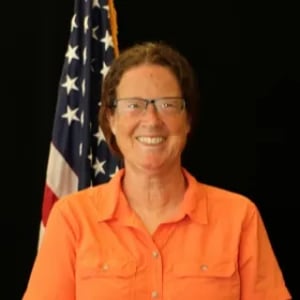
Adjunct Professor of History and Strategic Intelligence, Patrick Henry College
Mary Habeck is a strategic planner and an expert on military matters, Russia, Great Power
Competition, and extremism. She teaches on these issues at Johns Hopkins School of Advanced
International Studies (SAIS), Georgetown, American University, and Patrick Henry College, and
is a consultant for various parts of the federal government. From 2005-2013 she was an
Associate Professor in Strategic Studies at SAIS, teaching courses on extremism, military history,
and strategic thought. Before moving to SAIS, Dr. Habeck taught American and European
military history in Yale’s history department, 1994-2005. She received her PhD in history from
Yale in 1996, an MA in international relations from Yale in 1989, and a BA in international
studies, Russian, and Spanish from Ohio State in 1987.
Dr Habeck was appointed by President Bush to the Council on the Humanities at the National
Endowment for the Humanities (2006-2013), and in 2008-2009 she was the Special Advisor for
Strategic Planning on the National Security Council staff, where she worked on extremism.
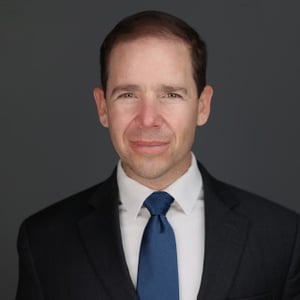
Founder and CEO, Lexpat Global Services
Adam Pearlman is the Founder and Chief Executive Officer of Lexpat Global Services. He is a National Security Law expert and a proven senior leader with experience across the U.S. Departments of Justice, Defense, and State, in the White House, and with the U.S. Federal Judiciary.
Before founding Lexpat, Mr. Pearlman served as the Senior Advisor for Legal Policy in the State Department’s Bureau of Counterterrorism. There, he counseled senior officials on matters covering the entire spectrum of programs and operations to counter terrorism and violent extremism. While participating in sensitive diplomatic engagements and helping to coordinate military operations, he also advised in the development of sanctions policy and initiatives to build legal and operational capacity in partner nations. Mr. Pearlman also managed the Bureau’s participation in federal litigation and led U.S. delegations in multilateral forums concerning criminal justice and rule of law. Separately, Mr. Pearlman supported the State Department’s Bureau of International Narcotics and Law Enforcement Affairs (INL) as the contracted Senior Justice and Rule of Law Advisor in Cabo Verde, Africa. There he was the chief implementer of a Foreign Assistance program that grew eight-fold during his tenure, building host nation capacity across the law enforcement, justice sector, rule of law, anti-money laundering, and corrections disciplines.
A former Associate Deputy General Counsel of the Department of Defense, Mr. Pearlman was agency counsel for complex civil and criminal national security matters in federal and military courts. He also led the Supreme Court and appellate unit of the team dedicated to litigating classified counterterrorism cases. His earlier service in the Department of Justice spanned four litigating divisions and the Office of the Deputy Attorney General. His diverse experience included reviewing complex international transactions and mergers, and advising on immigration removal proceedings, human rights abuses, and terrorist financing investigations. Mr. Pearlman also served with distinction in Iraq as an early advisor to the Iraqi High Tribunal’s prosecution of Saddam Hussein. He was a law clerk for The Honorable Royce C. Lamberth of the U.S. District Court for the District of Columbia, and during law school interned in the White House Counsel’s Office.
Mr. Pearlman is a Senior Fellow at the National Security Institute at George Mason University’s Antonin Scalia Law School, a member of the American Bar Association’s Advisory Committee on Law and National Security, and the Editor-in-Chief of the U.S. Intelligence Community Law Sourcebook. Previously, he has been a Term Member of the Council on Foreign Relations, National Security Fellow at the Foundation for Defense of Democracies, member of the ABA’s Africa Law Initiative Council and of the Center for Strategic & International Studies’ (CSIS) Project on Nuclear Issues, vice chairman of the ABA Section of International Law’s committees on national security, and aerospace and defense, and a liaison to the Board of Directors of the ABA’s Rule of Law Initiative. He has published articles in the Harvard National Security Journal, Stanford Law & Policy Review, Intelligence & National Security, The Foreign Service Journal, Lawfare, and many other outlets.
Mr. Pearlman earned his B.A., with honors, from UCLA, and his J.D., with honors, from The George Washington University Law School, where he was a member of the International Law Review. He also earned a Master of Science of Strategic Intelligence degree from the National Intelligence University, where he was the inaugural recipient of the Kornblum Award for national security law and ethics. Mr. Pearlman is a Certified Financial Crime Specialist and holds certificates in international human rights law from the University of Oxford and in anti-corruption law from American University’s Washington College of Law. He is admitted to the State Bars of California and Virginia, as well as to the Bar of the United States Supreme Court. He speaks and reads Portuguese at the intermediate level.
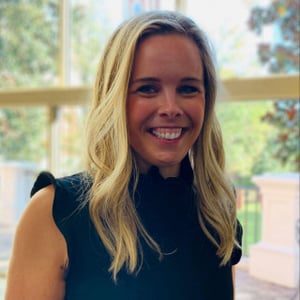
Senior Litigation Counsel, New Civil Liberties Alliance
Margaret Harker litigates for a public interest law firm. She has significant experience in government investigations and litigation, having served in the three branches of our government. Previously, she led complex Congressional investigations for the House Committee on Oversight and Government Reform—including the only government-wide investigation into federal agencies’ strategy (or lack thereof) to counter Chinese Communist Party political warfare against America.
Prior to her time on Capitol Hill, Harker served in the U.S. Department of Justice. She was an Assistant United States Attorney in both the Eastern District of Tennessee and the Eastern District of Virginia. She was a Trial Attorney in the National Security Division, Counterintelligence and Export Control Section, with an emphasis on the administration and enforcement of the Foreign Agents Registration Act.
Harker clerked for the Honorable Henry E. Hudson, U.S. District Court for the Eastern District of Virginia and the Honorable Randolph A. Beales, Court of Appeals of Virginia.
Earlier in her career, she studied in Beijing, China, and worked at the U.S. Chamber of Commerce’s China Center.
Writer and Editor, Tablet Magazine
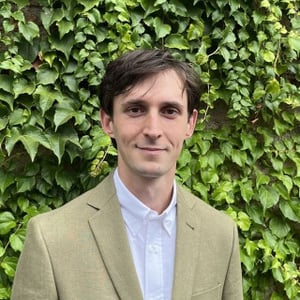
Park MacDougald is Editor and Senior Writer at The Scroll, Tablet’s daily afternoon newsletter, a fellow at the Manhattan Institute, and a former recipient of the Novak Fellowship from The Fund for American Studies. His writing has appeared in Tablet, City Journal, New York Magazine, The Washington Examiner, and UnHerd.

Fellow, National Security Institute, Antonin Scalia Law School, George Mason University
Vince Vitkowsky chaired the Executive Committee of the Federalist Society’s International and National Security Law and Policy Practice Group for over a decade. He is also a Fellow at the National Security Institute of George Mason University Law School. Vince spent 45 years in private practice, primarily in AmLaw 100/200 firms and their spin-offs. His practice included domestic and international commercial arbitration and litigation, as well as cyber risks and liabilities. Vince's current focus is on national security policy, artificial intelligence, cybersecurity, and counterterrorism. He has often written and spoken on national security and other public policy issues. Among other affiliations, Vince has been an Adjunct Fellow at the Center for Law and Counterterrorism of the Foundation for the Defense of Democracies, a member of the Executive Committee of the American Branch of the International Law Association, and Co-Chair of the Committee on Interventions and Trial Observations of the International Bar Association’s Human Rights Institute. He received his B.A. from Northwestern University and his J.D. from Cornell Law School.
Judge, United States Court of Appeals, Fifth Circuit
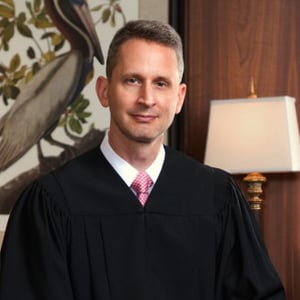
Judge Duncan received his B.A. from Louisiana State University in 1994, his J.D. from the Paul M. Hebert Law Center at Louisiana State University in 1997, and his LL.M. from Columbia Law School in 2004.
After graduating from law school, he clerked for Louisiana-based Circuit Judge John Malcolm Duhé Jr. of the United States Court of Appeals for the Fifth Circuit.
From 2008–2012, Duncan served as Appellate Chief for Louisiana's Attorney General's office. From 2012–2014, he served as general counsel of the Becket Fund for Religious Liberty. From 2004-2008, he was an assistant professor of law at the University of Mississippi School of Law.
Before becoming a judge, Duncan practiced at the Washington, D.C. firm of Schaerr Duncan LLP, where he was a founding partner. He was appointed by President Trump to the United States Court of Appeals for the Fifth Circuit on May 1, 2018.
Payson J. Treat Distinguished Research Fellow in Contemporary Asia, Hoover Institution
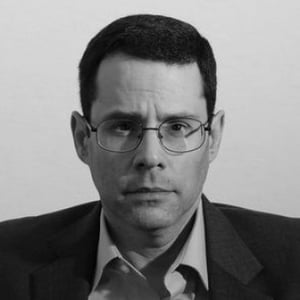
Michael Auslin, PhD, is the Payson J. Treat Distinguished Research Fellow in Contemporary Asia at the Hoover Institution, Stanford University. A historian by training, he specializes in US policy in Asia and geopolitical issues in the Indo-Pacific region.
Auslin is the author of six books, including Asia’s New Geopolitics: Essays on Reshaping the Indo-Pacific and the best-selling The End of the Asian Century: War, Stagnation, and the Risks to the World's Most Dynamic Region. He is a longtime contributor to the Wall Street Journal and National Review, and his writing appears in other leading publications, including the Financial Times, The Spectator, and Foreign Policy. He comments regularly for US and foreign print and broadcast media.
Previously, Auslin was an associate professor of history at Yale University, a resident scholar at the American Enterprise Institute, and a visiting professor at the University of Tokyo. He is a fellow of the Royal Historical Society, the senior advisor for Asia at the Halifax International Security Forum, a senior fellow at London’s Policy Exchange, and a senior fellow at the Foreign Policy Research Institute. Among his honors are being named a Young Global Leader by the World Economic Forum, a Fulbright Scholar, and a German Marshall Fund Marshall Memorial Fellow. He serves on the board of the Wilton Park USA Foundation.
Auslin cohosts the podcast "The Pacific Century" with John Yoo, where they broadly address developments in China and Asia. They discuss the latest politics, economics, law, and cultural news, with a focus on US policy in the region.
Payson J. Treat, for whom Auslin’s current Stanford position is named, held the first professorship at an American university in what was then called Far Eastern history, a post created for him at Stanford in 1906.
Senior Public Policy Advisor, Wiley Rein LLP
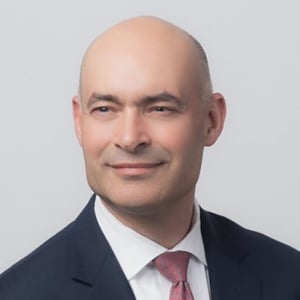
Nova Daly, an experienced international investment and trade policy professional, has held senior leadership positions at the U.S. Departments of the Treasury and Commerce, the White House, and the U.S. Senate. Drawing on his experience in the management, development, and implementation of the U.S. economic and national security policies and programs, he provides both high-level insight and deep operational experience to help clients navigate the policy and regulatory environment surrounding cross-border business activities, especially through the Committee on Foreign Investment in the United States (CFIUS).
Partner, CFIUS and Foreign Investment Reviews; National Security; International Trade, Skadden, Arps, Slate, Meagher & Flom LLP and Affiliates
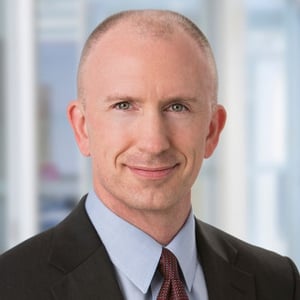
Ambassador Gerrish returned to Skadden in 2020 after serving as the deputy U.S. trade representative for Asia, Europe, the Middle East and Industrial Competitiveness. In this role, he formulated and implemented U.S. trade policy for the regions and issues under his purview, led critically important trade negotiations, and developed and executed strategies to address trade barriers and unfair trade practices in countries around the world. In addition, he was responsible for global trade policy in the areas of intellectual property and innovation. Ambassador Gerrish served as lead negotiator for the U.S.-China Economic and Trade Agreement and played a key role in the negotiation or renegotiation of several other major trade agreements, including the U.S.-Japan Trade Agreement, the U.S.-Japan Digital Trade Agreement, the United States-Mexico-Canada Agreement and the U.S.-Korea Free Trade Agreement. From April 2018 to May 2019, Ambassador Gerrish also served as acting president and chairman of the Export-Import Bank of the United States, where he developed and implemented major policy initiatives, including an increased focus on programs to aid small businesses.
Ambassador Gerrish helps clients navigate challenges and barriers in international trade and investment. He advises on the market access opportunities and compliance challenges presented by trade agreements, and counsels clients on how to address market access issues, trade barriers and unfair trade practices that affect their ability to export to, operate within or invest in other countries. He develops strategies for clients to open or maintain international markets for their products or services, and he advocates on their behalf before the U.S. government and foreign governments. Additionally, Ambassador Gerrish advises clients on how best to structure their operations and supply chains to avoid supply chain disruptions and take advantage of current trade agreements and structures.
Ambassador Gerrish also works with clients in ongoing negotiations relating to international trade agreements, including negotiations at the World Trade Organization and for bilateral trade agreements. He advises clients on how such negotiations may affect their interests and operations and helps them to develop and execute strategies for the negotiations.
Another important part of Ambassador Gerrish’s practice is working closely with clients in matters involving U.S. export controls and U.S. customs laws and regulations. He has helped a broad array of clients in handling compliance issues, interpreting the scope and applicability of the requirements in these areas, developing and implementing company compliance programs, and resolving internal investigations and government enforcement matters.
Ambassador Gerrish has extensive experience assisting companies in complex antidumping, countervailing duty and safeguards cases and in other high-stakes trade disputes before the U.S. government and foreign governments and international institutions. He has litigated hundreds of cases before the U.S. Department of Commerce, U.S. International Trade Commission, U.S. Court of International Trade, U.S. Court of Appeals for the Federal Circuit, North American Free Trade Agreement binational panels and World Trade Organization dispute settlement panels. In addition, Ambassador Gerrish works with clients on national security investigations under Section 232 of the Trade Expansion Act of 1962 and in investigations into unfair trade policies and practices before the U.S. Trade Representative’s Office under Section 301 of the Trade Act of 1974. He has achieved highly successful outcomes for clients in these matters in industries ranging from steel to geosynthetics.
Ambassador Gerrish also assists clients in navigating national security reviews before the Committee on Foreign Investment in the United States (CFIUS). In this capacity, he draws upon his experience at the U.S. Trade Representative’s Office, where he advised on CFIUS reviews and helped to formulate the regulations and policies implementing the Foreign Investment Risk Review Modernization Act.
Ambassador Gerrish is a frequent speaker on international trade topics. He also was previously appointed (and reappointed) by the chief judge of the U.S. Court of International Trade to serve as a member of the court’s Rules Advisory Committee, and he served as co-chair of the International Trade Committee and a board member of the Customs and International Trade Bar Association. Ambassador Gerrish repeatedly has been selected for inclusion in The Best Lawyers in America.

Professor Emeritus of Law, Antonin Scalia Law School, George Mason University
Jeremy A. Rabkin is a Professor Emeritus of Law at the Antonin Scalia Law School, George Mason University. Before joining the faculty in June 2007, he was for over two decades a professor in the Department of Government at Cornell University. Professor Rabkin serves on the board of directors of the Center for Individual Rights, a public interest law firm based in Washington, D.C. Previously he was a board member of the U.S. Institute of Peace and the board of academic advisors of the American Enterprise Institute.
Professor Rabkin’s books include Law Without Nations? (Princeton University Press, 2005). He authored “If You Need a Friend, Don’t Call a Cosmopolitan,” a chapter in Varieties of Sovereignty and Citizenship (Sigal R. Ben-Porath & Rogers M. Smith eds., University of Pennsylvania Press, 2012). His articles have appeared in major law reviews and political science journals and his journalistic contributions in a range of magazines and newspapers, including the Washington Post and the Wall Street Journal.
Former Member of the European Parliament, South East England Constituency
Professor Emeritus of Law, Antonin Scalia Law School, George Mason University
Jeremy A. Rabkin is a Professor Emeritus of Law at the Antonin Scalia Law School, George Mason University. Before joining the faculty in June 2007, he was for over two decades a professor in the Department of Government at Cornell University. Professor Rabkin serves on the board of directors of the Center for Individual Rights, a public interest law firm based in Washington, D.C. Previously he was a board member of the U.S. Institute of Peace and the board of academic advisors of the American Enterprise Institute.
Professor Rabkin’s books include Law Without Nations? (Princeton University Press, 2005). He authored “If You Need a Friend, Don’t Call a Cosmopolitan,” a chapter in Varieties of Sovereignty and Citizenship (Sigal R. Ben-Porath & Rogers M. Smith eds., University of Pennsylvania Press, 2012). His articles have appeared in major law reviews and political science journals and his journalistic contributions in a range of magazines and newspapers, including the Washington Post and the Wall Street Journal.

Maurice A. Deane Distinguished Professor of Constitutional Law and Faculty Director of International Programs, Hofstra University School of Law
Professor Ku’s primary research interest is the relationship of international law to constitutional law. He has also conducted academic research on a wide range of topics including international dispute resolution, international criminal law, and China’s relationship with international law. He teaches courses such as U.S. constitutional law, U.S. foreign affairs law, transnational law, and international trade and business law. Since 2014, he has served as the faculty director of international programs, overseeing Hofstra Law’s study abroad, exchange and LL.M. programs. Professor Ku also teaches Constitutional Law in our online degree programs: Master of Laws in American Law and Master of Arts in American Legal Studies. He has also been selected as the John DeWitt Gregory Research Scholar and as a Hofstra Law Research Fellow. He is a member of the American Law Institute.
He is the co-author, with John Yoo, of Taming Globalization: International Law, the U.S. Constitution, and the New World Order (Oxford University Press 2012). He also has published more than 40 law review articles, book chapters and symposia essays. He has given dozens of academic lectures and workshops at major universities and conferences in the United States, Europe and Asia.
He co-founded the leading international law weblog Opinio Juris, which is read daily by thousands worldwide. His essays and op-eds have been published in major news publications such as the Wall Street Journal, the Los Angeles Times, and the NYTimes.com. He has been frequently interviewed for television news programs and quoted in print and electronic media. He has also signed or submitted amicus briefs to national and international courts and served as an expert witness in both domestic and international proceedings.
Before joining the Hofstra Law faculty, Professor Ku served as a law clerk to the Honorable Jerry E. Smith of the U.S. Court of Appeals for the Fifth Circuit and as an Olin Fellow and Lecturer in Law at the University of Virginia Law School. Professor Ku also practiced as an associate at the New York City law firm of Debevoise & Plimpton, specializing in litigation and arbitration arising out of international disputes. He has been a visiting professor at the College of William & Mary Marshall- Wythe School of Law in Williamsburg, Virginia; a Fulbright Distinguished Lecturer in Law at East China University of Political Science and Law in Shanghai, China; and a Taiwan Fellow at National Taiwan University in Taipei, Taiwan. He is a member of the New York Bar and a graduate of Yale College and Yale Law School.
Director, Center for Religious Freedom, Hudson Institute
An international human-rights lawyer for over thirty years, Nina Shea joined Hudson Institute as a Senior Fellow in November 2006, where she directs the Center for Religious Freedom. Shea works extensively for the advancement of individual religious freedom and other human rights in U.S. foreign policy as it confronts an ascendant Islamic extremism, as well as nationalist and remnant communist regimes. She undertakes scholarship and advocacy in defense of those persecuted for their religious beliefs and identities and on behalf of diplomatic measures to end religious repression and violence abroad, whether from state actors or extremist groups.
Ms. Shea was appointed by the U.S. House of Representatives to serve seven terms as a Commissioner on the U.S. Commission on International Religious Freedom (June 1999 - March 2012). During the Soviet era, Shea’s first client before the United Nations was Soviet Nobel Peace Laureate Andrei Sakharov. Since then, she has been appointed as a U.S. delegate to the United Nation's main human rights body by both Republican and Democratic administrations. She also served as a member of the Clinton administration's Advisory Committee on Religious Freedom Abroad. In 2009, she was appointed to serve as a member of the U.S. National Commission to UNESCO.
Ms. Shea played a leading role in building grassroot support for the adoption of the International Religious Freedom Act (1998). For seven years ending in 2005, she helped organize and lead a coalition of churches and religious groups that worked to end a religious war against non-Muslims and dissident Muslims in southern Sudan. In 2014, she initiated and helped lead a coalition of hundreds of prominent American religious leaders to issue The Pledge of Solidarity for Persecuted Iraqi, Syrian and Egyptian Christians and Other Minorities, which was released by a bi-partisan Congressional panel on May 7. In summer 2014, she met with Pope Francis to discuss the persecution of Christians in the Middle East.
At Hudson, she has organized conferences for Nigerian schoolgirls and others who survived Boko Haram attacks, Christian converts formerly imprisoned in Iran, Coptic bishops from Egypt, Catholic bishops from China and the Gulf, Muslim scholars, and many others. Ms. Shea advocates in the nation's capital on behalf of a broad range of persecuted religious minorities around the world; and, for such work, was honored by the Ahmadiyya Muslim Community USA with the Community's inaugural "Ahmadiyya Muslim Humanitarian Award."
She has authored and/or edited four widely-acclaimed reports on Saudi state educational materials that promote extremist views and in 2011 had an opportunity to travel to Saudi Arabia and speak directly about her findings with the Ministers of Education, Justice and Islamic Affairs. Her reports include: Ten Years On: Saudi Arabia's Textbooks Still Promote Religious Violence (2011), Update: Saudi Arabia's Curriculum of Intolerance (2008), Saudi Arabia's Curriculum of Intolerance (2006), and Saudi Publications on Hate Ideology Invade American Mosques (2005), all of which translated and analyzed Saudi governmental publications that teach hatred and violence against the religious "other."
She is the co-author of Silenced: How Apostasy & Blasphemy Codes are Choking Freedom Worldwide, with a Foreword by Kyai Haji Abdurrahman Wahid, the former President of Indonesia and head of Nahdlatul Ulama, the world's largest Muslim organization (Oxford University Press, 2011). Her most recent book, which she also co-authored, is Persecuted: The Global Assault on Christians (Thomas Nelson Publishers, 2013). She regularly presents testimony before Congress, delivers public lectures, organizes briefings and conferences, and writes frequently on religious freedom issues. Her writings have appeared in the Wall Street Journal, Washington Post, CQ Researcher, Weekly Standard, National Review Online, CNN, Fox, The Daily Beast, HuffingtonPost, and RealClearWorld, among others.
For the ten years prior to joining Hudson, Ms. Shea worked at Freedom House, where she directed the Center for Religious Freedom, an entity which she had helped found in 1986 as the Puebla Institute.
She is a member of the bar of the District of Columbia. She is a graduate of Smith College, and American University's Washington College of Law.
Professor Emeritus of Law, Antonin Scalia Law School, George Mason University
Jeremy A. Rabkin is a Professor Emeritus of Law at the Antonin Scalia Law School, George Mason University. Before joining the faculty in June 2007, he was for over two decades a professor in the Department of Government at Cornell University. Professor Rabkin serves on the board of directors of the Center for Individual Rights, a public interest law firm based in Washington, D.C. Previously he was a board member of the U.S. Institute of Peace and the board of academic advisors of the American Enterprise Institute.
Professor Rabkin’s books include Law Without Nations? (Princeton University Press, 2005). He authored “If You Need a Friend, Don’t Call a Cosmopolitan,” a chapter in Varieties of Sovereignty and Citizenship (Sigal R. Ben-Porath & Rogers M. Smith eds., University of Pennsylvania Press, 2012). His articles have appeared in major law reviews and political science journals and his journalistic contributions in a range of magazines and newspapers, including the Washington Post and the Wall Street Journal.
President, Genocide Watch
Gregory H. Stanton is President of Genocide Watch, an organization he founded in 1999. He is also director of the Cambodian Genocide Project and he is Research Professor of Genocide Studies and Prevention at George Mason University. Dr. Stanton served in the State Department (1992-1999), where he drafted the United Nations Security Council resolutions that created the International Criminal Tribunal for Rwanda, the Burundi Commission of Inquiry, and the Central African Arms Flow Commission. He also drafted the U.N. Peacekeeping Operations resolutions that helped bring about an end to the Mozambique civil war. In 1994, Stanton won the American Foreign Service Association’s prestigious W. Averell Harriman award for “extraordinary contributions to the practice of diplomacy exemplifying intellectual courage,” based on his dissent from U.S. policy on the Rwandan genocide. He wrote the State Department options paper on ways to bring the Khmer Rouge to justice in Cambodia.
President, Institute for Liberty and Democracy
Mr. de Soto is currently President of the ILD —headquartered in Lima, Peru— considered byThe Economistas one of the two most important think tanks in the world.Timemagazine chose him as one of the five leading Latin American innovators of the century in its special May 1999 issue "Leaders for the New Millennium", and included him among the 100 most influential people in the world in 2004. In its 85th anniversary edition, Forbes named Mr. de Soto as one of 15 innovators “who will reinvent your future”. In January 2000,Entwicklung und Zusammenarbeit, the German development magazine, described Mr. de Soto as one of the most important development theoreticians of the last millennium. In October 2005, over 20,000 readers ofProspectmagazine of the UK andForeign Policyof the US ranked him among the top 13 “public intellectuals” in the world from the magazines’ joint list of 100.
Mr. de Soto has served as an economist for the General Agreement on Tariffs and Trade, as President of the Executive Committee of the Copper Exporting Countries Organization (CIPEC), as CEO of Universal Engineering Corporation (Continental Europe’s largest consulting engineering firm), as a principal of the Swiss Bank Corporation Consultant Group, and as a governor of Peru’s Central Reserve Bank.
Currently, Mr. de Soto, together with his colleagues at the ILD, is focused on designing and implementing capital formation programs to empower the poor in Africa, Asia, Latin America, the Middle East, and former Soviet Nations. Some 30 heads of state have invited him to carry out these ILD programs in their countries. He also co-chairs with former US Secretary of State Madeleine Albright the Commission on Legal Empowerment for the Poor,and currently serves as honorary co-chair on various boards and organizations, including the World Justice Project.
Mr. de Soto has published two books about economic and political development: The Other Path, in the mid- 1980s, and at the end of 2000, The Mystery of Capital: Why Capitalism Triumphs in the West and Fails Everywhere Else. Both books have been international bestsellers – translated into some 20 languages
Professor of Law, George Mason University School of Law
With his work in regulatory takings and other aspects of property law, professor of law Steven Eagle plays an important role in the ongoing dialogue among American legal scholars, lawyers, and judges on the proper interpretation of property rights in the Constitution. He is the author of a leading property treatise and scholarly and popular articles and teaches in programs for judges and the practicing bar.
Professor Eagle came to George Mason in 1987 and also has taught at the law schools of Vanderbilt University, the University of Toledo, and Pace University. He earned his B.B.A. from the City College of New York (1965) and his J.D. from Yale Law School (1970). Professor Eagle teaches the first-year course, Property, Land Use Planning, and an advanced constitutional law seminar on property rights.
Professor of Law, Vermont Law School
John Echeverria is a Professor of Law at Vermont Law School where he teaches Property, Public Law and a wide range of environmental and natural resource law courses. Prior to joining the Vermont Law School faculty in 2009, he served for 12 years as Executive Director of the Georgetown Environmental Law & Policy Institute at Georgetown University Law Center. He also was General Counsel of the National Audubon Society and General Counsel and Conservation Director of American Rivers, Inc., and was an Associate for four years in the Washington, D.C. office of Hughes, Hubbard & Reed. He served for one year as law clerk to the Honorable Gerhard A. Gesell of the U.S. District Court for the District of Columbia immediately after graduating from law school.
Professor Echeverria has written several books and numerous scholarly articles on environmental and natural resource law topics. He has published pieces for more general audiences in The New York Times, The Washington Post, and The Christian Science Monitor. He has represented state and local governments, environmental organizations, and planning groups in a variety of legal matters at all levels of the federal and state court systems. In 2007, Professor Echeverria received the Jefferson Fordham Advocacy Award from the American Bar Association to recognize outstanding excellence within the area of state and local government law over a lifetime of achievement. In addition to teaching at Vermont Law School, he has served as a Visiting Professor at Harvard Law School and Georgetown University Law Center.
Professor Echeverria received a JD degree from the Yale Law School. He received a Master’s degree from the Yale School of Forestry and Environmental Studies as well as a BA degree from Yale College (summa cum laude).

Professor of Law and Executive Director, Law and Economics Center, Antonin Scalia Law School, George Mason University
Donald Kochan is Professor of Law and Executive Director of the Law & Economics Center (LEC). Professor Kochan is an elected member of the American Law Institute (ALI) and serves as an Adviser to ALI's Restatement of the Law Fourth, Property project. Professor Kochan is a Nonresident Scholar at the Center for the Constitution at Georgetown University Law Center, where he was a Visiting Scholar in residence during Fall 2018. Before joining the Antonin Scalia Law School faculty, he was the Parker S. Kennedy Professor in Law at Chapman University’s Dale E. Fowler School of Law from 2004 to 2020. From 2003 to 2004, Professor Kochan was an Olin Fellow at the University of Virginia School of Law. During 2002-2003, he was a Visiting Assistant Professor of Law at George Mason’s Scalia Law School.
Professor Kochan’s scholarship focuses on areas of property law, constitutional law, administrative law, local government law, natural resources and environmental law, and law & economics. He has published several books and more than 50 scholarly articles and essays in well-regarded law journals. His work has been cited in more than a dozen state and federal court opinions, in more than 75 briefs filed in state and federal courts including more than 25 filed in the U.S. Supreme Court, in dozens of books and treatises, and in more than 800 scholarly articles.
Professor Kochan received his JD from Cornell Law School, where he was a John M. Olin Scholar in Law and Economics and managing editor of the Cornell International Law Journal. During law school, he also served as editor and executive editor of the Harvard Journal of Law & Public Policy symposium issues in 1997 and 1998. He received his BA from Western Michigan University, magna cum laude, with majors in both political science and philosophy, where he studied as the John W. Gill Medallion Scholar and was honored as the Presidential Scholar (awarded to the top graduate in the political science department).
After graduating from law school, Professor Kochan was a law clerk to The Honorable Richard F. Suhrheinrich of the United States Court of Appeals for the Sixth Circuit. Following his clerkship, Professor Kochan was an associate with the firm of Crowell & Moring LLP in Washington, D.C., where he specialized in natural resources & environmental law as well as tort, products, and consumer civil litigation & legislative affairs.

Judge, United States Court of Appeals, Fifth Circuit
Judge Smith was appointed U.S. Circuit Judge for the Fifth Circuit by President Reagan and entered on duty in January 1988. He attended public schools in Lubbock, Texas, and graduated from Yale University, receiving a B.A. in 1969 and a J.D. in 1972.
Judge Smith was a Law Clerk to U.S. District Judge Halbert Woodward, Northern District of Texas, 1972-1973; with the Houston law firm of Fulbright & Jaworski as an Associate, 1973-1981, and as Partner, 1981-1984; and as City Attorney, City of Houston, 1984-1988. He was Chairman, Civil Service Commission, City of Houston, 1982-1984; and a Director, Harris County Housing Authority, 1978-1980.
Judge Smith lives in Houston and is married to Mary Jane Smith and has four children: Ruth Ann, Clark, J.J., and Brandon. He formerly was Chair of the Advisory Committee on Federal Rules of Evidence of the Judicial Conference of the United States. He assists LexisNexis/Matthew Bender & Co. in periodic revisions of several chapters of Moore’s Federal Practice.

Tazewell Taylor Professor of Law and William H. Cabell Research Professor, William & Mary Law School
Jonathan H. Adler joined the William & Mary law faculty as the Tazwell Taylor Professor of Law and William H. Cabell Research Professor in 2025. Prior to joining the faculty, he was the inaugural Johan Verheij Memorial Professor of Law and the founding Director of the Coleman P. Burke Center for Environmental Law at the Case Western Reserve University School of Law.
Professor Adler is the author or editor of seven books, including Climate Liberalism: Perspectives on Liberty, Property and Pollution (Palgrave, 2023), Marijuana Federalism: Uncle Sam and Mary Jane (Brookings Institution Press, 2020), Business and the Roberts Court (Oxford University Press, 2016) and Rebuilding the Ark: New Perspectives on Endangered Species Act Reform (AEI Press, 2011).
His articles have appeared in publications ranging from the Harvard Environmental Law Review and Yale Journal on Regulation to the Wall Street Journal, New York Times, and Washington Post. He has testified before Congress a dozen times, and his work has been cited in the U.S. Supreme Court. A 2024 study identified Professor Adler as the seventh most cited legal academic in administrative and environmental law from 2019 to 2023.
Professor Adler is a contributing editor to Civitas Outlook and a regular contributor to the popular legal blog, The Volokh Conspiracy. A regular commentator on constitutional and regulatory issues, he has appeared on numerous radio and television programs, ranging from the PBS Newshour and National Public Radio to the Fox News Channel and Entertainment Tonight.
Professor Adler is a senior fellow at the Property & Environment Research Center in Bozeman, Montana. In 2018, Professor Adler was elected to membership in the American Law Institute and helped co-found the organization Checks and Balances. In 2024, Professor Adler was appointed a public member of the Administrative Conference of the United States.
Professor Adler clerked for the Honorable David B. Sentelle on the U.S. Court of Appeals for the District of Columbia Circuit.
Director, Vanderbilt Health Policy Center, Vanderbilt University Law School
Director of Litigation and Senior Attorney, Hamilton Lincoln Law Institute
Theodore H. Frank is director at the Hamilton Lincoln Law Institute and the Center for Class Action Fairness. Frank founded and ran CCAF as a non-profit, public interest law firm in 2009.
Frank has won several landmark appeals and tens of millions of dollars for consumers and other plaintiffs through his class action work. Adam Liptak of The New York Times calls Frank “the leading critic of abusive class action settlements” and the American Lawyer Litigation Daily referred to him as “the indefatigable scourge of underwhelming class action settlements.”
Previously, Frank clerked for the Honorable Frank H. Easterbrook on the Seventh Circuit Court of Appeals, and was a litigator at firms in Washington and Los Angeles and a resident fellow at the American Enterprise Institute. Frank is a frequent public speaker and has testified before Congress multiple times on legal issues. He has been profiled by The Wall Street Journal, Forbes, GQ, and the ABA Journal, among other publications.
In 2008, Frank was elected to membership in the American Law Institute. He also serves on the Executive Committee of the Federalist Society Litigation Practice Group. Frank graduated from The University of Chicago Law School in 1994 with high honors and as a member of the Order of the Coif and the Law Review. He is a member of the District of Columbia Bar and the state bars of California and Illinois.
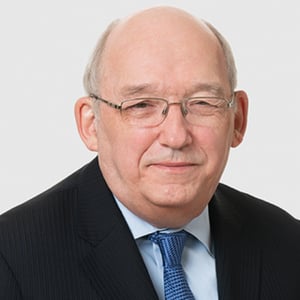
Senior Fellow, American Enterprise Institute
Thomas Miller is a senior fellow at the American Enterprise Institute (AEI), where he studies health care policy, including regulatory barriers to choice and competition, market-based alternatives to the Affordable Care Act, health care litigation, and the political economy of health care reform.
A former senior health economist for the Joint Economic Committee in Congress, Mr. Miller was previously a trial attorney, journalist, and sports broadcaster.
Mr. Miller is the coauthor of the bestseller “Why Obamacare Is Wrong for America” (HarperCollins, 2011), the first in-depth examination of the impact of the Affordable Care Act. His analyses and commentary have been published and featured widely in peer-reviewed publications and in the popular press, including Cato Journal, Health Affairs, Law and Contemporary Problems, the Journal of Law, Medicine, and Politics, the Los Angeles Times, The New York Times, USA Today, The Wall Street Journal, and The Washington Post.
Mr. Miller has also testified before Congress on the uninsured, health care costs, Medicare cost sharing, high-risk pools, health care competition, health insurance tax credits, the individual mandate, genetic information, Social Security, and the federal reinsurance of catastrophic events, among others. He also speaks regularly on various college campuses and teaches a seminar on “Shaping Law and Policy” at Duke University School of Law.
Mr. Miller has a JD from the Duke University School of Law and a BA in political science from New York University.
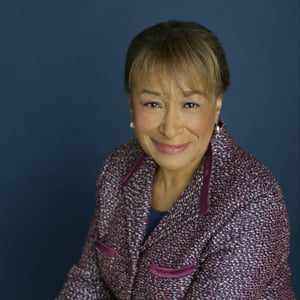
Judge, United States Court of Appeals, District of Columbia Circuit (ret.)
The Honorable Janice Rogers Brown was confirmed to the United States Court of Appeals for the District of Columbia Circuit on June 8, 2005. She retired from the court in 2017. From 1996 to 2005, she was an associate justice of the California Supreme Court. Prior to this, she served as associate justice of the Third District Court of Appeals in Sacramento and as legal affairs secretary to California Governor Pete Wilson. Earlier in her career, she served as Deputy Secretary and General Counsel for California’s Business, Transportation and Housing Agency after having worked in the criminal appellate and civil trial divisions of the California Attorney General’s Office. She currently chairs the Advisory Board of the New Civil Liberties Alliance, and serves on the Board of the Coolidge Foundation and the Association of College Trustees and Alumni. She is the Darling Foundation Jurist-in-Residence and visiting professor of Law at the University of California Boalt School of Law. Brown has been honored with the Jurisprudence Award of Claremont Institute’s Center for Constitutional Jurisprudence, the Baroness Thatcher Award of the Pacific Research Institute, the Edwin Meese III, Originalism and Religious Liberty Award from the Alliance Defending Freedom, the James Wilson Institute Leadership and the Law Award, and the 2019 Bradley Award. She earned her law degree from the University of California – Los Angeles School of Law, and a Master of Laws in judicial process from the University of Virginia School of Law.

Former President & CEO, The Federalist Society for Law and Public Policy Studies
Eugene B. Meyer, former President and CEO of the Federalist Society, has served as Executive Director, CEO, and/or President of the organization for more than 40 years. He is responsible for shepherding the organization from a small group of law students to a community of 90,000 lawyers, law students, academics, judges, and others interested in the rule of law. The Society now includes a Student Chapter at nearly every ABA-accredited law school in the country and Lawyers Chapters in 220 major cities across the nation. Gene earned his B.A. in history at Yale in 1975 and his M.A. in political science from the London School of Economics in 1976. Gene currently serves on the boards of the U.S. Chess Center, the Holman Foundation, the Sarah Scaife Foundation, and the advisory board of the Adam Smith Society. He holds the title of International Chess Master.

25 of 250 - The Echoes of 9/11 in Law, Policy, and Security Today
Darrell Blocker, Jonathan Fredman, Mary Habeck, Adam R. Pearlman
As America celebrates its 250th birthday, it also remembers the 25th anniversary of the September...
Foreign Influence Operations and National Security
Margaret Harker, Park MacDougald, Vincent Vitkowsky
Foreign influence operations have become increasingly important in geopolitical competition and American national security. China...
The Corruption of Law Schools and the Health of Our Democracy
Stuart Kyle Duncan
A review of Ilya Shapiro, Lawless: The Miseducation of America’s Elites (2025) The legal scholar...
Topics
Self-Evident Truths: The One Sure Foundation for True Diversity, Equity, and Inclusion
In recent years, corporations, government agencies, and institutions of higher education across the country have...
China Policy and the Pacific Trade Pact
Michael R. Auslin, Nova Daly, Jeffrey Gerrish, Jeremy A. Rabkin
President Trump declined to join the Trans-Pacific Trade Partnership but many of China’s neighbors (with...
World Politics After Brexit: A Conversation with Nigel Farage
Nigel Farage, Jeremy A. Rabkin
Nigel Farage has been campaigning for Britain’s withdrawal from the European Union since 1999, when...
We've Said It – Now What? Genocide in the Middle East - Podcast
Julian Ku, Nina Shea, Jeremy A. Rabkin, Gregory H. Stanton
After much prodding from human rights advocates and congressional committees, Secretary of State John Kerry...
Environmental Law: Property Rights: The Forgotten Spark of the Arab Spring
Hernando de Soto, Steven J. Eagle, John D. Echeverria, Donald J. Kochan, Jerry E. Smith
The Environmental Law & Property Rights Practice Group hosted this panel on "Property Rights: The Forgotten...
Panel III: Health Care and the Environment
Jonathan H. Adler, James Blumstein, Theodore "Ted" Frank, Thomas P. Miller
Prof. Jonathan Adler, Case Western Reserve University School of Law Prof. James Blumstein, Vanderbilt Law...
Banquet Keynote Address by Judge Janice Rogers Brown
Janice Rogers Brown, Eugene B. Meyer
Judge Janice Rogers Brown of the United States Court of Appeals for the District of...