

Chief Economist, The Phoenix Center for Advanced Legal & Economic Public Policy Studies
George S. Ford is the chief economist for the Phoenix Center for Advanced Legal and Economic Public Policy Studies, a nonprofit 501(c)(3) research organization that studies broad public-policy issues related to governance, social and economic conditions, with a particular emphasis on the law and economics of the digital age.
President, Phoenix Center for Advanced Legal and Economic Public Policy Studies
Lawrence J. Spiwak is President of the Phoenix Center for Advanced Legal & Economic Public Policy Studies, a non-profit 501(c)(3) organization that studies broad public-policy issues related to governance, social and economic conditions, with a particular emphasis on the law and economics of the digital age. Mr. Spiwak is a prolific scholar whose work is frequently cited by policymakers, major news media and academic journals around the world, and is in the top 1.3%of authors downloaded on the Social Science Research Network. Mr. Spiwak currently serves as the co-chair of the Federal Communications Bar Association’s (FCBA) committee responsible for overseeing the FEDERAL COMMUNICATIONS LAW JOURNAL and is a member of the program committee of the Telecommunications Policy Research Conference (“TPRC”). Mr. Spiwak is also the recipient of the FCBA’s Distinguished Service Award. Prior to joining the Phoenix Center, Mr. Spiwak was a Senior Attorney with the Competition Division in the FCC’s Office of General Counsel from 1994-1998. While in college, Mr. Spiwak was accepted into the Presidential Stay-In School program where he was responsible for delivering classified and confidential material among senior White House and Reagan Administration officials and received a full FBI security clearance. Mr. Spiwak received his B.A. with Special Honors from the George Washington University and his J.D. from the Benjamin N. Cardozo School of Law. Mr. Spiwak is a member in good standing of the bars of New York, Massachusetts, the District of Columbia, and the U.S. Court of Appeals for the D.C. Circuit.
Chief Economist, The Phoenix Center for Advanced Legal & Economic Public Policy Studies
George S. Ford is the chief economist for the Phoenix Center for Advanced Legal and Economic Public Policy Studies, a nonprofit 501(c)(3) research organization that studies broad public-policy issues related to governance, social and economic conditions, with a particular emphasis on the law and economics of the digital age.
Partner, Wilkinson Barker Knauer LLP
Russell P. Hanser has nearly 20 years of experience working in communications law and commercial litigation. His practice focuses on the regulation of next-generation broadband services and IP-enabled applications, information privacy, Universal Service, intercarrier compensation, and a range of other issues faced by the information and communications technology industry. Mr. Hanser’s clients include wireline carriers, mobile wireless providers, cable operators, Internet service providers, equipment manufacturers, private equity funds, and investment advisors.
Prior to joining the firm, Mr. Hanser worked at the FCC, where he held senior positions in the Wireline Competition Bureau and the Office of General Counsel, and served as wireline Legal Advisor in the Office of Commissioner Kathleen Abernathy. He is an Adjunct Professor at the Catholic University of America's Columbus School of Law, where he teaches telecommunications law. He has previously been an Adjunct Professor of Law at the University of New Hampshire Law School and the George Washington University Law School. Following law school, Mr. Hanser clerked for Judge Norman H. Stahl on the United States Court of Appeals for the First Circuit.
Professor of Law and Associate Dean, Boston College Law School; Nonresident Senior Fellow, American Enterprise Institute, Boston College Law School
Professor Lyons is a Professor and Associate Dean at Boston College Law School. He specializes in telecommunications and tech policy, energy, and administrative law. Before joining the faculty, he practiced at the firm of Munger, Tolles and Olson in Los Angeles. He also clerked for the Judge Cynthia Holcomb Hall of the Ninth Circuit Court of Appeals.
Professor Lyons is also a Nonresident Senior Fellow at the American Enterprise Institute, where he has written over 250 blog posts on tech policy issues, including net neutrality, telecommunications regulation, First Amendment issues with tech regulation, and generative AI.
President, Phoenix Center for Advanced Legal and Economic Public Policy Studies
Lawrence J. Spiwak is President of the Phoenix Center for Advanced Legal & Economic Public Policy Studies, a non-profit 501(c)(3) organization that studies broad public-policy issues related to governance, social and economic conditions, with a particular emphasis on the law and economics of the digital age. Mr. Spiwak is a prolific scholar whose work is frequently cited by policymakers, major news media and academic journals around the world, and is in the top 1.3%of authors downloaded on the Social Science Research Network. Mr. Spiwak currently serves as the co-chair of the Federal Communications Bar Association’s (FCBA) committee responsible for overseeing the FEDERAL COMMUNICATIONS LAW JOURNAL and is a member of the program committee of the Telecommunications Policy Research Conference (“TPRC”). Mr. Spiwak is also the recipient of the FCBA’s Distinguished Service Award. Prior to joining the Phoenix Center, Mr. Spiwak was a Senior Attorney with the Competition Division in the FCC’s Office of General Counsel from 1994-1998. While in college, Mr. Spiwak was accepted into the Presidential Stay-In School program where he was responsible for delivering classified and confidential material among senior White House and Reagan Administration officials and received a full FBI security clearance. Mr. Spiwak received his B.A. with Special Honors from the George Washington University and his J.D. from the Benjamin N. Cardozo School of Law. Mr. Spiwak is a member in good standing of the bars of New York, Massachusetts, the District of Columbia, and the U.S. Court of Appeals for the D.C. Circuit.

Laurence H. Silberman Chair in Constitutional Governance, American Enterprise Institute; Executive Director, Antonin Scalia Law School’s C. Boyden Gray Center for the Study of the Administrative State
Adam J. White is the Laurence H. Silberman Chair in Constitutional Governance and senior fellow at the American Enterprise Institute, where he focuses on the Supreme Court and the administrative state. He also directs the Antonin Scalia Law School’s C. Boyden Gray Center for the Study of the Administrative State.
He writes on regulation and constitutional government for a variety of publications. He practiced law in Washington, D.C., after clerking for the D.C. Circuit's Judge David Sentelle. He also has been chairman of the ABA's Administrative Law Section.
In 2021, he served on the Presidential Commission on the Supreme Court of the United States, where he criticized “Court packing” and other efforts to restructure the Supreme Court.
Assistant Attorney General, Civil Division, United States Department of Justice
Brett A. Shumate was sworn in as the Civil Division’s 36th Assistant Attorney General on June 11, 2025. He previously served in the Civil Division from 2017 to 2019 as the Deputy Assistant Attorney General for the Federal Programs Branch. Prior to rejoining the Department, Mr. Shumate was a partner at Jones Day in Washington, D.C.
Mr. Shumate clerked for Judge Edith H. Jones on the United States Court of Appeals for the Fifth Circuit. He graduated from Wake Forest University School of Law and Furman University.
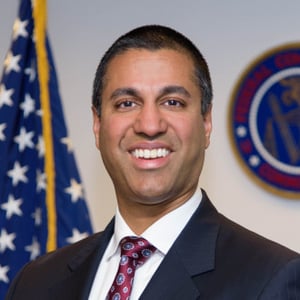
Nonresident Fellow, American Enterprise Institute
Ajit Pai, a former chairman of the Federal Communications Commission (FCC), is a nonresident fellow at the American Enterprise Institute, where he focuses on issues pertaining to technology and innovation, telecommunications regulatory policy, and market-based incentives for investment in broadband deployment. Concurrently, he is a partner at Searchlight Capital Partners, a global investment firm.
Mr. Pai’s distinguished career at the FCC includes two leadership roles following presidential appointments. He was appointed commissioner by President Barack Obama in 2012, designated chairman by President Donald Trump in 2017, and twice confirmed by the US Senate. While at the helm of the FCC, Mr. Pai had a transformative impact on the future of US technology and communications policy, implementing major initiatives to help close the digital divide; advance US leadership in 5G and other wireless technologies; promote innovation; protect consumers, public safety, and national security; and make the agency itself more open, transparent, and data-driven.
Earlier in his career, Mr. Pai served in various public-sector positions in the FCC’s Office of General Counsel, the US Department of Justice, the US Senate Judiciary Committee, and the US District Court for the Eastern District of Louisiana. He also worked as a partner at Jenner & Block and associate general counsel at Verizon Communications.
Mr. Pai graduated with honors from Harvard University, where he received a bachelor’s degree, and from the University of Chicago Law School, where he received a law degree and was an editor on the University of Chicago Law Review.

Managing Partner, Wilkinson Barker Knauer LLP
Bryan Tramont, the firm’s managing partner, offers strategic counsel to Fortune 100 companies and trade associations, as well as small and mid-sized telecommunications and media companies, on all aspects of communications law and regulation. He is regularly called on to advise companies as they develop and evaluate new business opportunities in the technology, media, and telecommunications sectors. Mr. Tramont also designs and leads the execution of the firm’s strategic plan and directs client management and development. Mr. Tramont has been recognized by leading publications like Legal 500, Chambers USA, and Washingtonian as one of the nation’s top communications lawyers. In 2017, he was named to the inaugural Legal 500 Hall of Fame List, which highlights individuals who have received constant praise by their clients and who have been recognized by the Legal 500 as an elite leading lawyer for six consecutive years. He has been awarded The Best Lawyers in America © 2017 “Lawyer of the Year” for Media Law and “Lawyer of the Year" in Communications Law in 2016. In 2016, he was also named one of the Top 10 Washington, DC Super Lawyers.
Mr. Tramont serves on the Commerce Spectrum Management Advisory Committee (CSMAC), advising the Assistant Secretary of Commerce for Communications and Information at NTIA. Appointed under the Bush and Obama Administrations, he also served as the committee’s Co-Chairman from 2008-2010. In addition, Mr. Tramont is active in the Federal Communications Bar Association, where he served in a variety of leadership roles, including as President from 2010-11 and has been awarded the organization’s Distinguished Service Award. Mr. Tramont chairs the Federalist Society’s Telecommunications Practice Group Executive Committee, serves on the International Institute of Communications Canada Board of Directors, and previously served on the Governing Committee of the ABA Forum on Communications Law. Mr. Tramont currently is an adjunct law professor at The Catholic University of America as part of the Communications Law Institute, is a senior adjunct fellow at the University of Colorado, Boulder, has served as the Syracuse University Law School’s Practitioner in Residence, and is on the Board of Trustees at William Woods University. Mr. Tramont is the author of numerous articles on communications policy and is a frequent speaker and lecturer at academic and industry events. Prior to joining Wilkinson Barker Knauer, Mr. Tramont served as Chief of Staff of the Federal Communications Commission under Chairman Michael Powell. As Chief of Staff, Mr. Tramont managed all aspects of the agency’s operations and directed FCC staff in implementing all components of the agency’s policy portfolio including media, broadband, mobility, and traditional telephone services. Before being elevated to Chief of Staff, Mr. Tramont was Chairman Powell’s Senior Legal Advisor, advising him on strategic policy matters and on wireless, international, technology, satellite, and consumer issues. Mr. Tramont also served as Senior Legal Advisor to Commissioner Kathleen Abernathy and, before that, to Commissioner Harold Furchtgott-Roth. He also served as a law clerk for the Honorable Duane Benton on the Supreme Court for his home state of Missouri. In addition, Mr. Tramont has served as an expert witness in a number of communications-related litigation matters.
Bryan Tramont graduated summa cum laude from The George Washington University with a degree in political science. He earned his law degree from Yale Law School, where he served as editor of the Yale Law & Policy Review.
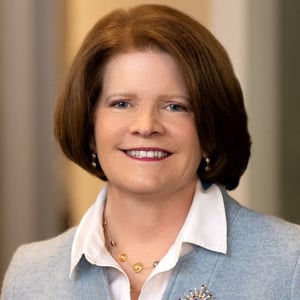
Partner, Antitrust and Competition, Wilson Sonsini Goodrich & Rosati
Maureen Ohlhausen is a partner in the Washington, D.C., office of Wilson Sonsini Goodrich & Rosati, where she advises industry-leading clients on complex antitrust and litigation matters, with a focus on high-profile cases. Sought after for her depth of experience on antitrust and Federal Trade Commission (FTC)-related issues, Maureen is known for her relationships with officials in the U.S. and abroad.
After finishing law school and clerking at the U.S. Court of Appeals for the D.C. Circuit, Maureen joined the FTC in 1997. She held a series of roles at the agency over the next 12 years, rising to the position of Director of the FTC Office of Policy Planning, where she led the agency’s work on e-commerce and headed the FTC’s Internet Access Task Force, which produced an influential report analyzing competition and consumer protection legal issues in the broadband and internet sectors. She then went into private practice at a leading telecommunications law firm, where she headed the FTC practice group.
In 2012, Maureen was confirmed by the Senate as a Commissioner of the FTC and was appointed Acting Chairman in January 2017, a role she held until May 2018. As Acting Chairman, Maureen directed all aspects of the agency’s antitrust work, including merger review, conduct enforcement, and all consumer protection enforcement, with an emphasis on privacy and technology issues. Under her leadership, the FTC won several influential merger challenges in court and reached a number of key digital privacy settlements.
To date, Maureen is the only FTC Commissioner to have received the Robert Pitofsky Lifetime Achievement Award in recognition of her contributions to the FTC.
Following the end of her term at the FTC, and immediately prior to joining Wilson Sonsini, Maureen was chair of the global antitrust and competition practice at Baker Botts, based in that firm’s Washington, D.C., office.
A recognized thought leader, Maureen is a frequent author and speaker, and is often quoted by leading print and broadcast media on antitrust, FTC, and privacy and data security matters. She has published dozens of articles on antitrust, privacy, intellectual property, regulation, FTC litigation, telecommunications, and international law issues in prestigious publications. During her tenure at the FTC and in private practice, she testified more than two dozen times before Congress, including before the Senate Commerce Committee and the House Energy and Commerce Antitrust Sub-Committee. She also testified before the Antitrust Modernization Commission.

Charles Evans Hughes Professor of Law, Columbia Law School
THOMAS W. MERRILL is the Charles Evans Hughes Professor of Law at Columbia Law School. He previously taught at Northwestern University School of Law and Yale Law School. He has undergraduate degrees from Grinnell College and Oxford University, where he studied as a Rhodes Scholar, and a law degree from the University of Chicago. He clerked on the D.C. Circuit (for Chief Judge David Bazelon) and the U.S. Supreme Court (for Justice Harry Blackmun). From 1987-1990 he served as Deputy Solicitor General, U.S. Department of Justice. Professor Merrill’s writings related to property include Property: Principles and Policies (Foundation Press Second Edition, 2012) (with Henry E. Smith); Property: The Oxford Introductions to U.S. Law (Oxford U. Press, 2010); Property: Takings (Foundation Press, 2002)(with David Dana); and numerous articles, including “The Economics of Public Use” (Cornell Law Review 1986); “The Landscape of Constitutional Property” (Virginia Law Review 2000); and “The Character of the Governmental Action” (Vermont Law Review 2012). He is a member of the American Academy of Arts and Sciences.

Professor of Law and Executive Director, Law and Economics Center, Antonin Scalia Law School, George Mason University
Donald Kochan is Professor of Law and Executive Director of the Law & Economics Center (LEC). Professor Kochan is an elected member of the American Law Institute (ALI) and serves as an Adviser to ALI's Restatement of the Law Fourth, Property project. Professor Kochan is a Nonresident Scholar at the Center for the Constitution at Georgetown University Law Center, where he was a Visiting Scholar in residence during Fall 2018. Before joining the Antonin Scalia Law School faculty, he was the Parker S. Kennedy Professor in Law at Chapman University’s Dale E. Fowler School of Law from 2004 to 2020. From 2003 to 2004, Professor Kochan was an Olin Fellow at the University of Virginia School of Law. During 2002-2003, he was a Visiting Assistant Professor of Law at George Mason’s Scalia Law School.
Professor Kochan’s scholarship focuses on areas of property law, constitutional law, administrative law, local government law, natural resources and environmental law, and law & economics. He has published several books and more than 50 scholarly articles and essays in well-regarded law journals. His work has been cited in more than a dozen state and federal court opinions, in more than 75 briefs filed in state and federal courts including more than 25 filed in the U.S. Supreme Court, in dozens of books and treatises, and in more than 800 scholarly articles.
Professor Kochan received his JD from Cornell Law School, where he was a John M. Olin Scholar in Law and Economics and managing editor of the Cornell International Law Journal. During law school, he also served as editor and executive editor of the Harvard Journal of Law & Public Policy symposium issues in 1997 and 1998. He received his BA from Western Michigan University, magna cum laude, with majors in both political science and philosophy, where he studied as the John W. Gill Medallion Scholar and was honored as the Presidential Scholar (awarded to the top graduate in the political science department).
After graduating from law school, Professor Kochan was a law clerk to The Honorable Richard F. Suhrheinrich of the United States Court of Appeals for the Sixth Circuit. Following his clerkship, Professor Kochan was an associate with the firm of Crowell & Moring LLP in Washington, D.C., where he specialized in natural resources & environmental law as well as tort, products, and consumer civil litigation & legislative affairs.
General Counsel, Hyperloop One
Marvin Ammori is the General Counsel of Hyperloop One.
He is widely regarded as one of the top lawyers and political strategists in the US, and is best known for leading the most important, successful, and unlikely political victories determining the Internet’s future, including the net neutrality campaigns. Time Magazine calls him “a prominent First Amendment lawyer and Internet policy expert,” the San Jose Mercury News calls him “a well-known advocate for Internet freedom,” while Fast Company calls him Silicon Valley’s “go-to First Amendment guy.” In private practice, he has represented Apple, Google, Dropbox, eBay, Automattic, Tumblr, Twitter, the National Association of Realtors, and others. He helped them stop “inevitable” legislation and to overcome widely believed “impossible” odds on issues of international significance, even when few in DC saw a path to victory.
For his pioneering work advancing Internet freedom, Ammori has been named to POLITICO 50’s “list of thinkers, doers, and dreamers” “transforming politics,” Washingtonian Magazine’s “Tech Titans,” Fast Company Magazine’s “100 Most Creative People in Business,” one of the top five tech lawyers by the World Technology Network, and is a recipient of the Nyan Cat Medal of Internet Awesomeness. His work has been profiled on the front pages of the Philadelphia Inquirer, the Wall Street Journal, and the Washington Post.
Ammori helped lead the online movement that killed the proposed SOPA bill in 2012 as well as the movements defending network neutrality. He was a key organizational and intellectual force behind the FCC’s Comcast/BitTorrent decision in 2008 (he authored the complaint) and the key advocate behind the White House and FCC’s decision to back strong “Title II” rules in 2015. Etsy CEO Chad Dickerson has called him the “net neutrality whisperer”; Tim Wu wrote that Ammori “deserves enormous credit for leading the march to Title II”; and Kickstarter’s communications head declared that, “No one deserves more credit for the Net neutrality victory than” Ammori. Reviewing the decade-long fight for net neutrality, Salon’s Matt Stoller wrote, “if there’s one person who really operated with superb strategic insight and tenacity this whole time, it would be superlawyer Marvin Ammori.”
Ammori has published articles in the New York Times, USA Today, the Atlantic, Wired, Slate, Forbes, and the Harvard Law Review, and authored a book On Internet Freedom. He has appeared as an expert on CNN, MSNBC, ABC, NPR, and other TV and radio outlets. Ammori has also keynoted conferences in Germany, Portugal, Brussels, Taiwan, has spoken at TEDx U-Michigan,three Federalist Society National Lawyer Conventions, and has testified before several government bodies.
Ammori has also served as a Senior Fellow to the Democracy Fund, as well as a Future Tense and Schwartz Fellow at New America, one of the nation’s most prominent think tanks. He serves on the boards of the nonprofit advocacy groups Fight for the Future, Demand Progress, and Engine Advocacy. He also serves as an Affiliate Scholar of the Stanford Law School Center for Internet & Society. Ammori was a Term Member of the Council on Foreign Relations and a Fellow of the Americas Business Council Foundation. In 2008, he served as an advisor to the Obama campaign and the transition team.

Chief Judge, United States Court of Appeals, Fifth Circuit
Jennifer Walker Elrod is the Chief Judge of the United States Court of Appeals for the Fifth Circuit. She was nominated to the Fifth Circuit in 2007, and she served as a Circuit Judge on the court until assuming the role of Chief Judge in October 2024. Prior to serving as a Circuit Judge, Chief Judge Elrod was appointed and then twice elected Judge of the 190th District Court of Harris County, Texas, where she spent over five years presiding over more than 200 jury and non-jury trials.
Chief Judge Elrod graduated cum laude from Harvard Law School, where she was an active member of the Harvard Federalist Society, an Ames Moot Court finalist, and a Senior Editor of the Harvard Journal of Law & Public Policy. She clerked for the Honorable Sim Lake in the Southern District of Texas. Before serving as a judge, Chief Judge Elrod worked in private practice, focusing on civil litigation, antitrust, and employment matters.
She has been repeatedly recognized for her work as a jurist, as well as for her pro bono work and contributions to the community. She has been named the 2022 Texas Review of Law & Politics’ Jurist of the Year, the 2018 Harvard Federalist Society’s Alumni of the Year, the 2016–17 Texas Association of Civil Trial and Appellate Specialists’ Appellate Judge of the Year, and the 2008 Mexican-American Bar Association of Texas’s Judge of the Year.
Chief Judge Elrod is actively engaged in the academic and legal communities. Chief Judge Elrod currently serves on the Board of Directors and as the Jurist-in-Residence at the South Texas College of Law, where she teaches civil procedure and First Amendment law. She is also a member of the American Law Institute and of the Board of Advisors for the Harvard Journal of Law & Public Policy, and she is a former member of the Board of Regents of her alma mater, Baylor University, and the Board of Visitors at Brigham Young University Law School. She previously served as the Chair of the Codes of Conduct Committee for the Judicial Conference of the United States. She has also served as the M.D. Anderson Visiting Public Service Professor at the Texas Tech University School of Law and as Jurist-in-Residence at Brigham Young University Law School, and she has taught legal writing at the University of Houston Law Center. She presented the Lewis F. Powell, Jr. Distinguished Lecture at the Washington and Lee University School of Law and is a frequent speaker on the topics of trial and appellate procedure, ethics, employment law, and constitutional law. Chief Judge Elrod also serves on the board of the Garland R. Walker Inn of Court, and co-produces an annual musical CLE, for which her pupilage group has won multiple national awards.
Chief Judge Elrod’s publications include: Trial by Siri: AI Comes to the Courtroom; Don’t Mess with Texas Judges: In Praise of the State Judiciary; For Good: Enriching Your Practice and Your Life Through Pro Bono and Community Service; Is the Jury Still Out?: A Case for the Continued Viability of the American Jury; and W(h)ither the Jury? The Diminishing Role of the Jury Trial in our Legal System.
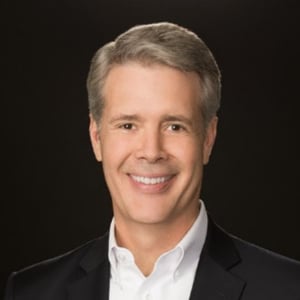
Partner, Cooley
Rob McDowell advises telecommunications, media and technology clients on their most significant regulatory, legal and business matters. As a former commissioner of the Federal Communications Commission (FCC) and a highly regarded industry leader, Rob has been at the forefront of the most complex and groundbreaking issues facing telecommunications.
Mr. McDowell was first appointed to the FCC by President George W. Bush in 2006 and again by President Obama in 2009. He was unanimously confirmed both times by the US Senate. During his tenure, Mr. McDowell led efforts to expand consumer access to spectrum through his work on the two largest wireless auctions in US history at the time, played a key role in the 2009 digital television transition and led efforts to establish the first federal civil rights rule in a generation by creating a ban on racially discriminatory practices in broadcast advertising. He also worked extensively on several large and complex mergers, including Sirius/XM and Comcast/NBC-Universal.
He is an advocate for internet freedom, serving on the US delegation to the 2012 World Conference on International Telecommunications and exposing an international bid to regulate vital aspects of the Internet through multilateral treaty-based organizations. Mr. McDowell authored an op-ed in the Wall Street Journal opposing multilateral internet regulation that led to a resolution passed unanimously in the House and Senate, as well as the ultimate defeat of the international bid at a treaty negation in Dubai later that year.
Prior to the FCC, Mr. McDowell was senior vice president for CompTel, the Competitive Telecommunications Association, where he led advocacy efforts before several government agencies, the White House and Congress.
Mr. McDowell is often called upon for speaking engagements and frequently appears on TV and radio. He has written opinion pieces for many high-profile publications, including the Wall Street Journal and Washington Post.

David McIntosh is a leader for the principles of limited constitutional government and individual freedom. He is president of the Club for Growth, the leading advocate for economic liberty.
Former Congressman David McIntosh represented Indiana's 2nd Congressional District in the United States Congress from 1995-2001. As a Freshman, David chaired the Subcommittee on Regulatory Relief. He passed the Congressional Review Act and held extensive oversight and field hearings to build a record of public support for regulatory relief initiatives in energy, biotechnology, pharmaceutical, healthcare, transportation and technology sectors. Another issue that he championed was the elimination of the marriage penalty in the Federal Tax Code.
David served during the Reagan administration as special assistant to Attorney General Edwin Meese III, and as special assistant to President Reagan for Domestic Affairs. During the first Bush administration, he served as executive director of the President's Council on Competitiveness and assistant to the Vice President. The Competitiveness Council coordinated the cost/benefit review of major regulations and promoted legal reform measures.
David is a co-founder of the Federalist Society for Law and Public Policy and serves on the Board of Directors. He remains active with several free market and conservative think tanks and grassroots organizations. David has also had stints at the Hudson Institute and as a Professor of Economics at Ball State School of Business.
Prior to the Club for Growth, David was a partner at Mayer Brown, LLP in Washington, DC.
David graduated from the University of Chicago Law School in 1983, and Yale University, BA, cum laude, in 1980. He and his wife, Ruthie, are the proud parents of Ellie age 17 and Davey age 13.
President & CEO, National Cable & Telecommunications Association
President and Co-Founder, Public Knowledge
Gigi Sohn is an internationally known communications attorney. In September 2001, she founded Public Knowledge with Laurie Racine (then President of the Center for the Public Domain) and activist/author David Bollier.
Gigi serves as PK's chief strategist, fundraiser and public face. She is frequently quoted in the New York Times, Washington Post and Wall Street Journal, as well as in trade and local press. Gigi has been published in the Washington Post, Variety, CNET and Legal Times. In addition, she has appeared on numerous television and radio programs, including the Today Show, The McNeil-Lehrer Report, C-SPAN's Washington Journal and National Public Radio's All Things Considered and Morning Edition.
Gigi is a Senior Adjunct Fellow at the Silicon Flatirons Center for Law, Technology and Entrepreneurship at the University of Colorado and a Senior Fellow at the University of Melbourne Faculty of Law, Graduate Studies Program in Australia. She has been a Non-Resident Fellow at the University of Southern California Annenberg Center, and an Adjunct Professor at Georgetown University and at the Benjamin N. Cardozo School of Law, Yeshiva University.
Gigi served as a Project Specialist in the Ford Foundation's Media, Arts and Culture unit and as Executive Director of the Media Access Project, a public interest law firm that represents citizens' rights before the FCC and the courts. In 1997, President Clinton appointed Gigi to serve as a member of his Advisory Committee on the Public Interest Obligations of Digital Television Broadcasters. In May 2006, the Electronic Frontier Foundation gave Gigi its Internet "Pioneer" Award.
Gigi currently serves on the board of the Telecommunications Policy Research Conference (TPRC) and Broadcasters' Child Development Center (BCDC). She is a member of the advisory board of the Future of Music Coalition and the Center for Public Integrity's "Well Connected" Telecommunications Project. Gigi served on the District of Columbia Bar Board of Governors from 1997-2000.
Gigi holds a B.S. in Broadcasting and Film, Summa Cum Laude, from the Boston University College of Communication and a J.D. from the University of Pennsylvania Law School.
Partner, Cooley
Rob McDowell advises telecommunications, media and technology clients on their most significant regulatory, legal and business matters. As a former commissioner of the Federal Communications Commission (FCC) and a highly regarded industry leader, Rob has been at the forefront of the most complex and groundbreaking issues facing telecommunications.
Mr. McDowell was first appointed to the FCC by President George W. Bush in 2006 and again by President Obama in 2009. He was unanimously confirmed both times by the US Senate. During his tenure, Mr. McDowell led efforts to expand consumer access to spectrum through his work on the two largest wireless auctions in US history at the time, played a key role in the 2009 digital television transition and led efforts to establish the first federal civil rights rule in a generation by creating a ban on racially discriminatory practices in broadcast advertising. He also worked extensively on several large and complex mergers, including Sirius/XM and Comcast/NBC-Universal.
He is an advocate for internet freedom, serving on the US delegation to the 2012 World Conference on International Telecommunications and exposing an international bid to regulate vital aspects of the Internet through multilateral treaty-based organizations. Mr. McDowell authored an op-ed in the Wall Street Journal opposing multilateral internet regulation that led to a resolution passed unanimously in the House and Senate, as well as the ultimate defeat of the international bid at a treaty negation in Dubai later that year.
Prior to the FCC, Mr. McDowell was senior vice president for CompTel, the Competitive Telecommunications Association, where he led advocacy efforts before several government agencies, the White House and Congress.
Mr. McDowell is often called upon for speaking engagements and frequently appears on TV and radio. He has written opinion pieces for many high-profile publications, including the Wall Street Journal and Washington Post.
Managing Member, Aviation Perspectives LLC

U.S. Court of Appeals, D.C. Circuit
Judge Williams practiced law in New York City (at the firm of Debevoise Plimpton and as an Assistant U.S. Attorney) and then taught law at the University of Colorado Law School from 1969 to 1986, with visiting years at UCLA, SMU, and the University of Chicago (where he was also a fellow in law and economics). He was appointed to the U.S. Court of Appeals for the D.C. Circuit in 1986. His most recent book is a biography of Vasily Maklakov, The Reformer: How One Liberal Fought to Preempt the Russian Revolution (Encounter Books, 2017).

Law and Economics of Net Neutrality
George Ford, Lawrence J. Spiwak
According to the Telecommunications Act of 1996, the policy of the United States shall be...
Next Steps in the Net Neutrality Saga – Mozilla v. FCC
George Ford, Russell P. Hanser, Daniel Lyons, Lawrence J. Spiwak
This week, the D.C. Circuit issued its long-awaited opinion in Mozilla v. Federal Communications Commission...
Net Neutrality Litigation - Podcast
Adam White, Brett Shumate
After suffering two judicial setbacks, most recently in the D.C. Circuit’s Verizon v. FCC decision...
Commissioner Ajit Pai on Net Neutrality - Podcast
Ajit V. Pai, Bryan N. Tramont
FCC Commissioner Ajit Pai spoke to Telecommunications & Electronic Media Practice Group Chairman Bryan Tramont...
Net Neutrality vs. Net Reality: Why an Evidence-Based Approach to Enforcement, And Not More Regulation, Could Protect Innovation on the Web
Maureen K. Ohlhausen
Related Links: Senate Committee on Commerce, Science, and Transportation, Hearing on “Network Neutrality” (testimony of...
PPL Montana, LLC v. Montana - Post-Decision SCOTUScast
Thomas W. Merrill
On February 22, 2012, the Supreme Court announced its decision in PPL Montana, LLC v. Montana....
PPL Montana, LLC v. Montana - Post-Argument SCOTUScast
Donald J. Kochan
On December 7, 2011, the Supreme Court heard oral argument in PPL Montana, LLC v. Montana....
Telecommunications: Broadband Policy -- One Year In
Marvin Ammori, Jennifer Walker Elrod, Robert M. McDowell, David M. McIntosh, Kyle E. McSlarrow, Gigi B. Sohn
President Obama was elected after running a very technology-savvy campaign and now promises to continue...
The Regulatory State and American Technology
David A. Gross, Roy E. Hoffinger, Robert M. McDowell, James T. Miller, Stephen F. Williams
The Federalist Society's Telecommunications Practice Group presented this panel discussion at the 2007 Annual National...