

Judge, United States Court of Appeals, Ninth Circuit
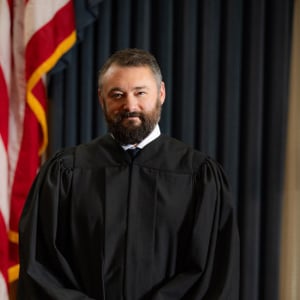
Judge Carlos Bea serves as a judge on the United States Court of Appeals for the Ninth Circuit. He received his Bachelor's Degree from Stanford University in 1956 and his J.D. from Stanford Law School in 1958. Judge Bea was born in San Sebastian, Spain, and immigrated with his family to Cuba in 1939. In 1952, he represented Cuba on the Cuban National basketball team in the Helsinki Olympics. Judge Bea became a naturalized citizen of the United States in 1958. He engaged in private practice in San Francisco, principally in the area of civil trials (jury and non-jury), from 1959-75 at Dunne, Phelps & Mills and from 1975-90 at Carlos Bea, A Law Corporation. He taught courses in civil litigation advocacy at Hastings College of Law and Stanford Law School. From 1990 to 2003, Judge Bea served as a judge of the San Francisco Superior Court. He was nominated by President George W. Bush to the United States Court of Appeals for the Ninth Circuit and was confirmed in 2003.
Judge Bea and his wife Louise reside in San Francisco, where they raised their four sons, Sebastian, Alexander, Nicholas, and Dominic.
Judge, United States Court of Appeals for the Sixth Circuit
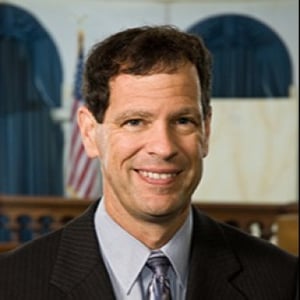
Ben Flowers is a judge on the United States Court of Appeals for the Sixth Circuit. President Donald J. Trump appointed Judge Flowers to the bench in 2026. At the time of his nomination, Flowers worked as a partner at Ashbrook Byrne Kresge Flowers, in Ohio. Before that, Judge Flowers served as Ohio’s Tenth Solicitor General. In that role he regularly represented the State of Ohio before the Supreme Court of the United States, the United States Court of Appeals for the Sixth Circuit, and the Supreme Court of Ohio.
Judge Flowers is a graduate of The Ohio State University and the University of Chicago Law School. He served as a law clerk for Sandra Ikuta of the U.S. Court of Appeals for the Ninth Circuit and for Justice Antonin Scalia of the Supreme Court of this United States.
Warren Distinguished Professor of Law, University of San Diego School of Law
Michael D. Ramsey is Warren Distinguished Professor of Law at the University of San Diego School of Law, where he teaches and writes in the areas of Constitutional Law, Foreign Relations Law and International Law. He is the author of The Constitution’s Text in Foreign Affairs (Harvard University Press), co-editor of International Law in the U.S. Supreme Court: Continuity and Change (Cambridge University Press), and co-author of two casebooks, Transnational Law and Practice (2d ed., Aspen) and International Business Transactions: A Problem-Oriented Coursebook (14th ed., West). His scholarly articles have appeared in publications such as the Yale Law Journal, the University of Chicago Law Review, the Georgetown Law Journal and the American Journal of International Law. He received his B.A. magna cum laude from Dartmouth College and his J.D. summa cum laude from Stanford Law School. Prior to teaching, he served as a judicial clerk for Judge J. Clifford Wallace of the United States Court of Appeals for the Ninth Circuit and for Justice Antonin Scalia of the United States Supreme Court, and practiced law with the law firm of Latham & Watkins, where he specialized in international finance and investment. He has taught as a visiting professor at the University of California, San Diego, in the Department of Political Science and at the University of Paris – Sorbonne, in the Department of Comparative Law.

Thomas M. Siebel Senior Fellow, The Hoover Institution, Stanford University; Gary T. Schwartz Distinguished Professor of Law Emeritus, UCLA School of Law
Eugene Volokh is the Thomas M. Siebel Senior Fellow at the Hoover Institution (Stanford), as well as the Gary T. Schwartz Distinguished Professor of Law Emeritus and Distinguished Research Professor at UCLA School of Law. He recently retired from teaching at UCLA, after 30 years there, and is now focusing on research.
Volokh is the author of the textbooks The First Amendment and Related Statutes (8th ed. 2023), and Academic Legal Writing (5th ed. 2016), as well as over 100 academic law journal articles, mostly on First Amendment law. He is a member of The American Law Institute; the editor-in-chief of the Journal of Free Speech Law; and the creator and coauthor of The Volokh Conspiracy, a leading legal blog founded in 2002 (hosted at the Washington Post from 2014 to 2017 and now at Reason Magazine).
Partner, Gibson, Dunn & Crutcher
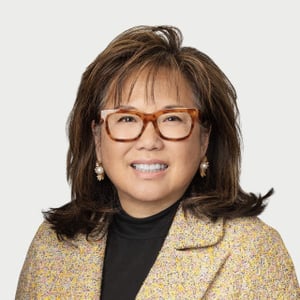
Debra Wong Yang is a partner in Gibson, Dunn & Crutcher’s Los Angeles office. Reflective of her broad practice and comprehensive abilities, Ms. Yang is Chair of the Crisis Management Practice Group, former Chair of the White Collar Defense and Investigations Practice Group, which includes the FCPA Practice Group, and former Chair of the Information Technology and Data Privacy Practice Group. She is also a member of the firm’s Executive Committee. She previously served as the United States Attorney for the Central District of California, where she was appointed by President George W. Bush, who made her the first Asian-American woman to serve as a United States Attorney. Ms. Yang was also selected to serve on President George W. Bush’s Corporate Fraud Task Force and to chair the Attorney General’s Advisory Committees on Intellectual Property and Civil Rights.
In 2023, Ms. Yang was recognized by Chambers USA with an Outstanding Contribution Award where she was described by Chambers and Partners as “the epitome of an elite white-collar practitioner and go-to thought leader.” Lawdragon has recognized Ms. Yang as a “Lawdragon Legend,” one of the Top 500 lawyers in the United States, and a member of its inaugural 500 Leading Litigators in America for 2023. The Los Angeles Business Journal named Ms. Yang to its annual list of the Top 100 Lawyers in Los Angeles (May 2023), and has named her as one of the Top 500 most influential people in Los Angeles every year since 2016. In 2015, Ms. Yang was recognized by the Los Angeles Business Journal as one of the 27 “stellar attorneys” on the Most Influential Lawyers: White Collar and Cyber Crime list. From 2017 – 2019 and 2021 – 2022, she was also named to its list of Most Influential Women Lawyers in Los Angeles, featuring 50 of the most accomplished female attorneys working in the region, and in 2018, 2020 and 2022 they named her among the Most Influential Minority Lawyers in Los Angeles. Who’s Who Legal included her in the 2023 Who’s Who Legal Investigations guide as a top practitioner, and from 2019 – 2023, Who’s Who Legal also recognized Ms. Yang in the field of Business Crime Defense. She was recognized in 2023 as a leading lawyer by Chambers USA in California for Litigation: White-Collar Crime & Government Investigations, an award she has received since 2009. The Daily Journal has named her to its list of California’s Top 100 lawyers over the past several years, including most recently in 2023, highlighting her role in defending companies in investigations and crises that make headlines and are highly confidential in nature. The Daily Journal has also repeatedly named Ms. Yang to its annual list of 100 Leading Women Lawyers in California. In 2019, Benchmark Litigation named her a California “Litigation Star.”
In 2022, the American Jewish Committee bestowed Ms. Yang with their prestigious Learned Hand Award. The Anti-Defamation League presented Ms. Yang with its prestigious Deborah Award, which honors “extraordinary women of achievement.” The award was given in recognition for her “professional and philanthropic dedication to the Los Angeles community.” She was also named by the Los Angeles Chapter of the Federalist Society as Lawyer of the Year. She previously served as a founding member and officer of many Asian American bar organizations in Chicago and Los Angeles. Ms. Yang was recognized by The National Law Journal as one of the Top 50 Most Influential Minority Lawyers in America. She has been recognized as a champion of civil rights by both the Los Angeles City Council and the Inglewood Superior Court. The Asian Pacific Bar Association selected her as the 2002 recipient of its Public Service Award and the National Asian Pacific American Bar Association selected her as the 2003 recipient of the Trailblazers Award. Previously, she was appointed to the President’s Council for Pitzer College of the Claremont Colleges and was given the inaugural Distinguished Alumni Award.
Ms. Yang has remained active in the local and legal communities, roles for which she has been frequently honored. In 2009, she was selected by Los Angeles Mayor Antonio Villaraigosa to serve as a Los Angeles Police Commissioner, part of the civilian oversight committee of the LA Police Department. Ms. Yang has
been an adjunct professor at the USC School of Law and has instructed at the National Institute of Trial Advocacy and at California’s Judicial College. She is a former president and board member of The Chinese American Museum in Los Angeles, the secretary and board member of River LA, a board member of the Smithsonian American Art Museum, a board member of the LA Philharmonic and a past board member of colleges and other educational institutions.
Ms. Yang received her Juris Doctor from Boston College Law School and was a law clerk to the Honorable Ronald S.W. Lew in the U.S. District Court for the Central District of California.

Vice President for Legal Strategy, Stand Together
Casey Mattox is Vice President for Legal Strategy at Stand Together and Senior Advisor at
Americans for Prosperity. In these roles he advocates for and creates strategies and
partnerships to ensure a constitutionally limited government that protects the civil liberties of all
Americans. Prior to joining Stand Together and AFP Casey’s legal career focused on defending
the First Amendment rights of students, faculty, healthcare workers and religious organizations.
Casey has a J.D. from Boston College School of Law and an undergraduate degree from the
University of Virginia. You can find him on Twitter at @CaseyMattox_ and on LinkedIn at
@Casey-Mattox-ST.

Vice President, Edwin Meese III Institute for the Rule of Law, Advancing American Freedom
John G. Malcolm oversees Advancing American Freedom’s work to increase understanding of the Constitution and the rule of law as Vice President of the organization’s Edwin Meese III Institute for the Rule of Law. Malcolm brings to the challenge a wealth of legal expertise and experience in both the public and private sectors.
Prior to joining Advancing American Freedom in 2025, Malcolm was the Vice President of the Institute for Constitutional Government and the Director of the Meese Center for Legal and Judicial Studies at the Heritage Foundation. Prior to joining Heritage in 2012, Malcolm was general counsel at the U.S. Commission on International Religious Freedom, as well as a distinguished practitioner in residence at Pepperdine Law School. From 2004 to 2009, Malcolm was executive vice president and director of worldwide anti-piracy operations for the Motion Picture Association.
Malcolm served as a deputy assistant attorney general in the Department of Justice’s Criminal Division from 2001 to 2004, where he oversaw sections on computer crime and intellectual property, domestic security, child exploitation and obscenity, and special investigations. Immediately prior to that, he was a founding partner in the Atlanta law firm of Malcolm & Schroeder, LLP.
From 1990 to 1997, Malcolm was an assistant U.S. attorney in Atlanta, assigned to the fraud and public corruption section, and also an associate independent counsel, investigating fraud and abuse in the Department of Housing and Urban Development. He was honored with the Director’s Award for Superior Performance for his work in connection with the successful prosecution of Walter Leroy Moody Jr., who assassinated an 11th Circuit judge and the head of the Savannah chapter of the NAACP.
A graduate of Harvard Law School and Columbia College, Malcolm began his career as a law clerk to a federal district court judge and a federal appellate court judge, and as an associate at the Atlanta-based law firm of Sutherland, Asbill & Brennan (new Eversheds Sutherland).
Malcolm, who resides in Washington, D.C., serves on the Board of Trustees of the Washington National Opera and is a Senate-confirmed member of the Board of Directors of the Legal Services Corporation, the largest funder of civil legal aid in the United States.

Emanuel S. Heller Professor of Law, University of California at Berkeley; Thomas Smith Senior Research Fellow, The Civitas Institute, University of Texas at Austin
John Yoo is the Emanuel Heller Professor of Law at the University of California at Berkeley. He is also the Thomas Smith Senior Research Fellow, Civitas Institute, at the University of Texas at Austin. He is also a Nonresident Senior Fellow at the American Enterprise Institute.
His most recent book, The Politically Incorrect Guide to the Supreme Court, co-authored with Robert Delahunty, was published in 2023. Professor Yoo’s other books include Defender-in-Chief: Trump’s Fight for Presidential Power; Striking Power: How Cyber, Robots, and Space Weapons Change the Rules for War; Point of Attack: Preventive War, International Law, and Global Welfare; and Crisis and Command: A History of Executive Power from George Washington to George Bush.
He is a co-author of volumes 1 and 2 of R. Rossum, G. Tarr, V. Munoz & J. Yoo American Constitution Law (Routledge, 2026), and a co-editor of the eight-volume series on the 250th anniversary of the American Revolution, We Hold These Truths, with Yuval Levin and Adam White of the American Enterprise Institute.
Professor Yoo has published more than 100 articles in academic journals on subjects including national security, constitutional law, international law, and the Supreme Court. He also regularly contributes to the editorial pages of the Wall Street Journal, New York Times, Washington Post, Los Angeles Times, and National Review, among others.
Professor Yoo has served in all three branches of government. He was an official in the U.S. Department of Justice, where he worked on national security and terrorism issues after the 9/11 attacks. He served as general counsel of the U.S. Senate Judiciary Committee. He has been a law clerk for Supreme Court Justice Clarence Thomas and federal appeals Judge Laurence Silberman. He has been a visiting professor at the University of Texas at Austin’s School of Civic Leadership, Seoul National University, the Interdisciplinary Center Herzliya, Keio University, Trento University, the University of Chicago, and the Free University of Amsterdam.
Professor Yoo supervises the Public Law and Policy Program and the California Constitution Center. He also serves on the boards of Founding Forward, the Washington Legal Foundation, the Pacific Legal Foundation, the Ulysses Grant Institute, the Federalist Society’s Separation of Powers and Federalism Division, the Universidad Cientifica del Sur Law School, and the Asia-Pacific Law Institute at Seoul National University. He is a winner of the Federalist Society’s Paul Bator award and the Heritage Foundation’s Edwin Meese III Originalism Lectureship.
Professor Yoo graduated from Yale Law School and summa cum laude from Harvard College.

Founder and CEO, Lexpat Global Services
Adam Pearlman is the Founder and Chief Executive Officer of Lexpat Global Services. He is a National Security Law expert and a proven senior leader with experience across the U.S. Departments of Justice, Defense, and State, in the White House, and with the U.S. Federal Judiciary.
Before founding Lexpat, Mr. Pearlman served as the Senior Advisor for Legal Policy in the State Department’s Bureau of Counterterrorism. There, he counseled senior officials on matters covering the entire spectrum of programs and operations to counter terrorism and violent extremism. While participating in sensitive diplomatic engagements and helping to coordinate military operations, he also advised in the development of sanctions policy and initiatives to build legal and operational capacity in partner nations. Mr. Pearlman also managed the Bureau’s participation in federal litigation and led U.S. delegations in multilateral forums concerning criminal justice and rule of law. Separately, Mr. Pearlman supported the State Department’s Bureau of International Narcotics and Law Enforcement Affairs (INL) as the contracted Senior Justice and Rule of Law Advisor in Cabo Verde, Africa. There he was the chief implementer of a Foreign Assistance program that grew eight-fold during his tenure, building host nation capacity across the law enforcement, justice sector, rule of law, anti-money laundering, and corrections disciplines.
A former Associate Deputy General Counsel of the Department of Defense, Mr. Pearlman was agency counsel for complex civil and criminal national security matters in federal and military courts. He also led the Supreme Court and appellate unit of the team dedicated to litigating classified counterterrorism cases. His earlier service in the Department of Justice spanned four litigating divisions and the Office of the Deputy Attorney General. His diverse experience included reviewing complex international transactions and mergers, and advising on immigration removal proceedings, human rights abuses, and terrorist financing investigations. Mr. Pearlman also served with distinction in Iraq as an early advisor to the Iraqi High Tribunal’s prosecution of Saddam Hussein. He was a law clerk for The Honorable Royce C. Lamberth of the U.S. District Court for the District of Columbia, and during law school interned in the White House Counsel’s Office.
Mr. Pearlman is a Senior Fellow at the National Security Institute at George Mason University’s Antonin Scalia Law School, a member of the American Bar Association’s Advisory Committee on Law and National Security, and the Editor-in-Chief of the U.S. Intelligence Community Law Sourcebook. Previously, he has been a Term Member of the Council on Foreign Relations, National Security Fellow at the Foundation for Defense of Democracies, member of the ABA’s Africa Law Initiative Council and of the Center for Strategic & International Studies’ (CSIS) Project on Nuclear Issues, vice chairman of the ABA Section of International Law’s committees on national security, and aerospace and defense, and a liaison to the Board of Directors of the ABA’s Rule of Law Initiative. He has published articles in the Harvard National Security Journal, Stanford Law & Policy Review, Intelligence & National Security, The Foreign Service Journal, Lawfare, and many other outlets.
Mr. Pearlman earned his B.A., with honors, from UCLA, and his J.D., with honors, from The George Washington University Law School, where he was a member of the International Law Review. He also earned a Master of Science of Strategic Intelligence degree from the National Intelligence University, where he was the inaugural recipient of the Kornblum Award for national security law and ethics. Mr. Pearlman is a Certified Financial Crime Specialist and holds certificates in international human rights law from the University of Oxford and in anti-corruption law from American University’s Washington College of Law. He is admitted to the State Bars of California and Virginia, as well as to the Bar of the United States Supreme Court. He speaks and reads Portuguese at the intermediate level.
Chair, Government Enforcement & Investigations Group, Baker Donelson Bearman Caldwell & Berkowitz, PC
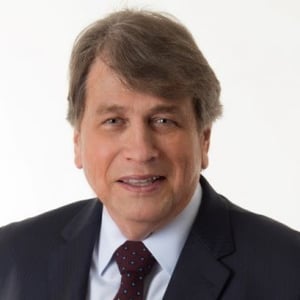
Mr. Whitley represents clients nationally and internationally in white collar criminal matters and regulatory enforcement, corporate internal investigations, Foreign Corrupt Practices Act (FCPA) and U.S. export controls and compliance. He also advises clients on corporate compliance, health care fraud and FDA-related matters.
Mr. Whitley has had a wide-ranging career in the Department of Justice (DOJ). During the Ronald Reagan and George H.W. Bush administrations, he served as Acting Associate Attorney General, the third-ranking position at Main Justice. He was appointed by Presidents Reagan and Bush, respectively, to serve as the U.S. Attorney in the Middle and Northern Federal Districts of Georgia. Throughout his career, Mr. Whitley served under five U.S. Attorneys General and four Presidents in a number of key operational and policy positions. Earlier in his career, Mr. Whitley served as an Assistant District Attorney in the Chattahoochee Judicial Circuit in Columbus, Georgia. Mr. Whitley maintains strong professional relationships with the state and federal law enforcement community.
In 2003, Mr. Whitley was appointed by President George W. Bush as the first General Counsel of the U.S. Department of Homeland Security (DHS), the highest ranking legal official at DHS. He held that position for two years working for DHS Secretaries Tom Ridge and Michael Chertoff, before returning to private practice.
Mr. Whitley leads a team of lawyers in the Firm's Government Enforcement and Investigations practice group who conduct sensitive high level investigations for both public and private sector institutions. Mr. Whitley's practice focuses on corporate defense and representation of clients in complex civil and criminal enforcement matters brought by the DOJ, other federal agencies, State Attorneys General and local prosecutors. He has represented numerous individuals and corporations in major government investigations throughout the United States and internationally. Mr. Whitley is a frequent speaker on white collar, compliance and corporate governance issues.
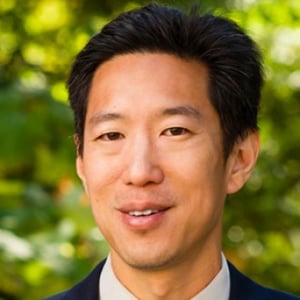
Professor of Law, Lewis & Clark Law School
Tung Yin joined the Lewis & Clark Law School faculty in 2009. Before that, he taught for seven years at The University of Iowa College of Law, where was most recently professor and Claire Ferguson Carlson Faculty Fellow; practiced law from 1998-2002 with Munger Tolles & Olson LLP in Los Angeles, where he specialized in white collar corporate criminal defense and employment law. He clerked for the late Hon. Edward Rafeedie, U.S. District Court for the Central District of California, the late Hon. William J. Holloway, U.S. Court of Appeals for the Tenth Circuit, and the Hon. J. Clifford Wallace, U.S. Court of Appeals for the Ninth Circuit. While in law school at the University of California, Berkeley, he was a Notes and Comments Editor of the California Law Review and a member of the Moot Court Board.
Yin’s academic research focuses primarily on national security and terrorism law, and has ranged from legal issues arising out of indefinite military detention of suspected terrorists at Guantanamo Bay, to race and religion and the perception of terrorism, to drone terrorism, and more. His scholarship has been cited in judicial opinions from the U.S. Court of Appeals for the Fifth and Ninth Circuits, the Florida and Georgia Supreme Courts, and other lower state and federal trial courts.
He frequently provides commentary for local and national media on high-profile criminal matters, including news outlets such as The Wall Street Journal, The Los Angeles Times, Associated Press, The New York Daily News, Bloomberg News, The National Law Journal, The Oregonian, Bloomberg Radio, Oregon Public Broadcasting, KEX News, KXL News, KPAM News, “The Lars Larson Show,” “The Terry Boyd Show,” “The Mark and Dave Show,” and the local news affiliates for ABC, CBS, NBC, and Fox. He also writes about running for the Run Oregon blog.
Professor of Constitutional Law, Pepperdine University School of Law
One of America's best known scholars and popular commentators on the law, Professor Douglas W. Kmiec holds the endowed chair in constitutional law at Pepperdine Law School. He came to this position after serving several years as dean and St. Thomas More Professor of Law at The Catholic University of America in Washington, D.C., and for nearly two decades, on the law faculty at the University of Notre Dame. As dean at Catholic University, Professor Kmiec did what many said would be impossible; he greatly increased academic quality and student selectivity at the same time he deepened the school's religious commitment. During his tenure, the law school moved into the upper tier of the U.S. News ranking from tier three. At Notre Dame, he was director of Notre Dame's Center on Law & Government, and the founder of its Journal of Law, Ethics & Public Policy. Beyond the university setting, Kmiec served Presidents Ronald Reagan and George Bush during 1985-89 as constitutional legal counsel (Assistant Attorney General, Office of Legal Counsel, U.S. Department of Justice).
A wide-ranging writer and engaging speaker, Professor Kmiec writes a syndicated column for the Catholic News Service, and for several years wrote a regular column in the Chicago Tribune. He is also a frequent contributor to the pages of the Los Angeles Times, Wall Street Journal, and other periodicals. He is the co-author (with legal historian Stephen Presser of Northwestern) of three books on the Constitution -- The American Constitutional Order; Individual Rights and the American Constitution and The History, Structure and Philosophy of the American Constitution. Another recent book, Cease-Fire on the Family (Crisis Books/Notre Dame) attracted scholarly and popular acclaim for proposing realistic ways for families to "end the culture war" by renewing personal virtue and civic responsibility within itself. He has also written The Attorney General's Lawyer (Praeger 1992), and several respected legal treatises.
Professor Kmiec's scholarly research spans legal and non-legal subjects, from the Constitution and the federal system, to land use and the organization of America society. He is a frequent guest on national news programs, such as Nightline, the Newshour, and NPR's Talk of the Nation, analyzing constitutional questions.
A White House Fellow (1982-83), Professor Kmiec is one of a few individuals who has received the Distinguished Service Award from two cabinet departments —the Department of Justice in 1987 and Housing and Urban Development in 1983. In 1988, he was awarded the Edmund J. Randolph Award by the attorney general. He has lectured on the U.S. Constitution in Asia as a Fulbright Distinguished Scholar.
An honors graduate of Northwestern, Professor Kmiec received his law degree from the University of Southern California, where he served on the Law Review and received the Legion Lex Commencement Prize for Legal Writing. He is a member of the bar of the U.S. Supreme Court and the state bars of Illinois and California.
B.A., with honors, Northwestern University, 1973
J.D., University of Southern California, 1976
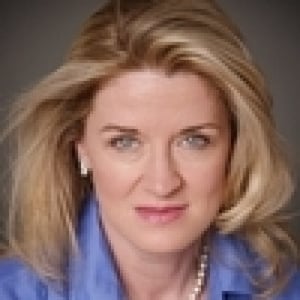
Counsel, The Judicial Confirmation Network
Wendy Long is legal counsel to the Judicial Confirmation Network. Until March 2005, she was a litigation partner in the New York office of Kirkland & Ellis LLP. Wendy was a law clerk to U.S. Supreme Court Justice Clarence Thomas and to Judge Ralph Winter of the U.S. Court of Appeals for the Second Circuit in New York. She is a graduate of Northwestern University School of Law, cum laude and Order of the Coif, where she was articles editor of the Northwestern University Law Review, and of Dartmouth College. She previously served as a press secretary in the U.S. Senate, for former U.S. Senator Bill Armstrong (R-Colo.) and former U.S. Senator Gordon Humphrey (R-N.H.).
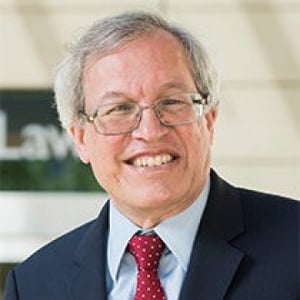
Dean and Jesse H. Choper Distinguished Professor of Law, UC Berkeley School of Law
Erwin Chemerinsky became the 13th Dean of Berkeley Law on July 1, 2017, when he joined the faculty as the Jesse H. Choper Distinguished Professor of Law.
Prior to assuming this position, from 2008-2017, he was the founding Dean and Distinguished Professor of Law, and Raymond Pryke Professor of First Amendment Law, at University of California, Irvine School of Law, with a joint appointment in Political Science. Before that he was the Alston and Bird Professor of Law and Political Science at Duke University from 2004-2008, and from 1983-2004 was a professor at the University of Southern California Law School, including as the Sydney M. Irmas Professor of Public Interest Law, Legal Ethics, and Political Science. He also has taught at DePaul College of Law and UCLA Law School.
He is the author of eleven books, including leading casebooks and treatises about constitutional law, criminal procedure, and federal jurisdiction. His most recent books are, We the People: A Progressive Reading of the Constitution for the Twenty-First Century (Picador Macmillan) published in November 2018, and two books published by Yale University Press in 2017, Closing the Courthouse Doors: How Your Constitutional Rights Became Unenforceable and Free Speech on Campus (with Howard Gillman).
He also is the author of more than 200 law review articles. He writes a regular column for the Sacramento Bee, monthly columns for the ABA Journal and the Daily Journal, and frequent op-eds in newspapers across the country. He frequently argues appellate cases, including in the United States Supreme Court.
In 2016, he was named a fellow of the American Academy of Arts and Sciences. In 2017, National Jurist magazine again named Dean Chemerinsky as the most influential person in legal education in the United States.

Patrick Hotung Professor of Constitutional Law, Georgetown University Law Center; Faculty Director, Georgetown Center for the Constitution
Randy E. Barnett is the Patrick Hotung Professor of Constitutional Law at the Georgetown University Law Center and is the Faculty Director of the Georgetown Center for the Constitution. After graduating from Northwestern University and Harvard Law School, he tried many felony cases as a prosecutor in the Cook County States’ Attorney’s Office in Chicago. A recipient of a Guggenheim Fellowship in Constitutional Studies and the Bradley Prize, Professor Barnett has been a visiting professor at Penn, Northwestern and Harvard Law School.
Professor Barnett’s publications includes thirteen books, more than one hundred articles and reviews, as well as numerous op-eds. His most recent book is Felony Review: Tales of True Crime and Corruption in Chicago (2026). His other books on the Constitution include: A Life for Liberty: The Making of an American Originalist (2024); The Original Meaning of the Fourteenth Amendment: Its Letter and Spirit (2021) (with Evan Bernick); An Introduction to Constitutional Law: 100 Supreme Court Cases Everyone Should Know (2019) (with Josh Blackman); Restoring the Lost Constitution: The Presumption of Liberty (2nd ed. 2013); Our Republican Constitution: Securing the Liberty and Sovereignty of We the People (2016); and Constitutional Law: Cases in Context (5th ed. forthcoming 2027) (with Josh Blackman). His books on contracts are The Oxford Introductions to U.S. Law: Contracts (2010) and Contracts: Cases and Doctrine (7th ed. 2021) (with Nate Oman). And he is the author of The Structure of Liberty: Justice and the Rule of Law (2nd ed. 2014).
In 2004, he argued the medical marijuana case of Gonzalez v. Raich before the U.S. Supreme Court. In 2012, he was one of the lawyers representing the National Federation of Independent Business in its constitutional challenge to the Affordable Care Act in NFIB v. Sebelius. He’s appeared in numerous documentaries and portrayed a prosecutor in the 2010 science-fiction feature film, InAlienable: The Movie. On X he is @RandyEBarnett

Panel One: Judicial Independence and Trust: Has Article III Become Too Political?
Carlos T. Bea, Benjamin M. Flowers, Michael D. Ramsey, Eugene Volokh, Debra Wong Yang
All levels of the judiciary have faced increased attacks on their independence in recent years....
Litigation Update: Meriwether v. Hartop
Casey Mattox
In a decision issued on March 26, 2021, the Sixth Circuit held Professor Nicholas Meriwether,...
The Insurrection Act, Executive Authority, and More
John G. Malcolm, John C. Yoo
The Insurrection Act of 1807 empowers the President of the United States to deploy U.S....
Watching the Terror Watchlist
Adam R. Pearlman, Joe D. Whitley, Tung Yin
Watchlisting people with known or suspected ties to terrorism has long been a key tool...
Topics
Fourth Circuit Recognizes Free Speech Concerns with Voter List Access Restrictions
On July 12, a panel of the U.S. Court of Appeals for the Fourth Circuit...
State Court Docket Watch News Clips: 10/15/2015
Due to a law taking effect today, residents of Maine are no longer required to...
Partial-Birth Abortion Ban Act
Douglas W. Kmiec, Wendy Long, Erwin Chemerinsky, Randy E. Barnett
On April 18, 2007, the Supreme Court upheld the constitutionality of the Partial-Birth Abortion Ban...