
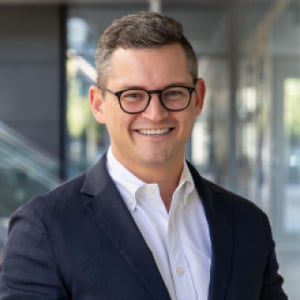
Associate Professor of Law, Sandra Day O'Connor College of Law, Arizona State University
Jonathan Green is an Associate Professor of Law at Arizona State University teaching Civil Procedure and Statutory Interpretation. His scholarship focuses on the history of political and legal thought. He is especially interested in the history of constitutionalism, theories of interpretation, and the concept of judicial power. His research has been published in the Arizona State Law Journal, the Journal of the History of Ideas, Modern Intellectual History, and the Historical Journal.
Prior to joining the ASU faculty in 2024, Professor Green was a Harry A. Bigelow Fellow at the University of Chicago. He previously clerked for Judge Neomi Rao of the U.S. Court of Appeals for the District of Columbia Circuit, and worked as a litigation associate at DLA Piper in Philadelphia.
Professor Green holds a J.D. from Yale Law School, where he was an editor of the Yale Law Journal. He received his PhD from the University of Cambridge, where he was a joint recipient of Prince Consort & Thirwall Prize, awarded annually for the best dissertation in the Cambridge History Faculty. He also received his MPhil from Cambridge, and earned his B.A., summa cum laude, from Northwestern University.
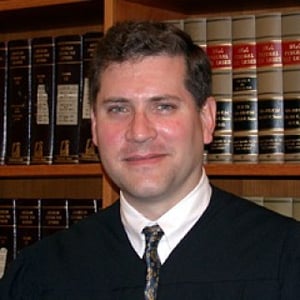
Judge, United States Tax Court
Senior Judge.. B.A. Harvard College, 1979; J.D. University of Chicago Law School, 1983. Admitted to New York and District of Columbia Bars; U.S. Supreme Court; DC, Second, Fifth and Ninth Circuits; Southern and Eastern Districts of New York, Court of Federal Claims. Practiced in New York as an Associate, Cahill Gordon & Reindel, 1983-85; Sullivan & Cromwell, 1987-1991; served as Clerk to the Hon. Alex Kozinski, Ninth Circuit, 1985-87; and in Washington as Counsel to Commissioners, United States International Trade Commission, 1991-96; Counsel, Miller & Chevalier, 1996-2001; Deputy Assistant Attorney General, Tax Division, 2001-03. Member, American Bar Association (Litigation and Tax Sections). Appointed by President George W. Bush as Judge, United States Tax Court, on June 30, 2003.

University of Minnesota Law School
Ilan Wurman is a professor at the University of Minnesota, where he teaches administrative law and constitutional law. He is also the co-host of the new legal podcast, Rationally BASED.
Professor Wurman previously taught at Arizona State University. He writes primarily on the Fourteenth Amendment, administrative law, separation of powers, and constitutionalism. His academic writing has appeared in the Yale Law Journal, the Stanford Law Review, the University of Chicago Law Review, the University of Pennsylvania Law Review, the Virginia Law Review, the Duke Law Journal, the Minnesota Law Review, the Notre Dame Law Review, and the Texas Law Review among other journals.
Professor Wurman is the author of the new book The Constitution of 1789: A New Introduction (Cambridge 2026). His previous books include A Debt Against the Living: An Introduction to Originalism (Cambridge 2017), and The Second Founding: An Introduction to the Fourteenth Amendment (Cambridge 2020). He is also the author of the casebook, Administrative Law Theory and Fundamentals: An Integrated Approach (Foundation Press 3d ed. 2025).
Professor Wurman has also litigated a variety of administrative law and constitutional law cases, including cases involving COVID-19 restrictions, transmission lines, and Appointments Clause challenges. He also devised winning public nuisance theories to force city governments to address the increasingly challenging public camping crises throughout the country.
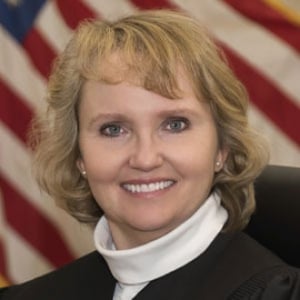
Judge, District II, Wisconsin Court of Appeals
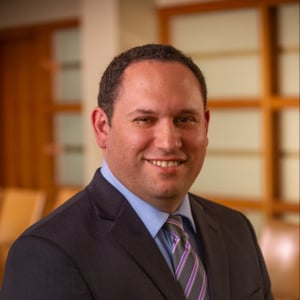
Partner, Stafford Rosenbaum, LLP
Jeff Mandell is a partner at Stafford Rosenbaum LLP, where he maintains a broad practice with specialties in election and political law, complex litigation and appeals, and issues related to the Wisconsin Fair Dealership Law. Jeff is also the co-founder and board president of Law Forward, a nonprofit, nonpartisan organization focused on defending and advancing democracy in Wisconsin. Jeff is a graduate of the University of Chicago Law School and, before entering practice, served as a judicial clerk for the Honorable A. Raymond Randolph of the U.S. Court of Appeals for the D.C. Circuit.
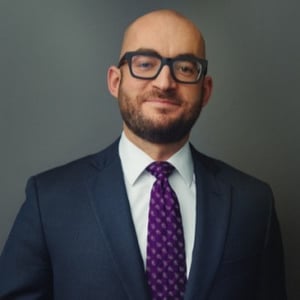
Partner, Eimer Stahl LLP
Ryan is a partner at Eimer Stahl LLP and is based in the firm’s Madison office. He focuses his practice on appellate and complex litigation in a wide variety of areas, including antitrust, constitutional law, corporate law, environmental, ERISA, products liability, and white collar. As part of his practice, Ryan devotes significant time to matters of legal strategy and the art of written and oral advocacy.
Ryan previously served as Chief Deputy Solicitor General of Wisconsin, securing numerous wins in the Supreme Court of the United States, in three federal courts of appeal, and in the state supreme court. Ryan built national, bipartisan coalitions of attorneys general and agencies in support of several lawsuits and briefing efforts, including a Wisconsin-led, 12-state coalition whose suit against the Federal Communications Commission prompted that agency to reverse a major new rule. When he left government, Ryan had a perfect win record in all of his cases to have reached final judgment.
Earlier in his career, Ryan worked in Washington D.C. as an associate in the appellate group of one of the world’s largest law firms.
Ryan also served as a law clerk on the U.S. Supreme Court for the Honorable Antonin Scalia and on the U.S. Court of Appeals for the Ninth Circuit for the Honorable Diarmuid F. O’Scannlain.
Ryan was named to Forbes’ “30 Under 30: Law and Policy” list in 2017. His briefing has won awards from the National Association of Attorneys General and the International Municipal Lawyers Association. He has also won a “best brief” accolade from the State Bar of Wisconsin in the civil category for his written work defending Wisconsin’s right-to-work law.
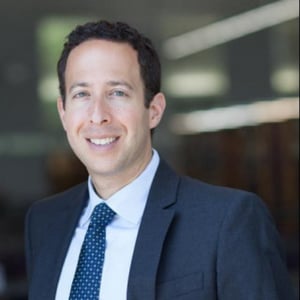
Associate Professor of Law, University of Wisconsin-Madison
Robert Yablon is an Associate Professor of Law and Faculty Co-Director of the State Democracy Research Initiative. His research interests include political and election law, constitutional law, federal and state courts, and statutory interpretation. He teaches Civil Procedure, Federal Jurisdiction, and the Law of Democracy.
Professor Yablon's recent publications have appeared in the NYU Law Review, Northwestern University Law Review, Minnesota Law Review, and Iowa Law Review. In 2018, UW Law students honored Professor Yablon with the Classroom Teacher of the Year Award, and in 2019 he received a University Distinguished Teaching Award.
Professor Yablon received his bachelor's degree in economics and political science from the University of Wisconsin-Madison and his master's degree in social policy from the University of Oxford, where he was a Rhodes Scholar. He then earned his J.D. at Yale Law School, where he was an Articles Editor of the Yale Law Journal.
Following law school, Professor Yablon served as a law clerk for Judge William Fletcher of the U.S. Court of Appeals for the Ninth Circuit and for U.S. Supreme Court Justices Ruth Bader Ginsburg and Sonia Sotomayor. He also worked in private practice at Orrick, Herrington & Sutcliffe LLP in San Francisco and Washington, D.C. He has been the principal author of dozens of appellate and trial-level briefs, and has argued in a number of state and federal courts, including the U.S. Supreme Court.

Alexander M. Bickel Professor of Public Law, Yale Law School
Degrees from Davidson College, B.A. summa cum laude, 1973; Harvard University, M.A., 1974; Yale Law School, J.D, 1978. Clerked for Edward Weinfeld, 1978-79; Attorney at Shea & Gardner, 1979-82; Law Professor since 1982, tenured at Georgetown and Yale, visiting professor at Stanford, NYU, Toronto, Harvard, Columbia, Penn, Fordham, Vanderbilt. Author of casebooks on legislation and sexuality, gender and law, as well as monographs on statutory interpretation and the rights of sexual and gender minorities. Author of dozens of articles, by one empirical count a top ten most cited law professors.
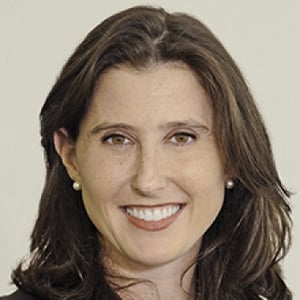
Professor of Law and Faculty Director, Solomon Center for Health Law and Policy, Yale Law School
Abbe R. Gluck is a Professor of Law and the Faculty Director of the Solomon Center for Health Law and Policy at Yale Law School. She joined Yale Law School in 2012, having previously served on the faculty of Columbia Law School. She is an expert on Congress and the political process, federalism, civil procedure, and health law, and is the chair emerita of Section on Legislation and the Law of the Political Process for the Association of American Law Schools. Gluck has extensive experience working as a lawyer in all levels of government. Prior to joining Columbia, she served in the administration of New Jersey Governor Jon Corzine as the special counsel and senior advisor to the New Jersey Attorney General; and in the administration of New York City Mayor Michael Bloomberg, as chief of staff and counsel to the Deputy Mayor for Health and Human Services, senior counsel in the New York City Office of Legal Counsel, and deputy special counsel to the New York City Charter Revision Commission. Prior to law school, she worked in the U.S. Senate for Senator Paul S. Sarbanes of Maryland. Before returning to government work after law school, Professor Gluck was associated with the Paul Weiss firm in New York. She earned her B.A. from Yale University, summa cum laude, and her J.D. from Yale Law School. Following law school, she clerked for then-Chief Judge Ralph K. Winter on the U.S. Court of Appeals for the Second Circuit, and for U.S. Supreme Court Justice Ruth Bader Ginsburg. Gluck's scholarship has been published in the Yale Law Journal, the Harvard Law Review, the Stanford Law Review, the Columbia Law Review, the New England Journal of Medicine, Health Affairs, and many other journals. Among her most recent work is the most extensive empirical study ever conducted about the realities of the congressional law-making process (published in the Stanford Law Review) and the Harvard Law Review's Supreme Court issue comment on King v. Burwell, the 2015 challenge to the Affordable Care Act. She also served as co-counsel on a Supreme Court brief in both King and the 2012 ACA challenge, NFIB v. Sebelius. Professor Gluck currently serves on numerous boards and commissions, including as an appointed member of both the Uniform Law Commission and the New York State Taskforce on Life and the Law, and as an elected member of the American Law Institute. In 2015, Gluck received the Law School's teaching award.

Levin, Mabie & Levin Professor of Law, University of Florida Levin College of Law
Professor Gary Lawson joined the University of Florida Levin College of Law faculty on July 1, 2024, after twenty-four years at Boston University School of Law and eleven years at Northwestern University School of Law. While at Boston University, he was named a William Fairfield Warren Distinguished Professor in 2022 – the highest faculty honor within the university. He has authored or co-authored nine editions of a textbook on administrative law, a textbook on constitutional law, five university press books, one popular press book, and more than one hundred scholarly articles on topics ranging from aspects of constitutional theory and history to the proof of legal propositions. His works have been cited in more than twenty opinions of United States Supreme Court justices. He is a founding member, and serves on the Board of Directors, of the Federalist Society for Law and Public Policy Studies and is on the Editorial Advisory Board of the Heritage Guide to the Constitution.

Executive Vice President, The Federalist Society
Dean Reuter is Executive Vice President at the Federalist Society for Law and Public Policy Studies. He has served in two federal government agency Offices of the Inspector General, as Counsel to the Inspector General and Deputy Inspector General, responsible for policing the use of federal funds granted and contracted through those agencies. As such, he helped conduct and oversee criminal investigations across the country. He is the principal author of the non-fiction book, The Hidden Nazi: The Untold Story of America's Deal with the Devil, and editor of Liberty’s Nemesis: The Unchecked Expansion of the State and Confronting Terror: 9/11 and the Future of American National Security. He was appointed by the President and served as Vice-Chairman of the Board of Directors of the Corporation for National and Community Service, and recently served as an appointee on the U.S. Commission on Presidential Scholars. He is a graduate of Hood College (BA with Honors) and the University of Maryland School of Law.

Professor of Law, Georgetown University Law Center
Nicholas Quinn Rosenkranz teaches constitutional law and federal jurisdiction, and he writes articles for the Harvard Law Review and the Stanford Law Review.
He is currently developing a new theory of constitutional interpretation and judicial review. The first installment, entitledThe Subjects of the Constitution, was published in the Stanford Law Review in May of 2010, and it is among the most downloaded articles about constitutional interpretation, judicial review, and/or federal courts in the history of SSRN. The second installment, The Objects of the Constitution, was published in May of 2011, also in the Stanford Law Review. And the comprehensive version is forthcoming as a book by Oxford University Press.
Rosenkranz has served and advised the federal government in a variety of capacities. He clerked for Judge Frank H. Easterbrook on the U.S. Court of Appeals for the Seventh Circuit (1999-2000) and for Justice Anthony M. Kennedy at the U.S. Supreme Court (October Term 2001). He served as an Attorney-Advisor at the Office of Legal Counsel in the U.S. Department of Justice (November 2002 - July 2004). He often testifies before Congress as a constitutional expert—most recently before the House Financial Services Oversight Subcommittee, regarding the Obama Administration's use of bank settlement agreements to circumvent the Appropriations Clause. He has also filed briefs and presented oral argument before the U.S. Supreme Court. His most recent Supreme Court brief, in Los Angeles v. Patel, was cited by Justice Alito in dissent.
Rosenkranz is a member of the New York Bar and the U.S. Supreme Court Bar. He is a Senior Fellow at the Cato Institute. He serves on the Board of Directors of the Foundation for Individual Rights in Education (FIRE). He is a founding member of Heterodox Academy and a member of its Executive Committee. He also serves on the Board of Directors of the Federalist Society and as the faculty advisor to the Georgetown chapter.

Judge, United States Court of Appeals, Seventh Circuit
Judge Sykes was nominated to the Seventh Circuit by President George W. Bush and confirmed by the Senate in 2004. Prior to her appointment to the federal bench, Judge Sykes served as a justice on the Wisconsin Supreme Court. Governor Tommy G. Thompson appointed her in September 1999 to fill a mid-term vacancy on the state supreme court, and she was elected to a full ten-year term in April 2000. From 1992-1999, Judge Sykes served on the state trial bench in Milwaukee County (elected in 1992 and re-elected in 1998). From 1985-1992, Judge Sykes practiced law with the Milwaukee firm of Whyte & Hirschboeck, S.C., and from 1984-1985, was a law clerk to Federal Judge Terence T. Evans.
Born and raised in the Milwaukee area, Judge Sykes earned a bachelor’s degree in journalism from Northwestern University in 1980 and a law degree from Marquette University Law School in 1984. Between college and law school, Judge Sykes worked as a reporter for The Milwaukee Journal.
Judge Sykes has two sons.

Sterling Professor of Law and Political Science, Yale Law School
Akhil Reed Amar is Sterling Professor of Law and Political Science at Yale University, where he teaches constitutional law in both Yale College and Yale Law School. After graduating from Yale College, summa cum laude, in 1980 and from Yale Law School in 1984, and clerking for Judge (later Justice) Stephen Breyer, Amar joined the Yale faculty in 1985 at the age of 26. He is Yale’s only living professor to have won the University’s unofficial triple crown — the Sterling Chair for scholarship, the DeVane Medal for teaching, and the Lamar Award for alumni service.
Amar’s work has won awards from both the American Bar Association and the Federalist Society, and he has been cited by Supreme Court justices across the spectrum in more than 50 cases — tops among scholars under age 70. According to both Fred Shapiro’s landmark 2021 study of lifetime scholarly citations and Heinonline’s most recent tabulation of lifetime law-review citations, Amar is America’s second most-cited legal scholar still under age 70. He is a member of the American Academy of Arts and Sciences and has written widely for popular publications, including The New York Times, The Washington Post, The Wall Street Journal, Time, and The Atlantic. He was an informal consultant to the popular TV show The West Wing and his scholarship has been showcased on many broadcasts, including The Colbert Report, Morning Joe, AC360, Velshi, Fox News @ Night with Shannon Bream, Fareed Zakaria GPS, Erin Burnett Outfront, and Constitution USA with Peter Sagal.
He is the author of more than a hundred law review articles and several books, including The Bill of Rights (1998 — winner of the Yale University Press Governors’ Award), America’s Constitution (2005 — winner of the ABA’s Silver Gavel Award), America’s Unwritten Constitution (2012 — named one of the year’s 100 best nonfiction books by The Washington Post), and The Constitution Today (2016 — named one of the year’s top ten nonfiction books by Time magazine). The first volume of his ambitious trilogy on American constitutional history from the Founding to the present, The Words That Made Us: America’s Constitutional Conversation, 1760-1840, came out in May 2021. The second volume, Born Equal: Remaking America’s Constitution, 1840-1920, will be published in September 2025 and is already available for pre-order. All together, his nonfiction books have won two starred reviews from Publishers Weekly and three starred reviews from Kirkus—tops, it is believed, among legal scholars under age 70. Together with Vikram David Amar (YLS ’88), he has a bi-weekly column on the Supreme Court on the distinguished website SCOTUSblog. Along with Andy Lipka, he co-hosts a popular and free weekly podcast, Amarica’s Constitution, whose listeners are eligible for CLE credit in most American jurisdictions. A wide assortment of his articles and op-eds and video links to many of his public lectures and free online courses may be found at akhilamar.com.

U.S. Court of Appeals, Seventh Circuit
Frank H. Easterbrook is a judge of the United States Court of Appeals for the Seventh Circuit and a Senior Lecturer at the Law School of the University of Chicago. He was Chief Judge from 2006–2013. Before joining the court in 1985, he was the Lee andBrena Freeman Professor of Law at the University of Chicago, where he taught and wrote in antitrust, securities, corporate law, jurisprudence, and criminal procedure. He has published The Economic Structure of Corporate Law (with Daniel R. Fischel) and about 100 scholarly articles. He served as Co-Editor of the Journal of Law and Economics from 1982 to 1991 and as a member of the Judicial Conference’s Standing Committee on Rules of Practice and Procedure from 1991 to 1997. Before joining the faculty of the Law School in 1979, Judge Easterbrook was Deputy Solicitor General of the United States. He holds degrees from Swarthmore College (B.A. with high honors, 1970) and the University of Chicago (J.D. cum laude, 1973), and is a member of the American Academy of Arts and Sciences, the American Law Institute, the Mont Pelerin Society, Phi Beta Kappa, and the Order of the Coif.

James Madison Distinguished Professor of Law and Class of 1941 Research Professor of Law, University of Virginia School of Law
Professor John C. Harrison is the James Madison Distinguished Professor of Law and Class of 1941 Research Professor of Law at the University of Virginia School of Law. He joined the faculty at University of Virginia in 1993 as an associate professor of law after a distinguished career with the U.S. Department of Justice. His teaching subjects include constitutional history, federal courts, remedies, corporations, civil procedure, legislation and property. In 2008 he was on leave from the Law School to serve as counselor on international law in the Office of the Legal Adviser at the U.S. Department of State.
A 1977 graduate of the University of Virginia, Harrison earned his law degree in 1980 at Yale, where he served as editor of the Yale Law Journal and editor and articles editor of the Yale Studies in World Public Order. He was an associate at Patton Boggs & Blow in Washington, D.C., and clerked for Judge Robert Bork on the U.S. Court of Appeals for the District of Columbia Circuit. He worked with the Department of Justice from 1983-93, serving in numerous capacities, including deputy assistant attorney general in the Office of Legal Counsel (1990-93).
United States District Court, Eastern District of New York
William Francis Kuntz II is a United States district judge on the United States District Court for the Eastern District of New York. The United States Senate confirmed him on October 3, 2011. He received his judicial commission on October 4, 2011.
Judge Kuntz was a commercial litigator in private practice in New York, and had been a partner at the law firm of Baker Hostetler since 2005. He has been a partner at several law firms in New York during his career, including Torys LLP from 2001 to 2004, Seward & Kissel LLP from 1994 to 2001, and Milgrim, Thomajan, Jacobs & Lee from 1986 to 1994. In addition, he worked as Counsel at Constantine Cannon from 2004 to 2005, and as an associate at Shearman & Sterling LLP from 1978 to 1986. Since 1987, Kuntz has served as a Commissioner of the New York City Civilian Complaint Review Board, supervising hundreds of investigations into allegations of abuse by members of the New York City Police Department. From 1987 to 2003, he was an adjunct associate professor of law at Brooklyn Law School, teaching a course in American legal history. He received his A.B. from Harvard College in 1972 and his J.D. from Harvard Law School in 1977. Kuntz also received an M.A. and Ph.D. in American History from Harvard University in 1974 and 1979, respectively.
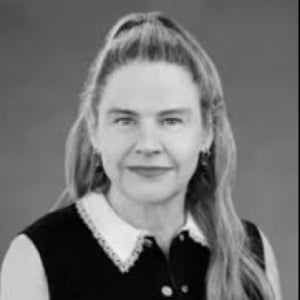
Ralph V. Whitworth Professor in Law, Georgetown University Law Center
Professor Nourse is one of the nation’s leading scholars of Congress, the separation of powers, and statutory interpretation. In addition to her scholarship, she has practiced as an attorney in the White House, the Department of Justice, the Senate, and in private practice. The story of her pioneering work on gender equality is told in Equal: Women Reshape American Law.
Her most recent book is “The Impeachments of Donald Trump: An Introduction to Constitutional Argument” (West 2021). In 2016, Harvard Press published her Misreading Law, Misreading Democracy, on the limits of textualism. She is one of the most-cited scholars on interpretation in the country and has recently co-authored Yale’s revised leading casebook, Statutes, Regulation & Interpretation (West 2024).
Professor Nourse has published widely on the power of the President and the separation of powers, Reclaiming the Constitutional Text from Originalism: The Case of Executive Power, 106 Calif. L. Rev. 1 (2018), and constitutional rights, In Reckless Hands (Norton 2008), the story of Skinner v. Oklahoma and American eugenics.
President Biden appointed Professor Nourse to serve as Vice-Chair of the United States Commission on Civil Rights in 2023, with her term expiring in 2029.
Professor Nourse previously served as Chief Counsel to then Vice President Biden under the Obama Administration. Prior to that role, she practiced as an appellate litigator in the Department of Justice and as Special Counsel to the Senate Judiciary Committee.
Professor Nourse has held chairs at Emory University and the University of Wisconsin. She has been a visiting professor at Yale, NYU, University of Maryland, and Northwestern.
She began her legal career in New York, clerking for legendary trial judge of the Southern District of New York, Edward Weinfeld, and practicing at Paul, Weiss, Rifkind Wharton & Garrison. She left private practice to serve as junior counsel to the Senate-Iran Contra Committee. After serving on the appellate staff of the Civil Division, she was hired as a legal expert for then Senator Joseph Biden.
Professor Nourse is the co-Founder of the Supreme Court Interpretation Lab, which uses big data to analyze trends in Supreme Court analyses. She formerly served as Executive Director of the Georgetown Law Center on Congressional Studies.
Executive Vice President, The Federalist Society
Dean Reuter is Executive Vice President at the Federalist Society for Law and Public Policy Studies. He has served in two federal government agency Offices of the Inspector General, as Counsel to the Inspector General and Deputy Inspector General, responsible for policing the use of federal funds granted and contracted through those agencies. As such, he helped conduct and oversee criminal investigations across the country. He is the principal author of the non-fiction book, The Hidden Nazi: The Untold Story of America's Deal with the Devil, and editor of Liberty’s Nemesis: The Unchecked Expansion of the State and Confronting Terror: 9/11 and the Future of American National Security. He was appointed by the President and served as Vice-Chairman of the Board of Directors of the Corporation for National and Community Service, and recently served as an appointee on the U.S. Commission on Presidential Scholars. He is a graduate of Hood College (BA with Honors) and the University of Maryland School of Law.
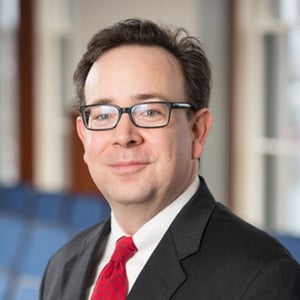
Professor of Law, Oklahoma City University School of Law
Professor O’Shea is a nationally recognized expert on firearms law and the Second Amendment. He is a co-author of the first law school casebook on the subject, Firearms Law and the Second Amendment: Regulation, Rights, and Policy, published in 2012. He serves as the Associate Director of OCU Law’s Center for State Constitutional Law and Government.
Professor O’Shea is an honors graduate of Harvard College and Harvard Law School. He also holds a master’s degree in philosophy from the University of Pittsburgh. Before coming to Oklahoma City University School of Law in 2006, he practiced commercial litigation in Chicago and in his hometown of Kansas City, Missouri. He also served as a law clerk to Chief Judge Danny J. Boggs of the U.S. Court of Appeals for the Sixth Circuit and to Judge John R. Gibson of the U.S. Court of Appeals for the Eighth Circuit.

Formalism and the Fate of the Republic—Defending the Judiciary from Itself
Jonathan Green, Mark V. Holmes, Ilan Wurman
Featuring: Prof. Jonathan A. Green, Associate Professor of Law, Sandra Day O’Connor College of Law Prof....
Panel II: The Future of the Wisconsin Supreme Court
Shelley A. Grogan, Jeffrey A. Mandell, Ryan J. Walsh, Robert Yablon
Panelists will offer their diverse perspectives on the current state of the Wisconsin Supreme Court...
Showcase Panel III: Transforming Statutory Interpretation
William N. Eskridge, Abbe R. Gluck, Gary Lawson, Dean Reuter, Nicholas Quinn Rosenkranz, Diane S. Sykes
Justice Scalia also greatly influenced the law of statutory interpretation. By eliminating legislative history as...
Showcase Panel II: Rules Versus Standards in Constitutional and Statutory Interpretation
Akhil Reed Amar, Frank H. Easterbrook, John C. Harrison, William Kuntz, Victoria Nourse, Dean Reuter
Justice Scalia believed that the rule of law required a law of rules rather than...
Ohio v. Clark - Post-Decision SCOTUScast
Michael O'Shea
On June 18, 2015, the Supreme Court decided Ohio v. Clark. This case involved two questions...