

President, Center for Individual Rights
Todd Gaziano is the President of the Center for Individual Rights. Mr. Gaziano received his J.D. in 1988 from the University of Chicago Law School, where he was a John M. Olin Fellow in Law and Economics. He received his B.A. from West Virginia University, summa cum laude in 1985. He was selected as a Truman Scholar from West Virginia while an undergraduate.
Mr. Gaziano’s previous legal work includes service as a law clerk for U.S. Court of Appeals for the Fifth Circuit Judge Edith Jones, as an attorney in the U.S. Department of Justice Office of Legal Counsel, as a chief subcommittee counsel in the U.S. House of Representatives, as a Houston trial attorney, and as a chief corporate legal officer. He also served a six-year term as commissioner on the U.S. Commission on Civil Rights (2008-2013), where he helped conduct oversight and investigations of civil rights agencies.
For most of the last 25 years, Mr. Gaziano was a legal scholar and public interest law leader, promoting individual liberty in the Supreme Court and Congress. From 1997 to 2013, he was the founding director of the Edwin Meese Center for Legal and Judicial Studies at The Heritage Foundation. From 2014 until he joined CIR, he was the Chief of Legal Policy and Strategic Research, and Director of the Center for the Separation of Powers, at Pacific Legal Foundation.

David McIntosh is a leader for the principles of limited constitutional government and individual freedom. He is president of the Club for Growth, the leading advocate for economic liberty.
Former Congressman David McIntosh represented Indiana's 2nd Congressional District in the United States Congress from 1995-2001. As a Freshman, David chaired the Subcommittee on Regulatory Relief. He passed the Congressional Review Act and held extensive oversight and field hearings to build a record of public support for regulatory relief initiatives in energy, biotechnology, pharmaceutical, healthcare, transportation and technology sectors. Another issue that he championed was the elimination of the marriage penalty in the Federal Tax Code.
David served during the Reagan administration as special assistant to Attorney General Edwin Meese III, and as special assistant to President Reagan for Domestic Affairs. During the first Bush administration, he served as executive director of the President's Council on Competitiveness and assistant to the Vice President. The Competitiveness Council coordinated the cost/benefit review of major regulations and promoted legal reform measures.
David is a co-founder of the Federalist Society for Law and Public Policy and serves on the Board of Directors. He remains active with several free market and conservative think tanks and grassroots organizations. David has also had stints at the Hudson Institute and as a Professor of Economics at Ball State School of Business.
Prior to the Club for Growth, David was a partner at Mayer Brown, LLP in Washington, DC.
David graduated from the University of Chicago Law School in 1983, and Yale University, BA, cum laude, in 1980. He and his wife, Ruthie, are the proud parents of Ellie age 17 and Davey age 13.

Freelance Journalist and Author
Stuart Taylor, Jr. is a Washington writer focusing on legal and policy issues and a National Journal contributing editor. He occasionally practices law.
Taylor has coauthored three books. All have been acclaimed by commentators across the ideological spectrum. In January 2017, KC Johnson and Taylor authored The Campus Rape Frenzy: The Attack on Due Process at America's Universities. In 2012, Richard Sander and Taylor authored Mismatch: How Affirmative Action Hurts Students It's Intended to Help, and Why Universities Won't Admit It. In 2007, Taylor and Johnson authored Until Proven Innocent: Political Correctness and the Shameful Injustices of the Duke Lacrosse Rape Fraud. Sander and Taylor have also filed amicus briefs in Supreme Court cases involving admissions preferences.
Since 1980, Taylor has done reporting and commentary about issues ranging from the biggest Supreme Court cases to race, voting rights, mindlessly excessive criminal penalties, guilt-presuming campus rape processes, journalistic bias, the death penalty, war powers, gerrymandering, guns, polarization, civil liberties, national security, torture, campaign finance, education, impeachment, and other issues. He has often been called one of the nation's best legal journalists and is known for challenging both liberal and conservative conventional wisdom.
Taylor was a reporter for The New York Times from 1980-1988, covering legal affairs and then the Supreme Court. He wrote commentaries and long features for The American Lawyer, Legal Times and their affiliates from 1989-1997, and for National Journal and Newsweek from 1998 through 2010. He has written (less often) on a freelance basis for numerous publications since 2010. He has written op-eds for The Washington Post, The New York Times, The Wall Street Journal, The Los Angeles Times, USA Today, and The New York Daily News and longer commentaries for RealClearPolitics, The Atlantic, The New Republic, the (late) Weekly Standard, National Review, Slate, The Daily Beast, Harper’s, Reader’s Digest, Time and other magazines. He has been interviewed on all major television and radio networks. He taught “Law and the News Media” at Stanford Law School in 2011 and 2012 and practices law on occasion.
Taylor graduated from Princeton University in 1970 with an A.B. in History. After working as a reporter for the Baltimore Evening Sun and Sun from 1971-1974, he moved to Harvard Law School, was a Harvard Law Review note editor, and graduated in 1977 at the top of his class, with high honors. He also won a Frederick Sheldon Traveling Fellowship and traveled around the world in 1977-1978 while studying freedom of the press in the United Kingdom and Kenya.
Taylor practiced law with Wilmer, Cutler & Pickering, in Washington, D.C., from 1977-1980 before returning to journalism in 1980 by joining the Washington Bureau of The New York Times.
Taylor's journalism honors include the 2009 Northern California Innocence Project Media Award for his work on the Duke lacrosse rape fraud; a 2002 National Headliner Award for best special magazine column on one subject; and a share of The American Lawyer’s National Magazine Award for a March 1990 special issue on the drug war. He was a National Magazine Award finalist in 1993 and 1997 and was nominated by The New York Times for a Pulitzer Prize in 1988.
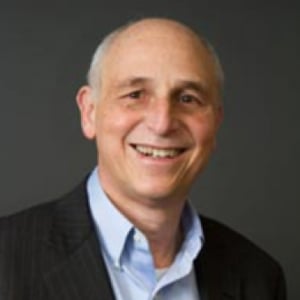
A.B. Chettle Chair in Civil Procedure, Georgetown University Law Center
Professor Vladeck teaches civil procedure, federal courts, a practicum on privacy and technology (taught jointly with MIT), and directs the Civil Litigation Clinic, a student clinic that handles trial court litigation focused on public-interest cases. He also serves as Faculty Director of the Law Center’s Center on Privacy and Technology.
From 2002 to 2009, Professor Vladeck served as Director of the Civil Rights section of Georgetown Law’s Institute for Public Representation, a student clinic that handles complex trial court and appellate litigation focused on civil rights and other public-interest litigation, while also teaching civil procedure and federal courts. From 2009 to 2012, Professor Vladeck took leave from Georgetown to serve as the Director of the Federal Trade Commission’s Bureau of Consumer Protection.
At the FTC, he supervised the Bureau’s 450 lawyers, investigators, paralegals and support staff in carrying out the Bureau’s work to protect consumers from unfair, deceptive or fraudulent practices. Before joining the Law Center faculty full-time in 2002, Professor Vladeck spent over 25 years with Public Citizen Litigation Group, a national public interest law firm, serving the last ten years as the Group’s director. He has briefed and argued a number of cases before the U.S. Supreme Court and more than sixty cases before federal courts of appeal and state courts of law resort.
He is a Senior Fellow of the Administrative Conference of the United States, a member of the National Academy of Sciences’ Committee on Law, Science and Technology, and an elected member of the American Law Institute. He also serves as Vice Chair of the Board of Trustees of the Natural Resources Defense Council, and on the boards of the National Consumers Law Center and the Center for Democracy and Technology. Professor Vladeck frequently testifies before Congress and writes on administrative law, First Amendment, consumer protection, privacy, and access to justice issues.
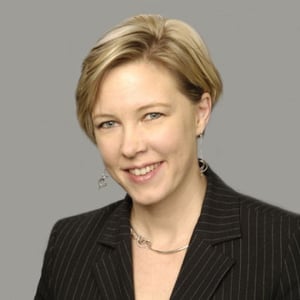
Clinical Professor and Senior Scholar and Senior Fellow for Copyright Research and Policy of C-IP2, Antonin Scalia Law School, George Mason University
Sandra Aistars is Senior Fellow for Copyright Research and Policy and a Senior Scholar at the Center for Intellectual Property x Innovation Policy (C-IP2). She also leads the law school’s Arts & Entertainment Advocacy Program. Professor Aistars has over twenty years of advocacy experience on behalf of copyright and other intellectual property owners. She has served on trade missions and been an industry advisor to the Department of Commerce on intellectual property implications for international trade negotiations; worked on legislative and regulatory matters worldwide; frequently testified before Congress and federal agencies regarding intellectual property matters; chaired cross-industry coalitions and technology standards efforts; and is regularly tapped by government agencies to lecture in U.S. government-sponsored study tours for visiting legislators, judges, prosecutors, and regulators.
Immediately prior to joining Scalia Law, Professor Aistars was the Chief Executive Officer of the Copyright Alliance – a nonprofit, public interest organization that represents the interests of artists and creators across the creative spectrum. While at Scalia Law, she continues to collaborate with the Copyright Alliance as a member of its Academic Advisory Board. Professor Aistars currently serves on the boards of the Washington Area Lawyers for the Arts (WALA) and the Howard Intellectual Property Program (HIPP), and she has previously served as trustee of the Copyright Society of the USA (CSUSA). Professor Aistars has also previously served as Vice President and Associate General Counsel at Time Warner Inc. She began her legal career in private practice at Weil, Gotshal and Manges LLP.

What is Congress Doing to Reassert its Power Over Agencies?
Todd F. Gaziano, David M. McIntosh, Stuart S. Taylor, David C. Vladeck
The Fifth Annual Executive Branch Review Conference will examine the changing and often convoluted relationship...
Courthouse Steps: Fashionable Copyright Law in the U.S. Supreme Court - Podcast
Sandra Aistars
Last Wednesday the Supreme Court handed down a 6-2 opinion resolving a long mystifying test...