
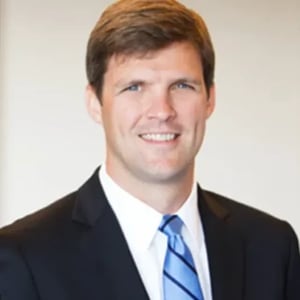
Judge, United States District Court for the Western District of Kentucky
Prior to joining the bench, Judge Beaton was a Partner at Squire Patton Boggs LLP, where he co-chaired the firm’s Appellate & Supreme Court practice group. Judge Beaton’s represented clients engaged in complex commercial litigation in Federal and State courts, and before administrative agencies. Judge Beaton also served as an adjunct professor at the University of Louisville Brandeis School of Law, where he taught constitutional interpretation. Before joining Squire Patton Boggs, Judge Beaton practiced in the Washington, D.C. office of Sidley Austin, LLP, and also served as a legal fellow with the International Justice Mission in Kampala, Uganda. Upon graduation from law school, Judge Beaton served as a law clerk to Justice Ruth Bader Ginsburg of the United States Supreme Court, and to Judge A. Raymond Randolph of the United States Court of Appeals for the D.C. Circuit. Judge Beaton earned his B.A., summa cum laude, from Centre College, and his J.D. from Columbia Law School, where he served as an Articles Editor on the Columbia Law Review.

James Madison Distinguished Professor of Law and Class of 1941 Research Professor of Law, University of Virginia School of Law
Professor John C. Harrison is the James Madison Distinguished Professor of Law and Class of 1941 Research Professor of Law at the University of Virginia School of Law. He joined the faculty at University of Virginia in 1993 as an associate professor of law after a distinguished career with the U.S. Department of Justice. His teaching subjects include constitutional history, federal courts, remedies, corporations, civil procedure, legislation and property. In 2008 he was on leave from the Law School to serve as counselor on international law in the Office of the Legal Adviser at the U.S. Department of State.
A 1977 graduate of the University of Virginia, Harrison earned his law degree in 1980 at Yale, where he served as editor of the Yale Law Journal and editor and articles editor of the Yale Studies in World Public Order. He was an associate at Patton Boggs & Blow in Washington, D.C., and clerked for Judge Robert Bork on the U.S. Court of Appeals for the District of Columbia Circuit. He worked with the Department of Justice from 1983-93, serving in numerous capacities, including deputy assistant attorney general in the Office of Legal Counsel (1990-93).

Levin, Mabie & Levin Professor of Law, University of Florida Levin College of Law
Professor Gary Lawson joined the University of Florida Levin College of Law faculty on July 1, 2024, after twenty-four years at Boston University School of Law and eleven years at Northwestern University School of Law. While at Boston University, he was named a William Fairfield Warren Distinguished Professor in 2022 – the highest faculty honor within the university. He has authored or co-authored nine editions of a textbook on administrative law, a textbook on constitutional law, five university press books, one popular press book, and more than one hundred scholarly articles on topics ranging from aspects of constitutional theory and history to the proof of legal propositions. His works have been cited in more than twenty opinions of United States Supreme Court justices. He is a founding member, and serves on the Board of Directors, of the Federalist Society for Law and Public Policy Studies and is on the Editorial Advisory Board of the Heritage Guide to the Constitution.

Attorney, Center for American Future
Christian Townsend is an attorney with the Center for the American Future. Prior to joining the Foundation, Christian was a legal associate with the Cato Institute’s Robert A. Levy Center for Constitutional Studies.
During law school, Christian interned in Washington, DC at the New Civil Liberties Alliance and the Cato Institute and in Cambodia at the law offices of Tilleke & Gibbins.
Christian received his JD from Indiana University Maurer School of Law, where he was the President of IU’s chapter of the Federalist Society and Executive Online Editor of the Indiana Law Journal. Christian attended undergrad at Cedarville University where he received BAs in political science and history. He is licensed to practice law in Texas and Maryland.
Associate Professor, Indiana University Maurer School of Law
Professor Scott joined the Indiana University Maurer School of Law faculty in 2009. He teaches and writes on criminal law and procedure, statutory interpretation, and federal courts. Professor Scott's research examines structural and procedural interactions between the judicial branch and other branches of government, particularly in the criminal context. He has written on efforts to control the composition of the judiciary, including the judicial appointments process, legislative strategies for encouraging judicial retirements, and the semi-retirement program of senior judges. Professor Scott also studies efforts to influence judicial decision making directly by placing constraints on judicial discretion. His current project examines changes in inter-judge sentencing disparity under the United States Sentencing Guidelines, one of Congress's most ambitious efforts to restrict judges in the performance of a historically discretionary function.After graduating from law school, Professor Scott clerked for Judge Michael W. McConnell of the United States Court of Appeals for the Tenth Circuit. He then served as a Bristow Fellow in the Office of the Solicitor General of the United States. Before joining the faculty, he worked for two years as an associate in the Supreme Court and appellate practice at O'Melveny & Myers LLP in Washington, D.C.

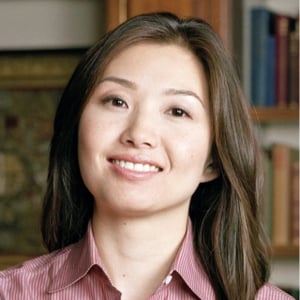
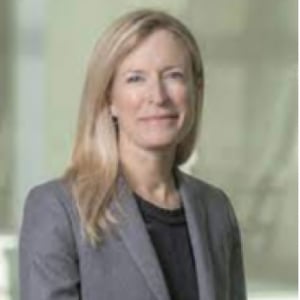
Panel III: The Judicial Power and Evaluating Judicial Supremacy
Benjamin Beaton, John C. Harrison, Gary Lawson, Jeannie Suk Gersen, Amanda L. Tyler
New presidential administrations start with a flurry of administrative actions. These fresh rules, guidelines, and...
Texas Supreme Court Tackles Attorney-Client Privilege and the Texas Public Information Act
Christian Townsend
One of the bedrock principles of our legal system is confidentiality between attorneys and their...
Heien v. North Carolina - Post-Argument SCOTUScast
Ryan Scott
On October 6, 2014, the Supreme Court heard oral argument in Heien v. North Carolina. The...