
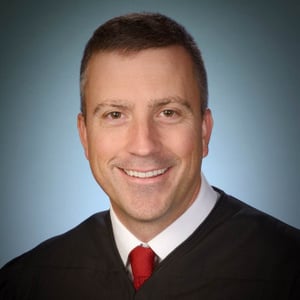
Judge, United States District Court, District of Columbia
Judge Trevor N. McFadden was appointed to the United States District Court for the District of Columbia in 2017. He received his B.A. in 2001 from Wheaton College, IL, magna cum laude. In 2006, he received his J.D. from the University of Virginia School of Law, where he graduated Order of the Coif and was an editor for the Virginia Law Review.
Following graduation from law school, Judge McFadden clerked for Judge Steven Colloton, U.S. Court of Appeals for the Eighth Circuit. He then joined the U.S. Department of Justice, where he served as Counsel to the Deputy Attorney General and as Assistant U.S. Attorney in the District of Columbia. Judge McFadden subsequently became a partner at Baker & McKenzie LLP in Washington, DC, where he focused on white collar investigations. He is also co-author of a treatise, Corporate Settlement Tools: DPAs, NPAs, and Cooperation Agreements.
After four years in private practice, Judge McFadden returned to the U.S. Department of Justice, where he was Deputy Assistant Attorney General and acted as the second-in-command of the Department's Criminal Division. As Deputy Assistant Attorney General, he managed the Division's Fraud and Appellate Sections.
Judge McFadden also has extensive experience in law enforcement. He served as an officer with the Fairfax County, VA, Police Department and as a deputy sheriff in Madison County, VA.

Professor of Law, University of Baltimore Law School
Kimberly Wehle (formerly Kimberly N. Brown) joined the law school after several years of teaching as an Associate Professor at the University of Oklahoma College of Law and a Visiting Professor at the George Washington University Law School. She teaches and writes in the areas of administrative law, federal courts and civil procedure. She is particularly interested in separation of powers questions, as well as in the constitutional implications of structural and technological innovations in modern government.
Wehle is the author of three books that explain complex constitutional concepts for lay audiences. She is a contributor for BBC World News and BBC World News America on PBS, and an opinion contributor to The Atlantic, Politico, The Bulwark and The Hill. She was an on-air legal analyst and commentator for CBS News. In addition, she appears regularly as a guest legal analyst on constitutional topics such as separation of powers and impeachment with outlets including CNN, MSNBC, NPR’s Morning Edition, PBS NewsHour and Fox News. Her articles have also appeared in The Baltimore Sun, The Los Angeles Times, and NBC News Think. She is regularly interviewed and cited by prominent print journalists on a range of newsworthy legal issues.
She hosts a show on Instagram called #SimplePolitics with Kim Wehle at @kimwehle. She also tweets @kimwehle. She is the 2020 recipient of the prestigious University of Maryland System Board of Regents Faculty Award for excellence in scholarship.
Wehle's scholarship addresses the constitutional relationship of independent agencies and private contractors to the enumerated branches of government. Her articles have appeared in the Notre Dame Law Review, the Indiana Law Journal and the North Carolina Law Review, among others, and her work is cited in a leading federal courts casebook.
Wehle was an editor of the Michigan Law Review and clerked for the Hon. Charles R. Richey of the United States District Court for the District of Columbia. She went on to practice, first at the Federal Trade Commission and subsequently as an Associate Independent Counsel in the Office of Independent Counsel Kenneth W. Starr, and as an Assistant U.S. Attorney in the Civil Division of the Office of the United States Attorney in Washington, D.C.
She has practiced before the United States Supreme Court and argued several cases in the United States Court of Appeals for the D.C. Circuit.
Wehle is also an advisor to the nonpartisan nonprofit, Protect Democracy.
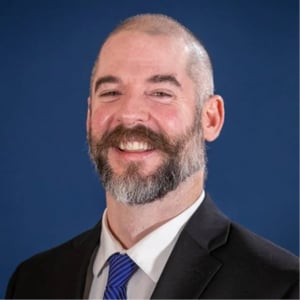
Deputy Director, Regulatory Studies Center, George Washington University
Will Yeatman is deputy director of the GW Regulatory Studies Center. A lawyer, he has spent almost two decades working on federal regulatory policy, with an emphasis on administrative law.
Yeatman has testified many times before Congress and state legislatures, and his scholarly work has appeared in such academic journals as Georgetown Law Journal, Administrative Law Review, and the (forthcoming) Catholic University Law Review. His popular writing has appeared in The Wall Street Journal, Foreign Policy, and Bloomberg.
Yeatman came to the RSC from the Pacific Legal Foundation. Previously, he had been at the Cato Institute’s Center for Constitutional Studies and the Competitive Enterprise Institute. From 2004 to 2006, he served as a Peace Corps volunteer in the Kyrgyz Republic.
Yeatman holds a BA in environmental sciences from the University of Virginia, an MA in international studies from the Denver University Graduate School of International Studies, and a JD from the Georgetown University Law Center. He is a member of the Washington, DC Bar.
Judge, United States District Court, District of Columbia
Judge Trevor N. McFadden was appointed to the United States District Court for the District of Columbia in 2017. He received his B.A. in 2001 from Wheaton College, IL, magna cum laude. In 2006, he received his J.D. from the University of Virginia School of Law, where he graduated Order of the Coif and was an editor for the Virginia Law Review.
Following graduation from law school, Judge McFadden clerked for Judge Steven Colloton, U.S. Court of Appeals for the Eighth Circuit. He then joined the U.S. Department of Justice, where he served as Counsel to the Deputy Attorney General and as Assistant U.S. Attorney in the District of Columbia. Judge McFadden subsequently became a partner at Baker & McKenzie LLP in Washington, DC, where he focused on white collar investigations. He is also co-author of a treatise, Corporate Settlement Tools: DPAs, NPAs, and Cooperation Agreements.
After four years in private practice, Judge McFadden returned to the U.S. Department of Justice, where he was Deputy Assistant Attorney General and acted as the second-in-command of the Department's Criminal Division. As Deputy Assistant Attorney General, he managed the Division's Fraud and Appellate Sections.
Judge McFadden also has extensive experience in law enforcement. He served as an officer with the Fairfax County, VA, Police Department and as a deputy sheriff in Madison County, VA.
Professor of Law, University of Baltimore Law School
Kimberly Wehle (formerly Kimberly N. Brown) joined the law school after several years of teaching as an Associate Professor at the University of Oklahoma College of Law and a Visiting Professor at the George Washington University Law School. She teaches and writes in the areas of administrative law, federal courts and civil procedure. She is particularly interested in separation of powers questions, as well as in the constitutional implications of structural and technological innovations in modern government.
Wehle is the author of three books that explain complex constitutional concepts for lay audiences. She is a contributor for BBC World News and BBC World News America on PBS, and an opinion contributor to The Atlantic, Politico, The Bulwark and The Hill. She was an on-air legal analyst and commentator for CBS News. In addition, she appears regularly as a guest legal analyst on constitutional topics such as separation of powers and impeachment with outlets including CNN, MSNBC, NPR’s Morning Edition, PBS NewsHour and Fox News. Her articles have also appeared in The Baltimore Sun, The Los Angeles Times, and NBC News Think. She is regularly interviewed and cited by prominent print journalists on a range of newsworthy legal issues.
She hosts a show on Instagram called #SimplePolitics with Kim Wehle at @kimwehle. She also tweets @kimwehle. She is the 2020 recipient of the prestigious University of Maryland System Board of Regents Faculty Award for excellence in scholarship.
Wehle's scholarship addresses the constitutional relationship of independent agencies and private contractors to the enumerated branches of government. Her articles have appeared in the Notre Dame Law Review, the Indiana Law Journal and the North Carolina Law Review, among others, and her work is cited in a leading federal courts casebook.
Wehle was an editor of the Michigan Law Review and clerked for the Hon. Charles R. Richey of the United States District Court for the District of Columbia. She went on to practice, first at the Federal Trade Commission and subsequently as an Associate Independent Counsel in the Office of Independent Counsel Kenneth W. Starr, and as an Assistant U.S. Attorney in the Civil Division of the Office of the United States Attorney in Washington, D.C.
She has practiced before the United States Supreme Court and argued several cases in the United States Court of Appeals for the D.C. Circuit.
Wehle is also an advisor to the nonpartisan nonprofit, Protect Democracy.
Deputy Director, Regulatory Studies Center, George Washington University
Will Yeatman is deputy director of the GW Regulatory Studies Center. A lawyer, he has spent almost two decades working on federal regulatory policy, with an emphasis on administrative law.
Yeatman has testified many times before Congress and state legislatures, and his scholarly work has appeared in such academic journals as Georgetown Law Journal, Administrative Law Review, and the (forthcoming) Catholic University Law Review. His popular writing has appeared in The Wall Street Journal, Foreign Policy, and Bloomberg.
Yeatman came to the RSC from the Pacific Legal Foundation. Previously, he had been at the Cato Institute’s Center for Constitutional Studies and the Competitive Enterprise Institute. From 2004 to 2006, he served as a Peace Corps volunteer in the Kyrgyz Republic.
Yeatman holds a BA in environmental sciences from the University of Virginia, an MA in international studies from the Denver University Graduate School of International Studies, and a JD from the Georgetown University Law Center. He is a member of the Washington, DC Bar.

Professor of Law, University of Baltimore School of Law (on leave); Senior Counsel, U.S. Department of Justice
Professor Dolin’s scholarship centers on patent law with a specific focus on how the patent regime affects innovation, especially in bio-pharmaceutical areas. His work in these areas includes a number of scholarly articles, presentations, amicus briefs, and congressional testimony.
Dr. Dolin is currently on leave from his academic duties while he serves as Senior Counsel in the Civil Rights Division of the United States Department of Justice.
From January 2020 to January 2022, Professor Dolin served as a resident Associate Justice of the Supreme Court of the Republic of Palau. In this role, he (together with other members of the Court) heard appeals in civil, criminal, administrative, and constitutional law matters.
Prior to joining the University of Baltimore School of Law, Professor Dolin held visiting appointments in other law schools. He also served as a law clerk to the Hon. Pauline Newman, of the U.S. Court of Appeals for the Federal Circuit and the late Hon. H. Emory Widener Jr., of the U.S. Court of Appeals for the Fourth Circuit.
Rumors that he has a real Russian bear in his office are entirely true.
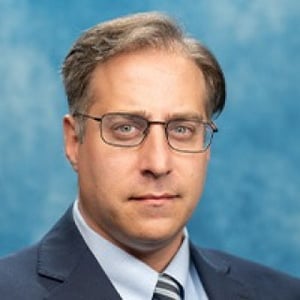
Interim Dean, Florida International University College of Law
Dan Epstein was Vice President at America First Legal and an Associate Professor of Law at St. Thomas University in Miami, Florida. He also advises individuals and small businesses in affirmative and defensive actions against government overreach. Previously, he advised startups on regulatory matters as Director at a venture capital firm. His federal service includes being a Special Assistant to and Senior Associate Counsel to the President and a counsel for the House of Representatives Committee on Oversight and Government Reform. Earlier in his career, Mr. Epstein founded and ran Cause of Action, where he represented clients in government investigations and litigated regulatory, constitutional, political, and public law matters.
He holds a Ph.D. from George Washington University in Political Economy, a J.D. from Emory University School of Law, and a B.A. from Kenyon College. He is active in the Palm Beach community as a member of the Fourth Court of Appeals Judicial Nominating Commission in Florida, a transition team member to Florida Attorney General James Uthmeier, and the Chairman and Trustee of Palm Beach State College.
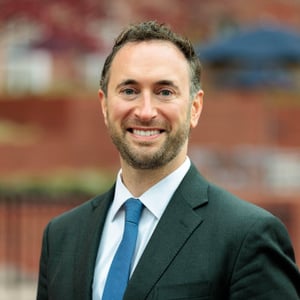
Associate Dean for Academic Affairs, The George Washington University Law School
Aram A. Gavoor is the Associate Dean for Academic Affairs and an internationally recognized scholar in American administrative law, national security, and federal courts. His co-authored work was cited by the U.S. Supreme Court in Department of Commerce v. New York (2019). His scholarship has earned placement in the Florida Law Review, Indiana Law Journal, Ohio State Law Journal, and other law journals. He has briefed and argued over a dozen high-profile public law cases before a majority of the U.S. Courts of Appeals and numerous cases before almost a third of the 94 U.S. District Courts. Associate Dean Gavoor frequently shares his national security, artificial intelligence policy, and federal courts expertise with international news media, including CNN, BBC World News, Wall Street Journal, NBC News, and ABC (Australia) World News. In 2021, the National Law Journal named Associate Dean Gavoor a Rising Star (top 40 under 40) honoree.
Earlier in his career, Associate Dean Gavoor served as Senior Counsel for National Security in the Civil Division of the U.S. Department of Justice, as third-in-rank Counselor to the Administrator of the Office of Information and Regulatory Affairs in the White House Office of Management and Budget, and in private practice. He received the Attorney General's Award for Distinguished Service in 2019, the Civil Division Special Commendation Award in 2020, 2019, and 2018, and a Commendation from the Human Rights and Special Prosecutions Section of the Criminal Division in 2018.
Associate Dean Gavoor previously served on the law school’s part-time faculty from 2008-2017 before accepting a term-limited position as Visiting Associate Professor from 2017-2019. He received GW Law’s Distinguished Adjunct Faculty Teaching Award from the 2020 and 2017 graduating classes. He currently teaches Constitutional Law II, Administrative Law, National Security Law, and Federal Courts.
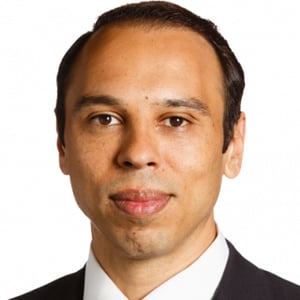
Vice President of Domestic and Economic Policy, The Heritage Foundation
Roger Severino is Vice President of Economic and Domestic Policy, and the Joseph C. and Elizabeth A. Anderlik Fellow at The Heritage Foundation.
Severino is a national authority on civil rights, conscience and religious freedom, the administrative state, and information privacy, particularly as applied to health care law and policy. Find his tweets at @RogerSeverino_.
Severino spearheaded the HHS Accountability Project while a Senior Fellow at EPPC from 2021 to 2023. Previously, Severino was Director of HHS’ Office for Civil Rights, where he led a team of over 250 staff enforcing our nation’s civil rights, conscience and religious freedom, and health information privacy laws. He served from 2017 to 2021 and was the longest-serving OCR director of the past three decades.
Prior to joining HHS, Severino served for two years as Director of the DeVos Center for Religion and Civil Society at Heritage, advocating for life, family, and religious-freedom policies. Before that, he was a trial attorney for seven years at the U.S. Department of Justice’s Civil Rights Division where he enforced the Fair Housing Act and the Civil Rights Act of 1964. Severino started his legal career at the Becket Fund for Religious Liberty, where he was Legal Counsel and Chief Operations Officer and defended the rights of people of all faiths under federal and international law.
Severino has been profiled in The New York Times, The Atlantic, The Wall Street Journal, and The Hill and has appeared on Fox News, CNN, MSNBC, NPR, and PBS, among others. In 2020, The New York Times dubbed him and his wife Carrie, “a conservative power couple” to be reckoned with.
Severino holds a JD from Harvard Law School, a master’s degree in public policy, with highest distinction, from Carnegie Mellon University, and a bachelor’s degree in business from the University of Southern California. He was appointed by President Trump to the Administrative Conference of the United States and is a member of the District of Columbia and the Commonwealth of Virginia bars.
As OCR director, Severino founded the federal government’s first division dedicated exclusively to conscience and religious freedom compliance and enforcement. He enforced the Weldon Amendment for the first time against a state (California) after it coerced families and religious organizations into paying for abortion insurance coverage, leading to a $200 million federal funding disallowance. He also enforced laws protecting pro-life pregnancy resource centers from discrimination by states hostile to their message and enforced laws prohibiting forced participation in abortions by medical professionals.
With respect to civil rights, Severino protected older persons and people with disabilities from being denied life-saving care due to discriminatory “quality of life” judgments, especially during the COVID-19 pandemic. He also achieved a landmark sexual harassment resolution with Michigan State University in the wake of the Larry Nassar sexual assault scandal and protected the rights of non-English speakers to have equal access to health and human services.
In the area of health privacy, he secured the largest HIPAA monetary settlement in history and achieved the largest number of enforcement resolutions both in a single year and across four years. He also facilitated the transformational use of Skype, Zoom, and Facetime for delivery of telehealth during the COVID-19 pandemic and beyond.
His regulatory reform activities resulted in a comprehensive conscience protection regulation and proposed a life-affirming disability rights regulation. He achieved regulatory savings of $3.6 billion in health care industry costs over five years and identified and proposed an additional $3.2 billion in cost savings from the repeal of ineffective and unnecessary regulatory burdens.
Severino is a Spanish speaker who teaches salsa and west coast swing in his spare time.
Professor of Law, University of Baltimore Law School
Kimberly Wehle (formerly Kimberly N. Brown) joined the law school after several years of teaching as an Associate Professor at the University of Oklahoma College of Law and a Visiting Professor at the George Washington University Law School. She teaches and writes in the areas of administrative law, federal courts and civil procedure. She is particularly interested in separation of powers questions, as well as in the constitutional implications of structural and technological innovations in modern government.
Wehle is the author of three books that explain complex constitutional concepts for lay audiences. She is a contributor for BBC World News and BBC World News America on PBS, and an opinion contributor to The Atlantic, Politico, The Bulwark and The Hill. She was an on-air legal analyst and commentator for CBS News. In addition, she appears regularly as a guest legal analyst on constitutional topics such as separation of powers and impeachment with outlets including CNN, MSNBC, NPR’s Morning Edition, PBS NewsHour and Fox News. Her articles have also appeared in The Baltimore Sun, The Los Angeles Times, and NBC News Think. She is regularly interviewed and cited by prominent print journalists on a range of newsworthy legal issues.
She hosts a show on Instagram called #SimplePolitics with Kim Wehle at @kimwehle. She also tweets @kimwehle. She is the 2020 recipient of the prestigious University of Maryland System Board of Regents Faculty Award for excellence in scholarship.
Wehle's scholarship addresses the constitutional relationship of independent agencies and private contractors to the enumerated branches of government. Her articles have appeared in the Notre Dame Law Review, the Indiana Law Journal and the North Carolina Law Review, among others, and her work is cited in a leading federal courts casebook.
Wehle was an editor of the Michigan Law Review and clerked for the Hon. Charles R. Richey of the United States District Court for the District of Columbia. She went on to practice, first at the Federal Trade Commission and subsequently as an Associate Independent Counsel in the Office of Independent Counsel Kenneth W. Starr, and as an Assistant U.S. Attorney in the Civil Division of the Office of the United States Attorney in Washington, D.C.
She has practiced before the United States Supreme Court and argued several cases in the United States Court of Appeals for the D.C. Circuit.
Wehle is also an advisor to the nonpartisan nonprofit, Protect Democracy.

Congress and the Future of Agency Authority: A Discussion of Three Major Administrative Law Cases and Their Implications for Congress
Washington, DCCongress and the Future of Agency Authority: A Discussion of Three Major Administrative Law Cases and Their Implications for Congress
Trevor N. McFadden, Kimberly Wehle, Will Yeatman
The Federalist Society's Capitol Hill Chapter and the Regulatory Transparency Project invite you to join...
Humphrey’s Executor and Presidential Removal Power
Gregory Dolin, Daniel Z. Epstein, Aram A. Gavoor, Roger Severino, Kimberly Wehle
In one of its most significant separation of powers opinions, the U.S. Supreme Court decided...