
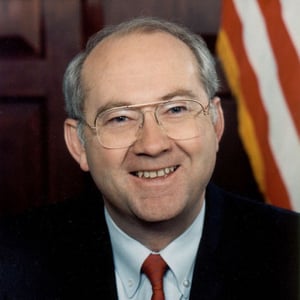
Senior Advisor, US Policy Metrics and Former U.S. Senator, Texas
Senator Gramm is a Senior Advisor at US Policy Metrics, overseeing our policy advisory team and acting as our Ambassador in Washington DC. Before US Policy Metrics, Senator Gramm was the Vice-Chairman of UBS Investment Bank for 9 years. At UBS he focused on providing strategic economic, political and policy advice to major corporate and institutional clients all around the world. He provided senior leadership on such landmark IPOs as Visa, Bank of China, China Merchants Bank and LGPhillips in Korea. He was instrumental in the follow-on equity offering for the Industrial and Commercial Bank of China and the privatization of Telstra in Australia.
Senator Gramm served six years in the US House and eighteen years in the US Senate. His legislative record includes landmark bills like the Gramm-Latta Budget, which reduced federal spending, rebuilt national defense and mandated the Reagan tax cut and the Gramm-Rudman Act, which placed the first binding constraints on federal spending. As Chairman of the Banking Committee, Senator Gramm steered through legislation modernizing banking, insurance and securities law, which had been languishing in Congress for 60 years. The Gramm-Leach-Bliley Act allowed banks, securities firms and insurance companies to affiliate as part of a financial services holding company. Dodd-Frank did not change Gramm-Leach-Bliley but expanded it by requiring systemically significant non-banks to become financial services holding companies.
Phil Gramm holds a Ph.D. from the University of Georgia in economics, the subject he taught at Texas A&M University for 12 years. He has published numerous articles and books on subjects ranging from monetary theory and policy to private property and the economics of mineral extraction.
He is married to Dr. Wendy Lee Gramm, former Chairman of the U.S. Commodity Futures Trading Commission under Presidents Reagan and Bush. They have two sons, Marshall and Jeff and four grandchildren, Caroline, Will, Joshua and Gilbert.

Judge, United States Court of Appeals, Fifth Circuit
Edith Jones graduated from Alamo Heights High School, where she was a National Merit Scholar. In 1971, she received her B.A. in Economics from Cornell University, graduating with honors. In 1974, she was awarded her J.D. at the University of Texas Law School, where she was a law review editor and received the Order of the Coif.
Judge Jones was the first female partner at Andrews, Kurth, Campbell & Jones (now Hunton Andrews Kurth) where she practiced various types of litigation and bankruptcy cases. Judge Jones went on the federal bench on June 1, 1985.
Judge Jones served as a former member of the National Bankruptcy Review Commission, and as a member of the Judicial Conference Commission on Bankruptcy Rules. Judge Jones served on the White House Fellows Commission. Judge Jones served on the board of the Sam Houston Area Council of the Boy Scouts of America. She has been a member of the Garland Walker Inn of Court in Houston for more than 20 years and its President for at least ten years. Judge Jones is also on the Board of the Calvin Coolidge Presidential Foundation.
Senior Counsel & Director of Research, Better Markets
Before joining Better Markets, Mr. Medina was the Deputy Chief Counsel for the House Financial Services Committee, where he drafted legislation and amendments and wrote reports on major financial regulatory issues considered by the Committee, including financial stability, systemic risk, and financial crises. Before that, he was a Senior Attorney at the Securities and Exchange Commission, an Associate General Counsel at Citigroup, Inc., and an associate at the law firms of Wilmer, Cutler & Pickering and Cravath, Swaine & Moore.
Mr. Medina holds an AB from Brown University and a JD with honors from the University of Chicago Law School.
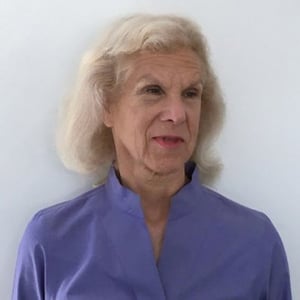
Managing Parter, Federal Financial Analytics

Associate Professor of Law, Antonin Scalia Law School, George Mason University
Associate Professor of Law J.W. Verret joined the Antonin Scalia Law School, George Mason University faculty in 2008. In 2013, he took leave for two years to serve as the Chief Economist and Senior Counsel for the U.S. House Committee on Financial Services. He received his JD and MA in Public Policy from Harvard Law School and the Harvard Kennedy School of Government, respectively, in 2006. While in law school, Professor Verret served an Olin Fellowship in Law and Economics at the Harvard Program on Corporate Governance under the guidance of Prof. Lucian Bebchuk.
Professor Verret then served as a law clerk for Vice-Chancellor John W. Noble of the Delaware Court of Chancery. Prior to joining the faculty at Scalia Law, Professor Verret was an associate in the SEC Enforcement Defense Practice Group at Skadden, Arps in Washington, D.C. He has written extensively on corporate law topics, including Delaware's Guidance, co-written with Chief Justice Myron T. Steele of the Delaware Supreme Court. His academic work has been featured in the Yale Journal on Regulation, The Business Lawyer, the Delaware Journal of Corporate Law, the Stanford Law Review, the University of Pennsylvania Journal of Business Law, and the Virginia Law and Business Review. Professor Verret was selected by the Northwestern Law School Searle Center on Law, Regulation, and Economic Growth for a 2009-2010 Searle-Kaufmann Research Fellowship.
Professor Verret is also a Senior Scholar at the Mercatus Center Working Group on Financial Markets, where he regularly briefs Congressional staff, members of Congress, SEC Commissioners and other financial regulatory agencies on financial regulation topics. He also directs the Corporate Federalism Initiative, where he obtains research grants for a network of students and faculty scholars who study the division between states and the federal government as sources of corporate law. Professor Verret has been invited to testify before various House and Senate Committees four times during the financial crisis of 2009 regarding all of the central provisions of the Obama Administration's 2009 financial regulatory reform proposals. For a full list of Professor Verret's C-Span appearances, including testimony before the U.S. House of Representatives and the U.S. Senate, see http://www.c-spanvideo.org/jwverret.
Professor Verret has been an invited panelist for various television appearances, including an interview on The NewsHour with Jim Lehrer. Professor Verret has been quoted in various media on financial regulation and corporate law topics, including the New York Times, CNN Money, the CNN Political Ticker, CNBC, ABC News, Investor's Business Daily, ESPN.com, The American Banker, The American Lawyer, The Huffington Post, CBS.com, and AP News. Professor Verret's op-eds have been featured in Forbes, The Chicago Tribune, The Orange County Register, and The Wall Street Journal. Professor Verret is also a regular guest contributor to three of the most noted corporate law and financial regulation law blogs: the Harvard Law School Corporate Governance and Financial Regulation Forum, Deallawyers.com, and The Conglomerate.
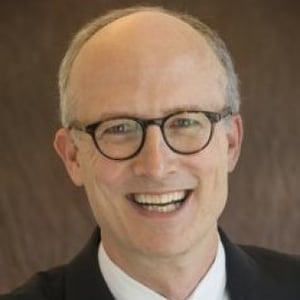
Michael J. Marks Professor of Law, University of Chicago Law School
M. Todd Henderson is the Michael J. Marks Professor of Law at the University of Chicago Law School. Professor Henderson’s research interests include corporations, securities regulation, and law and economics. He has taught classes ranging from Banking Regulation to Torts to American Indian Law.
Professor Henderson received an engineering degree cum laude from Princeton University in 1993. He worked for several years designing and building dams in California before matriculating at the Law School. While at the Law School, Todd was an editor of the Law Review and captained the Law School's all-University champion intramural football team. He graduated magna cum laude in 1998 and was elected to the Order of the Coif. Following law school, Todd served as clerk to the Hon. Dennis Jacobs of the US Court of Appeals for the Second Circuit. He then practiced appellate litigation at Kirkland & Ellis in Washington, DC, and was an engagement manager at McKinsey & Company in Boston, where he specialized in counseling telecommunications and high-tech clients on business and regulatory strategy.
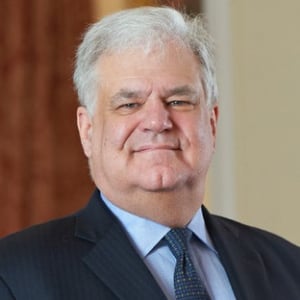
Stuyvesant P. Comfort Professor of Law; Director, Center for Financial Institutions; and Co-Director, Center for Civil Justice, New York University School of Law
Geoffrey Miller is an author or editor of a dozen books and more than 200 articles in the fields of financial institutions, contract law, corporate and securities law, constitutional law, civil procedure, legal history, jurisprudence, and ancient law. He has taught a wide range of subjects including law and economics, corporations, compliance and risk management, property, regulation of financial institutions, land development, securities law, the legal profession, and legal theory. Miller received his BA magna cum laude from Princeton in 1973 and his JD from Columbia in 1978, where he was a Stone Scholar and editor-in-chief of the Columbia Law Review. He clerked for Judge Carl McGowan of the US Court of Appeals for the District of Columbia Circuit and Justice Byron White of the US Supreme Court. After two years as an attorney adviser at the Office of Legal Counsel of the US Department of Justice and one year with a Washington, DC, law firm, he joined the faculty of the University of Chicago Law School in 1983 and NYU School of Law in 1995.
Miller has been a visiting professor or visiting scholar at Columbia University, Harvard University, University of Minnesota, University of Basel (Switzerland), University of Genoa (Italy), Collegio Carlo Alberto (Italy), Study Center Gerzensee (Switzerland), Vanderbilt University, University of St. Gallen (Switzerland), University of Frankfurt (Germany), University of Sydney (Australia), University of Auckland (New Zealand), and the Bank of Japan. Miller is a founder of the Society for Empirical Legal Studies, a scholarly organization devoted to promoting statistical and other empirical techniques in the study of legal institutions. He is founder and director of NYU School of Law’s Center for Financial Institutions, co-director of the Center for Civil Justice, co-founder of and Senior Academic Fellow at NYU's Program on Corporate Compliance and Enforcement, co-convener of the Global Economic Policy Forum, a member of the board of directors of State Farm Bank, and a fellow in the American Academy of Arts and Sciences.
S. Samuel Arsht Professor of Corporate Law, University of Pennsylvania Law School
David Skeel is the Caryl Louise Boies Visiting Professor of Law at New York University, and the S. Samuel Arsht Professor of Corporate Law at the University of Pennsylvania. He is the author of The New Financial Deal: Understanding the Dodd-Frank Act and its (Unintended) Consequences (Wiley, 2011); Icarus in the Boardroom: The Fundamental Flaws in Corporate America and Where They Came From (Oxford University Press, 2005); Debt’s Dominion: A History of Bankruptcy Law in America (Princeton University Press, 2001); and numerous articles on bankruptcy, corporate law, financial regulation, Christianity and law, and other topics. Professor Skeel has also written commentaries for the New York Times, Wall Street Journal, Books & Culture, The Weekly Standard, and other publications.

Laurence H. Silberman Chair in Constitutional Governance, American Enterprise Institute; Executive Director, Antonin Scalia Law School’s C. Boyden Gray Center for the Study of the Administrative State
Adam J. White is the Laurence H. Silberman Chair in Constitutional Governance and senior fellow at the American Enterprise Institute, where he focuses on the Supreme Court and the administrative state. He also directs the Antonin Scalia Law School’s C. Boyden Gray Center for the Study of the Administrative State.
He writes on regulation and constitutional government for a variety of publications. He practiced law in Washington, D.C., after clerking for the D.C. Circuit's Judge David Sentelle. He also has been chairman of the ABA's Administrative Law Section.
In 2021, he served on the Presidential Commission on the Supreme Court of the United States, where he criticized “Court packing” and other efforts to restructure the Supreme Court.
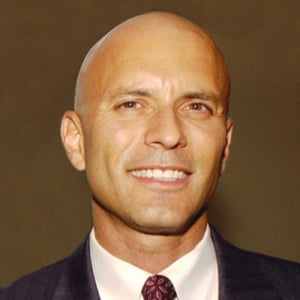
Professor of Law and Public Finance, NSU Florida Shepard Broad College of Law
Tim Canova is a Professor of Law and Public Finance at the NSU Shepard Broad College of Law, with broad experience in law teaching, private practice, and public policy. He teaches Constitutional Law II: First Amendment Law, Corporations, Business Entities, Regulation of Financial Institutions, and a Seminar on Law, Finance, and Markets at Nova. He previously taught at the Chapman University Dale E. Fowler School of Law in Orange, California, where he served as Associate Dean for Academic Affairs and the inaugural Betty Hutton Williams Professor of International Economic Law. He was first granted tenure at the University of New Mexico School of Law and he has taught as a visitor at the University of Arizona and the University of Miami.
Canova's work crosses the disciplines of law, public finance, history, and economics. He has been a leading critic of private central banks, including the Federal Reserve. His work has been published in more than two dozen book chapters and articles in the U.S. and overseas, including in the Oxford University Press, Edward Elgar Publishing, Harvard Law & Policy Review, American Journal of Economics and Sociology, Brooklyn Law Review, Georgetown Journal of Law & Public Policy, and UC Davis Law Review. Canova was an early critic of financial deregulation and the Federal Reserve under Alan Greenspan. In the 1980s, he wrote critically of the federal bailout of Continental Illinois, the nation’s seventh largest commercial bank, and the collapse of the savings & loan industry. In the 1990s, prior to the Asian currency contagion, he argued against the International Monetary Fund’s capital account liberalization program. Throughout the Bush administration, he warned of an impending crisis in the bubble economy. Following the 2008 financial collapse, he lectured and published widely on the causes and consequences of the economic and financial crisis. In 2011, Canova was appointed by Senator Bernie Sanders (I-Vt.) to serve on an Advisory Committee on Federal Reserve Reform with leading economists, including Jeffrey Sachs, Robert Reich, James Galbraith, and Nobel Laureate Joseph Stiglitz.
Canova also writes and advocates in the areas of campaign finance and election reform, a research agenda informed by his 2016 campaign challenging the then chair of the Democratic National Committee for her U.S. House of Representatives seat in a hotly contested election. Canova’s campaign went viral, raising $3.8 million from 209,000 individual donations and setting a record at the time for the highest percentage (76%) of small online donations for any campaign for federal office. The election results were marred by evidence of statistical anomalies, allegations of electronic voting irregularities, and an order by Florida’s 17th Judicial Circuit Court finding that the Broward County Elections Supervisor had illegally destroyed every ballot cast. In 2019, Canova testified to the Florida Advisory Committee of the United States Civil Rights Commission about the systematic electronic disenfranchisement of voters in Florida elections.
Canova received his A.B. degree from Franklin and Marshall College and his J.D. degree, cum laude, from the Georgetown University Law Center. He has a master’s diploma in graduate legal studies from the University of Stockholm where he was a Swedish Institute Visiting Scholar. He previously served as a legislative assistant to the late U.S. Senator Paul E. Tsongas and practiced law in New York City with Gibson, Dunn & Crutcher and Mudge Rose Guthrie Alexander & Ferdon.
Featured Article entitled “Central Bank Independence as Agency Capture: A Review of the Empirical Literature, Banking & Financial Services Policy Report 30:11 (Nov. 2011).
Mercatus Center, George Mason University
New York University School of Law
Former Mildred Van Voorhis Jones Chair in Law, University of Illinois College of Law
The University of Illinois College of Law community mourns the loss of Professor Larry E. Ribstein, the Mildred Van Voorhis Jones Chair, Associate Dean for Research, and Co-Director of the Illinois Business Law and Policy Program, who passed away on December 24, 2011 in Fairfax, Virginia.
A member of the Illinois law faculty since 2002, Ribstein was a prodigious and pioneering scholar across a vast range of subjects, including partnerships and limited liability companies, corporate and securities law, choice of law, financial regulation, white-collar crime, legal ethics, and the legal profession. Among his over 170 publications, he was the author of The Rise of the Uncorporation (Oxford University Press, 2010),The Law Market (Oxford University Press, 2009) (with Erin A. O’Hara), The Sarbanes-Oxley Debate (American Enterprise Institute Press, 2006) (with Henry N. Butler), The Constitution and the Corporation (American Enterprise Institute Press, 1995) (with Butler), leading treatises (including Ribstein & Keatinge on Limited Liability Corporations and Bromberg & Ribstein on Partnerships), and two casebooks (Business Associations (4th ed. 2003, Lexis/Nexis) (with Peter V. Letsou) andUnincorporated Business Entities (4th ed. 2009, Lexis/Nexis) (with Jeffrey M. Lipshaw)). His latest book, The Rise of the Uncorporation, which examines the emergence and significance of non-corporate forms of business organization, was recently described in the Michigan Law Review as a “fascinating” study that “takes the traditional law and economics story of the corporation and turns it on its head.” A prominent commentator on law and business, Ribstein was the founder of Ideoblog (www.ideoblog.org) and the leading contributor to Truth on the Market (www.truthonthemarket.com), which was recently ranked by the ABA Journal as one of the 100 top law blogs.
Professor Ribstein taught a variety of courses at the College of Law, including business organizations, unincorporated business entities, and market regulation. He also taught an innovative colloquium on corporate law that brought together students and leading scholars to discuss current issues in the field.
“Larry was a scholar of incandescent intellect, breathtaking range, and unflagging energy,” said Dean Bruce Smith. “He cared passionately about his students and about transforming legal education to meet the challenges of the twenty-first century. He invested selflessly in the professional development of junior faculty members – whether at Illinois or at other institutions. He cared deeply about the College of Law and contributed incalculably to it through his ideas, his engagement, and his counsel. And he cherished his family with a love that was boundless. Larry was a towering figure and an incomparable person, and he will be dearly missed.”
After earning his B.A. from The Johns Hopkins University and his J.D. from the University of Chicago Law School, Ribstein practiced for three years as an associate at McDermott, Will & Emery in Chicago. He began his teaching career at Mercer University Law School (1975-87), later serving on the faculty at George Mason University School of Law (1987-2002), including as George Mason University Foundation Professor of Law (1993-2002). He also held visiting professorships at New York University Law School, the University of Texas School of Law, Washington University School of Law, and St. Louis University School of Law. He served the legal-academic community in a variety of capacities, including on the Executive Committee of the American Association of Law Schools (AALS) Section on Securities Regulation, as chair of the AALS Section on Agency, Partnership and LLCs, and as editor and co-editor of The Supreme Court Economic Review.

The Legitimacy of the Brexit Referendum
As all the world knows, last Thursday the British people voted in a referendum about...
Financial Services: Explaining the Next Crisis
Phil Gramm, Edith H. Jones, Frank Medina, Karen Shaw Petrou, J.W. Verret
Many observers of the U.S. financial system increasingly believe that the United States will soon...
Panel 2: Dodd Frank
Todd Henderson, Geoffrey P. Miller, David Skeel, Adam White
The Federalist Society's Facutly Division hosted this panel discussion on "Dodd-Frank" on Saturday, January 5,...
Panel 1: Bankruptcy or Bailout?
Barry Adler, Timothy Canova, Garett Jones, Michael E. Levine, Larry Ribstein
Prof. Barry Adler, New York University School of Law Prof. Timothy Canova, Chapman University School...