
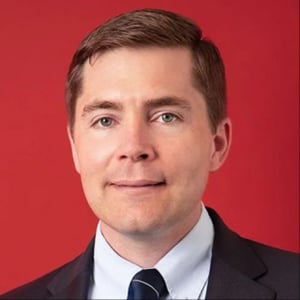
Senior Attorney, Pacific Legal Foundation
Damien Schiff is a senior attorney at Pacific Legal Foundation. He leads its environmental practice group, a unique initiative that draws broadly from PLF’s expertise and success in property rights and separation of powers litigation. Over the years, Damien has represented hundreds of landowners and property rights advocates to defend their liberties against heavy-handed and unwarranted environmental and land-use regulation. His litigation experience includes Sackett v. U.S. Environmental Protection Agency, a groundbreaking decision in which the U.S. Supreme Court upheld the right of landowners to challenge Clean Water Act compliance orders issued by EPA, and Contoski v. Norton, PLF’s successful effort to force the federal government to make good on its promise to delist the bald eagle from the Endangered Species Act.
Besides litigation, Damien has written academic articles on a variety of subjects, including the Endangered Species Act, the Clean Water Act, greenhouse gas torts, the duty to rescue, and international water law. He has appeared on a variety of television and radio programs and has been quoted in The New York Times, The Wall Street Journal, Harper’s Magazine, and The Economist, among other publications.
He obtained his law degree magna cum laude from the University of San Diego School of Law, and his undergraduate degree magna cum laude from Georgetown University. While at USD, he was a research assistant for Professor Bernard Siegan, a leading constitutional theorist and advocate for property rights and economic liberty. Immediately prior to joining PLF, Damien clerked for Judge (and former PLF attorney) Victor Wolski of the United States Court of Federal Claims. Damien credits the mentoring and examples of Professor Siegan and Judge Wolski for his decision to pursue a career in liberty-based public interest litigation.
Damien lives in Sacramento with his wife, two young sons, four chickens, and a cat named Princess. In his off hours he enjoys stamp collecting, Gregorian chant, and martinis—preferably at the same time.
Andrew Varcoe was formerly a partner at Boyden Gray & Associates in Washington, D.C. From 2014 to 2017, Mr. Varcoe was Deputy General Counsel at the Biotechnology Innovation Organization (BIO), the trade association for the biotechnology industry. He previously served as an attorney in the Office of the General Counsel of the U.S. Department of Agriculture (USDA) in Washington, D.C., and Harrisburg, Pennsylvania. While at USDA, he briefed, argued, and mediated cases in the federal courts of appeals and helped manage USDA’s and its agencies’ nationwide appellate litigation docket, working closely with trial and appellate lawyers at the U.S. Department of Justice. Before joining USDA, Mr. Varcoe was an associate and then counsel at Wilmer Cutler Pickering Hale and Dorr LLP (previously Wilmer, Cutler & Pickering). Mr. Varcoe served as a law clerk to Justice Francis X. Spina of the Massachusetts Supreme Judicial Court (from 1999 to 2000), and to Judge Edith H. Jones of the U.S. Court of Appeals for the Fifth Circuit (from 2001 to 2002).
Mr. Varcoe received his J.D. cum laude in 1999 from Harvard Law School, where he was a research assistant to Professor Martha Minow and an editor of the Harvard Journal of Law & Public Policy. Mr. Varcoe graduated with honors in 1995 from the University of Chicago, where he was Student Ombudsperson (a mediator, reporting to the President of the University, who investigated and resolved student grievances) and a member of Phi Beta Kappa.
In 2018 and 2019, Mr. Varcoe served as Chairman of the Executive Committee of the Federalist Society’s Environmental Law and Property Rights Practice Group.
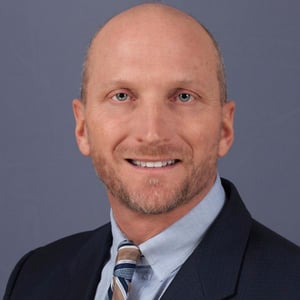
Distinguished Professor of Law, Widener University Delaware Law School
James R. May is Distinguished Professor of Law, and Chief Sustainability Officer, Widener University (USA). He also serves as co-Director of the Environmental Rights Institute and co-Director of the Dignity Rights Project at Widener University Delaware Law School. May is also an Adjunct Professor of Graduate Engineering, and founded and co-chairs a program on marine policy. May is the editor of Principles of Constitutional Environmental Law (American Bar Association), and co-editor of Shale Gas and the Future of Energy (Edward Elgar), Global Environmental Constitutionalism (Cambridge), Environmental Constitutionalism in Context (Edward Elgar), New Frontiers in Environmental Constitutionalism (United National Environment Programme, forthcoming), Implementing Environmental Constitutionalism(Cambridge, forthcoming), Standards of Environmental Constitutionalism (Cambridge, forthcoming), and Human Rights and the Environment: Indivisibility, Dignity and Legality (Edward Elgar, forthcoming). May is also author or co-author of more than 100 articles and book chapters, and numerous amicus briefs to the U.S. Supreme Court and U.S. federal courts of appeal on issues including environmental law, constitutional law, comparative constitutional, international environmental law, environmental rights, and human dignity.
May founded two non-profit environmental organizations (the Mid-Atlantic and the Eastern Environmental Law Centers), and has litigated more than 200 public interest environmental claims, including cases throughout the Mid-Atlantic to restore water and air quality, conserve rare species and habitats, and protect biodiversity.
May is a Member of Faculty to the National Judicial College, and a Fellow of the American College of Environmental Lawyers, for whom he has served as a delegate to Haiti and China. May has also served as a consultant to the U.S. Embassy on legal education in the Philippines, and to the Hungarian Embassy and the Moroccan Human Rights Council on constitutional reform. May is a member of Phi Kappa Phi, serves on numerous boards, and has won numerous awards, including from Pace University, Sierra Club, and the American Canoe Association. He earned his B.S. in Mechanical Engineering from the University of Kansas (Bowman Scholar), J.D. from the University of Kansas (Appellate Advocacy Scholar and national moot court champion), and LL.M. in Environmental Law from Pace University, where he was the Feldshuh Fellow and graduated first in class.
May is a member of the bar in the State of Pennsylvania, several federal courts of appeal, and the U.S. Supreme Court.

Sheila M. McDevitt Professor of Law and Faculty Director of the Election Law Center, Florida State University College of Law
Professor Morley joined FSU Law in 2018, and teaches and writes in the areas of election law, constitutional law, remedies, and the federal courts. He is best known for his work on election emergencies and post-election litigation, nationwide and other defendant-oriented injunctions, the jurisdiction of the federal courts and their equitable powers more generally. He has testified before congressional committees, made presentations to election officials for the U.S. Election Assistance Commission and participated in bipartisan blue-ribbon groups to develop election reforms. The governor of Florida also appointed Professor Morley to the Criminal Punishment Code Task Force, to propose potential revisions to the legislature.
The U.S. Supreme Court has cited several of his articles, and he was counsel of record for the successful Petitioner in a landmark campaign finance case. Professor Morley has appeared on C-SPAN, Court TV, Fox News and numerous local news programs, and has been quoted in the Washington Post, Los Angeles Times, Roll Call, Politico, U.S. News and World Report, and a wide range of other national publications. His work has been published in many of the nation’s top law reviews, including the Georgetown Law Journal, Northwestern University Law Review, Boston University Law Review and Emory Law Journal.
Before joining FSU Law, Professor Morley was a Climenko Fellow and Lecturer in Law at Harvard Law School. Prior to his experience in academia, he served in government as special assistant to the General Counsel of the Army at the Pentagon, as well as a law clerk for Judge Gerald B. Tjoflat of the U.S. Court of Appeals for the Eleventh Circuit. During his tenure with the Army General Counsel’s office, he was awarded the Meritorious Civilian Service Award and the Army Staff Lapel Pin. He also worked as an associate at Williams & Connolly LLP and the Supreme Court & Appellate group of Winston & Strawn, LLP, both in Washington, D.C.
Professor Morley earned his J.D. from Yale Law School in 2003, where he was a senior editor on the Yale Law Journal; served on the moot court board; and received the Thurman Arnold Prize for Best Oralist in the Morris Tyler Moot Court of Appeals.
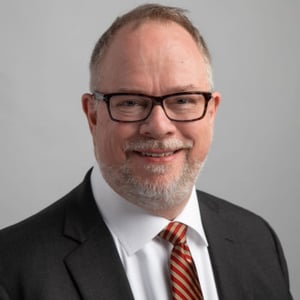
Managing Attorney of the Washington Office, Institute for Justice
William R. Maurer is the Managing Attorney of the Washington state office of the Institute for Justice, which engages in litigation in the areas of economic liberty, private property rights, educational choice, & freedom of speech.
Maurer is an advocate against the criminalization of poverty and the governmental use of the criminal and civil enforcement systems to raise revenue. He was lead counsel in a class action challenging the use of tickets to raise revenue in the city of Pagedale, Missouri. The suit resulted in a federal consent decree that reformed the city’s ticketing and municipal court system. He regularly speaks, teaches, and writes about the abuse of fines and fees in the criminal justice system. He was a participant in summits on taxation by citation put on by the White House and Department of Justice during the Obama Administration. His work on the issue includes serving as an advisory board member of the Fines and Fees Justice Center.
In addition to his work on criminal and civil justice reform, Maurer is a First Amendment litigator. In 2011, he successfully argued before the U.S. Supreme Court that Arizona’s punitive campaign financing regime was unconstitutional. Before the Washington Supreme Court, he successfully argued against efforts to classify radio commentary as a contribution under the state’s campaign finance law.
His cases and advocacy have been covered in the Washington Post, the New York Times, the Economist, the Wall Street Journal, and other major media outlets.
Maurer was named a “Washington Superlawyer” by Washington Law & Politics Magazine for several years. He is a chapter author in numerous legal reference works and has written several articles for law reviews and legal publications across the country.
Prior to joining IJ-WA, Maurer clerked for Washington Supreme Court Justice Richard Sanders and then practiced law at Perkins Coie LLP. Maurer received his law degree in 1994 from the University of Wisconsin – Madison, where he was an editor of the Wisconsin Law Review. He received his BA from Bard College in 1989.

Tazewell Taylor Professor of Law and William H. Cabell Research Professor, William & Mary Law School
Jonathan H. Adler joined the William & Mary law faculty as the Tazwell Taylor Professor of Law and William H. Cabell Research Professor in 2025. Prior to joining the faculty, he was the inaugural Johan Verheij Memorial Professor of Law and the founding Director of the Coleman P. Burke Center for Environmental Law at the Case Western Reserve University School of Law.
Professor Adler is the author or editor of seven books, including Climate Liberalism: Perspectives on Liberty, Property and Pollution (Palgrave, 2023), Marijuana Federalism: Uncle Sam and Mary Jane (Brookings Institution Press, 2020), Business and the Roberts Court (Oxford University Press, 2016) and Rebuilding the Ark: New Perspectives on Endangered Species Act Reform (AEI Press, 2011).
His articles have appeared in publications ranging from the Harvard Environmental Law Review and Yale Journal on Regulation to the Wall Street Journal, New York Times, and Washington Post. He has testified before Congress a dozen times, and his work has been cited in the U.S. Supreme Court. A 2024 study identified Professor Adler as the seventh most cited legal academic in administrative and environmental law from 2019 to 2023.
Professor Adler is a contributing editor to Civitas Outlook and a regular contributor to the popular legal blog, The Volokh Conspiracy. A regular commentator on constitutional and regulatory issues, he has appeared on numerous radio and television programs, ranging from the PBS Newshour and National Public Radio to the Fox News Channel and Entertainment Tonight.
Professor Adler is a senior fellow at the Property & Environment Research Center in Bozeman, Montana. In 2018, Professor Adler was elected to membership in the American Law Institute and helped co-found the organization Checks and Balances. In 2024, Professor Adler was appointed a public member of the Administrative Conference of the United States.
Professor Adler clerked for the Honorable David B. Sentelle on the U.S. Court of Appeals for the District of Columbia Circuit.
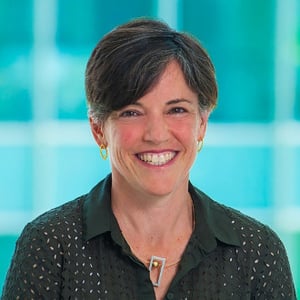
Professor of Law and Director of the Program on Environmental and Energy Law, American University Washington College of Law
Professor Leiter is a Professor of Law and the Director of the Program on Environmental and Energy Law at American University's Washington College of Law. She teaches environmental law, administrative law, and torts, and her research interests include administrative law and process, and domestic environmental law and policy. From August 2015 – January 2017, Leiter served as a Deputy Assistant Secretary for Land and Minerals at the U.S. Department of the Interior, advancing Department priorities related to oil and gas and renewable energy development on public lands both on- and offshore. Before joining the WCL faculty in the fall of 2011, Professor Leiter was an associate professor at Catholic University’s Columbus School of Law. Prior to that, she was a Beagle/HLS fellow at the Natural Resources Defense Council, where she developed and pursued federal appeals court challenges to EPA rules governing industrial air pollution.
Professor Leiter clerked for Judge Nancy Gertner of the Federal District Court for the District of Massachusetts; for Judge David Tatel of the U.S. Court of Appeals for the D.C. Circuit; and for Supreme Court Justice John Paul Stevens. She is admitted to practice before the District of Columbia, the States of Colorado and Massachusetts, and the U.S. Supreme Court.

Founder, Law Office of Eileen J. O'Connor PLLC
After nearly 30 years as a national tax specialist with the IRS and major accounting firms, Eileen J. O’Connor, now an attorney in private practice, was Assistant Attorney General for the Justice Department’s Tax Division for six years during the administration of President George W. Bush and a member of then-President-elect Trump’s Treasury Department Transition Team. She focuses on federal administrative and tax law.

Judge, United States Court of Appeals, D.C. Circuit
Judge Randolph was confirmed by the Senate and appointed to the United States Court of Appeals for the District of Columbia Circuit by President George H. W. Bush in July 1990.
Judge Randolph received his B.S. degree in 1966 from Drexel University, majoring in economics and basic engineering. At Drexel, he was president of the debate society, vice president of the Student Senate, and a member of the varsity wrestling squad. In 1969, he received his J.D. from the University of Pennsylvania, summa cum laude. Judge Randolph ranked first in his law school class all three years and was managing editor of the Law Review.
After graduation, Judge Randolph served as a law clerk to Judge Henry J. Friendly of the United States Court of Appeals for the Second Circuit in New York.
Admitted to the California Bar in 1970 (and to the District of Columbia bar in 1973), Judge Randolph worked as Assistant to the Solicitor General, U.S. Department of Justice, in Washington, D.C., 1970-1973.
After two years in private practice, Judge Randolph was named Deputy Solicitor General of the United States, a position he held from 1975-1977.
In 1979, Judge Randolph was appointed Special Counsel to the Committee on Standards of Official Conduct (the Ethics Committee) of the United States House of Representatives, remaining in this position until 1980.
In the 1980s, Judge Randolph held a number of positions while in private practice, including Special Assistant Attorney General for the states of New Mexico (1985 90), Utah (1986-1990) and Montana (1983-1990). He also served as a Member of the Advisory Panel of the Federal Courts Study Committee.
From 1971-1990, Judge Randolph argued 23 times in the United States Supreme Court, winning 20 of his cases.
As an Adjunct Professor of Law at Georgetown University Law Center from 1974-1978 he taught courses in civil procedure and injunctions. In 1992 he taught a course in constitutional law. He is a Distinguished Adjunct Professor of Law at George Mason School of Law and for the past ten years has been teaching First Amendment law. He also serves on the Judicial Advisory Board of the George Mason University Law and Economics Center.
From 1993 through 1995 Judge Randolph was a member of the Committee on Codes of Conduct of the Judicial Conference of the United States, and from 1995 to 1998 served as the Committee's chairman. He also served as the judicial liaison to the American Bar Association’s Administrative Law Section.
Judge Randolph is a member of the Board of Visitors at Drexel University Law School and was named to the “Drexel One Hundred” as a leading alumnus. In 2002 he was presented the James Wilson Award by the University of Pennsylvania Law School. In November 2005 he delivered the Fifth Annual Barbara K. Olson Memorial Lecture at the Annual Lawyers Convention of the Federalist Society. He has published numerous articles, the most recent of which is in the June 2006 issue of the Harvard Journal of Law and Public Policy.
Judge Randolph is married to the Honorable Eileen J. O’Connor, formerly Assistant Attorney General, Tax Division, U.S. Department of Justice. His son John Trevor Randolph is an investment banker in New York. His daughter Cynthia Lee Randolph is an artist living in San Francisco.
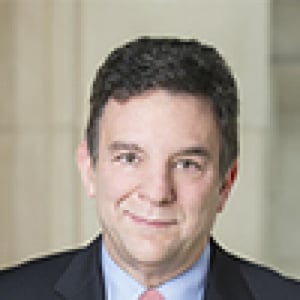
Partner, Arnold & Porter Kaye Scholer LLP
Rob Weiner has significant experience as a trial lawyer, appellate advocate, and legal strategist in complex litigation. He is skilled in developing creative legal approaches to bring cases to a quick, cheap and successful resolution. Mr. Weiner’s long experience representing business and sovereign clients in litigation, and his three tours of duty as a government lawyer, have honed his ability to deal with the regulatory, tactical, and constitutional issues arising when the federal government is, or may become, a party in litigation. From 2010-2012, Mr. Weiner was Associate Deputy Attorney General at the US Department of Justice, where his principal responsibility was to oversee the defense of the Affordable Care Act. He also handled sensitive negotiations with a foreign government involving bank secrecy, and dealt with or headed-off difficult issues across the range of the Department’s matters. Mr. Weiner also has served as Senior Counsel in the White House Counsel’s Office, and as an Associate Independent Counsel. He began his career as a law clerk for The Honorable Henry J. Friendly and for Justice Thurgood Marshall.
At the firm, Mr. Weiner has litigated major administrative and constitutional cases; served as national coordinating and trial counsel in product liability and toxic tort cases; represented clients in media-intensive Congressional regulatory, criminal, and disciplinary investigations; and was lead counsel for the State of Israel in litigation involving national security policies. In addition, clients frequently seek him out to author briefs in the US Supreme Court and other forums.
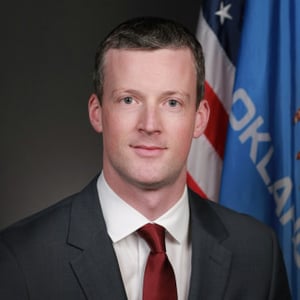
Judge, United States District Court, Western District of Oklahoma
Patrick Wyrick serves as a United States District Court Judge for the Western District of Oklahoma. He was nominated for that position by the President, and assumed duty on April 12, 2019. Before being appointed a federal judge, Wyrick served as Vice Chief Justice of the Oklahoma Supreme Court. Prior to his appointment to the Oklahoma Supreme Court, Wyrick served six years as Oklahoma's Solicitor General.

Partner, Wiley Rein, LLP
Megan L. Brown is a partner at Wiley Rein LLP. She has significant litigation, appellate and regulatory experience before state and federal courts and agencies.
Ms. Brown helps businesses respond to federal, state and local regulation and investigations raising administrative law, statutory interpretation, and constitutional issues, including the First Amendment.
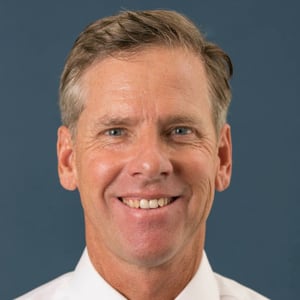
Senior Attorney, Pacific Legal Foundation
David (Dave) Breemer developed a passion for liberty while reading classics such as John Locke’s Two Treatises of Government and Thomas Paine’s The Rights of Man, as he pursued a Master’s Degree in American Political Theory at University of California, Davis. During this time, Dave began to believe that individual freedom and choice is a God-given and inviolable gift that cannot be taken away through governmental power.
Dave then traveled throughout North America for several years as an adventure tour guide, discussing American ideas of freedom with groups of young people form Europe, Australia, and Japan while rafting, skydiving, and hiking in places like Monument Valley, Las Vegas, and Alaska.
In 1998, Dave went to law school at the University of Hawaii where he studied and co-authored several property rights-oriented law reviews with Professor David L. Callies, a noted land use authority. In 2001, Dave graduated summa cum laude from law school, second in his class, and returned to California to work as an attorney for PLF.
Since joining PLF, Dave has worked as an attorney in PLF’s property rights group. In that capacity, he has litigated numerous federal and state court cases vindicating constitutional rights, particularly those related to the ability to use and enjoy private property. Examples include: Knick v. Township of Scott, U.S. Supreme Court No. 17-647; MVA v. Minnesota, U.S. Supreme Court, No. 16-1435; Levin v. City and County of San Francisco, 71 F. Supp. 3d 1072 (N.D. Cal., 2014); Sansotta v. Town of Nags Head, 724 F.3d 533 (4th Cir. 2013); Severance v. Patterson, 390 S.W.3d 705 (Tex. 2012); Severance v. Patterson, 566 F.3d 490 (5th Cir. 2009); Crown Point Dev., Inc. v. City of Sun Valley, 506 F.3d 851 (9th Cir. 2007).
In his time at PLF, Dave has also written many law review articles about the Supreme Court’s property rights jurisprudence. He continues to believe that property rights are vital to securing other rights—such as privacy, self-expression, and financial freedom—and as a result, he continues to be passionate about securing the right to use and enjoy property for all Americans in the courts of this nation.
State of California Attorney General's Office

Professor of Law and Executive Director, Law and Economics Center, Antonin Scalia Law School, George Mason University
Donald Kochan is Professor of Law and Executive Director of the Law & Economics Center (LEC). Professor Kochan is an elected member of the American Law Institute (ALI) and serves as an Adviser to ALI's Restatement of the Law Fourth, Property project. Professor Kochan is a Nonresident Scholar at the Center for the Constitution at Georgetown University Law Center, where he was a Visiting Scholar in residence during Fall 2018. Before joining the Antonin Scalia Law School faculty, he was the Parker S. Kennedy Professor in Law at Chapman University’s Dale E. Fowler School of Law from 2004 to 2020. From 2003 to 2004, Professor Kochan was an Olin Fellow at the University of Virginia School of Law. During 2002-2003, he was a Visiting Assistant Professor of Law at George Mason’s Scalia Law School.
Professor Kochan’s scholarship focuses on areas of property law, constitutional law, administrative law, local government law, natural resources and environmental law, and law & economics. He has published several books and more than 50 scholarly articles and essays in well-regarded law journals. His work has been cited in more than a dozen state and federal court opinions, in more than 75 briefs filed in state and federal courts including more than 25 filed in the U.S. Supreme Court, in dozens of books and treatises, and in more than 800 scholarly articles.
Professor Kochan received his JD from Cornell Law School, where he was a John M. Olin Scholar in Law and Economics and managing editor of the Cornell International Law Journal. During law school, he also served as editor and executive editor of the Harvard Journal of Law & Public Policy symposium issues in 1997 and 1998. He received his BA from Western Michigan University, magna cum laude, with majors in both political science and philosophy, where he studied as the John W. Gill Medallion Scholar and was honored as the Presidential Scholar (awarded to the top graduate in the political science department).
After graduating from law school, Professor Kochan was a law clerk to The Honorable Richard F. Suhrheinrich of the United States Court of Appeals for the Sixth Circuit. Following his clerkship, Professor Kochan was an associate with the firm of Crowell & Moring LLP in Washington, D.C., where he specialized in natural resources & environmental law as well as tort, products, and consumer civil litigation & legislative affairs.
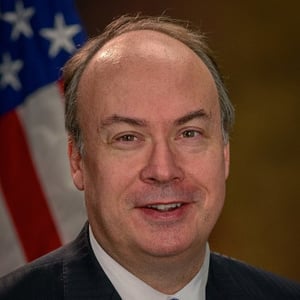
Assistant Attorney General, Environment and Natural Resources Division, U.S. Department of Justice
Jeffrey Bossert Clark was born in Philadelphia, Pennsylvania on April 17, 1967. He is a graduate of Harvard University (A.B. in economics and history, 1989), the University of Delaware (M.A. in urban affairs and public policy, 1993), and the Georgetown University Law Center (J.D., 1995).
Mr. Clark began his career working for the State of Delaware’s Department of Finance, Division of Revenue as an economics analyst in the field of tax policy. During his tenure from 1989 to 1992, he authored several white papers analyzing Delaware revenue sources. Delaware also selected Mr. Clark to submit an economic report and affidavit to the United States Supreme Court in the original jurisdiction case of Delaware v. New York, 507 U.S. 490 (1993).
He entered Georgetown’s law school in 1992 where he earned honors as an articles editor of the Georgetown Law Journal, an Olin Law & Economics Fellow, and a member of the Order of the Coif. From 1995 to 1996, Mr. Clark clerked for Judge Boggs of the U.S. Court of Appeals of the Sixth Circuit. Mr. Clark then joined the law firm of Kirkland & Ellis as an associate from 1996-2001. He worked as an appellate litigator on numerous Supreme Court and other appellate cases and developed expertise in administrative law, statutory interpretation, as well as antitrust, labor, environmental, and telecommunications law.
Mr. Clark went on to serve in ENRD from 2001-2005 as a Deputy Assistant Attorney General selected by Attorney General Ashcroft and Assistant Attorney General Tom Sansonetti. In that capacity, he supervised ENRD’s Appellate and Indian Resources Sections. He reviewed, edited, and contributed to virtually every brief that ENRD filed in the Courts of Appeals, including several cases of exceptional significance that he personally briefed and argued. During his service in the early 2000s, Mr. Clark argued and won numerous cases in multiple U.S. Courts of Appeals and worked on all Supreme Court cases arising out of ENRD’s work.
In 2005, Mr. Clark returned to Kirkland & Ellis LLP as a partner, where he litigated until his return to ENRD in 2018. There he worked on numerous multi-billion-dollar matters and continued to argue many appellate cases. His practice operated at all levels — appellate litigation, trial court litigation, agency proceedings, and regulatory and litigation counseling. He has been named a Super Lawyer for multiple years running, highlighted in the Legal 500, named to the “Legal Who’s Who for Environmental Law” in Corporate Responsibility Magazine, rated A.V. preeminent by Martindale Hubbell, and named a member of the National Association of Distinguished Counsel’s Nation’s One Percent. He also was named one of America’s Top 100 High Stakes Litigators.
President Trump nominated Mr. Clark to be the Assistant Attorney General of the Environment and Natural Resources Division (ENRD) on June 7, 2017. He was confirmed by the U.S. Senate on October 11, 2018 and sworn into office on November 1, 2018, followed by an investiture ceremony on November 15, 2018.

Courthouse Steps: Juliana v. United States
Damien Michael Schiff, Andrew R. Varcoe, James R. May
On December 11, a Ninth Circuit panel heard argument in San Francisco in an unusual appellate proceeding...
Shapiro v. McManus - Post Argument SCOTUScast
Michael T. Morley
On November 4, 2015, the Supreme Court heard oral argument in Shapiro v. McManus. In...
Should Judges Judge?: The Affordable Care Act, Subsidies, and Judicial Engagement
William R. Maurer
Note from the Editor: This article is about D.C. Circuit’s decision in Halbig v. Burwell...
Without Standing, Are We All Sitting Ducks?
Jonathan H. Adler, Amanda Cohen Leiter, Eileen J. O'Connor, A. Raymond Randolph, Robert N. Weiner, Patrick Wyrick
For a federal court to consider an issue, there must be a case or controversy,...
American Electric Power Company v. Connecticut - Post-Argument SCOTUScast
Megan L. Brown
On April 19, 2011, the Supreme Court heard oral argument in American Electric Power Company...
Are Nuisance Lawsuits to Address Climate Change Justiciable in the Federal Courts? Global Warming at the Supreme Court
Megan L. Brown
This article examines American Electric Power Co. v. Connecticut, a U.S. Supreme Court case whose...
Federal Courts Standards for Ripeness and Takings Claims
J. David Breemer, Daniel L. Siegel, Donald J. Kochan
Justiciability doctrines, particularly ripeness, have a particularly important role in takings challenges to permitting decisions. ...
SCOTUScast 11-25-08 featuring Jeffrey Clark
Jeffrey Bossert Clark
On Wednesday, October 8, the Supreme Court heard oral argument in Summers v. Earth Island...