
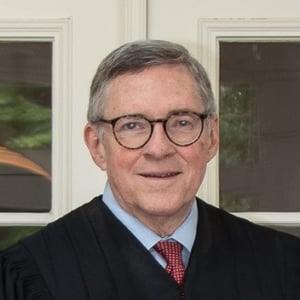
Circuit Court Judge, State of Tennessee, 21st Judicial District
Judge Woodruff has served as the Division I Circuit Judge of Tennessee’s 21st Judicial District since his election in 2014. The 21st is one of Tennessee’s busiest judicial districts and each judge sits as a chancellor, criminal and civil circuit court judge. Prior to redistricting in 2022, the 21st Judicial District had the largest ratio of population per judge of any of Tennessee’s 31 judicial districts. Today, the 21st remains in the top tier of that statistic. He was re-elected in 2022 without opposition.
Before becoming a judge, Woody was a partner in the litigation group at Waller Lansden Dortch & Davis, LLP, where he represented clients in state and federal trial and appellate courtrooms in a nationwide practice focusing on the healthcare and financial services industries. From 2004 through 2007, he was the lead lawyer of the team representing the State of Tennessee in litigation against the Maddox Foundation. This bitter interstate legal battle concluded with a settlement returning $55 million to Tennessee reviving the charitable foundation originally established by Nashville philanthropists Dan and Margaret Maddox.
Woody began his legal career as an officer in the US Army JAG Corps. During his six years of active duty, he tried to verdict more than 100 contested cases involving military justice, administrative law and federal tort claims actions. In 1986, he successfully represented a military intelligence agent charged with financial crimes related to covert activities and stemming from a sweeping criminal investigation into the official actions of high-ranking commissioned officers. His client was the first defendant tried, and only defendant to be acquitted. Following active duty, Woody served as a JAG in the US Army Reserve and retired at the rank of Lieutenant Colonel.
He earned his JD degree in 1981 from the University of Alabama School of Law. In law school, he was the recipient of the Dean M. Leigh Harrison Award, the Hugo Black Award, and was a member of the Order of the Coif, among other honors. He has published scholarly articles in various legal periodicals, as well as newspaper columns and blogs on college football. He has been an adjunct professor at the Belmont University School of Law, and is an active member of the Tenn. John Marshall Chapter, American Inns of Court and the Federalist Society for Law and Public Policy.

Judge, Tennessee 5th Judicial District, Blount County Circuit Court
David R. Duggan, Blount County circuit judge, is the author of the book, Alcoa: A Century in Words and Pictures. He also co-authored Alcoa and Maryville in Arcadia Publishing’s Images of America series. He is Alcoa city historian, a former Blount County Library board chair, and lay representative, a Sunday School teacher, and church historian at Alcoa First Methodist Church. He serves as lay leader of the MidSouth Annual Conference of the Global Methodist Church (GMC), and he is a member of the GMC’s global Ecumenical Relations Commission. He chaired the City of Alcoa’s 75th Anniversary and Centennial Committees. Named to the Daily Times Alumni Wall of Fame in 2010, he received the Blount Historic Trust Champion Award in 2015. He also received, in 2018, a Community History Award, and in 2022 an Award of Distinction, from the East Tennessee Historical Society. He is president and a director of the Faith and Family Coalition, Inc. He serves as a member of the executive committee of the Knoxville chapter of the Federalist Society. Duggan also serves on the Mr. P Foundation board. Alcoa High School’s lyceum is named in his honor.
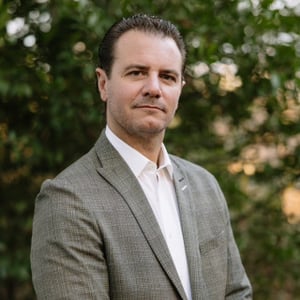
Circuit Court Judge of the Tenth Judicial District, State of Tennessee
Judge Andrew Mark Freiberg is a Circuit Court Judge for criminal matters in the Tenth Judicial District in Tennessee, covering the counties of Bradley, McMinn, Monroe, and Polk. He was elected to the court in 2014 and was reelected to office in 2022.
Judge Freiberg received his undergraduate degree from the University of Wisconsin-Madison in 2001, majoring in Psychology and minoring in Criminal Justice. He received his Juris Doctorate degree from the University of Tennessee College of Law in 2004. From 2004-2011, he was a Prosecutor in the District Attorney’s Office, 10th Judicial District, Tennessee, and from 2011-2014, prior to his election, he was a litigation attorney in a local law firm. He has also served part-time as an Adjunct Professor at Tennessee Wesleyan University.
As a judge, he has presided over criminal jurisdiction matters throughout Southeast Tennessee having adjudicated over eleven thousand felony jury trials, motion hearings and pleas involving the criminally accused. He has served with distinction as the presiding Judge for the Tenth Judicial Recovery Court, which is a judicially monitored, intensive out-patient treatment program for non-violent offenders seeking to overcome addiction and mental illness. He also founded a successful Mental Health Court rehabilitation program for the Tenth Judicial District serving the mentally ill convicted of non-violent offenses.
While attending law school at UT, Judge Freiberg met his wife, Crystal Freiberg, with whom he shares two amazing children, Archer and Berkley Freiberg. He is a member of First Lutheran Church in Cleveland, Tennessee where he has served as both President and Vice-President. He is also a member of the Federalist Society, Heritage Foundation, NRA, National Association of Drug Court Professionals, and Benevolent and Protective Order of the Elks. He is also an avid sports fan and a fanatic of the Green Bay Packers and the Tennessee Vols.
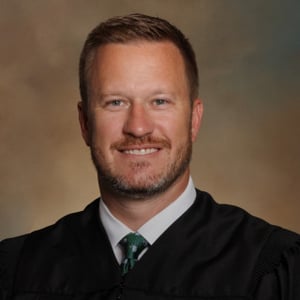
Circuit Court Judge, State of Tennessee
A West Tennessee native, Judge Jimmy Turner graduated from Middle Tennessee State University in 2006 with a Bachelor of Science in Aerospace Administration. He graduated from Nashville School of Law in 2011. As an attorney, his practice focused on criminal defense, domestic relations and personal injury litigation representing both plaintiffs and defendants. He also served as the City Attorney for Eagleville, Tennessee. In 2021, Judge Turner was appointed by Governor Bill Lee as Circuit Court Judge for the 16th Judicial District. He presides over a criminal docket. Judge Turner and his wife Erin reside in Lascassas, Tennessee with their two sons, Hudson and Harrison.
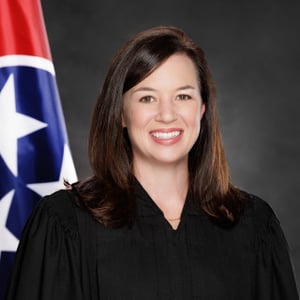
Justice, Tennessee Supreme Court
Tennessee Gov. Bill Haslam appointed Mary L. Wagner of Memphis as Circuit Court Judge, Division VII, for the 30th Judicial District on October 24, 2016. Wagner was elected to this judgeship in August 2018.
“With her extensive background in Shelby County, Mary Wagner is well prepared for a seat on the circuit court in the 30th Judicial District,” Haslam said. “We are fortunate to have someone with her experience, and we are pleased to announce this appointment.”
Prior to her appointment Wagner practiced with the Memphis law firm Rice, Amundsen & Caperton PLLC, where she had a general civil litigation practice. While at the firm, she taught at the Cecil C. Humphreys School of Law at the University of Memphis from 2012-2014 as an adjunct professor, teaching second-year law students advanced skills in legal writing and oral advocacy and first-year students legal writing, research and analysis.
Before joining Rice, Amundsen & Caperton, Wagner practiced with a regional insurance defense firm. She served as a law clerk from 2009-2010 for Judge Steven Stafford of the Tennessee Court of Appeals, law clerk for Judge Robert L. Childers in the Shelby County Circuit Court from 2008-2009 and worked as an extern in 2008 with the U.S. Attorney’s office for the Western District of Tennessee. Wagner was a research assistant in 2007 for Prof. Andrew McClurg during law school.
Wagner received her law degree from the University of Memphis in 2009 graduating magna cum laude, 4th in her class. While in law school, Wagner served as a Notes Editor for the University of Memphis Law Review. She received a bachelor’s degree in 2006 from the University of Colorado, majoring in political science.
Throughout her career, Wagner has been active in the legal community. She is a member of the Tennessee, Mississippi and Memphis Bar Associations. She serves on various committees and board for these associations. In 2018, Wagner was elected as a Fellow of the Memphis Bar Foundation. Also, in 2018, Wagner was selected as one of the Twelve Most Outstanding Women, Honoring Women in the Judicial System by the Memphis Inter-Denominational Fellowship Inc. Wagner is also active in the Tennessee Judicial Conference, where she served as Secretary and currently serves on the Tennessee Pattern Jury Instruction Committee and Legislation Committee. Wagner is also a member of the Tennessee Trial Judges Association. In 2019, Wagner received the Chancellor Charles A. Round Memorial Award for Outstanding Judge of the Year from the Young Lawyers’ Division of the Memphis Bar Association.
Judge Wagner has also been appointed by the Tennessee Supreme Court as special judge for the Tennessee Worker’s Compensation Appeals Panel and as a member of a Three-Judge panel in a constitutional case.
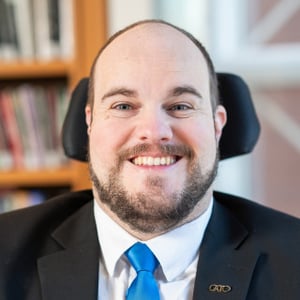
Director, Project on Criminal Justice, Cato Institute
Matthew Cavedon is the Director of the Cato Institute’s Project on Criminal Justice. He focuses on reforming plea-driven mass adjudication, ensuring police accountability, and defending constitutional criminal originalism. Cavedon’s scholarship has been published (or is forthcoming in) publications including the Arizona State Law Journal, Cato Supreme Court Review, Seattle University Law Review, and Georgetown Journal of Law and Public Policy. Formerly a Georgia public defender and fellow at the Institute for Justice, Cavedon has taught law school courses on criminal law and procedure, as well as the First Amendment. Cavedon clerked for a U.S. district court and the Supreme Court of Georgia. He came to Cato following a fellowship at the Emory University Center for the Study of Law and Religion.

Chief Policy Counsel, Council on Criminal Justice and Senior Advisor, Right on Crime
Marc A. Levin is the Chief Policy Counsel for the Council on Criminal Justice (counciloncj.org) and Senior Advisor for Right on Crime.
An attorney and accomplished author on legal and public policy issues, Marc began the Foundation’s criminal justice program in 2005. This work contributed to nationally praised policy changes that have been followed by dramatic declines in crime and incarceration in Texas. Building on this success, in 2010, Levin developed the concept for the Right on Crime initiative, a TPPF project in partnership with Prison Fellowship and the American Conservative Union Foundation. Right on Crime has become the national clearinghouse for conservative criminal justice reforms and has contributed to the adoption of policies in dozens of states that fight crime, support victims, and protect taxpayers.
In 2014, Levin was named one of the “Politico 50” in the magazine’s annual “list of thinkers, doers, and dreamers who really matter in this age of gridlock and dysfunction.”
Marc has testified on criminal justice policy on four occasions before Congress and has testified before legislatures in states including Texas, Nevada, Kansas, Wisconsin, and California. He also has met personally with leaders such as U.S. Presidents, Speakers of the House, and the Justice Commtitee of the United Kingdom Parliament to share his ideas on criminal justice reform. In 2007, he was honored in a resolution unanimously passed by the Texas House of Representatives that stated, “Mr. Levin’s intellect is unparalleled and his research is impeccable.”
Since 2005, Marc has published dozens of policy papers on topics such as sentencing, probation, parole, reentry, and overcriminalization which are available on the TPPF website. Levin’s articles on law and public policy have been featured in publications such as the Wall Street Journal, USA Today, Texas Review of Law & Politics, National Law Journal, New York Daily News, Jerusalem Post, Toronto Star, Atlanta Journal-Constitution, Philadelphia Inquirer, San Francisco Chronicle, Washington Times, Los Angeles Daily Journal, Charlotte Observer, Dallas Morning News, Houston Chronicle, Austin American-Statesman, San Antonio Express-News and Reason Magazine.
In 1999, Marc graduated with honors from the University of Texas with a B.A. in Plan II Honors and Government. In 2002, Marc received his J.D. with honors from the University of Texas School of Law. Marc was a Charles G. Koch Summer Fellow in 1996. He served as a law clerk to Judge Will Garwood on the U.S. Court of Appeals for the Fifth Circuit and Staff Attorney at the Texas Supreme Court.
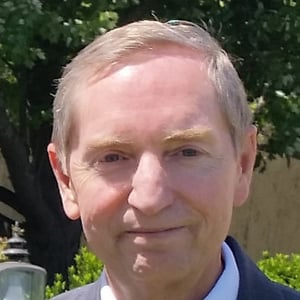
Legal Director & General Counsel, Criminal Justice Legal Foundation
Kent S. Scheidegger has been the Legal Director of the Criminal Justice Legal Foundation since December 1986. He also served as Chairman of the Criminal Law Practice Group of the Federalist Society 2003 to 2005. His articles on criminal and constitutional law have been published in law reviews, national legal publications, and congressional reports. Legal arguments authored by Mr. Scheidegger have been cited and incorporated in several precedent-setting United States Supreme Court decisions.
After receiving a degree in physics with honors from New Mexico State University in 1976, Mr. Scheidegger served for six years in the United States Air Force as a Nuclear Research Officer. He took his law degree with distinction from the University of the Pacific, McGeorge School of Law in 1982 and practiced civil law in Northern California. He was general counsel of California Cooler, Inc. from 1984 until 1986, when he joined the Foundation.

AI Innovation and Law Fellow, University of Texas School of Law
Kevin Frazier is an AI Innovation and Law Fellow with University of Texas School of Law.
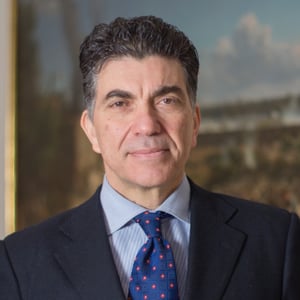
University of Florence, Professor of Constitutional Law
Distinguished Research Affiliate Andrea Simoncini is a professor of constitutional law at the University of Florence. As a constitutional scholar whose work is internationally well known, Simoncini focuses his research on Italian and European constitutional law, developmental dynamics of the sources of law, social rights, and the study of the interrelations between natural law and positive legal systems. He also studies the nexus of environmental politics with constitutional law and human rights.
Simoncini spent fall semester 2013 at the Kellogg Institute as a visiting fellow working on a joint project with Mauro Magatti: Europe: An Institution without a Society? His Kellogg collaboration with Magatti examined the changes over time in the meaning of civil society in Europe, looking particularly on how it evolved from a communally oriented to a more individualistic concept. Using a multidisciplinary approach, the pair study the relationship between the multiple civil societies of Europe and the future of the EU's institutional framework.
Twice a visiting professor at Notre Dame Law School, Simoncini was also the University's 2009 Fulbright Italian Scholar, serving as research fellow at the Nanovic Institute for European Studies.

Legal Fellow, Center for Constitutional Studies, Cato Institute
Brent Skorup is a legal fellow in the Cato Institute’s Robert A. Levy Center for Constitutional Studies.
Before joining Cato, he was a senior research fellow at the Mercatus Center at the George Mason University. His research areas include free speech, technology law, Fourth Amendment protections, regulation, and property law. Skorup has published pieces in economics and law journals and in popular media, including The Wall Street Journal, The New York Times, Bloomberg Law, Reuters, and Wired. He’s appeared as a TV and radio interview guest for news outlets like C‑SPAN, NPR, CBS News, ABC News, and CNBC Asia.
The Pennsylvania Supreme Court, a dissenting opinion at the Illinois Supreme Court, and the ALI's Restatement of the Law of Property have cited his legal research and he has testified as a technology and legal expert in legislative hearings in several states. Skorup has been appointed to several federal and state advisory bodies and he is currently a member of the Texas Advanced Air Mobility Advisory Committee.
Skorup has a BA in economics from Wheaton College and a law degree from the George Mason University School of Law, where he was articles editor for the Civil Rights Law Journal. He was a legal clerk at the FCC’s wireless bureau and Office of General Counsel and at the Energy and Commerce Committee in the U.S. House of Representatives.

Laurence H. Silberman Chair in Constitutional Governance, American Enterprise Institute; Executive Director, Antonin Scalia Law School’s C. Boyden Gray Center for the Study of the Administrative State
Adam J. White is the Laurence H. Silberman Chair in Constitutional Governance and senior fellow at the American Enterprise Institute, where he focuses on the Supreme Court and the administrative state. He also directs the Antonin Scalia Law School’s C. Boyden Gray Center for the Study of the Administrative State.
He writes on regulation and constitutional government for a variety of publications. He practiced law in Washington, D.C., after clerking for the D.C. Circuit's Judge David Sentelle. He also has been chairman of the ABA's Administrative Law Section.
In 2021, he served on the Presidential Commission on the Supreme Court of the United States, where he criticized “Court packing” and other efforts to restructure the Supreme Court.
Director, Project on Criminal Justice, Cato Institute
Matthew Cavedon is the Director of the Cato Institute’s Project on Criminal Justice. He focuses on reforming plea-driven mass adjudication, ensuring police accountability, and defending constitutional criminal originalism. Cavedon’s scholarship has been published (or is forthcoming in) publications including the Arizona State Law Journal, Cato Supreme Court Review, Seattle University Law Review, and Georgetown Journal of Law and Public Policy. Formerly a Georgia public defender and fellow at the Institute for Justice, Cavedon has taught law school courses on criminal law and procedure, as well as the First Amendment. Cavedon clerked for a U.S. district court and the Supreme Court of Georgia. He came to Cato following a fellowship at the Emory University Center for the Study of Law and Religion.
Chief Policy Counsel, Council on Criminal Justice and Senior Advisor, Right on Crime
Marc A. Levin is the Chief Policy Counsel for the Council on Criminal Justice (counciloncj.org) and Senior Advisor for Right on Crime.
An attorney and accomplished author on legal and public policy issues, Marc began the Foundation’s criminal justice program in 2005. This work contributed to nationally praised policy changes that have been followed by dramatic declines in crime and incarceration in Texas. Building on this success, in 2010, Levin developed the concept for the Right on Crime initiative, a TPPF project in partnership with Prison Fellowship and the American Conservative Union Foundation. Right on Crime has become the national clearinghouse for conservative criminal justice reforms and has contributed to the adoption of policies in dozens of states that fight crime, support victims, and protect taxpayers.
In 2014, Levin was named one of the “Politico 50” in the magazine’s annual “list of thinkers, doers, and dreamers who really matter in this age of gridlock and dysfunction.”
Marc has testified on criminal justice policy on four occasions before Congress and has testified before legislatures in states including Texas, Nevada, Kansas, Wisconsin, and California. He also has met personally with leaders such as U.S. Presidents, Speakers of the House, and the Justice Commtitee of the United Kingdom Parliament to share his ideas on criminal justice reform. In 2007, he was honored in a resolution unanimously passed by the Texas House of Representatives that stated, “Mr. Levin’s intellect is unparalleled and his research is impeccable.”
Since 2005, Marc has published dozens of policy papers on topics such as sentencing, probation, parole, reentry, and overcriminalization which are available on the TPPF website. Levin’s articles on law and public policy have been featured in publications such as the Wall Street Journal, USA Today, Texas Review of Law & Politics, National Law Journal, New York Daily News, Jerusalem Post, Toronto Star, Atlanta Journal-Constitution, Philadelphia Inquirer, San Francisco Chronicle, Washington Times, Los Angeles Daily Journal, Charlotte Observer, Dallas Morning News, Houston Chronicle, Austin American-Statesman, San Antonio Express-News and Reason Magazine.
In 1999, Marc graduated with honors from the University of Texas with a B.A. in Plan II Honors and Government. In 2002, Marc received his J.D. with honors from the University of Texas School of Law. Marc was a Charles G. Koch Summer Fellow in 1996. He served as a law clerk to Judge Will Garwood on the U.S. Court of Appeals for the Fifth Circuit and Staff Attorney at the Texas Supreme Court.
Legal Director & General Counsel, Criminal Justice Legal Foundation
Kent S. Scheidegger has been the Legal Director of the Criminal Justice Legal Foundation since December 1986. He also served as Chairman of the Criminal Law Practice Group of the Federalist Society 2003 to 2005. His articles on criminal and constitutional law have been published in law reviews, national legal publications, and congressional reports. Legal arguments authored by Mr. Scheidegger have been cited and incorporated in several precedent-setting United States Supreme Court decisions.
After receiving a degree in physics with honors from New Mexico State University in 1976, Mr. Scheidegger served for six years in the United States Air Force as a Nuclear Research Officer. He took his law degree with distinction from the University of the Pacific, McGeorge School of Law in 1982 and practiced civil law in Northern California. He was general counsel of California Cooler, Inc. from 1984 until 1986, when he joined the Foundation.
Director, Project on Criminal Justice, Cato Institute
Matthew Cavedon is the Director of the Cato Institute’s Project on Criminal Justice. He focuses on reforming plea-driven mass adjudication, ensuring police accountability, and defending constitutional criminal originalism. Cavedon’s scholarship has been published (or is forthcoming in) publications including the Arizona State Law Journal, Cato Supreme Court Review, Seattle University Law Review, and Georgetown Journal of Law and Public Policy. Formerly a Georgia public defender and fellow at the Institute for Justice, Cavedon has taught law school courses on criminal law and procedure, as well as the First Amendment. Cavedon clerked for a U.S. district court and the Supreme Court of Georgia. He came to Cato following a fellowship at the Emory University Center for the Study of Law and Religion.
Chief Policy Counsel, Council on Criminal Justice and Senior Advisor, Right on Crime
Marc A. Levin is the Chief Policy Counsel for the Council on Criminal Justice (counciloncj.org) and Senior Advisor for Right on Crime.
An attorney and accomplished author on legal and public policy issues, Marc began the Foundation’s criminal justice program in 2005. This work contributed to nationally praised policy changes that have been followed by dramatic declines in crime and incarceration in Texas. Building on this success, in 2010, Levin developed the concept for the Right on Crime initiative, a TPPF project in partnership with Prison Fellowship and the American Conservative Union Foundation. Right on Crime has become the national clearinghouse for conservative criminal justice reforms and has contributed to the adoption of policies in dozens of states that fight crime, support victims, and protect taxpayers.
In 2014, Levin was named one of the “Politico 50” in the magazine’s annual “list of thinkers, doers, and dreamers who really matter in this age of gridlock and dysfunction.”
Marc has testified on criminal justice policy on four occasions before Congress and has testified before legislatures in states including Texas, Nevada, Kansas, Wisconsin, and California. He also has met personally with leaders such as U.S. Presidents, Speakers of the House, and the Justice Commtitee of the United Kingdom Parliament to share his ideas on criminal justice reform. In 2007, he was honored in a resolution unanimously passed by the Texas House of Representatives that stated, “Mr. Levin’s intellect is unparalleled and his research is impeccable.”
Since 2005, Marc has published dozens of policy papers on topics such as sentencing, probation, parole, reentry, and overcriminalization which are available on the TPPF website. Levin’s articles on law and public policy have been featured in publications such as the Wall Street Journal, USA Today, Texas Review of Law & Politics, National Law Journal, New York Daily News, Jerusalem Post, Toronto Star, Atlanta Journal-Constitution, Philadelphia Inquirer, San Francisco Chronicle, Washington Times, Los Angeles Daily Journal, Charlotte Observer, Dallas Morning News, Houston Chronicle, Austin American-Statesman, San Antonio Express-News and Reason Magazine.
In 1999, Marc graduated with honors from the University of Texas with a B.A. in Plan II Honors and Government. In 2002, Marc received his J.D. with honors from the University of Texas School of Law. Marc was a Charles G. Koch Summer Fellow in 1996. He served as a law clerk to Judge Will Garwood on the U.S. Court of Appeals for the Fifth Circuit and Staff Attorney at the Texas Supreme Court.
Legal Director & General Counsel, Criminal Justice Legal Foundation
Kent S. Scheidegger has been the Legal Director of the Criminal Justice Legal Foundation since December 1986. He also served as Chairman of the Criminal Law Practice Group of the Federalist Society 2003 to 2005. His articles on criminal and constitutional law have been published in law reviews, national legal publications, and congressional reports. Legal arguments authored by Mr. Scheidegger have been cited and incorporated in several precedent-setting United States Supreme Court decisions.
After receiving a degree in physics with honors from New Mexico State University in 1976, Mr. Scheidegger served for six years in the United States Air Force as a Nuclear Research Officer. He took his law degree with distinction from the University of the Pacific, McGeorge School of Law in 1982 and practiced civil law in Northern California. He was general counsel of California Cooler, Inc. from 1984 until 1986, when he joined the Foundation.
AI Innovation and Law Fellow, University of Texas School of Law
Kevin Frazier is an AI Innovation and Law Fellow with University of Texas School of Law.
University of Florence, Professor of Constitutional Law
Distinguished Research Affiliate Andrea Simoncini is a professor of constitutional law at the University of Florence. As a constitutional scholar whose work is internationally well known, Simoncini focuses his research on Italian and European constitutional law, developmental dynamics of the sources of law, social rights, and the study of the interrelations between natural law and positive legal systems. He also studies the nexus of environmental politics with constitutional law and human rights.
Simoncini spent fall semester 2013 at the Kellogg Institute as a visiting fellow working on a joint project with Mauro Magatti: Europe: An Institution without a Society? His Kellogg collaboration with Magatti examined the changes over time in the meaning of civil society in Europe, looking particularly on how it evolved from a communally oriented to a more individualistic concept. Using a multidisciplinary approach, the pair study the relationship between the multiple civil societies of Europe and the future of the EU's institutional framework.
Twice a visiting professor at Notre Dame Law School, Simoncini was also the University's 2009 Fulbright Italian Scholar, serving as research fellow at the Nanovic Institute for European Studies.
Legal Fellow, Center for Constitutional Studies, Cato Institute
Brent Skorup is a legal fellow in the Cato Institute’s Robert A. Levy Center for Constitutional Studies.
Before joining Cato, he was a senior research fellow at the Mercatus Center at the George Mason University. His research areas include free speech, technology law, Fourth Amendment protections, regulation, and property law. Skorup has published pieces in economics and law journals and in popular media, including The Wall Street Journal, The New York Times, Bloomberg Law, Reuters, and Wired. He’s appeared as a TV and radio interview guest for news outlets like C‑SPAN, NPR, CBS News, ABC News, and CNBC Asia.
The Pennsylvania Supreme Court, a dissenting opinion at the Illinois Supreme Court, and the ALI's Restatement of the Law of Property have cited his legal research and he has testified as a technology and legal expert in legislative hearings in several states. Skorup has been appointed to several federal and state advisory bodies and he is currently a member of the Texas Advanced Air Mobility Advisory Committee.
Skorup has a BA in economics from Wheaton College and a law degree from the George Mason University School of Law, where he was articles editor for the Civil Rights Law Journal. He was a legal clerk at the FCC’s wireless bureau and Office of General Counsel and at the Energy and Commerce Committee in the U.S. House of Representatives.
Laurence H. Silberman Chair in Constitutional Governance, American Enterprise Institute; Executive Director, Antonin Scalia Law School’s C. Boyden Gray Center for the Study of the Administrative State
Adam J. White is the Laurence H. Silberman Chair in Constitutional Governance and senior fellow at the American Enterprise Institute, where he focuses on the Supreme Court and the administrative state. He also directs the Antonin Scalia Law School’s C. Boyden Gray Center for the Study of the Administrative State.
He writes on regulation and constitutional government for a variety of publications. He practiced law in Washington, D.C., after clerking for the D.C. Circuit's Judge David Sentelle. He also has been chairman of the ABA's Administrative Law Section.
In 2021, he served on the Presidential Commission on the Supreme Court of the United States, where he criticized “Court packing” and other efforts to restructure the Supreme Court.

Panel 1: Matter of First Impression: The Constitution on the Front Lines
2026 Tennessee Chapters Conference
Nashville, TNCriminal Law & Procedure at the Supreme Court—A Recap of OT25
Matthew P. Cavedon, Marc Levin, Kent Scheidegger
This term, several important questions of criminal law and procedure reached the Supreme Court, ranging...
Criminal Law & Procedure at the Supreme Court—A Recap of OT25
Matthew P. Cavedon, Marc Levin, Kent Scheidegger
This term, several important questions of criminal law and procedure reached the Supreme Court, ranging...
Criminal Law & Procedure at the Supreme Court—A Recap of OT25
Transporting Abortifacients Across State Lines: Prospects for Indictment and Extradition
Paul Linton
On January 31, 2025, a Louisiana grand jury indicted a New York physician—Dr. Margaret Carpenter—for...
Panel III: Let Slip the AI Overlords? Justice and Federal Regulators
Kevin Frazier, Andrea Simoncini, Brent Skorup, Adam White
Panel 3 will tackle Anastasia Boden and Brent Skorup’s paper, “Welcoming Our AI Overlords and...
Panel III: Let Slip the AI Overlords? Justice and Federal Regulators
The Future of Law in an AI World
Washington, DCTopics
Bad Judicial Medicine
This post originally appeared in American Reformer. President Biden and Senator Majority Leader Chuck Schumer recently announced...
Topics
FedSoc 2023 National Security Symposium: The Legal, Practical, and Policy Implications of the Russia-Ukraine Conflict
Panel I: The Economic War: What Has Been Done, What Can Be Done, and What...
Topics
Ken Starr: The Quiet Warrior
It was the summer of 2003. I was interning at the U.S. Solicitor General’s office...