

Partner, Steptoe & Johnson LLP
Stewart Baker is a partner in the law firm of Steptoe & Johnson in Washington, D.C. From 2005 to 2009, he was the first Assistant Secretary for Policy at the Department of Homeland Security. His law practice covers cybersecurity, data protection, homeland security, and travel and foreign investment regulation; he has been awarded one patent.
Mr. Baker has been General Counsel of the National Security Agency and General Counsel of the commission that investigated WMD intelligence failures prior to the Iraq war. He is the author of Skating on Stilts, a book on terrorism, cybersecurity, and other technology issues; he also hosts the weekly Cyberlaw Podcast.
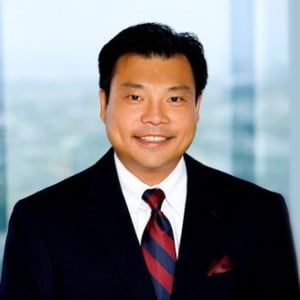
Attorney and Legal Commentator
John Shu is an attorney and legal commentator. His focus areas include constitutional law, securities & corporate law, antitrust law, administrative law, politics, and international affairs. Mr. Shu has lectured and published on a wide variety of issues.
Mr. Shu served President George H.W. Bush and President George W. Bush. He also served Judge Stanley Sporkin, U.S. District Court for the District of Columbia, who was Director of Enforcement at the U.S. Securities & Exchange Commission and General Counsel at the Central Intelligence Agency, and Judge Paul Roney, U.S. Court of Appeals for the Eleventh Circuit, who was Presiding Judge of the Foreign Intelligence Surveillance Court of Review.
Mr. Shu is a member of the National Committee on U.S. - China Relations, the Pacific Council on International Policy, and the Foreign Policy Association.

Judge, United States Court of Appeals, Ninth Circuit
Judge Carlos Bea serves as a judge on the United States Court of Appeals for the Ninth Circuit. He received his Bachelor's Degree from Stanford University in 1956 and his J.D. from Stanford Law School in 1958. Judge Bea was born in San Sebastian, Spain, and immigrated with his family to Cuba in 1939. In 1952, he represented Cuba on the Cuban National basketball team in the Helsinki Olympics. Judge Bea became a naturalized citizen of the United States in 1958. He engaged in private practice in San Francisco, principally in the area of civil trials (jury and non-jury), from 1959-75 at Dunne, Phelps & Mills and from 1975-90 at Carlos Bea, A Law Corporation. He taught courses in civil litigation advocacy at Hastings College of Law and Stanford Law School. From 1990 to 2003, Judge Bea served as a judge of the San Francisco Superior Court. He was nominated by President George W. Bush to the United States Court of Appeals for the Ninth Circuit and was confirmed in 2003.
Judge Bea and his wife Louise reside in San Francisco, where they raised their four sons, Sebastian, Alexander, Nicholas, and Dominic.
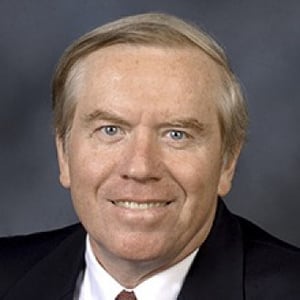
Edward J. Phelps Professor of Law and Economics and Kauffman Distinguished Research Scholar in Law, Economics, and Entrepreneurship, Yale Law School
Professor George L. Priest passed away on Dec. 17, 2024. Please read his obituary here.
George L. Priest is the Edward J. Phelps Professor of Law and Economics and Kauffman Distinguished Research Scholar in Law, Economics, and Entrepreneurship at Yale Law School. An internationally recognized expert, Professor Priest has focused his research over the past two decades on antitrust, the operation of private and public insurance, and the role of the legal system in promoting economic growth. He joined Yale Law School in 1981 and is co-director of the John M. Olin Center for Law, Economics and Public Policy, which facilitates the scholarly work of the Yale law and economics faculty and supports student interest and research in the field. Before coming to Yale, Professor Priest taught law at the University of Chicago, SUNY/Buffalo, and UCLA. His subject areas are antitrust; capitalism; regulated industries; torts; and insurance and public policy. Professor Priest holds a B.A. from Yale and a J.D. from the University of Chicago.

Associate General Counsel, Indiana University
Beth Cate is Associate General Counsel for Indiana University, and practices in a variety of areas, with emphases on intellectual property law and the law and ethics concerning research and the use of information technologies. Beth is also an adjunct member of the faculty in the University's School for Public and Environmental Affairs. Before joining the University in 1998, Beth served as in-house counsel for Eli Lilly and Company, practicing in a variety of areas; clerked for the Hon. S. Jay Plager of the United States Court of Appeals for the Federal Circuit; and practiced with the law firm of McKenna & Cuneo (now McKenna Long & Aldridge) in Washington D.C., focusing on civil litigation and international trade. Beth holds a B.A. in Economics from The George Washington University and a J.D. from Harvard Law School, both with honors. She is a member of both EDUCAUSE and the National Association of College and University Attorneys (NACUA) and a frequent speaker for these and other organizations.
Distinguished Scholar in Intellectual Property Law, Indiana University Maurer School of Law
Professor Leaffer, formerly the Anderson-Fornoff Professor of Law and Values at the University of Toledo College of Law, is an internationally known intellectual property law scholar. He received his JD at the University of Texas and his LLM in Trade Regulation at New York University Law School.
At Indiana since 1997, Leaffer teaches Copyright Law, Trademark Law, Intellectual Property Survey, and International Intellectual Property. He is the author of three books and numerous articles, including the best-selling treatise, Understanding Copyright Law, now in its fourth edition. Leaffer is also the author of Copyright Law: Cases and Materials, 7th edition and International Treaties on Intellectual Property, 2d edition. His current research focuses on the interplay of intellectual property law in a global marketplace.
Before becoming a full-time teacher, he practiced trademark law with American Home Products Corp. and the firm of Haseltine Lake & Waters in New York. He also has served as attorney-advisor to the U.S. Patent and Trademark Office and the U.S. Copyright Office.
Leaffer is a popular speaker in both the United States and Europe on all areas of intellectual property law, and has been honored as both a scholar and lecturer. He currently serves on the international executive committee of the Association Littéraire et Artistique Internationale, a non-governmental institution based in Paris, that promotes the rights of authors worldwide.

Vice President, Edwin Meese III Institute for the Rule of Law, Advancing American Freedom
John G. Malcolm oversees Advancing American Freedom’s work to increase understanding of the Constitution and the rule of law as Vice President of the organization’s Edwin Meese III Institute for the Rule of Law. Malcolm brings to the challenge a wealth of legal expertise and experience in both the public and private sectors.
Prior to joining Advancing American Freedom in 2025, Malcolm was the Vice President of the Institute for Constitutional Government and the Director of the Meese Center for Legal and Judicial Studies at the Heritage Foundation. Prior to joining Heritage in 2012, Malcolm was general counsel at the U.S. Commission on International Religious Freedom, as well as a distinguished practitioner in residence at Pepperdine Law School. From 2004 to 2009, Malcolm was executive vice president and director of worldwide anti-piracy operations for the Motion Picture Association.
Malcolm served as a deputy assistant attorney general in the Department of Justice’s Criminal Division from 2001 to 2004, where he oversaw sections on computer crime and intellectual property, domestic security, child exploitation and obscenity, and special investigations. Immediately prior to that, he was a founding partner in the Atlanta law firm of Malcolm & Schroeder, LLP.
From 1990 to 1997, Malcolm was an assistant U.S. attorney in Atlanta, assigned to the fraud and public corruption section, and also an associate independent counsel, investigating fraud and abuse in the Department of Housing and Urban Development. He was honored with the Director’s Award for Superior Performance for his work in connection with the successful prosecution of Walter Leroy Moody Jr., who assassinated an 11th Circuit judge and the head of the Savannah chapter of the NAACP.
A graduate of Harvard Law School and Columbia College, Malcolm began his career as a law clerk to a federal district court judge and a federal appellate court judge, and as an associate at the Atlanta-based law firm of Sutherland, Asbill & Brennan (new Eversheds Sutherland).
Malcolm, who resides in Washington, D.C., serves on the Board of Trustees of the Washington National Opera and is a Senate-confirmed member of the Board of Directors of the Legal Services Corporation, the largest funder of civil legal aid in the United States.

Qualcomm Litigation Update
Stewart A. Baker, John Shu
On March 5, the committee on Foreign Investment in the United States (CFIUS) raised objection...
Topics
President Trump and CFIUS Were Right To Halt Broadcom’s Hostile Takeover Attempt of Qualcomm
On Monday evening, President Trump swiftly shut down Broadcom/Avago’s attempted hostile takeover of Qualcomm, thus...
Mexico's New Class Action Law
Carlos T. Bea, Eduardo Garcia, Marco Martinez, George L. Priest, Luis Daniel Rodriguez
This panel will discuss the new class action law in Mexico and how it compares...
The Scurvy of Hollywood: International Film Piracy and the Pirate Bay Cases
Beth Cate, Marshall Leaffer, John G. Malcolm
The Indiana-Bloomington Student Chapter hosted this debate on "The Scurvy of Hollywood: International Film Piracy...