
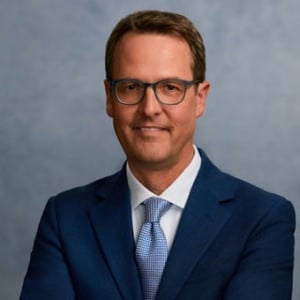
Partner, Orrick, Herrington & Sutcliffe LLP
Andy excels at solving complex problems for his clients using a variety of effective strategies. As former Chief Deputy Attorney General for the State of Wisconsin, Andy Cook has extensive experience representing businesses before state Attorneys General involving investigations and lawsuits. His strong relationships with Attorneys General and their senior staff frequently facilitate the successful resolution of client issues through diplomacy and negotiations. When litigation becomes necessary, Andy effectively advocates for clients throughout the litigation process.
Andy combines his legal expertise in numerous areas of law covered by state Attorneys General, an understanding of how state AG offices operate, and vast knowledge of legal and regulatory issues facing his clients. This substantive and comprehensive legal approach is crucial to effectively representing clients before state Attorneys General. Andy also has substantial experience drafting and enacting complex civil liability reforms before state legislatures to successfully address client goals.
Andy’s main practice focuses on advising Fortune 500 companies before state Attorneys General in the areas of antitrust, consumer protection, False Claims Act, environmental law, and cybersecurity and data privacy. Andy, in collaboration with a team of attorneys, successfully navigated a client through antitrust regulatory review by state Attorneys General in one of the nation’s largest mergers of two major telecommunication companies. Andy also worked with a team of lawyers representing a large corporation involving the multistate opioids litigation brought by state Attorneys General.
Andy gained valuable experience serving as Deputy Attorney General for the State of Wisconsin where he was the second in command of the 700-plus state agency. In his role as Chief Deputy Attorney General, Andy oversaw the day-to-day operations at the Wisconsin Department of Justice (DOJ); directed the State’s litigation strategy; negotiated, reviewed, and approved all settlements; drafted and reviewed attorney general opinions; managed the agency’s budget; oversaw civil and criminal investigations handled by DOJ; and managed DOJ’s legislative agenda.
Andy played college hockey and remains active by running, cross country skiing, and playing golf. On the weekends, Andy and his wife enjoy watching their kids’ sporting events, including soccer, baseball, gymnastics, and track. In his rare spare time, Andy reads history books.
Chancellor's Professor of Law and Political Science, University of California, Irvine School of Law
Professor Richard L. Hasen is Chancellor’s Professor of Law and Political Science at the University of California, Irvine. Hasen is a nationally recognized expert in election law and campaign finance regulation, and is co-author of a leading casebook on election law.
From 2001-2010, he served (with Dan Lowenstein) as founding co-editor of the quarterly peer-reviewed publication, Election Law Journal. He is the author of over 100 articles on election law issues, published in numerous journals including the Harvard Law Review, Stanford Law Review and Supreme Court Review. He was elected to The American Law Institute in 2009 and served as an Adviser on ALI’s law reform project, Principles of Election Law: Resolution of Election Disputes.
Professor Hasen was named one of the 100 most influential lawyers in America by The National Law Journal in 2013, and one of the Top 100 Lawyers in California in 2005 and 2016 by the Los Angeles and San Francisco Daily Journal.
His op-eds and commentaries have appeared in many publications, including The New York Times, The Washington Post, Politico, and Slate. Hasen also writes the often-quoted Election Law Blog, which the ABA Journal named to its “Blawg 100 Hall of Fame” in 2015. His newest book, The Justice of Contradictions: Antonin Scalia and the Politics of Disruption, will be published in 2018 by Yale University Press.
Professor Hasen holds a B.A. degree (with highest honors) from UC Berkeley, and a J.D., M.A., and Ph.D. (Political Science) from UCLA. After law school, Hasen clerked for the Honorable David R. Thompson of the United States Court of Appeals for the Ninth Circuit, and then worked as a civil appellate lawyer at the Encino firm Horvitz and Levy.
From 1994-1997, Hasen taught at the Chicago-Kent College of Law and from 1998-2011 he taught at Loyola Law School, Los Angeles, where he was named the William H. Hannon Distinguished Professor of Law in 2005. He joined the UC Irvine School of Law faculty in July 2011, and is a faculty member of the UC Irvine Jack W. Peltason Center for the Study of Democracy.
U.S. Court of Appeals, Ninth Circuit
Sandra Segal Ikuta was confirmed as a judge of the U.S. Court of Appeals for the Ninth Circuit on June 19, 2006. She filled a judgeship vacant since September 1, 2000, when Chief Judge Emeritus James R. Browning took senior status.
Before becoming a U.S. Circuit Judge, California Gov. Arnold Schwarzenegger appointed her to be deputy secretary and general counsel of the California Resources Agency in January 2004.
Prior to her political appointment, Judge Ikuta was a partner at the Los Angeles office of O'Melveny & Myers LLP. She joined the law firm in 1990 as an associate and became a partner in 1997. She specialized in environmental and natural resources law and co-chaired the firm's environmental practice group. She previously served as a law clerk for U.S. Supreme Court Justice Sandra Day O'Connor, 1989-90, and Judge Alex Kozinski of the U.S. Court of Appeals for the Ninth Circuit, 1988-89.
Prior to her legal career, Judge Ikuta took an unorthodox career path, which included serving as the first female editor-in-chief of a national martial arts magazine.
She received her J.D. from the University of California at Los Angeles School of Law and a Master of Science from Columbia University School of Journalism. She earned her undergraduate degree from the University of California at Berkeley in 1976.
In addition to her duties as an active U.S. Circuit Judge, Judge Ikuta was an appointed member of the Judicial Conference of the U.S. Advisory Committee on Bankruptcy Rules.
Partner, Gibson Dunn & Crutcher LLP
Daniel M. Kolkey is a partner in the San Francisco office of Gibson, Dunn & Crutcher. A member of the Litigation Department, he is co-chair of the Appellate and Constitutional Law Practice Group. Mr. Kolkey returned to the firm in November 2003 after five years as an Associate Justice on the California Court of Appeal, Third Appellate District, in Sacramento.
Recognized in 2005 and 2007 by California Lawyermagazine as an Attorney of the Year in the fields of Government/Public Policy and Appellate law, respectively, and ranked in the first tier for California Appellate Litigation by Chambers USA in 2010, 2011, 2012, and 2013, Mr. Kolkey's practice focuses on appellate litigation. He has also advised four different governors on legal issues, and served as Governor Pete Wilson’s and Governor Arnold Schwarzenegger's lead negotiator for tribal-state compacts under the Indian Gaming Regulatory Act. He was named in 2004, 2005, and 2006 by the Daily Journal as one of the top 100 attorneys in California. And in May 2010, he was appointed by the California Chief Justice to the California Judicial Council’s Appellate Advisory Committee for a three-year term.
Prior to being appointed as an Associate Justice on the California Court of Appeal, Mr. Kolkey served as Legal Affairs Secretary and counsel to Governor Pete Wilson for four years. As such, he was responsible for all of the legal advice within the Governor's Office; approving all state agency appeals; supervising and directing litigation strategy with respect to lawsuits brought against the Governor in his official capacity; drafting the Governor's civil justice reform legislation; and negotiating tribal-state compacts under the Indian Gaming Regulatory Act.
Before serving Governor Wilson, Mr. Kolkey was a partner at Gibson Dunn, where he handled litigation at both the trial and appellate levels, including commercial disputes, political law litigation, and international arbitration.
As a litigator (before and after his government service from 1995 to 2003), Mr. Kolkey has handled class and shareholder actions; construction, real estate, employment, and contract disputes; unfair competition litigation; and political law litigation, including ballot litigation, Voting Rights Act claims, and redistricting matters.

Co-Chairman, The Federalist Society for Law and Public Policy Studies
Leonard is Co-Chairman and former Executive Vice President of the Federalist Society, joining the organization over 25 years ago. Since that time he has been instrumental in helping the organization top 70,000, focusing on the growth of lawyers membership, operations and activities advancing limited, constitutional government. In addition to his work at the Society, Leonard has advised President Trump on judicial selection, assisted with the Gorsuch and Kavanaugh Supreme Court selection and confirmation process, and served as a member of the transition team. He also organized the outside coalition efforts in support of the Roberts and Alito U.S. Supreme Court confirmations. Leonard was appointed by President George W. Bush to three terms to the U.S. Commission on International Religious Freedom as chairman. He was also a U.S. Delegate to the UN Council and UN Commission on Human Rights during the Bush Administration. Leonard was the recipient of the 2009 Bradley Prize, along with the other founders and directors of the Federalist Society, for his work in advancing freedom and the rule of law. He is the coeditor of Presidential Leadership: Rating the Best and the Worst in the White House, as well as the author of opinion editorials in the New York Times,The Wall Street Journal, and Washington Post. Leonard holds degrees from Cornell University and Cornell Law School. He presently resides in Northern Virginia, where he and his wife Sally have raised their seven children.
Associate Professor of Law, Loyola Law School Los Angeles
Levitt is a national expert in constitutional law and the law of democracy, with particular focus on election administration and redistricting. He has published in the Harvard Law Review, the Yale Law and Policy Review, the Georgetown Law Journal, the William & Mary Law Review, and the peer-reviewed Election Law Journal, among others. In the spring of 2013, he served as a visiting faculty member at the Yale Law School.
Levitt has been invited to testify before committees of the U.S. Senate, the U.S. Civil Rights Commission, several state legislative bodies, and both federal and state courts. His research has been cited extensively in the media and the courts, including the U.S. Supreme Court. He also maintains the website All About Redistricting, tracking the process of state and federal redistricting around the country, including litigation.
Levitt has served in various capacities for several presidential campaigns, including as the National Voter Protection Counsel in 2008, helping to run an effort ensuring that tens of millions of citizens could vote and have those votes counted. Before joining the faculty of Loyola Law School, he was counsel at the Brennan Center for Justice at NYU School of Law, for five years. He has also worked as in-house counsel to the country's largest independent voter registration and engagement operation, and at several nonprofit civil rights and civil liberties organizations.
Levitt served as a law clerk to the Honorable Stephen Reinhardt of the U.S. Court of Appeals for the Ninth Circuit. He holds a law degree and a masters degree in public administration from Harvard University, and was an articles editor for the Harvard Law Review. He is admitted to the bar in California, New Jersey, New York, and the District of Columbia, and to the U.S. Courts of Appeal for the Ninth Circuit and Eleventh Circuit, and the U.S. District Courts in the Central District of California and Northern District of Florida.
Associate Professor and Associate Director, Rose Institute of St, Claremont McKenna College
Dr. Ken Miller became Associate Director of the Rose Institute in 2009. He has served as a member of CMC’s Government faculty since 2003. Dr. Miller’s research focuses on state government institutions, with emphasis on direct democracy (initiative, referendum, and recall) and the interaction between law and politics. His publications include Direct Democracy and the Courts (Cambridge University Press 2009) and a co-edited volume The New Political Geography of California(Berkeley Public Policy Press 2008). Dr. Miller has worked with Rose Institute students on several research projects, including the 24-state Miller-Rose Institute Initiative Database. Dr. Miller returns this year after a year-long sabbatical at Princeton University in Princeton, New Jersey.

Founder, Law Office of Eileen J. O'Connor PLLC
After nearly 30 years as a national tax specialist with the IRS and major accounting firms, Eileen J. O’Connor, now an attorney in private practice, was Assistant Attorney General for the Justice Department’s Tax Division for six years during the administration of President George W. Bush and a member of then-President-elect Trump’s Treasury Department Transition Team. She focuses on federal administrative and tax law.

Senior Vice President for Legal Studies, Cato Institute
Clark Neily is senior vice president for legal studies at the Cato Institute. His areas of interest include constitutional law, overcriminalization, civil forfeiture, police accountability, and gun rights. Neily is the author of Terms of Engagement: How Our Courts Should Enforce the Constitution’s Promise of Limited Government. His writing has appeared in the Wall Street Journal, Forbes, and National Review Online, as well as various law reviews, including the Harvard Journal of Law and Public Policy, George Mason Law Review, Georgetown Journal of Law and Public Policy, NYU Journal of Law and Liberty, and Texas Review of Law and Politics. Neily is a frequent guest speaker and lecturer for the Federalist Society, Institute for Humane Studies, and American Constitution Society.
Before joining Cato in 2017, Neily was a senior attorney and constitutional litigator at the Institute for Justice and director of the Institute’s Center for Judicial Engagement. He is also an adjunct professor at the University of Texas School of Law, where he teaches constitutional litigation and public-interest law.
Neily served as co-counsel in District of Columbia v. Heller, the historic case in which the Supreme Court held for the first time that the Second Amendment protects an individual right to own a gun for self-defense.
Neily began his legal career as a law clerk to Judge Royce Lamberth on the U.S. District Court for the District of Columbia. After that he spent four years in the trial department of the Dallas-based firm Thompson & Knight. Neily received his undergraduate and law degrees from the University of Texas, where he was Chief Articles Editor of the Texas Law Review.
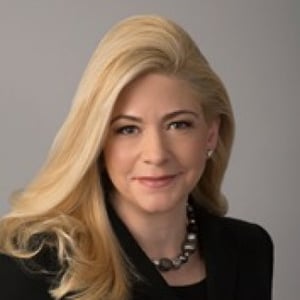
Partner, Gibson, Dunn & Crutcher LLP
Elizabeth Papez is a partner in the Washington, D.C. office of Gibson, Dunn & Crutcher LLP and a member of the firm’s litigation group. Her practice focuses on high-stakes class actions, complex commercial litigation, and related government investigations and appeals.
As a seasoned litigator and former U.S. Deputy Assistant Attorney General, Ms. Papez has substantial experience representing clients in the financial services, pharmaceutical, consumer, and product sectors. She regularly handles federal class actions, multidistrict litigation (MDLs) and other complex commercial disputes under federal and state antitrust statutes, banking and securities laws, and false claims acts, as well as parallel regulatory investigations with the U.S. Department of Justice (DOJ), the Securities and Exchange Commission (SEC), the Commodity Futures Trading Commission (CFTC), and the Food and Drug Administration (FDA).
Ms. Papez has been repeatedly recognized as one of Benchmark USA’s Top 250 Women in Litigation nationwide, which named her a “client favorite” who is “extremely smart and practical and very charismatic,” and is praised by peers as a “fierce, dynamic, bright, powerhouse of a litigator.” Ms. Papez is also recognized in The Legal 500 for her antitrust and appellate work, and by The Best Lawyers in America 2019 for her appellate practice.

Dean and Jesse H. Choper Distinguished Professor of Law, UC Berkeley School of Law
Erwin Chemerinsky became the 13th Dean of Berkeley Law on July 1, 2017, when he joined the faculty as the Jesse H. Choper Distinguished Professor of Law.
Prior to assuming this position, from 2008-2017, he was the founding Dean and Distinguished Professor of Law, and Raymond Pryke Professor of First Amendment Law, at University of California, Irvine School of Law, with a joint appointment in Political Science. Before that he was the Alston and Bird Professor of Law and Political Science at Duke University from 2004-2008, and from 1983-2004 was a professor at the University of Southern California Law School, including as the Sydney M. Irmas Professor of Public Interest Law, Legal Ethics, and Political Science. He also has taught at DePaul College of Law and UCLA Law School.
He is the author of eleven books, including leading casebooks and treatises about constitutional law, criminal procedure, and federal jurisdiction. His most recent books are, We the People: A Progressive Reading of the Constitution for the Twenty-First Century (Picador Macmillan) published in November 2018, and two books published by Yale University Press in 2017, Closing the Courthouse Doors: How Your Constitutional Rights Became Unenforceable and Free Speech on Campus (with Howard Gillman).
He also is the author of more than 200 law review articles. He writes a regular column for the Sacramento Bee, monthly columns for the ABA Journal and the Daily Journal, and frequent op-eds in newspapers across the country. He frequently argues appellate cases, including in the United States Supreme Court.
In 2016, he was named a fellow of the American Academy of Arts and Sciences. In 2017, National Jurist magazine again named Dean Chemerinsky as the most influential person in legal education in the United States.

Board Member, Center for Equal Opportunity
Roger Clegg is a Board Member at and former President and General Counsel of the Center for Equal Opportunity. He focuses on legal issues arising from civil rights laws--including the regulatory impact on business and the problems in higher education created by affirmative action. A former Deputy Assistant Attorney General in the Reagan and Bush administrations, Clegg held the second highest positions in both the Civil Rights Division (1987-91) and in the Environment and Natural Resources Division (1991-93). He has held several other positions at the U.S. Justice Department, including Assistant to the Solicitor General (1985-87), Associate Deputy Attorney General (1984-85), and Acting Assistant Attorney General in the Office of Legal Policy (1984). Clegg is a graduate of Yale University Law School (1981).
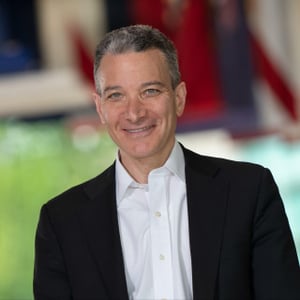
Professor of Law, The George Washington University Law School; CEO Emeritus, National Constitution Center
Jeffrey Rosen is the CEO Emeritus of the National Constitution Center, a professor of law at the George Washington University Law School, a senior fellow at the Foundation for Individual Rights and Expression (FIRE), and a contributing editor of The Atlantic. Host of "The Blessings of Liberty" podcast, he was previously the legal affairs editor of The New Republic and a staff writer for the New Yorker.
Rosen is the author of the New York Times bestsellers The Pursuit of Happiness and Conversations with RBG. His new book is The Pursuit of Liberty: How Hamilton vs. Jefferson Ignited the Lasting Battle Over Power in America.
Rosen is a graduate of Harvard College; Oxford University, where he was a Marshall Scholar; and Yale Law School. He is an elected member of the American Philosophical Society and the American Law Institute. In 2024, the French government recognized him as a Chevalier in the Ordre des Arts et des Lettres.
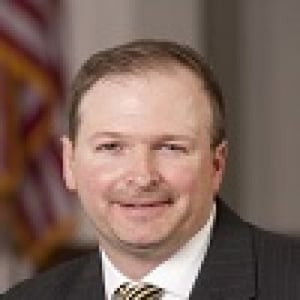
J. Richard Broughton is Assistant Professor of Law at the University of Detroit Mercy School of Law in Detroit, Michigan. He teaches in the areas of criminal law, criminal procedure, and constitutional law; his scholarship focuses on the separation of powers, constitutional law and politics, and crime policy.
Previously, Professor Broughton served as Visiting Assistant Professor of Law at Wayne State University, where he was named both the First-Year Professor of the Year and Upperclass Professor of the Year for 2008-09. He also has taught on the law school faculties at Stetson University and Texas Wesleyan University (where he also won two teaching awards), and as a Lecturer in Government at Johns Hopkins University. From 2005 to 2008, he served in the Criminal Division of the United States Department of Justice in Washington, D.C., where he advised senior Department leaders and federal prosecutors on issues arising in federal death penalty cases.
Board Member, Center for Equal Opportunity
Roger Clegg is a Board Member at and former President and General Counsel of the Center for Equal Opportunity. He focuses on legal issues arising from civil rights laws--including the regulatory impact on business and the problems in higher education created by affirmative action. A former Deputy Assistant Attorney General in the Reagan and Bush administrations, Clegg held the second highest positions in both the Civil Rights Division (1987-91) and in the Environment and Natural Resources Division (1991-93). He has held several other positions at the U.S. Justice Department, including Assistant to the Solicitor General (1985-87), Associate Deputy Attorney General (1984-85), and Acting Assistant Attorney General in the Office of Legal Policy (1984). Clegg is a graduate of Yale University Law School (1981).
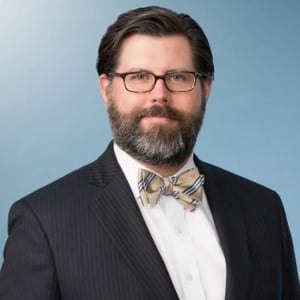
Partner, Faegre Drinker Biddle & Reath LLP
Brian J. Paul is an appellate lawyer and leads law teams in high-stakes commercial litigation. He has briefed and argued everything from weighty abstract constitutional issues to dollars-and-cents business issues and everything in-between, both on appeal and in trial courts around the country. A member of the American Law Institute, recent past-president of the Seventh Circuit Bar Association and top-tier ranked Chambers appellate lawyer, Brian had one client say about him: “Brian is one of the most respected and skilled appellate lawyers, not only in Indianapolis but across the country. He is trusted to deliver timely guidance on complex issues.” Another said: “He is excellent. I enjoyed working with him. He is able to put things into layman’s terms and explains things really well. His written and oral advocacy are short, crisp and to the point.”
Clients hire Brian to digest the complex, and make the complex simple and compelling for busy, generalist judges. In his writing, he strives to cut through jargon and legalese, and distill things down to what’s important. In his oral advocacy, by intense preparation, he strives to be the advocate whom judges trust for the right answers. In the dozens of cases he has argued, Brian has helped clients win on both sides of the “v.” His recent representations include:
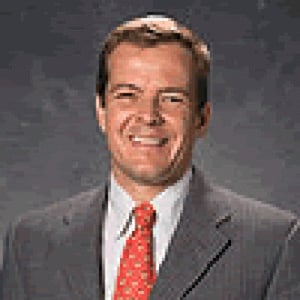
Professor of Law, University of Georgia School of Law
Peter B. "Bo" Rutledge is a full professor whose teaching and research interests include international dispute resolution, arbitration, international business transactions and the Supreme Court.
He is the author of the forthcoming book Arbitration and the Constitution and co-author with Gary Born of the book International Civil Litigation in the United States. His works have been published by Yale University Press, Oxford University Press and Cambridge University Press, and his articles have appeared in a diverse array of journals such as the University of Chicago Law Review, the Vanderbilt Law Review and the Journal of International Arbitration. He also regularly advises parties on matters of international dispute resolution (litigation and arbitration).
In 2008, the Supreme Court appointed Rutledge to brief and argue the case of Irizarry v. United States as amicus curiae in defense of the judgment below. He subsequently won the case, joining the ranks of a select few advocates who have successfully defended a judgment below when the government refused to do so. A former law clerk at the U.S. Supreme Court for Justice Clarence Thomas and the U.S. Court of Appeals for the 4th Circuit for Chief Judge J. Harvie Wilkinson III, Rutledge regularly files briefs and advises lawyers in matters before the Supreme Court and lower courts.
Given his interest in international dispute resolution, Rutledge has taught and spoken at numerous foreign universities. In 2010-11, he was a Fulbright Professor at the Institut für Zivilverfahrensrecht at the University of Vienna Law School. Foreign universities where Rutledge has been invited to speak include Oxford University, Cambridge University, the University of Mainz, Jagellonian University, Stockholm University and the University of Oslo.
An accomplished teacher, he has received teaching awards in the majority of his years in the legal academy, including most recently the 2009 John C. O'Byrne Award for Furthering Faculty-Student Relations.
In addition to his academic and legal work, Rutledge remains active in professional circles. He regularly advises parties on matters of international dispute resolution and has served as an expert in both litigation and arbitration. He is a listed arbitrator with the London Court of International Arbitration and the Vienna International Arbitral Center. He has testified on several occasions before Congress on pending arbitration legislation, has regularly spoken to broadcast and print media, and has given speeches to a range of professional audiences on matters such as international dispute resolution, arbitration and the Supreme Court. He currently serves as part of the American Arbitration Association's delegation to the UNCITRAL Working Group on Arbitration and is a member of the Academic Council of the Institute for Transnational Arbitration.
Before entering the teaching academy, Rutledge practiced at Wilmer Cutler & Pickering (now Wilmer Cutler Pickering Hale and Dorr), where his practice included international dispute resolution and Supreme Court matters, and at Freshfields Bruckhaus Deringer, where his practice concentrated on international arbitration.
He holds a B.A. magna cum laude from Harvard University, an M.Litt. in Applied Ethics from the University of Aberdeen (Scotland) and a J.D. with high honors from the University of Chicago, where he served as executive editor of The University of Chicago Law Review and was inducted into the Order of the Coif.
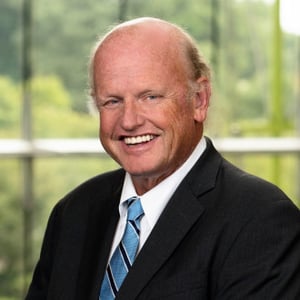
In his 35 years at the Justice Department and in private practice, Mike Carvin was one of the leading appellate and trial lawyers challenging state and federal regulations on constitutional and statutory grounds, with 10 Supreme Court arguments and numerous high-profile victories. In addition to his numerous cases in the United States Supreme Court, he argued in virtually every federal appeals court. His major cases include the recent constitutional challenge to the Affordable Care Act and the decisions invalidating Sarbanes-Oxley's accounting board, preventing the Justice Department from obtaining monetary relief against the tobacco industry under RICO, overturning the federal government's plan to statistically adjust the census, limiting the Justice Department's ability to create "majority-minority" districts, and upholding Proposition 209's ban on racial preferences in California.
Mike was one of the lead lawyers, and argued before the Florida Supreme Court, on behalf of George W. Bush in the 2000 presidential election Florida recount controversy. He also has represented state governments, financial institutions, telecommunications, and energy companies in "takings," First Amendment, civil rights, and statutory challenges to federal government actions.

2013 Civil Justice Update: Recently Enacted State Reforms and Judicial Challenges
Andrew Cook
The purpose of this paper is to provide a comprehensive national survey of both recent...
Panel One: Has the United States Supreme Court killed California’s initiative process or helped check its abuses?
Richard Hasen, Sandra Segal Ikuta, Daniel M. Kolkey, Leonard A. Leo, Justin Levitt, Kenneth P. Miller
This panel will focus on what effect the United States Supreme Court’s holding that initiative...
Terms of Engagement - Podcast
Eileen J. O'Connor, Clark Neily
In his new book, Terms of Engagement: How Our Courts Should Enforce the Constitution's Promise of...
Henderson v. United States - Post-Decision SCOTUScast
Elizabeth P. Papez
On February 20, 2013, The Supreme Court announced its decision in Henderson v. United States....
Debate on Fisher and Shelby County - Podcast
Erwin Chemerinsky, Roger B. Clegg, Jeffrey Rosen
The Federalist Society co-sponsored a Teleforum call with the National Constitution Center and the American...
Metrish v. Lancaster - Post-Decision SCOTUScast
Richard Broughton
On May 20, 2013 the Supreme Court announced its decision in Metrish v. Lancaster. The question...
Why the Supreme Court Should Strike Down Section 5 of the Voting Rights Act
Roger B. Clegg, Brian J. Paul
On March 11, 2013, the Indianapolis Lawyers Chapter of the Federalist Society hosted an event...
Oxford Health Plans LLC v. Sutter - Post-Argument SCOTUScast
Peter B. Rutledge
On March 25, 2013 the Supreme Court heard oral argument in Oxford Health Plans LLC...
Clapper v. Amnesty International USA - Post-Decision SCOTUScast
On February 26, 2013, the Supreme Court announced its decision in Clapper v. Amnesty International USA....
Shelby County v. Holder - Post-Argument SCOTUScast
Michael A. Carvin
On February 27, 2013, the Supreme Court heard oral argument in Shelby County v. Holder. The...