



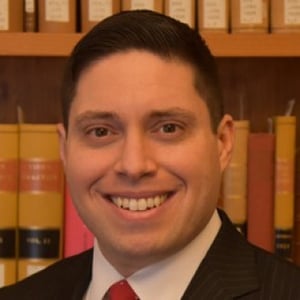
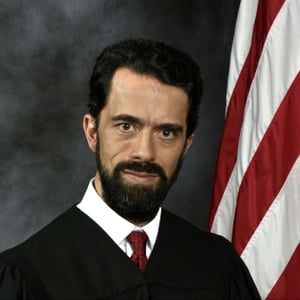

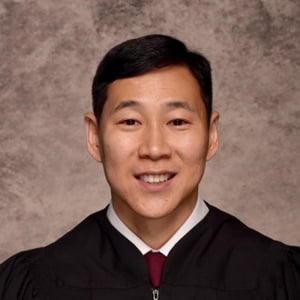

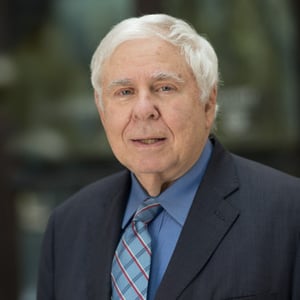
Garrett West is an Associate Professor of Law at Yale Law School. His subject areas include torts, remedies, federal courts, and administrative law. His scholarship focuses on the uses of private law theory in public law and on the problems of constitutional interpretation and doctrinal coherence through constitutional change.
West received a J.D. from Yale Law School, where he served as an Articles and Essays Editor on the Yale Law Journal, and a B.A. from Hillsdale College in 2015. After graduating from Yale, West practiced appellate litigation in Washington, D.C., and clerked for Judge Diarmuid O’Scannlain, Judge Thomas Griffith, and Justice Samuel Alito.

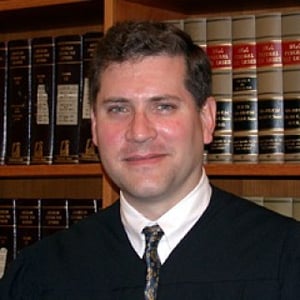





Judicial Restraint in Modern Originalism
Utah Lawyer Chapter
Salt Lake City, UTPlenary Panel 2: Justice Alito's Jurisprudence
J. Joel Alicea, Stephanos Bibas, Sherif Girgis, Michael H. Park, E. Garrett West
This panel will examine Justice Samuel Alito’s jurisprudence as a whole, with particular attention to...
Formalism and the Fate of the Republic—Defending the Judiciary from Itself
Jonathan Green, Mark V. Holmes, Ilan Wurman
Featuring: Prof. Jonathan A. Green, Associate Professor of Law, Sandra Day O’Connor College of Law Prof....
Courthouse Steps Decision: City of Grants Pass, Oregon v. Johnson
Vikrant P. Reddy
City of Grants Pass, Oregon v. Johnson raised the question of whether the sections of...
Judge Silberman, Judicial Restraint, and State Supreme Courts
Harvard Student Chapter
Cambridge, MARevisiting Jacobson
Josh Blackman, Sanford V. Levinson
In 1905, the U.S. Supreme Court decided Jacobson v. Massachusetts, upholding a state's ability to enforce compulsory...
Litigation Update: FEC v. Cruz for Senate
Harmeet K. Dhillon
On January 19, 2022, the United States Supreme Court will hear an appeal by the Federal...
Courthouse Steps Decision Teleforum: Jones v. Mississippi
Marc Levin
On April 22, the Supreme Court released its decision in the case of Jones v....
Judicial Activism, Judicial Engagement, and Judicial Restraint: What They Are and What They Ain't
Judicial Activism, Judicial Engagement, and Judicial Restraint: What They Are and What They Ain't
Eugene, Oregon