
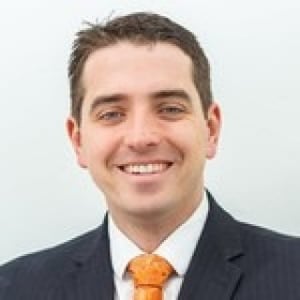
President and Chairman of the Board, Judicial Education Institute
James Heilpern is President and Chairman of the Board of the Judicial Education Institute, a
501(c)(3) organization that provides high quality judicial education seminars to judges
nationwide. He specializes in helping judges harness new technology to improve the
interpretive process. In the last three years alone, he has trained approximately 250 judges
from at least 50 different jurisdictions, as well as hundreds of practicing attorneys, on
topics related artificial intelligence, corpus linguistics, and statutory interpretation. He also
serves as counsel at the law firm Schaerr-Jaffe, where he regularly represents clients at all
three levels of the federal judiciary, as well as before state supreme courts. He was part of
the team the represented the state of Georgia in Texas v. Pennsylvania, et. al., successfully
persuading the Supreme Court to dismiss Texas’ last-ditch effort to overturn the results of
the 2020 presidential election. Heilpern’s scholarship has been cited by the Second
Circuit, the DDC, and the Virginia Supreme Court, as well as dozens of times in the merits
and amicus briefs of Trump v. Anderson. He is a Research Fellow at the Georgetown Center
for the Constitution, and previously served as a Senior Fellow at the BYU Law School; as
General Counsel of an ed-tech start up; and as a strategic advisor to an artificial
intelligence company. He graduated magna cum laude from the BYU Law School and with
highest honors and with distinction from the University of North Carolina at Chapel Hill. He
previously clerked from Judge Edith Clement on the U.S. Court of Appeals for the Fifth
Circuit and Judge Robert H. Cleland on the U.S. District Court for the Eastern District of
Michigan.
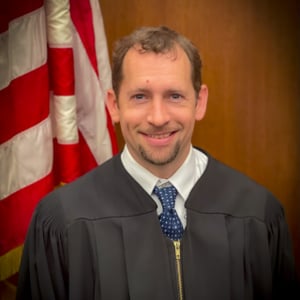
District Judge, United States District Court for the Northern District of Texas
Judge Brantley Starr was appointed to United States District Court for the Northern District of Texas in August 2019. Before his appointment, Judge Starr was the Deputy First Assistant Attorney General of Texas. Prior to that appointment, he served as Deputy Attorney General for Legal Counsel. From 2011 to 2015, Judge Starr served as career staff attorney to Texas Supreme Court Justice Eva Guzman. From 2008 to 2011, he practiced at King & Spalding, LLP. He served in the Office of the Solicitor General from 2006 to 2008. Prior to that, Judge Starr clerked for then-Justice Don Willett on the Texas Supreme Court after serving at the Office of the Attorney General. Judge Starr received his law degree from the University of Texas School of Law and his bachelor of arts degree from Abilene Christian University in 2001. Judge Starr has taught the Origins of the Constitution Class at the University of Texas law, Texas A&M law, and SMU law.
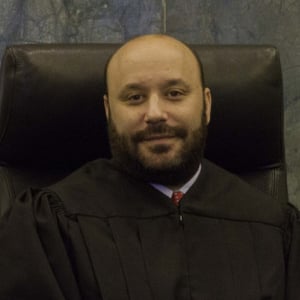
Judge, United States District Court, Eastern District of Arkansas
Lee Philip Rudofsky is a judge on the United States District Court for the Eastern District of Arkansas. Prior to his 2019 appointment by President Trump, Judge Rudofsky served as the Solicitor General of Arkansas, an Assistant General Counsel at Walmart, a Senior Litigation Associate at Kirkland & Ellis, and counsel to several Republican political campaigns. Today, in addition to his judicial service, Judge Rudofsky teaches law school classes on founding-era constitutional history and, separately, speaks to students across the country about the October 7th Massacre and the subsequent Israeli response. In 2024, Judge Rudofsky helped establish an annual judicial education mission to Israel that offers American judges the opportunity to learn first-hand about the Israeli legal system, Israeli society, and legal issues related to the Israel-Hamas war.
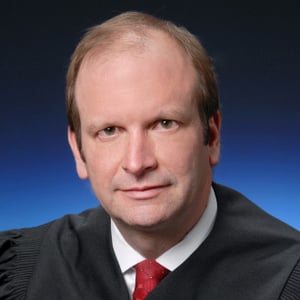
Associate Justice, Supreme Court of Ohio
Justice Pat DeWine began his six-year term on the Supreme Court of Ohio on Jan. 2, 2017, following his statewide election in November 2016. An excellent writer, Justice DeWine is known for the quality and thoroughness of his legal opinions. His opinions reflect his strong belief in judicial restraint and his respect for the constitutional roles of the other coequal branches of government.
Justice DeWine has served at all levels of the Ohio judiciary. Prior to his election to the Supreme Court, Justice DeWine served for four years on the First District Court of Appeals, and prior to that, for four years on the Hamilton County Common Pleas Court.
Justice DeWine has a strong commitment to furthering the rule of law through education. He is an adjunct professorat the University of Cincinnati College of Law where he teaches Appellate Practice and Procedure. In addition, he has taught undergraduate courses at the University of Cincinnati in Ohio Government & Politics and American Courts.
Justice DeWine has strong academic credentials. He graduated from the University of Michigan Law School in the top ten percent of his class with Order of the Coif honors. As an undergraduate student at Miami University, he maintained a perfect 4.0 grade point average and received summa cum laude honors. He was also a member of the Varsity Track and Cross Country teams.
After law school, he was selected for a clerkship on United States Court of Appeals for the Sixth Circuit. He served under the Honorable David A. Nelson, who had been appointed to the Sixth Circuit by President Ronald Reagan.
Justice DeWine understands the litigant’s perspective, having practiced law for 13 years with one of Cincinnati’s top law firms, Keating, Muething & Klekamp. He represented clients in appellate matters in Ohio and in federal courts across the country. He handled a diverse range of litigation matters, including mass tort bankruptcies, securities fraud litigation, and constitutional issues.
Other Public Service
Justice DeWine brings a unique perspective to the bench because of his public service as a County Commissioner and a member of Cincinnati City Council.
As a member of the Hamilton County Board of Commissioners, he focused on reforming County government, lowering the tax burden, eliminating unnecessary bureaucracy and promoting public safety. He led the citizens referendum that ultimately repealed the nearly $1 billion sales tax increase that was enacted by his colleagues on the Commission. The Reason Foundation named him an “Innovator in Action,” along with such leaders as Rudy Giuliani and Jeb Bush, for his efforts to reform County government.
On Cincinnati City Council, he was known as a taxpayer watchdog, successfully rooting out wasteful spending and abuse in city government. He helped eliminate unnecessary regulations, led the effort to crack down on quality of life issues affecting city neighborhoods and created a development fund that leveraged private capital to spur new housing development downtown and across city neighborhoods. He also led the Issue Four charter change that created a more accountable city government by allowing the city to hire the most qualified individuals for key positions in city government.
He was a founder of the Build Cincinnati reform group that successfully passed a charter amendment to allow Cincinnati voters to directly elect the Mayor.athon.
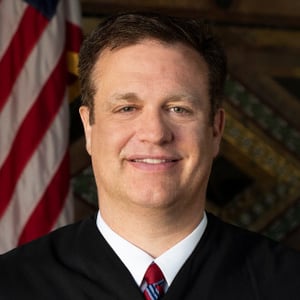
Judge, United States Court of Appeals, Ninth Circuit
Judge Nelson was confirmed to the Ninth Circuit in October 2018, as the youngest Circuit Judge to serve from Idaho and he has chambers in his hometown of Idaho Falls. Prior to his confirmation, Judge Nelson served for nine years as General Counsel of Idaho Falls-based Melaleuca, Inc., a consumer goods company. He previously worked in Washington, DC, where he served in all three branches of the federal government, including as Special Counsel for Supreme Court nominations to the Ranking Member of the Senate Judiciary Committee; Deputy General Counsel to the White House Office of Management and Budget; Deputy Assistant Attorney General in the Environment and Natural Resources Division of the United States Department of Justice; and a law clerk to Judge Henderson of the United States Court of Appeals for the D.C. Circuit. He has argued in most of the federal courts of appeals and worked on dozens of Supreme Court briefs. He started in the Washington, DC office of Sidley Austin as an appellate lawyer, after clerking for Judges Mosk and Brower of the Iran-U.S. Claims Tribunal at The Hague, and for now-Judge Tom Griffith, then-Senate Legal Counsel, during the impeachment trial of President Clinton. Judge Nelson earned his B.A. from Brigham Young University and his J.D., with honors, from BYU Law School. Judge Nelson has been a member of the Federalist Society since 1998.
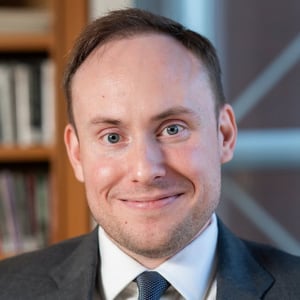
Director, Robert A. Levy Center for Constitutional Studies, Cato Institute
Thomas Berry is the director in the Cato Institute’s Robert A. Levy Center for Constitutional Studies and editor in chief of the Cato Supreme Court Review. Before joining Cato, he was an attorney at Pacific Legal Foundation and clerked for Judge E. Grady Jolly of the U.S. Court of Appeals for the Fifth Circuit. His academic work has appeared in NYU Journal of Law and Liberty, Washington and Lee Law Review Online, and Federalist Society Review. His popular writing has appeared in The Wall Street Journal, National Law Journal, Investor’s Business Daily, National Review Online, and The Hill Online. He has testified before the U.S. Senate, and his work has been cited by the U.S. District Court for the District of Columbia.
Berry holds a J.D. from Stanford Law School, where he was a senior editor on the Stanford Law and Policy Review and a Bradley Student Fellow in the Stanford Constitutional Law Center. He graduated with a B.A. in Liberal Arts from St. John’s College, Santa Fe.
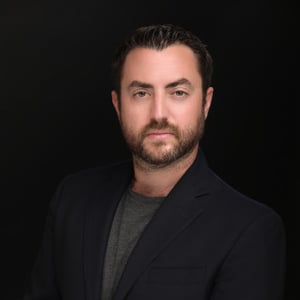
Newsweek Senior Editor-at-Large, Syndicated Columnist, Host of "The Josh Hammer Show," Article III Project Senior Counsel, Newsweek, Salem Media, Article III Project, David Horowitz Freedom Center
Josh Hammer is the senior editor-at-large of Newsweek and host of "The Josh Hammer Show," a podcast, a syndicated radio show, and TV program on Salem News Channel. A syndicated columnist through Creators Syndicate, Josh is a frequent pundit and essayist on political, legal, and cultural issues. He is also senior counsel for the Article III Project and Internet Accountability Project, as well as a Shillman Fellow with the David Horowitz Freedom Center and a fellow with the Palm Beach Freedom Institute.
An outspoken conservative, Josh opines on conservative intellectual trends, contemporary domestic and foreign policy debates, constitutional and legal issues, and the intersection of law, politics and culture. He has been published by many leading outlets, including the Los Angeles Times, the New York Post, Daily Mail, Newsweek, the Claremont Review of Books, National Affairs, American Affairs, The New Criterion, The National Interest, National Review, RealClearPolitics, First Things, City Journal, Public Discourse, Law & Liberty, Tablet Magazine, Deseret Magazine, Compact Magazine, Chronicles Magazine, The Spectator, The American Mind, The American Conservative, The European Conservative, American Greatness, American Compass, The Federalist, Blaze Media, TomKlingenstein.com, Townhall, The Daily Wire, The Daily Signal, The Daily Caller, The Epoch Times, Anchoring Truths, Fortune, Fox Business, The Jerusalem Post, The Times of Israel, The Forward, Jewish Telegraphic Agency and the Jewish Journal. He has also had legal scholarship published by the Harvard Journal of Law & Public Policy and the University of St. Thomas Law Journal.
Josh is a college campus speaker through Young America's Foundation and the Intercollegiate Studies Institute, and a law school campus speaker through the Federalist Society. Prior to Newsweek and The Daily Wire, where he was an editor, Josh worked at Kirkland & Ellis LLP and clerked for the Hon. James C. Ho on the U.S. Court of Appeals for the Fifth Circuit. Josh has also served as a John Marshall Fellow with the Claremont Institute and as a Fellow with the James Wilson Institute. He is the former host of "America on Trial with Josh Hammer," a one-season daily podcast with The First that covered the unique legal issues surrounding the 2024 presidential election.
Josh graduated from Duke University, where he majored in economics, and from the University of Chicago Law School. He lives in Florida, but remains an active member of the State Bar of Texas.

Chief Judge, United States Court of Appeals, Eleventh Circuit
William H. Pryor Jr. serves as Chief Circuit Judge on the United States Court of Appeals for the Eleventh Circuit.
In 2013–18, he served on the United States Sentencing Commission and, in 2017–18, served as Acting Chair.
He has taught as a visiting professor at the University of Alabama School of Law and previously taught as an adjunct professor at the Cumberland School of Law of Samford University.
He served as the 45th Attorney General of Alabama from 1997 to 2004. When he took office, he was the youngest attorney general in the nation. In his reelection, he received the highest percentage of votes of any statewide candidate.
He graduated magna cum laude from Tulane Law School where he finished first in the common-law curriculum and was editor in chief of the Tulane Law Review. He then served as a law clerk for Judge John Minor Wisdom of the U.S. Court of Appeals for the Fifth Circuit.
He is a member of The American Law Institute and an Adviser for the RESTATEMENT OF THE LAW THIRD, CONFLICT OF LAWS. He is a coauthor with Bryan Garner, Justices Gorsuch and Kavanaugh, and several other judges of a treatise, THE LAW OF JUDICIAL PRECEDENT. He has published in the Yale Law Journal, Columbia Law Review, Virginia Law Review, Notre Dame Law Review, Harvard Journal of Law & Public Policy, Yale Law & Policy Review, George Mason Law Review, Florida Law Review, Alabama Law Review, Case Western Reserve Law Review, and Tulane Law Review. He has published op-eds in The Wall Street Journal, The New York Times, National Review, and USA Today. He has debated at National Lawyers’ Conventions of the Federalist Society (including on National Public Radio) and at the Oxford Union in the United Kingdom. And he is listed among several “widely admired judicial writers” in Bryan Garner’s The Redbook: A Manual on Legal Style.
He is a member of the Tulane Law School Hall of Fame and has received the Defender of the Constitution Award from the Heritage Foundation, the Jurist of the Year Award from the Texas Review of Law & Politics, and the St. Thomas More Award from the St. Thomas More Society of Atlanta. Judge Pryor is also a proud member of the National Society of the Sons of the American Revolution.
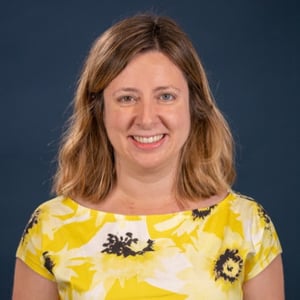
Legal Fellow, Center for the Separation of Powers, Pacific Legal Foundation
Alison Somin joined Pacific Legal Foundation in May 2020 as a legal fellow in the Center for the Separation of Powers and part of the equality before the law practice group.
Before joining the Pacific Legal Foundation team, Alison was a special assistant and counsel for over a decade to Gail Heriot, a member of the bipartisan United States Commission on Civil Rights. She also has deep roots in the liberty movement. Alison was a Koch Associate at the National Federation for Independent Business Legal Foundation and, during law school, completed summer clerkships at the Institute for Justice and the Charles G. Koch Charitable Foundation. She holds a J.D. from Emory University School of Law and an A.B. in history from Dartmouth College.
Her work has been published in the San Francisco Chronicle, the Daily Journal, Texas Journal of Law and Politics, and The Federalist Society’s Engage magazine and blog.
She lives in northern Virginia with her husband Ilya; two children; and golden retriever Willow. In her spare time, she enjoys reading, baking and cooking, children’s art projects, and training and exercising Willow.
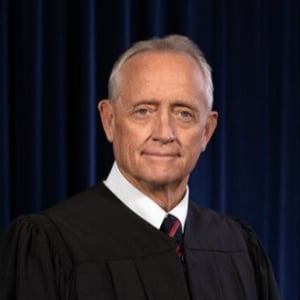
Justice, Supreme Court of Ohio
Justice Joseph T. Deters is the 163rd justice of the Supreme Court of Ohio. He took office in January 2023, following appointment by Governor Mike DeWine.
Prior to joining the Court, Justice Deters served as the longest-tenured prosecutor in Hamilton County. He held the position twice from 1992-1999 and 2005-2023.
During his time as prosecutor, Justice Deters established the first drug court in Ohio, in partnership with Hamilton County Common Pleas Court. The Hamilton County Drug Treatment and Recovery Court handles more cases than any other specialized docket in the state.
Justice Deters established the county’s first victim/witness advocate program and helped develop several diversion programs for first time non-violent offenders. He started a sex offender unit within the prosecutor’s office to monitor offender registration and compliance. He formed a unit focused on violent crimes against women and children.
Justice Deters was elected statewide as Ohio Treasurer for two terms, in 1998 and 2002. As treasurer, he was responsible for collecting, managing, and investing more than $11 billion in assets for the state.
He served as Hamilton County Clerk of Courts from 1988-1992. The justice spent the first six years of his legal career as an assistant Hamilton County prosecutor.
Justice Deters received his undergraduate and law degrees from the University of Cincinnati, where he was recognized as a distinguished alumnus. He is a member of the Cincinnati Bar Association and various civic organizations. He previously served on the University of Cincinnati Board of Trustees, Ohio Organized Crime Commission, and the Southern Ohio Leukemia Foundation.
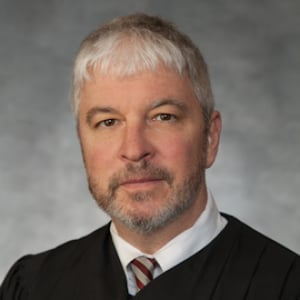
Cuyahoga County Common Pleas Court
Michael P. Donnelly is a judge on the Cuyahoga County Court of Common Pleas General Division in Cleveland, Ohio. He first joined the court on January 3, 2005. Donnelly won re-election to a third consecutive term in the general election on November 8, 2016. His current term expires January 2, 2023.
Donnelly received his undergraduate degree from John Carroll University and his J.D. from the Cleveland-Marshall College of Law. He was admitted to the Ohio Bar in 1992 and began working as an assistant prosecutor for Cuyahoga County. In 1997, he left that role to become an attorney at the firm of Davis & Young, where he worked until 1999. He then joined the firm of Climaco, Lefkowitz, Peca, Wilcox & Garofoli, working as a private practice attorney until his election to the common pleas bench in 2004.
In 2011, Donnelly participated in a program with the National Judicial College called "Innovative Leadership/Management Skills for Future Court Leaders". In 2012, Donnelly served as the Chair of Commission on Professionalism.
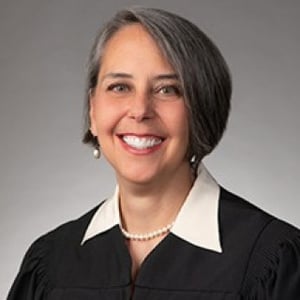
Judge, 8th District Court of Appeals, State of Ohio
Judge Lisa Forbes was elected to the Eighth District Court of Appeals on November 3, 2020. Prior to joining the bench, Judge Forbes was a partner in the Cleveland office of the law firm Vorys, Sater, Seymour and Pease LLP where she practiced in the area of complex litigation. As a litigator, Judge Forbes represented clients in state and federal trial and appellate courts throughout Ohio for 27 years.
Throughout her career, Judge Forbes has been an active and engaged member of the Northeast Ohio community including serving on the boards of the Centers for Families and Children and Circle Health for over a decade. She is currently the chair of both boards. In addition, while practicing, she regularly wrote and presented on developments in and application of the law.
Judge Forbes graduated summa cum laude from Case Western Reserve University School of Law in 1992. She served first as an associate editor on the law review and then as Executive Notes Editor. Judge Forbes majored in public policy at Cornell University, graduating in 1985 with a Bachelor of Science degree.
Judge Forbes is excited to bring her passion for and love of the law to the Eighth District Court of Appeals.
Judge, Franklin County Court
Hon. Daniel R. Hawkins is a judge for the Franklin County Court of Common Pleas (General Division) in Ohio. He was elected to the seat on November 6, 2018.
Prior to his election, Hawkins presided as a judge in the Environmental Division of the Franklin County Municipal Court, a position he had held since 2013.
He received a B.S. in criminal justice from Bowling Green State University in 1998. Hawkins went on to complete a J.D. at Ohio State University, Michael E. Moritz College of Law in 2001.
After graduating from law school, he began his legal career as an assistant prosecuting attorney with the Franklin County Prosecutor’s Office. During his tenure there, Hawkins was promoted to director of the Special Victims Unit in 2003. In that role, he prosecuted violent crimes involving women and children as victims, including homicides, sexual assaults, child abuse, human trafficking, and internet child exploitation. In addition, Hawkins was tasked with managing fellow prosecutors in the SVU and was credited with conducting several jury trials including six death penalty cases. He remained in that capacity until joining the Municipal Court bench in 2013.
His memberships have included the American Judges Association, the Ohio Judicial Conference, the Association of Municipal County Judges of Ohio, the Ohio State Bar Association, and the Columbus Bar Association.
Hawkins is a married father of three.
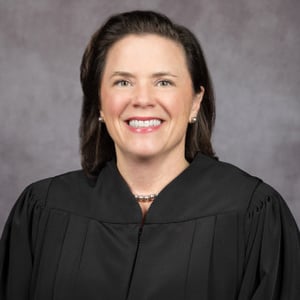
Judge, Hamilton County Courts
Hon. Megan E. Shanahan is a judge for the Hamilton County Court of Common Pleas (General Division) in Ohio. She was appointed to the bench by former Governor John Kasich on March 6, 2015 to fill the vacancy created by the Hon. Ralph E. Winkler after his election to the Hamilton County Court of Common Pleas Probate Division.
Prior to her appointment, Shanahan had presided as a judge for the Hamilton County Municipal Court, a position to which she was elected in 2011.
She received a B.A. in political science from Kent State University in 1995. SHanahan went on to complete a J.D. at the University of Cincinnati College of Law in 2000.
After graduating from law school, she began her legal career as an assistant prosecutor with the Butler county Prosecutor’s Office, where she served in the appellate, municipal, and trial divisions and prosecuted cases involving the violation of the obscenity law as well as child pornography cases. In 2005, Shanahan moved to the Hamilton County Prosecutor’s Office. During her tenure in that position, she prosecuted child predators and served in the Felony Trial Division.
Her legal career also included acting as a prosecutor for the Mt. Healthy Mayor’s Court.
Shanahan received the Peggy Caldwell Award ini 20009.
From a civic standpoint, she has been a supporter of the Cincinnati Living Hope organization which provides transitional housing or homeless women and children.
She was born and raised in western Pennsylvania, the youngest of eight children. At the time of her appointment, Shanahan and her family resided in Cincinnati.
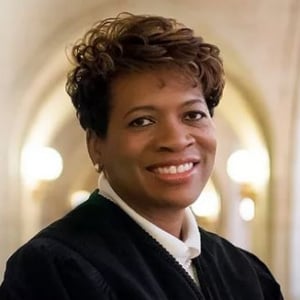
Ohio Eighth District Court of Appeals
Elected to the Ohio Court of Appeals – Eighth Appellate District in 2006 and twice reelected, Judge Melody Stewart has over 30 years of combined administrative, legal, and academic experience in a number of private and public settings. She has been an administrator for a healthcare management company, a music teacher, a civil defense litigator, and a law school administrator and professor. She served as the Administrative Judge for the Court of Appeals in 2013.
Judge Stewart earned a Bachelor of Music degree from the College-Conservatory of Music at the University of Cincinnati; her law degree as a Patricia Roberts Harris Fellow from the Cleveland-Marshall College of Law, Cleveland State University; and her Ph.D. as a Mandel Leadership Fellow at Case Western Reserve University’s Mandel School of Applied Social Sciences.
After practicing law as an assistant law director for the cities of Cleveland and East Cleveland, Judge Stewart worked as a lecturer, an adjunct instructor, and an assistant dean at Cleveland-Marshall College of Law before joining the faculty. Her primary teaching areas were ethics and professional responsibility, criminal law, criminal procedure, and legal research, writing, and advocacy. Additionally, she taught at the University of Toledo College of Law, at Ursuline College, and was Director of Student Services at Case Western Reserve University’s School of Law.
Judge Stewart has served on many boards of trustees and been a member of various professional, educational, civic, and community organizations. She also served as a commissioner and chair of the Board of Planning and Zoning for the city of Euclid. Recently Judge Stewart served as a member of the Ohio Criminal Justice Recodification Committee. She is currently a member of the board of the Ohio Supreme Court’s Judicial College and is chair of the Ohio Capital Case Attorney Fee Council. Judge Stewart is admitted to practice in the state and federal courts in Ohio, the District of Columbia, and the United States Supreme Court.

Professor of Law, University of Michigan Law School
Christopher J. Walker is a Professor of Law at the University of Michigan. Prior to joining Michigan law faculty in 2022, he spent a decade teaching at The Ohio State University Moritz College of Law. He previously clerked for Justice Anthony Kennedy of the U.S. Supreme Court, worked on the Civil Appellate Staff at the U.S. Department of Justice, and served on the Senate Judiciary Committee staff for the Gorsuch Supreme Court confirmation. Professor Walker’s research focuses on administrative law, regulation, and law and policy at the agency level. Outside the law school, he chaired the American Bar Association’s Section of Administrative Law and Regulatory Practice in 2020-21 and served as one of forty Public Members of the Administrative Conference of the United States from 2016-2022, and he continues to serve in both organizations in various capacities. He also works of counsel at the U.S. Chamber Litigation Center. In 2022, he received the Federalist Society’s Joseph Story Award.

Executive Director, Salmon P. Chase Center for Civics, Culture, and Society, The Ohio State University
Professor Lee J. Strang serves as the inaugural executive director of the Salmon P. Chase Center for Civics, Culture, and Society at The Ohio State University.
Initiated in 2023 by the state of Ohio, the Chase Center will be an academic home at Ohio State for teaching, research, and programing on the foundations of the American constitutional order and its impact on society. As executive director, Professor Strang is responsible for organizing the center, overseeing the hiring and appointment of the center’s faculty, developing curriculum, and delivering student and academic programming. He also holds a faculty appointment in the Moritz College of Law at Ohio State.
Professor Strang is a nationally recognized legal scholar who has published dozens of articles in leading journals in the fields of constitutional law and interpretation, property law, and religion and the First Amendment. He co-edits the textbook Federal Constitutional Law, and his most recent book, Originalism’s Promise: A Natural Law Account of the American Constitution is the first book-length, natural law justification for originalism. He currently is writing on civic thought and leadership, and he is finalizing a book on the history of American Catholic legal education (with John M. Breen).
Before joining Ohio State, Professor Strang served as the inaugural director of the University of Toledo’s Institute of American Constitutional Thought & Leadership. He joined the Toledo College of Law faculty in 2008, was granted tenure in 2010, and was named John W. Stoepler Professor of Law & Values in 2015. The University of Toledo awarded Professor Strang its Outstanding Faculty Research and Scholarship Award in 2017. Before that, he was a visiting professor at Michigan State University College of Law. A graduate of the University of Iowa, where he was articles editor of the Iowa Law Review and Order of the Coif, Professor Strang holds an LL.M. degree from Harvard Law School.
Professor Strang has been a visiting scholar at the Georgetown Center for the Constitution and a visiting fellow at the James Madison Program at Princeton University. In 2016, he was appointed to the Ohio Advisory Committee of the U.S. Commission on Civil Rights and reappointed as chair in 2023.
Prior to teaching, Professor Strang served as a judicial clerk for Judge Alice M. Batchelder of the U.S. Court of Appeals for the Sixth Circuit. He was also an associate for Jenner & Block LLP in Chicago, where he practiced in general and appellate litigation.
Professor Strang is a frequent presenter at scholarly conferences. He is the president of the Board of Trustees of Northwest Ohio Classical Academy, Ohio’s first classical charter school. He is also a regular participant in debates at law schools across the country, a contributor to the media, and a speaker to political, civic, and religious groups.
Professor of History, Georgia Southern University
Johnathan O'Neill is Professor of History at Georgia Southern University. Professor O’Neill is the author of Originalism in American Law and Politics: A Constitutional History (2005) and Conservative Thought and American Constitutionalism Since the New Deal (2023).

America 250: Interpreting our Founding Documents—A Discussion on Corpus Linguistics
Fort Worth, TXCurrent Issues in Judicial Interpretation and the Law: A Q & A with Judge Lee Rudofsky
North Dakota Lawyer Chapter
Bismarck, NDDaniel Webster Debate Series: Should Americans Embrace Common-Good Constitutionalism?
Thomas Berry, Josh Hammer, William H. Pryor
The Federalist Society's Georgetown Law Chapter'sDaniel Webster Debate Series presents Daniel Webster Debate Series:Should...
State Constitutional Interpretation: Why it Matters and How to do it
Ohio State Student Chapter
Columbus, OHState Constitutional Interpretation: Why it Matters and How to do it
Michigan Student Chapter
Ann Arbor, MIMuldrow v. City of St. Louis, Missouri - Post-Decision SCOTUScast
Alison E. Somin
On April 17, 2024, the Supreme Court issued its ruling in Muldrow v. City of...
Panel 1: State Supreme Court Candidate Forum
Joseph T. Deters, Michael P. Donnelly, Lisa Forbes, Hon. Daniel R. Hawkins, Megan E. Shanahan, Melody Stewart, Christopher J. Walker
Featuring: Hon. Joseph Deters, Justice, Supreme Court of Ohio Hon. Michael Donnelly, Justice, Supreme Court of...
The Role of "History and Tradition" in Constitutional Interpretation
Northwestern Student Chapter
Chicago, ILChallenges to Originalism IX: Originalism is Inconsistent with Natural Law
Lee J. Strang
The Federalist Society's Student Division & UNC School of Law Student Chapterpresent Challenges to Originalism IX:...
A Deeper Originalism: From Court-Centered Jurisprudence to Constitutional Self-Government
Johnathan O'Neill
Originalism has substantially reoriented constitutional discourse since it first reemerged in response to the Warren...