
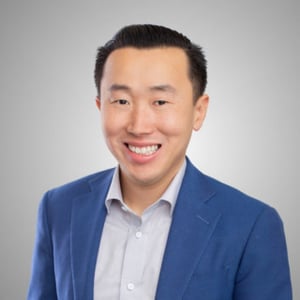
Vice President of Legal Affairs, Beacon Center of Tennessee
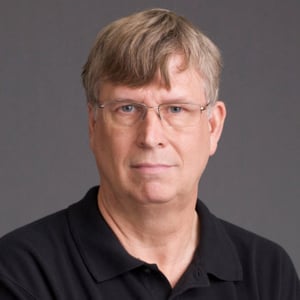
Wen Fa is the Vice President of Legal Affairs at the Beacon Center of Tennessee. He also serves on Beacon’s senior leadership team. Wen leads Beacon’s legal department in its efforts to protect the constitutional rights of property owners, entrepreneurs, and other Americans in courts across the United States. Having immigrated to America from Beijing, Wen believes that property rights, economic liberty, and equality under the law are essential to a free society and strives to advance those principles through his work.
Before joining Beacon, Wen was a senior attorney with Pacific Legal Foundation, where he litigated numerous cases involving equality under the law, free speech, economic liberty, and property rights. Wen litigated two Supreme Court cases: Minnesota Voters Alliance v. Mansky, which vindicated the free speech rights of voters, and Cedar Point Nursery v. Hassid, which secured the property rights of agricultural businesses. Wen has also secured important victories for farmers standing up against a racially discriminatory federal farm loan forgiveness program and small business owners who fought back against racial preferences in small business grants.
In addition to litigation, Wen promotes liberty through speeches, debates, and op-eds. Wen testified before Congress in 2021 and has published numerous op-eds in newspapers such as the Wall Street Journal, the Hill, and San Francisco Chronicle. He has spoken about his work in podcasts, on television, and in speeches to students at Georgetown, Duke, and law schools around the country.
Wen graduated with a bachelor’s degree in finance from the University of Texas-Dallas, a master’s degree in political theory from the London School of Economics, where he studied under libertarian scholar Chandran Kukathas, and a law degree from the University of Michigan. Wen is licensed to practice law in California, Texas, and several federal courts, including the Supreme Court of the United States.
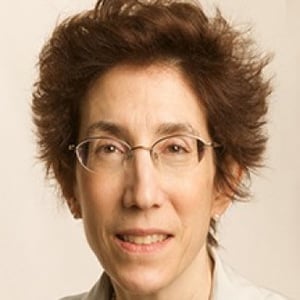
U.S. Court of Appeals, Ninth Circuit
Sandra Segal Ikuta was confirmed as a judge of the U.S. Court of Appeals for the Ninth Circuit on June 19, 2006. She filled a judgeship vacant since September 1, 2000, when Chief Judge Emeritus James R. Browning took senior status.
Before becoming a U.S. Circuit Judge, California Gov. Arnold Schwarzenegger appointed her to be deputy secretary and general counsel of the California Resources Agency in January 2004.
Prior to her political appointment, Judge Ikuta was a partner at the Los Angeles office of O'Melveny & Myers LLP. She joined the law firm in 1990 as an associate and became a partner in 1997. She specialized in environmental and natural resources law and co-chaired the firm's environmental practice group. She previously served as a law clerk for U.S. Supreme Court Justice Sandra Day O'Connor, 1989-90, and Judge Alex Kozinski of the U.S. Court of Appeals for the Ninth Circuit, 1988-89.
Prior to her legal career, Judge Ikuta took an unorthodox career path, which included serving as the first female editor-in-chief of a national martial arts magazine.
She received her J.D. from the University of California at Los Angeles School of Law and a Master of Science from Columbia University School of Journalism. She earned her undergraduate degree from the University of California at Berkeley in 1976.
In addition to her duties as an active U.S. Circuit Judge, Judge Ikuta was an appointed member of the Judicial Conference of the U.S. Advisory Committee on Bankruptcy Rules.
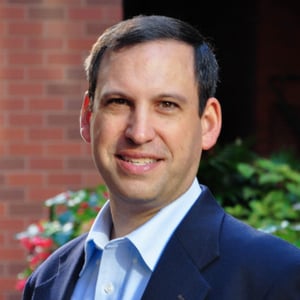
President, Becket Fund for Religious Liberty; Professor of Law and Co-Director of the Center for Religious Liberty, Catholic University; Visiting Professor, Harvard Law School
Mark joined the Becket team in 2011 and splits his time as Associate Professor at The Catholic University of America, Columbus School of Law, and as Visiting Professor at Harvard Law School. Mark teaches constitutional law, religious liberty, torts, and evidence. He has been voted Teacher of the Year three years in a row by the Law School’s Student Bar Association.
Mark has broad experience litigating First Amendment religious exercise and free speech cases. He has represented the winning parties in a variety of Supreme Court First Amendment cases including Hobby Lobby, Little Sisters, Wheaton College, and Holt. In January 2014, Mark argued before the Supreme Court in McCullen v. Coakley, a First Amendment challenge to a Massachusetts speech restriction outside of abortion clinics. The Justices ruled in favor of his clients 9-0. Mark also led a successful eight-year litigation battle against Governor Blagojevich’s effort to force religious pharmacists to distribute the morning-after and week-after pills.
Mark’s academic writing focuses on the First and Fourteenth Amendments, and has appeared in a variety of prestigious journals, including the Harvard Law Review.
Mark is a widely sought after speaker on constitutional issues, particularly concerning abortion and the First Amendment. Professor Rienzi has been invited to discuss these issues at Harvard Law School, Columbia University Law School, Georgetown University Law Center, Boston College Law School, Notre Dame Law School, the National Press Club, and the Capitol. He has been quoted on constitutional law issues on NPR, in the Washington Times, The New York Daily News, and the Chicago Sun-Times. Mark has also been featured on the Kelly File, Fox News Sunday, Your World with Neil Cavuto, Geraldo at Large, CNN Tonight, CNN Live, Andrea Mitchell Reports, and Wall Street Journal Live.
Prior to joining Becket, Mark served as counsel for the litigation department and the intellectual property litigation practice group of WilmerHale LLP. His practice focused on complex civil and appellate litigation with a particular emphasis on intellectual property and First Amendment issues. Prior to joining WilmerHale, he served as law clerk to the Hon. Stephen F. Williams, senior circuit judge for the U.S. Court of Appeals for the D.C. Circuit. Prior to that, Mark was an editor of the Harvard Law Review, and earned his J.D. from Harvard Law School and B.A. from Princeton University, both with honors.
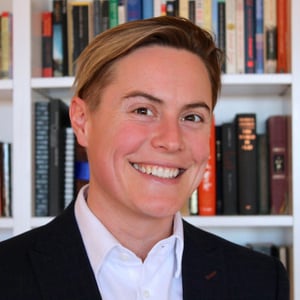
Associate Professor of Legal Studies & Business Ethics, The University of Pennsylvania Wharton School of Business
Amanda Shanor is an Assistant Professor at the University of Pennsylvania Wharton School, where her scholarship focuses on constitutional and administrative law, and in particular the First Amendment.
Shanor is a graduate of Yale Law School and Yale College, and a PhD candidate in law at Yale University. She served as a law clerk to Judges Cornelia T.L. Pillard and Judith W. Rogers on the D.C. Circuit, and Judge Robert W. Sweet in the Southern District of New York. She has taught at both Yale and Georgetown law schools and has published in the New York University Law Review, the Harvard Law Review Forum, and the Yale Law Journal Forum, among others. She is a contributor to Take Care and the co-author of a textbook on counterterrorism law.
Prior to joining the academy, Amanda worked in the National Legal Department of the American Civil Liberties Union on the organization’s Supreme Court litigation, including Masterpiece Cakeshop. Previously, she litigated a number of constitutional and national security cases with Professor David Cole, including Humanitarian Law Project v. Holder, while a fellow at Georgetown.

Thomas M. Siebel Senior Fellow, The Hoover Institution, Stanford University; Gary T. Schwartz Distinguished Professor of Law Emeritus, UCLA School of Law
Eugene Volokh is the Thomas M. Siebel Senior Fellow at the Hoover Institution (Stanford), as well as the Gary T. Schwartz Distinguished Professor of Law Emeritus and Distinguished Research Professor at UCLA School of Law. He recently retired from teaching at UCLA, after 30 years there, and is now focusing on research.
Volokh is the author of the textbooks The First Amendment and Related Statutes (8th ed. 2023), and Academic Legal Writing (5th ed. 2016), as well as over 100 academic law journal articles, mostly on First Amendment law. He is a member of The American Law Institute; the editor-in-chief of the Journal of Free Speech Law; and the creator and coauthor of The Volokh Conspiracy, a leading legal blog founded in 2002 (hosted at the Washington Post from 2014 to 2017 and now at Reason Magazine).
U.S. Court of Appeals, Ninth Circuit
Sandra Segal Ikuta was confirmed as a judge of the U.S. Court of Appeals for the Ninth Circuit on June 19, 2006. She filled a judgeship vacant since September 1, 2000, when Chief Judge Emeritus James R. Browning took senior status.
Before becoming a U.S. Circuit Judge, California Gov. Arnold Schwarzenegger appointed her to be deputy secretary and general counsel of the California Resources Agency in January 2004.
Prior to her political appointment, Judge Ikuta was a partner at the Los Angeles office of O'Melveny & Myers LLP. She joined the law firm in 1990 as an associate and became a partner in 1997. She specialized in environmental and natural resources law and co-chaired the firm's environmental practice group. She previously served as a law clerk for U.S. Supreme Court Justice Sandra Day O'Connor, 1989-90, and Judge Alex Kozinski of the U.S. Court of Appeals for the Ninth Circuit, 1988-89.
Prior to her legal career, Judge Ikuta took an unorthodox career path, which included serving as the first female editor-in-chief of a national martial arts magazine.
She received her J.D. from the University of California at Los Angeles School of Law and a Master of Science from Columbia University School of Journalism. She earned her undergraduate degree from the University of California at Berkeley in 1976.
In addition to her duties as an active U.S. Circuit Judge, Judge Ikuta was an appointed member of the Judicial Conference of the U.S. Advisory Committee on Bankruptcy Rules.

Charles Evans Hughes Professor of Law, Columbia Law School
THOMAS W. MERRILL is the Charles Evans Hughes Professor of Law at Columbia Law School. He previously taught at Northwestern University School of Law and Yale Law School. He has undergraduate degrees from Grinnell College and Oxford University, where he studied as a Rhodes Scholar, and a law degree from the University of Chicago. He clerked on the D.C. Circuit (for Chief Judge David Bazelon) and the U.S. Supreme Court (for Justice Harry Blackmun). From 1987-1990 he served as Deputy Solicitor General, U.S. Department of Justice. Professor Merrill’s writings related to property include Property: Principles and Policies (Foundation Press Second Edition, 2012) (with Henry E. Smith); Property: The Oxford Introductions to U.S. Law (Oxford U. Press, 2010); Property: Takings (Foundation Press, 2002)(with David Dana); and numerous articles, including “The Economics of Public Use” (Cornell Law Review 1986); “The Landscape of Constitutional Property” (Virginia Law Review 2000); and “The Character of the Governmental Action” (Vermont Law Review 2012). He is a member of the American Academy of Arts and Sciences.

Distinguished University Chair and Professor of Law, University of St. Thomas School of Law
Michael Stokes Paulsen is Distinguished University Chair & Professor of Law at the University of St. Thomas, where he has taught since 2007. Professor Paulsen was previously the McKnight Presidential Professor of Law & Public Policy and Associate Dean at the University of Minnesota Law School, where he taught from 1991-2007. He is a graduate of Northwestern University, Yale Law School, and Yale Divinity School. He has served as a federal prosecutor, as Attorney-Advisor in the Office of Legal Counsel of the U.S. Department of Justice, and as counsel for the Center for Law & Religious Freedom.
Paulsen has taught as a visiting professor at Princeton University, Pepperdine University, Georgetown University, Bethel University, Uppsala University (Sweden), Daystar University (Kenya), and University of the Andes (Chile). He has been a guest lecturer at universities around the nation, including Harvard, Yale, Columbia, Princeton, Penn, NYU, Georgetown, Virginia, Stanford, Berkeley, Michigan, University of Chicago, and Northwestern.
Professor Paulsen is the author of more than ninety scholarly articles and book chapters on a wide variety of constitutional law topics, published in law journals including the Harvard Law Review, the Yale Law Journal, the Stanford Law Review, the University of Chicago Law Review, the Michigan Law Review, the Georgetown Law Journal, and the Northwestern University Law Review. He is the author or co-author of three books, including The Constitution: An Introduction (Basic Books, 2015) (co-authored with Luke Paulsen) and the casebook The Constitution of the United States, now in its fifth edition with Foundation Press, co-authored with Michael McConnell, Samuel Bray, and Will Baude.

James Monroe Distinguished Professor of Law and Albert Clark Tate, Jr., Professor of Law, University of Virginia School of Law
Professor Saikrishna Prakash’s scholarship focuses on separation of powers, particularly executive powers. He teaches Constitutional Law, Foreign Relations Law and Presidential Powers at the Law School.
Prakash’s most recent book, “The Living Presidency: An Originalist Argument Against Its Ever-Expanding Powers,” was published by Harvard Belknap Press in 2020. He also authored “Imperial from the Beginning: The Constitution of the Original Executive” (Yale University Press, 2015). The former book focuses on the modern presidency while the latter considers the presidency of the Founders.
Prakash has authored over 75 law review articles. Among them are “Of Synchronicity and Supreme Law” in the Harvard Law Review, “The Indefensible Duty to Defend” in the Columbia Law Review, and “50 States, 50 Attorneys General and 50 Approaches to the Duty to Defend” and “The Executive Power Over Foreign Affairs” in the Yale Law Journal.
Prakash has published op-eds in The New York Times, The Wall Street Journal and the Los Angeles Times. At the request of Democrats and Republicans, he has testified before Congress on matters of presidential removal, the Mueller Report and how Congress might better check the presidency. He is currently a Miller Center Senior Fellow. In 2015, he received the Roger Traynor award for faculty scholarship. In the same year, he received an honorable mention from the American Society of Legal Writers for his book “Imperial from the Beginning.” He has given named lectures at William & Mary Law School, Princeton University and Toledo Law School, and keynote addresses at several conferences.
Prakash majored in economics and political science at Stanford University. At Yale Law School, he served as senior editor of the Yale Law Journal and received the John M. Olin Fellowship in Law, Economics and Public Policy. He subsequently clerked for Judge Laurence H. Silberman of the U.S. Court of Appeals for the District of Columbia Circuit and for Justice Clarence Thomas of the U.S. Supreme Court. After practicing in New York for two years, he served as a visiting professor at the University of Illinois College of Law and as an associate professor at Boston University School of Law. He then spent several years at the University of San Diego School of Law as the Herzog Research Professor of Law. Prakash has been a visiting professor at Northwestern University and the University of Chicago. He also has served as a James Madison Fellow at Princeton University and Visiting Research Fellow at the Hoover Institution of War & Peace at Stanford University.
William L. Matheson and Robert M. Morgenthau Distinguished Professor of Law and Douglas D. Drysdale Research Professor of Law, University of Virginia School of Law
Lawrence B. Solum is an internationally recognized legal theorist who works in constitutional theory, procedure and the philosophy of law. Solum contributes to debates in constitutional theory and normative legal theory. He is especially interested in the intersection of law with the philosophy of language and with moral and political philosophy. His series of articles on constitutional originalism have shaped contemporary thinking about the great debate between originalism and constitutional theory. Solum’s original theory of the fundamental nature and purpose of law, “Virtue Jurisprudence,” has been debated and discussed in Asia, Europe and North America. He also works on problems of law and technology, including Internet governance, copyright policy and patent law. His pathbreaking article, “Legal Personhood for Artificial Intelligences,” published in the early 1990s, is widely acknowledged as far ahead of its time.
Solum received his J.D. magna cum laude from Harvard Law School and received his B.A. with highest departmental honors in philosophy from the University of California at Los Angeles. While at Harvard, he served as an editor of the Harvard Law Review. After graduation, he worked for the law firm of Cravath, Swaine, and Moore in New York, and then clerked for Judge William A. Norris of the U.S. Court of Appeals for the Ninth Circuit.
Prior to joining the UVA Law faculty in 2020, he was a member of the faculty at Georgetown University Law Center, the University of Illinois, the University of San Diego and Loyola Marymount University, and visited at Boston University and the University of Southern California. He regularly teaches Civil Procedure and Constitutional Law. His other teaching includes seminars in constitutional theory and the philosophy of law as well as courses in conflict of laws, federal courts, intellectual property and internet law and governance.

Courthouse Steps Decision Teleforum: Cedar Point Nursery v. Hassid
The Supreme Court issued its decision in Cedar Point Nursery v. Hassid today, June 23, 2021,...
Cedar Point Nursery v. Hassid - Post-Decision SCOTUScast
Wencong Fa
On June 23rd, 2021 the Supreme Court decided Cedar Point Nursery v. Hassid, a case...
Say What You Will?: Government Compelled Speech
Sandra Segal Ikuta, Mark L. Rienzi, Amanda Shanor, Eugene Volokh
When can the government require you to speak, or to host speech on your property,...
Showcase Panel I: Justice Scalia: Text Over Intent and the Demise of Legislative History
Sandra Segal Ikuta, Thomas W. Merrill, Michael Stokes Paulsen, Saikrishna Prakash, Lawrence Solum
Until 1986, most conservative lawyers favored following the original intentions of the Framers of the...