
Mr. Mirengoff is a retired attorney in Washington, D.C. and is a blogger at powerlineblog.com.
President, JCN
Carrie Campbell Severino is the president of the JCN, and co-author with Mollie Hemingway of the bestselling book Justice on Trial: The Kavanaugh Confirmation and the Future of the Court. As a go-to expert on the confirmation process, Mrs. Severino has been extensively quoted in the media. She regularly appears on television, including FOX, CNN, MSNBC, C-SPAN, and ABC’s This Week.
Severino writes and speaks on a wide range of judicial issues, including the constitutional limits on government, the federal nomination process, and state judicial selection. She has testified before Congress on constitutional questions and briefed Senators on judicial nominations, and regularly files briefs in high-profile Supreme Court cases. She was a law clerk to Supreme Court Justice Clarence Thomas and to Judge David B. Sentelle of the U.S. Court of Appeals for the D.C. Circuit, and is a graduate of Harvard Law School (J.D.), Duke University (B.A., Biology), and Michigan State University (M.A., Linguistics).
Professor of Law, UCLA School of Law
Paul J. Schierl Professor of Law, University of Notre Dame Law School
Professor Richard W. Garnett teaches and writes in the areas of constitutional law, criminal law, the First Amendment, and law and religion. He is a leading authority on questions and debates regarding religious freedom and church-state relations, and is the founding director of Notre Dame Law School’s Program on Church, State, and Society.
Garnett clerked for the late Chief Justice of the United States, William H. Rehnquist, and also for the late Chief Judge of the United States Court of Appeals for the Eighth Circuit, Richard S. Arnold. He earned his J.D. from Yale Law School in 1995 and his B.A., summa cum laude, from Duke University in 1990. He joined the faculty in 1999 after practicing law in Washington, D.C. with Miller, Cassidy, Larroca & Lewin.
Edward Rood Eminent Scholar Chair, Professor of Law, and Senior Fellow, Hamilton Center for Classical and Civic Education, University of Florida Levin College of Law
Professor Stinneford researches, teaches, and consults about legal ethics, criminal law, criminal procedure, and constitutional law. His work has been cited by the United States Supreme Court, several state supreme courts and federal courts of appeal, and numerous scholars. It has been published in numerous scholarly journals including the Georgetown Law Journal, the Northwestern University Law Review, the Virginia Law Review, the Notre Dame Law Review, and the William & Mary Law Review. The Stanford-Yale Junior faculty forum selected one of his articles as the best paper in the category of Constitutional History, and the AALS Criminal Justice Section named another article as the best paper in its Junior Scholars Paper Competition. In the fall of 2015, he was a Visiting Scholar at the Georgetown Law Center, Center for the Constitution.
John Stinneford was the inaugural Director and serves as a Senior Fellow of the Hamilton Center for Classical and Civic Education at the University of Florida. The Hamilton Center is a new academic unit whose mission is to promote civic education and civic discourse and to foster intellectual diversity. Its core purpose is to help students develop the knowledge, habits of thought, analytical skills, and character to be citizens and leaders in a free society. It will do so through curriculum, public programming, and (in conjunction with the Florida Department of Education) teacher training. Its curriculum will focus primarily on the Western intellectual tradition and the American founding.
Before joining the Florida faculty in 2009, Stinneford clerked for the Hon. James Moran of the United States District Court for the Northern District of Illinois, served as an Assistant United States Attorney, and practiced law with Winston & Strawn in Chicago. Stinneford teaches first-year courses in Criminal Law and Constitutional Law, and upper-level courses in Professional Responsibility, Criminal Procedure, Federal Criminal Law, Law & Literature, and White Collar Crime.
Prof. Sheley joined the College of Law in 2018. Before coming to OU she was an Assistant Professor at the University of Calgary Faculty of Law. She has also served as a Visiting Associate Professor at the George Washington University Law School and an Olin-Searle Fellow at Georgetown University Law Center. Prior to academia she practiced for several years in the litigation group of the Washington, D.C. offices of Gibson, Dunn & Crutcher LLP. While in practice she was commended by the Humane Society of the United States for her pro bono work in the prosecution of dog fighting sponsors. She is proud to have served on the Board of Directors of the Alberta Animal Rescue Crew Society.
Solicitor General, Kansas, and Professor of Law, University of Kansas School of Law
 Stephen R. McAllister is a native Kansan who grew up in Lucas, Kansas and graduated from Lucas-Luray High School. Growing up, he also lived in Hiawatha and Chanute, Kansas. He received both his B.A. and his J.D. degrees from the University of Kansas.
Following his graduation from law school, Steve clerked for Judge Richard Posner of the United States Court of Appeals for the Seventh Circuit in Chicago, and then for Justices Byron White and Clarence Thomas of the Supreme Court of the United States. After his clerkships Steve worked in the Washington, D.C. office of the Los Angeles law firm, Gibson, Dunn & Crutcher.
In 1993, Steve returned to his alma mater as a visiting professor of law. In 1999 he received tenure and promotion to the rank of full Professor. He served as Dean of the KU Law School from 2000 – 2005.
As a professor, Steve teaches constitutional law, constitutional litigation and torts. He won the Frederick J. Moreau Award for student advising in 1997, and a W.T. Kemper Award for excellence in teaching in 1999. As a scholar, Steve has written on a variety of constitutional topics, including affirmative action, capital punishment, federalism, and sex offender laws. Steve is an elected a Fellow of the American Bar Foundation and a Trustee of the Supreme Court Historical Society.
Steve also has appeared before the Supreme Court of the United States several times. From 1999 – 2003, he served as the first State Solicitor for Kansas, assisting the Kansas Attorney General’s office in state cases raising important constitutional issues. In both 2001 and 2002, Supreme Court briefs that Steve authored for the State of Kansas won Best Brief Prizes at the annual summer meeting of the National Association of Attorneys General.
From May 2006 until March 2007, Steve served as Legislative Counsel for Kansas, advising the legislature regarding legal issues. In that capacity, Steve participated in the Kansas school finance litigation in the Kansas Supreme Court, filing a brief on behalf of the Kansas Legislature and presenting oral argument on behalf of the State as a special assistant attorney general. Since May 2007, Steve has served as Solicitor General of Kansas in the office of the Kansas Attorney General, briefing and arguing important cases involving abortion, the death penalty, freedom of speech, and right to a jury trial.
Steve speaks regularly on a variety of constitutional topics, as well as judicial confirmation and the Supreme Court as an institution.
Clerk, Judge Richard Posner, U.S. Court of Appeals, 7th Circuit 1988-89; Clerk, Justice Byron White, U.S. Supreme Court 1989-91; Clerk, Justice Clarence Thomas, U.S. Supreme Court 1991-1992; Associate, Gibson, Dunn & Crutcher, DC, 1992-93; Visiting Associate Professor, Kansas 1993-95, Associate Professor, Kansas 1995-98, Professor since 1999; Associate Dean of Academic Affairs 1999-2000; Dean 2000-2005; Interim Director, Dole Institute of Politics 2003-04.
J.D. 1988, Kansas, Articles Editor, University of Kansas Law Review; B.A. 1985, Kansas

Senior Fellow and Director of Constitutional Studies, Manhattan Institute
Ilya Shapiro is a senior fellow and director of constitutional studies at the Manhattan Institute and a contributing editor of City Journal. Previously he was executive director and senior lecturer at the Georgetown Center for the Constitution, and before that a vice president of the Cato Institute.
Shapiro is the author of Lawless: The Miseducation of America’s Elites (2025) and Supreme Disorder: Judicial Nominations and the Politics of America’s Highest Court (2020), coauthor of Religious Liberties for Corporations? (2014), and editor of 11 volumes of the Cato Supreme Court Review (2008-18). He has contributed to a variety of academic, popular, and professional publications, including the Wall Street Journal, Harvard Journal of Law & Public Policy, Washington Post, Los Angeles Times, USA Today, National Review, and Newsweek. He also regularly provides commentary for various media outlets, writes the Shapiro’s Gavel newsletter on Substack, and once appeared on the Colbert Report.
Shapiro has testified many times before Congress and state legislatures and has filed more than 500 amicus curiae “friend of the court” briefs in the Supreme Court. He lectures regularly on behalf of the Federalist Society, is a member of the board of fellows of the Jewish Policy Center, was an inaugural Washington Fellow at the National Review Institute, and has been an adjunct law professor at the George Washington University and University of Mississippi. He is also the chairman of the board of advisers of the Mississippi Justice Institute, a barrister in the Edward Coke Appellate Inn of Court, and a former member of the Virginia Advisory Committee to the U.S. Commission on Civil Rights.
Earlier in his career, Shapiro was a special assistant/adviser to the Multi-National Force in Iraq on rule-of-law issues and practiced at Patton Boggs and Cleary Gottlieb. Before entering private practice, he clerked for Judge E. Grady Jolly of the U.S. Court of Appeals for the Fifth Circuit. He holds an AB from Princeton University, an MSc from the London School of Economics, and a JD from the University of Chicago Law School.
Robert A. Lucas Professor of Law, Indiana University Maurer School of Law
 Professor a Professor Bradley is a faculty member at the Indiana University Maurer School of Law. He was an Alexander von Humboldt Fellow at the Max Planck Institute for Criminal Law in Germany and a Fulbright Senior Fellow at Australian National University. Professor Bradley lectured on criminal law and procedure throughout South Africa as a guest of Rand Afrikaans University in Johannesburg. He has written extensively, including three books and more than 40 articles.
B.A., University of North Carolina
J.D., University of Virginia
Assistant Solicitor General, Louisiana Department of Justice
Well known legal expert and speaker/author in the areas of constitutional law, criminal law, family law, legal ethics, evidence and procedure. Experience in courts at all levels and with numerous legislative bodies. Endowed professor of law for over 26 years having taught at Southern University Law Center, Georgetown Law School, and American University's Washington College of Law. Member of Advisory Committee to US Civil Rights Commission, of the Louisiana Law Institute, and numerous boards and task forces. Former Fellow with the US Supreme Court.
President, JCN
Carrie Campbell Severino is the president of the JCN, and co-author with Mollie Hemingway of the bestselling book Justice on Trial: The Kavanaugh Confirmation and the Future of the Court. As a go-to expert on the confirmation process, Mrs. Severino has been extensively quoted in the media. She regularly appears on television, including FOX, CNN, MSNBC, C-SPAN, and ABC’s This Week.
Severino writes and speaks on a wide range of judicial issues, including the constitutional limits on government, the federal nomination process, and state judicial selection. She has testified before Congress on constitutional questions and briefed Senators on judicial nominations, and regularly files briefs in high-profile Supreme Court cases. She was a law clerk to Supreme Court Justice Clarence Thomas and to Judge David B. Sentelle of the U.S. Court of Appeals for the D.C. Circuit, and is a graduate of Harvard Law School (J.D.), Duke University (B.A., Biology), and Michigan State University (M.A., Linguistics).
Associate Professor of Law, University of Colorado Law School
Scott Moss joined CU Law School in 2007 after six years as an attorney in New York City and three years as a professor at Marquette Law School, where he was the 2007 recipient of the James D. Ghiardi Faculty Award for Outstanding Teaching, Student Body Support, and Scholarship. In New York, Professor Moss was a law clerk to U.S. District Judge Constance Baker Motley and then a plaintiff's employment lawyer at Outten & Golden LLP, the largest plaintiff-side employment law practice in the country, where he litigated individual and class action cases of discrimination, harassment, and minimum/overtime wage violations. He also has argued and briefed appeals of employment cases and has undertaken pro bono projects such as First Amendment right-to-protest litigation with the New York Civil Liberties Union, low-income worker clinics in lower Manhattan, and court-sponsored mediations for pro se litigants. Professor Moss received his J.D. (magna cum laude) in 1998 from Harvard Law School, where he was a Senior Editor of the Harvard Civil Rights-Civil Liberties Law Review; his B.A. (Economics) and M.A. (Media Studies) are from Stanford University. Professor Moss's research interests have included employment law, discrimination, constitutional law, various civil procedure rules, and economic analysis of all of the preceding topics.
B.A., Stanford
M.A., Stanford
J.D., Harvard
Sudler Family Professor of Constitutional Law, New York University School of Law
Richard H. Pildes is one of the nation’s leading scholars of constitutional law and a specialist in legal issues affecting democracy. He is a Member of the American Academy of Arts and Sciences and the American Law Institute, and has received recognition as a Guggenheim Fellow and a Carnegie Scholar. His acclaimed casebook, The Law of Democracy: Legal Structure of the Political Process (now in its fourth edition), helped create an entirely new field of study in the law schools. The Law of Democracy systematically explores legal and policy issues concerning the structure of democratic elections and institutions, such as the role of money in politics, the design of election districts, the regulation of political parties, the design of voting systems, the representation of minority interests in democratic institutions, and similar issues. He has written extensively on the rise of political polarization in the United States, the Voting Rights Act, the dysfunction of America’s political processes, the role of the Supreme Court in overseeing American democracy, the powers of the American President and Congress, and he has criticized excessively “romantic” understandings of democracy. In addition to his scholarship on these issues, he has written on national-security law, the design of the regulatory state, and American constitutional history and theory.
Respect for his expertise in these areas is reflected in frequent citations of his work in U.S. Supreme Court opinions, the translation of his work into many languages, and his frequent public lectures and appearances around the world, including his nomination with the NBC News Team for an Emmy Award for coverage of the 2000 Presidential election litigation.
His work has been translated and published in Chinese, French, Spanish, and Portuguese. In addition to his scholarship, Professor Pildes plays an active role litigating in these areas. He has won two cases before the United States Supreme Court, including a 2015 victory in Alabama Democratic Conference v. Alabama, a case involving race and redistricting. He served as counsel to a group of former chairmen of the Securities and Exchange Commission in litigation defending the constitutionality of the Sarbanes-Oxley Act; as counsel in election litigation to the Puerto Rico Electoral Commission; as counsel to the government of Puerto Rico; as a federal court-appointed independent expert on voting rights litigation; and as counsel in successful Supreme Court litigation that challenged the way the United States Tax Court operated. He was also a senior legal advisor to the 2008 and 2012 campaigns of President Obama.
Pildes received his A.B. in physical chemistry summa cum laude from Princeton, and his J.D. magna cum laude from Harvard, where he served as Supreme Court Note Editor on the Harvard Law Review. He clerked for Judge Abner J. Mikva of the U.S. Court of Appeals for the District of Columbia Circuit and for Justice Thurgood Marshall of the U.S. Supreme Court. After practicing law in Boston, he began his academic career at the University of Michigan Law School, before joining the NYU School of Law in 2001.
President, JCN
Carrie Campbell Severino is the president of the JCN, and co-author with Mollie Hemingway of the bestselling book Justice on Trial: The Kavanaugh Confirmation and the Future of the Court. As a go-to expert on the confirmation process, Mrs. Severino has been extensively quoted in the media. She regularly appears on television, including FOX, CNN, MSNBC, C-SPAN, and ABC’s This Week.
Severino writes and speaks on a wide range of judicial issues, including the constitutional limits on government, the federal nomination process, and state judicial selection. She has testified before Congress on constitutional questions and briefed Senators on judicial nominations, and regularly files briefs in high-profile Supreme Court cases. She was a law clerk to Supreme Court Justice Clarence Thomas and to Judge David B. Sentelle of the U.S. Court of Appeals for the D.C. Circuit, and is a graduate of Harvard Law School (J.D.), Duke University (B.A., Biology), and Michigan State University (M.A., Linguistics).
Associate Professor of Law, University of Colorado Law School
Scott Moss joined CU Law School in 2007 after six years as an attorney in New York City and three years as a professor at Marquette Law School, where he was the 2007 recipient of the James D. Ghiardi Faculty Award for Outstanding Teaching, Student Body Support, and Scholarship. In New York, Professor Moss was a law clerk to U.S. District Judge Constance Baker Motley and then a plaintiff's employment lawyer at Outten & Golden LLP, the largest plaintiff-side employment law practice in the country, where he litigated individual and class action cases of discrimination, harassment, and minimum/overtime wage violations. He also has argued and briefed appeals of employment cases and has undertaken pro bono projects such as First Amendment right-to-protest litigation with the New York Civil Liberties Union, low-income worker clinics in lower Manhattan, and court-sponsored mediations for pro se litigants. Professor Moss received his J.D. (magna cum laude) in 1998 from Harvard Law School, where he was a Senior Editor of the Harvard Civil Rights-Civil Liberties Law Review; his B.A. (Economics) and M.A. (Media Studies) are from Stanford University. Professor Moss's research interests have included employment law, discrimination, constitutional law, various civil procedure rules, and economic analysis of all of the preceding topics.
B.A., Stanford
M.A., Stanford
J.D., Harvard
Sudler Family Professor of Constitutional Law, New York University School of Law
Richard H. Pildes is one of the nation’s leading scholars of constitutional law and a specialist in legal issues affecting democracy. He is a Member of the American Academy of Arts and Sciences and the American Law Institute, and has received recognition as a Guggenheim Fellow and a Carnegie Scholar. His acclaimed casebook, The Law of Democracy: Legal Structure of the Political Process (now in its fourth edition), helped create an entirely new field of study in the law schools. The Law of Democracy systematically explores legal and policy issues concerning the structure of democratic elections and institutions, such as the role of money in politics, the design of election districts, the regulation of political parties, the design of voting systems, the representation of minority interests in democratic institutions, and similar issues. He has written extensively on the rise of political polarization in the United States, the Voting Rights Act, the dysfunction of America’s political processes, the role of the Supreme Court in overseeing American democracy, the powers of the American President and Congress, and he has criticized excessively “romantic” understandings of democracy. In addition to his scholarship on these issues, he has written on national-security law, the design of the regulatory state, and American constitutional history and theory.
Respect for his expertise in these areas is reflected in frequent citations of his work in U.S. Supreme Court opinions, the translation of his work into many languages, and his frequent public lectures and appearances around the world, including his nomination with the NBC News Team for an Emmy Award for coverage of the 2000 Presidential election litigation.
His work has been translated and published in Chinese, French, Spanish, and Portuguese. In addition to his scholarship, Professor Pildes plays an active role litigating in these areas. He has won two cases before the United States Supreme Court, including a 2015 victory in Alabama Democratic Conference v. Alabama, a case involving race and redistricting. He served as counsel to a group of former chairmen of the Securities and Exchange Commission in litigation defending the constitutionality of the Sarbanes-Oxley Act; as counsel in election litigation to the Puerto Rico Electoral Commission; as counsel to the government of Puerto Rico; as a federal court-appointed independent expert on voting rights litigation; and as counsel in successful Supreme Court litigation that challenged the way the United States Tax Court operated. He was also a senior legal advisor to the 2008 and 2012 campaigns of President Obama.
Pildes received his A.B. in physical chemistry summa cum laude from Princeton, and his J.D. magna cum laude from Harvard, where he served as Supreme Court Note Editor on the Harvard Law Review. He clerked for Judge Abner J. Mikva of the U.S. Court of Appeals for the District of Columbia Circuit and for Justice Thurgood Marshall of the U.S. Supreme Court. After practicing law in Boston, he began his academic career at the University of Michigan Law School, before joining the NYU School of Law in 2001.
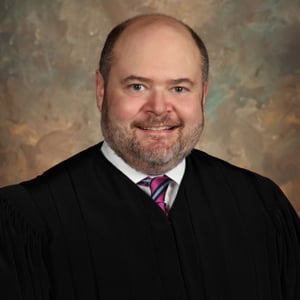
Judge, United States Court of Appeals, Eighth Circuit
David Stras became a judge on the United States Court of Appeals for the Eighth Circuit on January 31, 2018. Before serving on the Eighth Circuit, Judge Stras was an Associate Justice of the Minnesota Supreme Court, a position he occupied from July 1, 2010 until his appointment to the Eighth Circuit.
Prior to becoming a judge, Stras was a member of the faculty of the University of Minnesota Law School from 2004 through 2010. He taught and wrote in the areas of federal courts and jurisdiction, constitutional law, criminal law, and law and politics.
Judge Stras received his Bachelor of Arts degree, with highest distinction, in 1995 and his Master of Business Administration in 1999, both from the University of Kansas. He also received his law degree from the University of Kansas School of Law in 1999, where he served as Editor-in-Chief of the Criminal Procedure Edition of the Kansas Law Review.
Following law school, Stras clerked for The Honorable Melvin Brunetti of the United States Court of Appeals for the Ninth Circuit and then for The Honorable J. Michael Luttig of the United States Court of Appeals for the Fourth Circuit.
From 2001 to 2002, he practiced white-collar criminal and appellate litigation with the Washington, D.C., office of Sidley Austin Brown & Wood. Following his year in practice, he clerked for The Honorable Clarence Thomas of the Supreme Court of the United States.
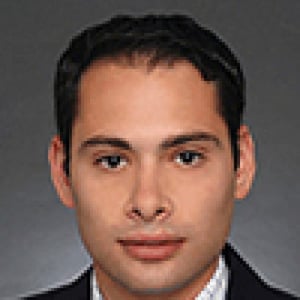
Litigation Associate, Winston & Strawn LLP
Jacob R. Loshin is a litigation associate in Winston & Strawn's Washington, D.C. office and a member of the firm’s nationwide appellate and critical motions practice.
Before joining Winston & Strawn, Mr. Loshin served as a law clerk to the Hon. Jerry E. Smith of the U.S. Court of Appeals for the Fifth Circuit. He has also worked in business strategy and development for an education technology company.
While at Yale Law School, Mr. Loshin was senior editor of the Yale Law Journal and editor-in-chief of the Yale Journal on Regulation.
B.A., magna cum laude, in Philosophy, Politics, and Economics, Claremont McKenna College
J.D., Yale Law School
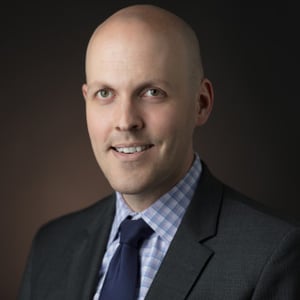
Partner, Barr & Klein PLLC
Steve Klein, a partner at Barr & Klein PLLC, is an experienced free speech attorney who has successfully fought for the First Amendment rights of his clients against local, state and federal regulators. As a lobbyist, Steve’s advocacy has led to the successful amendment of state laws to respect political engagement and prevented the enactment of laws that burden it. Steve has published articles in several legal journals, and his commentary has appeared in The Wall Street Journal, The Washington Times, The Detroit News, and other outlets. Steve earned a bachelors degree in politics at Hillsdale College and a law degree from Ave Maria School of Law, where he served as Managing Editor of the Ave Maria Law Review. He is licensed to practice law in the District of Columbia, Illinois and Michigan.

Solicitor General Kagan’s Confirmation Hearing
Paul E. Mirengoff, Carrie Campbell Severino, Adam Winkler, Richard W. Garnett
UPDATED: 11 AM, July 8, 2010 On May 10, 2010 President Obama nominated Solicitor General Elena...
Graham v. Florida - Post-Decision SCOTUScast
John F. Stinneford
On May 17, 2010, the Supreme Court announced its decision in Graham v. Florida. The...
United States v. Comstock - Post-Decision Debate SCOTUScast
Erin Sheley, Stephen R. McAllister, Ilya Shapiro
On May 17, 2010, the Supreme Court announced its decision in United States v. Comstock. The...
Florida v. Powell & Maryland v. Shatzer – Post-Decision SCOTUScast
Craig M. Bradley
On February 23 and 24, 2010, the Supreme Court announced its decisions in Florida v....
Beard v. Kindler - Post-Decision SCOTUScast
Michelle Ward Ghetti
On December 8, 2009, the Supreme Court announced its decision in Beard v. Kindler. This...
The Kagan Nomination
Carrie Campbell Severino, Scott Moss, Richard H. Pildes
Updated: 6 PM, May 13, 2010 On May 10, 2010, President Obama nominated Solicitor General Elena...
Justice Stevens’ Retirement & Filling the Vacancy
Carrie Campbell Severino, Scott Moss, Richard H. Pildes, David R. Stras
Updated: 9 AM, May 5, 2010 On Friday, April 9, 2010, Justice John Paul Stevens...
United States v. Stevens – Post-Decision SCOTUScast
Jacob R. Loshin
On April 20, 2010, the Supreme Court announced its decision in United States v. Stevens....
CAPERTON Decision Prompts Changes to Judicial Recusal Standards and Procedures
Stephen R. Klein
In June of 2009, the Supreme Court decided the case Caperton v. A. T. Massey Coal...
Legal Issues and Legislative Options for Dealing with Guantanamo Detainees
Houston, Texas