
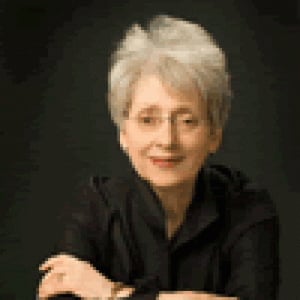
Vice-chair, U.S. Commission on Civil Rights, and Adjunct Scholar, American Enterprise Institute
Abigail Thernstrom is the vice-chair of the U.S. Commission on Civil Rights, and an adjunct scholar at the American Enterprise Institute. She was a senior fellow at the Manhattan Institute in New York from 1993 to 2009, and a member of the Massachusetts State Board of Education for more than a decade until her third term ended in November 2006. She also serves on the board of advisors of the U.S. Election Assistance Commission. She received her Ph.D. in 1975 from the Department of Government, Harvard University.
In 2007 she and her husband, Stephan Thernstrom, along with James Q. Wilson, Martin Feldstein, and John Bolton, were the recipients of a Bradley Foundation prizes for Outstanding Intellectual Achievement.
Thernstrom and her husband, Harvard historian Stephan Thernstrom, are the co-authors of No Excuses: Closing the Racial Gap in Learning (Simon & Schuster, October 2003), which has been awarded the 2007 Fordham Foundation prize for “for distinguished scholarship,” and was named by both the Los Angeles Times and the American School Board Journal as one of the best books of 2003.
They also collaborated on America in Black and White: One Nation, Indivisible (Simon & Schuster), which the New York Times Book Review, in its annual end-of-the-year issue, named as one of the notable books of 1997.
They are the editors of a Beyond the Color Line: New Perspectives on Race and Ethnicity. Their lengthy review of William G. Bowen and Derek Bok's much-noticed work, The Shape of the River, appeared in the June 1999 issue of the UCLA Law Review.
Whose Votes Count? Affirmative Action and Minority Voting Rights (Harvard University Press) won four awards, including the American Bar Association's Certificate of Merit, and the Anisfield-Wolf prize for the best book on race and ethnicity. It was named the best policy studies book of that year by the Policy Studies Organization (an affiliate of the American Political Science Association), and won the Benchmark Book Award from the Center for Judicial Studies. Along with her husband, she also won the 2004 Peter Shaw Memorial Award given by National Association of Scholars.
She is currently completing a book entitled Voting Rights and Wrongs: The Elusive Quest for Racially Fair Elections, and is working, as well, with her husband on another book with the tentative title of Don’t Call it Segregation: The Myth of Contemporary Apartheid. She (and two co-authors) submitted an amicus brief in Parents Involved in Community Schools v. Seattle, challenging the constitutionality of Seattle's racial balancing plan.
Her frequent media appearances have included Fox News Sunday, Good Morning America, and This Week with George Stephanopoulos. For some years, she was a stringer for The Economist, and continues to write for a variety of journals and newspapers, including the Wall Street Journal, the Los Angeles Times, the New York Times and the (London) Times Literary Supplement.
She serves on several boards, and from 1992 to 1997 was a member of the Aspen Institute's Domestic Strategy Group.
Professor of Law, Emory University School of Law
Charles A. Shanor was president of the student government at Rice University and a Rhodes Scholar. After earning both his BA and MA (in jurisprudence) from Oxford University, he received his JD from the University of Virginia.
Before joining the Emory faculty in 1975, he served as a law clerk to Judge Elbert P. Tuttle of the U.S. Court of Appeals for the Fifth Circuit and practiced with the Atlanta law firm of Sutherland, Asbill & Brennan. After three years as General Counsel of the U.S. Equal Employment Opportunity Commission in Washington, D.C., he returned to Emory in 1990, where he teaches and writes about the areas of employment discrimination, constitutional law and counterterrorism law.
Professor Shanor is a Fellow of the American College of Labor and Employment Lawyers and was Secretary of the American Bar Association Labor and Employment Section in 2008.
Professor Shanor served in a part-time of counsel position in the Washington, D.C. and Atlanta offices of Paul, Hastings, Janofsky and Walker from 1990-1997. He continues to do occasional consulting, expert witness and appellate work on employment discrimination and constitutional law matters.
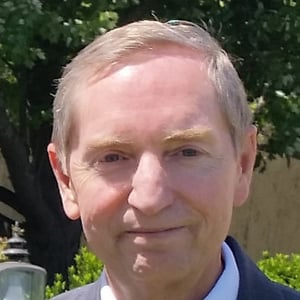
Legal Director & General Counsel, Criminal Justice Legal Foundation
Kent S. Scheidegger has been the Legal Director of the Criminal Justice Legal Foundation since December 1986. He also served as Chairman of the Criminal Law Practice Group of the Federalist Society 2003 to 2005. His articles on criminal and constitutional law have been published in law reviews, national legal publications, and congressional reports. Legal arguments authored by Mr. Scheidegger have been cited and incorporated in several precedent-setting United States Supreme Court decisions.
After receiving a degree in physics with honors from New Mexico State University in 1976, Mr. Scheidegger served for six years in the United States Air Force as a Nuclear Research Officer. He took his law degree with distinction from the University of the Pacific, McGeorge School of Law in 1982 and practiced civil law in Northern California. He was general counsel of California Cooler, Inc. from 1984 until 1986, when he joined the Foundation.

Professor of Law, University of San Diego School of Law (Retired)
Gail Heriot is a recently retired law professor from the University of San Diego. She also served as a member of the U.S. Commission on Civil Rights from 2007 to 2025. She is also the chairman of the board of the American Civil Rights Project and the chair emerita of the Civil Rights practice group at the Federalist Society for Law & Public Policy.
Professor Heriot is a prolific writer in the area of civil rights. She is the author of many law review articles. She is also the editor (along with Maimon Schwarzschild) of the 2021 anthology, A Dubious Expediency: How Race Preferences Damage Higher Education. Her upcoming book is entitled, Why We Walk on Eggshell: How Our Civil Rights Laws Helped Bring About the Woke Era—And the Trump Era, Too.
Her writings for a general audience have appeared in the Wall Street Journal, the San Diego Union-Tribune, the National Review and many other newspapers and magazines.
In 1996, she co-chaired the successful “Yes on Proposition 209” campaign, which amended the California Constitution to prohibit state-sponsored discrimination or preferential treatment based on race, sex, color, ethnicity or national origin. In 2020, she co-chaired the “No on Proposition 16” campaign, which successfully prevented Proposition 209’s repeal.
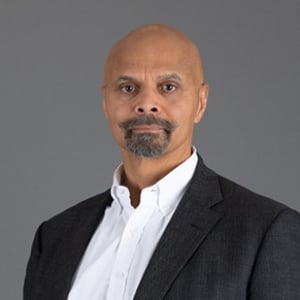
Partner, Benesch, Friedlander, Coplan & Aronoff LLP
Peter focuses his legal practice on representing management in employment-related litigation and in contract negotiations, NLRB proceedings, EEO matters and arbitration.
Peter Kirsanow is a partner with Benesch’s Labor & Employment Practice Group. He returned to Benesch in January 2008 after serving as a presidential appointee to the National Labor Relations Board (NLRB) in Washington D.C. for two years. While serving on the NLRB, he was involved with significant decisions including Oakwood Healthcare, Inc., Dana/Metaldyne and Oil Capital Sheet Metal, Inc. In addition, Peter testified before the Senate Judiciary Committee on the nominations of John Roberts, Samuel Alito, Sonia Sotomayor, Elena Kagan and Neil Gorsuch to the Supreme Court. He also continues to testify before and advise members of the U.S. Congress on employment law matters, most recently on November 18 before the House Subcommittee on Investigations and Oversight regarding disparate impact theory.
Peter was recently reappointed by the Majority Leader of the House of Representatives to his fourth consecutive six-year term on the U.S. Commission on Civil Rights. This is a part-time position which will expire in December 2025.
Recently, Peter and a team of Benesch attorneys served as lead counsel to the National Association of Manufacturers in litigation before the U.S. Circuit Court for the District of Columbia against the NLRB, challenging the Board’s Notice of Employer Rights Posting Rule. The court ruled in favor of Benesch’s client, striking down the NLRB’s Rule in its entirety. This ruling impacts over 6,000,000 employers nationwide which would have been subject to the posting requirement.
Additionally, Peter is past chair of the board of directors of the Center for New Black Leadership and is a member of Benesch’s Diversity & Inclusion Committee. This committee helps ensure that the firm promotes an environment in which differences are respected, employees are treated fairly, and individual skills and talents are valued.
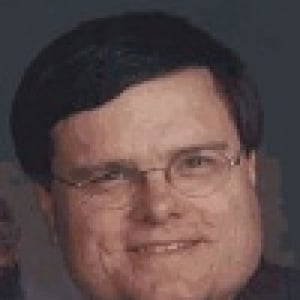
Supervising Deputy Attorney General, California Department of Justice.
Ward Campbell is the Supervising Deputy Attorney General and Sacramento Capital Case Coordinator, as well as the Supervising Deputy Attorney General, at the California Department of Justice.
Mr. Campbell is the recipient of the Attorney General’s Awards for Excellence (1999 and 2006), the William James Award for Distinguished Service from the California District Attorneys Association (2003), the Appellate Award for Outstanding Advocacy in Capital Cases (2005) and the William Schafer Award for Distinguished Service (2011).
Mr. Campbell received his law degree from the University of California at Davis.
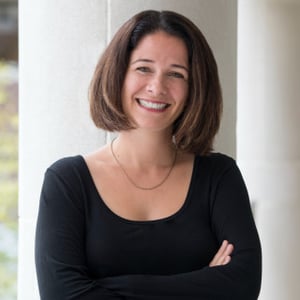
Anne Shea Ransdell and William Garland "Buck" Ransdell, Jr. Distinguished Professor of Law, University of North Carolina School of Law
Carissa Byrne Hessick joined the Carolina Law faculty in 2016. She serves as the Anne Shea Ransdell and William Garland “Buck” Ransdell, Jr. Distinguished Professor of Law and as the director of the Prosecutors and Politics Project. Her teaching and research interests include criminal law, the structure of the criminal justice system, criminal sentencing, and child pornography crimes. Hessick is the author of multiple law review articles, essays, and op eds on plea bargaining, the powers and selection of prosecutors, Sixth Amendment sentencing rights, and criminal statutes. Her work has appeared in the California Law Review, the Cornell Law Review, the L.A. Times, the UCLA Law Review, and the Virginia Law Review, among others. She founded the Prosecutors and Politics Project in 2018. And she currently serves as the Reporter for the ABA Criminal Justice Section’s Sentencing Standards Task Force.
Hessick attended Yale Law School, where she was an editor of the Yale Law Journal and winner of the Potter Stewart Prize for the Morris Tyler Moot Court of Appeals. After graduating from law school, she clerked for Judge Barbara S. Jones on the Southern District of New York and for Judge A. Raymond Randolph on the D.C. Circuit. She also worked as a litigation associate at Wachtell, Lipton, Rosen & Katz in New York City. Before joining the faculty at Carolina Law, Hessick taught on the faculties at Arizona State University’s Sandra Day O’Connor College of Law and the University of Utah’s S.J. Quinney College of Law. She also spent two years as a Climenko Fellow at Harvard Law School.
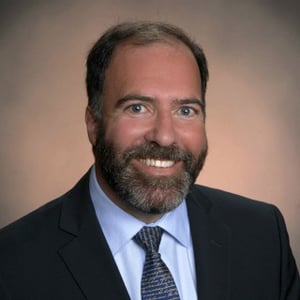
Professor of Law, Widener University Commonwealth Law School
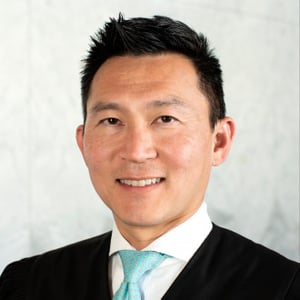
Judge, United States Court of Appeals, Ninth Circuit
Kenneth Kiyul Lee is a judge on the U.S. Court of Appeals for the Ninth Circuit. He was appointed in June 2019 and is based in San Diego, California.
Prior to his appointment, he was a partner at the law firm of Jenner & Block in Los Angeles. Judge Lee previously served as an Associate Counsel to President George W. Bush and as Special Counsel to Senator Arlen Specter, then-chair of the Senate Judiciary Committee. He started his legal career at Wachtell, Lipton, Rosen & Katz in New York.
Judge Lee received his J.D. from Harvard Law School, magna cum laude, and his A.B. from Cornell University, summa cum laude. He clerked for Judge Emilio M. Garza of the U.S. Court of Appeals for the Fifth Circuit.

Government Affairs Program Manager, Energy Northwest
Daniel Himebaugh is a lawyer working in government affairs.
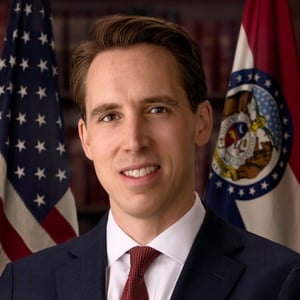
United States Senator, Missouri
U.S. SENATOR JOSH HAWLEY TOOK OFFICE IN JANUARY 2019.
Raised in rural Missouri, U.S. Senator Josh Hawley previously served as Missouri’s Attorney General. There he earned a reputation for taking on the big and the powerful to protect Missouri workers and families. He has battled big government and big business, special interests, organized crime, and anyone who would threaten the well-being of Missourians.
A native of small town Lexington, Missouri in rural Lafayette County, Senator Hawley graduated from Rockhurst High School in Kansas City. After graduating from Stanford University in 2002 and Yale Law School in 2006, he moved back home to mid-Missouri with his wife, Erin, where they started a family. They are the proud parents of two young boys, Elijah and Blaise.
Senator Hawley is recognized as one of the nation’s leading constitutional lawyers. He has litigated at the Supreme Court of the United States, the federal courts of appeals, and in state court, fighting for the people’s liberties. He previously fought Obamacare at the Supreme Court — and won — as one of the lead attorneys in the landmark Hobby Lobby case. He was also a lead attorney in the Hosanna-Tabor case at the Supreme Court, protecting the rights of churches.
As Attorney General, he fought the Washington overreach threatening farms and family businesses, including the Waters of the United States Rule and the Clean Power Plan. Senator Hawley has also taken on big opioid manufacturers, challenging their unethical marketing practices that helped create an epidemic of opioid abuse. He cracked down on human trafficking in Missouri, leading the largest anti-trafficking bust in Missouri history. And he stood up to big tech, launching investigations of the most powerful companies in the world—Google and Facebook—to protect Missourians, their data, and the First Amendment.
The youngest Senator in America, Senator Hawley serves on the Senate Committees on the Judiciary; Armed Services; Homeland Security and Governmental Affairs; Small Business and Entrepreneurship; and the Special Committee on Aging.

Shelby County v. Holder - Post-Decision SCOTUScast
Abigail Thernstrom
On June 25, 2013, the Supreme Court announced its decision in Shelby County v. Holder....
University of Texas Southwestern Medical Center v. Nassar - Post-Decision SCOTUScast
Charles Shanor
On June 24, 2013, the Supreme Court announced its decision in University of Texas Southwestern...
Salinas v. Texas - Post-Decision SCOTUScast
Kent Scheidegger
On June 17, 2013, the Supreme Court announced its decision in Salinas v. Texas. This case...
Fisher v. University of Texas - Post-Decision SCOTUScast
Gail L. Heriot, Peter Kirsanow
On June 24, 2013 the Supreme Court announced its decision in Fisher v. University of...
Trevino v. Thaler and McQuiggin v. Perkins - Post-Decision SCOTUScast
Ward Campbell
On May 28, 2013, the Supreme Court announced its decision in Trevino v. Thaler and McQuiggin v. Perkins....
U.S. Supreme Court Round-Up: 2012-2013 Term
Peugh v. United States - Post-Decision SCOTUScast
Carissa Byrne Hessick
On June 19, 2013, the Supreme Court announced its decision in Peugh v. United States. ...
Shelby County, Alabama v. Holder: Must Congress Update the Voting Rights Act’s Coverage Formula for Preclearance?
Michael R. Dimino
Section 5 of the Voting Rights Act requires “covered jurisdictions”—mostly, but not exclusively, in the...
Comcast v. Behrend - Post-Decision SCOTUScast
Kenneth Kiyul Lee
On March 27, 2013, the Supreme Court announced its decision in Comcast v. Behrend. The question...
Decker v. Northwest Environmental Defense Center - Post-Decision SCOTUScast
Daniel Himebaugh
On March 20, 2013, the Supreme Court announced its decision in Decker v. Northwest Environmental Center,...