
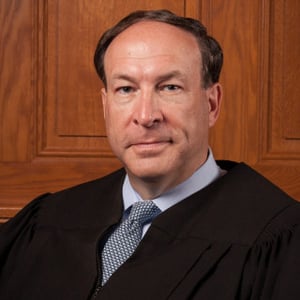
Judge, United States Court of Appeals, Seventh Circuit
Michael B. Brennan was confirmed and sworn in as a Circuit Judge for the U.S. Court of Appeals for the Seventh Circuit in May 2018.
He previously worked as a partner in the Milwaukee law firm of Gass Weber Mullins LLC, where he tried cases and handled appeals in federal and state courts, as a judge on the Milwaukee County Circuit, where he presided over a variety of criminal and civil calendars, and as an assistant district attorney in the Milwaukee County District Attorney’s office.
Brennan’s undergraduate degree is from the University of Notre Dame, and his law degree from Northwestern University School of Law, where he was an editor on the law review and the moot court champion. He served as a law clerk on the U.S. District Court for the Eastern District of Wisconsin and the U.S. Court of Appeals for the Seventh Circuit.
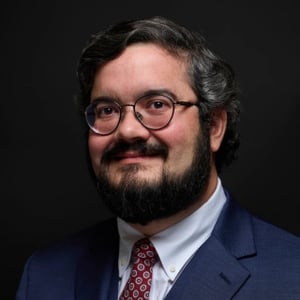
Partner, Torridon Law PLLC
Mike Fragoso is an experienced legal and policy strategist who represents clients before all three branches of the federal government. Most recently he served as chief counsel to the Senate Republican Leader, Mitch McConnell (R-KY). He has negotiated consequential legislation, managed successful congressional oversight, and prepared individuals for the most contentious Senate hearings.
As chief counsel to Leader McConnell, Mike was the Leader’s primary legal advisor and managed the “last mile” of any legislation touching on the Senate Judiciary Committee. He ran the 2024 reauthorization of FISA Section 702 and was involved at the highest levels of the appropriations and budget-reconciliation processes. Mike also repeatedly represented Leader McConnell as counsel of record at the Supreme Court. Leader McConnell said of Mike that he’s “equally at home in the high-minded philosophical discourse of the legal community and the urgent pragmatism of congressional dealmaking,” and that he “maintains a firm grasp on the realm of the possible” but “knows which screws to twist.” He observed that Mike “is so exceptionally competent that he often produces from his desk the work that would normally require, literally, teams of outside counsel.”
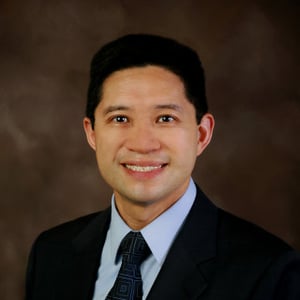
Founder, Original Jurisdiction
David Lat is a lawyer turned writer. He publishes Original Jurisdiction, a newsletter on Substack about law and legal affairs, and he writes for newspapers and magazines, including the New York Times, Washington Post, and Wall Street Journal. Prior to launching Original Jurisdiction, David founded Above the Law, one of the nation's most widely read legal news websites, and Underneath Their Robes, a popular blog about federal judges that he wrote under a pseudonym. He is also the author of a novel set in the world of the federal courts, Supreme Ambitions. Before entering the media world, David worked as a federal prosecutor in Newark, New Jersey; a litigation associate at Wachtell, Lipton, Rosen & Katz, in New York; and a law clerk to Judge Diarmuid F. O’Scannlain of the U.S. Court of Appeals for the Ninth Circuit. David graduated from Harvard College and Yale Law School, where he served as an editor of the Yale Law Journal.

Associate Professor of Law, Antonin Scalia Law School at George Mason University
Robert Luther III was appointed Associate Professor of Law in 2025 after serving as Distinguished Professor of Law from 2024-2025 and Adjunct Professor of Law from 2019-2024. He teaches and writes on the federal courts, legal and judicial ethics, political law, Congress, and professional sports. He has served at high levels in all three branches of the federal government and recently founded Constitutional Solutions PLLC—a law firm that navigates judicial candidates, judges, elected officials, professional athletes, and executives through high-stakes hearings, investigations, and reputational attacks.
Immediately before joining the Scalia Law faculty, Professor Luther spent over five years in the Washington, D.C. office of Jones Day, where his practice focused on strategic counseling, crisis management, and litigation. Prior to joining Jones Day, he served as Associate Counsel to the President of the United States in the White House Counsel’s Office. In the White House, he co-managed the judicial selection process and supervised the preparation of over 150 federal judicial nominees for their successful U.S. Senate confirmation hearings. The New York Times Magazine referred to his work on judicial selection during this period as “unique in White House history.” Before joining the White House, Professor Luther served as Counsel to then–U.S. Senator Jeff Sessions (R-Ala.) on the U.S. Senate Judiciary Committee, where he served as a core member of the team that prepared the Senator for confirmation as United States Attorney General. Professor Luther was also a law clerk to Judge Daniel A. Manion of the U.S. Court of Appeals for the Seventh Circuit. Earlier in his career, Professor Luther practiced civil and appellate litigation at a boutique firm in Williamsburg, Va. and taught at William & Mary Law School.
Professor Luther frequently speaks on the legal profession, political law, and federal judicial selection. His public work has been covered by or appeared in The New York Times, The Washington Post, The Wall Street Journal, Bloomberg, Fox News, The Hill, Politico, the Washington Examiner, National Law Journal, Law360, The Washington Reporter, and elsewhere, while his scholarship is published in the law journals of nearly twenty universities including three journals of Harvard University. He holds active law licenses in Virginia, the District of Columbia, the U.S. Supreme Court, and half of the U.S. Courts of Appeals.
In 2025, Virginia Governor Glenn Youngkin appointed Professor Luther to the Board of Visitors to Mount Vernon. He is an elected member of the American Law Institute (ALI) and serves on the Advisory Board of the Wilson Center for Leadership at Hampden-Sydney College. Since 2019, he has helped over 200 of his students secure clerkships with federal judges.
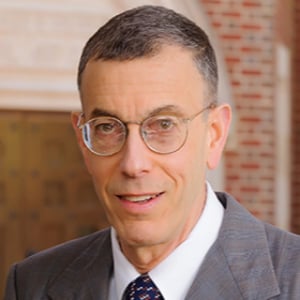
Williams Chair in Law, University of Richmond School of Law
Professor Carl Tobias holds the Law School’s prestigious Williams Chair and writes in a number of areas, with a particular emphasis on federal judicial selection. A prolific scholar, Professor Tobias is the author of over 120 law review articles and the author or co-author of more than 80 essays, commentaries, and other shorter works in law reviews. He has published in the country’s top law journals, including the Stanford, Columbia, California, and Cornell Law Reviews, among others. Professor Tobias is also a frequent commentator in the media and has written several hundred opinion pieces published in the Washington Post, Los Angeles Times, Christian Science Monitor, Slate and Politico, among other high-profile media outlets. He has served as a Legal Consultant to the Food and Drug Administration and the American Bar Association’s Commission on the Twenty-First Century Judiciary as well as a member of the District Court Local Rules Review Committee of the Ninth Circuit Chief District Judges Conference, the Civil Justice Reform Act Advisory Group for the U.S. District Court for the District of Montana, and the Study Committee to Review the Nevada Rules of Civil Procedure. Professor Tobias has been a member of the prestigious American Law Institute since 1994.
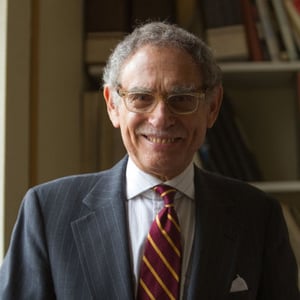
Founder and Co-Director, James Wilson Institute
Hadley Arkes joined the faculty of Amherst College in 1966. He became the Edward Ney Professor of Jurisprudence in 1987, and held that chair until he retired officially in July 2015. But he has not retired from writing and speaking. He has carried that teaching into a new phase; he has become the Founder and Director of the James Wilson Institute on Natural Rights and the American Founding in Washington, D.C. He has written eight books, mostly with Princeton and Cambridge University Presss. Among the books at Princeton have been: The Philosopher in the City (1981), First Things (1986), Beyond the Constitution (1990), and The Return of George Sutherland (1994). With Cambridge Press he has done Natural Rights and the Right to Choose (2002), and Constitutional Illusions & Anchoring Truths: The Touchstone of the Natural Law (2010). His most recent book, with Regnery Press is Mere Natural Law (2023) His articles have appeared in professional journals, but apart from his writing in more scholarly formats, he has become known to a wider audience through his writings in the Wall Street Journal, National Review, Civitas and First Things, a journal that took its name from his book of that title.
He was the main advocate, and architect, of the bill that became known as the Born-Alive Infants’ Protection Act. The account of his experience, in moving the bill through Congress, is contained as an epilogue or memoir in his book, Natural Rights & the Right to Choose. Arkes first prepared his proposal as part of the debating kit assembled for the first George Bush in 1988. The purpose of that proposal was to offer the “most modest first step” of all in legislating on abortion, and opening a conversation even with people who called themselves “pro-choice.” Professor Arkes proposed to begin simply by preserving the life of a child who survived an abortion–contrary to the holding of one federal judge, that such a child was not protected by the laws. Professor Arkes led the testimony on the bill before the Judiciary Committee of the U.S. House in July 2000, then again in July 2001. The legislative calendar was upended in the aftermath of September 11th, but in March 2002, the bill was brought to the floor of the House, where it passed unanimously. To the surprise of Professor Arkes, the bill was brought to the floor of the Senate on July 18 by the Deputy Majority Leader, Harry Reid, and passed in the same way. On August 5, President Bush signed the bill into law with Professor Arkes in attendance.
Professor Arkes was the founder, at Amherst, of the Committee for the American Founding, a group of alumni and students seeking to preserve, at Amherst, the doctrines of “natural rights” taught by the American Founders and Lincoln. That interest has been carried over now to the founding of a new center for the jurisprudence of natural law, in Washington, D.C.: the James Wilson Institute on Natural Rights and the American Founding, named for one of the premier minds among the American Founders. Professor Arkes has drawn to this project a cluster of accomplished federal judges who have wanted to get a firmer hold on the natural law, and brought them together with some gifted teachers of philosophy and law. The new institute will be sponsoring lectures and seminars in Washington and other parts of the country. The purpose of this new James Wilson Institute is to teach anew, to lawyers, judges, and students those principles of law that furnished the guide to the American Founders as they set about framing a Constitution. And the hope is to restore, to a new generation, the furnishings of mind of the men who formed this regime.

Patrick Hotung Professor of Constitutional Law, Georgetown University Law Center; Faculty Director, Georgetown Center for the Constitution
Randy E. Barnett is the Patrick Hotung Professor of Constitutional Law at the Georgetown University Law Center and is the Faculty Director of the Georgetown Center for the Constitution. After graduating from Northwestern University and Harvard Law School, he tried many felony cases as a prosecutor in the Cook County States’ Attorney’s Office in Chicago. A recipient of a Guggenheim Fellowship in Constitutional Studies and the Bradley Prize, Professor Barnett has been a visiting professor at Penn, Northwestern and Harvard Law School.
Professor Barnett’s publications includes thirteen books, more than one hundred articles and reviews, as well as numerous op-eds. His most recent book is Felony Review: Tales of True Crime and Corruption in Chicago (2026). His other books on the Constitution include: A Life for Liberty: The Making of an American Originalist (2024); The Original Meaning of the Fourteenth Amendment: Its Letter and Spirit (2021) (with Evan Bernick); An Introduction to Constitutional Law: 100 Supreme Court Cases Everyone Should Know (2019) (with Josh Blackman); Restoring the Lost Constitution: The Presumption of Liberty (2nd ed. 2013); Our Republican Constitution: Securing the Liberty and Sovereignty of We the People (2016); and Constitutional Law: Cases in Context (5th ed. forthcoming 2027) (with Josh Blackman). His books on contracts are The Oxford Introductions to U.S. Law: Contracts (2010) and Contracts: Cases and Doctrine (7th ed. 2021) (with Nate Oman). And he is the author of The Structure of Liberty: Justice and the Rule of Law (2nd ed. 2014).
In 2004, he argued the medical marijuana case of Gonzalez v. Raich before the U.S. Supreme Court. In 2012, he was one of the lawyers representing the National Federation of Independent Business in its constitutional challenge to the Affordable Care Act in NFIB v. Sebelius. He’s appeared in numerous documentaries and portrayed a prosecutor in the 2010 science-fiction feature film, InAlienable: The Movie. On X he is @RandyEBarnett

McCormick Professor of Jurisprudence; Director, James Madison Program, Princeton University
Robert P. George is McCormick Professor of Jurisprudence and Director of the James Madison Program in American Ideals and Institutions at Princeton University. He has several times been a Visiting Professor at Harvard Law School. He has served as Chairman of the U.S. Commission on International Religious Freedom and on the U.S. Commission on Civil Rights and the President’s Council on Bioethics. He has also served as the U.S. member of UNESCO’s World Commission on the Ethics of Scientific Knowledge and Technology. He was a Judicial Fellow at the Supreme Court of the United States, where he received the Justice Tom C. Clark Award. A Phi Beta Kappa graduate of Swarthmore, he holds the degrees of J.D. and M.T.S. from Harvard University and the degrees of D.Phil., B.C.L., D.C.L., and D.Litt. from Oxford University, in addition to twenty-one honorary doctorates. He is a recipient of the U.S. Presidential Citizens Medal, the Honorific Medal for the Defense of Human Rights of the Republic of Poland, the Canterbury Medal of the Becket Fund for Religious Liberty, the Bradley Prize, the Irving Kristol Award of the American Enterprise Institute, and Princeton University’s President’s Award for Distinguished Teaching. His books include Making Men Moral: Civil Liberties and Public Morality and In Defense of Natural Law (both published by Oxford University Press), as well as The Clash of Orthodoxies and Conscience and Its Enemies (both published by ISI Books).

Judge, United States Court of Appeals, Fifth Circuit
Edith Jones graduated from Alamo Heights High School, where she was a National Merit Scholar. In 1971, she received her B.A. in Economics from Cornell University, graduating with honors. In 1974, she was awarded her J.D. at the University of Texas Law School, where she was a law review editor and received the Order of the Coif.
Judge Jones was the first female partner at Andrews, Kurth, Campbell & Jones (now Hunton Andrews Kurth) where she practiced various types of litigation and bankruptcy cases. Judge Jones went on the federal bench on June 1, 1985.
Judge Jones served as a former member of the National Bankruptcy Review Commission, and as a member of the Judicial Conference Commission on Bankruptcy Rules. Judge Jones served on the White House Fellows Commission. Judge Jones served on the board of the Sam Houston Area Council of the Boy Scouts of America. She has been a member of the Garland Walker Inn of Court in Houston for more than 20 years and its President for at least ten years. Judge Jones is also on the Board of the Calvin Coolidge Presidential Foundation.
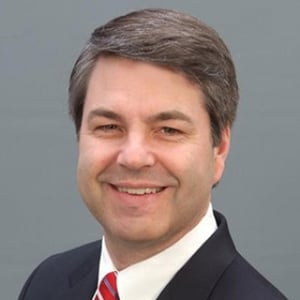
Partner and Co-Chair, Public Policy Group, Shook Hardy & Bacon LLP
Mark Behrens co-chairs Shook's Washington, DC-based Public Policy Practice Group and is a leading national expert on civil justice issues with over thirty years of experience. A substantial part of his practice is working to improve the civil litigation environment through state and federal legislation; in the courts through amicus curiae briefs; through legal scholarship and judicial education; and in the court of public opinion.
Mark is actively involved in civil justice reform efforts at the federal and state levels. He has testified before the U.S. Congress and most state legislatures on behalf of business and civil justice organizations. Mark also has an active amicus brief practice specializing in tort liability and civil justice issues. He has authored or co-authored over 150 amicus briefs in cases before the United States Supreme Court and federal and state appellate courts on behalf of business, civil justice, and defense lawyer organizations. In addition, Mark routinely files comments on behalf of business, civil justice, and defense lawyer organizations regarding potential changes to federal and state court rules. He chairs the International Association of Defense Counsel’s (IADC) Civil Justice Response Committee and serves on the Board of Directors of Lawyers for Civil Justice (LCJ).
Mark is a member of the American Law Institute (ALI). He received his J.D. in 1990 from Vanderbilt University Law School, where he was a member of the Vanderbilt Law Review. He received his B.A. in economics from the University of Wisconsin in 1987.
Professor of Legal Rhetoric, American University Washington College of Law
Professor Paul Figley is a Professor of Legal Rhetoric at the Washington College of Law where he first joined the faculty in 2006. Professor Figley has taught Legal Rhetoric, first year Torts, and upper level Advanced Lawyering Skills: Tort Litigation. He serves on the Advisory Board of the Administrative Law Review and the American University Law Review. The Student Bar Association named Washington College of Law Professor of the Year for 2012-13 and Faculty Member of the Year for 2014-15.
Professor Figley has testified before Congress, presented at scholarly symposia and conferences of national organizations and government agencies. He has written for national legal writing publications and has published articles in scholarly journals. His book, A Guide to the Federal Tort Claims Act (ABA, 2018), is now in its second edition.
Professor Figley served three decades as a litigator for the U.S. Department of Justice where he was Deputy Director of the Torts Branch for fifteen years. At Justice, Professor Figley represented the United States and its agencies in appellate and district court litigation involving torts, national security, and information law.
Professor Figley is a graduate of Franklin & Marshall College and Southern Methodist University School of Law, where he was Leading Articles Editor for the Journal of Air Law & Commerce.
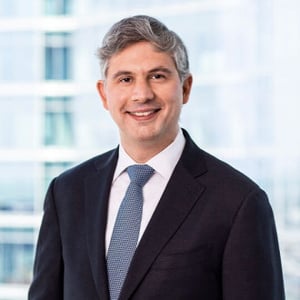
Partner, Keller Postman
Ashley Keller is one of the founding Partners of Keller Postman LLC. An experienced trial and appellate lawyer, Ashley helps set strategic direction across virtually all of the firm’s cases. He represents clients in a wide variety of practice areas and types of claims, including product-liability, antitrust, class action, and arbitration matters.
Ashley is one of the leaders of Keller Postman’s national product-liability practice. He leverages his ability to detangle complex concepts and develop novel legal theories to support individual client matters and as counsel on numerous product-liability multidistrict litigation matters. He chairs the plaintiffs’ Law & Briefing Committee in the Zantac (Ranitidine) Product Liability MDL in the U.S. District Court for the Southern District of Florida.
Ashley also litigates complex antitrust and class action matters. Among his notable cases, Ashley represents numerous States in antitrust litigation against Google for monopolizing products and services used by advertisers and publishers in online-display advertising.
Ashley also has played a central role in developing the firm’s pioneering arbitration practice, which includes pursuing individual arbitrations for clients whose claims are subject to arbitration clauses with class-action waivers. In part through managing the complexity of pursuing these individual claims simultaneously, the firm has secured millions in settlements for more than 500,000 employees and consumers.
Before launching Keller Postman, Ashley co-founded the litigation finance firm Gerchen Keller Capital, which grew to more than $1.3 billion in assets under management and was the world’s largest private investment manager focused on legal and regulatory risk prior to being acquired by Burford Capital in 2016.
Previously, Ashley was a partner at Bartlit Beck Herman Palenchar & Scott LLP, The American Lawyer’s litigation boutique of the year. While there, he handled various trial and appellate matters involving multi-billion-dollar securities and patent cases, contract disputes, mass torts, and class actions.
Ashley also worked as an analyst at Alyeska Investment Group, a Chicago-based market-neutral hedge fund, where he focused on investments in companies facing litigation and other complicated regulatory matters.
Ashley was named a 2021 Plaintiffs’ Lawyers Trailblazer by the National Law Journal. He is also listed on Lawdragon’s 500 Leading Lawyers in America, Lawdragon’s 500 Leading Plaintiff Consumer Lawyers, Lawdragon’s Leading Plaintiff Financial Lawyers, National Trial Lawyers’ Top 100, and Illinois Super Lawyers.
Ashley was a law clerk for Justice Anthony M. Kennedy at the Supreme Court of the United States and Judge Richard Posner at the U.S. Court of Appeals for the Seventh Circuit. He graduated magna cum laude from Harvard College, received his M.B.A. from the University of Chicago Booth School of Business and received his J.D. from the University of Chicago Law School, where he graduated first in his class.

Executive Vice President, Chief Legal Officer, Gates Corporation
Matthew R. A. Heiman joined the Company in May 2026 and has served as the Company’s Chief Legal Officer and Corporate Secretary since June 2026. As Chief Legal Officer, Mr. Heiman is responsible for all legal functions for Gates, including securities and corporate governance, M&A, litigation, commercial, regulatory, compliance, patents and trademarks, real estate, employment and labor, sustainability and environmental matters. Prior to joining Gates, Mr. Heiman held senior legal leadership roles at Waystar, where he served as Chief Legal & Administrative Officer from 2023 to 2025 and as General Counsel and Corporate Secretary from 2020 to 2023. Prior to that, he was with Johnson Controls, where he served as Vice President, Corporate Secretary, and Associate General Counsel. Mr. Heiman has been a Senior Fellow for the National Security Institute at George Mason University’s Antonin Scalia School of Law since 2018.
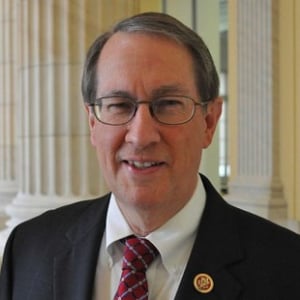
Former Congressman, United States House of Representatives
Bob Goodlatte served in the United States House of Representatives representing Virginia's 6th congressional district for 13 terms.
Goodlatte’s service to the people of the Sixth District began in 1977 when he became District Director for former Congressman Caldwell Butler. He served in this position for two years until 1979, and was responsible for helping folks across the District seeking assistance with or encountering problems from various federal agencies. In 1979, he founded his own private law practice in Roanoke. Later, he was a partner in the law firm of Bird, Kinder and Huffman, working there from 1981 until taking office.
Rep. Goodlatte was first elected to serve as Chairman of the House Judiciary Committee in the 113th Congress. He was the first Judiciary Committee Chairman from Virginia in the last 125 years. Rep. Goodlatte was an active Member of the Judiciary Committee since arriving in Congress, serving in a variety of leadership positions on the Committee including taking the lead on many intellectual property issues. During his time in Congress, Rep. Goodlatte made a name for himself as a leader on Internet and technology issues. He was Co-Chair of the Congressional Internet Caucus and the International Creativity and Theft-Prevention Caucus.
Rep. Goodlatte is a graduate of Washington and Lee University School of Law, and his undergraduate degree in Government was earned at Bates College in Lewiston, Maine.

Vice President, Edwin Meese III Institute for the Rule of Law, Advancing American Freedom
John G. Malcolm oversees Advancing American Freedom’s work to increase understanding of the Constitution and the rule of law as Vice President of the organization’s Edwin Meese III Institute for the Rule of Law. Malcolm brings to the challenge a wealth of legal expertise and experience in both the public and private sectors.
Prior to joining Advancing American Freedom in 2025, Malcolm was the Vice President of the Institute for Constitutional Government and the Director of the Meese Center for Legal and Judicial Studies at the Heritage Foundation. Prior to joining Heritage in 2012, Malcolm was general counsel at the U.S. Commission on International Religious Freedom, as well as a distinguished practitioner in residence at Pepperdine Law School. From 2004 to 2009, Malcolm was executive vice president and director of worldwide anti-piracy operations for the Motion Picture Association.
Malcolm served as a deputy assistant attorney general in the Department of Justice’s Criminal Division from 2001 to 2004, where he oversaw sections on computer crime and intellectual property, domestic security, child exploitation and obscenity, and special investigations. Immediately prior to that, he was a founding partner in the Atlanta law firm of Malcolm & Schroeder, LLP.
From 1990 to 1997, Malcolm was an assistant U.S. attorney in Atlanta, assigned to the fraud and public corruption section, and also an associate independent counsel, investigating fraud and abuse in the Department of Housing and Urban Development. He was honored with the Director’s Award for Superior Performance for his work in connection with the successful prosecution of Walter Leroy Moody Jr., who assassinated an 11th Circuit judge and the head of the Savannah chapter of the NAACP.
A graduate of Harvard Law School and Columbia College, Malcolm began his career as a law clerk to a federal district court judge and a federal appellate court judge, and as an associate at the Atlanta-based law firm of Sutherland, Asbill & Brennan (new Eversheds Sutherland).
Malcolm, who resides in Washington, D.C., serves on the Board of Trustees of the Washington National Opera and is a Senate-confirmed member of the Board of Directors of the Legal Services Corporation, the largest funder of civil legal aid in the United States.

Emanuel S. Heller Professor of Law, University of California at Berkeley; Thomas Smith Senior Research Fellow, The Civitas Institute, University of Texas at Austin
John Yoo is the Emanuel Heller Professor of Law at the University of California at Berkeley. He is also the Thomas Smith Senior Research Fellow, Civitas Institute, at the University of Texas at Austin. He is also a Nonresident Senior Fellow at the American Enterprise Institute.
His most recent book, The Politically Incorrect Guide to the Supreme Court, co-authored with Robert Delahunty, was published in 2023. Professor Yoo’s other books include Defender-in-Chief: Trump’s Fight for Presidential Power; Striking Power: How Cyber, Robots, and Space Weapons Change the Rules for War; Point of Attack: Preventive War, International Law, and Global Welfare; and Crisis and Command: A History of Executive Power from George Washington to George Bush.
He is a co-author of volumes 1 and 2 of R. Rossum, G. Tarr, V. Munoz & J. Yoo American Constitution Law (Routledge, 2026), and a co-editor of the eight-volume series on the 250th anniversary of the American Revolution, We Hold These Truths, with Yuval Levin and Adam White of the American Enterprise Institute.
Professor Yoo has published more than 100 articles in academic journals on subjects including national security, constitutional law, international law, and the Supreme Court. He also regularly contributes to the editorial pages of the Wall Street Journal, New York Times, Washington Post, Los Angeles Times, and National Review, among others.
Professor Yoo has served in all three branches of government. He was an official in the U.S. Department of Justice, where he worked on national security and terrorism issues after the 9/11 attacks. He served as general counsel of the U.S. Senate Judiciary Committee. He has been a law clerk for Supreme Court Justice Clarence Thomas and federal appeals Judge Laurence Silberman. He has been a visiting professor at the University of Texas at Austin’s School of Civic Leadership, Seoul National University, the Interdisciplinary Center Herzliya, Keio University, Trento University, the University of Chicago, and the Free University of Amsterdam.
Professor Yoo supervises the Public Law and Policy Program and the California Constitution Center. He also serves on the boards of Founding Forward, the Washington Legal Foundation, the Pacific Legal Foundation, the Ulysses Grant Institute, the Federalist Society’s Separation of Powers and Federalism Division, the Universidad Cientifica del Sur Law School, and the Asia-Pacific Law Institute at Seoul National University. He is a winner of the Federalist Society’s Paul Bator award and the Heritage Foundation’s Edwin Meese III Originalism Lectureship.
Professor Yoo graduated from Yale Law School and summa cum laude from Harvard College.
Vice President, Edwin Meese III Institute for the Rule of Law, Advancing American Freedom
John G. Malcolm oversees Advancing American Freedom’s work to increase understanding of the Constitution and the rule of law as Vice President of the organization’s Edwin Meese III Institute for the Rule of Law. Malcolm brings to the challenge a wealth of legal expertise and experience in both the public and private sectors.
Prior to joining Advancing American Freedom in 2025, Malcolm was the Vice President of the Institute for Constitutional Government and the Director of the Meese Center for Legal and Judicial Studies at the Heritage Foundation. Prior to joining Heritage in 2012, Malcolm was general counsel at the U.S. Commission on International Religious Freedom, as well as a distinguished practitioner in residence at Pepperdine Law School. From 2004 to 2009, Malcolm was executive vice president and director of worldwide anti-piracy operations for the Motion Picture Association.
Malcolm served as a deputy assistant attorney general in the Department of Justice’s Criminal Division from 2001 to 2004, where he oversaw sections on computer crime and intellectual property, domestic security, child exploitation and obscenity, and special investigations. Immediately prior to that, he was a founding partner in the Atlanta law firm of Malcolm & Schroeder, LLP.
From 1990 to 1997, Malcolm was an assistant U.S. attorney in Atlanta, assigned to the fraud and public corruption section, and also an associate independent counsel, investigating fraud and abuse in the Department of Housing and Urban Development. He was honored with the Director’s Award for Superior Performance for his work in connection with the successful prosecution of Walter Leroy Moody Jr., who assassinated an 11th Circuit judge and the head of the Savannah chapter of the NAACP.
A graduate of Harvard Law School and Columbia College, Malcolm began his career as a law clerk to a federal district court judge and a federal appellate court judge, and as an associate at the Atlanta-based law firm of Sutherland, Asbill & Brennan (new Eversheds Sutherland).
Malcolm, who resides in Washington, D.C., serves on the Board of Trustees of the Washington National Opera and is a Senate-confirmed member of the Board of Directors of the Legal Services Corporation, the largest funder of civil legal aid in the United States.
Emanuel S. Heller Professor of Law, University of California at Berkeley; Thomas Smith Senior Research Fellow, The Civitas Institute, University of Texas at Austin
John Yoo is the Emanuel Heller Professor of Law at the University of California at Berkeley. He is also the Thomas Smith Senior Research Fellow, Civitas Institute, at the University of Texas at Austin. He is also a Nonresident Senior Fellow at the American Enterprise Institute.
His most recent book, The Politically Incorrect Guide to the Supreme Court, co-authored with Robert Delahunty, was published in 2023. Professor Yoo’s other books include Defender-in-Chief: Trump’s Fight for Presidential Power; Striking Power: How Cyber, Robots, and Space Weapons Change the Rules for War; Point of Attack: Preventive War, International Law, and Global Welfare; and Crisis and Command: A History of Executive Power from George Washington to George Bush.
He is a co-author of volumes 1 and 2 of R. Rossum, G. Tarr, V. Munoz & J. Yoo American Constitution Law (Routledge, 2026), and a co-editor of the eight-volume series on the 250th anniversary of the American Revolution, We Hold These Truths, with Yuval Levin and Adam White of the American Enterprise Institute.
Professor Yoo has published more than 100 articles in academic journals on subjects including national security, constitutional law, international law, and the Supreme Court. He also regularly contributes to the editorial pages of the Wall Street Journal, New York Times, Washington Post, Los Angeles Times, and National Review, among others.
Professor Yoo has served in all three branches of government. He was an official in the U.S. Department of Justice, where he worked on national security and terrorism issues after the 9/11 attacks. He served as general counsel of the U.S. Senate Judiciary Committee. He has been a law clerk for Supreme Court Justice Clarence Thomas and federal appeals Judge Laurence Silberman. He has been a visiting professor at the University of Texas at Austin’s School of Civic Leadership, Seoul National University, the Interdisciplinary Center Herzliya, Keio University, Trento University, the University of Chicago, and the Free University of Amsterdam.
Professor Yoo supervises the Public Law and Policy Program and the California Constitution Center. He also serves on the boards of Founding Forward, the Washington Legal Foundation, the Pacific Legal Foundation, the Ulysses Grant Institute, the Federalist Society’s Separation of Powers and Federalism Division, the Universidad Cientifica del Sur Law School, and the Asia-Pacific Law Institute at Seoul National University. He is a winner of the Federalist Society’s Paul Bator award and the Heritage Foundation’s Edwin Meese III Originalism Lectureship.
Professor Yoo graduated from Yale Law School and summa cum laude from Harvard College.
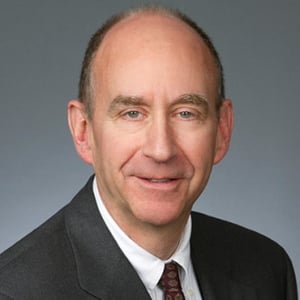
Partner, Kirkland & Ellis LLP
Neil Eggleston is a litigation partner in the Washington, D.C. office of Kirkland & Ellis LLP.
Neil has a distinguished record of public service, and has held a number of senior government roles. He was White House Counsel to President Obama from 2014 to 2017, and advised the president on all legal and constitutional issues across a broad spectrum of domestic and foreign policy matters. Neil’s practice focuses on enforcement defense including at the U.S. Department of Justice (DOJ), U.S. Securities and Exchange Commission (SEC), U.S. Attorney’s Offices, and other enforcement agencies.
Earlier in his career, Neil served as Associate Counsel to President Clinton from 1993 to 1994. Heals o served as Deputy Chief Counsel, U.S. House of Representatives Select Committee Investigating the Iran/Contra Affair (1987-1988); Assistant U.S. Attorney (1981-1987); and Chief Appellate Attorney for the Southern District of New York (1986-1987).
Neil served as a law clerk for the United States Court of Appeals for the Third Circuit (1978-1979) and for Chief Justice Warren E. Burger on the United States Supreme Court (1979-1980).
Neil teaches a seminar in Presidential Power at Harvard Law School in the spring of 2017, 2019, 2020, and 2021 and at Yale Law School in the spring of 2018. He also frequently lectures at American Bar Association and similar seminars.
Judge, United States Court of Appeals, Fifth Circuit
Edith Jones graduated from Alamo Heights High School, where she was a National Merit Scholar. In 1971, she received her B.A. in Economics from Cornell University, graduating with honors. In 1974, she was awarded her J.D. at the University of Texas Law School, where she was a law review editor and received the Order of the Coif.
Judge Jones was the first female partner at Andrews, Kurth, Campbell & Jones (now Hunton Andrews Kurth) where she practiced various types of litigation and bankruptcy cases. Judge Jones went on the federal bench on June 1, 1985.
Judge Jones served as a former member of the National Bankruptcy Review Commission, and as a member of the Judicial Conference Commission on Bankruptcy Rules. Judge Jones served on the White House Fellows Commission. Judge Jones served on the board of the Sam Houston Area Council of the Boy Scouts of America. She has been a member of the Garland Walker Inn of Court in Houston for more than 20 years and its President for at least ten years. Judge Jones is also on the Board of the Calvin Coolidge Presidential Foundation.
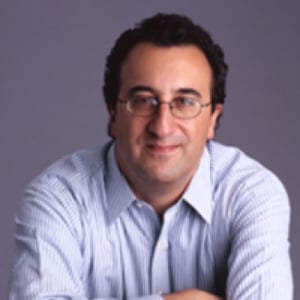
Professor from Practice, Georgetown University Law Center

Judge, United States Court of Appeals, D.C. Circuit
Judge Randolph was confirmed by the Senate and appointed to the United States Court of Appeals for the District of Columbia Circuit by President George H. W. Bush in July 1990.
Judge Randolph received his B.S. degree in 1966 from Drexel University, majoring in economics and basic engineering. At Drexel, he was president of the debate society, vice president of the Student Senate, and a member of the varsity wrestling squad. In 1969, he received his J.D. from the University of Pennsylvania, summa cum laude. Judge Randolph ranked first in his law school class all three years and was managing editor of the Law Review.
After graduation, Judge Randolph served as a law clerk to Judge Henry J. Friendly of the United States Court of Appeals for the Second Circuit in New York.
Admitted to the California Bar in 1970 (and to the District of Columbia bar in 1973), Judge Randolph worked as Assistant to the Solicitor General, U.S. Department of Justice, in Washington, D.C., 1970-1973.
After two years in private practice, Judge Randolph was named Deputy Solicitor General of the United States, a position he held from 1975-1977.
In 1979, Judge Randolph was appointed Special Counsel to the Committee on Standards of Official Conduct (the Ethics Committee) of the United States House of Representatives, remaining in this position until 1980.
In the 1980s, Judge Randolph held a number of positions while in private practice, including Special Assistant Attorney General for the states of New Mexico (1985 90), Utah (1986-1990) and Montana (1983-1990). He also served as a Member of the Advisory Panel of the Federal Courts Study Committee.
From 1971-1990, Judge Randolph argued 23 times in the United States Supreme Court, winning 20 of his cases.
As an Adjunct Professor of Law at Georgetown University Law Center from 1974-1978 he taught courses in civil procedure and injunctions. In 1992 he taught a course in constitutional law. He is a Distinguished Adjunct Professor of Law at George Mason School of Law and for the past ten years has been teaching First Amendment law. He also serves on the Judicial Advisory Board of the George Mason University Law and Economics Center.
From 1993 through 1995 Judge Randolph was a member of the Committee on Codes of Conduct of the Judicial Conference of the United States, and from 1995 to 1998 served as the Committee's chairman. He also served as the judicial liaison to the American Bar Association’s Administrative Law Section.
Judge Randolph is a member of the Board of Visitors at Drexel University Law School and was named to the “Drexel One Hundred” as a leading alumnus. In 2002 he was presented the James Wilson Award by the University of Pennsylvania Law School. In November 2005 he delivered the Fifth Annual Barbara K. Olson Memorial Lecture at the Annual Lawyers Convention of the Federalist Society. He has published numerous articles, the most recent of which is in the June 2006 issue of the Harvard Journal of Law and Public Policy.
Judge Randolph is married to the Honorable Eileen J. O’Connor, formerly Assistant Attorney General, Tax Division, U.S. Department of Justice. His son John Trevor Randolph is an investment banker in New York. His daughter Cynthia Lee Randolph is an artist living in San Francisco.

Partner, Baker Hostetler LLP
David Rivkin is a member of the firm's litigation, international and environmental teams and is co-leader of the firm's national appellate practice. He has extensive experience in constitutional, administrative and international law litigation and has been involved in numerous high-profile cases. With his prior experience in the government sector, David draws on a wealth of knowledge when providing compliance advice to companies and handling enforcement proceedings before government agencies on issues arising out of multilateral and unilateral sanctions, the Foreign Corrupt Practices Act (FCPA), anti-boycott issues, bankruptcy and financial fraud matters, and environmental and energy issues.
David has developed and implemented legislative, regulatory and litigation initiatives for two presidential administrations. Over the years, he has published hundreds of articles, op-eds, book reviews and book chapters on a variety of international, legal, constitutional, defense, arms control, foreign policy, environmental and energy issues for various newspapers and magazines, including The Wall Street Journal, The Washington Post, The New York Times, USA Today and The Los Angeles Times, and has been a frequent commentator and guest on TV and radio shows including ABC, CBS, NBC, CNN, Fox News, NPR and PBS.
Vice President, Edwin Meese III Institute for the Rule of Law, Advancing American Freedom
John G. Malcolm oversees Advancing American Freedom’s work to increase understanding of the Constitution and the rule of law as Vice President of the organization’s Edwin Meese III Institute for the Rule of Law. Malcolm brings to the challenge a wealth of legal expertise and experience in both the public and private sectors.
Prior to joining Advancing American Freedom in 2025, Malcolm was the Vice President of the Institute for Constitutional Government and the Director of the Meese Center for Legal and Judicial Studies at the Heritage Foundation. Prior to joining Heritage in 2012, Malcolm was general counsel at the U.S. Commission on International Religious Freedom, as well as a distinguished practitioner in residence at Pepperdine Law School. From 2004 to 2009, Malcolm was executive vice president and director of worldwide anti-piracy operations for the Motion Picture Association.
Malcolm served as a deputy assistant attorney general in the Department of Justice’s Criminal Division from 2001 to 2004, where he oversaw sections on computer crime and intellectual property, domestic security, child exploitation and obscenity, and special investigations. Immediately prior to that, he was a founding partner in the Atlanta law firm of Malcolm & Schroeder, LLP.
From 1990 to 1997, Malcolm was an assistant U.S. attorney in Atlanta, assigned to the fraud and public corruption section, and also an associate independent counsel, investigating fraud and abuse in the Department of Housing and Urban Development. He was honored with the Director’s Award for Superior Performance for his work in connection with the successful prosecution of Walter Leroy Moody Jr., who assassinated an 11th Circuit judge and the head of the Savannah chapter of the NAACP.
A graduate of Harvard Law School and Columbia College, Malcolm began his career as a law clerk to a federal district court judge and a federal appellate court judge, and as an associate at the Atlanta-based law firm of Sutherland, Asbill & Brennan (new Eversheds Sutherland).
Malcolm, who resides in Washington, D.C., serves on the Board of Trustees of the Washington National Opera and is a Senate-confirmed member of the Board of Directors of the Legal Services Corporation, the largest funder of civil legal aid in the United States.
Emanuel S. Heller Professor of Law, University of California at Berkeley; Thomas Smith Senior Research Fellow, The Civitas Institute, University of Texas at Austin
John Yoo is the Emanuel Heller Professor of Law at the University of California at Berkeley. He is also the Thomas Smith Senior Research Fellow, Civitas Institute, at the University of Texas at Austin. He is also a Nonresident Senior Fellow at the American Enterprise Institute.
His most recent book, The Politically Incorrect Guide to the Supreme Court, co-authored with Robert Delahunty, was published in 2023. Professor Yoo’s other books include Defender-in-Chief: Trump’s Fight for Presidential Power; Striking Power: How Cyber, Robots, and Space Weapons Change the Rules for War; Point of Attack: Preventive War, International Law, and Global Welfare; and Crisis and Command: A History of Executive Power from George Washington to George Bush.
He is a co-author of volumes 1 and 2 of R. Rossum, G. Tarr, V. Munoz & J. Yoo American Constitution Law (Routledge, 2026), and a co-editor of the eight-volume series on the 250th anniversary of the American Revolution, We Hold These Truths, with Yuval Levin and Adam White of the American Enterprise Institute.
Professor Yoo has published more than 100 articles in academic journals on subjects including national security, constitutional law, international law, and the Supreme Court. He also regularly contributes to the editorial pages of the Wall Street Journal, New York Times, Washington Post, Los Angeles Times, and National Review, among others.
Professor Yoo has served in all three branches of government. He was an official in the U.S. Department of Justice, where he worked on national security and terrorism issues after the 9/11 attacks. He served as general counsel of the U.S. Senate Judiciary Committee. He has been a law clerk for Supreme Court Justice Clarence Thomas and federal appeals Judge Laurence Silberman. He has been a visiting professor at the University of Texas at Austin’s School of Civic Leadership, Seoul National University, the Interdisciplinary Center Herzliya, Keio University, Trento University, the University of Chicago, and the Free University of Amsterdam.
Professor Yoo supervises the Public Law and Policy Program and the California Constitution Center. He also serves on the boards of Founding Forward, the Washington Legal Foundation, the Pacific Legal Foundation, the Ulysses Grant Institute, the Federalist Society’s Separation of Powers and Federalism Division, the Universidad Cientifica del Sur Law School, and the Asia-Pacific Law Institute at Seoul National University. He is a winner of the Federalist Society’s Paul Bator award and the Heritage Foundation’s Edwin Meese III Originalism Lectureship.
Professor Yoo graduated from Yale Law School and summa cum laude from Harvard College.

Plenary Session 4: Midterm Madness—States Redrawing Congressional Maps
Featuring: Ms. Molly DiRago, Partner, Troutman Pepper Locke Ms. Kate McKnight, Partner, BakerHostetler LLP Mr. Conor Woodfin, Associate,...
Practice Groups: Federal Judicial Selections in the Next Administration
Michael B. Brennan, Michael Fragoso, David Lat, Robert Luther, Carl W. Tobias
The importance of judicial selection and confirmation is now a point of emphasis for all...
Mere Natural Law
Hadley P. Arkes, Randy E. Barnett, Robert P. George, Edith H. Jones
The U.S. Supreme Court’s originalist jurisprudence has been on display in its most recent terms...
The Camp Lejeune Justice Act - What Happens Next?
Mark A. Behrens, Paul Figley, Ashley Keller
In 1982, the U.S. Marine Corps discovered that one quarter of the water wells on...
Update on Foreign Intelligence Surveillance Act (FISA) Renewal
Matthew R. A. Heiman, Bob Goodlatte
On March 15, 2020, certain authorities under the Foreign Intelligence Surveillance Act (FISA) will expire...
Removal or Acquittal? President Trump's Trial in the Senate
John G. Malcolm, John C. Yoo
In December 2019, the United States House of Representatives voted to impeach President Donald Trump....
The President's Impeachment
John G. Malcolm, John C. Yoo
In December 2019, the United States House of Representatives voted to impeach President Donald Trump....
Special Session: Executive Power vs. Congressional Power
W. Neil Eggleston, Edith H. Jones, Martin S. Lederman, A. Raymond Randolph, David B. Rivkin
On November 16, 2019, the Federalist Society's Federalism & Separation of Powers Practice Group held...
The Trump Impeachment Effort
John G. Malcolm, John C. Yoo
Defenders of the Constitution designed impeachment to be a rare event, especially by making the...
Impeachment and Presidential Powers
John G. Malcolm, John C. Yoo
Join us as John Malcolm and John Yoo discuss developments on impeachment: the latest on...