
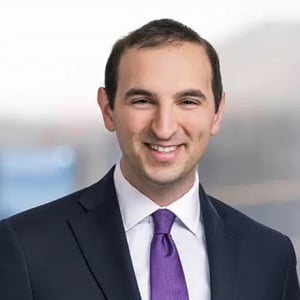
Associate, Covington & Burling LLP
Eli Nachmany is an associate at Covington & Burling LLP in the Washington, DC, office. He clerked for Judge Steven J. Menashi of the U.S. Court of Appeals for the Second Circuit. Eli graduated magna cum laude from Harvard Law School, where he was Editor-in-Chief of the Harvard Journal of Law & Public Policy. Prior to law school, Eli served as the speechwriter to the U.S. Secretary of the Interior and as a domestic policy aide in the White House Office of American Innovation. He graduated summa cum laude from New York University with a B.S. in Sports Management. Eli’s scholarship on administrative law and executive power has appeared in the BYU Law Review, George Mason Law Review, Wake Forest Law Review, and Yale Law Journal Forum.
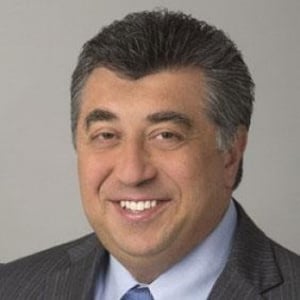
Counsel, Cadwalader, Wickersham & Taft LLP; Senior Competition Counsel, TechFreedom
Bilal Sayyed represents clients before the Federal Trade Commission (FTC) and Department of Justice (DOJ) in significant merger, civil and criminal antitrust matters. A significant portion of his practice involves representing investment funds on antitrust and Hart-Scott-Rodino (HSR) Act compliance matters; he has also provided expert witness services related to HSR compliance. Bilal also counsels clients before the FTC in consumer protection and privacy investigations. He maintains an active amicus and appellate brief writing practice in antitrust litigation and antitrust merger matters.
Prior to joining Cadwalader, Bilal was the Director of the FTC’s Office of Policy Planning (OPP) (2018-2021). In that role, he provided legal and policy advice to the Chairman and Commissioners on antitrust and consumer protection matters and worked closely with the senior and career leadership of the FTC’s Bureaus of Competition, Consumer Protection, and Economics. Bilal previously served as an Attorney Advisor to FTC Chairman Timothy J. Muris from 2001 to 2004. In that role, Bilal advised the Chairman on matters involving a wide spectrum of industries, including chemical and mining, petroleum and natural gas, health care and pharmaceutical, defense and transportation, gaming, various consumer products and retail operations, and professional associations and standard-setting organizations.
Bilal has taught antitrust and competition law at the George Mason University School of Law since 2011.
Bilal received his B.A. from Case Western Reserve University, and a J.D. from George Mason University School of Law. He is admitted to practice in the District of Columbia and the State of New York, as well as before the U.S. District Courts for the District of Colorado and the District of Columbia, the U.S. Court of Appeals for the District of Columbia Circuit, the Fifth Circuit, the Ninth Circuit, and the U.S. Supreme Court.
Bilal is the host of Rethinking Antitrust, a podcast published by TechFreedom that examines the economics, institutions, law, legislation, and policy goals of antitrust enforcement.

Tazewell Taylor Professor of Law and William H. Cabell Research Professor, William & Mary Law School
Jonathan H. Adler joined the William & Mary law faculty as the Tazwell Taylor Professor of Law and William H. Cabell Research Professor in 2025. Prior to joining the faculty, he was the inaugural Johan Verheij Memorial Professor of Law and the founding Director of the Coleman P. Burke Center for Environmental Law at the Case Western Reserve University School of Law.
Professor Adler is the author or editor of seven books, including Climate Liberalism: Perspectives on Liberty, Property and Pollution (Palgrave, 2023), Marijuana Federalism: Uncle Sam and Mary Jane (Brookings Institution Press, 2020), Business and the Roberts Court (Oxford University Press, 2016) and Rebuilding the Ark: New Perspectives on Endangered Species Act Reform (AEI Press, 2011).
His articles have appeared in publications ranging from the Harvard Environmental Law Review and Yale Journal on Regulation to the Wall Street Journal, New York Times, and Washington Post. He has testified before Congress a dozen times, and his work has been cited in the U.S. Supreme Court. A 2024 study identified Professor Adler as the seventh most cited legal academic in administrative and environmental law from 2019 to 2023.
Professor Adler is a contributing editor to Civitas Outlook and a regular contributor to the popular legal blog, The Volokh Conspiracy. A regular commentator on constitutional and regulatory issues, he has appeared on numerous radio and television programs, ranging from the PBS Newshour and National Public Radio to the Fox News Channel and Entertainment Tonight.
Professor Adler is a senior fellow at the Property & Environment Research Center in Bozeman, Montana. In 2018, Professor Adler was elected to membership in the American Law Institute and helped co-found the organization Checks and Balances. In 2024, Professor Adler was appointed a public member of the Administrative Conference of the United States.
Professor Adler clerked for the Honorable David B. Sentelle on the U.S. Court of Appeals for the District of Columbia Circuit.

Laurence H. Silberman Chair in Constitutional Governance, American Enterprise Institute; Executive Director, Antonin Scalia Law School’s C. Boyden Gray Center for the Study of the Administrative State
Adam J. White is the Laurence H. Silberman Chair in Constitutional Governance and senior fellow at the American Enterprise Institute, where he focuses on the Supreme Court and the administrative state. He also directs the Antonin Scalia Law School’s C. Boyden Gray Center for the Study of the Administrative State.
He writes on regulation and constitutional government for a variety of publications. He practiced law in Washington, D.C., after clerking for the D.C. Circuit's Judge David Sentelle. He also has been chairman of the ABA's Administrative Law Section.
In 2021, he served on the Presidential Commission on the Supreme Court of the United States, where he criticized “Court packing” and other efforts to restructure the Supreme Court.
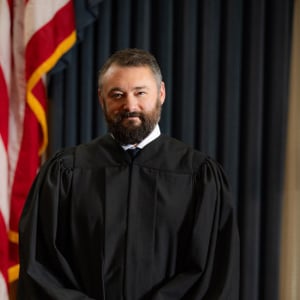
Judge, United States Court of Appeals for the Sixth Circuit
Ben Flowers is a judge on the United States Court of Appeals for the Sixth Circuit. President Donald J. Trump appointed Judge Flowers to the bench in 2026. At the time of his nomination, Flowers worked as a partner at Ashbrook Byrne Kresge Flowers, in Ohio. Before that, Judge Flowers served as Ohio’s Tenth Solicitor General. In that role he regularly represented the State of Ohio before the Supreme Court of the United States, the United States Court of Appeals for the Sixth Circuit, and the Supreme Court of Ohio.
Judge Flowers is a graduate of The Ohio State University and the University of Chicago Law School. He served as a law clerk for Sandra Ikuta of the U.S. Court of Appeals for the Ninth Circuit and for Justice Antonin Scalia of the Supreme Court of this United States.
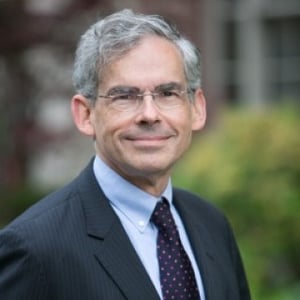
Andrew Sabin Professor of Professional Practice and Founder and Faculty Director of the Sabin Center for Climate Change Law, Columbia University Law School
The founder and faculty director of the groundbreaking Sabin Center for Climate Change Law and one of the foremost environmental lawyers in the nation, Michael Gerrard is an advocate, litigator, teacher, and scholar who has pioneered cutting-edge legal tools and strategies for addressing climate change. He writes and teaches courses on environmental law, climate change law, and energy regulation. He was the chair of the faculty of Columbia University’s renowned Earth Institute from 2015 to 2018 and now holds a joint appointment to the faculty of its successor, the Columbia Climate School.
For three decades, before joining the Columbia Law School faculty in 2009, Gerrard practiced law in New York, most recently as the partner in charge of the New York office of Arnold & Porter. As an environmental lawyer, he tried numerous cases and argued many appeals in federal and state courts and administrative tribunals. He also handled the environmental aspects of diverse transactions and development projects and provided regulatory compliance advice to an array of clients in the private and public sectors. Several publications rated him the leading environmental lawyer in New York and one of the leaders in the world.
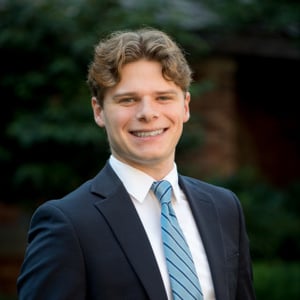
President Emeritus, Yale Student Chapter
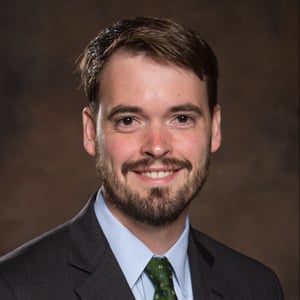
Senior Attorney, Institute for Justice
Rob Johnson is a senior attorney at the Institute for Justice, where he litigates to protect private property, free speech, and other individual rights. Rob is a nationally-recognized expert on civil forfeiture. He previously represented a series of small business owners who had their entire bank accounts seized by the IRS, and he launched an initiative that resulted in the IRS reopening hundreds of closed forfeiture cases and returning millions of dollars. He has also litigated cases challenging the constitutionality of civil forfeiture procedures, and he scored a victory striking down a forfeiture program as a violation of due process.
Beyond civil forfeiture, Rob has litigated cases defending a range of constitutional rights. He was part of teams that successfully challenged occupational licensing requirements for tour guides in Savannah and Charleston. He also developed a class action lawsuit fighting the NYPD’s use of a draconian “no-fault eviction” statute to coerce residents to waive their constitutional rights, which led New York City to reform the challenged law.
Rob’s writing has been published in the Wall Street Journal, Washington Post, Politico, and Reason, among other venues. Rob has testified about occupational licensing before the House and Senate Judiciary Committees and has twice testified about civil forfeiture before the House Ways & Means Oversight Subcommittee. He has also testified before state legislatures across the country.
From 2014-2017, Rob served as IJ’s first Elfie Gallun Fellow for Freedom and the Constitution. In that role, Rob wrote and spoke about the vital role the U.S. Constitution plays in protecting our most precious freedoms. He is currently at work on a book about the Fourteenth Amendment.
Rob studied literature and anthropology at Columbia University, and he studied law at Harvard Law School. Upon graduation, he clerked for Chief Judge Alex Kozinski on the Ninth Circuit and for Justice Anthony Kennedy on the Supreme Court.
Rob lives in Cleveland with his wife and two daughters—all named after characters in Shakespeare plays—and is an amateur large format photographer.

Judge, U.S. Court of Appeals for the Third Circuit
Hon. Jennifer Mascott served as Associate Professor of Law and Director of the Separation of Powers Institute at The Catholic University of America’s Columbus School of Law before her appointment to the federal bench. On July 16, 2025, President Donald J. Trump nominated her to the U.S. Court of Appeals for the Third Circuit (Delaware), and she was confirmed on October 9, 2025.
Prior to her confirmation, Judge Mascott wrote extensively in administrative and constitutional law, statutory interpretation, and the separation of powers. Her scholarship—published in leading journals including the Stanford Law Review, Notre Dame Law Review, and Supreme Court Review—was cited by the U.S. Supreme Court and multiple federal courts. She also contributed Supreme Court commentary for NBC Universal.
Before joining Catholic Law, she was an Assistant Professor and Co-Director of The C. Boyden Gray Center at George Mason University’s Antonin Scalia Law School. In 2022 she became co-author of Beermann, Cass & Diver’s Administrative Law: Cases and Materials (9th ed.). In 2023 she received the Justice Joseph Story Award for excellence in scholarship, teaching, and advancing the rule of law.
Judge Mascott also served as a Council Member of the ABA’s Administrative Law Section and as a Public Member of the Administrative Conference of the United States. She frequently testified before Congress on executive power, regulatory reform, and judicial jurisdiction, and participated in multiple Supreme Court confirmation hearings.
From 2019 to 2021, she took leave from academia to serve as Deputy Assistant Attorney General in the Department of Justice’s Office of Legal Counsel and later as Associate Deputy Attorney General, where she argued federal cases and assisted with Justice Amy Coney Barrett’s confirmation. Earlier in her career, she clerked for Justice Clarence Thomas and for then-Judge Brett M. Kavanaugh on the D.C. Circuit.
Judge Mascott earned her J.D. summa cum laude from the George Washington University Law School and her B.A. from the same institution.
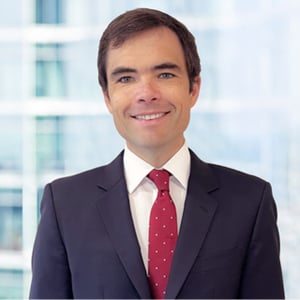
Partner, Keller Postman LLP
JJ Snidow is a Partner at Keller Postman where he specializes in civil litigation in the trial courts. His area of practice focuses on product liability, consumer protection, and antitrust. Before joining Keller Postman, he practiced in DC at Wilkinson Stekloff, a defense-side trial firm. He clerked for Judge Raymond M. Kethledge on the Sixth Circuit, Judge Amul R. Thapar on the Eastern District of Kentucky, and Justice Anthony M. Kennedy on the Supreme Court. He was formerly chairman of the Federalist Society's emerging leaders council, and in law school he served as president of the Yale chapter.
Judge, U.S. Court of Appeals for the Third Circuit
Hon. Jennifer Mascott served as Associate Professor of Law and Director of the Separation of Powers Institute at The Catholic University of America’s Columbus School of Law before her appointment to the federal bench. On July 16, 2025, President Donald J. Trump nominated her to the U.S. Court of Appeals for the Third Circuit (Delaware), and she was confirmed on October 9, 2025.
Prior to her confirmation, Judge Mascott wrote extensively in administrative and constitutional law, statutory interpretation, and the separation of powers. Her scholarship—published in leading journals including the Stanford Law Review, Notre Dame Law Review, and Supreme Court Review—was cited by the U.S. Supreme Court and multiple federal courts. She also contributed Supreme Court commentary for NBC Universal.
Before joining Catholic Law, she was an Assistant Professor and Co-Director of The C. Boyden Gray Center at George Mason University’s Antonin Scalia Law School. In 2022 she became co-author of Beermann, Cass & Diver’s Administrative Law: Cases and Materials (9th ed.). In 2023 she received the Justice Joseph Story Award for excellence in scholarship, teaching, and advancing the rule of law.
Judge Mascott also served as a Council Member of the ABA’s Administrative Law Section and as a Public Member of the Administrative Conference of the United States. She frequently testified before Congress on executive power, regulatory reform, and judicial jurisdiction, and participated in multiple Supreme Court confirmation hearings.
From 2019 to 2021, she took leave from academia to serve as Deputy Assistant Attorney General in the Department of Justice’s Office of Legal Counsel and later as Associate Deputy Attorney General, where she argued federal cases and assisted with Justice Amy Coney Barrett’s confirmation. Earlier in her career, she clerked for Justice Clarence Thomas and for then-Judge Brett M. Kavanaugh on the D.C. Circuit.
Judge Mascott earned her J.D. summa cum laude from the George Washington University Law School and her B.A. from the same institution.
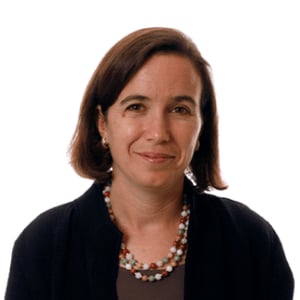
Joseph L. Sax Collegiate Professor of Law and Co-Director of the Environmental and Energy Law Program, University of Michigan Law School

Charles Evans Hughes Professor of Law, Columbia Law School
THOMAS W. MERRILL is the Charles Evans Hughes Professor of Law at Columbia Law School. He previously taught at Northwestern University School of Law and Yale Law School. He has undergraduate degrees from Grinnell College and Oxford University, where he studied as a Rhodes Scholar, and a law degree from the University of Chicago. He clerked on the D.C. Circuit (for Chief Judge David Bazelon) and the U.S. Supreme Court (for Justice Harry Blackmun). From 1987-1990 he served as Deputy Solicitor General, U.S. Department of Justice. Professor Merrill’s writings related to property include Property: Principles and Policies (Foundation Press Second Edition, 2012) (with Henry E. Smith); Property: The Oxford Introductions to U.S. Law (Oxford U. Press, 2010); Property: Takings (Foundation Press, 2002)(with David Dana); and numerous articles, including “The Economics of Public Use” (Cornell Law Review 1986); “The Landscape of Constitutional Property” (Virginia Law Review 2000); and “The Character of the Governmental Action” (Vermont Law Review 2012). He is a member of the American Academy of Arts and Sciences.
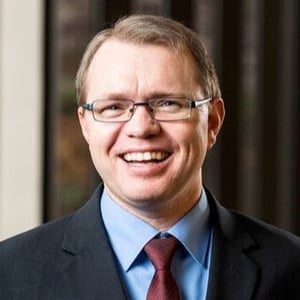
Charles I. Francis Professorship in Law, University of Texas at Austin School of Law
Professor Aaron Nielson lectures and writes in the areas of administrative law, civil procedure, and federal courts. Before joining the faculty, he served as Solicitor General of Texas and represented Texas before the U.S. Supreme Court and the Texas Supreme Court, as well as overseeing all appellate litigation for the State. Earlier in his career, he was a professor at Brigham Young University and an appellate and antitrust partner in the Washington, D.C. office of Kirkland & Ellis LLP. He also clerked for Justice Samuel A. Alito, Jr. of the U.S. Supreme Court, Judge Janice Rogers Brown of the U.S. Court of Appeals for the D.C. Circuit, and Judge Jerry E. Smith of the U.S. Court of Appeals for the Fifth Circuit.
As Solicitor General, Professor Nielson successfully defended against a First Amendment challenge Texas’s law requiring online pornographers to institute age verification. In 2020, the U.S. Supreme Court appointed him to defend the constitutionality of a federal agency. He currently serves as a Senior Fellow of the Administrative Conference of the United States after completing a six-year term as an appointed public member and chair of the Conference’s Administration & Management Committee.
Nielson’s research focuses on administrative law, federal litigation, and the separation of powers. He has published (or soon will publish) in the Harvard Law Review, Columbia Law Review, University of Chicago Law Review, University of Pennsylvania Law Review, Duke Law Journal, Georgetown Law Journal, Cornell Law Review, and Northwestern University Law Review, among others. Nielson has been recognized for teaching for teaching and scholarship and in 2021 received the Federalist Society’s Joseph Story Award, which recognizes a young academic for excellence in legal scholarship, a commitment to teaching, and a concern for students, and who has made a significant public impact in a manner that advances the rule of law in a free society. He is also an elected member of the American Law Institute.
Professor Nielson received his J.D. magna cum laude from Harvard Law School and an LL.M from the University of Cambridge, where he focused his studies on the institutions that regulate global competition and commerce. He received his undergraduate degree summa cum laude from the University of Pennsylvania, majoring in economics and political science.
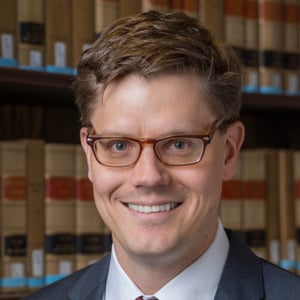
Associate Professor, University of Notre Dame Law School
Jeffrey Pojanowski joined the faculty and community of Notre Dame Law School in 2010. He teaches and writes in the areas of administrative law, jurisprudence, and torts. At present, his scholarship focuses on the legal theory of administrative action, as well as the philosophy and intellectual history of legal reasoning.
Prof. Pojanowski earned his A.B. in Public Policy with highest honors from Princeton University and graduated magna cum laude from Harvard Law School in 2004, where he was Articles Co-Chair for the Harvard Law Review. After law school, he served as a law clerk to then-Judge John Roberts on the United States Court of Appeals for the D.C. Circuit and then to Justice Anthony Kennedy on the Supreme Court of the United States. He then practiced law with Latham & Watkins in Washington, D.C., where he specialized in appellate litigation and administrative-law matters.

Judge, United States Court of Appeals, Sixth Circuit
Judge Readler earned his undergraduate and law degrees from the University of Michigan. After graduating, he served as a law clerk to Judge Alan Norris of the United States Court of Appeals for the Sixth Circuit. Judge Readler then began practicing law in the Columbus office of the international law firm Jones Day, eventually spending ten years as a partner in the firm’s Issues and Appeals Practice Group. While at Jones Day, Judge Readler appeared in state and federal trial and appellate courts around the country, most frequently the Supreme Court of Ohio and the Sixth Circuit. Judge Readler also successfully argued before the United States Supreme Court in McQuiggin v. Perkins on behalf of an inmate claiming actual innocence. His other pro bono representations include representing capital defendants before the Tenth Circuit and the Supreme Court of Ohio, as well as representing defendants sentenced to life in prison before the Sixth Circuit. While at Jones Day, Judge Readler traveled to Nairobi with Lawyers Without Borders to train Kenyan lawyers in prosecuting domestic violence cases, and he was also a recipient of the American Marshall Memorial Fellowship awarded by the German Marshall Fund of the United States. Following his career in private practice, Judge Readler served as Acting Assistant Attorney General for the Civil Division of the United States Department of Justice from 2017 to 2019. In that role, Judge Readler led and supervised over 1,000 lawyers in the Department’s largest litigating division, briefing and arguing several cases on behalf of the United States in federal courts across the country, including high-profile cases significant to the Administration and the Department. In March 2019, Judge Readler was confirmed to serve as a Circuit Judge on the Sixth Circuit. He resides in Columbus.
Tazewell Taylor Professor of Law and William H. Cabell Research Professor, William & Mary Law School
Jonathan H. Adler joined the William & Mary law faculty as the Tazwell Taylor Professor of Law and William H. Cabell Research Professor in 2025. Prior to joining the faculty, he was the inaugural Johan Verheij Memorial Professor of Law and the founding Director of the Coleman P. Burke Center for Environmental Law at the Case Western Reserve University School of Law.
Professor Adler is the author or editor of seven books, including Climate Liberalism: Perspectives on Liberty, Property and Pollution (Palgrave, 2023), Marijuana Federalism: Uncle Sam and Mary Jane (Brookings Institution Press, 2020), Business and the Roberts Court (Oxford University Press, 2016) and Rebuilding the Ark: New Perspectives on Endangered Species Act Reform (AEI Press, 2011).
His articles have appeared in publications ranging from the Harvard Environmental Law Review and Yale Journal on Regulation to the Wall Street Journal, New York Times, and Washington Post. He has testified before Congress a dozen times, and his work has been cited in the U.S. Supreme Court. A 2024 study identified Professor Adler as the seventh most cited legal academic in administrative and environmental law from 2019 to 2023.
Professor Adler is a contributing editor to Civitas Outlook and a regular contributor to the popular legal blog, The Volokh Conspiracy. A regular commentator on constitutional and regulatory issues, he has appeared on numerous radio and television programs, ranging from the PBS Newshour and National Public Radio to the Fox News Channel and Entertainment Tonight.
Professor Adler is a senior fellow at the Property & Environment Research Center in Bozeman, Montana. In 2018, Professor Adler was elected to membership in the American Law Institute and helped co-found the organization Checks and Balances. In 2024, Professor Adler was appointed a public member of the Administrative Conference of the United States.
Professor Adler clerked for the Honorable David B. Sentelle on the U.S. Court of Appeals for the District of Columbia Circuit.
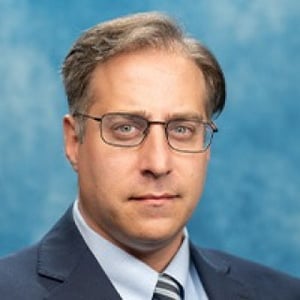
Interim Dean, Florida International University College of Law
Dan Epstein was Vice President at America First Legal and an Associate Professor of Law at St. Thomas University in Miami, Florida. He also advises individuals and small businesses in affirmative and defensive actions against government overreach. Previously, he advised startups on regulatory matters as Director at a venture capital firm. His federal service includes being a Special Assistant to and Senior Associate Counsel to the President and a counsel for the House of Representatives Committee on Oversight and Government Reform. Earlier in his career, Mr. Epstein founded and ran Cause of Action, where he represented clients in government investigations and litigated regulatory, constitutional, political, and public law matters.
He holds a Ph.D. from George Washington University in Political Economy, a J.D. from Emory University School of Law, and a B.A. from Kenyon College. He is active in the Palm Beach community as a member of the Fourth Court of Appeals Judicial Nominating Commission in Florida, a transition team member to Florida Attorney General James Uthmeier, and the Chairman and Trustee of Palm Beach State College.
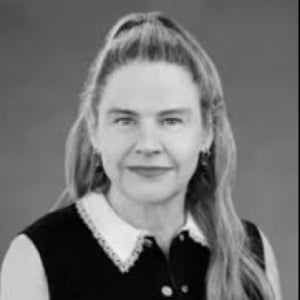
Ralph V. Whitworth Professor in Law, Georgetown University Law Center
Professor Nourse is one of the nation’s leading scholars of Congress, the separation of powers, and statutory interpretation. In addition to her scholarship, she has practiced as an attorney in the White House, the Department of Justice, the Senate, and in private practice. The story of her pioneering work on gender equality is told in Equal: Women Reshape American Law.
Her most recent book is “The Impeachments of Donald Trump: An Introduction to Constitutional Argument” (West 2021). In 2016, Harvard Press published her Misreading Law, Misreading Democracy, on the limits of textualism. She is one of the most-cited scholars on interpretation in the country and has recently co-authored Yale’s revised leading casebook, Statutes, Regulation & Interpretation (West 2024).
Professor Nourse has published widely on the power of the President and the separation of powers, Reclaiming the Constitutional Text from Originalism: The Case of Executive Power, 106 Calif. L. Rev. 1 (2018), and constitutional rights, In Reckless Hands (Norton 2008), the story of Skinner v. Oklahoma and American eugenics.
President Biden appointed Professor Nourse to serve as Vice-Chair of the United States Commission on Civil Rights in 2023, with her term expiring in 2029.
Professor Nourse previously served as Chief Counsel to then Vice President Biden under the Obama Administration. Prior to that role, she practiced as an appellate litigator in the Department of Justice and as Special Counsel to the Senate Judiciary Committee.
Professor Nourse has held chairs at Emory University and the University of Wisconsin. She has been a visiting professor at Yale, NYU, University of Maryland, and Northwestern.
She began her legal career in New York, clerking for legendary trial judge of the Southern District of New York, Edward Weinfeld, and practicing at Paul, Weiss, Rifkind Wharton & Garrison. She left private practice to serve as junior counsel to the Senate-Iran Contra Committee. After serving on the appellate staff of the Civil Division, she was hired as a legal expert for then Senator Joseph Biden.
Professor Nourse is the co-Founder of the Supreme Court Interpretation Lab, which uses big data to analyze trends in Supreme Court analyses. She formerly served as Executive Director of the Georgetown Law Center on Congressional Studies.
Vice President, Practice Groups, The Federalist Society
Deputy Director, Regulatory Studies Center, George Washington University
Will Yeatman is deputy director of the GW Regulatory Studies Center. A lawyer, he has spent almost two decades working on federal regulatory policy, with an emphasis on administrative law.
Yeatman has testified many times before Congress and state legislatures, and his scholarly work has appeared in such academic journals as Georgetown Law Journal, Administrative Law Review, and the (forthcoming) Catholic University Law Review. His popular writing has appeared in The Wall Street Journal, Foreign Policy, and Bloomberg.
Yeatman came to the RSC from the Pacific Legal Foundation. Previously, he had been at the Cato Institute’s Center for Constitutional Studies and the Competitive Enterprise Institute. From 2004 to 2006, he served as a Peace Corps volunteer in the Kyrgyz Republic.
Yeatman holds a BA in environmental sciences from the University of Virginia, an MA in international studies from the Denver University Graduate School of International Studies, and a JD from the Georgetown University Law Center. He is a member of the Washington, DC Bar.
Assistant Professor of Law, The University of Houston Law Center
David Froomkin is an assistant professor of law at the University of Houston Law Center, with primary scholarly interests in administrative law, election law, and democratic and constitutional theory. His research focuses on the structure of government and of the democratic process, drawing on political science, political economy, and analysis of the text and structure of the Constitution. In addition to other ongoing projects, he is currently completing a book manuscript that develops a new conceptual and normative theory of the separation of powers as a government structure that can reinforce rather than vitiate legislative supremacy.
David received a B.A. from Columbia University in 2015, a J.D. from Yale Law School in 2022, and a Ph.D. (Political Science) from Yale University in 2024. Before joining the University of Houston Law Center, he also served as a Teaching Fellow and an Associate in Teaching at Yale. He currently teaches courses on election law, criminal law, and constitutional design.
Associate, Covington & Burling LLP
Eli Nachmany is an associate at Covington & Burling LLP in the Washington, DC, office. He clerked for Judge Steven J. Menashi of the U.S. Court of Appeals for the Second Circuit. Eli graduated magna cum laude from Harvard Law School, where he was Editor-in-Chief of the Harvard Journal of Law & Public Policy. Prior to law school, Eli served as the speechwriter to the U.S. Secretary of the Interior and as a domestic policy aide in the White House Office of American Innovation. He graduated summa cum laude from New York University with a B.S. in Sports Management. Eli’s scholarship on administrative law and executive power has appeared in the BYU Law Review, George Mason Law Review, Wake Forest Law Review, and Yale Law Journal Forum.

Professor of Law, University of Michigan Law School
Christopher J. Walker is a Professor of Law at the University of Michigan. Prior to joining Michigan law faculty in 2022, he spent a decade teaching at The Ohio State University Moritz College of Law. He previously clerked for Justice Anthony Kennedy of the U.S. Supreme Court, worked on the Civil Appellate Staff at the U.S. Department of Justice, and served on the Senate Judiciary Committee staff for the Gorsuch Supreme Court confirmation. Professor Walker’s research focuses on administrative law, regulation, and law and policy at the agency level. Outside the law school, he chaired the American Bar Association’s Section of Administrative Law and Regulatory Practice in 2020-21 and served as one of forty Public Members of the Administrative Conference of the United States from 2016-2022, and he continues to serve in both organizations in various capacities. He also works of counsel at the U.S. Chamber Litigation Center. In 2022, he received the Federalist Society’s Joseph Story Award.

Chief Judge, United States Court of Appeals, Fifth Circuit
Jennifer Walker Elrod is the Chief Judge of the United States Court of Appeals for the Fifth Circuit. She was nominated to the Fifth Circuit in 2007, and she served as a Circuit Judge on the court until assuming the role of Chief Judge in October 2024. Prior to serving as a Circuit Judge, Chief Judge Elrod was appointed and then twice elected Judge of the 190th District Court of Harris County, Texas, where she spent over five years presiding over more than 200 jury and non-jury trials.
Chief Judge Elrod graduated cum laude from Harvard Law School, where she was an active member of the Harvard Federalist Society, an Ames Moot Court finalist, and a Senior Editor of the Harvard Journal of Law & Public Policy. She clerked for the Honorable Sim Lake in the Southern District of Texas. Before serving as a judge, Chief Judge Elrod worked in private practice, focusing on civil litigation, antitrust, and employment matters.
She has been repeatedly recognized for her work as a jurist, as well as for her pro bono work and contributions to the community. She has been named the 2022 Texas Review of Law & Politics’ Jurist of the Year, the 2018 Harvard Federalist Society’s Alumni of the Year, the 2016–17 Texas Association of Civil Trial and Appellate Specialists’ Appellate Judge of the Year, and the 2008 Mexican-American Bar Association of Texas’s Judge of the Year.
Chief Judge Elrod is actively engaged in the academic and legal communities. Chief Judge Elrod currently serves on the Board of Directors and as the Jurist-in-Residence at the South Texas College of Law, where she teaches civil procedure and First Amendment law. She is also a member of the American Law Institute and of the Board of Advisors for the Harvard Journal of Law & Public Policy, and she is a former member of the Board of Regents of her alma mater, Baylor University, and the Board of Visitors at Brigham Young University Law School. She previously served as the Chair of the Codes of Conduct Committee for the Judicial Conference of the United States. She has also served as the M.D. Anderson Visiting Public Service Professor at the Texas Tech University School of Law and as Jurist-in-Residence at Brigham Young University Law School, and she has taught legal writing at the University of Houston Law Center. She presented the Lewis F. Powell, Jr. Distinguished Lecture at the Washington and Lee University School of Law and is a frequent speaker on the topics of trial and appellate procedure, ethics, employment law, and constitutional law. Chief Judge Elrod also serves on the board of the Garland R. Walker Inn of Court, and co-produces an annual musical CLE, for which her pupilage group has won multiple national awards.
Chief Judge Elrod’s publications include: Trial by Siri: AI Comes to the Courtroom; Don’t Mess with Texas Judges: In Praise of the State Judiciary; For Good: Enriching Your Practice and Your Life Through Pro Bono and Community Service; Is the Jury Still Out?: A Case for the Continued Viability of the American Jury; and W(h)ither the Jury? The Diminishing Role of the Jury Trial in our Legal System.
James G. Phillipp Professor of Law, University of Michigan Law School
Julian Davis Mortenson writes on constitutional and international law. His current book project—The Founders' President (under contract, Harvard University Press)—develops a comprehensive account of presidential power at the American Founding. He is also co-authoring a new constitutional law casebook, scheduled for publication by Foundation Press in 2020.
Professor Mortenson is an award-winning teacher and an active litigator. Representative constitutional matters include his work as lead counsel in a pre-Obergefell suit that required Michigan to recognize the marriages of more than 300 same-sex couples; his representation of discharged military service members challenging the "Don't Ask, Don't Tell" law; and his work as one of the principal drafters of the merits briefs in the landmark case Boumediene v. Bush, which secured the right of Guantanamo detainees to challenge their incarceration. He regularly litigates complex transnational matters in the U.S. courts, and has served as arbitrator, counsel, and expert witness in a wide variety of commercial and investor-state disputes.
Before joining the faculty, Professor Mortenson worked at the law firm WilmerHale, in the President's Office of the International Criminal Tribunal for the former Yugoslavia, and as a law clerk for both Justice David H. Souter and The Hon. J. Harvie Wilkinson III. Prior to law school, he was a management consultant with a client portfolio spanning the finance, manufacturing, oil and gas, and information technology industries. Professor Mortenson was salutatorian of his class at Stanford Law School and received an AB in history, summa cum laude, from Harvard College.
Associate, Covington & Burling LLP
Eli Nachmany is an associate at Covington & Burling LLP in the Washington, DC, office. He clerked for Judge Steven J. Menashi of the U.S. Court of Appeals for the Second Circuit. Eli graduated magna cum laude from Harvard Law School, where he was Editor-in-Chief of the Harvard Journal of Law & Public Policy. Prior to law school, Eli served as the speechwriter to the U.S. Secretary of the Interior and as a domestic policy aide in the White House Office of American Innovation. He graduated summa cum laude from New York University with a B.S. in Sports Management. Eli’s scholarship on administrative law and executive power has appeared in the BYU Law Review, George Mason Law Review, Wake Forest Law Review, and Yale Law Journal Forum.
Professor of Law, University of Michigan Law School
Christopher J. Walker is a Professor of Law at the University of Michigan. Prior to joining Michigan law faculty in 2022, he spent a decade teaching at The Ohio State University Moritz College of Law. He previously clerked for Justice Anthony Kennedy of the U.S. Supreme Court, worked on the Civil Appellate Staff at the U.S. Department of Justice, and served on the Senate Judiciary Committee staff for the Gorsuch Supreme Court confirmation. Professor Walker’s research focuses on administrative law, regulation, and law and policy at the agency level. Outside the law school, he chaired the American Bar Association’s Section of Administrative Law and Regulatory Practice in 2020-21 and served as one of forty Public Members of the Administrative Conference of the United States from 2016-2022, and he continues to serve in both organizations in various capacities. He also works of counsel at the U.S. Chamber Litigation Center. In 2022, he received the Federalist Society’s Joseph Story Award.
Judge, U.S. Court of Appeals for the Third Circuit
Hon. Jennifer Mascott served as Associate Professor of Law and Director of the Separation of Powers Institute at The Catholic University of America’s Columbus School of Law before her appointment to the federal bench. On July 16, 2025, President Donald J. Trump nominated her to the U.S. Court of Appeals for the Third Circuit (Delaware), and she was confirmed on October 9, 2025.
Prior to her confirmation, Judge Mascott wrote extensively in administrative and constitutional law, statutory interpretation, and the separation of powers. Her scholarship—published in leading journals including the Stanford Law Review, Notre Dame Law Review, and Supreme Court Review—was cited by the U.S. Supreme Court and multiple federal courts. She also contributed Supreme Court commentary for NBC Universal.
Before joining Catholic Law, she was an Assistant Professor and Co-Director of The C. Boyden Gray Center at George Mason University’s Antonin Scalia Law School. In 2022 she became co-author of Beermann, Cass & Diver’s Administrative Law: Cases and Materials (9th ed.). In 2023 she received the Justice Joseph Story Award for excellence in scholarship, teaching, and advancing the rule of law.
Judge Mascott also served as a Council Member of the ABA’s Administrative Law Section and as a Public Member of the Administrative Conference of the United States. She frequently testified before Congress on executive power, regulatory reform, and judicial jurisdiction, and participated in multiple Supreme Court confirmation hearings.
From 2019 to 2021, she took leave from academia to serve as Deputy Assistant Attorney General in the Department of Justice’s Office of Legal Counsel and later as Associate Deputy Attorney General, where she argued federal cases and assisted with Justice Amy Coney Barrett’s confirmation. Earlier in her career, she clerked for Justice Clarence Thomas and for then-Judge Brett M. Kavanaugh on the D.C. Circuit.
Judge Mascott earned her J.D. summa cum laude from the George Washington University Law School and her B.A. from the same institution.

Panel 2: New Frontiers for Traditional Fuels: Deregulation or Lawfare?
CLE credit for this event is available at On-Demand CLE. Coal, oil, and natural gas...
Courthouse Steps Oral Argument: Trump v. Slaughter
Eli Nachmany, Bilal Sayyed
Humphrey's Executor v. United States, decided in 1935, upheld the Federal Trade Commission Act, declaring...
Courthouse Steps Oral Argument: Learning Resources v. Trump
Jonathan H. Adler, Adam White
The Supreme Court recently heard oral argument in Learning Resources v. Trump, a case examining the...
Showcase Panel 4: Science in the Courts After COVID and Skrmetti
Benjamin M. Flowers, Michael Gerrard, David Haungs, Robert E. Johnson, Jenn L. Mascott, J.J. James Snidow
CLE credit for this event is available at On-Demand CLE. From litigation challenging COVID regulations to...
Panel I: How We Got Here – The Supreme Court’s “Anti-Administrativist” Turn?
Jenn L. Mascott, Nina A. Mendelson, Thomas W. Merrill, Aaron Nielson, Jeffrey Pojanowski, Chad A. Readler
Featuring: Prof. Jeffrey Pojanowski, Biolchini Family Professor of Law, Notre Dame Law School Prof. Jennifer...
You’re Fired! Trump, Tenure Protection, and the Future of Humphrey’s Executor
Jonathan H. Adler, Daniel Z. Epstein, Victoria Nourse, Elizabeth Slattery, Will Yeatman
The recent flurry of firings in the federal government has sparked new questions surrounding the...
Remedies in Presidential Removal Cases: A Shifting Landscape
David Froomkin, Eli Nachmany, Christopher J. Walker
The Supreme Court's decision in Collins v. Yellen represented a paradigm shift. Now, in cases...
Daniel Webster Debate Series: Should the Court Shut Down Its "Shadow Docket"?
Supreme Court Preview
Pennsylvania Student Chapter
Philadelphia, PAPanel II: The Executive Power, the Legislative Power, and the Administrative State
Jennifer Walker Elrod, Julian Davis Mortenson, Eli Nachmany, Jed Shugerman, Christopher J. Walker
Many critics of modern administrative law want a world where Congress does more things, and...