
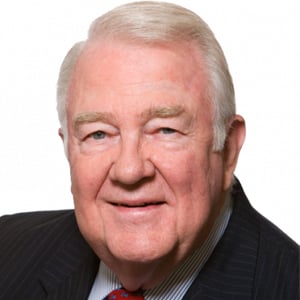
Ronald Reagan Distinguished Fellow Emeritus, The Heritage Foundation
Edwin Meese III, the prominent conservative leader, thinker and elder statesman, continues a quarter-century formal association with The Heritage Foundation as the leading think tank’s Ronald Reagan Distinguished Fellow Emeritus.
In that capacity, Meese oversees special projects and acts as an ambassador for Heritage within the conservative movement.
Meese was chairman of Heritage’s Center for Legal and Judicial Studies from its founding in 2001 until what he calls his “semi-retirement” on Feb. 1, 2013.
He joined Heritage in 1988 as the think tank's first Ronald Reagan Distinguished Fellow -- the only policy chair in the country to be officially named for the 40th president. His work focused on keeping President Reagan’s legacy of conservative principles alive in public debate and discourse.
The legal center now bears his name, in recognition of Meese’s contributions to the rule of law and the nation’s understanding of constitutional law. Its mission is to educate government officials, the media and the public about the Constitution and legal principles -- and how they affect public policy.
Perhaps best known as U.S. attorney general during Reagan’s second term, Meese’s service to the conservative icon stretched from the California governor’s mansion in 1966 to the White House in 1981 before he went to the Department of Justice four years later.
His Heritage “hats” kept Meese among the major conservative voices in national policy debates at an age when most men and women enjoyed quiet retirements.
In 2006, for example, Meese was named to the Iraq Study Group, a special presidential commission dedicated to examining the best resolutions for America's involvement in Iraq. In the past few years he wrote and spoke about constitutional topics ranging from religious liberty to the responsibility of Supreme Court justices.
Immediately after Reagan's death in 2004, and in the years since, Meese often agreed to major media appearances to discuss the lasting impact of his old friend, mentor and boss. He has summarized the Reagan legacy in three accomplishments: Reagan cut taxes and kept them low. He worked to defeat and end the Soviet Union and its worldwide push for communism. And he restored America's faith in itself after years of failure and "malaise."
"I admired him as a leader and cherish his friendship," Meese wrote in a 2004 essay for Heritage members and supporters. "Ronald Reagan had strong convictions. He was committed to the principles that had led to the founding of our nation. And he had the courage to follow his convictions against all odds." <[>Edwin Meese III was born Dec. 2, 1931, to Edwin Jr. and Leone Meese in Oakland, Calif. He graduated from Yale University in 1953 and holds a law degree from the University of California-Berkeley.
Meese spent much of his adult life working for Reagan, first after the former actor, sports announcer and athlete was elected as California’s governor in 1966 and then when he sought and won the presidency in 1980.
Reagan never forgot Meese's loyalty and hard work. During a press conference at which reporters questioned Meese's actions at the Justice Department, Reagan replied: "If Ed Meese is not a good man, there are no good men."
During the Reagan governorship, Meese served as executive assistant and chief of staff from 1969 through 1974 and as legal affairs secretary from 1967 through 1968. He previously was deputy district attorney in Alameda County, Calif.
From January 1981 to February 1985, Meese held the position of counsellor to the president -- the senior job on the White House staff -- and functioned as Reagan's chief policy adviser. In 1985, he received Government Executive magazine's annual award for excellence in management.
Meese served as the 75th attorney general of the United States from February 1985 to August 1988. As the nation's chief law enforcement officer, he directed the Justice Department and led international efforts to combat terrorism, drug trafficking and organized crime.
Meese’s relationship with Heritage began when he met with senior management to discuss the think tank's landmark policy guide, Mandate for Leadership, prepared for the incoming administration. Meese later recalled that Reagan personally handed out copies of the 1,093-page book to members of his Cabinet and asked them to read it. Nearly two-thirds of Mandate's 2,000 recommendations would be adopted or attempted by the Reagan administration.
More than a decade after joining Heritage, Meese assumed the chairmanship of its Center for Legal and Judicial Studies. Under his guidance, the center counseled White House staffers, Justice Department officials and Senate Judiciary Committee members on the importance of filling judicial vacancies with qualified men and women who are committed to interpreting the Constitution according to the founding document's original meaning.
The center became known for hosting "moot court" practice sessions to sharpen the arguments of attorneys slated to bring important cases before the Supreme Court. Those cases addressed constitutional issues ranging from property rights to racial preferences in primary and secondary schools to restrictions on free speech in campaign finance law.
Meese headed the legal center's Advisory Board for the writing and editing of the best-selling book, The Heritage Guide to the Constitution (Regnery, 2005). In it, 109 experts walked readers through a clause-by-clause analysis of the Constitution. Sen. Tom Coburn (R-Okla.) was among those keeping the reference work handy during Judiciary Committee hearings on Supreme Court nominees.
Meese's other books include “Leadership, Ethics and Policing” (Prentice Hall, 2004); “Making America Safer” (Heritage, 1997); and “With Reagan: The Inside Story” (Regnery Gateway, 1992).He wrote the Introduction to a well-received 2010 book on the “overcriminalization” trend, “One Nation Under Arrest,” by Heritage veterans Paul Rosenzweig and Brian W. Walsh.
He also is a distinguished visiting fellow at the Hoover Institution at Stanford University in California and lectures, writes and consults throughout the United States on a variety of subjects.
As both attorney general and counsellor to Reagan, Meese was a member of the Cabinet and the National Security Council. He served as chairman of the Domestic Policy Council and the National Drug Policy Board. After Reagan won the White House in the 1980 election, Meese headed the transition team. During the campaign, he was the Reagan-Bush Committee's senior official.
Meese had a career outside government and politics. From 1977 to 1981, he was a law professor at the University of San Diego, where he also directed the Center for Criminal Justice Policy and Management.
He was an executive in the aerospace and transportation industry as vice president for administration of Rohr Industries Inc. in Chula Vista, Calif. He left Rohr to return to the practice of law, doing corporate and general work in San Diego County.
A retired colonel in the Army Reserve, Meese remains active in numerous civic and educational organizations.
He and his wife, Ursula, have two grown children and reside in McLean, Va.
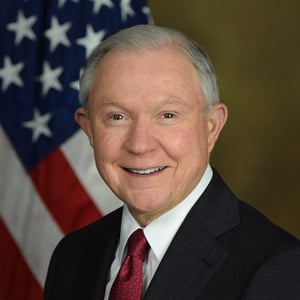
Former United States Attorney General
Jeff Sessions served as the 84th Attorney General of the United States from February 9, 2017 until November 7, 2018.
Prior to becoming Attorney General, Mr. Sessions served as a United States Senator for Alabama since 1996. As a United States Senator, he focused his energies on maintaining a strong military, upholding the rule of law, limiting the role of government, and providing tax relief to stimulate economic growth and to empower Americans to keep more of their hard-earned money.
Mr. Sessions was born in Selma, Alabama on December 24, 1946, and grew up in Hybart, the son of a country store owner. Growing up in the country, Sessions was instilled with certain core values – honesty, hard work, belief in God and parental respect – that define him today. In 1964, he became an Eagle Scout and thereafter received the Distinguished Eagle Scout Award. After attending school in nearby Camden, Sessions attended Huntingdon College in Montgomery, graduating with a Bachelor of Arts degree in 1969. He received a Juris Doctorate degree from the University of Alabama in 1973. Sessions served in the United States Army Reserve from 1973 to 1986, ultimately attaining the rank of Captain. He still considers that period to be one of the most rewarding chapters of his life.
Sessions’ interest in the law led to a distinguished legal career, first as a practicing attorney in Russellville, Alabama, and then in Mobile. Following a two-year stint as Assistant United States Attorney for the Southern District of Alabama (1975-1977), Sessions was nominated by President Reagan in 1981 and confirmed by the Senate to serve as the United States Attorney for the Southern District of Alabama, a position he held for 12 years. Sessions was elected Alabama Attorney General in 1995, serving as the State’s chief legal officer until 1996, when he entered the United States Senate.
Sessions and his wife, Mary Blackshear Sessions, originally of Gadsden, Alabama, have three children, Mary Abigail Reinhardt, Ruth Sessions Walk, and Sam. They have seven granddaughters, Jane Ritchie, Alexa, Gracie, Sophia, Hannah, Joanna, and Phoebe, and three grandsons, Jim Beau, Lewis, and Nicholas.
Partner, Latham & Watkins LLP
Alice Fisher is a partner in Latham & Watkins' Washington, D.C. office and is a member of the firm's Executive Committee. She focuses her practice on white collar criminal investigations, internal investigations and advises clients on a range of criminal matters.
From 2005-2008, Ms. Fisher served as Assistant Attorney General in charge of the Criminal Division of the US DOJ. As Assistant Attorney General, Ms. Fisher led more than 750 attorneys and staff responsible for federal criminal enforcement policy as well as handling criminal matters in federal courts across the country in all areas of federal criminal law enforcement. Under her leadership, the Criminal Division pursued a broad array of federal criminal investigations and prosecutions, with particular focus on corporate fraud matters, including securities fraud, procurement fraud, financial institution fraud, anti-money laundering, healthcare fraud, computer hacking and cyber security, national security, as well as US-domestic and international corruption.
Ms. Fisher also chaired the National Procurement Fraud Task Force, supervised the Medicare Fraud Strike Force, and served as a member of the President's Corporate Fraud Task Force. She handled various transnational and multi-national law enforcement operations and policies, including bilateral agreements and treaties involving information sharing and global criminal enforcement initiatives. Representing the DOJ in front of Congress, Ms. Fisher testified on criminal enforcement policies and served on the Federal Criminal Rules Committee.
As a litigation partner at Latham from 2003-2005 and prior to 2001, Ms. Fisher represented both individual and corporate clients in grand jury, agency and congressional inquiries involving allegations of securities and bank fraud, healthcare fraud, the FCPA, criminal antitrust matters, OFAC sanctions and procurement fraud. She has also represented clients in a number of complex civil and regulatory litigations. Ms. Fisher previously held other positions in government, including Deputy Special Counsel to a US Senate Special Committee.
Ms. Fisher has published articles and spoken on criminal law topics such as the criminalization of corporate conduct, the FCPA, healthcare and procurement fraud, the False Claims Act, the US criminal enforcement environment, public corruption and the honest services statute, financial crime in the financial services industry, securities fraud, identity theft, cybercrime and national security.
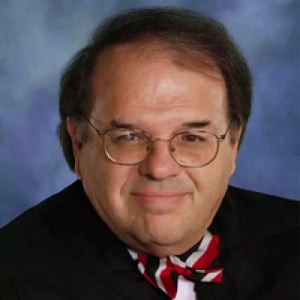
Senior Judge, United States District Court, District of Columbia
Judge Leon was appointed to the United States District Court in February 2002. He received his A.B. from Holy Cross College in 1971, his J.D. cum laude from Suffolk Law School in 1974, and his LL.M. from Harvard Law School in 1981. Immediately prior to his appointment to the bench, Judge Leon was engaged in private practice in Washington, D.C., as a partner in the Washington office of Baker & Hostetler (1989-1999), and Vorys, Sater, Seymour and Pease (1999-2002). Prior to and while in private practice, Judge Leon served as counsel to Congress in the investigations of three sitting Presidents. In 1987, he was the Deputy Chief Minority Counsel for the U.S. House Select “Iran-Contra” Committee. From 1992-1993, he was the Chief Minority Counsel to the U.S. House Foreign Affairs Committee’s “October Surprise” Task Force. In 1994, Judge Leon was Special Counsel to the U.S. House Banking Committee for its “Whitewater” investigation. He also served in 1997 as Special Counsel to the bipartisan U.S. House Ethics Reform Task Force. Earlier in his career, Judge Leon served at the U.S. Department of Justice in a number of positions including Deputy Assistant Attorney General in the Environment Division, Senior Trial Attorney in the Criminal Section of the Tax Division, and as a Special Assistant United States Attorney in the Southern District of New York. He also served as a Commissioner on the White House Fellows Commission and the Judicial Review Commission on Foreign Asset Control. A former full-time law professor at St. John’s Law School (1979-1983), Judge Leon is currently an adjunct law professor at the Georgetown University Law Center and the George Washington University Law School.
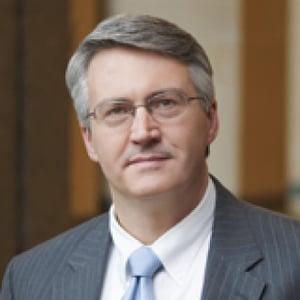
Partner, Morgan, Lewis & Bockius LLP
Matthew S. Miner focuses his practice on white collar enforcement and compliance matters, as well as US congressional inquiries and committee investigations. Mr. Miner has experience in investigations involving alleged corporate misconduct—including matters related to the FCPA—in jurisdictions on five continents. He regularly represents companies and individuals in grand jury investigations, matters involving the US Department of Justice, Securities and Exchange Commission, and Office of Foreign Assets Control, internal and audit committee investigations, and inquiries by non-governmental entities, such the World Bank.
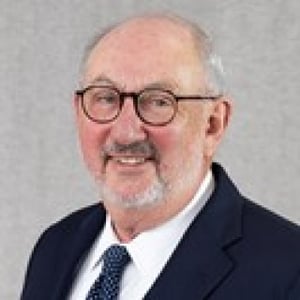
Partner, McGuireWoods LLP
George Terwilliger is co-head of the firm's white collar practice and leads the firm's Strategic Response and Crisis Management practice group. Following his fifteen years of public service in the US Department of Justice, where he began as a law clerk and concluded as Acting Attorney General, George has provided counsel in government and internal investigations, agency enforcement proceedings and in civil and criminal litigation. He has represented many of the nation's and the world's largest corporations, including major financial institutions, energy companies, public institutions as well as leading business and government officials, including members of the US Senate and House as well as cabinet officials. He has also represented lawyers and corporate legal departments in investigations. As a result of both his private sector work and government positions, George is called upon to provide counsel as well as commentary to government officials, Congress and private organizations on national security, homeland defense, terrorism, and other public policy and legal issues. George's work regularly involves providing counsel in the executive suites and boardrooms of major corporations.
In private practice for international law firms, George has represented national and international financial, energy, telecommunications, industrial and healthcare companies. He is a recognized expert in leading credible corporate internal investigations and his experience designing and executing both targeted and global legal compliance reviews has involved work in more than 60 countries around the globe. George is an expert on the Foreign Corrupt Practices Act and regularly provides counsel to companies addressing FCPA issues. No stranger to high stakes litigation and crisis events, George helped lead the Bush-Cheney legal team in the 2000 Florida vote recount, served as special outside counsel to a Senate committee investigating vote fraud allegations, served as counsel to an executive commission on gambling, and has represented many clients in politically charged election law and similar cases. He has guided corporations and individual through high stakes matters of intense public interest. He represented an incumbent president in First Amendment litigation concerning the right to have an inaugural prayer said in a public ceremony.
At the Department of Justice, George served for 10 years as a frontline federal prosecutor, handling hundreds of investigations, trials and appeals, including in white collar and national security cases. President Ronald Reagan appointed him as a U.S. attorney, and he next served as the deputy attorney general and as acting attorney general during the George H.W. Bush administration. As Deputy Attorney General, George ran the Justice Department's operations, overseeing all the nation's federal prosecutors, as well as the FBI and other law enforcement agencies. He also had leadership responsibility in several national and international crises, including a hostage-taking in a federal prison and the federal law enforcement response to domestic unrest in Los Angeles. In several instances, he personally handled negotiations of high-profile criminal and civil matters in the United States and abroad.
Partner, Latham & Watkins LLP
Alice Fisher is a partner in Latham & Watkins' Washington, D.C. office and is a member of the firm's Executive Committee. She focuses her practice on white collar criminal investigations, internal investigations and advises clients on a range of criminal matters.
From 2005-2008, Ms. Fisher served as Assistant Attorney General in charge of the Criminal Division of the US DOJ. As Assistant Attorney General, Ms. Fisher led more than 750 attorneys and staff responsible for federal criminal enforcement policy as well as handling criminal matters in federal courts across the country in all areas of federal criminal law enforcement. Under her leadership, the Criminal Division pursued a broad array of federal criminal investigations and prosecutions, with particular focus on corporate fraud matters, including securities fraud, procurement fraud, financial institution fraud, anti-money laundering, healthcare fraud, computer hacking and cyber security, national security, as well as US-domestic and international corruption.
Ms. Fisher also chaired the National Procurement Fraud Task Force, supervised the Medicare Fraud Strike Force, and served as a member of the President's Corporate Fraud Task Force. She handled various transnational and multi-national law enforcement operations and policies, including bilateral agreements and treaties involving information sharing and global criminal enforcement initiatives. Representing the DOJ in front of Congress, Ms. Fisher testified on criminal enforcement policies and served on the Federal Criminal Rules Committee.
As a litigation partner at Latham from 2003-2005 and prior to 2001, Ms. Fisher represented both individual and corporate clients in grand jury, agency and congressional inquiries involving allegations of securities and bank fraud, healthcare fraud, the FCPA, criminal antitrust matters, OFAC sanctions and procurement fraud. She has also represented clients in a number of complex civil and regulatory litigations. Ms. Fisher previously held other positions in government, including Deputy Special Counsel to a US Senate Special Committee.
Ms. Fisher has published articles and spoken on criminal law topics such as the criminalization of corporate conduct, the FCPA, healthcare and procurement fraud, the False Claims Act, the US criminal enforcement environment, public corruption and the honest services statute, financial crime in the financial services industry, securities fraud, identity theft, cybercrime and national security.
Senior Judge, United States District Court, District of Columbia
Judge Leon was appointed to the United States District Court in February 2002. He received his A.B. from Holy Cross College in 1971, his J.D. cum laude from Suffolk Law School in 1974, and his LL.M. from Harvard Law School in 1981. Immediately prior to his appointment to the bench, Judge Leon was engaged in private practice in Washington, D.C., as a partner in the Washington office of Baker & Hostetler (1989-1999), and Vorys, Sater, Seymour and Pease (1999-2002). Prior to and while in private practice, Judge Leon served as counsel to Congress in the investigations of three sitting Presidents. In 1987, he was the Deputy Chief Minority Counsel for the U.S. House Select “Iran-Contra” Committee. From 1992-1993, he was the Chief Minority Counsel to the U.S. House Foreign Affairs Committee’s “October Surprise” Task Force. In 1994, Judge Leon was Special Counsel to the U.S. House Banking Committee for its “Whitewater” investigation. He also served in 1997 as Special Counsel to the bipartisan U.S. House Ethics Reform Task Force. Earlier in his career, Judge Leon served at the U.S. Department of Justice in a number of positions including Deputy Assistant Attorney General in the Environment Division, Senior Trial Attorney in the Criminal Section of the Tax Division, and as a Special Assistant United States Attorney in the Southern District of New York. He also served as a Commissioner on the White House Fellows Commission and the Judicial Review Commission on Foreign Asset Control. A former full-time law professor at St. John’s Law School (1979-1983), Judge Leon is currently an adjunct law professor at the Georgetown University Law Center and the George Washington University Law School.
Partner, Morgan, Lewis & Bockius LLP
Matthew S. Miner focuses his practice on white collar enforcement and compliance matters, as well as US congressional inquiries and committee investigations. Mr. Miner has experience in investigations involving alleged corporate misconduct—including matters related to the FCPA—in jurisdictions on five continents. He regularly represents companies and individuals in grand jury investigations, matters involving the US Department of Justice, Securities and Exchange Commission, and Office of Foreign Assets Control, internal and audit committee investigations, and inquiries by non-governmental entities, such the World Bank.
Partner, McGuireWoods LLP
George Terwilliger is co-head of the firm's white collar practice and leads the firm's Strategic Response and Crisis Management practice group. Following his fifteen years of public service in the US Department of Justice, where he began as a law clerk and concluded as Acting Attorney General, George has provided counsel in government and internal investigations, agency enforcement proceedings and in civil and criminal litigation. He has represented many of the nation's and the world's largest corporations, including major financial institutions, energy companies, public institutions as well as leading business and government officials, including members of the US Senate and House as well as cabinet officials. He has also represented lawyers and corporate legal departments in investigations. As a result of both his private sector work and government positions, George is called upon to provide counsel as well as commentary to government officials, Congress and private organizations on national security, homeland defense, terrorism, and other public policy and legal issues. George's work regularly involves providing counsel in the executive suites and boardrooms of major corporations.
In private practice for international law firms, George has represented national and international financial, energy, telecommunications, industrial and healthcare companies. He is a recognized expert in leading credible corporate internal investigations and his experience designing and executing both targeted and global legal compliance reviews has involved work in more than 60 countries around the globe. George is an expert on the Foreign Corrupt Practices Act and regularly provides counsel to companies addressing FCPA issues. No stranger to high stakes litigation and crisis events, George helped lead the Bush-Cheney legal team in the 2000 Florida vote recount, served as special outside counsel to a Senate committee investigating vote fraud allegations, served as counsel to an executive commission on gambling, and has represented many clients in politically charged election law and similar cases. He has guided corporations and individual through high stakes matters of intense public interest. He represented an incumbent president in First Amendment litigation concerning the right to have an inaugural prayer said in a public ceremony.
At the Department of Justice, George served for 10 years as a frontline federal prosecutor, handling hundreds of investigations, trials and appeals, including in white collar and national security cases. President Ronald Reagan appointed him as a U.S. attorney, and he next served as the deputy attorney general and as acting attorney general during the George H.W. Bush administration. As Deputy Attorney General, George ran the Justice Department's operations, overseeing all the nation's federal prosecutors, as well as the FBI and other law enforcement agencies. He also had leadership responsibility in several national and international crises, including a hostage-taking in a federal prison and the federal law enforcement response to domestic unrest in Los Angeles. In several instances, he personally handled negotiations of high-profile criminal and civil matters in the United States and abroad.
Ronald Reagan Distinguished Fellow Emeritus, The Heritage Foundation
Edwin Meese III, the prominent conservative leader, thinker and elder statesman, continues a quarter-century formal association with The Heritage Foundation as the leading think tank’s Ronald Reagan Distinguished Fellow Emeritus.
In that capacity, Meese oversees special projects and acts as an ambassador for Heritage within the conservative movement.
Meese was chairman of Heritage’s Center for Legal and Judicial Studies from its founding in 2001 until what he calls his “semi-retirement” on Feb. 1, 2013.
He joined Heritage in 1988 as the think tank's first Ronald Reagan Distinguished Fellow -- the only policy chair in the country to be officially named for the 40th president. His work focused on keeping President Reagan’s legacy of conservative principles alive in public debate and discourse.
The legal center now bears his name, in recognition of Meese’s contributions to the rule of law and the nation’s understanding of constitutional law. Its mission is to educate government officials, the media and the public about the Constitution and legal principles -- and how they affect public policy.
Perhaps best known as U.S. attorney general during Reagan’s second term, Meese’s service to the conservative icon stretched from the California governor’s mansion in 1966 to the White House in 1981 before he went to the Department of Justice four years later.
His Heritage “hats” kept Meese among the major conservative voices in national policy debates at an age when most men and women enjoyed quiet retirements.
In 2006, for example, Meese was named to the Iraq Study Group, a special presidential commission dedicated to examining the best resolutions for America's involvement in Iraq. In the past few years he wrote and spoke about constitutional topics ranging from religious liberty to the responsibility of Supreme Court justices.
Immediately after Reagan's death in 2004, and in the years since, Meese often agreed to major media appearances to discuss the lasting impact of his old friend, mentor and boss. He has summarized the Reagan legacy in three accomplishments: Reagan cut taxes and kept them low. He worked to defeat and end the Soviet Union and its worldwide push for communism. And he restored America's faith in itself after years of failure and "malaise."
"I admired him as a leader and cherish his friendship," Meese wrote in a 2004 essay for Heritage members and supporters. "Ronald Reagan had strong convictions. He was committed to the principles that had led to the founding of our nation. And he had the courage to follow his convictions against all odds." <[>Edwin Meese III was born Dec. 2, 1931, to Edwin Jr. and Leone Meese in Oakland, Calif. He graduated from Yale University in 1953 and holds a law degree from the University of California-Berkeley.
Meese spent much of his adult life working for Reagan, first after the former actor, sports announcer and athlete was elected as California’s governor in 1966 and then when he sought and won the presidency in 1980.
Reagan never forgot Meese's loyalty and hard work. During a press conference at which reporters questioned Meese's actions at the Justice Department, Reagan replied: "If Ed Meese is not a good man, there are no good men."
During the Reagan governorship, Meese served as executive assistant and chief of staff from 1969 through 1974 and as legal affairs secretary from 1967 through 1968. He previously was deputy district attorney in Alameda County, Calif.
From January 1981 to February 1985, Meese held the position of counsellor to the president -- the senior job on the White House staff -- and functioned as Reagan's chief policy adviser. In 1985, he received Government Executive magazine's annual award for excellence in management.
Meese served as the 75th attorney general of the United States from February 1985 to August 1988. As the nation's chief law enforcement officer, he directed the Justice Department and led international efforts to combat terrorism, drug trafficking and organized crime.
Meese’s relationship with Heritage began when he met with senior management to discuss the think tank's landmark policy guide, Mandate for Leadership, prepared for the incoming administration. Meese later recalled that Reagan personally handed out copies of the 1,093-page book to members of his Cabinet and asked them to read it. Nearly two-thirds of Mandate's 2,000 recommendations would be adopted or attempted by the Reagan administration.
More than a decade after joining Heritage, Meese assumed the chairmanship of its Center for Legal and Judicial Studies. Under his guidance, the center counseled White House staffers, Justice Department officials and Senate Judiciary Committee members on the importance of filling judicial vacancies with qualified men and women who are committed to interpreting the Constitution according to the founding document's original meaning.
The center became known for hosting "moot court" practice sessions to sharpen the arguments of attorneys slated to bring important cases before the Supreme Court. Those cases addressed constitutional issues ranging from property rights to racial preferences in primary and secondary schools to restrictions on free speech in campaign finance law.
Meese headed the legal center's Advisory Board for the writing and editing of the best-selling book, The Heritage Guide to the Constitution (Regnery, 2005). In it, 109 experts walked readers through a clause-by-clause analysis of the Constitution. Sen. Tom Coburn (R-Okla.) was among those keeping the reference work handy during Judiciary Committee hearings on Supreme Court nominees.
Meese's other books include “Leadership, Ethics and Policing” (Prentice Hall, 2004); “Making America Safer” (Heritage, 1997); and “With Reagan: The Inside Story” (Regnery Gateway, 1992).He wrote the Introduction to a well-received 2010 book on the “overcriminalization” trend, “One Nation Under Arrest,” by Heritage veterans Paul Rosenzweig and Brian W. Walsh.
He also is a distinguished visiting fellow at the Hoover Institution at Stanford University in California and lectures, writes and consults throughout the United States on a variety of subjects.
As both attorney general and counsellor to Reagan, Meese was a member of the Cabinet and the National Security Council. He served as chairman of the Domestic Policy Council and the National Drug Policy Board. After Reagan won the White House in the 1980 election, Meese headed the transition team. During the campaign, he was the Reagan-Bush Committee's senior official.
Meese had a career outside government and politics. From 1977 to 1981, he was a law professor at the University of San Diego, where he also directed the Center for Criminal Justice Policy and Management.
He was an executive in the aerospace and transportation industry as vice president for administration of Rohr Industries Inc. in Chula Vista, Calif. He left Rohr to return to the practice of law, doing corporate and general work in San Diego County.
A retired colonel in the Army Reserve, Meese remains active in numerous civic and educational organizations.
He and his wife, Ursula, have two grown children and reside in McLean, Va.
Former United States Attorney General
Jeff Sessions served as the 84th Attorney General of the United States from February 9, 2017 until November 7, 2018.
Prior to becoming Attorney General, Mr. Sessions served as a United States Senator for Alabama since 1996. As a United States Senator, he focused his energies on maintaining a strong military, upholding the rule of law, limiting the role of government, and providing tax relief to stimulate economic growth and to empower Americans to keep more of their hard-earned money.
Mr. Sessions was born in Selma, Alabama on December 24, 1946, and grew up in Hybart, the son of a country store owner. Growing up in the country, Sessions was instilled with certain core values – honesty, hard work, belief in God and parental respect – that define him today. In 1964, he became an Eagle Scout and thereafter received the Distinguished Eagle Scout Award. After attending school in nearby Camden, Sessions attended Huntingdon College in Montgomery, graduating with a Bachelor of Arts degree in 1969. He received a Juris Doctorate degree from the University of Alabama in 1973. Sessions served in the United States Army Reserve from 1973 to 1986, ultimately attaining the rank of Captain. He still considers that period to be one of the most rewarding chapters of his life.
Sessions’ interest in the law led to a distinguished legal career, first as a practicing attorney in Russellville, Alabama, and then in Mobile. Following a two-year stint as Assistant United States Attorney for the Southern District of Alabama (1975-1977), Sessions was nominated by President Reagan in 1981 and confirmed by the Senate to serve as the United States Attorney for the Southern District of Alabama, a position he held for 12 years. Sessions was elected Alabama Attorney General in 1995, serving as the State’s chief legal officer until 1996, when he entered the United States Senate.
Sessions and his wife, Mary Blackshear Sessions, originally of Gadsden, Alabama, have three children, Mary Abigail Reinhardt, Ruth Sessions Walk, and Sam. They have seven granddaughters, Jane Ritchie, Alexa, Gracie, Sophia, Hannah, Joanna, and Phoebe, and three grandsons, Jim Beau, Lewis, and Nicholas.
Partner, Latham & Watkins LLP
Alice Fisher is a partner in Latham & Watkins' Washington, D.C. office and is a member of the firm's Executive Committee. She focuses her practice on white collar criminal investigations, internal investigations and advises clients on a range of criminal matters.
From 2005-2008, Ms. Fisher served as Assistant Attorney General in charge of the Criminal Division of the US DOJ. As Assistant Attorney General, Ms. Fisher led more than 750 attorneys and staff responsible for federal criminal enforcement policy as well as handling criminal matters in federal courts across the country in all areas of federal criminal law enforcement. Under her leadership, the Criminal Division pursued a broad array of federal criminal investigations and prosecutions, with particular focus on corporate fraud matters, including securities fraud, procurement fraud, financial institution fraud, anti-money laundering, healthcare fraud, computer hacking and cyber security, national security, as well as US-domestic and international corruption.
Ms. Fisher also chaired the National Procurement Fraud Task Force, supervised the Medicare Fraud Strike Force, and served as a member of the President's Corporate Fraud Task Force. She handled various transnational and multi-national law enforcement operations and policies, including bilateral agreements and treaties involving information sharing and global criminal enforcement initiatives. Representing the DOJ in front of Congress, Ms. Fisher testified on criminal enforcement policies and served on the Federal Criminal Rules Committee.
As a litigation partner at Latham from 2003-2005 and prior to 2001, Ms. Fisher represented both individual and corporate clients in grand jury, agency and congressional inquiries involving allegations of securities and bank fraud, healthcare fraud, the FCPA, criminal antitrust matters, OFAC sanctions and procurement fraud. She has also represented clients in a number of complex civil and regulatory litigations. Ms. Fisher previously held other positions in government, including Deputy Special Counsel to a US Senate Special Committee.
Ms. Fisher has published articles and spoken on criminal law topics such as the criminalization of corporate conduct, the FCPA, healthcare and procurement fraud, the False Claims Act, the US criminal enforcement environment, public corruption and the honest services statute, financial crime in the financial services industry, securities fraud, identity theft, cybercrime and national security.
Senior Judge, United States District Court, District of Columbia
Judge Leon was appointed to the United States District Court in February 2002. He received his A.B. from Holy Cross College in 1971, his J.D. cum laude from Suffolk Law School in 1974, and his LL.M. from Harvard Law School in 1981. Immediately prior to his appointment to the bench, Judge Leon was engaged in private practice in Washington, D.C., as a partner in the Washington office of Baker & Hostetler (1989-1999), and Vorys, Sater, Seymour and Pease (1999-2002). Prior to and while in private practice, Judge Leon served as counsel to Congress in the investigations of three sitting Presidents. In 1987, he was the Deputy Chief Minority Counsel for the U.S. House Select “Iran-Contra” Committee. From 1992-1993, he was the Chief Minority Counsel to the U.S. House Foreign Affairs Committee’s “October Surprise” Task Force. In 1994, Judge Leon was Special Counsel to the U.S. House Banking Committee for its “Whitewater” investigation. He also served in 1997 as Special Counsel to the bipartisan U.S. House Ethics Reform Task Force. Earlier in his career, Judge Leon served at the U.S. Department of Justice in a number of positions including Deputy Assistant Attorney General in the Environment Division, Senior Trial Attorney in the Criminal Section of the Tax Division, and as a Special Assistant United States Attorney in the Southern District of New York. He also served as a Commissioner on the White House Fellows Commission and the Judicial Review Commission on Foreign Asset Control. A former full-time law professor at St. John’s Law School (1979-1983), Judge Leon is currently an adjunct law professor at the Georgetown University Law Center and the George Washington University Law School.
Partner, Morgan, Lewis & Bockius LLP
Matthew S. Miner focuses his practice on white collar enforcement and compliance matters, as well as US congressional inquiries and committee investigations. Mr. Miner has experience in investigations involving alleged corporate misconduct—including matters related to the FCPA—in jurisdictions on five continents. He regularly represents companies and individuals in grand jury investigations, matters involving the US Department of Justice, Securities and Exchange Commission, and Office of Foreign Assets Control, internal and audit committee investigations, and inquiries by non-governmental entities, such the World Bank.
Partner, McGuireWoods LLP
George Terwilliger is co-head of the firm's white collar practice and leads the firm's Strategic Response and Crisis Management practice group. Following his fifteen years of public service in the US Department of Justice, where he began as a law clerk and concluded as Acting Attorney General, George has provided counsel in government and internal investigations, agency enforcement proceedings and in civil and criminal litigation. He has represented many of the nation's and the world's largest corporations, including major financial institutions, energy companies, public institutions as well as leading business and government officials, including members of the US Senate and House as well as cabinet officials. He has also represented lawyers and corporate legal departments in investigations. As a result of both his private sector work and government positions, George is called upon to provide counsel as well as commentary to government officials, Congress and private organizations on national security, homeland defense, terrorism, and other public policy and legal issues. George's work regularly involves providing counsel in the executive suites and boardrooms of major corporations.
In private practice for international law firms, George has represented national and international financial, energy, telecommunications, industrial and healthcare companies. He is a recognized expert in leading credible corporate internal investigations and his experience designing and executing both targeted and global legal compliance reviews has involved work in more than 60 countries around the globe. George is an expert on the Foreign Corrupt Practices Act and regularly provides counsel to companies addressing FCPA issues. No stranger to high stakes litigation and crisis events, George helped lead the Bush-Cheney legal team in the 2000 Florida vote recount, served as special outside counsel to a Senate committee investigating vote fraud allegations, served as counsel to an executive commission on gambling, and has represented many clients in politically charged election law and similar cases. He has guided corporations and individual through high stakes matters of intense public interest. He represented an incumbent president in First Amendment litigation concerning the right to have an inaugural prayer said in a public ceremony.
At the Department of Justice, George served for 10 years as a frontline federal prosecutor, handling hundreds of investigations, trials and appeals, including in white collar and national security cases. President Ronald Reagan appointed him as a U.S. attorney, and he next served as the deputy attorney general and as acting attorney general during the George H.W. Bush administration. As Deputy Attorney General, George ran the Justice Department's operations, overseeing all the nation's federal prosecutors, as well as the FBI and other law enforcement agencies. He also had leadership responsibility in several national and international crises, including a hostage-taking in a federal prison and the federal law enforcement response to domestic unrest in Los Angeles. In several instances, he personally handled negotiations of high-profile criminal and civil matters in the United States and abroad.
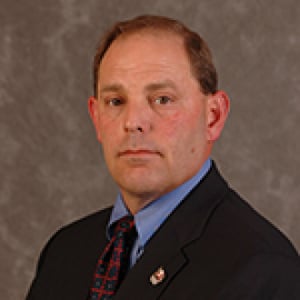
President, Fraternal Order of Police
Chuck Canterbury began serving as President of the Fraternal Order of Police in January 2003 after the death of President Steve Young. He has been reelected seven times.
President Canterbury joined the Fraternal Order of Police in 1984 when he, along with eleven other officers, chartered their Local Lodge. He served as Local Lodge President for 13 years, during which time he was instrumental in starting the Lodge Legal Defense Plan, purchasing the first lodge building, and starting the Lodge insurance program.
He went on to serve as State Lodge President from 1990 to 1998. During his tenure he was instrumental in establishing the State Lodge lobbying program, initiating the political endorsement program and implementing the State Lodge Legal Defense Plan. He led the effort to hire a full time Executive Director for the State Lodge to manage these programs.
He began his service on the Grand Lodge Executive Board in 1995 when he was elected to the first of three terms as the Second Vice President. In 2001, he was elected Vice President. During this time, he has worked to expand the police labor movement in the areas of our country who do not have collective bargaining rights. Improving the quality of life for police officers has been his foremost goal. During his tenure he has brought a best business practice model to the FOP.
President Canterbury retired in January 2004 from the Horry County Police Department, Conway, South Carolina, where he most recently had oversight of the Operations Bureau. He began his police career in 1978 and over his 26-year career he worked in the Patrol Division, the Criminal Investigations Division and served as the Training Division Supervisor, during which he was certified as an Instructor in basic law enforcement, firearms, chemical weapons, and pursuit driving.
He has been appointed by President George Bush to serve on the Medal of Valor Board and also serves on our Nation's Homeland Security Council. Chuck has also been appointed to the Congressional Badge of Bravery Awards committee. Chuck is also on the Board of Directors of the National Center for Missing and Exploited Children. He also serves as Treasurer of the International Council of Police Representatives Association. This group represents over 1.4 million of our world's law enforcement officers.
He earned a Bachelor of Arts degree from Coastal Carolina University.
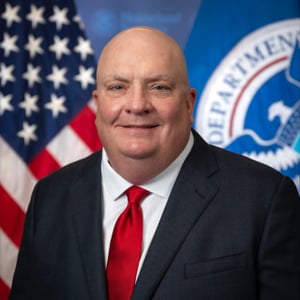
Acting Assistant Commissioner of Customs and Border Protection, Office of Professional Responsibility, U.S. Department of Homeland Security
Brian M. Fish is currently the Senior Advisor to the General Counsel at the Department of Homeland Security where he works on immigration and law enforcement issues. Previously, he was a trial attorney with the United States Immigration and Customs Enforcement, where he represented the Department of Homeland Security in removal hearings before the U.S. Immigration Court. Additionally, he was a Special Assistant United States Attorney and a Baltimore City homicide prosecutor. He is a member of the Federalist Society's Criminal Law & Procedure Practice Group Executive Committee and the President of its Baltimore Lawyers Chapter. He earned his B.A. from LaSalle University in 1992 and his J.D. from Loyola University New Orleans School of Law in 1998.
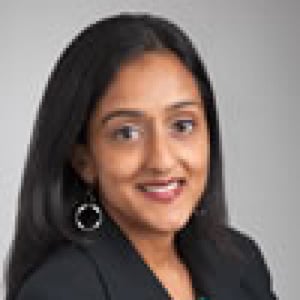
President, Leadership Conference on Civil and Human Rights
Vanita Gupta is the President of The Leadership Conference on Civil and Human Rights. She previously served as the acting Principal Deputy Assistant Attorney General for the Civil Rights Division and the top civil rights prosecutor for the United States Department of Justice. Before her work at the DOJ she was a civil rights lawyer and the Deputy Legal Director of the American Civil Liberties Union (ACLU), where she oversaw the ACLU's national criminal justice reform efforts. She is a graduate of Yale and New York University Law School.
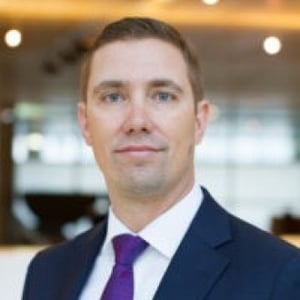
Associate Professor of Law, Georgetown University Law Center
Shon Hopwood’s unusual legal journey began prior to him attending law school and included the U.S. Supreme Court granting two petitions for certiorari he prepared. Shon’s research and teaching interests include criminal law and procedure, civil rights, and the constitutional rights of prisoners. He received a J.D. as a Gates Public Service Law Scholar from the University of Washington School of Law. He served as a law clerk for Judge Janice Rogers Brown of the U.S. Court of Appeals for the District of Columbia Circuit. And his legal scholarship has been published in the Harvard Civil Rights-Civil Liberties, Fordham, and Washington Law Reviews, as well as the American Criminal Law Review and Georgetown Law Journal’s Annual Review of Criminal Procedure.

Topics
Attorney General Directs DOJ to Stop Circumventing APA
In remarks to the Federalist Society’s National Lawyers Convention on Friday, Attorney General Jeff Sessions announced new...
Topics
2017 National Lawyers Convention Live Stream
Thank you for joining us online for the 2017 National Lawyers Convention. Below is...
Address by Attorney General Jeff Sessions
Edwin Meese, Jefferson B. Sessions
Attorney General Jeff Sessions delivered this address at the 2017 National Lawyers Convention in Washington,...
Address by Attorney General Jeff Sessions
2017 National Lawyers Convention
Washington, DCTopics
The Government's Uncertain Path to Numeracy
At 2:00 p.m. on July 24, 2017, with Roger Clegg moderating, I will be presenting a...
Beyond the Yates Memo: A New Era of Enforcement?
Alice Fisher, Richard J. Leon, Matthew S. Miner, George J. Terwilliger
In this sequel to our panel last year on “The Limits of Federal Criminal Law,”...
Beyond the Yates Memo: A New Era of Enforcement?
Alice Fisher, Richard J. Leon, Matthew S. Miner, George J. Terwilliger
In this sequel to our panel last year on “The Limits of Federal Criminal Law,”...
Beyond the Yates Memo: A New Era of Enforcement?
Criminal Law & Procedure Practice Group
Washington, DCFederal Oversight of Local Police Departments
TeleforumBreakfast with Shon Hopwood
Washington, District of Columbia