
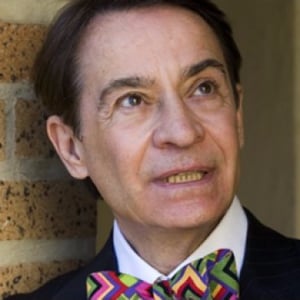
Doy & Dee Henley Chair and Distinguished Professor of Jurisprude, Chapman University Dale E. Fowler School of Law
Ronald D. Rotunda was the Doy & Dee Henley Chair and Distinguished Professor of Jurisprudence, at Chapman University, the Dale E. Fowler School of Law. He joined the faculty in 2008. Before that, he was University Professor and Professor of Law at George Mason University School of Law. From 2002 to 2006, he was the George Mason University Foundation Professor of Law. Before that, he was the Albert E. Jenner, Jr. Professor of Law, at the University of Illinois. He was a magna cum laude graduate of both Harvard College and Harvard Law School, where he was a member of Harvard Law Review. He joined the University of Illinois faculty in 1974 after clerking for Judge Walter R. Mansfield of the United States Court of Appeals for the Second Circuit, practicing law in Washington, D.C., and serving as assistant majority counsel for the Senate Watergate Committee. He has co-authored the most widely used course book on legal ethics, Problems and Materials on Professional Responsibility(Foundation Press, 12th ed. 2014) and was the author of a leading course book on constitutional law, Modern Constitutional Law (West Academic Co., 11th ed. 2015)(Abridged & Unabridged editions). He was the coauthor of, Legal Ethics: The Lawyer's Deskbook on Professional Responsibility (ABA- West/Thompson Reuters Publishing, St. Paul, Minnesota, 2016-2017 ed.) (Jointly published by the ABA and West/Thompson Reuters Publishing) (with John Dzienkowski). Rotunda also co-authored (with John Nowak) the six-volume Treatise on Constitutional Law (West/Thompson Reuters Publishing, 5th ed. 2012)(with annual updates), and a one volume Treatise on Constitutional Law (West Academic, 8th ed. 2010). He was also the author of several other books and more than 500 articles in various law reviews, journals, newspapers, and books in this country and abroad. His works have been translated into French, Portuguese German, Romanian, Czech, Russian, Japanese, and Korean. These books and articles have been cited more than 2000 times by law reviews, by state and federal courts at every level, from trial courts to the U.S. Supreme Court, and by foreign courts in Europe, Africa, Asia, and South America. He has been interviewed on radio and television on legal issues, both in this country and abroad. In 1993 he was the Constitutional Law Adviser to the Supreme National Council of Cambodia and assisted that country in writing its first democratic constitution. He has consulted with various new democracies in Eastern Europe and the former Soviet Union, including Moldova, Romania, and Ukraine, on their proposed constitutions and judicial codes. He chaired the subcommittee that drafted the American Bar Association's Model Rules for Lawyer Disciplinary Enforcement; was a member of the Publications Board of the A.B.A. Center for Professional Responsibility from 1994 to 2016; was a member of the A.B.A. Standing Committee on Professional Discipline (1991-1997); and was Liaison to the A.B.A. Standing Committee on Ethics and Professional Responsibility (1994-1997). He was a Fulbright Professor in Venezuela in 1986 and a Fulbright Research Scholar in Italy in 1981. In 1996 he assisted the Czech Republic in drafting the first Rules of Ethics for lawyers in that country. During the Spring, 1999 semester, he was Visiting Professor at the University of Alabama School of Law, holding the John S. Stone Endowed Chair of Law. During the summer and fall of 2000, he was the Visiting Senior Fellow in Constitutional Studies at the Cato Institute, in Washington, DC. In the fall of 2001, he was visiting professor at George Mason University School of Law. During November-December, 2002, he was Visiting Scholar, Katholieke Universiteit Leuven, Faculty of Law, Leuven, Belgium. In May, 2004, and December, 2005, he was visiting lecturer at the Institute of Law and Economics, Institut für Recht und Ökonomik, at the University of Hamburg. From early June 2004 to May 2005, he was the Special Counsel to the Department of Defense. He was on the Panel of Contributing Editors that produced, Black's Law Dictionary (West/Thompson Reuters Publishing, 8th ed. 2004; Thomson-Reuters, 10th ed. 2014). From 2005-2006, he was a member of the Task Force on Judicial Functions of the Commission on Virginia Courts in the 21st Century: To Benefit All, to Exclude None.
In May, 2000, American Law Media, publisher of The American Lawyer, the National Law Journal, and the Legal Times picked Professor Rotunda as one of the ten most influential Illinois Lawyers. Also in 2000, a lengthy study that the University of Chicago Press published, which sought to determine the influence, productivity, and reputations of law professors over the last several decades, listed Professor Rotunda as the 17th highest in the nation. The 2002-2003 New Educational Quality Ranking of U.S. Law Schools (EQR) [the last year for which such records are available] ranks Professor Rotunda as the eleventh most cited of all law faculty in the United States. Seehttp://www.leiterrankings.com/faculty/2002faculty_impact_cites.shtml.
In July, 2007, he was one of the main speakers at the International Judicial Conference hosted by the United States Embassy, the Supreme Court of Latvia, and the Latvian Ministry of Justice. The other main speakers were Justice Samuel Alito, the President of Latvia, the Prime Minister of Latvia, the Chief Justice of Latvia, and the Minister of Justice of Latvia. On February 27, 2008, President George W. Bush nominated Ronald D. Rotunda to become a member of the Privacy and Civil Liberties Oversight Board (PCLOB) for an initial four-year term and sent his nomination to the Senate Committee on Homeland Security and Governmental Affairs for confirmation hearings on the nominees. He was selected the Best Lawyer in Washington, DC, in 2009 in Ethics and Professional Responsibility Law, as published in November 2008 in the Washington Post in association with the Legal Times. When he moved to California, he was also selected as one of the Best Lawyers in Southern California, in 2009, 2010, 2011, 2012, 2013, 2014, 2015, 2016, 2017, also in Ethics and Professional Responsibility Law as published in the Los Angeles Times, U.S. News, and American Law Media. On June 17, 2009, he became a Commissioner of the Fair Political Practices Commission, a state regulatory agency (analogous to the Federal Election Commission) that is California's independent political watchdog. He served until January 31, 2013, when his term expired. In 2012, he became a Distinguished International Research Fellow at the World Engagement Institute, a non-profit, multidisciplinary and academically-based non-governmental organization with the mission to facilitate professional global engagement for international development and poverty reduction http://www.weinstitute.org/fellows.html. In 2012, Chapman University honored him with The Chapman University Excellence In Scholarly/Creative Work Award, 2011-2012. Since 2014, he has been a member of the Editorial Board of, The International Journal of Sustainable Human Security (IJSHS), a peer-reviewed publication of the World Engagement Institute (WEI). Rotunda was a Member of the Editorial Board of ABA's Journal of Legal Education (2014 to 2016).

Dean and Jesse H. Choper Distinguished Professor of Law, UC Berkeley School of Law
Erwin Chemerinsky became the 13th Dean of Berkeley Law on July 1, 2017, when he joined the faculty as the Jesse H. Choper Distinguished Professor of Law.
Prior to assuming this position, from 2008-2017, he was the founding Dean and Distinguished Professor of Law, and Raymond Pryke Professor of First Amendment Law, at University of California, Irvine School of Law, with a joint appointment in Political Science. Before that he was the Alston and Bird Professor of Law and Political Science at Duke University from 2004-2008, and from 1983-2004 was a professor at the University of Southern California Law School, including as the Sydney M. Irmas Professor of Public Interest Law, Legal Ethics, and Political Science. He also has taught at DePaul College of Law and UCLA Law School.
He is the author of eleven books, including leading casebooks and treatises about constitutional law, criminal procedure, and federal jurisdiction. His most recent books are, We the People: A Progressive Reading of the Constitution for the Twenty-First Century (Picador Macmillan) published in November 2018, and two books published by Yale University Press in 2017, Closing the Courthouse Doors: How Your Constitutional Rights Became Unenforceable and Free Speech on Campus (with Howard Gillman).
He also is the author of more than 200 law review articles. He writes a regular column for the Sacramento Bee, monthly columns for the ABA Journal and the Daily Journal, and frequent op-eds in newspapers across the country. He frequently argues appellate cases, including in the United States Supreme Court.
In 2016, he was named a fellow of the American Academy of Arts and Sciences. In 2017, National Jurist magazine again named Dean Chemerinsky as the most influential person in legal education in the United States.

Senior Legal Fellow, the Meese Institute for the Rule of Law, Advancing American Freedom
Paul J. Larkin is a Senior Legal Fellow in the Meese Institute for the Rule of Law at Advancing American Freedom. Paul has held various positions in the federal and state governments throughout his career, such as being an attorney in the Organized Crime and Racketeering Section of the Criminal Division at the U.S. Department of Justice, an Assistant to the Solicitor General in the Office of the Solicitor General at the U.S. Department of Justice, Special Agent-in-Charge and Acting Director of the Criminal Investigation Division at the Environmental Protection Agency, and a member of the Parole Abolition and Sentencing Reform Commission and of the Juvenile Justice Reform Commission in the Office of Virginia Governor George Allen.
He has also worked at Verizon Communications and two law firms in Washington, D.C. His current research is principally in the fields of drug policy, criminal justice policy, and administrative law and policy. He has published numerous articles in law and public policy journals, both in print and online.

Partner, Baker Hostetler LLP
David Rivkin is a member of the firm's litigation, international and environmental teams and is co-leader of the firm's national appellate practice. He has extensive experience in constitutional, administrative and international law litigation and has been involved in numerous high-profile cases. With his prior experience in the government sector, David draws on a wealth of knowledge when providing compliance advice to companies and handling enforcement proceedings before government agencies on issues arising out of multilateral and unilateral sanctions, the Foreign Corrupt Practices Act (FCPA), anti-boycott issues, bankruptcy and financial fraud matters, and environmental and energy issues.
David has developed and implemented legislative, regulatory and litigation initiatives for two presidential administrations. Over the years, he has published hundreds of articles, op-eds, book reviews and book chapters on a variety of international, legal, constitutional, defense, arms control, foreign policy, environmental and energy issues for various newspapers and magazines, including The Wall Street Journal, The Washington Post, The New York Times, USA Today and The Los Angeles Times, and has been a frequent commentator and guest on TV and radio shows including ABC, CBS, NBC, CNN, Fox News, NPR and PBS.

Founder and Executive Director, National Security Institute; Assistant Professor of Law, Antonin Scalia Law School, George Mason University
Jamil N. Jaffer is the Founder and Executive Director of the National Security Institute at the Antonin Scalia Law School at George Mason University where he also serves as an Assistant Professor of Law, Director of the National Security Law and Policy Program, and Director of the Cyber, Intelligence, and National Security LLM Program. Jamil also teaches classes on counterterrorism, intelligence, surveillance, cybersecurity, and other national security matters, as well as a summer course held abroad with U.S. Supreme Court Justice Neil M. Gorsuch. Jamil is also affiliated with Stanford University’s Center for International Security and Cooperation and previously served as a Visiting Fellow at the Hoover Institution from 2016 to 2019.
Jamil is also a Venture Partner with Paladin Capital Group, where he assists the firm with investments across the full range of its themes and theses, including a focus on dual-use national security technologies. Jamil also serves on the board of directors of RangeForce, a cybersecurity training and readiness platform startup and Tozny, a digital identity startup, and on the advisory boards of U.S. Strategic Metals, North America’s largest primary producer of cobalt, a critical mineral used in EV batteries, aerospace, and other national security applications; and Constella Intelligence, a deep and dark web intelligence startup. Jamil also serves as an advisor to Beacon Global Strategies, a strategic advisory firm and Duco, a technology platform startup that connects corporations with geopolitical and international business experts. Jamil is also the managing director of Trigraph Caveat Capital, a private investment vehicle.
Among other things, Jamil currently serves on the Board of Directors for the Greater Washington Board of Trade, the Board of Advisors for the Global Cyber Alliance, and the Advisory Board of the Foundation for the Defense of Democracies’ Center on Cyber and Tech Innovation, the Executive Committee of the Reagan Institute Strategy Group. Jamil is also a Fellow at the Academy for Judaic, Christian, and Islamic Studies, an advisor to the Concordia Summit, and is a member of the Board of Directors for the Center for Intelligence Policy, the Board of Directors of Speech First, and the Executive Committee of the International Law and National Security Practice Group of the Federalist Society.
Immediately prior to his current positions, from 2015-2021, Jamil served as a senior business leader at IronNet Cybersecurity, helping take the company from a bootstrapped first-year technology products startup through two rounds of venture capital fundraising, growing from 40 employees to over 300, and through its listing on New York Stock Exchange. In his role as IronNet's Senior Vice President for Strategy, Partnerships & Corporate Development, Jamil worked directly for the co-CEOs of the company, Gen (ret.) Keith B. Alexander, the former Director of the National Security Agency and Founding Commander of U.S. Cyber Command, and Bill Welch, the former COO of Zscaler and Duo; in that role, Jamil led all of the company’s strategic and technology partnership efforts, including developing go-to-market and technology integration plans with some of the largest cloud platforms and cybersecurity companies in the market, evaluating potential acquisition targets, and developing overall corporate strategy and thought leadership around collective security and collaborative defense in the cyber arena.
Prior to his time at IronNet, Jamil served on the leadership team of the Senate Foreign Relations Committee as Chief Counsel and Senior Advisor under Chairman Bob Corker (R-TN), where he worked on key national security and foreign policy issues, including leading the drafting of the proposed Authorization for the Use of Military Force against ISIS in 2014 and 2015, the AUMF against Syria in 2013, and revisions to the 9/11 AUMF against al Qaeda. Jamil was also the lead architect of the Iran Nuclear Agreement Review Act and two sanctions laws against Russia for its first intervention in Ukraine.
Prior to joining SFRC, Jamil served as Senior Counsel to the House Permanent Select Committee on Intelligence under Chairman Mike Rogers (R-MI) where he led the committee’s oversight of NSA surveillance, NRO intelligence issues, and NGA analytic and collection matters, as well as intelligence community-wide counterterrorism issues. Jamil was also the lead architect of the Cyber Intelligence Sharing and Protection Act, the nation’s first cyber threat intelligence sharing legislation that was signed into law in 2015.
In the Bush Administration, Jamil served in the White House as an Associate Counsel to the President, handling Defense Department, State Department, and intelligence community matters, and serving as one of the White House Counsel’s primary representatives to the National Security Council Deputies Committee.
Prior to the White House, Jamil served on the leadership team of the Justice Department’s National Security Division as Counsel to the Assistant Attorney General for National Security, where he focused on counterterrorism and intelligence matters. At NSD, Jamil helped lead the division’s work on In re: Directives, the first ever two-party litigated matter in the FISA Court and the second case before the FISA Court of Review in its 30-year history. Jamil also led NSD’s efforts on the President’s Comprehensive National Cybersecurity Initiative (CNCI), including the drafting of NSPD-54/HSPD-23, and related classified matters, and advised the National Security Agency (NSA) and U.S. Cyber Command’s predecessor organization, the Joint Function Component Command for Network Warfare (JFCC-NW), on matters related to cyber intelligence collection and offensive cyber activities. For his work on these matters, Jamil was awarded the Assistant Attorney General’s Award for Special Initiative and was among the group of lawyers awarded the Director of National Intelligence’s 2008 Legal Award (Team of the Year – Cyber Legal).
Jamil also served in other positions in the Justice Department, including in the Office of Legal Policy, where he worked on the confirmations of Chief Justice John G. Roberts, Jr. and Justice Samuel A. Alito, Jr. to the United States Supreme Court.
Jamil also served as a lawyer in private practice at Kellogg Huber, a Washington, DC-based litigation boutique, as a policy advisor to Congressman Bob Goodlatte (R-VA), and as a staff member or senior advisor on a number of political campaigns, including two presidential campaigns and a presidential transition team. While in law school, Jamil was a member of the University of Chicago Law Review, managing editor of the Chicago Journal of International Law, and National Symposium Editor of the Harvard Journal of Law & Public Policy. Following law school, Jamil served as a law clerk to Judge Edith H. Jones of the United States Court of Appeals for the Fifth Circuit and, later in his career, as a law clerk to then-Judge Neil M. Gorsuch when he first joined the United States Court of Appeals for the Tenth Circuit as well as a law clerk to Justice Neil Gorsuch when he joined the U.S. Supreme Court.
Jamil has published multiple op-eds and academic articles on national security, foreign policy, cybersecurity, counterterrorism, encryption, and intelligence matters, and is the co-author of a book chapter with former NSA Director Gen. (Ret.) Keith B. Alexander on national security and the press in National Security, Leaks, and the Freedom of the Press: The Pentagon Papers Fifty Years On (2021) and a book chapter with former CIA Director Gen. (ret.) Mike Hayden on ISIS, al Qaeda, and other international terrorist groups in Choosing to Lead: American Foreign Policy for a Disordered World (2015). Jamil has also written book chapters on cybersecurity and surveillance, as well as op-eds and policy papers with former Attorney General Michael B. Mukasey, former National Counterterrorism Center Director Matt Olsen, and Congressman Mike Waltz (R-FL), among others.
Jamil has previously taught graduate-level courses in intelligence law and policy at George Washington University’s Elliott School of International Affairs and the National Intelligence University, served an outside advisor to the Cyberspace Solarium Commission, and has recently testified before committees of the U.S. Senate and House of Representatives on China, cybersecurity, counterterrorism, and other national security matters. Jamil has also recently appeared on a range of national television and radio outlets including CNN, Fox News, Fox Business, MSNBC, Bloomberg, PBS, Voice of America, and National Public Radio, and in various print and online publications, including the Wall Street Journal, New York Times, and the Washington Post on a range of national security matters including cybersecurity, counterterrorism, surveillance, encryption, privacy, and foreign policy issues.
Jamil holds degrees from UCLA (BA, cum laude), the University of Chicago Law School (JD, with honors), and the United States Naval War College (MA, with distinction).

Emanuel S. Heller Professor of Law, University of California at Berkeley; Thomas Smith Senior Research Fellow, The Civitas Institute, University of Texas at Austin
John Yoo is the Emanuel Heller Professor of Law at the University of California at Berkeley. He is also the Thomas Smith Senior Research Fellow, Civitas Institute, at the University of Texas at Austin. He is also a Nonresident Senior Fellow at the American Enterprise Institute.
His most recent book, The Politically Incorrect Guide to the Supreme Court, co-authored with Robert Delahunty, was published in 2023. Professor Yoo’s other books include Defender-in-Chief: Trump’s Fight for Presidential Power; Striking Power: How Cyber, Robots, and Space Weapons Change the Rules for War; Point of Attack: Preventive War, International Law, and Global Welfare; and Crisis and Command: A History of Executive Power from George Washington to George Bush.
He is a co-author of volumes 1 and 2 of R. Rossum, G. Tarr, V. Munoz & J. Yoo American Constitution Law (Routledge, 2026), and a co-editor of the eight-volume series on the 250th anniversary of the American Revolution, We Hold These Truths, with Yuval Levin and Adam White of the American Enterprise Institute.
Professor Yoo has published more than 100 articles in academic journals on subjects including national security, constitutional law, international law, and the Supreme Court. He also regularly contributes to the editorial pages of the Wall Street Journal, New York Times, Washington Post, Los Angeles Times, and National Review, among others.
Professor Yoo has served in all three branches of government. He was an official in the U.S. Department of Justice, where he worked on national security and terrorism issues after the 9/11 attacks. He served as general counsel of the U.S. Senate Judiciary Committee. He has been a law clerk for Supreme Court Justice Clarence Thomas and federal appeals Judge Laurence Silberman. He has been a visiting professor at the University of Texas at Austin’s School of Civic Leadership, Seoul National University, the Interdisciplinary Center Herzliya, Keio University, Trento University, the University of Chicago, and the Free University of Amsterdam.
Professor Yoo supervises the Public Law and Policy Program and the California Constitution Center. He also serves on the boards of Founding Forward, the Washington Legal Foundation, the Pacific Legal Foundation, the Ulysses Grant Institute, the Federalist Society’s Separation of Powers and Federalism Division, the Universidad Cientifica del Sur Law School, and the Asia-Pacific Law Institute at Seoul National University. He is a winner of the Federalist Society’s Paul Bator award and the Heritage Foundation’s Edwin Meese III Originalism Lectureship.
Professor Yoo graduated from Yale Law School and summa cum laude from Harvard College.
Associate Professor of Law, University of Baltimore School of Law
Bessler has taught at the University of Minnesota Law School and The George Washington University Law School. He clerked for U.S. Magistrate Judge John M. Mason of the District of Minnesota, and practiced law for many years in the area of civil litigation as a partner at the Minneapolis law firm of Kelly & Berens, P.A. He has written five books, four on the subject of capital punishment and one on the craft of writing. His undergraduate degree is in political science, while his master's degree is in international human rights law. His law review articles have appeared in the Indiana Law Journal, the Arkansas Law Review, the Hastings International and Comparative Law Review and elsewhere. John Bessler also teaches a capital punishment seminar as an adjunct professor at the Georgetown University Law Center.

Legal Director & General Counsel, Criminal Justice Legal Foundation
Kent S. Scheidegger has been the Legal Director of the Criminal Justice Legal Foundation since December 1986. He also served as Chairman of the Criminal Law Practice Group of the Federalist Society 2003 to 2005. His articles on criminal and constitutional law have been published in law reviews, national legal publications, and congressional reports. Legal arguments authored by Mr. Scheidegger have been cited and incorporated in several precedent-setting United States Supreme Court decisions.
After receiving a degree in physics with honors from New Mexico State University in 1976, Mr. Scheidegger served for six years in the United States Air Force as a Nuclear Research Officer. He took his law degree with distinction from the University of the Pacific, McGeorge School of Law in 1982 and practiced civil law in Northern California. He was general counsel of California Cooler, Inc. from 1984 until 1986, when he joined the Foundation.

Chairman, Center for Equal Opportunity
Linda Chavez is Chairman of the Center for Equal Opportunity. She has published opinions and columns in newspapers across the country and appears regularly on cable news. Chavez is the author of the three books: Out of the Barrio: Toward a New Politics of Hispanic Assimilation, An Unlikely Conservative: The Transformation of an Ex-Liberal, and Betrayal: How Union Bosses Shake Down Their Members and Corrupt American Politics. She has been honored by the Library of Congress as a "Living Legend" and as nominee for Secretary of Labor by President George W. Bush.
Chavez has held many appointed positions and has served on numerous corporate and nonprofit boards. Among her appointed positions has been Chairman, National Commission on Migrant Education (1988-1992); White House Director of Public Liaison (1985); Staff Director of the U.S. Commission on Civil Rights (1983-1985); and member of the Administrative Conference of the United States (1984-1986). Chavez was also the Republican nominee for U.S. Senator from Maryland in 1986 and was elected by the United Nations' Human Rights Commission to serve a four-year term as U.S. Expert to the U.N. Sub-commission on the Prevention of Discrimination and Protection of Minorities.
Chavez earned her BA from the University of Colorado.
Co-chairman, Team America PAC, and President, Rocky Mountain Foundation
Tom Tancredo represented Colorado's 6th Congressional District from 1999 until 2009 where he chaired the 100+ member bipartisan Immigration Reform Caucus. He currently serves as co-chairman of Team America PAC and president of the Rocky Mountain Foundation. He authored "In Mortal Danger: The Battle for America's Border and Security".
Legal Director & General Counsel, Criminal Justice Legal Foundation
Kent S. Scheidegger has been the Legal Director of the Criminal Justice Legal Foundation since December 1986. He also served as Chairman of the Criminal Law Practice Group of the Federalist Society 2003 to 2005. His articles on criminal and constitutional law have been published in law reviews, national legal publications, and congressional reports. Legal arguments authored by Mr. Scheidegger have been cited and incorporated in several precedent-setting United States Supreme Court decisions.
After receiving a degree in physics with honors from New Mexico State University in 1976, Mr. Scheidegger served for six years in the United States Air Force as a Nuclear Research Officer. He took his law degree with distinction from the University of the Pacific, McGeorge School of Law in 1982 and practiced civil law in Northern California. He was general counsel of California Cooler, Inc. from 1984 until 1986, when he joined the Foundation.
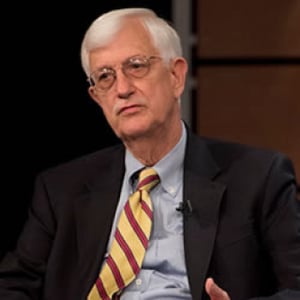
Berkley Center for Religion, Peace, and World Affairs, Georgetown University
Thomas Farr, Ph.D. is cofounder of the Religious Freedom Institute (RFI), and served as its President from its founding until January 2023. RFI is a non-profit that works to advance religious freedom for everyone, both as a source of individual human dignity and flourishing, and as a source of political stability, economic development, and international security.
A leading authority on international religious freedom, Dr. Farr served for 28 years in the U.S. Army and the U.S. Foreign Service. In 1999 he became the first director of the State Department's Office of International Religious Freedom. He subsequently directed the Witherspoon Institute's International Religious Freedom (IRF) Task Force, was a member of the Chicago World Affairs Council’s Task Force on Religion and U.S. Foreign Policy, taught at the National Defense University, and served on the Secretary of State’s IRF working group.
From 2008 – 2018 Dr. Farr was Associate Professor of the Practice of Religion and World Affairs at Georgetown University’s Edmund A. Walsh School of Foreign Service. He also founded and directed the Religious Freedom Project at Georgetown’s Berkley Center. Farr’s early work on religious freedom can be found here.
A Ph.D. in History from the University of North Carolina, Farr is a senior fellow at the Institute for Studies of Religion at Baylor University. He serves as a consultant to the U.S. Catholic Bishops Conference, and as a member of the advisory councils for the Human Rights Program at Catholic University, the international division of Alliance Defending Freedom, the Alexander Hamilton Society, and the National Museum of American Religion.
His many published works include World of Faith and Freedom: Why International Religious Liberty is Vital to American National Security (Oxford University Press, 2008), a book that has shaped U.S. religious freedom legislation and foreign policy. His later work can be found here.
Farr has been recognized for his contributions to religious freedom for all, as well as to U.S. policy, including the Defender of Religious Freedom Award, Religious Freedom Institute, 2024, the Edwin Meese III Originalism and Religious Liberty Award, Alliance Defending Freedom, 2024, the 15th Annual Religious Liberty Dinner International Award, June 1, 2017. a Lifetime Achievement Recognition, In Defense of Christians, September 2015, and the Jan Karski Wellspring of Freedom Award, Institute on Religion and Public Policy, 2003.
Founder and Executive Director, Hardwired, Inc.
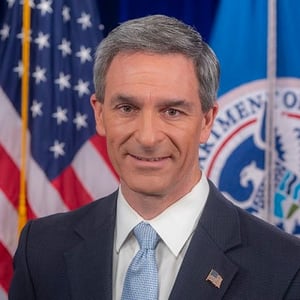
Former Acting Deputy Secretary, Department of Homeland Security
Senior Fellow for Homeland Security at The Center for Renewing America, Mr. Cuccinelli has been a trial and appellate litigator, including constitutional law, for over 25 years. Additionally, Mr. Cuccinelli served in state government in the Virginia State Senate from 2002-2010, and as Virginia’s Attorney General from 2010-2014. As Virginia’s Attorney General, Mr. Cuccinelli led national litigation against Obamacare and other illegal and unconstitutional federal overreach. He also led Virginia from being among the worst states in fighting human trafficking to becoming one of the best; and his successful prosecutorial efforts resulted in record enforcement against gangs, health care fraud and child predators, all while protecting life and constitutional rights.
Mr. Cuccinelli also served in the federal government, first as the Acting Director of
United States Citizenship & Immigration Services, and then as the Acting Deputy
Secretary for the Department of Homeland Security. During his tenure, Mr. Cuccinelli
was a leading spokesman for the administration on immigration, election security and
homeland security issues. He was responsible for planning and managing a budget of
over $50 billion per year, while serving as the chief operating officer for the Department
of the federal government responsible for responding to most forms of crises in the
United States. Mr. Cuccinelli was appointed by the President to serve as an original
member of the Coronavirus Task Force upon the emergence of the Covid-19 pandemic.
Following his time in federal service, Mr. Cuccinelli assumed leadership of the joint
Susan B. Anthony List/American Principles Project Election Transparency Initiative, in
which position Mr. Cuccinelli seeks to fend off a federal takeover of state elections while
at the same time advancing election reforms to achieve security, transparency and
accountability in our elections.
Mr. Cuccinelli continues to be a frequent media contributor on the wide array of
subjects in which he is an expert.
Mr. Cuccinelli and his wife, Teiro, grew up and live in Virginia and they have seven
children, two sons-in-law and most joyously of all – four grandchildren (so far).
In his spare time, Mr. Cuccinelli enjoys spending time with his family, reading, shooting,
playing ultimate frisbee and watching college basketball.
Deputy Editorial Page Editor, Foreign Affairs Columnist, The Wall Street Journal
Bret Stephens writes “Global View,” the weekly foreign-affairs column of The Wall Street Journal, for which he won the 2013 Pulitzer Prize for distinguished commentary. He is the paper’s deputy editorial-page editor, responsible for the opinion content of its overseas editions, as well as a member of the editorial board. Previously, he was editor-in-chief of the Jerusalem Post, a position he assumed in 2002 at the age of 28. He was raised in Mexico City, educated at the University of Chicago and the London School of Economics, and lives with his family in New York.
Kansas Securities Commissioner
Aaron Jack, J.D., M.B.A., is the Kansas Securities Commissioner, a position he was appointed to by Kansas Governor Sam Brownback in 2011. Aaron was previously the West-Central Zone Director for New York Life where his 3,200 registered representatives produced over $1.5 billion in sales annually. Aaron was the first director in the history of New York Life to raise $1 billion in new assets for the company's investment management subsidiary, NYLIM.

The Least Dangerous Branch? Reflections on Bickel’s Classic - Podcast
Ronald D. Rotunda, Erwin Chemerinsky, James A. Haynes
The Federalist Society's Teleforum series, Legal Classics Revisited, will consider Professor Alexander Bickel's 1962 book,...
Domestic Convictions for Foreign Violations
Paul James Larkin
Note from the Editor: This article discusses the Lacey Act and argues that its incorporation of...
The "Iran Deal" - Podcast
David B. Rivkin, Jamil N. Jaffer, John C. Yoo
The "Iran Deal" as negotiated by the Obama Administration and approved by the UN raises...
Execution Methods and Deciding Implementation of the Death Penalty - Podcast
John Bessler, Kent Scheidegger
During oral argument in Glossip v. Gross, Justice Samuel Alito pointed to what he called "a...
Immigration Law and Policy - Podcast
Linda L. Chavez, Thomas G. Tancredo
Is there a way out of the morass on immigration policy that is consistent with...
Supreme Court to Consider Oklahoma Execution Method - Podcast
Kent Scheidegger
On Wednesday, April 29, 2015, the Supreme Court heard oral arguments in Glossip v. Gross....
The Meriam Ibrahim Case and International Religious Liberty - Podcast
Thomas F. Farr, Tina Ramírez
Miriam Ibrahim is a Sudanese woman who was arrested in Sudan and charged with adultery...
High Stakes: The FCC Gambles with America’s Global Leadership
Kenneth T. Cuccinelli
Note from the Editor: On February 4, 2015, Federal Communications Commission Chairman Tom Wheeler put...
America In Retreat: The New Isolationism and the Coming Global Disorder - Podcast
Bret Stephens
In December 2011 the last American soldier left Iraq. “We’re leaving behind a sovereign, stable,...
The Economic Freedom Amendment: A States-Based Response to the Nationalizing Effects of Bailouts and Federal Ownership of Corporate Stock
Aaron Jack
Note from the Editor: This paper discusses a proposed state constitutional amendment that would deny...