
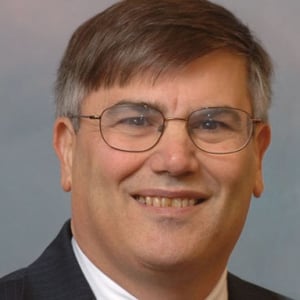
Senior Vice President, Spectrum Strategy & Technology Policy, Qualcomm
Dean Brenner is Senior Vice President, Government Affairs for Qualcomm Incorporated. He directs Qualcomm’s global spectrum acquisitions and strategy and is responsible for global technology policy. He represents Qualcomm before the Federal Communications Commission and other agencies of the United States and Canadian governments responsible for spectrum and telecommunications policy and interacts with spectrum regulators around the world. He also leads Qualcomm’s policy initiatives relating to mobile healthcare.
Mr. Brenner led Qualcomm’s bidding team in recent spectrum auctions in India (the 2.3 GHz band), the United States (the 700 MHz band), and the United Kingdom (the L Band). In addition, he was responsible for obtaining the regulatory approvals for Qualcomm’s sale of 700 MHz spectrum to AT&T in 2011. In 2006, he obtained the regulatory approvals to launch FLO TV, a mobile TV service. He has spoken at conferences on spectrum policy in the United States, Canada, South Korea, Belgium, Great Britain, and elsewhere around the world. He joined Qualcomm in November 2003.
Mr. Brenner received his A.B. degree, magna cum laude with distinction in public policy studies, from Duke in 1982. He won a prize for the best paper on communications policy, and he was a recipient for four years of a CBS Scholarship. He received his J.D., cum laude, from Georgetown University in 1985. He is admitted to the Bars of the District of Columbia, Maryland, and the U.S. Supreme Court, the U.S. Courts of Appeal for the D.C., Third, and Eleventh Circuits, and the U.S. District Court for the District of Columbia.
Mr. Brenner is a member of the Federal Advisory Board for Space-Based Positioning, Navigation, & Timing, which advises the Executive Branch on policy matters impacting the Global Positioning System. He is also a member of the Board of Governors of 4G Americas, the Board for Jewish Life at Duke University, and the Board of Trustees of the Field School. He lives in Washington, DC with his wife Robin Shaffert and their two sons, Michael and Steven.
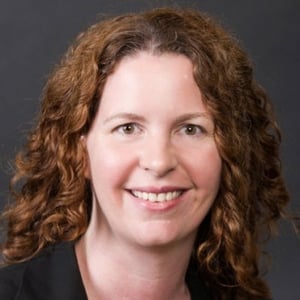
Director (Group Manager), Technology and Innovation Policy, Toyota North America
Hilary Cain is Director of Technology and Innovation Policy for Toyota. In this position, she handles policy issues relating to connected and automated vehicle technology, including artificial intelligence, data privacy, cybersecurity, and telecommunications.
Prior to joining Toyota, Cain was on the staff of the U.S. House of Representatives’ Committee on Science, Space, and Technology. She served as Staff Director of the Subcommittee on Technology and Innovation with jurisdiction over matters relating to competitiveness, technology, standards, and innovation. Previously, as a Counsel to the Committee, she handled parliamentary, procedural, and jurisdictional matters and participated in the development and implementation of legislative strategy. Before joining the Committee staff, Cain served as Legislative Director and Ways and Means Counsel for individual Members of Congress.
She holds a J.D. and a M.A. in Public Affairs from the University of Texas, and a B.A. in Political Science with honors from the University of Washington.

Vice President & Associate General Counsel, NCTA- The Internet & Television Association
Danielle J. Piñeres is a Vice President & Associate General Counsel at NCTA – The Internet & Television Association, where she focuses on wireless spectrum policy issues. Prior to her employment at NCTA, Ms. Piñeres worked as an associate with the law firm of Harris, Wiltshire & Grannis LLP in Washington, D.C., where she practiced in the areas of telecommunications (including spectrum regulation), international trade and foreign investment, and appellate litigation. Before joining HWG, Ms. Piñeres clerked for the Honorable Emily C. Hewitt at the United States Court of Federal Claims. Ms. Piñeres received her J.D. magna cum laude from the Georgetown University Law Center.

Professor of Law, University of Michigan Law School
Christopher J. Walker is a Professor of Law at the University of Michigan. Prior to joining Michigan law faculty in 2022, he spent a decade teaching at The Ohio State University Moritz College of Law. He previously clerked for Justice Anthony Kennedy of the U.S. Supreme Court, worked on the Civil Appellate Staff at the U.S. Department of Justice, and served on the Senate Judiciary Committee staff for the Gorsuch Supreme Court confirmation. Professor Walker’s research focuses on administrative law, regulation, and law and policy at the agency level. Outside the law school, he chaired the American Bar Association’s Section of Administrative Law and Regulatory Practice in 2020-21 and served as one of forty Public Members of the Administrative Conference of the United States from 2016-2022, and he continues to serve in both organizations in various capacities. He also works of counsel at the U.S. Chamber Litigation Center. In 2022, he received the Federalist Society’s Joseph Story Award.
General Counsel and Vice-President of Litigation, Washington Legal Foundation
Cory Andrews is General Counsel and Vice-President of Litigation for the Washington Legal Foundation (WLF). As counsel of record for WLF and other clients, he has authored more than 100 briefs, at petition and merits stages, in the U.S. Supreme Court. He also frequently litigates in state and federal appellate courts. Before joining WLF, Cory practiced trial and appellate law for White & Case LLP, where he litigated in state and federal courts on behalf of clients in the telecommunications, hospitality, and banking industries. He received his J.D. magna cum laude from the University of Florida, where he was Editor-in-Chief of the Florida Law Review and elected to the Order of the Coif. Upon graduation, Cory served as a law clerk to the Honorable Steven D. Merryday of the U.S. District Court for the Middle District of Florida.

Chief Economist, The Phoenix Center for Advanced Legal & Economic Public Policy Studies
George S. Ford is the chief economist for the Phoenix Center for Advanced Legal and Economic Public Policy Studies, a nonprofit 501(c)(3) research organization that studies broad public-policy issues related to governance, social and economic conditions, with a particular emphasis on the law and economics of the digital age.
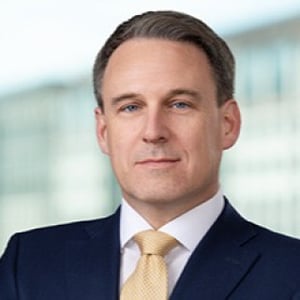
Chair, Global Antitrust Law Practice Group, Morrison Foerster
Alex Okuliar is Co-Chair of Morrison Foerster’s Global Antitrust Law Practice Group. He is the former Deputy Assistant Attorney General for Civil Antitrust Enforcement at the U.S. Department of Justice and a former advisor at the Federal Trade Commission.
Alex’s practice spans merger review, civil litigation, and criminal investigations. Over his twenty-five-year career, Alex has worked on nearly one thousand deals. He has deep experience guiding clients through the complex global merger clearance process and has litigated agency merger challenges through trial. He has also helped clients succeed in a wide range of federal and state cases, including class actions and private party disputes alleging price fixing, monopolization, group boycotts, market allocation, and tying. His understanding of the agency processes from the inside allows him to offer expert, timely, and practical advice to clients navigating merger and conduct investigations by the U.S. Department of Justice, the Federal Trade Commission, state Attorneys General, and foreign agencies. Alex’s work has been recognized by leading industry publications such as Chambers, The Legal 500 U.S., and Global Competition Review.
Outside of client work, Alex is a prolific thought leader and was recognized as a 2024 Top Author for Antitrust & Trade Regulation by JD Supra’s Readers’ Choice Awards. He currently serves as the co-chair of the ABA Antitrust Law Section’s Joint Conduct Committee and is the former chair of the Section’s Intellectual Property Committee and co-chair of the 2023 Antitrust Fall Forum on Artificial Intelligence. He is also a member of the Corporations, Securities & Antitrust Executive Committee of The Federalist Society for Law and Public Policy Studies.
Before law school, Alex co-founded and sold an online technology company. Alex received his B.S. in economics and B.A. with distinction in history from the Wharton School of the University of Pennsylvania and his J.D. from Vanderbilt University Law School.
CEO, INCOMPAS
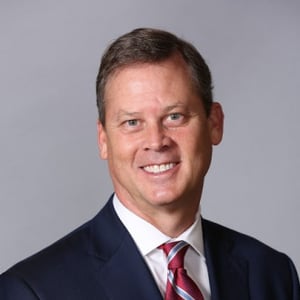
Chip Pickering has been CEO of INCOMPAS since January 2014. During that time, INCOMPAS has achieved significant growth with leading internet, backbone, business broadband, wireless, and international companies. Under his leadership, INCOMPAS has led numerous public policy campaigns promoting competition through an open internet and in the business broadband market.
Mr. Pickering was a six-term Congressman representing Mississippi’s Third District. During his time in the House, he served on the Energy & Commerce Committee, where he was vice chairman from 2002 to 2006 and a member of the Telecommunications Subcommittee.
He also was co-chairman and founder of the Congressional Wireless Caucus and an assistant minority whip of the House. Previously, Mr. Pickering worked for Sen. Trent Lott (R-Miss.) and served as a staff member on the Senate Commerce Committee, where he helped shape the Telecommunications Act of 1996.
Because of his role in drafting the 1996 Act, he became well known as a Congressional leader on telecommunications issues. While in Congress, Mr. Pickering served as chair of the subcommittee overseeing the transition to the commercial internet, the establishment of domain names, registries, and internet governance. He also successfully led a bipartisan legislative effort to codify net neutrality principles through the House in 2006.
Prior to joining INCOMPAS, Mr. Pickering was a partner with Capitol Resources LLC, a public affairs and government relations firm, where he represented an array of telecom clients, including wireless, cable and competitive broadband providers, as well as non-profits and companies specializing in education, energy, technology and defense.

Professor, University of Southern California Gould School of Law
Jonathan Barnett is the Torrey H. Webb Professor of Law at the Gould School of Law, University of Southern California. He founded and currently directs the USC Media, Entertainment and Technology Law Program. Barnett specializes in intellectual property, contracts, antitrust, and corporate law. Barnett has published in the Harvard Law Review, Yale Law Journal, Journal of Legal Studies, Review of Law & Economics, Journal of Corporation Law and other scholarly journals.
He joined USC Law in fall 2006 and was a visiting professor at New York University School of Law in fall 2010. Prior to academia, Barnett practiced corporate law as a senior associate at Cleary Gottlieb Steen & Hamilton in New York, specializing in private equity and mergers and acquisitions transactions. He was also a visiting assistant professor at Fordham University School of Law in New York. A magna cum laude graduate of University of Pennsylvania, Barnett received a MPhil from Cambridge University and a JD from Yale Law School.
Taft, Stettinius & Hollister Professor of Law, University of Minnesota Law School
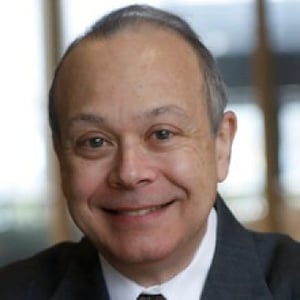
Professor Thomas F. Cotter joined the University of Minnesota Law School faculty in 2006. He received his B.S. and M.S. degrees in economics from the University of Wisconsin-Madison, and in 1987 graduated magna cum laude from the University of Wisconsin Law School, where he served as Senior Articles Editor of the Wisconsin Law Review and was elected to the Order of the Coif.
From 1987-89, Professor Cotter clerked for the Honorable Lawrence W. Pierce, United States Court of Appeals for the Second Circuit. He practiced law at Cravath, Swaine & Moore in New York City from 1988-90, and at Jenner & Block in Chicago from 1990-94. From 1994-2005, he taught at the University of Florida College of Law, where he held a University of Florida Research Foundation Professorship and directed the school’s Intellectual Property Law Program. From 2005-06, he was a Professor of Law at Washington and Lee University School of Law. In 2007, he was named to a two-year Solly Robins Distinguished Research Fellowship at the University of Minnesota Law School, and in 2008 was named to the Taft, Stettinius & Hollister Chair in Law.
Professor Cotter’s principal research and teaching interests are in the fields of domestic and international intellectual property law, antitrust, and law and economics. He is the author of six books—Patent Wars: How Patents Impact Our Daily Lives (Oxford Univ. Press, 2018); Trademarks, Unfair Competition, and Business Torts (with Barton Beebe, Mark A. Lemley, Peter S. Menell, and Robert P. Merges) (Wolters Kluwer 2d ed., 2016; 1st ed., 2011); Law and Economics: Positive, Normative, and Behavioral Perspectives (with Jeffrey L. Harrison) (3d ed., Thomson West, 2013); Comparative Patent Remedies: A Legal and Economic Analysis (Oxford University Press, 2013); and Intellectual Property: Economic and Legal Dimensions of Rights and Remedies (with Roger D. Blair) (Cambridge University Press 2005).
Altogether he has authored or coauthored over 60 other scholarly works, including articles in the California Law Review, the Georgetown Law Journal, the Iowa Law Review, the Minnesota Law Review, and the University of Illinois Law Review. He also publishes a blog, ComparativePatentRemedies.com, on the law (both foreign and domestic) and economics of patent remedies. Most recently, the Innovators Network Foundation, in partnership with ACT|The App Association, appointed Professor Cotter to a one-year Intellectual Property Fellowship.

Associate Dean for Academic Affairs, Austin E. Owen Research Scholar & Professor of Law, The University of Richmond School of Law
Dean Kristen Jakobsen Osenga teaches and writes in the areas of patent law, antitrust, and legislation and regulation. Some of her recent scholarship focuses on standard development organizations, patent eligible subject matter, patent licensing firms, litigation and remedies for patent infringement, and patent law reform. She has written numerous law review articles on these and other topics, as well as book chapters and op eds on various aspects of patent law. Additionally, she has spoken on these issues at many academic conferences and bar events. Dean Osenga is Chief Policy Counselor for the Inventors Defense Alliance, as well as an active member of the Federal Circuit Bar Association and the American Intellectual Property Law Association.
Dean Osenga received a B.S. degree in Biomedical Engineering from the University of Iowa, an M.S. degree in Electrical Engineering from Southern Illinois University – Carbondale, and a J.D. from the University of Illinois College of Law, where she graduated magna cum laude. After law school, she practiced at the law firm of Finnegan, Henderson, Farabow, Garrett, & Dunner LLP, (now Finnegan) where she did patent prosecution and litigation. She then clerked for the Judge Richard Linn of the U.S. Court of Appeals for the Federal Circuit. After clerking, she entered academia, teaching first at Chicago-Kent College of Law and then at the University of Richmond, where she has been since 2006. She has also been a Visiting Professor at Emory University School of Law and at William & Mary School of Law.
General Counsel and Vice-President of Litigation, Washington Legal Foundation
Cory Andrews is General Counsel and Vice-President of Litigation for the Washington Legal Foundation (WLF). As counsel of record for WLF and other clients, he has authored more than 100 briefs, at petition and merits stages, in the U.S. Supreme Court. He also frequently litigates in state and federal appellate courts. Before joining WLF, Cory practiced trial and appellate law for White & Case LLP, where he litigated in state and federal courts on behalf of clients in the telecommunications, hospitality, and banking industries. He received his J.D. magna cum laude from the University of Florida, where he was Editor-in-Chief of the Florida Law Review and elected to the Order of the Coif. Upon graduation, Cory served as a law clerk to the Honorable Steven D. Merryday of the U.S. District Court for the Middle District of Florida.
Partner, Mayer Brown LLP
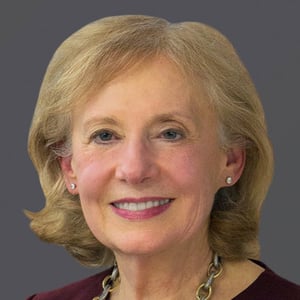
Marcia Madsen was Chair of the Government Contracts practice and co-chair of the National Security Practice at Mayer Brown. She represented contractors in regulatory, policy, transactional, litigation, and investigative matters involving virtually every federal agency. Her clients included defense contractors, information technology and systems integrators, telecommunications companies, engineering firms, insurers, and manufacturing companies. Ms. Madsen's practice included defense of False Claims Act matters, internal investigations, audits, bid protests, claims and disputes before administrative forums and in the federal courts. She was a former Chair of the American Bar Association Section of Public Contract Law and currently co-chairs the Section’s Procurement Fraud Committee. She also is a member of the Federalist Society Administrative Law and Regulation Executive Committee. In addition, Marcia was a member of the Court of Federal Claims Advisory Council - Emeritus, and a recipient of the Court's Golden Eagle award. She was a Past President of the Board of Contract Appeals Bar Association. She was appointed by the Executive Office of the President to chair the Section 1423 Panel which recommended revision of the acquisition laws. She spoke and wrote frequently on government contracts and litigation topics.
Georgetown University Law Center, LL.M., 1980
American University - Washington College of Law, J.D., 1976
University of Utah, B.A., 1972
Associate, Mayer Brown
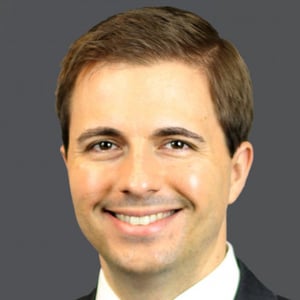
Peter Schmidt is an associate in Mayer Brown's Washington DC office and a member of the Intellectual Property practice. He focuses on the finance, media, and technology industries, advising and representing clients in patent, copyright, and trade secret matters. Peter’s work focuses on cases involving complex technical and financial issues, where he draws on his previous experience both as a software engineer and as a financial consultant for McKinsey and Company. These cases have covered both hardware and software issues in a range of sectors.
Peter has represented clients in a broad range of types and stages of litigation, and has extensive experience in case assessment; complaints and answers; discovery and fact gathering; non-infringement, infringement, invalidity, and validity contentions; claim construction; expert reports; motion practice (including summary judgment and admissibility of evidence); trial; and appeals. He graduated magna cum laude from Harvard Law School and first in his class from Carnegie Mellon University with a degree in Electrical and Computer Engineering; he also holds an MBA from Harvard Business School.
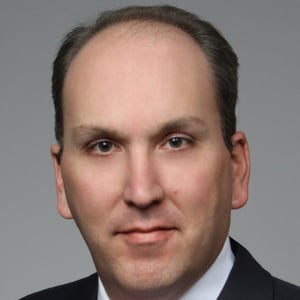
Counsel, Mayer Brown
Luke Levasseur has been representing clients in complex federal litigation for more than 20 years and currently focuses his practice on government contract matters. He represents clients in large contract disputes and bid protests before the US Court of Federal Claims and the Government Accountability Office. He has represented clients in federal and state False Claims Act cases, presenting arguments in federal court and conducting internal investigations for clients. Luke also has experience handling a variety of other federal court litigation for clients, involving such matters as antitrust claims, trademark disputes, and alleged fraud.
Prior to re-joining Mayer Brown in 2006, Luke represented the federal government as an attorney with the Civil Division of the US Department of Justice from 1997-2006. He served as lead counsel for, or had a significant role during the trial and appeal of, several large cases that were part of the Winstar-related litigation, which involved billions of dollars in claims against the government and were based on legislative and regulatory changes in the financial services industry. In those cases, he was responsible for developing and presenting expert opinion testimony from the government’s witnesses, including a Nobel-prize winning economist, and for cross-examining other parties’ experts. Throughout his career, Luke has focused on expert witness issues in complex litigation.
When he was with the Department of Justice, Luke also represented the government in numerous appeals before the US Court of Appeals for the Federal Circuit. He was awarded the John Marshall Award for Outstanding Legal Achievement and a Special Commendation Award for exceptional contributions to the defense of the Winstar cases. Luke continues to be an active part of the Court of Federal Claims bar and served as the President of that Court's Bar Association during 2012.
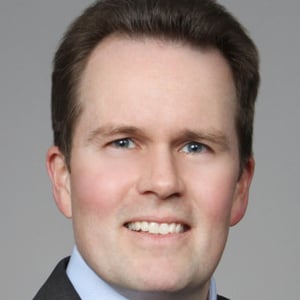
Partner, Mayer Brown
David Dowd is an experienced litigator at Mayer Brown whose practice has a strong emphasis in government contracting issues and controversies. He advises such clients as those involved in health care, information technology, large military systems, engineering services, and other industries regarding federal procurements and related issues. His counsel in this area includes commercial items, conflicts of interest, cost allowability issues, defective pricing, contract and subcontract negotiations, contract financing, assignments and novations, leasing, prime/sub disputes, preparation of claims, and procurement fraud.
David also handles procurement controversies, as he litigates bid protests and disputes before the Government Accountability Office and the Court of Federal Claims, represents contractors in litigation and arbitrations involving government contracts, and tries federal court litigation focused on contract disputes and alleged fraud.
Health care and insurance companies rely on David for advice regarding federal health care and insurance programs, including FEHBA, Medicare, TRICARE, and FEGLI. He represents these industry clients in bid protest and claim litigation regarding federal health care and insurance programs. In related matters, David counsels biotechnology and pharmaceutical companies on biodefense purchasing opportunities and applications, including research and development.
David has more than 20 years of practice experience, having joined Mayer Brown’s Washington, DC office in 2001 after practicing with two other national law firms.
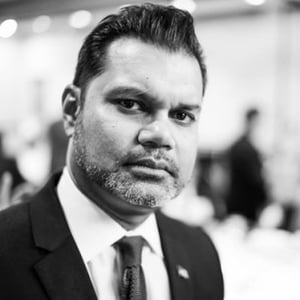
Director of External Affairs, Microsoft
Suhail A. Khan serves as Director of External Affairs at Microsoft Corporation and a Senior Fellow at the Institute for Global Engagement, a Christian religious freedom think tank. Suhail served on Capitol Hill, in the Bush Administration in the White House and at the U.S. Department of Transportation where he was awarded the Secretary's Team Award in 2005 and the Secretary's Gold Medal for Outstanding Achievement in 2007. He was elected to the Board of Directors of the American Conservative Union in 2006 and was awarded the Young Conservative Coalition's Buckley Award in 2010. In combating Holocaust-denial and anti-Semitism, Suhail led delegations of major American and global faith leaders to Europe’s death camps in 2010 and 2013. And in 2014, Suhail was appointed by RNC Chairman Reince Prebus to serve on the Asian Pacific American Advisory Council of the RNC. He was appointed to the Board of Directors of the American Studies Center, the parent foundation for Radio America and the American Veterans Center in 2014, the Board of Advisers for the Children's National Medical Center and the American Jewish Committee's Muslim Jewish Advisory Committee in 2016. Suhail earned a B.A. in political science from the University of California at Berkeley and his J.D. from the University of Iowa.

Professorial Lecturer in Law, The George Washington University
Paul Rosenzweig is an accomplished writer and speaker with a national reputation in cyber security and homeland security. He is the founder of Red Branch Consulting PLLC, a homeland security consulting company. He is also a Senior Advisor to The Chertoff Group. Mr. Rosenzweig formerly served as Deputy Assistant Secretary for Policy in the Department of Homeland Security.
He is a Professorial Lecturer in Law at George Washington University, and a Senior Fellow in the Tech, Law & Security Program at the American University, Washington College of Law. He serves as an advisor to and former member of the American Bar Association Standing Committee on Law and National Security, and a Contributing Editor of the Lawfare blog. He is a member of the ABA Cybersecurity Legal Task Force and of the United States Court of Appeals for the District of Columbia Circuit Advisory Committee on Admissions and Grievances. He serves, as well, as a Hearing Committee Member of the District of Columbia Board of Professional Responsibility. In 2011 he was a Carnegie Fellow in National Security Journalism at the Medill School of Journalism, Northwestern University.
Mr. Rosenzweig is a cum laude graduate of the University of Chicago Law School. He has an M.S. in Chemical Oceanography from the Scripps Institution of Oceanography, University of California at San Diego and a B.A from Haverford College. Following graduation from law school he served as a law clerk to the Honorable R. Lanier Anderson, III of the United States Court of Appeals for the Eleventh Circuit.
He is the author of Cyber Warfare: How Conflicts in Cyberspace are Challenging America and Changing the World and of three video lecture series from The Great Courses, Thinking About Cybersecurity: From Cyber Crime to Cyber Warfare; The Surveillance State: Big Data, Freedom, and You; and Investigating American Presidents.
He is the co-author (with James Jay Carafano) of Winning the Long War: Lessons from the Cold War for Defeating Terrorism and Preserving Freedom and co-editor (with Jill D. Rhodes and Robert S. Litt) of the Cybersecurity Handbook (3rd ed.). He is also co-editor (with Timothy McNulty and Ellen Shearer) of two books, Whistleblowers, Leaks and the Media: The First Amendment and National Security, and National Security Law in the News: A Guide for Journalists, Scholars, and Policymakers. Mr. Rosenzweig is a member of the Literary Society of Washington.

Partner, Crowell & Moring LLP, Crowell & Moring LLP
Trevor K. Copeland is a partner in the law firm of Crowell & Moring LLP (formerly Brinks Gilson & Lione PC).
His patent prosecution experience includes work on medical devices, sunglasses, footwear, sprinklers and irrigation equipment, decorative statuary and water gardens, biotechnology and general mechanical arts. He works closely with clients having products in these areas to develop intellectual property acquisition and management strategies, as well as to protect new ideas and products while respecting the rights of others.
Mr. Copeland's further practice includes design protection, whereby clients are able to protect the unique and valuable ornamental designs of their products using patent, copyright, and/or trademark. He has also litigated utility patents on clients' behalf, and has worked on preliminary injunction lawsuits for both design and utility patents, including winning a preliminary injunction against a foreign company preparing to launch an infringing laser-level device with a suction base.
Mr. Copeland has former experience as a high school biology and chemistry teacher, and as a visiting scientist with a Fungal Biochemistry and Molecular Genetics Laboratory Group.
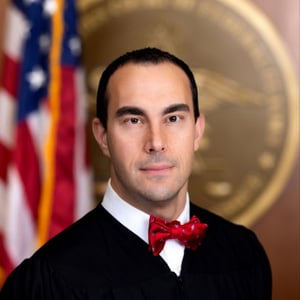
U.S. Court of Federal Claims and Jurist-In-Residence Professor of Law, The University of Akron School of Law
Judge Ryan T. Holte was sworn in as a judge on the United States Court of Federal Claims in July 2019. Prior to confirmation he served as the David L. Brennan Professor of Law and Director of the Center for Intellectual Property Law and Technology at The University of Akron School of Law (2017-2019) and an assistant professor of law at Southern Illinois University School of Law (2013-2017). Judge Holte has written and presented widely on patent law subjects and empirical legal studies of Federal Circuit and district court patent law cases. His most recent articles were published in the Iowa Law Review (2019), George Mason Law Review (2018), and Washington Law Review (2017).
In practice, Judge Holte served for six years as general counsel and partner of an electrical engineering technology company and is co-inventor of multiple patents related to Systems and Methods for Countering Satellite-Navigated Munitions. Prior to entering academia, Judge Holte practiced as a litigation attorney at the Federal Trade Commission and an associate in the Intellectual Property Practice Group at Jones Day. Prior to practice, he served as a law clerk to Judge Stanley F. Birch, Jr. on the United States Court of Appeals for the Eleventh Circuit and as a law clerk to Judge Loren A. Smith on the United States Court of Federal Claims.
Judge Holte received his JD from the University of California Davis School of Law and his BS, magna cum laude, in engineering from the California Maritime Academy where he was a First Class graduate of the Corps of Cadets Third Engineering Division and sailed as a U.S. Merchant Marine oiler.

Partner, Jackson Walker
Arthur offers clients a winning combination of trial and appellate experience gained as a federal prosecutor and more than 20 years of experience in handling patent, copyright, trademark, and trade secrets litigation.
While his practice concentrates on intellectual property litigation, Arthur also has significant experience in internal investigations, False Claims Act suits, partnership and breach of fiduciary duty, breach of contract, and employment litigation. Arthur also has represented clients testifying before Congressional committees.
Arthur writes and speaks frequently on topics ranging from the case against Boston bomber Dzhokhar Tsarnaev to patent litigation reform.
Prior to joining Michael Best, Arthur served as an Assistant United States Attorney in the Southern District of New York, where he was the lead prosecutor in criminal trials, including federal intellectual property crimes. He also argued numerous appeals.
Partner, Boies Schiller Flexner LLP
Jesse, the former third-ranking official at the U.S. Department of Justice, helps clients with their most difficult litigation and regulatory issues─whether that means defending against an enforcement action, pursuing high-stakes litigation and appeals, navigating regulatory thickets at federal and state agencies, or crafting a comprehensive strategy to manage a crisis. He approaches these problems with the knowledge gained both from his broad private-practice experience and from having served at the highest levels of federal and state government.
Jesse has experience across a range of substantive and regulatory areas. He has sued the federal government and has also been one of its top law-enforcement officials; he has represented states and has also navigated their regulatory agencies on behalf of clients; and he has represented companies in business disputes, both as defendants and plaintiffs.
Before joining the firm, Jesse was the Acting Associate Attorney General at the United States Department of Justice. In that role, he oversaw the civil and criminal work of the Antitrust, Civil, Civil Rights, Environment and Natural Resources, and Tax Divisions. During Jesse’s tenure, the Associate’s office closely managed the Department’s most significant litigation, including matters involving large financial institutions, healthcare companies, automakers, energy companies, and state and local governments. In addition, Jesse served as Chair of DOJ’s Regulatory Reform Task Force and Vice Chair of DOJ’s Task Force on Market Integrity and Consumer Fraud. Jesse regularly provided legal and strategic advice to the highest-level decision makers in the federal government, including the Attorney General and Deputy Attorney General, general counsels across the spectrum of federal agencies, and White House officials.
Jesse served for three years as the secretary of Florida’s labor, economic-development, and land-use agency, the Florida Department of Economic Opportunity. Before that, he served as Governor (now Senator) Rick Scott’s general counsel.
Jesse maintains offices in both Washington D.C. and Florida. From Washington, he focuses on federal litigation and crisis management. In Florida, in addition to federal litigation, Jesse employs his knowledge of state government and regulation to help clients in courts across the state, from trial through the Florida Supreme Court.
Jesse currently serves on the Florida Supreme Court Judicial Nominating Commission, the body that provides the governor with nominees for appointment to the Florida Supreme Court. Jesse is also a fellow at the Center for the Study of the Administrative State at the Scalia Law School at George Mason University, where he writes and speaks about administrative law.

Spectrum Wars
TeleforumAntitrust Enforcement and Telecom Consolidation: What Does the Future Hold?
George Ford, Alexander P. Okuliar, Chip Pickering
The recent elimination of network neutrality rules by the FCC and re-emphasis on a lighter...
Dispatches from the Patent Wars: The High-Stakes Battle Between Qualcomm and Apple
Jonathan Barnett, Thomas F. Cotter, Kristen Osenga
American patent law has witnessed a number of high-profile patent wars throughout history and today...
What Happened to the Public’s Interest in Patent Law?
Kristen Osenga
Note from the Editor: This article discusses the role of the concept of the public...
Courthouse Steps Oral Argument: Apple, Inc. v. Pepper
Cory L. Andrews
On Monday, November 26, 2018, the U.S. Supreme Court heard oral arguments for Apple, Inc. v. Pepper. At issue is...
Courthouse Steps Oral Argument: Apple, Inc. v. Pepper
Corporations, Securities & Antitrust Practice Group
TeleforumWhy DoD Should Adopt a Multi-Cloud IT Strategy
Marcia G. Madsen, Peter O. Schmidt, Luke P. Levasseur, David F. Dowd
Note from the Editor: This article describes how companies approach cloud based services, and it...
IoT: Rise of the Machines?
Suhail A. Khan, Paul Rosenzweig
The Internet of Things (IoT) refers to the connection of various devices to the Internet. ...
Courthouse Steps: Samsung v. Apple: Design Patents at the Supreme Court - Podcast
Trevor K. Copeland, Ryan T. Holte, Arthur Gollwitzer
The Federalist Society will host a one hour Teleforum to discuss the recent Supreme Court...
Courthouse Steps: Cash or credit? Price control or speech control? - Podcast
Jesse Panuccio
Credit-card companies charge a transaction fee, and merchants often pass that cost onto consumers by...