
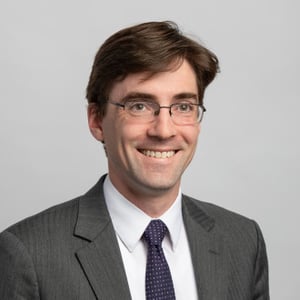
Deputy Litigation Director, Institute for Justice
Robert McNamara serves as Deputy Litigation Director with the Institute for Justice. He joined the Institute in August 2006 and litigates cutting-edge constitutional cases protecting free speech, property rights, economic liberty and other individual liberties in both federal and state courts.
Robert’s work has resulted in court victories for property owners fighting eminent domain abuse, tour guides fighting unconstitutional restrictions on their speech, taxi drivers seeking the right to own their own business, and many others. Robert also litigates in defense of innovation and entrepreneurship in medical care and was co-counsel in Flynn v. Holder, IJ’s landmark challenge to the federal prohibition on compensating bone marrow donors.
Robert’s writing has been published by outlets including The New York Times, The Wall Street Journal, The Washington Post and dozens more nationwide. His opinions and views on legal issues have been featured in radio and television programs ranging from National Public Radio’s All Things Considered to Fox News Channel’s Hannity & Colmes.
Robert is a graduate of Boston University and the New York University School of Law, where he was a founding member and eventual editor-in-chief of the NYU Journal of Law & Liberty. He currently lives in Virginia with his wife and children.
Robert McNamara is a member of the Virginia bar.
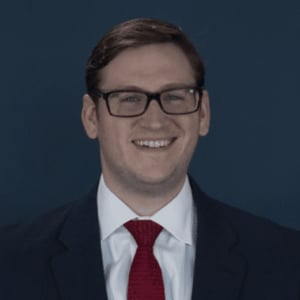
Attorney, Pacific Legal Foundation
Daniel Woislaw joined Pacific Legal Foundation in the spring of 2019. A passionate advocate for individual liberty, he focuses his litigation on property rights, economic liberty, and regulatory overreach. He was inspired as a student by the works of free-market economists and classical liberal political philosophers such as F.A. Hayek and Frédéric Bastiat.
As a former public defender, Daniel gained a great deal of experience arguing constitutional questions surrounding Fourth, Fifth, and Sixth Amendment rights in trial courts in southern Virginia. Before that, he worked as a legal aid attorney under a grant from the Department of Justice to represent elderly victims of crime and abuse.
His initial interest in pursuing a career litigating for a free society developed while studying at The Antonin Scalia Law School at George Mason University, from which he graduated magna cum laude in the spring of 2016. During his tenure, he was the senior research editor of George Mason’s Civil Rights Law Journal, served on the school’s moot court board, and spent one summer as a Charles Koch Fellow. He has published scholarly articles on the topics of unreasonable searches and sovereign immunity, with more in progress.
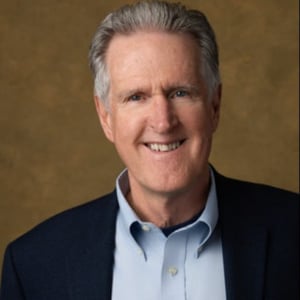
Senior Legal Counsel, Pacific Legal Foundation
Before becoming an attorney, James had been a productive member of society working as an exploration geologist in the late 1970s throughout the southwestern United States. However, after several years of dealing with irrational government bureaucrats and environmental policies untethered from reality, James decided that what the world needs is more lawyers — if they are willing to fight for rationality in regulatory regimes, property rights, and liberty.
James attended the University of Arizona College of Law in Tucson, where he served as an editor for the Law Review and received a J.D. degree in 1983. He had previously received a Masters degree in geological sciences from Brown University and an undergraduate degree from Hamilton College in New York. James received the Professional Achievement Award from the University of Arizona Alumni Association in 2018.
James has worked with Pacific Legal Foundation since 1983, litigating cases from Alaska to Florida. He is a member of the Federalist Society’s Environmental Law and Property Rights Practice Group’s Executive Committee, a member of the American College of Real Estate Lawyers, and an honorary member of Owners Counsel of America, an organization comprised of eminent domain attorneys who represent property owners. The Owners Counsel awarded James its Crystal Eagle award in 2013. In 2022, James was awarded the Brigham-Kanner Property Rights Prize at the William & Mary College of Law. The prize is awarded annually to an individual whose work has advanced the cause of property rights and has contributed to the overall awareness of the important role property rights occupy in the broader scheme of individual liberty.
In 2001, James successfully argued a major property rights case, Palazzolo v. Rhode Island, before the United States Supreme Court, a case which affirmed that rights in regulated property do not disappear when land is bought and sold. He has written extensively on all aspects of property rights and environmental law and frequently speaks on these subjects throughout the nation.
When James is not suing the government he enjoys skiing faster than he should, bicycling, hiking, swimming, and spending quality time with his wife, family, and grandchild.
Mr. Burling’s book Nowhere to Live: The Hidden Story of America’s Housing Crisis is available now on Amazon.
James is a member of the bar only in the states of Alaska and California.

Topics
A Takings Clause Lawsuit Against the CDC Eviction Moratorium
This post originally appeared at the Volokh Conspiracy. The Centers for Disease Control's enactment of...
Just Compensation: A Suggestion or a Requirement?
Robert J. McNamara, Daniel Woislaw
Can states unilaterally decide not to pay takings judgments? Some states think so. Louisiana and...
Topics
Eminent Domain in North Carolina
The Supreme Court of North Carolina late last week issued an important eminent-domain decision, concluding...
Arkansas Game & Fish Commission v. United States: A Temporary Fix for Temporary Takings
The United States Supreme Court’s decision in Arkansas Game & Fish Commission v. United States1...
Judicial Takings After Stop the Beach Renourishment v. Florida Department of Environmental Protection
James S. Burling
We know it is possible for the executive and legislative branches of government to take...