

Founder and Executive Director, National Security Institute; Assistant Professor of Law, Antonin Scalia Law School, George Mason University
Jamil N. Jaffer is the Founder and Executive Director of the National Security Institute at the Antonin Scalia Law School at George Mason University where he also serves as an Assistant Professor of Law, Director of the National Security Law and Policy Program, and Director of the Cyber, Intelligence, and National Security LLM Program. Jamil also teaches classes on counterterrorism, intelligence, surveillance, cybersecurity, and other national security matters, as well as a summer course held abroad with U.S. Supreme Court Justice Neil M. Gorsuch. Jamil is also affiliated with Stanford University’s Center for International Security and Cooperation and previously served as a Visiting Fellow at the Hoover Institution from 2016 to 2019.
Jamil is also a Venture Partner with Paladin Capital Group, where he assists the firm with investments across the full range of its themes and theses, including a focus on dual-use national security technologies. Jamil also serves on the board of directors of RangeForce, a cybersecurity training and readiness platform startup and Tozny, a digital identity startup, and on the advisory boards of U.S. Strategic Metals, North America’s largest primary producer of cobalt, a critical mineral used in EV batteries, aerospace, and other national security applications; and Constella Intelligence, a deep and dark web intelligence startup. Jamil also serves as an advisor to Beacon Global Strategies, a strategic advisory firm and Duco, a technology platform startup that connects corporations with geopolitical and international business experts. Jamil is also the managing director of Trigraph Caveat Capital, a private investment vehicle.
Among other things, Jamil currently serves on the Board of Directors for the Greater Washington Board of Trade, the Board of Advisors for the Global Cyber Alliance, and the Advisory Board of the Foundation for the Defense of Democracies’ Center on Cyber and Tech Innovation, the Executive Committee of the Reagan Institute Strategy Group. Jamil is also a Fellow at the Academy for Judaic, Christian, and Islamic Studies, an advisor to the Concordia Summit, and is a member of the Board of Directors for the Center for Intelligence Policy, the Board of Directors of Speech First, and the Executive Committee of the International Law and National Security Practice Group of the Federalist Society.
Immediately prior to his current positions, from 2015-2021, Jamil served as a senior business leader at IronNet Cybersecurity, helping take the company from a bootstrapped first-year technology products startup through two rounds of venture capital fundraising, growing from 40 employees to over 300, and through its listing on New York Stock Exchange. In his role as IronNet's Senior Vice President for Strategy, Partnerships & Corporate Development, Jamil worked directly for the co-CEOs of the company, Gen (ret.) Keith B. Alexander, the former Director of the National Security Agency and Founding Commander of U.S. Cyber Command, and Bill Welch, the former COO of Zscaler and Duo; in that role, Jamil led all of the company’s strategic and technology partnership efforts, including developing go-to-market and technology integration plans with some of the largest cloud platforms and cybersecurity companies in the market, evaluating potential acquisition targets, and developing overall corporate strategy and thought leadership around collective security and collaborative defense in the cyber arena.
Prior to his time at IronNet, Jamil served on the leadership team of the Senate Foreign Relations Committee as Chief Counsel and Senior Advisor under Chairman Bob Corker (R-TN), where he worked on key national security and foreign policy issues, including leading the drafting of the proposed Authorization for the Use of Military Force against ISIS in 2014 and 2015, the AUMF against Syria in 2013, and revisions to the 9/11 AUMF against al Qaeda. Jamil was also the lead architect of the Iran Nuclear Agreement Review Act and two sanctions laws against Russia for its first intervention in Ukraine.
Prior to joining SFRC, Jamil served as Senior Counsel to the House Permanent Select Committee on Intelligence under Chairman Mike Rogers (R-MI) where he led the committee’s oversight of NSA surveillance, NRO intelligence issues, and NGA analytic and collection matters, as well as intelligence community-wide counterterrorism issues. Jamil was also the lead architect of the Cyber Intelligence Sharing and Protection Act, the nation’s first cyber threat intelligence sharing legislation that was signed into law in 2015.
In the Bush Administration, Jamil served in the White House as an Associate Counsel to the President, handling Defense Department, State Department, and intelligence community matters, and serving as one of the White House Counsel’s primary representatives to the National Security Council Deputies Committee.
Prior to the White House, Jamil served on the leadership team of the Justice Department’s National Security Division as Counsel to the Assistant Attorney General for National Security, where he focused on counterterrorism and intelligence matters. At NSD, Jamil helped lead the division’s work on In re: Directives, the first ever two-party litigated matter in the FISA Court and the second case before the FISA Court of Review in its 30-year history. Jamil also led NSD’s efforts on the President’s Comprehensive National Cybersecurity Initiative (CNCI), including the drafting of NSPD-54/HSPD-23, and related classified matters, and advised the National Security Agency (NSA) and U.S. Cyber Command’s predecessor organization, the Joint Function Component Command for Network Warfare (JFCC-NW), on matters related to cyber intelligence collection and offensive cyber activities. For his work on these matters, Jamil was awarded the Assistant Attorney General’s Award for Special Initiative and was among the group of lawyers awarded the Director of National Intelligence’s 2008 Legal Award (Team of the Year – Cyber Legal).
Jamil also served in other positions in the Justice Department, including in the Office of Legal Policy, where he worked on the confirmations of Chief Justice John G. Roberts, Jr. and Justice Samuel A. Alito, Jr. to the United States Supreme Court.
Jamil also served as a lawyer in private practice at Kellogg Huber, a Washington, DC-based litigation boutique, as a policy advisor to Congressman Bob Goodlatte (R-VA), and as a staff member or senior advisor on a number of political campaigns, including two presidential campaigns and a presidential transition team. While in law school, Jamil was a member of the University of Chicago Law Review, managing editor of the Chicago Journal of International Law, and National Symposium Editor of the Harvard Journal of Law & Public Policy. Following law school, Jamil served as a law clerk to Judge Edith H. Jones of the United States Court of Appeals for the Fifth Circuit and, later in his career, as a law clerk to then-Judge Neil M. Gorsuch when he first joined the United States Court of Appeals for the Tenth Circuit as well as a law clerk to Justice Neil Gorsuch when he joined the U.S. Supreme Court.
Jamil has published multiple op-eds and academic articles on national security, foreign policy, cybersecurity, counterterrorism, encryption, and intelligence matters, and is the co-author of a book chapter with former NSA Director Gen. (Ret.) Keith B. Alexander on national security and the press in National Security, Leaks, and the Freedom of the Press: The Pentagon Papers Fifty Years On (2021) and a book chapter with former CIA Director Gen. (ret.) Mike Hayden on ISIS, al Qaeda, and other international terrorist groups in Choosing to Lead: American Foreign Policy for a Disordered World (2015). Jamil has also written book chapters on cybersecurity and surveillance, as well as op-eds and policy papers with former Attorney General Michael B. Mukasey, former National Counterterrorism Center Director Matt Olsen, and Congressman Mike Waltz (R-FL), among others.
Jamil has previously taught graduate-level courses in intelligence law and policy at George Washington University’s Elliott School of International Affairs and the National Intelligence University, served an outside advisor to the Cyberspace Solarium Commission, and has recently testified before committees of the U.S. Senate and House of Representatives on China, cybersecurity, counterterrorism, and other national security matters. Jamil has also recently appeared on a range of national television and radio outlets including CNN, Fox News, Fox Business, MSNBC, Bloomberg, PBS, Voice of America, and National Public Radio, and in various print and online publications, including the Wall Street Journal, New York Times, and the Washington Post on a range of national security matters including cybersecurity, counterterrorism, surveillance, encryption, privacy, and foreign policy issues.
Jamil holds degrees from UCLA (BA, cum laude), the University of Chicago Law School (JD, with honors), and the United States Naval War College (MA, with distinction).
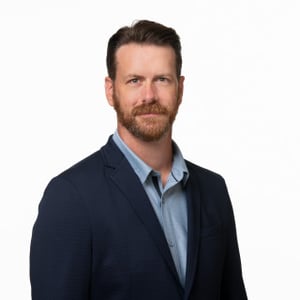
Managing Director, Beacon Global Strategies
Klon Kitchen, Managing Director at Beacon Global Strategies, leads the firm’s Global Technology Policy Practice. With over two decades of hands-on experience, Klon is adept at helping technology leaders anticipate and manage geopolitical risks, ensuring they stay ahead in an ever-evolving landscape.
Klon is a distinguished national security expert, bringing unparalleled insights and strategic foresight to the table. As a non-resident senior fellow at the American Enterprise Institute, he regularly shapes policy discussions through his congressional testimonies, high-impact publications in the The Wall Street Journal and other top-tier outlets, and features on CBS News’ “60 Minutes.”
Before joining Beacon, Klon was national security advisor to former Senator Ben Sasse and played a pivotal role in the U.S. Cyberspace Solarium Commission, crafting the strategic blueprint for America’s cyber defense. His leadership extended to directing the National Security and International Trade and Finance Subcommittee for the Committee on Banking, Housing, and Urban Affairs, where he navigated complex security and trade issues.
Klon’s foundational experience includes over 15 years as an intelligence officer, focusing on counterterrorism, cyber operations, and covert actions. His distinguished service, which includes deployments to multiple combat zones, earned him several prestigious honors, such as the civilian combat support medal and a commendation from the Commander of Joint Special Operations Command.
Holding an MA in strategy and security studies from the College of International Security Affairs and a War College Diploma from the National War College at National Defense University, Klon combines academic excellence with practical expertise. His unique perspective and proven track record make him an invaluable ally for technology executives facing the intricate challenges of geopolitical risk.
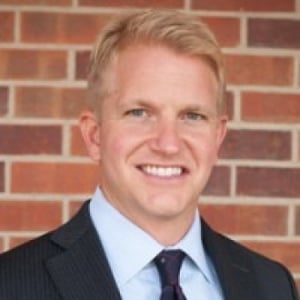
Wall Chair in Corporate Law and Governance and Professor of Law, University of Missouri School of Law
Thom Lambert holds the Wall Family Chair in Corporate Law and Governance at the University of Missouri Law School. He is co-author of a leading antitrust casebook and has published more than two dozen law review articles on antitrust, corporate, and regulatory matters. His most recent book, How to Regulate: A Guide for Policymakers was published by Cambridge University Press in 2017. He is a regular contributor to the law and economics blog, Truth on the Market (www.truthonthemarket.com) and is currently a visiting professor at Washington University Law School.
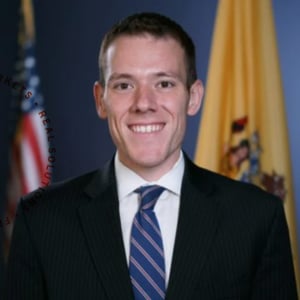
Brandon Pugh is the director and a resident senior fellow for the R Street Institute’s Cybersecurity and Emerging Threats team.
Outside of R Street, he serves in the U.S. Army Reserve as a national security law professor at The Judge Advocate General’s Legal Center and School, having previously served as a paratrooper and international law officer. Brandon is also a nonresident fellow with the Army Cyber Institute at the United States Military Academy at West Point, a member of the International Association of Privacy Professional’s Research Advisory Board, and a board member for both the Ithaca College Cybersecurity Program and a governor’s advisory council.
Prior to joining R Street, Brandon was legislative counsel for the New Jersey General Assembly Minority Office, where he handled nearly all policy and legislation on cybersecurity, emerging technology, and privacy. He also provided legal and policy advice to the 28-member caucus on almost every committee area from judiciary to commerce.
Brandon has served as a fellow with the Federal Bureau of Investigation; managing editor of the Journal of Law and Cyber Warfare; president and CEO of a homeland security advisory company; member of the Rutgers University Cybersecurity Program Board; and an elected and appointed official at the local, county, and state levels. This includes service as vice president for legislation of the New Jersey School Boards Association, a quasi-governmental entity representing the state’s nearly 600 school boards. His early work was in emergency management and chemical, biological, radiological, and nuclear incidents.
Brandon has presented and been published dozens of times; delivered congressional testimony; appeared on C-SPAN and other networks; trained congressional staff on cybersecurity; contributed to the U.S. Army’s critical infrastructure resiliency project; prepared cybersecurity guidance sent to thousands of public schools; and led events with senior military and intelligence community officials. He has received awards for his work from members of Congress and a governor of New Jersey, among others.
He holds a JD from Rutgers Law School and a bachelor’s degree from The College of New Jersey. Brandon is a master continuity practitioner through the U.S. Department of Homeland Security, a certified information privacy professional, a certified information privacy manager, and a fellow of information privacy. He is licensed to practice law in New Jersey and the District of Columbia, along with being admitted to the Supreme Court of the United States.
Brandon lives in New Jersey with his wife, who serves as an Air Force pilot.
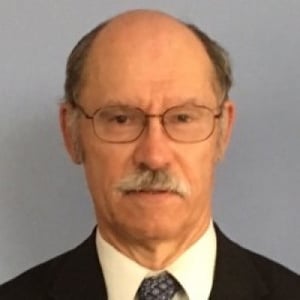
Professorial Lecturer in Law, George Washington University Law School
Theodore C. (Ted) Hirt was an attorney in the Department of Justice's Civil Division from August 1979 to March 2016. He was in its Federal Programs Branch from 1979 to 2008 (trial attorney, senior trial counsel, assistant director), and then in its Office of Immigration Litigation from 2008 to 2016 (trial attorney and senior litigation counsel). Among his responsibilities (September 2001 to March 2016) was being an advisor to the Assistant Attorneys General for the Civil Division, who serve ex officio on the Civil Rules Advisory Committee. Mr. Hirt’s areas of specialization include First Amendment issues, internet and telecommunications law, and electronic discovery. From 1976 to 1979, he was an associate at Fried, Frank, Harris, Shriver & Kampelman. From 1975 to 1976 he was an attorney in the Prehearing Division of the Michigan Court of Appeals.

Principal, Ely & Company, Inc.
Bert Ely has specialized in deposit insurance and banking structure issues since 1981. In 1986, he became an early predictor of the S&L crisis and a taxpayer bailout of the FSLIC. In 1991, he was the first person to correctly predict the non-crisis in commercial banking; in 1992, he predicted an eventual taxpayer bailout of the Japanese banking system.
Bert continuously monitors conditions in the banking and S&L industries, monetary policy, and the growing federalization of credit risk. He has helped to draft legislation to enact the cross-guarantee concept for privatizing banking regulation and its related deposit insurance and systemic risks. He has testified on numerous occasions before congressional committees on banking issues and he often speaks on these matters to bankers and others.
Bert first established his consulting practice in 1972. Before that, he was the chief financial officer of a public company, a consultant with Touche, Ross & Company, and an auditor with Ernst & Ernst. He received his MBA from the Harvard Business School in 1968 and his Bachelor's degree in economics in 1964 from Case Western Reserve University.

Senior Counsel, Cleary Gottlieb
Michael H. Krimminger is Senior Counsel at Cleary Gottlieb where his practice focuses on U.S. and international banking and financial institutions.
In particular, he advises on the challenges and opportunities stemming from statutory and regulatory reforms in the United States and internationally. He recently served as lead counsel to itBit Trust Company, a commercial Bitcoin exchange, in becoming the first U.S.-chartered and regulated virtual currency exchange.
Michael joined Cleary Gottlieb in 2012 as partner after serving for more than two decades in numerous leadership positions with the Federal Deposit Insurance Corporation (FDIC), including most recently as its general counsel. As general counsel, he served as the principal legal and policy advisor to the chairman and board of directors regarding the legislative development and later implementation of regulatory and policy components of the Dodd-Frank Act, including its SIFI resolution, living wills, capital markets and capital, and structured finance requirements. Michael played a major role in the FDIC and U.S. efforts to enhance resolution planning and cross-border cooperation among G-20 countries. He was also responsible for all legal policy, litigation, corporate issues and operations for the 730 attorney and non-attorney members of the Legal Division.
Prior to serving as general counsel, Michael served as Special Advisor for Policy to the Chairman and deputy to the chairman for policy. He played a central role in the FDIC’s response to the financial crisis and the development of Dodd-Frank Act provisions addressing capital markets, capital requirements, creation of the Financial Stability Oversight Council, living wills, enhanced prudential supervision, risk retention, resolution authority, and other provisions of the act.
Michael’s international experience includes serving as the co-chair of the Basel Committee’s Cross Border Resolutions Group and representing the FDIC on the Financial Stability Board’s Resolution Steering Group and other bodies. He has played a central role in bilateral and multilateral discussions with regulators around the world on legal reform, resolution planning, capital and liquidity requirements, and strategies for implementation of financial market reforms for derivatives and other financial market contracts.
Michael became senior counsel in 2020.

Executive Director, The Financial Technology and Cybersecurity Center
Thomas P. Vartanian is the Executive Director of the Financial Technology & Cybersecurity Center, an author, financial services advisor, expert witness, and board mentor. He is the former Executive Director of the Program on Financial Regulation & Technology at George Mason University’s Antonin Scalia Law School, where he was also a Professor of Law. Between 1983 and 2018, he chaired the Financial Institution’s practices at two international law firms, Dechert LLP and Fried Frank LLP, through four financial crises. Both as a regulator and private practitioner, he has represented parties in a majority of the 50 largest financial institution failures in American history.
Mr. Vartanian served in the Reagan Administration during the S&L crisis as General Counsel of the Federal Home Loan Bank Board and the FSLIC. Prior to that, he served in the Carter Administration in the Office of the Comptroller of the Currency as Special Assistant to the Chief Counsel. Since departing government service, he has advised many subsequent presidential administrations on financial institution issues.
Mr. Vartanian is a futurist and expert in financial technology who has been described by clients in Chambers as “one of the best financial services lawyers in America.” Mr. Vartanian was Chairman of the American Bar Association’s Cyberspace Law Committee between 1998 and 2002, where he chaired an international task force of lawyers from twenty countries which released a seminal report in London in 2000 on the novel issues created by doing business in Cyberspace. He is currently a member of the American Association of Bank Directors’ Task Force on Bank Director Personal Liability Mitigation.
Mr. Vartanian has authored more than four hundred articles and eight books, including his new book, 200 Years of American Financial Panics: Crashes, Recessions, Depressions, and the Technology That Will Change It All chronicling the country’s tumultuous financial history and the impact that technology will have on its future.
He is a frequent lecturer and media commentator on the financial services industry, having appeared on Bloomberg TV, CNN, Fox News, Newsmax, PBS and various local and national radio shows. He has also taught financial services and digital commerce law at Georgetown Law School, George Washington Law School, and Boston University School of Law, and has been a guest lecturer at Harvard Law School.
In 2008, Mr. Vartanian was named “Washingtonian of the Year” based on his use of music and sports to raise money for charities in the D.C. metropolitan area. As a musician, he appeared in the first production in the United States in 1970 of Joseph and the Amazing Technicolor Dreamcoat. His classic rock band, The Johnny Esquire Band, has helped raise approximately $5,000,000 for charities in the Washington D.C. area over the last twenty-five years. Mr. Vartanian also founded and plays for the Washington All Stars, a senior baseball team that has raised more than $500,000 for Special Olympics.
His next book, The Unhackable Internet, will be published in early 2023.
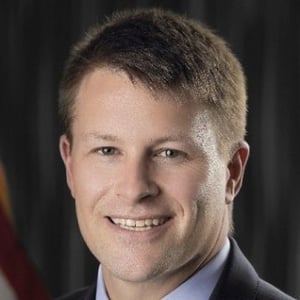
Managing Director, Banking Supervision and Regulation Group, Patomak Global Partners
Brian Johnson is Managing Director in the Banking Supervision and Regulation Group at Patomak Global Partners.
In this role, Mr. Johnson spearheads projects related to the regulation of consumer financial products under Keith Noreika, Executive Vice President and Chairman of the Banking Supervision and Regulation Group and former acting Comptroller of the Currency.
Prior to joining Patomak, Mr. Johnson was a partner in Alston & Bird LLP’s financial services and products group. There, he advised financial institutions on consumer finance regulatory issues relating to product compliance, examination, enforcement investigations, and compliance management systems, and on strategic engagement with independent federal regulatory agencies and with Congress.
Mr. Johnson previously served as Deputy Director of the Consumer Financial Protection Bureau (CFPB), where he oversaw the agency’s rulemaking, supervision, and enforcement activities. He conceived and led the creation of high-profile agency initiatives, including the Office of Innovation, Taskforce on Federal Consumer Financial Law, policy symposia series, and Start Small, Save Up emergency savings program. He also served as the CFPB representative to the Financial Stability Oversight Council Deputies’ Committee and advised on interagency matters involving the Federal Deposit Insurance Corporation and the Federal Financial Institutions Examination Council.
Mr. Johnson held various positions on Capitol Hill, including policy director and chief financial institutions counsel on the House Committee on Financial Services, where his portfolio covered consumer protection and credit, mortgage origination, credit reporting, banking, and data security. His efforts on the committee involved drafting legislation to provide regulatory relief to bank, credit union, and nondepository financial institutions, as well as conducting oversight of the activities of the CFPB, Financial Stability Oversight Council, Federal Deposit Insurance Corporation, Office of Financial Research, Office of the Comptroller of the Currency, Federal Reserve System, and National Credit Union Administration.
Mr. Johnson received his juris doctorate from the University of Virginia School of Law and his bachelor’s in economics from the University of Virginia.
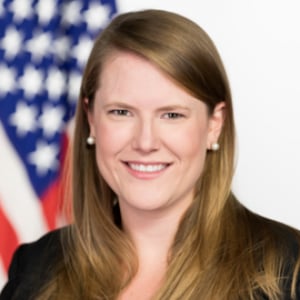
Deputy Policy Director, U.S. Senate Committee on Commerce, Science & Transportation

Director, Government Affairs, Semiconductor Industry Association
Maryam Cope is director of government affairs at SIA. In this role, Maryam works closely with industry, Congress, and the Administration to advance key legislative and regulatory priorities related to semiconductor research and technology, high-skilled immigration, and product security.
Maryam brings over a decade of technology policy and advocacy experience to SIA. Prior to SIA, she was managing partner for the technology practice at GoldsteinCope Policy Solutions. She also established the technology policy practice at the American Hotel & Lodging Association. Maryam also worked at the Information Technology Industry Council, where she led advocacy efforts in the areas of cybersecurity, encryption, and supply chain security.
Maryam began her career with Sen. Kay Bailey Hutchison. As professional staff for the United States Senate Committee on Commerce, Science, and Transportation, she focused on innovation, cybersecurity, emerging technologies, and R&D, including the reauthorization of the America COMPETES Act of 2010.
Maryam holds a Bachelor’s degree in Biology from Northwestern University, and a graduate certificate from Stanford’s Graduate School of Business Executive Program for Women Leaders.
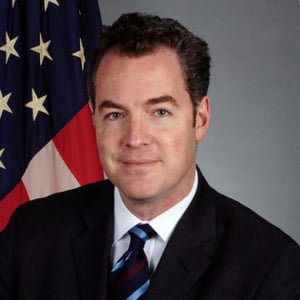
President and Founder, JKC Consulting LLC
John Kneuer is the President and Founder of JKC Consulting LLC. He sits on multiple public and private company boards.
Prior to starting Kneuer LLC, Mr. Kneuer served as the Assistant Secretary of Commerce for Communications and Information. In this capacity Mr. Kneuer was the principal advisor to the President of the United States on telecommunications policy and the Administrator of the National Telecommunications and Information Administration ("NTIA").In addition to representing the Executive Branch in domestic and international telecommunications and information policy activities, NTIA also manages the federal use of spectrum; performs cutting edge telecommunications research and engineering, including resolving technical telecommunications issues for the federal government and private sector; and administers infrastructure and public telecommunications facilities grants.
Prior to his service at NTIA, Mr. Kneuer served as a Senior Associate at the law firm of Piper Rudnick in Washington, D.C., providing regulatory and legislative representation to corporate clients in the telecommunications, defense, and transportation industries. Earlier in his career, Mr. Kneuer served as the Executive Director for Government Relations at the Industrial Telecommunications Association, and prior to that served as an Attorney-Advisor in the Commercial Wireless Division of the Federal Communications Commission's Wireless Bureau. Mr. Kneuer received B.A. and J.D. degrees from the Catholic University of America.

Partner, HWG LLP
Patricia Paoletta is a partner with the law firm of HWG LLP, where she specializes in telecommunications, trade and technology policy. Ms. Paoletta provides advice on regulatory, trade and legislative policy to clients before the FCC, Congress and the Administration. Her clients include providers of content, cloud, mobile broadband, VoIP, international telecommunications, small cells, cognitive radio, public safety and homeland security solutions. She serves on Advisory Boards for several entities engaged in information services, communications and technology.
Ms. Paoletta has accrued considerable experience with telecommunications trade and policy in the public sector. From 1990 to 1995, she was senior advisor to the International Bureau Chief and Office Director at the Federal Communications Commission. In the mid 1990s, Ms. Paoletta served as Director of Telecommunications Trade Policy in the Office of the U.S. Trade Representative, Executive Office of the President, where she worked on the WTO Information Technology Agreement (ITA) and the Basic Telecommunications Agreement. After USTR, Ms. Paoletta served as Majority Counsel to the House Energy and Commerce Committee. She then moved to Level 3 Communications, as Vice President, Government Relations.
Ms. Paoletta is on the Steering Committee of the Transatlantic Roundtable on Telecommunications and Information Technology of the European Institute. She is a member of the USTR Alumni Association, Washington International Trade Association, the Federal Communications Bar Association (FCBA), and Women in Technology. Ms. Paoletta has served on the Board of Advisors for the Inter-American Dialogue's Latin America Telecom Advisor, Co-Chairman of the American Bar Association International Communications Committee, and as a member of the U.S. Chamber of Commerce's Technology Policy Committee.
Ms. Paoletta served as a delegate in 2012 to the ITU-R's Study Group 6 Working Party 6A Meeting and in 2009 and 2010 to the ITU-R's Study Group I Working Party IB Meetings; the 2009 meetings of CITEL (the Committee on International Telecommunications at the Organization of American States) PCC-II; the International Telecommunication Union (ITU) World Telecommunications Standards Assembly (2000); the ITU Internet Protocol Telephony Experts Group and the ITU World Telecommunications Policy Forum in 2001; as Chairman of the National Reliability and Interoperability Council (NRIC) Steering Committee (2000-2001); as Board Member for the Voice on the Net Coalition (2001); as Co-Chairman of the FCBA's Annual Seminar Committee (2009-2011); as a member of the FCBA's Ad Hoc Speakers Committee (2006-2007); as Co-Chairman for the FCBA International Practice Committee (2001-2002 and 2005-2006); and as a Co-Chairman of the FCBA Legislative Practice Committee (1999-2000).
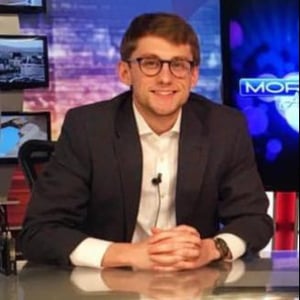
Policy Advisor, Federal Communications Commission
Gregory Watson serves as policy advisor to Federal Communications Commissioner Brendan Carr. Prior to joining Commissioner Carr’s office, Greg served as a Policy Advisor to the Chief Technology Officer of the United States in the White House Office of Science and Technology Policy where he led efforts to increase broadband access through the American Broadband Initiative. He was also involved with the Administration’s efforts to advance America’s leadership in 5G. Prior to his tenure at the White House, Greg was an advisor to Congressman Steve Scalise and the House Energy and Commerce Committee where he handled a broad range of communications and technology issues. Before moving to Washington, DC, he was a campaign aide to Congressman Fred Upton. Greg is a graduate of East Carolina University, where he studied History and Political Science.

Professor of the Practice of Economics, Duke University
Michelle P. Connolly is Professor of the Practice in the Economics Department at Duke University. She was the Economics Director of Duke in New York: Financial Markets and Institutions Program for 2007-2009 and the Director of EcoTeach for several years. She currently serves as the Director of the Honors Program in Economics and a member of the Duke Alumni Association Board.
In 2011, Professor Connolly won the Howard D. Johnson Trinity College Teaching Prize and was named among the top five percent of Duke University Undergraduate Instructors in 2009, 2010 and 2011.
Professor Connolly previously served as Chief Economist of the Federal Communications Commission in 2006-2007 and 2008-2009, and as an Economist for the International Research Function for the Federal Reserve Bank of New York from 1996 to 1997. She graduated Phi Beta Kappa and Summa Cum Laude from Yale University in 1990, and went on to earn her M.A. and M.Phil in economics. Professor Connolly received her Ph.D. in economics from Yale University in 1996.
Professor Connolly’s research and teaching focus specifically on international trade, telecommunications policy, media policy, education, growth, and development. She has received funding for her research from the National Science Foundation, the Duke Arts and Sciences Research Council Grants, the Spencer Grant, and the Teagle Grant.
Professor Connolly has published in numerous journals, including the American Economic Review, the American Economic Journal: Macroeconomics, the Journal of Development Economics, the Journal of Economic History, the Journal of Economic Growth, the Review of Industrial Organization, and Current Issues in Economics and Finance.
In 2011, Professor Connolly testified before Congress and participated in a White House panel on Spectrum Issues. She has been presenting her work at university seminars and international conferences since 1996. Some of her appearances were at the ACLP Advanced Communications 2009 Summit, where she was a panelist and moderator, at the conference on “Wireless Technologies: Enabling Innovation and Economic Growth”, where she served as a keynote panelist, and at the Martin H. Crego Lecture in Economics, an all college Lecture at Vassar College. In 2013 Professor Connolly was awarded a National Science Foundation Secure and Trustworthy Cyberspace Grant, “Dollars for Hertz: Making Trustworthy Spectrum Sharing Technically and Economically Viable.”

Senior Fellow and Director, Center for the Economics of the Internet, Hudson Institute
Harold Furchtgott-Roth is a senior fellow and director of the Center for the Economics of the Internet at Hudson Institute.
Mr. Furchtgott-Roth founded Furchtgott-Roth Economic Enterprises in 2003. He frequently comments on issues related to the communications sector of the economy. From 2001 to 2003, he was a visiting fellow at the American Enterprise Institute where he published A Tough Act to Follow, chronicling the difficulties implementing the Telecommunications Act of 1996.
From 1997 through 2001, Mr. Furchtgott-Roth served as a commissioner of the Federal Communications Commission. In that capacity, he served on the Joint Board on Universal Service. He is one of the few economists to have served as a federal regulatory commissioner, and the only one to have served on the Federal Communications Commission.
Before his appointment to the FCC, he was chief economist for the House Committee on Commerce and a principal staff member on the Telecommunications Act of 1996. Earlier in his career, he was a senior economist with Economists Incorporated and a research analyst with the Center for Naval Analyses.
Mr. Furchtgott-Roth is a member of the Washington Legal Foundation’s Legal Policy Advisory Board. He is the coauthor of three books: Cable TV: Regulation or Competition, with R.W. Crandall; Economics of A Disaster: The Exxon Valdez Oil Spill, with B.M. Owen et al; and International Trade in Computer Software, with S.E. Siwek.
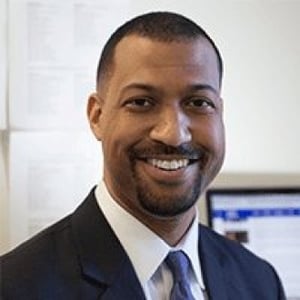
President & CEO, Public Knowledge
Chris Lewis has served as President and CEO at Public Knowledge since July 2019. Prior to being elevated to President and CEO, Chris served seven years as PK’s Vice President for Government Affairs, leading the organization’s day-to-day advocacy and political strategy on Capitol Hill and at government agencies. During that time he also served as a local elected official, serving two terms on the Alexandria City Public School Board in Virginia.
Before joining Public Knowledge, Chris worked in the Federal Communications Commission Office of Legislative Affairs, including as its Deputy Director. He is a former U.S. Senate staffer and an experienced political organizer and advocate in both the nonprofit world and political campaigns from local to the presidential level. Chris graduated from Harvard University with a Bachelors degree in Government and lives in Alexandria, VA where he continues to volunteer and advocate on local civic issues.
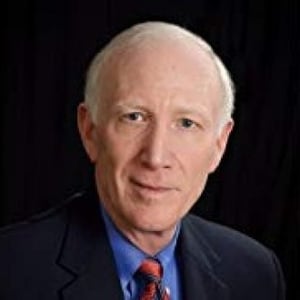
President, The Free State Foundation
Randolph J. May is Founder and President of The Free State Foundation. The Free State Foundation is an independent, non-profit free market-oriented think tank founded in 2006.
From October 1999-May 2006, May was a Senior Fellow and Director of Communications Policy Studies at The Progress & Freedom Foundation, a Washington, DC-based think tank. Prior to joining PFF, he practiced communications, administrative, and regulatory law as a partner at major national law firms. From 1978 to 1981, May served as Assistant General Counsel and Associate General Counsel at the Federal Communication Commission.
May has held numerous leadership positions in bar associations. He is a past Chair of the American Bar Association’s Section of Administrative Law and Regulatory Practice. He is a Fellow of the National Academy of Public Administration. Mr. May also has served as a Public Member of the Administrative Conference of the United States and currently is a Senior Fellow at ACUS.
Mr. May has published more than two hundred articles and essays on communications, administrative and constitutional law topics. He is author of A Call for a Radical New Communications Policy: Proposals for Free Market Reform, and co-author of #CommActUpdate: A Communications Law Fit for the Digital Age and The Constitutional Foundations of Intellectual Property. Mr. May is editor of two books, Communications Law and Policy in the Digital Age: The Next Five Years and New Directions in Communications Policy. In addition, he is the co-editor of two other books, Net Neutrality or Net Neutering: Should Broadband Internet Services Be Regulated? and Communications Deregulation and FCC Reform. In the past, Mr. May has written regular columns on legal and regulatory affairs for Legal Times and the National Law Journal, leading national legal periodicals.
He received his A.B. from Duke University and his J.D. from Duke Law School, where he serves as a member of the Board of Visitors.
President and Founder, JKC Consulting LLC
John Kneuer is the President and Founder of JKC Consulting LLC. He sits on multiple public and private company boards.
Prior to starting Kneuer LLC, Mr. Kneuer served as the Assistant Secretary of Commerce for Communications and Information. In this capacity Mr. Kneuer was the principal advisor to the President of the United States on telecommunications policy and the Administrator of the National Telecommunications and Information Administration ("NTIA").In addition to representing the Executive Branch in domestic and international telecommunications and information policy activities, NTIA also manages the federal use of spectrum; performs cutting edge telecommunications research and engineering, including resolving technical telecommunications issues for the federal government and private sector; and administers infrastructure and public telecommunications facilities grants.
Prior to his service at NTIA, Mr. Kneuer served as a Senior Associate at the law firm of Piper Rudnick in Washington, D.C., providing regulatory and legislative representation to corporate clients in the telecommunications, defense, and transportation industries. Earlier in his career, Mr. Kneuer served as the Executive Director for Government Relations at the Industrial Telecommunications Association, and prior to that served as an Attorney-Advisor in the Commercial Wireless Division of the Federal Communications Commission's Wireless Bureau. Mr. Kneuer received B.A. and J.D. degrees from the Catholic University of America.
Partner, HWG LLP
Patricia Paoletta is a partner with the law firm of HWG LLP, where she specializes in telecommunications, trade and technology policy. Ms. Paoletta provides advice on regulatory, trade and legislative policy to clients before the FCC, Congress and the Administration. Her clients include providers of content, cloud, mobile broadband, VoIP, international telecommunications, small cells, cognitive radio, public safety and homeland security solutions. She serves on Advisory Boards for several entities engaged in information services, communications and technology.
Ms. Paoletta has accrued considerable experience with telecommunications trade and policy in the public sector. From 1990 to 1995, she was senior advisor to the International Bureau Chief and Office Director at the Federal Communications Commission. In the mid 1990s, Ms. Paoletta served as Director of Telecommunications Trade Policy in the Office of the U.S. Trade Representative, Executive Office of the President, where she worked on the WTO Information Technology Agreement (ITA) and the Basic Telecommunications Agreement. After USTR, Ms. Paoletta served as Majority Counsel to the House Energy and Commerce Committee. She then moved to Level 3 Communications, as Vice President, Government Relations.
Ms. Paoletta is on the Steering Committee of the Transatlantic Roundtable on Telecommunications and Information Technology of the European Institute. She is a member of the USTR Alumni Association, Washington International Trade Association, the Federal Communications Bar Association (FCBA), and Women in Technology. Ms. Paoletta has served on the Board of Advisors for the Inter-American Dialogue's Latin America Telecom Advisor, Co-Chairman of the American Bar Association International Communications Committee, and as a member of the U.S. Chamber of Commerce's Technology Policy Committee.
Ms. Paoletta served as a delegate in 2012 to the ITU-R's Study Group 6 Working Party 6A Meeting and in 2009 and 2010 to the ITU-R's Study Group I Working Party IB Meetings; the 2009 meetings of CITEL (the Committee on International Telecommunications at the Organization of American States) PCC-II; the International Telecommunication Union (ITU) World Telecommunications Standards Assembly (2000); the ITU Internet Protocol Telephony Experts Group and the ITU World Telecommunications Policy Forum in 2001; as Chairman of the National Reliability and Interoperability Council (NRIC) Steering Committee (2000-2001); as Board Member for the Voice on the Net Coalition (2001); as Co-Chairman of the FCBA's Annual Seminar Committee (2009-2011); as a member of the FCBA's Ad Hoc Speakers Committee (2006-2007); as Co-Chairman for the FCBA International Practice Committee (2001-2002 and 2005-2006); and as a Co-Chairman of the FCBA Legislative Practice Committee (1999-2000).
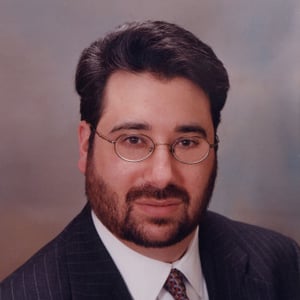
President, Phoenix Center for Advanced Legal and Economic Public Policy Studies
Lawrence J. Spiwak is President of the Phoenix Center for Advanced Legal & Economic Public Policy Studies, a non-profit 501(c)(3) organization that studies broad public-policy issues related to governance, social and economic conditions, with a particular emphasis on the law and economics of the digital age. Mr. Spiwak is a prolific scholar whose work is frequently cited by policymakers, major news media and academic journals around the world, and is in the top 1.3%of authors downloaded on the Social Science Research Network. Mr. Spiwak currently serves as the co-chair of the Federal Communications Bar Association’s (FCBA) committee responsible for overseeing the FEDERAL COMMUNICATIONS LAW JOURNAL and is a member of the program committee of the Telecommunications Policy Research Conference (“TPRC”). Mr. Spiwak is also the recipient of the FCBA’s Distinguished Service Award. Prior to joining the Phoenix Center, Mr. Spiwak was a Senior Attorney with the Competition Division in the FCC’s Office of General Counsel from 1994-1998. While in college, Mr. Spiwak was accepted into the Presidential Stay-In School program where he was responsible for delivering classified and confidential material among senior White House and Reagan Administration officials and received a full FBI security clearance. Mr. Spiwak received his B.A. with Special Honors from the George Washington University and his J.D. from the Benjamin N. Cardozo School of Law. Mr. Spiwak is a member in good standing of the bars of New York, Massachusetts, the District of Columbia, and the U.S. Court of Appeals for the D.C. Circuit.
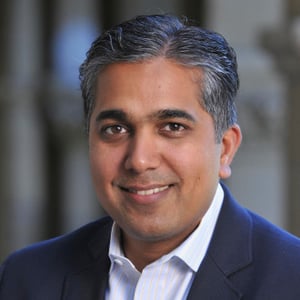
Raj M. Shah is currently the Co-founder and CEO of Arceo.ai, a start-up powering new approaches to cybersecurity through insurance and risk management. A seasoned entrepreneur and national security leader, Shah has transitioned often between the public and private sectors. Previously the Managing Partner of the Pentagon's Defense Innovation Unit Experimental (DIUx), he reported directly to the Secretary of Defense. Shah led DIUx in its efforts to strengthen our Armed Forces through contractual and cultural bridges between Silicon Valley and the Pentagon.
Previously, Shah was senior director of strategy at Palo Alto Networks, which acquired Morta Security, where he was Co-founder and CEO. He began his business career as a consultant with McKinsey & Co. Shah serves as a reserve F-16 pilot in the Air National Guard and has completed multiple combat tours. He holds an AB from Princeton University’s Woodrow Wilson School and an MBA from The Wharton School. Shah is also a visiting fellow at the Hoover Institution at Stanford University.
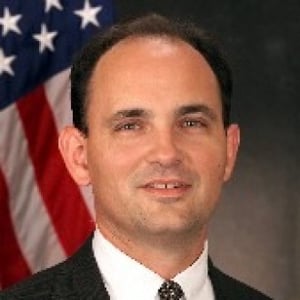
Chief Counsel, Cybersecurity and Infrastructure Security Agency (CISA)
Daniel Sutherland is the Chief Counsel for CISA, the Cybersecurity and Infrastructure Security Agency. CISA is responsible for cybersecurity, telecommunications, risk management and infrastructure resilience, operating with a budget over $1 billion and a workforce of approximately 2,000. He leads an office of attorneys who negotiate complex technology agreements, provide daily operational support to a cybersecurity operations center, advocate the agency’s positions in litigation, draft and negotiate legislation, and respond to audits and investigations.
Mr. Sutherland’s position builds on a career focused on issues at the intersection of civil liberties and national security. In 2003, Mr. Sutherland was appointed by President Bush to serve as the first Officer for Civil Rights and Civil Liberties at the Department of Homeland Security. He provided advice to Secretaries Ridge and Chertoff on intelligence policy, disability law and policy, emergency preparedness and response, and immigration law. His speech on the need for the government to engage with American Arab and Muslim communities appeared in the publication Vital Speeches of the Day. Mr. Sutherland has also served in the Senior National Intelligence Service at the National Counterterrorism Center where he coordinated the government’s efforts to prevent violent extremism; Mr. Sutherland was referred to by Wired as “one of the government’s point people on stemming the appeal of al-Qaida.” Mr. Sutherland is a Certified Information Privacy Professional (CIPP/G).
Mr. Sutherland started his federal career as a civil rights attorney with the U.S. Department of Justice, where for 14 years he litigated cases in courts across the country. Mr. Sutherland is a graduate of the University of Louisville and University of Virginia School of Law.
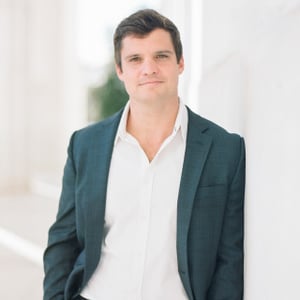
Managing Director, SCF Partners
Daniel G. West invests in energy services, equipment, and technology companies at SCF Partners in Houston, Texas. He provides equity capital and strategic growth assistance to entrepreneurs and leaders of both start-up ventures and established, growing businesses.
Prior to joining the private sector, Mr. West served as an infantry officer in the United States Marine Corps. As a platoon commander with the 22nd Marine Expeditionary Unit aboard the USS Mesa Verde, he led the Tactical Recovery of Aircraft and Personnel force in support of the NATO aerial campaign over Libya. He then served as executive officer of India Company, 3rd Battalion, 9th Marines as it mentored Afghan forces to assume lead security responsibility and executed counter-narcotics missions in Marjah, Helmand Province, Afghanistan. He also served as a clerk for Judge Laurence H. Silberman on the U.S. Court of Appeals for the D.C. Circuit.
Mr. West holds degrees in law, business administration, and economics from Harvard University, where he served as an editor of the Harvard Law Review and taught undergraduate courses in economics and government. He is a member of the Executive Committee of the International & National Security Law Practice Group of the Federalist Society and a term member of the Council on Foreign Relations.
Founder and Executive Director, National Security Institute; Assistant Professor of Law, Antonin Scalia Law School, George Mason University
Jamil N. Jaffer is the Founder and Executive Director of the National Security Institute at the Antonin Scalia Law School at George Mason University where he also serves as an Assistant Professor of Law, Director of the National Security Law and Policy Program, and Director of the Cyber, Intelligence, and National Security LLM Program. Jamil also teaches classes on counterterrorism, intelligence, surveillance, cybersecurity, and other national security matters, as well as a summer course held abroad with U.S. Supreme Court Justice Neil M. Gorsuch. Jamil is also affiliated with Stanford University’s Center for International Security and Cooperation and previously served as a Visiting Fellow at the Hoover Institution from 2016 to 2019.
Jamil is also a Venture Partner with Paladin Capital Group, where he assists the firm with investments across the full range of its themes and theses, including a focus on dual-use national security technologies. Jamil also serves on the board of directors of RangeForce, a cybersecurity training and readiness platform startup and Tozny, a digital identity startup, and on the advisory boards of U.S. Strategic Metals, North America’s largest primary producer of cobalt, a critical mineral used in EV batteries, aerospace, and other national security applications; and Constella Intelligence, a deep and dark web intelligence startup. Jamil also serves as an advisor to Beacon Global Strategies, a strategic advisory firm and Duco, a technology platform startup that connects corporations with geopolitical and international business experts. Jamil is also the managing director of Trigraph Caveat Capital, a private investment vehicle.
Among other things, Jamil currently serves on the Board of Directors for the Greater Washington Board of Trade, the Board of Advisors for the Global Cyber Alliance, and the Advisory Board of the Foundation for the Defense of Democracies’ Center on Cyber and Tech Innovation, the Executive Committee of the Reagan Institute Strategy Group. Jamil is also a Fellow at the Academy for Judaic, Christian, and Islamic Studies, an advisor to the Concordia Summit, and is a member of the Board of Directors for the Center for Intelligence Policy, the Board of Directors of Speech First, and the Executive Committee of the International Law and National Security Practice Group of the Federalist Society.
Immediately prior to his current positions, from 2015-2021, Jamil served as a senior business leader at IronNet Cybersecurity, helping take the company from a bootstrapped first-year technology products startup through two rounds of venture capital fundraising, growing from 40 employees to over 300, and through its listing on New York Stock Exchange. In his role as IronNet's Senior Vice President for Strategy, Partnerships & Corporate Development, Jamil worked directly for the co-CEOs of the company, Gen (ret.) Keith B. Alexander, the former Director of the National Security Agency and Founding Commander of U.S. Cyber Command, and Bill Welch, the former COO of Zscaler and Duo; in that role, Jamil led all of the company’s strategic and technology partnership efforts, including developing go-to-market and technology integration plans with some of the largest cloud platforms and cybersecurity companies in the market, evaluating potential acquisition targets, and developing overall corporate strategy and thought leadership around collective security and collaborative defense in the cyber arena.
Prior to his time at IronNet, Jamil served on the leadership team of the Senate Foreign Relations Committee as Chief Counsel and Senior Advisor under Chairman Bob Corker (R-TN), where he worked on key national security and foreign policy issues, including leading the drafting of the proposed Authorization for the Use of Military Force against ISIS in 2014 and 2015, the AUMF against Syria in 2013, and revisions to the 9/11 AUMF against al Qaeda. Jamil was also the lead architect of the Iran Nuclear Agreement Review Act and two sanctions laws against Russia for its first intervention in Ukraine.
Prior to joining SFRC, Jamil served as Senior Counsel to the House Permanent Select Committee on Intelligence under Chairman Mike Rogers (R-MI) where he led the committee’s oversight of NSA surveillance, NRO intelligence issues, and NGA analytic and collection matters, as well as intelligence community-wide counterterrorism issues. Jamil was also the lead architect of the Cyber Intelligence Sharing and Protection Act, the nation’s first cyber threat intelligence sharing legislation that was signed into law in 2015.
In the Bush Administration, Jamil served in the White House as an Associate Counsel to the President, handling Defense Department, State Department, and intelligence community matters, and serving as one of the White House Counsel’s primary representatives to the National Security Council Deputies Committee.
Prior to the White House, Jamil served on the leadership team of the Justice Department’s National Security Division as Counsel to the Assistant Attorney General for National Security, where he focused on counterterrorism and intelligence matters. At NSD, Jamil helped lead the division’s work on In re: Directives, the first ever two-party litigated matter in the FISA Court and the second case before the FISA Court of Review in its 30-year history. Jamil also led NSD’s efforts on the President’s Comprehensive National Cybersecurity Initiative (CNCI), including the drafting of NSPD-54/HSPD-23, and related classified matters, and advised the National Security Agency (NSA) and U.S. Cyber Command’s predecessor organization, the Joint Function Component Command for Network Warfare (JFCC-NW), on matters related to cyber intelligence collection and offensive cyber activities. For his work on these matters, Jamil was awarded the Assistant Attorney General’s Award for Special Initiative and was among the group of lawyers awarded the Director of National Intelligence’s 2008 Legal Award (Team of the Year – Cyber Legal).
Jamil also served in other positions in the Justice Department, including in the Office of Legal Policy, where he worked on the confirmations of Chief Justice John G. Roberts, Jr. and Justice Samuel A. Alito, Jr. to the United States Supreme Court.
Jamil also served as a lawyer in private practice at Kellogg Huber, a Washington, DC-based litigation boutique, as a policy advisor to Congressman Bob Goodlatte (R-VA), and as a staff member or senior advisor on a number of political campaigns, including two presidential campaigns and a presidential transition team. While in law school, Jamil was a member of the University of Chicago Law Review, managing editor of the Chicago Journal of International Law, and National Symposium Editor of the Harvard Journal of Law & Public Policy. Following law school, Jamil served as a law clerk to Judge Edith H. Jones of the United States Court of Appeals for the Fifth Circuit and, later in his career, as a law clerk to then-Judge Neil M. Gorsuch when he first joined the United States Court of Appeals for the Tenth Circuit as well as a law clerk to Justice Neil Gorsuch when he joined the U.S. Supreme Court.
Jamil has published multiple op-eds and academic articles on national security, foreign policy, cybersecurity, counterterrorism, encryption, and intelligence matters, and is the co-author of a book chapter with former NSA Director Gen. (Ret.) Keith B. Alexander on national security and the press in National Security, Leaks, and the Freedom of the Press: The Pentagon Papers Fifty Years On (2021) and a book chapter with former CIA Director Gen. (ret.) Mike Hayden on ISIS, al Qaeda, and other international terrorist groups in Choosing to Lead: American Foreign Policy for a Disordered World (2015). Jamil has also written book chapters on cybersecurity and surveillance, as well as op-eds and policy papers with former Attorney General Michael B. Mukasey, former National Counterterrorism Center Director Matt Olsen, and Congressman Mike Waltz (R-FL), among others.
Jamil has previously taught graduate-level courses in intelligence law and policy at George Washington University’s Elliott School of International Affairs and the National Intelligence University, served an outside advisor to the Cyberspace Solarium Commission, and has recently testified before committees of the U.S. Senate and House of Representatives on China, cybersecurity, counterterrorism, and other national security matters. Jamil has also recently appeared on a range of national television and radio outlets including CNN, Fox News, Fox Business, MSNBC, Bloomberg, PBS, Voice of America, and National Public Radio, and in various print and online publications, including the Wall Street Journal, New York Times, and the Washington Post on a range of national security matters including cybersecurity, counterterrorism, surveillance, encryption, privacy, and foreign policy issues.
Jamil holds degrees from UCLA (BA, cum laude), the University of Chicago Law School (JD, with honors), and the United States Naval War College (MA, with distinction).

Senior Privacy Policy Counsel, Google
David Lieber is a Senior Privacy Policy Counsel for Google based in Washington, D.C. In that capacity, Mr. Lieber works on government access, cybsersecurity, and international privacy issues on Google’s Public Policy team. Prior to joining Google, David worked in the E-Commerce & Privacy practice at DLA Piper. Mr. Lieber previously served as a Legislative Assistant to Senator Dick Durbin on the Senate Judiciary Committee. He is a graduate of Bates College and Northwestern University School of Law.

Chief Social Scientist at Endgame, Endgame
Andrea Little Limbago is the Chief Social Scientist at Endgame, where she researches and writes on geopolitics and cybersecurity, data science, and directs the company’s technical content. Her writing has been featured in numerous outlets, including Politico, the Hill, Business Insider, War on the Rocks, and Forbes. She also presents at a range of security, government and academic conferences, covering cybersecurity topics such as norms, attacker trends and techniques, computational propaganda, and bots. She previously worked in academia and at the Department of Defense. Andrea holds a PhD in Political Science from the University of Colorado at Boulder, where she taught international relations and foreign policy courses, and a Bachelor’s degree from Bowdoin College.
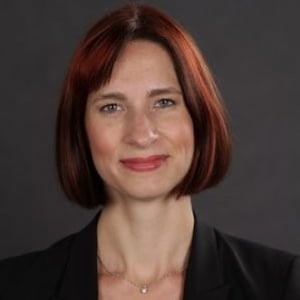
Senior Director, Cybersecurity Policy and Strategy, Microsoft
Ms. Angela McKay is Senior Director of Cybersecurity Policy and Strategy within Trustworthy Computing at Microsoft. She focuses on driving strategic change, both within Microsoft and externally, to advance trust in the computing ecosystem. Ms. McKay leads Microsoft’s public policy work on cybersecurity, cloud security, and norms, and on public sector use of cloud. Her team includes professionals working on these topics across Africa, Asia, Europe, Latin America, and the U.S.
Ms. McKay combines technical expertise and public policy acumen to develop policies that improve security and stability of cyberspace, and support development, growth, and innovation. She serves on the Board of Councilors for the East West Institute, a think tank focused on international conflict resolution, and as Microsoft’s Point of Contact for the National Security Telecommunications Advisory Committee, which provides the President of the United States with recommendations to maintain reliable, secure, and resilient communications.
Ms. McKay previously led Microsoft’s cybersecurity policy work in the U.S., and its work to increase cybersecurity capacity internationally. Before joining Microsoft in 2008, she worked at Booz Allen Hamilton on cybersecurity policy and communications resiliency, and at BellSouth Telecommunications as an engineer. Ms. McKay holds a Bachelor’s of Industrial and Systems Engineering from the Georgia Institute of Technology.

Fellow, National Security Institute, Antonin Scalia Law School, George Mason University
Vince Vitkowsky chaired the Executive Committee of the Federalist Society’s International and National Security Law and Policy Practice Group for over a decade. He is also a Fellow at the National Security Institute of George Mason University Law School. Vince spent 45 years in private practice, primarily in AmLaw 100/200 firms and their spin-offs. His practice included domestic and international commercial arbitration and litigation, as well as cyber risks and liabilities. Vince's current focus is on national security policy, artificial intelligence, cybersecurity, and counterterrorism. He has often written and spoken on national security and other public policy issues. Among other affiliations, Vince has been an Adjunct Fellow at the Center for Law and Counterterrorism of the Foundation for the Defense of Democracies, a member of the Executive Committee of the American Branch of the International Law Association, and Co-Chair of the Committee on Interventions and Trial Observations of the International Bar Association’s Human Rights Institute. He received his B.A. from Northwestern University and his J.D. from Cornell Law School.
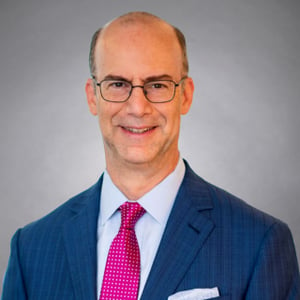
Managing Director & Head of Global Policy and Public Investment, DigitalBridge Investment Management
Jonathan S. Adelstein is a Managing Director and Head of Global Policy and Public Investment at DigitalBridge Investment Management. In this role, Mr. Adelstein works with all DigitalBridge portfolio companies on public policy and strategic regulatory matters and reviews policy impacts on potential investments.
Prior to joining DigitalBridge, Mr. Adelstein was President and CEO of the Wireless Infrastructure Association (WIA), where he represented over 200 businesses that build, own, and operate wireless infrastructure, including infrastructure owners, developers, carriers, and professional service firms.
Prior to WIA, Mr. Adelstein was nominated to positions by both President Barack Obama and President George W. Bush and confirmed unanimously for each by the U.S. Senate. Under President Obama, Mr. Adelstein headed the U.S. Department of Agriculture’s Rural Utilities Service as Administrator. There, he led the investment of nearly $7 billion under the Recovery Act in rural broadband and water infrastructure and oversaw a $60 billion loan portfolio in rural electric, telecommunications, and water infrastructure. Under President Obama, Mr. Adelstein was appointed to the White House National Science and Technology Council, which coordinates science and technology policy across the Federal government, and the White House Business Council, leading Council meetings with business leaders across America.
Mr. Adelstein was nominated by President Bush and served as Commissioner of the Federal Communications Commission (FCC) from 2002 to 2009. At the FCC, he worked to achieve bipartisan progress on issues including spectrum auctions, broadband expansion, widening access to the Internet and media diversity.
Before the FCC, Mr. Adelstein served at the U.S. Senate, in a number of legislative staff positions, culminating as a senior policy advisor to the Senate Majority Leader.
Mr. Adelstein received an M.A. in History and a B.A., with Distinction, in Political Science from Stanford University. He instructed undergraduates in history as a Teaching Fellow at Harvard University and a Teaching Assistant at Stanford University. He is a graduate of Phillips Academy, Andover.

Clinical Professor and Senior Scholar and Senior Fellow for Copyright Research and Policy of C-IP2, Antonin Scalia Law School, George Mason University
Sandra Aistars is Senior Fellow for Copyright Research and Policy and a Senior Scholar at the Center for Intellectual Property x Innovation Policy (C-IP2). She also leads the law school’s Arts & Entertainment Advocacy Program. Professor Aistars has over twenty years of advocacy experience on behalf of copyright and other intellectual property owners. She has served on trade missions and been an industry advisor to the Department of Commerce on intellectual property implications for international trade negotiations; worked on legislative and regulatory matters worldwide; frequently testified before Congress and federal agencies regarding intellectual property matters; chaired cross-industry coalitions and technology standards efforts; and is regularly tapped by government agencies to lecture in U.S. government-sponsored study tours for visiting legislators, judges, prosecutors, and regulators.
Immediately prior to joining Scalia Law, Professor Aistars was the Chief Executive Officer of the Copyright Alliance – a nonprofit, public interest organization that represents the interests of artists and creators across the creative spectrum. While at Scalia Law, she continues to collaborate with the Copyright Alliance as a member of its Academic Advisory Board. Professor Aistars currently serves on the boards of the Washington Area Lawyers for the Arts (WALA) and the Howard Intellectual Property Program (HIPP), and she has previously served as trustee of the Copyright Society of the USA (CSUSA). Professor Aistars has also previously served as Vice President and Associate General Counsel at Time Warner Inc. She began her legal career in private practice at Weil, Gotshal and Manges LLP.

Partner, Steptoe & Johnson LLP
Stewart Baker is a partner in the law firm of Steptoe & Johnson in Washington, D.C. From 2005 to 2009, he was the first Assistant Secretary for Policy at the Department of Homeland Security. His law practice covers cybersecurity, data protection, homeland security, and travel and foreign investment regulation; he has been awarded one patent.
Mr. Baker has been General Counsel of the National Security Agency and General Counsel of the commission that investigated WMD intelligence failures prior to the Iraq war. He is the author of Skating on Stilts, a book on terrorism, cybersecurity, and other technology issues; he also hosts the weekly Cyberlaw Podcast.

Senior Counsel, Electronic Privacy Information Center
Alan Butler is Senior Counsel at the Electronic Privacy Information Center (EPIC) in Washington, DC. In that capacity, Mr. Butler manages EPIC's litigation, including the Amicus Program, and files briefs in emerging privacy and civil liberties cases before the U.S. Supreme Court and other appellate courts. Mr. Butler has argued on behalf of EPIC in privacy and open government cases in the U.S. Court of Appeals for the D.C. Circuit, the Third Circuit, and the Supreme Courts of New Mexico and New Jersey. Mr. Butler has authored briefs on behalf of EPIC in significant privacy cases, including an amicus brief in Riley v. California that was cited in the Supreme Court's unanimous opinion upholding Fourth Amendment protections for cell phones. He has also authored briefs on national security, open government, workplace privacy, and consumer privacy issues. Mr. Butler is also Chair of the Privacy and Information Protection Committee of the ABA Section on Civil Rights and Social Justice. He is co-author of the most recent edition of Communications Law and Policy: Cases and Materials and has also published several articles on emerging privacy issues, including: Products Liability and the Internet of (Insecure) Things: Should Manufacturers Be Liable for Damage Caused by Hacked Devices?, Get a Warrant: The Supreme Court's New Course for Digital Privacy Rights after Riley v. California, Standing Up to Clapper: How to Increase Transparency and Oversight of FISA Surveillance, and When Cyberweapons End Up on Private Networks: Third Amendment Implications for Cybersecurity Policy. Mr. Butler is a graduate of UCLA School of Law and Washington University in St. Louis, where he earned a B.A. in Economics. He is a frequent speaker and commentator on cybersecurity, consumer privacy, and surveillance law issues.

Senior Fellow and Academic Director, Penn Carey Law School
Gus Hurwitz is a Senior Fellow and the Academic Director of the Center for Technology, Innovation & Competition and the University of Pennsylvania Carey Law School where he is working to develop academic and scholarly programs at the intersecution of law, technology, and policy.
He is also Director of Law & Economics Programs at the International Center for Law & Economics (ICLE), a think tank based in Portland, Oregon, where he directs its law and economics-focused research program and helps to translate academic research into applied policy issues.
Hurwitz's research focuses on the regulation of technology, including administrative and regulatory law, antitrust law, torts and products liability, and media law - alongside cognate fields. Inrecent years he has worked on an AI standardization initiative with Seoul National University, a UNICEF-organized study of broadband deployment to public schools in Rwanda, and a book on conglomerate and ecosystems theories of antitrust.
He has published over 30 articles and book chapters, two books (one on cybersecurity law & policy, one on media regulation in the digital era) and have two more in process, over 100 shorter writings (op-eds, shorter analyses, blog posts, &c), hosted over 100 podcast episodes, and regularly appear or am quoted in popular media (including the NY Times, Wall Street Journal, Washington Post, and Associated Press). His work has been cited by legislators, federal courts of appeals, and federal regulatory agencies.
He was previously a full professor and founding director of the Governance & Technology Center at the University of Nebraska, prior to which he was the inaugural research fellow at the Center for Technology, Innovation & Competition (CTIC). From 2007 to 2010, he was a trial attorney with the U.S. Department of Justice Antitrust Division in the Telecommunications and Media Enforcement Section.
He also is, or has been, affiliated with the Classical Liberal Institute at New York University School of Law, the National Security Institute at George Mason University, and the American Enterprise Institute (AEI).
Before attending law school, Hurwitz worked at Los Alamos National Lab and interned at the Naval Research Lab. During this time his work was recognized by the Federal Laboratory Consortium, Los Alamos National Lab, IEEE & ACM, Corporation for Education Network Initiatives in California, R&D Magazine, and even the Guinness Book of World Records.
A current list of Hurwitz’s publications is available on his website: GusHurwitz.net.
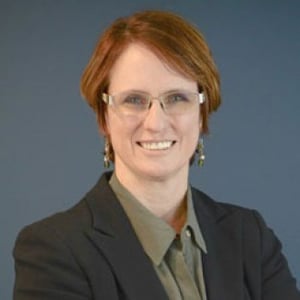
Senior Counsel and Director of Strategy, Future of Privacy Forum
Brenda Leong, CIPP/US, is Senior Counsel and Director of Strategy at the Future of Privacy Forum. She oversees strategic planning of organizational goals, as well as managing the FPF portfolio on biometrics, particularly facial recognition, along with the ethics and privacy issues associated with artificial intelligence. She works on industry standards and collaboration on privacy concerns, by partnering with stakeholders and advocates to reach practical solutions to the privacy challenges for consumer and commercial data uses. Prior to working at FPF, Brenda served in the U.S. Air Force, including policy and legislative affairs work from the Pentagon and the U.S. Department of State. She is a 2014 graduate of George Mason University School of Law.

Exploring Tradeoffs: The Nexus Between Antitrust and Security
Jamil N. Jaffer, Klon Kitchen, Thom Lambert, Brandon Pugh
Antitrust efforts have become prevalent in the courts and legislative bodies, both in the United...
A Short Introduction to Electronic Discovery
Ted Hirt
PowerPoint Slides This program will provide a short introduction to the world of E-Discovery,...
Who Runs the FDIC in a New Administration?
Bert Ely, Michael H. Krimminger, Thomas P. Vartanian, Brian C. Johnson
The FDIC board of directors has been convulsed by the widely publicized dispute over who controls...
ICT Supply Chain Security: A Panel Discussion
Kelsey Guyselman, Maryam Khan Cope, John Kneuer, Patricia J. Paoletta, Gregory Watson
On February 24, 2021, President Biden signed an executive order (EO) on a whole-of-government strategy...
The Telecommunications Act at 25 Years: A Panel Discussion
Michelle P. Connolly, Harold W. Furchtgott-Roth, Chris Lewis, Randolph May
On February 8, 1996, President Bill Clinton signed into law the landmark Telecommunications Act of...
Legal and Policy Issues of the Administration's 5G Agenda
John Kneuer, Patricia J. Paoletta, Lawrence J. Spiwak
The rapid deployment of 5G technologies has become a stated objective of the Trump Administration...
CISA and Cyber Threats: How Government and Private Sector Secure Our Networks and Infrastructure
Raj Shah, Daniel Sutherland, Daniel G. West
Following passage of the Cybersecurity and Infrastructure Security Agency Act in November 2018, the Cybersecurity...
Panel I — The Tech Titans' Role in Cybersecurity
Jamil N. Jaffer, David Lieber, Andrea Little Limbago, Angela McKay, Vincent Vitkowsky
This panel will focus on questions such as what measures major companies can take, individually...
Modernizing the Tribal Consultation Process for Wireless Infrastructure Siting
Jonathan Adelstein, Wade Lindsay
Note from the Editor: This article discusses barriers to establishing wireless infrastructure, particularly with respect...
21st Century Business Models Meet 20th Century Regulation
Sandra Aistars, Stewart A. Baker, Alan Butler, Justin (Gus) Hurwitz, Brenda Leong
This symposium was co-sponsored by the Regulatory Transparency Project and took place at the Antonin...