
Director, Center for Religious Freedom, Hudson Institute
An international human-rights lawyer for over thirty years, Nina Shea joined Hudson Institute as a Senior Fellow in November 2006, where she directs the Center for Religious Freedom. Shea works extensively for the advancement of individual religious freedom and other human rights in U.S. foreign policy as it confronts an ascendant Islamic extremism, as well as nationalist and remnant communist regimes. She undertakes scholarship and advocacy in defense of those persecuted for their religious beliefs and identities and on behalf of diplomatic measures to end religious repression and violence abroad, whether from state actors or extremist groups.
Ms. Shea was appointed by the U.S. House of Representatives to serve seven terms as a Commissioner on the U.S. Commission on International Religious Freedom (June 1999 - March 2012). During the Soviet era, Shea’s first client before the United Nations was Soviet Nobel Peace Laureate Andrei Sakharov. Since then, she has been appointed as a U.S. delegate to the United Nation's main human rights body by both Republican and Democratic administrations. She also served as a member of the Clinton administration's Advisory Committee on Religious Freedom Abroad. In 2009, she was appointed to serve as a member of the U.S. National Commission to UNESCO.
Ms. Shea played a leading role in building grassroot support for the adoption of the International Religious Freedom Act (1998). For seven years ending in 2005, she helped organize and lead a coalition of churches and religious groups that worked to end a religious war against non-Muslims and dissident Muslims in southern Sudan. In 2014, she initiated and helped lead a coalition of hundreds of prominent American religious leaders to issue The Pledge of Solidarity for Persecuted Iraqi, Syrian and Egyptian Christians and Other Minorities, which was released by a bi-partisan Congressional panel on May 7. In summer 2014, she met with Pope Francis to discuss the persecution of Christians in the Middle East.
At Hudson, she has organized conferences for Nigerian schoolgirls and others who survived Boko Haram attacks, Christian converts formerly imprisoned in Iran, Coptic bishops from Egypt, Catholic bishops from China and the Gulf, Muslim scholars, and many others. Ms. Shea advocates in the nation's capital on behalf of a broad range of persecuted religious minorities around the world; and, for such work, was honored by the Ahmadiyya Muslim Community USA with the Community's inaugural "Ahmadiyya Muslim Humanitarian Award."
She has authored and/or edited four widely-acclaimed reports on Saudi state educational materials that promote extremist views and in 2011 had an opportunity to travel to Saudi Arabia and speak directly about her findings with the Ministers of Education, Justice and Islamic Affairs. Her reports include: Ten Years On: Saudi Arabia's Textbooks Still Promote Religious Violence (2011), Update: Saudi Arabia's Curriculum of Intolerance (2008), Saudi Arabia's Curriculum of Intolerance (2006), and Saudi Publications on Hate Ideology Invade American Mosques (2005), all of which translated and analyzed Saudi governmental publications that teach hatred and violence against the religious "other."
She is the co-author of Silenced: How Apostasy & Blasphemy Codes are Choking Freedom Worldwide, with a Foreword by Kyai Haji Abdurrahman Wahid, the former President of Indonesia and head of Nahdlatul Ulama, the world's largest Muslim organization (Oxford University Press, 2011). Her most recent book, which she also co-authored, is Persecuted: The Global Assault on Christians (Thomas Nelson Publishers, 2013). She regularly presents testimony before Congress, delivers public lectures, organizes briefings and conferences, and writes frequently on religious freedom issues. Her writings have appeared in the Wall Street Journal, Washington Post, CQ Researcher, Weekly Standard, National Review Online, CNN, Fox, The Daily Beast, HuffingtonPost, and RealClearWorld, among others.
For the ten years prior to joining Hudson, Ms. Shea worked at Freedom House, where she directed the Center for Religious Freedom, an entity which she had helped found in 1986 as the Puebla Institute.
She is a member of the bar of the District of Columbia. She is a graduate of Smith College, and American University's Washington College of Law.
Founder and President, American Islamic Forum for Democracy
M. Zuhdi Jasser, M.D. is the Founder and President of the American Islamic Forum for Democracy (AIFD). A devout Muslim, Dr. Jasser founded AIFD in the wake of the 9/11 attacks on the United States as an effort to provide an American Muslim voice advocating for the preservation of the founding principles of the United States Constitution, liberty and freedom, through the separation of mosque and state. Dr. Jasser is a first generation American Muslim whose parents fled the oppressive Baath regime of Syria in the mid-1960’s for American freedom. He is leading the fight to shake the hold that the Muslim Brotherhood and their network of American Islamist organizations and mosques seek to exert on organized Islam in America.
Dr. Jasser earned his medical degree on a U.S. Navy scholarship at the Medical College of Wisconsin in 1992. He served 11 years as a medical officer in the U. S. Navy. His tours of duty included Medical Department Head aboard the U.S.S. El Paso which deployed to Somalia during Operation Restore Hope; Chief Resident at Bethesda Naval Hospital; and Staff Internist for the Office of the Attending Physician to the U. S. Congress. He is a recipient of the Meritorious Service Medal. Dr. Jasser is a respected physician currently in private practice in Phoenix, Arizona specializing in internal medicine and nuclear cardiology. He is a Past-President of the Arizona Medical Association.
AIFD seeks to counter political Islam the ideology that fuels radical Islamists. AIFD’s current passions include the Muslim Liberty Project (MLP) and involvement in the newly formed American Islamic Leadership Coalition (AILC). The Muslim Liberty Project seeks to instill the ideas of liberty into young Muslim adults in order to inoculate them against the viral threat of political Islam. The project brought together its first class of Muslim Youth in March 2011 with tremendous success. AILC is a broad based coalition of diverse Muslim organizations that provide a stark alternative to the domestic and global network of Islamist organizations.
Dr. Jasser is also actively involved in the Syrian-American community as the co-founder of Save Syria Now! which was formed by Americans of Syrian descent to put pressure on the United States to call for immediate action to end the regime of Bashar Assad of Syria and to help bring true liberty to the people of Syria. Dr. Jasser has also been asked to play a formative role in the emerging Syrian Democracy Council which is creating an opposition roadmap for a free, secular, and non-Islamist post-Assad Syria. Dr. Jasser briefed members of the U.S. House of Representatives on the situation in Syria in July 2011.
Dr. Jasser regularly briefs members of the House and Senate congressional anti-terror caucuses on the threat of Political Islam. Dr. Jasser testified before the United States House of Representatives Committee on Homeland Security on March 10, 2011 on “The Extent of Radicalization in the American Muslim Community and that Community’s Response” and again on June 20, 2012 on the “The American Muslim Response to Hearings on Radicalization within their Community.” On June 24, 2011 Dr. Jasser testified before the Constitution Subcommittee of the Judiciary Committee of the United States House of Representatives on the importance of HR 963 “The See Something, Say Something” Act of 2011. On March 20, 2012, Dr. Jasser was appointed by Senate Minority Leader Mitch McConnell (R-KY) to the United States Commission on International Religious Freedom (USCIRF).
Dr. Jasser is an internationally recognized expert in the contest of ideas against political Islam and American Islamist organizations. He has been featured in the Wall Street Journal, The Washington Times, The New York Post, The Dallas Morning News, CNN, CBS, Fox News Channel, MSNBC and BBC in addition to nationally syndicated radio programs. He has spoken at hundreds of national and international events including universities, places of worship, and government venues. In just the past year he has spoken at the Hudson Institute’s “The Perils of Global Intolerance: The UN and Durban III,” The U.S. Strategic Command’s 2011 Deterrence Symposium panel on “What did the rest of world learn about deterrence from the recent upheavals in the Middle East and Africa?,” and at the National FBI National Executive Institute on “Whose Voice are you listening to? What are the questions we should be asking?” In the past, Dr. Jasser has lectured on Islam to deploying officers at the Joint Forces Staff College at Norfolk, VA and was part of a select Muslim group that briefed Admiral Mike Mullen, Chairman of the Joint Chiefs of Staff, on the “Contest of Ideas with the Muslim World.”
Dr. Jasser was presented with the 2007 Director’s Community Leadership Award by the Phoenix office of the FBI and was recognized as a “Defender of the Home Front” at the annual Keeper of the Flame Dinner of the Center for Security Policy in 2008. Dr. Jasser is a contributing writer to a number of books and is the author of The Battle for the Soul of Islam: An American Muslim Patriot’s Fight to Save His Faith (Simon & Schuster, June 2012). He is featured in four documentaries: America at Risk, Islam v Islamists, A Question of Honor and The Third Jihad.

Thomas M. Siebel Senior Fellow, The Hoover Institution, Stanford University; Gary T. Schwartz Distinguished Professor of Law Emeritus, UCLA School of Law
Eugene Volokh is the Thomas M. Siebel Senior Fellow at the Hoover Institution (Stanford), as well as the Gary T. Schwartz Distinguished Professor of Law Emeritus and Distinguished Research Professor at UCLA School of Law. He recently retired from teaching at UCLA, after 30 years there, and is now focusing on research.
Volokh is the author of the textbooks The First Amendment and Related Statutes (8th ed. 2023), and Academic Legal Writing (5th ed. 2016), as well as over 100 academic law journal articles, mostly on First Amendment law. He is a member of The American Law Institute; the editor-in-chief of the Journal of Free Speech Law; and the creator and coauthor of The Volokh Conspiracy, a leading legal blog founded in 2002 (hosted at the Washington Post from 2014 to 2017 and now at Reason Magazine).

Wayne A. Abernathy, Wild Bells
Wayne A. Abernathy is a former U.S. Treasury Assistant Secretary for Financial Institutions under President George W. Bush, receiving the Alexander Hamilton Award in recognition of his service. In that office he was also a member of the Board of Directors of the Securities Investor Protection Corporation. Prior to his work at the Treasury, Mr. Abernathy served as Staff Director of the Senate Banking Committee, under Chairman Phil Gramm.
Following his service at the Treasury, Mr. Abernathy worked for 15 years on the staff of the American Bankers Association, as Executive Vice President for Financial Institutions Policy and Regulatory Affairs.
Previous experience with the Senate Banking Committee includes serving as Staff Director of the Subcommittee on Securities during 1995-1998. From 1989 until 1994, Mr. Abernathy was a Republican economist for the committee. He previously worked as a senior legislative assistant for Senator Gramm during 1987-1989 and as an economist for the Banking Committee’s Subcommittee on International Finance and Monetary Policy during 1981-1986, under Chairman Jake Garn.
Mr. Abernathy earned his bachelor’s degree in International Studies from The Johns Hopkins University in 1978. In 1980, he received a master’s degree in International Studies from the School of Advanced International Studies of The Johns Hopkins University.

Chairman of the Securities and Exchange Commission
Paul S. Atkins was sworn into office as the 34th Chairman of the Securities and Exchange Commission on April 21, 2025, after being nominated by President Donald J. Trump on January 20, 2025, and confirmed by the U.S. Senate on April 9, 2025.
Prior to returning to the SEC, Chairman Atkins was most recently chief executive of Patomak Global Partners, a company he founded in 2009. Chairman Atkins helped lead efforts to develop best practices for the digital asset sector. He served as an independent director and non-executive chairman of the board of BATS Global Markets, Inc. from 2012 to 2015.
Chairman Atkins was appointed by President George W. Bush to serve as a Commissioner of the SEC from 2002 to 2008. During his tenure, he advocated for transparency, consistency, and the use of cost-benefit analysis at the agency. Chairman Atkins also represented the SEC at meetings of the President’s Working Group on Financial Markets and the U.S.-EU Transatlantic Economic Council. From 2009 to 2010, he was appointed a member of the Congressional Oversight Panel for the Troubled Asset Relief Program.
Before serving as an SEC Commissioner, Chairman Atkins was a consultant on securities and investment management industry matters, especially regarding issues of strategy, regulatory compliance, risk management, new product development, and organizational control.
From 1990 to 1994, Chairman Atkins served on the staff of two chairmen of the SEC, Richard C. Breeden and Arthur Levitt, ultimately as chief of staff and counselor, respectively. He received the SEC’s 1992 Law and Policy Award for work regarding corporate governance matters.
Chairman Atkins began his career as a lawyer in New York, focusing on a wide range of corporate transactions for U.S. and foreign clients, including public and private securities offerings and mergers and acquisitions. He was resident for 2½ years in his firm's Paris office and admitted as conseil juridique in France.
A member of the New York and Florida bars, Chairman Atkins received his J.D. from Vanderbilt University School of Law in 1983 and was Senior Student Writing Editor of the Vanderbilt Law Review. He received his A.B., Phi Beta Kappa, from Wofford College in 1980.
Originally from Lillington, North Carolina, Chairman Atkins grew up in Tampa, Florida. He and his wife Sarah have three sons.
Senior Fellow-in-Residence, Milken Institute
Ed DeMarco is a Senior Fellow in Residence at the Milken Institute Center for Financial Markets and a Visiting Professor in the Owen Graduate School of Management at Vanderbilt University. He is a member of the Comptroller General’s Advisory Board for the U.S. Government Accountability Office and a Fellow of the National Academy of Public Administration.
From September 2009 to January 2014 DeMarco served as Acting Director of the Federal Housing Finance Agency (FHFA), the conservator for Fannie Mae and Freddie Mac and regulator of those companies and the Federal Home Loan Banks. DeMarco was the Chief Operating Officer and Senior Deputy Director of FHFA and its predecessor from 2006 to 2009. From 2003 to 2006 he was an executive at the Social Security Administration (SSA), where he was Assistant Deputy Commissioner for Policy.
Before joining SSA, DeMarco was Director of the Office of Financial Institutions Policy at the U.S. Department of the Treasury, where he oversaw analyses of policy issues involving banks, government sponsored enterprises and other financial institutions. He worked at the U.S. General Accounting Office from 1986 to 1994.
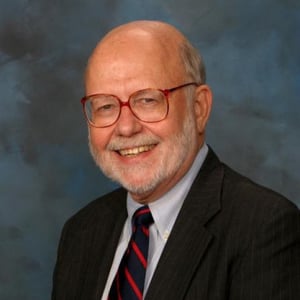
Principal, Ely & Company, Inc.
Bert Ely has specialized in deposit insurance and banking structure issues since 1981. In 1986, he became an early predictor of the S&L crisis and a taxpayer bailout of the FSLIC. In 1991, he was the first person to correctly predict the non-crisis in commercial banking; in 1992, he predicted an eventual taxpayer bailout of the Japanese banking system.
Bert continuously monitors conditions in the banking and S&L industries, monetary policy, and the growing federalization of credit risk. He has helped to draft legislation to enact the cross-guarantee concept for privatizing banking regulation and its related deposit insurance and systemic risks. He has testified on numerous occasions before congressional committees on banking issues and he often speaks on these matters to bankers and others.
Bert first established his consulting practice in 1972. Before that, he was the chief financial officer of a public company, a consultant with Touche, Ross & Company, and an auditor with Ernst & Ernst. He received his MBA from the Harvard Business School in 1968 and his Bachelor's degree in economics in 1964 from Case Western Reserve University.
Resident Scholar, American Enterprise Institute
Paul H. Kupiec is a resident scholar at the American Enterprise Institute (AEI), where he studies systemic risk and the management and regulations of banks and financial markets. He also follows the work of financial regulators such as the Federal Reserve and examines the impact of financial regulations on the US economy.
Before joining AEI, Kupiec was an associate director of the Division of Insurance and Research within the Center for Financial Research at the Federal Deposit Insurance Corporation (FDIC), where he oversaw research on bank risk measurement and the development of regulatory policies such as Basel III. Kupiec was also director of the Center for Financial Research at the FDIC and chairman of the Research Task Force of the Basel Committee on Banking Supervision. He has previously worked at the International Monetary Fund (IMF), Freddie Mac, J.P. Morgan, and for the Division of Research and Statistics at the Board of Governors of the Federal Reserve System.
Kupiec has edited many professional journals, including the Journal of Financial Services Research, Journal of Risk, and Journal of Investment Management.
He has a bachelor of science degree in economics from George Washington University and a doctorate in economics — with a specialization in finance, theory, and econometrics — from the University of Pennsylvania.
Trade and Globalization Policy Specialist, AFL-CIO
Celeste Drake is the Trade & Globalization Policy Specialist at the AFL-CIO, a job she boils down two main goals: 1) try to improve U.S. trade policy so it doesn’t undercut democracy, gut the American manufacturing sector, and send more U.S. jobs overseas; and 2) try to improve labor rights globally so that empowered workers can race to the top instead of allowing global corporations to force a race to the bottom.
Celeste has testified before the Senate Foreign Relations Committee, various House Subcommittees, the International Trade Commission, and the Executive Branch’s Trade Policy Staff Committee.
Prior to joining the AFL-CIO, Celeste served as Legislative Director for Congresswoman Linda T. Sánchez (D-CA), Legislative Counsel for Congressman Lloyd Doggett (D-TX), Clerk for the Honorable David R. Thompson of the U.S. Court of Appeals for the 9th Circuit, and Economics and World History teacher at Granite Hills High School in El Cajon, CA. She has a J.D., an M.P.P., and a B.A. from the University of California, Los Angeles.

Executive Vice President, Chief Legal Officer, Gates Corporation
Matthew R. A. Heiman joined the Company in May 2026 and has served as the Company’s Chief Legal Officer and Corporate Secretary since June 2026. As Chief Legal Officer, Mr. Heiman is responsible for all legal functions for Gates, including securities and corporate governance, M&A, litigation, commercial, regulatory, compliance, patents and trademarks, real estate, employment and labor, sustainability and environmental matters. Prior to joining Gates, Mr. Heiman held senior legal leadership roles at Waystar, where he served as Chief Legal & Administrative Officer from 2023 to 2025 and as General Counsel and Corporate Secretary from 2020 to 2023. Prior to that, he was with Johnson Controls, where he served as Vice President, Corporate Secretary, and Associate General Counsel. Mr. Heiman has been a Senior Fellow for the National Security Institute at George Mason University’s Antonin Scalia School of Law since 2018.

George C. Dix Professor in Constitutional Law, Northwestern University Pritzker School of Law
John O. McGinnis is a graduate of Harvard College and Harvard Law School where he was an editor of the Harvard Law Review. He also has an MA degree from Balliol College, Oxford, in philosophy and theology. Professor McGinnis clerked on the U.S. Court of Appeals for the District of Columbia. From 1987 to 1991, he was deputy assistant attorney general in the Office of Legal Counsel at the Department of Justice. He is the author of Accelerating Democracy: Transforming Government Through Technology (Princeton 2013) and Originalism and the Good Constitution (Harvard 2013) (with M. Rappaport). He is a past winner of the Paul Bator award given by the Federalist Society to an outstanding academic under 40. He has been listed by the United States on the roster of panelists who may be called upon to decide World Trade Organization Disputes.

Former General Counsel of the U.S. Immigration and Naturalization, Former United States Ambassador to East Timor
Grover Joseph Rees is a Louisiana native whose family has lived in the Breaux Bridge/Lafayette area since the 1700s.
His first job after college was as an assistant to Congressman Dave Treen (R-LA3), who had just been elected as the first Republican Congressman from Louisiana since Reconstruction.
Rees graduated with honors from LSU Law School, where he served as Editor-in-Chief of the Louisiana Law Review. While in law school he worked on Ronald Reagan’s 1976 presidential campaign and was a Reagan delegate from Louisiana to the Republican National Convention. He also served as a member of the Lafayette Parish Republican Executive Committee and as a board member of Acadiana Right to Life.
In 1979, when Congressman Treen ran successfully for Governor, he asked Rees to write his authorized biography. The book, Dave Treen of Louisiana, was read and discussed widely during the campaign and after Treen’s election.
In 1985-86 Rees served as Special Counsel for Judicial Selection in President Reagan’s Justice Department, working closely with Attorney General Ed Meese to reorganize the judicial selection process to make it more philosophically oriented. These efforts resulted in the appointment of over 100 federal judges and were widely credited with transforming the federal judiciary.
From 1986 through 1991 Rees served as Chief Justice of the High Court of American Samoa, an Article I federal judicial position.
From 1991 through 1993 he was General Counsel of the U.S. Immigration and Naturalization Service.
In 1995 Rees went to work for the new Republican Congress as staff director and chief counsel of the Subcommittee on International Operations and Human Rights. He worked with subcommittee chairman Chris Smith (R.-N.J.) to cut U.S. funding for the International Planned Parenthood Federation and other organizations that perform and promote abortions overseas. Rees also worked on the drafting and enactment of the International Religious Freedom Act, the Trafficking Victims Protection Act, and other legislation that has helped to bring U.S. foreign policy into closer alignment not only with our national interests but also with our values.
In 2001-2002 Rees worked for Congressman Henry Hyde (R.-Ill.), who was then serving as Chairman of the House International Relations Committee.
From 2002 until 2006 Rees served as the first United States Ambassador to newly independent East Timor.
From 2006 until 2009 Ambassador Rees was the United States Special Representative for Social Issues, responsible for representing the United States on issues relating to vulnerable persons and the family within the United Nations system.
Ambassador Rees retired from government service in January 2009 and returned to Lafayette. He is married to Lan Dai Nguyen Rees and is a member of St. Genevieve’s Catholic parish in Lafayette. He was recently elected to serve as a member of the Louisiana Republican State Central Committee.
Chairman of the Securities and Exchange Commission
Paul S. Atkins was sworn into office as the 34th Chairman of the Securities and Exchange Commission on April 21, 2025, after being nominated by President Donald J. Trump on January 20, 2025, and confirmed by the U.S. Senate on April 9, 2025.
Prior to returning to the SEC, Chairman Atkins was most recently chief executive of Patomak Global Partners, a company he founded in 2009. Chairman Atkins helped lead efforts to develop best practices for the digital asset sector. He served as an independent director and non-executive chairman of the board of BATS Global Markets, Inc. from 2012 to 2015.
Chairman Atkins was appointed by President George W. Bush to serve as a Commissioner of the SEC from 2002 to 2008. During his tenure, he advocated for transparency, consistency, and the use of cost-benefit analysis at the agency. Chairman Atkins also represented the SEC at meetings of the President’s Working Group on Financial Markets and the U.S.-EU Transatlantic Economic Council. From 2009 to 2010, he was appointed a member of the Congressional Oversight Panel for the Troubled Asset Relief Program.
Before serving as an SEC Commissioner, Chairman Atkins was a consultant on securities and investment management industry matters, especially regarding issues of strategy, regulatory compliance, risk management, new product development, and organizational control.
From 1990 to 1994, Chairman Atkins served on the staff of two chairmen of the SEC, Richard C. Breeden and Arthur Levitt, ultimately as chief of staff and counselor, respectively. He received the SEC’s 1992 Law and Policy Award for work regarding corporate governance matters.
Chairman Atkins began his career as a lawyer in New York, focusing on a wide range of corporate transactions for U.S. and foreign clients, including public and private securities offerings and mergers and acquisitions. He was resident for 2½ years in his firm's Paris office and admitted as conseil juridique in France.
A member of the New York and Florida bars, Chairman Atkins received his J.D. from Vanderbilt University School of Law in 1983 and was Senior Student Writing Editor of the Vanderbilt Law Review. He received his A.B., Phi Beta Kappa, from Wofford College in 1980.
Originally from Lillington, North Carolina, Chairman Atkins grew up in Tampa, Florida. He and his wife Sarah have three sons.
Bernard L. Schwartz Chair in Economic Policy, Brookings Institution
Resident Fellow, American Enterprise Institute
Timothy P. Carney is a resident fellow at the American Enterprise Institute, where he works on economic competition, cronyism, civil society, localism, and religion in America. He is concurrently the commentary editor at the Washington Examiner.
Mr. Carney’s latest book, “Alienated America: Why Some Places Thrive While Others Collapse” (HarperCollins), was published in February 2019. His previous books include “Obamanomics: How Barack Obama Is Bankrupting You and Enriching His Wall Street Friends, Corporate Lobbyists, and Union Bosses” (Regnery Publishing, 2009) and “The Big Ripoff: How Big Business and Big Government Steal Your Money” (John Wiley & Sons, 2006), which was awarded the 2008 Culture of Enterprise award by the Intercollegiate Studies Institute.
In addition to his Washington Examiner columns, Mr. Carney’s work has been published in a variety of magazines, websites, and newspapers, including The Atlantic, New York Post, The New York Times, Reason Magazine, and The Wall Street Journal. His television appearances include CNBC, CNN, Fox News, MSNBC, and the “PBS NewsHour.”
Mr. Carney has a bachelor’s degree from St. John’s College in Annapolis.
Partner, Davis Polk & Wardwell LLP
Mr. Guynn is head of Davis Polk’s Financial Institutions Group. He has been recognized as a thought-leader on financial regulatory reform and as one of the most widely consulted U.S. legal advisers during the financial crisis. See “In the Red Zone,”The American Lawyer, January 2009 and “For Davis Polk, Dodd-Frank Pays,” The American Lawyer, December 2010.
He has advised the Securities Industry and Financial Markets Association (SIFMA), the principal trade organization for U.S. banks, securities firms and asset managers, all of the U.S.’s six-largest banks and several foreign banks on the Dodd-Frank Act and its regulatory implementation.
His practice focuses on providing strategic bank and regulatory and enforcement advice and advising on M&A and capital markets transactions when the target or issuer is a banking organization or other financial institution. He also advises on bank failures and recapitalizations, corporate governance and internal controls, cross-border collateral transactions, credit risk management, securities settlement systems and payment systems.
Director of Research, Bloomberg Government, Bloomberg News
Now Director of Research at Bloomberg Government, Robert E. Litan has had a distinguished career. He had been vice president for Research and Policy at the Ewing Marion Kauffman Foundation in Kansas City, where he oversaw the Foundation’s extensive program for funding data collection and research relating entrepreneurship and economic growth. Dr. Litan also writes frequently with the Foundation’s president, Carl Schramm. Their book, Good Capitalism, Bad Capitalism, and the Economics of Growth and Prosperity, co-authored with William Baumol, (Yale University Press, 2007) has been translated into ten languages and is used as a college text around the world.
Dr. Litan was also a senior fellow in Economic Studies at the Brookings Institution, where he previously was vice president and director of Economic Studies. During his career, Dr. Litan has authored or co-authored over twenty books, edited another fourteen, and authored or co-authored over 200 articles in journals, magazines, and newspapers on a broad range of public policy issues. His other recent books include: Competitive Equity: Developing a Lower Cost Alternative for Mutual Funds (with Peter J. Wallison, AEI Press, 2007); Worldwide Financial Reporting (Oxford University Press, 2006, with three co-authors); Financial Statecraft (with Benn Steil, Yale University Press, 2006); and Follow The Money: The Enron Failure and the State of Corporate Disclosure (AEI-Brookings Joint Center for Regulatory Studies, 2003, with 3 co-authors).
Dr. Litan has been a lecturer in banking law at the Yale Law School, consulted for numerous organizations (public and private), and testified as an expert witness in a variety of legal and regulatory proceedings involving domestic (banking, antitrust) and international (primarily trade) issues. He also consulted for private sector firms and the Department of Justice on antitrust matters. Among his various assignments, he has written a number of influential federal reports. He co-authored two Congressionally-mandated studies for the Treasury Department on the role of the Community Reinvestment Act after the Financial Modernization Act of 1999. During 1996-97, he served as a consultant to the Treasury Department and was the lead author of its report to Congress on the future of the financial services industry (American Finance in the 21st Century), and in 1998-99, he was the main author of the Report of President’s Commission to Study Capital Budgeting. In 1998, he also chaired the National Academy of Sciences Committee on Assessing the Costs of Natural Disasters, which produced a report, The Impacts of Natural Disasters: A Framework for Loss Estimation.
Dr. Litan has served in several capacities in the federal government. During 1995 and 1996, he was associate director of the Office of Management and Budget, where he was responsible for overseeing budgetary and other policies of six cabinet agencies. From 1993 to 1995, he was Deputy Assistant Attorney General, in charge of civil antitrust litigation and regulatory issues at the Department of Justice (where among other matters, he supervised the first Microsoft investigation, which resulted in a consent decree; and the investigation against NASDAQ). From 1977 to 1979, he was the regulatory and legal staff specialist at the President’s Council of Economic Advisers. In the early 1990s, Dr. Litan was a member of the Commission on the Causes of the Savings and Loan Crisis.
Dr. Litan received his B.S. in economics (summa cum laude) from the Wharton School of Finance at the University of Pennsylvania; his J.D. from Yale Law School; and both his M. Phil. and Ph.D. in economics from Yale University.
President, Becket Fund for Religious Liberty; Professor of Law and Co-Director of the Center for Religious Liberty, Catholic University; Visiting Professor, Harvard Law School
Mark joined the Becket team in 2011 and splits his time as Associate Professor at The Catholic University of America, Columbus School of Law, and as Visiting Professor at Harvard Law School. Mark teaches constitutional law, religious liberty, torts, and evidence. He has been voted Teacher of the Year three years in a row by the Law School’s Student Bar Association.
Mark has broad experience litigating First Amendment religious exercise and free speech cases. He has represented the winning parties in a variety of Supreme Court First Amendment cases including Hobby Lobby, Little Sisters, Wheaton College, and Holt. In January 2014, Mark argued before the Supreme Court in McCullen v. Coakley, a First Amendment challenge to a Massachusetts speech restriction outside of abortion clinics. The Justices ruled in favor of his clients 9-0. Mark also led a successful eight-year litigation battle against Governor Blagojevich’s effort to force religious pharmacists to distribute the morning-after and week-after pills.
Mark’s academic writing focuses on the First and Fourteenth Amendments, and has appeared in a variety of prestigious journals, including the Harvard Law Review.
Mark is a widely sought after speaker on constitutional issues, particularly concerning abortion and the First Amendment. Professor Rienzi has been invited to discuss these issues at Harvard Law School, Columbia University Law School, Georgetown University Law Center, Boston College Law School, Notre Dame Law School, the National Press Club, and the Capitol. He has been quoted on constitutional law issues on NPR, in the Washington Times, The New York Daily News, and the Chicago Sun-Times. Mark has also been featured on the Kelly File, Fox News Sunday, Your World with Neil Cavuto, Geraldo at Large, CNN Tonight, CNN Live, Andrea Mitchell Reports, and Wall Street Journal Live.
Prior to joining Becket, Mark served as counsel for the litigation department and the intellectual property litigation practice group of WilmerHale LLP. His practice focused on complex civil and appellate litigation with a particular emphasis on intellectual property and First Amendment issues. Prior to joining WilmerHale, he served as law clerk to the Hon. Stephen F. Williams, senior circuit judge for the U.S. Court of Appeals for the D.C. Circuit. Prior to that, Mark was an editor of the Harvard Law Review, and earned his J.D. from Harvard Law School and B.A. from Princeton University, both with honors.

Director of the Program in Human Rights, Catholic University of America
William L. Saunders is Chair Emeritus of the Religious Liberties Practice Group of the Federalist Society. He is also a religious liberty and human rights scholar as well as director of the Center for Human rights at The Catholic University of America. He is Law Fellow with the Institute for Human Ecology, Professor and Director of the Program in Human Rights in the School of Arts & Sciences and Co-director of the Center for Religious Liberty at the Columbus School of Law. Before joining The Catholic University of America, Mr. Saunders served as Senior Vice President and Senior Counsel with Americans United for Life for ten years. From 1999 to 2009, he was Senior Fellow in Bioethics and Human Rights Counsel at the Family Research Council.
Mr. Saunders attended the University of North Carolina at Chapel Hill on a Morehead scholarship. He obtained his degree in law from the Harvard Law School.
Mr. Saunders was featured in Harvard’s first Guide to Conservative Public Interest Law in 2003 and again in the 2008 edition. He served on Harvard’s Advisory Committee for its 2008 celebration of public interest law. A member of the Supreme Court bar, he has authored numerous legal briefs in state, federal, foreign, and international courts.
Mr. Saunders’ book, Unborn Human Life and Fundamental Rights: Leading Constitutional Cases Under Scrutiny, was published in 2019. His articles and book chapters have been published by the university presses of Harvard, Villanova, Brigham Young, Fordham, Georgetown, Houston, Scranton, and the Catholic University of America, as well as by the Intercollegiate Studies Institute, Freedom House, Greenhaven Press, Rowan & Littlefield, Praeger, St. Augustine’s, and Intervarsity press. He has given lectures and participated in debates at many colleges, universities, and law schools, including Princeton, Harvard, Georgetown, and Notre Dame. He delivered the annual J. Michael Miller Lecture at the University of St. Thomas (on international law) in February 2007, the annual R. Wayne Kraft Memorial Lecture (on bioethics) at DeSales University in February 2004 and the annual James Moore Lecture (on human rights violations in Sudan) at Millikin University in 1999. He has also lectured, and/or has been published, in many foreign countries, including Italy, Germany, Poland, Austria, Spain, Greece, Slovakia, Mexico, Qatar, Malaysia, Romania, the Philippines, Hong Kong, and the United Kingdom.
In addition to speaking and writing frequently on bioethics topics, Mr. Saunders has submitted testimony to the President’s Council on Bioethics, as well as to UNESCO’s Committee on Bioethics, and has briefed Congressional staff and state legislatures. He is a regular columnist for the National Catholic Bioethics Quarterly.
Mr. Saunders has appeared often in the media, including BBC World News, CNN, Fox News, Vatican Radio, and National Public Radio. His articles on issues have appeared in a variety of journals, such as First Things, Human Events, Human Life Review, The Legal Times, Communio, The Family in America: A Journal of Public Policy, Ethics & Medics, and Touchstone.
Mr. Saunders served on the official United States delegation to the UN Special Session on Children in 2001/02. In 2011, he was a speaker at an official briefing at the UN, addressing the topic, why euthanasia is not a human right.
In 2004, he served on the NGO Working Committee in connection with the Doha Intergovernmental Conference for the Family.
Mr. Saunders is Senior Fellow with the Religious Freedom Institute, and Affiliated Scholar with the Pellegrino Center for Clinical Ethics at the Georgetown University School of Medicine. He is President of the Fellowship of Catholic Scholars and a member of the boards of the International Association of Catholic Bioethicists, the International Right to Life Federation, the Institute on Religion and Democracy, and the Society of Catholic Social Scientists.
In 1999, Mr. Saunders founded Sudan Relief and Rescue, Inc., to aid the persecuted church in Sudan. He has worked for and written on behalf of the persecuted church for many years.

Executive Vice President, The Federalist Society
Dean Reuter is Executive Vice President at the Federalist Society for Law and Public Policy Studies. He has served in two federal government agency Offices of the Inspector General, as Counsel to the Inspector General and Deputy Inspector General, responsible for policing the use of federal funds granted and contracted through those agencies. As such, he helped conduct and oversee criminal investigations across the country. He is the principal author of the non-fiction book, The Hidden Nazi: The Untold Story of America's Deal with the Devil, and editor of Liberty’s Nemesis: The Unchecked Expansion of the State and Confronting Terror: 9/11 and the Future of American National Security. He was appointed by the President and served as Vice-Chairman of the Board of Directors of the Corporation for National and Community Service, and recently served as an appointee on the U.S. Commission on Presidential Scholars. He is a graduate of Hood College (BA with Honors) and the University of Maryland School of Law.

Professorial Lecturer in Law, The George Washington University
Paul Rosenzweig is an accomplished writer and speaker with a national reputation in cyber security and homeland security. He is the founder of Red Branch Consulting PLLC, a homeland security consulting company. He is also a Senior Advisor to The Chertoff Group. Mr. Rosenzweig formerly served as Deputy Assistant Secretary for Policy in the Department of Homeland Security.
He is a Professorial Lecturer in Law at George Washington University, and a Senior Fellow in the Tech, Law & Security Program at the American University, Washington College of Law. He serves as an advisor to and former member of the American Bar Association Standing Committee on Law and National Security, and a Contributing Editor of the Lawfare blog. He is a member of the ABA Cybersecurity Legal Task Force and of the United States Court of Appeals for the District of Columbia Circuit Advisory Committee on Admissions and Grievances. He serves, as well, as a Hearing Committee Member of the District of Columbia Board of Professional Responsibility. In 2011 he was a Carnegie Fellow in National Security Journalism at the Medill School of Journalism, Northwestern University.
Mr. Rosenzweig is a cum laude graduate of the University of Chicago Law School. He has an M.S. in Chemical Oceanography from the Scripps Institution of Oceanography, University of California at San Diego and a B.A from Haverford College. Following graduation from law school he served as a law clerk to the Honorable R. Lanier Anderson, III of the United States Court of Appeals for the Eleventh Circuit.
He is the author of Cyber Warfare: How Conflicts in Cyberspace are Challenging America and Changing the World and of three video lecture series from The Great Courses, Thinking About Cybersecurity: From Cyber Crime to Cyber Warfare; The Surveillance State: Big Data, Freedom, and You; and Investigating American Presidents.
He is the co-author (with James Jay Carafano) of Winning the Long War: Lessons from the Cold War for Defeating Terrorism and Preserving Freedom and co-editor (with Jill D. Rhodes and Robert S. Litt) of the Cybersecurity Handbook (3rd ed.). He is also co-editor (with Timothy McNulty and Ellen Shearer) of two books, Whistleblowers, Leaks and the Media: The First Amendment and National Security, and National Security Law in the News: A Guide for Journalists, Scholars, and Policymakers. Mr. Rosenzweig is a member of the Literary Society of Washington.
Chief Security Officer, Mandiant
Richard Bejtlich is Mandiant’s Chief Security Officer. He has more than 15 years of experience in enterprise level intrusion detection and incident response working with the federal government, defense industrial base and Fortune 100 companies.
Prior to joining Mandiant, Richard was the Director of Incident Response for General Electric, where he built and led the 40-member GE Computer Incident Response Team (GE-CIRT). Before his work at GE, he operated TaoSecurity LLC as an independent consultant, protected national security interests for ManTech Corporation’s Computer Forensics and Intrusion Analysis division, investigated intrusions as part of Foundstone’s incident response team and monitored client networks for Ball Corporation. He began his digital security career as a military intelligence officer at the Air Force Computer Emergency Response Team (AFCERT), Air Force Information Warfare Center (AFIWC) and Air Intelligence Agency (AIA).
Richard is a graduate of Harvard University and the United States Air Force Academy. He wrote The Tao of Network Security Monitoring, Extrusion Detection, and co-authored Real Digital Forensics. He currently writes for his blog (taosecurity.blogspot.com) and teaches for Black Hat.
Executive Vice President, The Federalist Society
Dean Reuter is Executive Vice President at the Federalist Society for Law and Public Policy Studies. He has served in two federal government agency Offices of the Inspector General, as Counsel to the Inspector General and Deputy Inspector General, responsible for policing the use of federal funds granted and contracted through those agencies. As such, he helped conduct and oversee criminal investigations across the country. He is the principal author of the non-fiction book, The Hidden Nazi: The Untold Story of America's Deal with the Devil, and editor of Liberty’s Nemesis: The Unchecked Expansion of the State and Confronting Terror: 9/11 and the Future of American National Security. He was appointed by the President and served as Vice-Chairman of the Board of Directors of the Corporation for National and Community Service, and recently served as an appointee on the U.S. Commission on Presidential Scholars. He is a graduate of Hood College (BA with Honors) and the University of Maryland School of Law.
Co-Director, Center for Economic and Policy Research
Dean Baker is co-director of the Center for Economic and Policy Research in Washington, DC. He is frequently cited in economics reporting in major media outlets, including the New York Times,Washington Post, CNN, CNBC, and National Public Radio. He writes a weekly column for the Guardian Unlimited (UK), the Huffington Post,TruthOut, and his blog, Beat the Press, features commentary on economic reporting. His analyses have appeared in many major publications, including the Atlantic Monthly, the Washington Post, theLondon Financial Times, and the New York Daily News. He received his Ph.D in economics from the University of Michigan.
Dean has written several books, his latest being The End of Loser Liberalism: Making Markets Progressive. His other books includeTaking Economics Seriously (MIT Press), which thinks through what we might gain if we took the ideological blinders off of basic economic principles, False Profits: Recovering from the Bubble Economy(PoliPoint Press, 2010) about what caused - and how to fix - the current economic crisis. In 2009, he wrote Plunder and Blunder: The Rise and Fall of the Bubble Economy (PoliPoint Press), which chronicled the growth and collapse of the stock and housing bubbles and explained how policy blunders and greed led to the catastrophic - but completely predictable - market meltdowns. He also wrote a chapter ("From Financial Crisis to Opportunity") in Thinking Big: Progressive Ideas for a New Era (Progressive Ideas Network, 2009). His previous books include The United States Since 1980 (Cambridge University Press, 2007); The Conservative Nanny State: How the Wealthy Use the Government to Stay Rich and Get Richer (Center for Economic and Policy Research, 2006), and Social Security: The Phony Crisis (with Mark Weisbrot, University of Chicago Press, 1999). His book Getting Prices Right: The Debate Over the Consumer Price Index (editor, M.E. Sharpe, 1997) was a winner of a Choice Book Award as one of the outstanding academic books of the year.
Among his numerous articles are "The Benefits of a Financial Transactions Tax," Tax Notes 121, no. 4, 2008; "Are Protective Labor Market Institutions at the Root of Unemployment? A Critical Review of the Evidence," (with David R. Howell, Andrew Glyn, and John Schmitt),Capitalism and Society 2, no. 1, 2007; "Asset Returns and Economic Growth," (with Brad DeLong and Paul Krugman), Brookings Papers on Economic Activity, 2005; "Financing Drug Research: What Are the Issues," Center for Economic and Policy Research, 2004; "Medicare Choice Plus: The Solution to the Long-Term Deficit Problem," Center for Economic and Policy Research, 2004; The Benefits of Full Employment (with Jared Bernstein), Economic Policy Institute, 2004; "Professional Protectionists: The Gains From Free Trade in Highly Paid Professional Services," Center for Economic and Policy Research, 2003; and "The Run-Up in Home Prices: Is It Real or Is It Another Bubble," Center for Economic and Policy Research, 2002.
Dean previously worked as a senior economist at the Economic Policy Institute and an assistant professor at Bucknell University. He has also worked as a consultant for the World Bank, the Joint Economic Committee of the U.S. Congress, and the OECD's Trade Union Advisory Council. He was the author of the weekly online commentary on economic reporting, the Economic Reporting Review (ERR), from 1996 - 2006.
Partner, Sullivan & Cromwell LLP
H. Rodgin Cohen is a partner at Sullivan & Cromwell LLP. He was Chairman of the Firm from July 1, 2000 through December 31, 2009 and has served as its Senior Chairman since January 1, 2010. The primary focus of his practice is corporate governance, regulatory, acquisition and securities law matters for major U.S. and non-U.S. banking and other financial institutions.
Mr. Cohen has acted in most of the major U.S. bank acquisitions and government-sponsored and capital-raising efforts during the financial crisis and provides corporate governance advice to a large number of financial and non-financial institutions. He has played a singular role in the market events that have changed the face of the financial services industry and economy, for which The American Lawyer ranked Mr. Cohen #1 among its 25 “Dealmakers of the Year” in 2009.
In March 2010, Mr. Cohen was recognized as one of the “Decade’s Most Influential Lawyers” by The National Law Journal. In late 2009, he was among the top 25 people named to Institutional Investor’s “The Power 25: Leaders in Finance.” Mr. Cohen was also presented with an FT Special Achievement Award in recognition of his work on nearly 20 substantial credit crisis-related transactions by the Financial Times in October 2009.
Mr. Cohen is or has been a member of the FDIC Systemic Resolution Advisory Committee, The Pew Financial Reform Project, the IIF Special Committee for a Strategic Dialogue for Effective Regulation, the Treasury Advisory Committee on the Auditing Profession, The New York State Commission to Modernize the Regulation of Financial Services and The Financial Services Roundtable’s Blue Ribbon Commission on Enhancing Competitiveness.
Mr. Cohen is a trustee of New York Presbyterian Hospital, Rockefeller University, the Hackley School, Deerfield Academy, Hampton University, Lincoln Center Theater, New York City Partnership and, formerly, the Economic Club of New York. He is also a member of Harvard Law School’s Visiting Committee and the advisory boards of United Way of Westchester-Putnam, the University of Charleston and Wall Street Rising, which in 2005 honored him with its annual Leadership Award for his “steadfast commitment to Lower Manhattan” in the aftermath of the attacks of September 11, 2001. In May 2010, Mr. Cohen and his wife Barbara were honored with the Servant of Justice Award at the Legal Aid Society’s 33rd Annual Dinner.
Founder and Chief Executive Officer, Elliott Management Corporation
Paul E. Singer is founder and general partner of Elliott Associates LP, a New York–based trading partnership formed in 1977. Elliott's compound annual rate of return from inception to June 30, 2011 has been 14.2% net to investors, compared with 10.9% for the S&P 500 in the same period. Elliott's volatility of return has been roughly one-third that of the S&P 500. Total assets under management were approximately $17 billion as of July 1, 2011. Elliott has offices in New York, London, Hong Kong and Tokyo.
The Wall Street Journal has recognized Elliott's early forecasting of the systemic economic crisis of 2008. The New York Times has written that “of all the hedge fund managers on Wall Street, [Elliott] is one of the most revered.”
Mr. Singer is on the board of fellows of Harvard Medical School. He is also chairman of the Manhattan Institute and an advisory board member of the James Madison Program in American Ideals and Institutions at Princeton University, and on the board of directors of Commentary Magazine. He is a member of the Marketable Assets Advisory Committee at Williams College as well as an ex officio member of the Investment Committee of the University of Rochester.

Judge, United States Court of Appeals, Seventh Circuit
Judge Sykes was nominated to the Seventh Circuit by President George W. Bush and confirmed by the Senate in 2004. Prior to her appointment to the federal bench, Judge Sykes served as a justice on the Wisconsin Supreme Court. Governor Tommy G. Thompson appointed her in September 1999 to fill a mid-term vacancy on the state supreme court, and she was elected to a full ten-year term in April 2000. From 1992-1999, Judge Sykes served on the state trial bench in Milwaukee County (elected in 1992 and re-elected in 1998). From 1985-1992, Judge Sykes practiced law with the Milwaukee firm of Whyte & Hirschboeck, S.C., and from 1984-1985, was a law clerk to Federal Judge Terence T. Evans.
Born and raised in the Milwaukee area, Judge Sykes earned a bachelor’s degree in journalism from Northwestern University in 1980 and a law degree from Marquette University Law School in 1984. Between college and law school, Judge Sykes worked as a reporter for The Milwaukee Journal.
Judge Sykes has two sons.

Senior Fellow, Arthur F. Burns Fellow in Financial Policy Studies, American Enterprise Institute
Peter J. Wallison holds the Arthur F. Burns Chair in Financial Policy Studies and is co-director of AEI’s program on Financial Policy Studies. Prior to joining AEI, he practiced banking, corporate and financial law at Gibson, Dunn & Crutcher in Washington, D.C., and New York. Mr. Wallison has held a number of government positions. From June 1981 to January 1985, he was General Counsel of the United States Treasury Department, where he had a significant role in the development of the Reagan Administration's proposals for deregulation in the financial services industry. During 1986 and 1987, Mr. Wallison was White House counsel to President Ronald Reagan, and between 1972 and 1976, he served first as Special Assistant to New York's Gov. Nelson A. Rockefeller and, subsequently, as counsel to Mr. Rockefeller as vice president of the United States.
Mr. Wallison was admitted to practice before the courts of New York and the District of Columbia, and is retired from practice in New York. He continues to be a member of the District of Columbia Bar Association. He received his undergraduate degree from Harvard College in 1963 and law degree from Harvard Law School in 1966.
Mr. Wallison is the author of Ronald Reagan: The Power of Conviction and the Success of His Presidency, published in December 2002 by Westview Press. On campaign finance, he is the author (with Joel Gora) of Better Parties, Better Government, (AEI Press 2009). On financial or regulatory matters, he is the author of Back From the Brink, a proposal for a private deposit insurance system, and co-author of Nationalizing Mortgage Risk: The Growth of Fannie Mae and Freddie Mac; The GAAP Gap: Corporate Disclosure in the Internet Age; Competitive Equity: A Better Way to Organize Mutual Funds; Bad History, Worse Policy: How a False Narrative about the Financial Crisis Led to the Dodd-Frank Act (AEI Press 2013); and Hidden In Plain Sight: What Caused the World’s Worst Financial Crisis and Why it Could Happen Again (Encounter Books 2015). His most recent book is Judicial Fortitude: The Last Chance to Rein in the Administrative State, published by Encounter Books in October 2018.
He testifies frequently before committees of Congress, and is a frequent contributor to the op-ed pages of the Wall Street Journal and other print and online journals. He has also been a speaker at many conferences on financial services, housing, the causes of the financial crisis, the Dodd-Frank Act, accounting, and corporate governance, and was a member of the Shadow Financial Regulatory Committee between 1995 and 2015. He was a member of the SEC Advisory Committee on Improvements to Financial Reporting (2008), co-Chair of the Pew Financial Reform Task Force (2009), and a member of the congressionally- appointed Financial Crisis Inquiry Commission (2009-2011). In May 2011, for his work in financial policy, Mr. Wallison received an honorary doctorate in Humane Letters from the University of Colorado.
Stuyvesant P. Comfort Professor of Law; Director, Center for Financial Institutions; and Co-Director, Center for Civil Justice, New York University School of Law
Geoffrey Miller is an author or editor of a dozen books and more than 200 articles in the fields of financial institutions, contract law, corporate and securities law, constitutional law, civil procedure, legal history, jurisprudence, and ancient law. He has taught a wide range of subjects including law and economics, corporations, compliance and risk management, property, regulation of financial institutions, land development, securities law, the legal profession, and legal theory. Miller received his BA magna cum laude from Princeton in 1973 and his JD from Columbia in 1978, where he was a Stone Scholar and editor-in-chief of the Columbia Law Review. He clerked for Judge Carl McGowan of the US Court of Appeals for the District of Columbia Circuit and Justice Byron White of the US Supreme Court. After two years as an attorney adviser at the Office of Legal Counsel of the US Department of Justice and one year with a Washington, DC, law firm, he joined the faculty of the University of Chicago Law School in 1983 and NYU School of Law in 1995.
Miller has been a visiting professor or visiting scholar at Columbia University, Harvard University, University of Minnesota, University of Basel (Switzerland), University of Genoa (Italy), Collegio Carlo Alberto (Italy), Study Center Gerzensee (Switzerland), Vanderbilt University, University of St. Gallen (Switzerland), University of Frankfurt (Germany), University of Sydney (Australia), University of Auckland (New Zealand), and the Bank of Japan. Miller is a founder of the Society for Empirical Legal Studies, a scholarly organization devoted to promoting statistical and other empirical techniques in the study of legal institutions. He is founder and director of NYU School of Law’s Center for Financial Institutions, co-director of the Center for Civil Justice, co-founder of and Senior Academic Fellow at NYU's Program on Corporate Compliance and Enforcement, co-convener of the Global Economic Policy Forum, a member of the board of directors of State Farm Bank, and a fellow in the American Academy of Arts and Sciences.
Chief Executive Officer and Managing Director, Kalorama Partners LLC and Kalorama Legal Services PLLC
Harvey L. Pitt is the Founder, Chief Executive Officer and a Managing Director of the global business consulting firm, Kalorama Partners, LLC, and its law firm affiliate, Kalorama Legal Services, PLLC. Prior to founding the Kalorama firms in 2003, Mr. Pitt served as the twenty-sixth Chairman of the U. S. Securities and Exchange Commission. In that role, from 2001 until 2003, Mr. Pitt was responsible, among other things, for overseeing the SEC’s response to the market disruptions resulting from the terrorist attacks of 9/11, for creating the SEC’s “real time enforcement” program, and for leading the Commission’s unanimous adoption of dozens of rules in response to the corporate and accounting crises generated by the excesses of the 1990s.
For nearly a quarter of a century before becoming SEC Chairman, Mr. Pitt was a senior corporate partner of Fried, Frank LLP, an international law firm, and served as Co-Chair of the firm (1998-2001). He was a founding Trustee and first President of the SEC Historical Society. Former Chairman Pitt appears regularly as a commenter on major televised news programs, and is a frequent speaker on a wide variety of issues, including economics, regulation of capital and financial markets, corporate governance, business ethics, accounting, and legislative matters. Mr. Pitt has served as an Adjunct Faculty Member at the George Washington University Law School (Market Regulation, 1974-82), Georgetown University Law Center (Fraud and Fiduciary Duties, 1975-84), the University of Pennsylvania School of Law (Fraud and Fiduciary Duties, and Takeover Law, 1983-84) and The Yale Law School (Corporate Governance, 2007).
Former Chairman Pitt served previously on the Staff of the SEC (1968-78), including three years as Commission General Counsel (1975-78). Former Chairman Pitt received a J.D. degree from St. John’s University School of Law (1968), and his B.A. degree from the City University of New York (Brooklyn College) (1965). He was awarded an honorary LL.D. degree by St. John’s University (2002), and received the Brooklyn College President’s Medal of Distinction (2003). He co-authored a three volume comprehensive treatise on financial services regulation, entitled The Law of Financial Services (Aspen Law & Publishing, 1988), and has published numerous scholarly articles and monographs on a wide variety of economic, regulatory and legal subjects.
Mr. Pitt is currently a Director and Audit Committee member of Premier Alliance Group, Inc., a public professional services company focused on business, energy and technology advisory and consulting services. He is also a Director as well as the Chairman of the Audit and Compensation Committees of GWU Medical Faculty Associates, Inc., an IRC §501(c)(3) notfor-profit corporation that provides comprehensive medical care to residents of the greater Washington, D.C. metropolitan area. He also serves on the Board of Directors and Audit Committee of the offshore funds of Paulson & Co., and its affiliates. In addition to his fiduciary board positions, Mr. Pitt is a member of the Global Advisory Forum of CQS, a global multi strategy asset management firm, and a member of the Regulatory and Compliance Advisory Council of Millennium Management LLC. Mr. Pitt is also a member of the Advisory Council of the Public Company Accounting Oversight Board, a not-for-profit corporation created by the Sarbanes-Oxley Act, to oversee and regulate the audits of public companies and securities industry brokers and dealers. Mr. Pitt also serves as a Senior Advisor to Teneo Holdings LLC, a global consulting firm that offers a wide variety of strategic planning services to public and private companies, as well as local governments. Former Chairman Pitt previously served as a member of the National Cathedral School Board of Trustees (2006-09), where he was, variously, Board Vice-Chair, Co-Chair of the Board’s Governance Committee and Chair of the Audit and Compensation Committees.r. Pitt also previously served as a Director of Approva Corporation (2004-07), a closelyheld company that provided compliance software for major public companies, and was a member of Approva’s Audit and Strategic Planning Committees. In 2011, Mr. Pitt was inducted into the National Association of Corporate Directors-Directorship 100 Hall of Fame, which acknowledges corporate governance professionals for their lifetime accomplishments and their positive influence on corporate governance. In 2011, Mr. Pitt received the William O. Douglas Award, conferred annually by the Association of Securities and Exchange Commission Alumni, Inc. on an SEC alumnus who has contributed to the development of the federal securities laws or served the financial and SEC community with distinction.

Judge, United States Court of Appeals, D.C. Circuit
Judge Randolph was confirmed by the Senate and appointed to the United States Court of Appeals for the District of Columbia Circuit by President George H. W. Bush in July 1990.
Judge Randolph received his B.S. degree in 1966 from Drexel University, majoring in economics and basic engineering. At Drexel, he was president of the debate society, vice president of the Student Senate, and a member of the varsity wrestling squad. In 1969, he received his J.D. from the University of Pennsylvania, summa cum laude. Judge Randolph ranked first in his law school class all three years and was managing editor of the Law Review.
After graduation, Judge Randolph served as a law clerk to Judge Henry J. Friendly of the United States Court of Appeals for the Second Circuit in New York.
Admitted to the California Bar in 1970 (and to the District of Columbia bar in 1973), Judge Randolph worked as Assistant to the Solicitor General, U.S. Department of Justice, in Washington, D.C., 1970-1973.
After two years in private practice, Judge Randolph was named Deputy Solicitor General of the United States, a position he held from 1975-1977.
In 1979, Judge Randolph was appointed Special Counsel to the Committee on Standards of Official Conduct (the Ethics Committee) of the United States House of Representatives, remaining in this position until 1980.
In the 1980s, Judge Randolph held a number of positions while in private practice, including Special Assistant Attorney General for the states of New Mexico (1985 90), Utah (1986-1990) and Montana (1983-1990). He also served as a Member of the Advisory Panel of the Federal Courts Study Committee.
From 1971-1990, Judge Randolph argued 23 times in the United States Supreme Court, winning 20 of his cases.
As an Adjunct Professor of Law at Georgetown University Law Center from 1974-1978 he taught courses in civil procedure and injunctions. In 1992 he taught a course in constitutional law. He is a Distinguished Adjunct Professor of Law at George Mason School of Law and for the past ten years has been teaching First Amendment law. He also serves on the Judicial Advisory Board of the George Mason University Law and Economics Center.
From 1993 through 1995 Judge Randolph was a member of the Committee on Codes of Conduct of the Judicial Conference of the United States, and from 1995 to 1998 served as the Committee's chairman. He also served as the judicial liaison to the American Bar Association’s Administrative Law Section.
Judge Randolph is a member of the Board of Visitors at Drexel University Law School and was named to the “Drexel One Hundred” as a leading alumnus. In 2002 he was presented the James Wilson Award by the University of Pennsylvania Law School. In November 2005 he delivered the Fifth Annual Barbara K. Olson Memorial Lecture at the Annual Lawyers Convention of the Federalist Society. He has published numerous articles, the most recent of which is in the June 2006 issue of the Harvard Journal of Law and Public Policy.
Judge Randolph is married to the Honorable Eileen J. O’Connor, formerly Assistant Attorney General, Tax Division, U.S. Department of Justice. His son John Trevor Randolph is an investment banker in New York. His daughter Cynthia Lee Randolph is an artist living in San Francisco.
Chief Executive Officer, Foliofn
Principal, Ely & Company, Inc.
Bert Ely has specialized in deposit insurance and banking structure issues since 1981. In 1986, he became an early predictor of the S&L crisis and a taxpayer bailout of the FSLIC. In 1991, he was the first person to correctly predict the non-crisis in commercial banking; in 1992, he predicted an eventual taxpayer bailout of the Japanese banking system.
Bert continuously monitors conditions in the banking and S&L industries, monetary policy, and the growing federalization of credit risk. He has helped to draft legislation to enact the cross-guarantee concept for privatizing banking regulation and its related deposit insurance and systemic risks. He has testified on numerous occasions before congressional committees on banking issues and he often speaks on these matters to bankers and others.
Bert first established his consulting practice in 1972. Before that, he was the chief financial officer of a public company, a consultant with Touche, Ross & Company, and an auditor with Ernst & Ernst. He received his MBA from the Harvard Business School in 1968 and his Bachelor's degree in economics in 1964 from Case Western Reserve University.

Managing Director, Promontory Financial Group, LLC
Bill brings an exceptional blend of experience and insights to his work with clients, having been a banker, California’s Commissioner of Financial Institutions, and a member of the Financial Stability Oversight Council. He works with financial institutions on corporate governance and organizational design, compliance program design and implementation, anti-money laundering programs, senior management reviews, and strategic planning.
Bill’s financial services experience spans the corporate sector, the executive branches of both state and federal government, academia, and think tanks. He earned a reputation as an open, fair, and pragmatic regulator during four years as Commissioner of Financial Institutions in California, leading the agency through a period of economic upheaval both in the state and nationwide. His vast knowledge and understanding of the financial system led to his selection as the state banking supervisors’ representative on the Financial Stability Oversight Council, a federal agency created by the Dodd-Frank Act to foster coordination among financial regulators in order to identify systemic risks to the nation’s financial stability.
Before his appointment to state office, Bill was an independent consultant with Promontory while also serving as a visiting professor of economics and finance for the Graduate School of Management at the University of California-Davis. He worked on a wide array of client engagements at Promontory, in areas that included governance, due diligence, compliance, and strategy.
During nine years with Bank of America, Bill was managing director of Banc of America Securities and senior vice president of strategic policy development and planning for the bank. Earlier, he worked for five years as director of policy analysis for Citicorp.
Bill was J. Edward Lundy Scholar and director of the financial markets project at the American Enterprise Institute for Public Policy Research. He served under President Reagan as senior staff economist and special assistant to the chairman of the Council of Economic Advisors.

The “Hecklers’ Veto” - Podcast
Nina Shea, Zuhdi Jasser, Eugene Volokh
Two American Muslim professors have been targeted by ISIS for criticizing the Charlie Hebdo attacks....
Credit to Cronies: Government’s Heavy—IF Hidden—Hand
Wayne A. Abernathy, Paul S. Atkins, Edward J. DeMarco, Bert Ely, Paul H. Kupiec
Key to a vibrant and increasingly productive economy is an efficient credit allocation process --...
How Free Should Trade Be?
Celeste Drake, Matthew R. A. Heiman, John O. McGinnis, Grover Joseph Rees
The panel of experts will focus on international trade and what limits, if any, should...
Financial Services: Too Big To Fail - What Now?
Paul S. Atkins, Martin Neil Baily, Timothy P. Carney, Randall D. Guynn, Robert E. Litan
In the aftermath of the recent economic crisis a remarkable political consensus developed that no...
HHS "Contraceptive" Mandate - Litigation Update - Podcast
Mark L. Rienzi, William L. Saunders, Dean Reuter
The controversy over the HHS contraceptive mandate has generated over 50 lawsuits, on behalf of...
Cybersecurity And the Chinese Hacker Problem - Podcast
Paul Rosenzweig, Richard Bejtlich, Dean Reuter
A few weeks ago Mandiant, a private cybersecurity firm, released an explosive report attributing an...
Showcase Panel I: Too Big to Fail
Dean Baker, H. Rodgin Cohen, Paul Singer, Diane S. Sykes, Peter J. Wallison
The Dodd-Frank Wall Street Reform and Consumer Protection Act was aimed at correcting a number...
Showcase Panel IV: Control of the Bureaucracy
Geoffrey P. Miller, Harvey L. Pitt, A. Raymond Randolph, Steven M.H Wallman
One problem cited in the financial crisis was the failure of regulatory agencies to do...
International Monetary Policy: The Asian Crisis and Beyond
Ian Vasquez, William Lash, Bert Ely, William Haraf
A Panel Presented on November 12, 1998 at the Federalist Society's 1998 Lawyers Convention by...
Book Review: Bretton Woods and Dumbarton Oaks: American Economic and Political Postwar Planning in the Summer of 1944 by Georg Schild
John Pickering
Bretton Woods and Dumbarton Oaks: American Economic and Political Postwar Planning in the Summer of...