
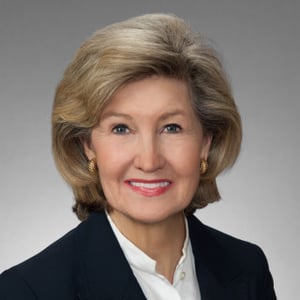
Former United States Ambassador to NATO, Former United States Senator, Texas
Kay Bailey Hutchison is a public servant and businesswoman who has served in roles from bank executive to U.S. Senator to most recently, U.S. Ambassador to NATO. She served as U.S. Senator from Texas from 1993 to 2013. In January 2021, she stepped down from a more than 3-year term as U.S. Ambassador to The North Atlantic Treaty Organization (NATO) in Brussels, Belgium where she worked to maintain U.S. leadership in the 30 Ally Alliance.
Kay Bailey Hutchison is a public servant and businesswoman who has served in roles from bank executive to U.S. Senator to most recently, U.S. Ambassador to NATO. She served as U.S. Senator from Texas from 1993 to 2013. In January 2021, she stepped down from a more than 3-year term as U.S. Ambassador to The North Atlantic Treaty Organization (NATO) in Brussels, Belgium where she worked to maintain U.S. leadership in the 30 Ally Alliance.
Kay has authored three books, including the bestselling American Heroines: The Spirited Women Who Shaped Our Country (2004), Leading Ladies: American Trailblazers (2007) and Unflinching Courage: Pioneering Women Who Shaped Texas (2013).
In 2013, the Dallas City Council honored her by naming the city’s convention center the Kay Bailey Hutchison Convention Center. Also in 2013, The Kay Bailey Hutchison Center for Energy, Law and Business (KBH Energy Center) was created by the University of Texas to provide unique opportunities for business and law school students to learn the energy industry. The Center sponsors an annual symposium for leaders in the energy field to discuss current issues in the industry.
Kay serves on the Dallas Mayor’s International Advisory Council, UT Southwestern Medical Foundation Board of Trustees, and the Board of Directors of the Atlantic Council. She is a Senior Adviser at CSIS (Center for Strategic and International Studies) and the NASA Advisory Council, in Washington DC. She also serves on the Bank of America Global Advisory Board.
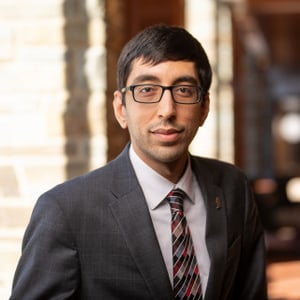
Judicial Law Clerk, U.S. District Court for the Southern District of Florida
Nitin is a recent graduate of Cornell Law School. Before his time in Ithaca, he majored in International Studies and Political Science at Johns Hopkins University and focused on power competition in South Asia during his graduate studies at the University of Oxford.
Beton Michael Kaneb Professor of National Security and Military Affairs, Harvard University
In addition to his roles at Harvard, where he has also served as Harvard College Professor, head of Winthrop House, and Director of the John M. Olin Institute for Strategic Studies, Professor Rosen has also served as the civilian assistant to the director, Net Assessment in the Office of the Secretary of Defense, the Director of Political-Military Affairs on the staff of the National Security Council, and a professor in the Strategic Department at the Naval War College. He participated in the President's Commission on Integrated Long Term Strategy, and in the Gulf War Air Power Survey sponsored by the Secretary of the Air Force. He currently serves as Senior Counsellor at the Long Term Strategy Group. He has published articles on ballistic missile defense, the American theory of limited war, and the strategic implications of the AIDS epidemic. His books include Winning the Next War: Innovation and the Modern Military, Societies and Military Power: India and its Armies, and War and Human Nature.
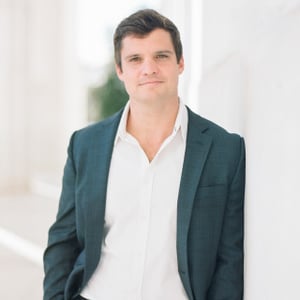
Managing Director, SCF Partners
Daniel G. West invests in energy services, equipment, and technology companies at SCF Partners in Houston, Texas. He provides equity capital and strategic growth assistance to entrepreneurs and leaders of both start-up ventures and established, growing businesses.
Prior to joining the private sector, Mr. West served as an infantry officer in the United States Marine Corps. As a platoon commander with the 22nd Marine Expeditionary Unit aboard the USS Mesa Verde, he led the Tactical Recovery of Aircraft and Personnel force in support of the NATO aerial campaign over Libya. He then served as executive officer of India Company, 3rd Battalion, 9th Marines as it mentored Afghan forces to assume lead security responsibility and executed counter-narcotics missions in Marjah, Helmand Province, Afghanistan. He also served as a clerk for Judge Laurence H. Silberman on the U.S. Court of Appeals for the D.C. Circuit.
Mr. West holds degrees in law, business administration, and economics from Harvard University, where he served as an editor of the Harvard Law Review and taught undergraduate courses in economics and government. He is a member of the Executive Committee of the International & National Security Law Practice Group of the Federalist Society and a term member of the Council on Foreign Relations.
Managing Director, Beacon Global Strategies LLC
From 2011-2013, Mr. Allen served as the Majority Staff Director of the House Permanent Select Committee on Intelligence (HPSCI). Under Chairman Mike Rogers’ (R-MI) direction, the HPSCI restored the process of an annual intelligence authorization bill to fund and give direction to the seventeen elements of the intelligence community, enacting measures for fiscal years 2011, 2012, and 2013. The HPSCI also led the House of Representatives’ consideration of cyber security legislation, passing the Cyber Information Sharing Protection Act (CISPA) with bipartisan majorities in 2012 and 2013.
Prior to joining the HPSCI, he was director for the Bipartisan Policy Center’s successor to the 9/11 Commission, the National Security Preparedness Group, co-chaired by former Congressman Lee Hamilton and former Governor Tom Kean.
Previously, Mr. Allen served in the White House for seven years in a variety of national security policy and legislative roles. At the National Security Council (NSC), he served as Special Assistant to the President and Senior Director for Counter-proliferation Strategy from June 2007 to January 2009 under National Security Advisor Steve Hadley. As Senior Director, he contributed to the development of the U.S. government’s policy on counter-proliferation issues, including on the Iranian, Syrian, and North Korean nuclear files; missile defense; civilian nuclear cooperation including the U.S.-India Civilian Nuclear Cooperation Agreement; U.S. exports controls; bio-defense; and WMD and terrorism.
As the Special Assistant to the President and Senior Director for Legislative Affairs from March 2005 to June 2007, Mr. Allen was the NSC’s chief liaison with the national security committees of Congress and led the confirmation teams of DNI nominees Negroponte and McConnell and CIA Director General Michael Hayden.
From December 2001 to February 2005, Mr. Allen worked in the legislative affairs office of the White House’s Homeland Security Council. As Special Assistant to the President for Legislative Affairs, Mr. Allen was part of team that managed the White House effort to enact the Intelligence Reform and Terrorism Prevention Act of 2004, which created the Office of the Director of National Intelligence.
At the beginning of the Bush Administration, Mr. Allen worked in the Bureau of Legislative Affairs at the Department of State. Mr. Allen received his L.L.M. with distinction in International Law from the Georgetown University Law Center, his J.D. from the University of Alabama (cum laude), and his B.A. from Vanderbilt University.
In addition to his work at the Bipartisan Policy Center, in 2009, Mr. Allen taught National Security Policymaking at the George Washington University Elliott School of International Affairs and served as an advisor for the congressionally-created Commission on WMD and Terrorism co-chaired by Senators Bob Graham and Jim Talent. Mr. Allen was the Intelligence Team Lead for the Romney for President Transition Team.
Mr. Allen is the author of Blinking Red: Crisis and Compromise in American Intelligence After 9/11. (Potomac Books, September 2013).
Senior Fellow, Hudson Institute
Former President Trump appointed Marshall S. Billingslea as Special Presidential Envoy for Arms Control on April 10, 2020 and accorded him the personal rank of Ambassador from May 18, 2020 to November 17, 2020. Billingslea leads arms control negotiations on behalf of the U.S. Government.
Billingslea most recently served as the Assistant Secretary for Terrorist Financing at the U.S. Department of Treasury since June 2017. In that role he built international coalitions and led U.S. efforts to counter illicit financial activities. In 2018 he was selected unanimously by the 37 member countries of the Financial Action Task Force (FATF) — the global anti-money laundering and counter-terrorist financing body — to serve as its President. He also co-chaired the global Counter-ISIS Finance Group and multiple bilateral negotiating fora with friendly and allied nations.
A former senior Pentagon official, Billingslea has deep expertise in arms control and broad experience in foreign policy and national security, having previously served in the Pentagon as the Deputy Under Secretary of the Navy, the Principal Deputy Assistant Secretary of Defense for Special Operations and Low-Intensity Conflict, and as the Deputy Assistant Secretary of Defense for Negotiations Policy. Billingslea has also worked as NATO’s Assistant Secretary General for Defense Investment, and as a Senior Professional Staff Member of the United States Senate Committee on Foreign Relations.
Billingslea holds a Bachelor of Arts from Dartmouth College and a Master of Arts in Law and Diplomacy from Tufts University. He has been decorated with numerous awards internationally including the Cross of Terra Mariana by the President of Estonia; the Knight’s Cross by the President of Poland; and the Cross of the Order of Merit of the Czech Republic. Throughout his years of public service, he has been awarded the Defense Medal for Distinguished Public Service by the U.S. Secretary of Defense; decorated by the U.S. Secretary of the Navy with the Distinguished Public Service medal; he was most recently awarded the Treasury Medal by the U.S. Secretary of the Treasury.
Professor of the Practice of Law and Executive Director, Center on Law, Ethics and National Security, Duke University Law School
Charles J. Dunlap Jr. joined the Duke Law faculty in July 2010 where he is currently a professor of the practice of law and Executive Director of the Center on Law, Ethics and National Security. His teaching and scholarly writing focus on national security, law of armed conflict, the use of force under international law, civil-military relations, cyberwar, airpower, military justice, and ethical issues related to the practice of national security law.
Dunlap retired from the Air Force in June 2010, having attained the rank of major general during a 34-year career in the Judge Advocate General Corps. In his capacity as Deputy Judge Advocate General spanning from May 2006 to March 2010, he assisted the Judge Advocate General in the professional supervision of more than 2,200 judge advocates, 350 civilian lawyers, 1,400 enlisted paralegals, and 500 civilians around the world. In addition to overseeing an array of military justice, operational, international, and civil law functions, he provided legal advice to commanders and civilian leaders at all levels.
In the course of his career, Dunlap has been involved in various high-profile interagency and policy matters, including his testimony before the U.S. House of Representatives concerning the Military Commissions Act of 2006.
Dunlap previously served as the senior lawyer (staff judge advocate) at Air Combat Command Headquarters at Langley Air Force Base in Virginia, at Air Education and Training Command Headquarters at Randolph Air Force Base in Texas, and at U.S. Strategic Command, Omaha, Nebraska, among other leadership posts. Additionally, he served on the faculty of the Air Force Judge Advocate General School where he taught various civil and criminal law topics. An experienced trial lawyer, he also spent two years as a military trial judge for a 22-state circuit. He served tours in the United Kingdom and Korea, and deployed for operations in the Middle East and Africa. He also led military-to-military delegations to Colombia, Uruguay, South Africa, and the Czech Republic.
A prolific author and accomplished public speaker, Dunlap’s commentary on a wide variety of national security topics has been published in leading newspapers and military journals. His 2001 essay written for Harvard University’s Carr Center on “lawfare,” a concept he defines as “the use or misuse of law as a substitute for traditional military means to accomplish an operational objective,” has been highly influential among military scholars and in the broader legal academy.
Dunlap is also the author of the prize-winning essay, “The Origins of the Military Coup of 2012”, originally published in 1992, which was selected for the 40th Anniversary Edition of Parameters (Winter 2010-2011).
Dunlap’s legal scholarship has been published in the Stanford Law Review, the Yale Journal of International Affairs, the Harvard Law’s National Security Journal, the Wake Forest Law Review, the Fletcher Forum of World Affairs, the University of Nebraska Law Review, the Texas Tech Law Review, Temple Law’s Journal of International & Comparative Law, the University of North Carolina’s Journal of International Law, the Connecticut Law Review, the Tennessee Law Review, and the Vanderbilt Journal of Transnational Law, among others.
He’s also authored numerous articles and opinion pieces in a range of publications including The Atlantic, the New York Times, the Washington Post, the Washington Times, the Air Force Times, Strategic Studies Quarterly, the Georgetown Journal of International Affairs, Business Insider, the Journal of Genocide Research, The Hill, Small Wars Journal, and the blogs, Lawfare and Just Security.
Maj Gen Dunlap founded his blog Lawfire in 2015 and has since written over 300 posts on a wide variety of subjects.
Dunlap's wife, Joy, was a vice president of the National Association of Broadcasters, and later a deputy director of Government Relations for the Military Officers Association of America. She served as the elected president of Duke Campus Club, and is a recipient of the prestigious Order of the Emerald by Kappa Delta sorority. Her blog, Speaking Joyfully, won 3rd place in the blog category at the 2021 Blue Ridge Mountains Christian Writers Conference. They reside in Durham.

Judge, United States Court of Appeals, Sixth Circuit
Judge Readler earned his undergraduate and law degrees from the University of Michigan. After graduating, he served as a law clerk to Judge Alan Norris of the United States Court of Appeals for the Sixth Circuit. Judge Readler then began practicing law in the Columbus office of the international law firm Jones Day, eventually spending ten years as a partner in the firm’s Issues and Appeals Practice Group. While at Jones Day, Judge Readler appeared in state and federal trial and appellate courts around the country, most frequently the Supreme Court of Ohio and the Sixth Circuit. Judge Readler also successfully argued before the United States Supreme Court in McQuiggin v. Perkins on behalf of an inmate claiming actual innocence. His other pro bono representations include representing capital defendants before the Tenth Circuit and the Supreme Court of Ohio, as well as representing defendants sentenced to life in prison before the Sixth Circuit. While at Jones Day, Judge Readler traveled to Nairobi with Lawyers Without Borders to train Kenyan lawyers in prosecuting domestic violence cases, and he was also a recipient of the American Marshall Memorial Fellowship awarded by the German Marshall Fund of the United States. Following his career in private practice, Judge Readler served as Acting Assistant Attorney General for the Civil Division of the United States Department of Justice from 2017 to 2019. In that role, Judge Readler led and supervised over 1,000 lawyers in the Department’s largest litigating division, briefing and arguing several cases on behalf of the United States in federal courts across the country, including high-profile cases significant to the Administration and the Department. In March 2019, Judge Readler was confirmed to serve as a Circuit Judge on the Sixth Circuit. He resides in Columbus.
Director of the Center for Eurasian, Russian and East European Studies and Professor of Government and Foreign Service, Georgetown University
Angela Stent is Director of the Center for Eurasian, Russian and East European Studies and Professor of Government and Foreign Service at Georgetown University. She is also a Senior Fellow (non-resident) at the Brookings Institution and co-chairs its Hewett Forum on Post-Soviet Affairs. During the academic year 2015-2016 she is a fellow at the Transatlantic Academy of the German Marshall Fund. From 2004-2006 she served as National Intelligence Officer for Russia and Eurasia at the National Intelligence Council. From 1999 to 2001, she served in the Office of Policy Planning at the U.S. Department of State. Stent’s academic work focuses on the triangular political and economic relationship between the United Sates, Russia and Europe. Her publications include: Russia and Germany Reborn: Unification, The Soviet Collapse and The New Europe (Princeton University Pres, 1999); From Embargo to Ostpolitik: The Political Economy of West German-Soviet Relations, 1955-1980 (Cambridge University Press, 1981); “Repairing US-Russian Relations: A Long Road Ahead” (2009) “Restoration and Revolution in Putin’s Foreign Policy,” (2008), “An Energy Superpower? Russia and Europe” (2008) and “Reluctant Europeans: Three Centuries of Russian Ambivalence Toward the West,” (2007), “Putin’s World” (2014). Her latest book is The Limits of Partnership: US-Russian Relations in the Twenty-First Century (Princeton University Press, 2014), for which she won the American Academy of Diplomacy’s Douglas Dillon prize for the best book on the practice of American Diplomacy. She is a member of the senior advisory panel for NATO’s Supreme Allied Commander in Europe. She is a member of the Council on Foreign Relations. She is a contributing editor to Survival and is on the editorial boards of the Journal of Cold War Studies, World Policy Journal, Internationale Politik and Mirovaia Ekonomika i Mezhdunarodnie Otnosheniie. She has served on the World Economic Forum’s Global Agenda Council for Russia and Central Asia. She is a Trustee of the Eurasia Foundation and of Supporters of Civil Society in Russia. Dr. Stent received her B.A. from Cambridge University, her MSc. with distinction from the London School of Economics and Political Science and her M.A. and PhD. from Harvard University.
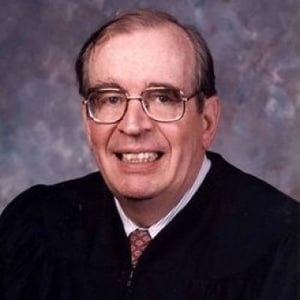
Judge, United States Court of Appeals, Fifth Circuit
William Lockhart Garwood (October 29, 1931 – July 14, 2011) was a United States Circuit Judge of the United States Court of Appeals for the Fifth Circuit. Garwood joined the court in 1981 after being nominated by President Ronald Reagan. He was serving on senior status at the time of his death.
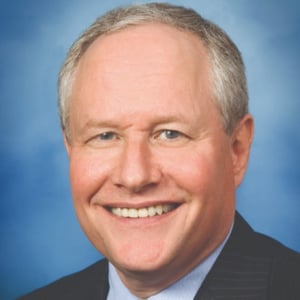
Editor, The Weekly Standard
William Kristol is the editor of The Weekly Standard. He is also a regular panelist on Fox News Sunday, a contributor for the Fox News Channel, and a monthly columnist for the Washington Post. Before starting the Weekly Standard in 1995, Mr. Kristol led the Project for the Republican Future, where he helped shape the strategy that produced the 1994 Republican congressional victory. Prior to that, Mr. Kristol served as chief of staff to Vice President Dan Quayle during the first Bush Administration, and to Education Secretary William Bennett under President Reagan. Before coming to Washington in 1985, Mr. Kristol was on the faculty of Harvard University’s Kennedy School of Government and the Department of Political Science at the University of Pennsylvania.
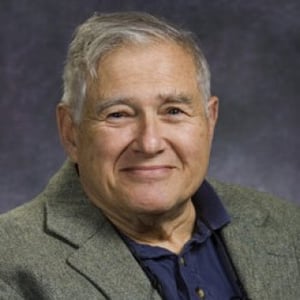
Heller Professor of Political Science, University of California, Berkeley
Nelson Woolf Polsby (October 25, 1934 – February 6, 2007) was an American political scientist. He specialized in the study of the United States presidency, the United States Congress and how governmental policies and practices evolve.
Polsby was the Heller Professor of Political Science at the University of California, Berkeley. He was the editor of the American Political Science Review from 1971–77 and the founding editor of the Annual Review of Political Science from 1998 until his death in 2007.
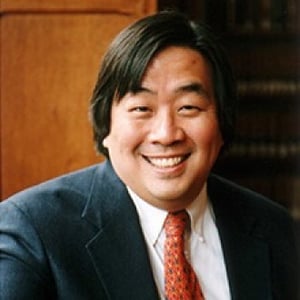
Sterling Professor of International Law, Yale Law School
Harold Hongju Koh is Sterling Professor of International Law at Yale Law School. He returned to Yale Law School in January 2013 after serving for nearly four years as the 22nd Legal Adviser of the U.S. Department of State.
Professor Koh is one of the country’s leading experts in public and private international law, national security law, and human rights. He first began teaching at Yale Law School in 1985 and served as its fifteenth Dean from 2004 until 2009. From 2009 to 2013, he took leave as the Martin R. Flug ’55 Professor of International Law to join the State Department as Legal Adviser, service for which he received the Secretary of State's Distinguished Service Award. From 1993 to 2009, he was the Gerard C. & Bernice Latrobe Smith Professor of International Law at Yale Law School, and from 1998 to 2001, he served as U.S. Assistant Secretary of State for Democracy, Human Rights and Labor.
Professor Koh has received seventeen honorary degrees and more than thirty awards for his human rights work, including awards from Columbia Law School and the American Bar Association for his lifetime achievements in international law. He has authored or co-authored eight books, published more than 200 articles, testified regularly before Congress, and litigated numerous cases involving international law issues in both U.S. and international tribunals. He is a Fellow of the American Philosophical Society and the American Academy of Arts and Sciences, an Honorary Fellow of Magdalen College, Oxford, and a member of the Council of the American Law Institute.
He holds a B.A. degree from Harvard College and B.A. and M.A. degrees from Oxford University, where he was a Marshall Scholar. He earned his J.D. from Harvard Law School, where he was Developments Editor of the Harvard Law Review. Before coming to Yale, he served as a law clerk for Justice Harry A. Blackmun of the United States Supreme Court and Judge Malcolm Richard Wilkey of the U.S. Court of Appeals for the D.C. Circuit, worked as an attorney in private practice in Washington, and served as an Attorney-Adviser for the Office of Legal Counsel, U.S. Department of Justice.
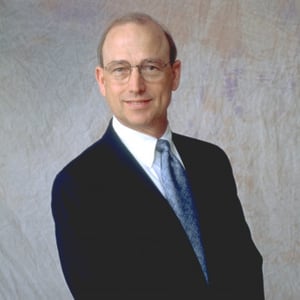
David C. Baum Professor Emeritus, University of Illinois College of Law
John Nowak graduated from College of Law in 1971, with the highest grade point average in the graduating class. During his third year at the College of Law, he served as the editor-in-chief of the University of Illinois Law Forum [now renamed as the University of Illinois Law Review]. Following graduation, John clerked for Justice Walter Schaefer of the Illinois Supreme Court. Professor Nowak joined the University of Illinois College of Law faculty in 1972; for thirty years he was what academics euphemistically call “a full-time professor.” He was the David C. Baum Professor at the College of Law from 1993 until his retirement in 2002; he received the “outstanding professor award” from three graduating classes of the College. As an emeritus professor, John taught courses at the College of Law from 2002 to 2008.
In 2008, Professor Nowak was the first professor appointed to the Raymond and Mary Simon Chair in Constitutional Law at Loyola University Chicago. He served in that position at Loyola from 2008-2014; he was awarded the “outstanding professor award” by the Loyola graduating class of 2011. In 2014, illness once again led Professor Nowak to retire. The Loyola University Chicago Board of Trustees awarded Professor Nowak the title of Professor and Raymond and Mary Simon Chair in Constitutional Law Emeritus.
Professor Nowak is the author, or coauthor, of more than a score of law review articles, including articles in the California, Columbia, Georgetown, Michigan, Northwestern, U.C.L.A., and Virginia Law Reviews, and the Supreme Court Review (published by the University of Chicago Press). With Jenner Professor Emeritus Professor Ronald D. Rotunda, Professor Nowak has coauthored: Concise Hornbook on Constitutional Law (4th edition, Thomson-West 2010); Constitutional Law (8th edition, Thomson-West 2010); and the six-volume Treatise on Constitutional Law: Substance and Procedure (5th ed., 2012-2013, West & Thomson-Reuters-Westlaw). Their multi-volume Treatise, which has annual supplements, also serves as the “conlaw” database on Westlaw. A chapter of Constitutional Law was translated into Korean by Professor Lee Boo-Ha, Yeungnam University College of Law and Political Science, and published in Korea as Nowak & Rotunda, Freedom of Speech and the American Constitution. Professors Nowak and Rotunda are also the editors of Story’s Commentaries on the Constitution (1987, Carolina Academic Press).
Professor Nowak has been a scholar in residence at the University of Arizona; a visiting professor at the University of Michigan; the Lee Distinguished Visiting Professor at the College of William and Mary, and the Williams Visiting Professor at the University of Richmond. He has presented lectures at several law schools; the National Conference of Law Reviews annual meeting; and at a variety of Federal Judicial Center programs. Professor Nowak served as Reporter for the National Center for State Courts’ Task Force on Courts in the American System of Government; Reporter for the Illinois Supreme Court’s Committee on Jury Instructions in Criminal Cases; Reporter for the United States District Courts for the Central and Southern Districts of Illinois Speedy Trial Act Planning Groups; and as a member of the Rules Committee of the United States District Court for the Northern District of Illinois.
Professor Nowak is a member of the American Bar Foundation, and a “life member” of the American Law Institute. He has served as a member of the Order of the Coif Triennial Book Award Committee; and as a member or a chairperson of the several committees of the Association of American Law Schools. Twice, Professor Nowak was elected to serve as the chairperson of the AALS Section on Constitutional Law. He served as the University of Illinois Faculty Athletic Representative to the Big Ten Conference and NCAA from 1981 through 1989; and a member of the NCAA’s Committee on Infractions from 1987 to 1990. Professor Nowak served as the “Interim Deputy Chancellor for Intercollegiate Athletics,” during the time when the University of Illinois Division of Intercollegiate Athletics replaced the University’s “Athletic Association,” and the campus did not have an Athletics Director.
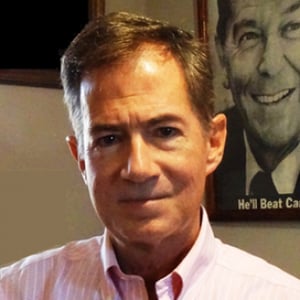
Former General Counsel of the U.S. Immigration and Naturalization, Former United States Ambassador to East Timor
Grover Joseph Rees is a Louisiana native whose family has lived in the Breaux Bridge/Lafayette area since the 1700s.
His first job after college was as an assistant to Congressman Dave Treen (R-LA3), who had just been elected as the first Republican Congressman from Louisiana since Reconstruction.
Rees graduated with honors from LSU Law School, where he served as Editor-in-Chief of the Louisiana Law Review. While in law school he worked on Ronald Reagan’s 1976 presidential campaign and was a Reagan delegate from Louisiana to the Republican National Convention. He also served as a member of the Lafayette Parish Republican Executive Committee and as a board member of Acadiana Right to Life.
In 1979, when Congressman Treen ran successfully for Governor, he asked Rees to write his authorized biography. The book, Dave Treen of Louisiana, was read and discussed widely during the campaign and after Treen’s election.
In 1985-86 Rees served as Special Counsel for Judicial Selection in President Reagan’s Justice Department, working closely with Attorney General Ed Meese to reorganize the judicial selection process to make it more philosophically oriented. These efforts resulted in the appointment of over 100 federal judges and were widely credited with transforming the federal judiciary.
From 1986 through 1991 Rees served as Chief Justice of the High Court of American Samoa, an Article I federal judicial position.
From 1991 through 1993 he was General Counsel of the U.S. Immigration and Naturalization Service.
In 1995 Rees went to work for the new Republican Congress as staff director and chief counsel of the Subcommittee on International Operations and Human Rights. He worked with subcommittee chairman Chris Smith (R.-N.J.) to cut U.S. funding for the International Planned Parenthood Federation and other organizations that perform and promote abortions overseas. Rees also worked on the drafting and enactment of the International Religious Freedom Act, the Trafficking Victims Protection Act, and other legislation that has helped to bring U.S. foreign policy into closer alignment not only with our national interests but also with our values.
In 2001-2002 Rees worked for Congressman Henry Hyde (R.-Ill.), who was then serving as Chairman of the House International Relations Committee.
From 2002 until 2006 Rees served as the first United States Ambassador to newly independent East Timor.
From 2006 until 2009 Ambassador Rees was the United States Special Representative for Social Issues, responsible for representing the United States on issues relating to vulnerable persons and the family within the United Nations system.
Ambassador Rees retired from government service in January 2009 and returned to Lafayette. He is married to Lan Dai Nguyen Rees and is a member of St. Genevieve’s Catholic parish in Lafayette. He was recently elected to serve as a member of the Louisiana Republican State Central Committee.
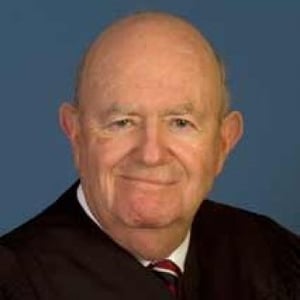
Judge, United States Court of Appeals, District of Columbia Circuit
LAURENCE HIRSCH SILBERMAN, senior circuit judge; recipient of the Presidential Medal of Freedom, June 19, 2008; born in York, PA, October 12, 1935; son of William Silberman and Anna (Hirsch); married to Rosalie G. Gaull on April 28, 1957 (deceased), married Patricia Winn on January 5, 2008; children: Robert Steven Silberman, Katherine DeBoer Fischer, and Anne Gaull Otis; B.A., Dartmouth College, 1957; LL.B., Harvard Law School, 1961; admitted to Hawaii Bar, 1962; District of Columbia Bar, 1973; associate, Moore, Torkildson and Rice, 1961–64; partner (Moore, Silberman and Schulze), Honolulu, 1964–67; attorney, National Labor Relations Board, Office of General Counsel, Appellate Division, 1967–69; Solicitor, Department of Labor, 1969–70; Under Secretary of Labor, 1970–73; partner, Steptoe and Johnson, 1973–74; Deputy Attorney General of the United States, 1974–75; Ambassador to Yugoslavia, 1975–77; President’s Special Envoy on ILO Affairs, 1976; senior fellow, American Enterprise Institute, 1977–78; visiting fellow, 1978–85; managing partner, Morrison and Foerster, 1978–79 and 1983–85; executive vice president, Crocker National Bank, 1979–83; lecturer, University of Hawaii, 1962–63; board of directors, Commission on Present Danger, 1978–85, Institute for Educational Affairs, New York, NY, 1981–85, member: General Advisory Committee on Arms Control and Disarmament, 1981–85; Defense Policy Board, 1981–85; vice chairman, State Department’s Commission on Security and Economic Assistance, 1983–84; American Bar Association (Labor Law Committee, 1965–72, Corporations and Banking Committee, 1973, Law and National Security Advisory Committee, 1981–85); Hawaii Bar Association Ethics Committee, 1965–67; Council on Foreign Relations, 1977–present; Judicial Conference Committee on Court Administration and Case Management, 1994; member, U.S. Foreign Intelligence Surveillance Act Court of Review, 1996–2003; Adjunct Professor of Law (Administrative Law and Labor Law) Georgetown Law Center, 1987–94; 1997; Adjunct Professor of Law, Harvard Law School, 1994-95, Adjunct Professor of Law, New York University Law School, 1995–96; Distinguished Visitor from the Judiciary, Georgetown Law Center, 2003–2019; co-chairman of the President’s Commission on The Intelligence Capabilities of the United States Regarding Weapons of Mass Destruction, 2004–05; appointed to the U.S. Court of Appeals for the District of Columbia Circuit by President Reagan on October 28, 1985.
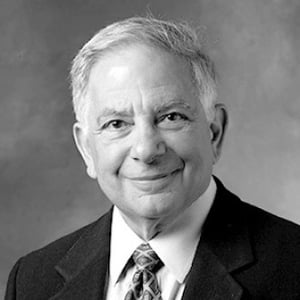
George P. Shultz Senior Fellow in Foreign Policy and National Security Affairs, Emeritus, Hoover Institution
Abraham D. Sofaer was appointed the first George P. Shultz Distinguished Scholar and Senior Fellow at the Hoover Institution in 1994. Named in honor of former US secretary of state George P. Shultz, the appointment is awarded to a senior scholar whose broad vision, knowledge, and skill will be brought to bear on the problems presented by a radically transformed global environment.
Sofaer's work focuses on the power over war within the US government and on issues related to international law, terrorism, diplomacy, and national security. His most recent books are Taking on Iran: Strength, Diplomacy, and the Iranian Threat(Hoover Institution Press, 2013) and The Best Defense?: Legitimacy and Preventive Force (Hoover Institution Press, 2010).
From 1985 to 1990, he served as a legal adviser to the US Department of State, where he resolved several interstate matters, including the dispute between Egypt and Israel over Taba, the claim against Iraq for its attack on the USS Stark, and the claims against Chile for the assassination of Orlando Letelier. He received the Distinguished Service Award in 1989, the highest state department award given to a non–civil servant.
From 1979 to 1985, Sofaer served as a US district judge in the Southern District of New York. From 1969 to 1979, he was a professor of law at Columbia University School of Law and wrote War, Foreign Affairs, and Constitutional Power: The Origins.From 1967 to 1969, he was an assistant US attorney in the Southern District of New York, after clerking for Judge J. Skelly Wright on the US Court of Appeals in Washington, DC, and the Honorable William J. Brennan Jr. on the US Supreme Court. He practiced law at Hughes, Hubbard and Reed from 1990 to 1994.
A veteran of the US Air Force, Sofaer received an LLB degree from New York University School of Law in 1965, where he was editor in chief of the law review. He holds a BA in history from Yeshiva College (1962). Sofaer is a founding trustee of the National Museum of Jazz in Harlem and a member of the board of the Koret Foundation.
His research papers are available at the Hoover Institution Archives.

James Monroe Distinguished Professor of Law and Albert Clark Tate, Jr., Professor of Law, University of Virginia School of Law
Professor Saikrishna Prakash’s scholarship focuses on separation of powers, particularly executive powers. He teaches Constitutional Law, Foreign Relations Law and Presidential Powers at the Law School.
Prakash’s most recent book, “The Living Presidency: An Originalist Argument Against Its Ever-Expanding Powers,” was published by Harvard Belknap Press in 2020. He also authored “Imperial from the Beginning: The Constitution of the Original Executive” (Yale University Press, 2015). The former book focuses on the modern presidency while the latter considers the presidency of the Founders.
Prakash has authored over 75 law review articles. Among them are “Of Synchronicity and Supreme Law” in the Harvard Law Review, “The Indefensible Duty to Defend” in the Columbia Law Review, and “50 States, 50 Attorneys General and 50 Approaches to the Duty to Defend” and “The Executive Power Over Foreign Affairs” in the Yale Law Journal.
Prakash has published op-eds in The New York Times, The Wall Street Journal and the Los Angeles Times. At the request of Democrats and Republicans, he has testified before Congress on matters of presidential removal, the Mueller Report and how Congress might better check the presidency. He is currently a Miller Center Senior Fellow. In 2015, he received the Roger Traynor award for faculty scholarship. In the same year, he received an honorable mention from the American Society of Legal Writers for his book “Imperial from the Beginning.” He has given named lectures at William & Mary Law School, Princeton University and Toledo Law School, and keynote addresses at several conferences.
Prakash majored in economics and political science at Stanford University. At Yale Law School, he served as senior editor of the Yale Law Journal and received the John M. Olin Fellowship in Law, Economics and Public Policy. He subsequently clerked for Judge Laurence H. Silberman of the U.S. Court of Appeals for the District of Columbia Circuit and for Justice Clarence Thomas of the U.S. Supreme Court. After practicing in New York for two years, he served as a visiting professor at the University of Illinois College of Law and as an associate professor at Boston University School of Law. He then spent several years at the University of San Diego School of Law as the Herzog Research Professor of Law. Prakash has been a visiting professor at Northwestern University and the University of Chicago. He also has served as a James Madison Fellow at Princeton University and Visiting Research Fellow at the Hoover Institution of War & Peace at Stanford University.

Emanuel S. Heller Professor of Law, University of California at Berkeley; Thomas Smith Senior Research Fellow, The Civitas Institute, University of Texas at Austin
John Yoo is the Emanuel Heller Professor of Law at the University of California at Berkeley. He is also the Thomas Smith Senior Research Fellow, Civitas Institute, at the University of Texas at Austin. He is also a Nonresident Senior Fellow at the American Enterprise Institute.
His most recent book, The Politically Incorrect Guide to the Supreme Court, co-authored with Robert Delahunty, was published in 2023. Professor Yoo’s other books include Defender-in-Chief: Trump’s Fight for Presidential Power; Striking Power: How Cyber, Robots, and Space Weapons Change the Rules for War; Point of Attack: Preventive War, International Law, and Global Welfare; and Crisis and Command: A History of Executive Power from George Washington to George Bush.
He is a co-author of volumes 1 and 2 of R. Rossum, G. Tarr, V. Munoz & J. Yoo American Constitution Law (Routledge, 2026), and a co-editor of the eight-volume series on the 250th anniversary of the American Revolution, We Hold These Truths, with Yuval Levin and Adam White of the American Enterprise Institute.
Professor Yoo has published more than 100 articles in academic journals on subjects including national security, constitutional law, international law, and the Supreme Court. He also regularly contributes to the editorial pages of the Wall Street Journal, New York Times, Washington Post, Los Angeles Times, and National Review, among others.
Professor Yoo has served in all three branches of government. He was an official in the U.S. Department of Justice, where he worked on national security and terrorism issues after the 9/11 attacks. He served as general counsel of the U.S. Senate Judiciary Committee. He has been a law clerk for Supreme Court Justice Clarence Thomas and federal appeals Judge Laurence Silberman. He has been a visiting professor at the University of Texas at Austin’s School of Civic Leadership, Seoul National University, the Interdisciplinary Center Herzliya, Keio University, Trento University, the University of Chicago, and the Free University of Amsterdam.
Professor Yoo supervises the Public Law and Policy Program and the California Constitution Center. He also serves on the boards of Founding Forward, the Washington Legal Foundation, the Pacific Legal Foundation, the Ulysses Grant Institute, the Federalist Society’s Separation of Powers and Federalism Division, the Universidad Cientifica del Sur Law School, and the Asia-Pacific Law Institute at Seoul National University. He is a winner of the Federalist Society’s Paul Bator award and the Heritage Foundation’s Edwin Meese III Originalism Lectureship.
Professor Yoo graduated from Yale Law School and summa cum laude from Harvard College.
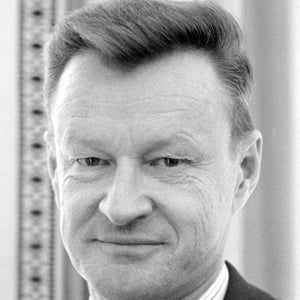
Former United States National Security Advisor
Zbigniew Brzezinski (born 1928) was assistant to the president of the United States for national security affairs during the Carter administration (1977-1980). Later he was associated with the Center for Strategic and International Studies in Washington D.C. He authored several books through which he expounded his philosophies as well as his political beliefs and ideals.

David McIntosh is a leader for the principles of limited constitutional government and individual freedom. He is president of the Club for Growth, the leading advocate for economic liberty.
Former Congressman David McIntosh represented Indiana's 2nd Congressional District in the United States Congress from 1995-2001. As a Freshman, David chaired the Subcommittee on Regulatory Relief. He passed the Congressional Review Act and held extensive oversight and field hearings to build a record of public support for regulatory relief initiatives in energy, biotechnology, pharmaceutical, healthcare, transportation and technology sectors. Another issue that he championed was the elimination of the marriage penalty in the Federal Tax Code.
David served during the Reagan administration as special assistant to Attorney General Edwin Meese III, and as special assistant to President Reagan for Domestic Affairs. During the first Bush administration, he served as executive director of the President's Council on Competitiveness and assistant to the Vice President. The Competitiveness Council coordinated the cost/benefit review of major regulations and promoted legal reform measures.
David is a co-founder of the Federalist Society for Law and Public Policy and serves on the Board of Directors. He remains active with several free market and conservative think tanks and grassroots organizations. David has also had stints at the Hudson Institute and as a Professor of Economics at Ball State School of Business.
Prior to the Club for Growth, David was a partner at Mayer Brown, LLP in Washington, DC.
David graduated from the University of Chicago Law School in 1983, and Yale University, BA, cum laude, in 1980. He and his wife, Ruthie, are the proud parents of Ellie age 17 and Davey age 13.
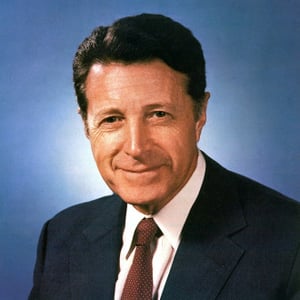
Former United States Secretary of Defense
Caspar Weinberger (August 18, 1917 – March 28, 2006) was an American politician and businessman. As a prominent Republican, he served in a variety of state and federal positions for three decades, including Chairman of the California Republican Party, 1962–68. Most notably he was Secretary of Defense under President Ronald Reagan from 1981 to 1987.
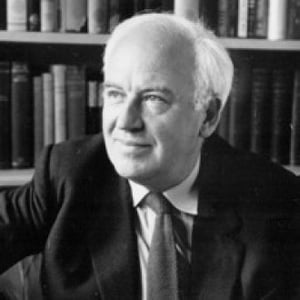
Author
Godfrey Hodgson was director of the Reuters' Foundation Programme at Oxford University, and before that the Observer's correspondent in the United States and foreign editor of the Independent. He is the author of The Myth of American Exceptionalism (Yale University Press, 2009).
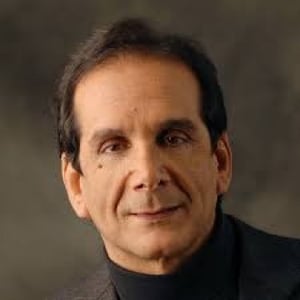
Columnist
Charles Krauthammer wrote a syndicated column for The Washington Post which appeared in more than 400 newspapers worldwide and for which he won the 1987 Pulitzer Prize. He was a FOX News commentator, appearing nightly on FOX's evening news program, Special Report with Bret Baier.
His book Things That Matter: Three Decades of Passions, Pastimes and Politics, a #1 New York Times bestseller, has sold more than a million copies. His book The Point of It All: A Lifetime of Great Loves and Endeavors is now available for order.
Born in New York City and raised in Montreal, Krauthammer was educated at McGill University (B.A. 1970), Oxford University (Commonwealth Scholar in Politics) and Harvard (M.D. 1975). While serving as chief resident in psychiatry at the Massachusetts General Hospital, he co-discovered a form of bipolar disease.
In 1978, he quit medical practice, came to Washington to help direct planning in psychiatric research in the Carter administration. In 1980, he served as a speechwriter to Vice President Walter Mondale. He joined The New Republic in 1981. Three years later his New Republic essays won the National Magazine Award for Essays and Criticism.
From 2001 to 2006, he served on the President's Council on Bioethics. He was president of The Krauthammer Foundation and chairman of Pro Musica Hebraica, an organization dedicated to the recovery and performance of lost classical Jewish music. He was also a member of Chess Journalists of America.
In his last column, he announced his terminal illness and reflected on his remarkable life. He passed away on June 21, 2018.
Essayist, Editor, and Publisher
Irving Kristol (born Jan. 20, 1920, Brooklyn, N.Y., U.S.—died Sept. 18, 2009, Arlington, Va.), American essayist, editor, and publisher, best known as an intellectual founder and leader of the neoconservative movement in the United States. His articulation and defense of conservative ideals against the dominant liberalism of the 1960s influenced generations of intellectuals and policymakers and contributed to the resurgence of the Republican Party in the late 1960s and its electoral successes in the 1980s.
Emeritus Professor of Law, George Mason University
As a professor of law and economics, Gordon Tullock brought the experience of a rich and varied professional career with him to George Mason University and the Mercatus Center. He was a member of the United States Foreign Service from 1947 until 1956, serving in China, Hong Kong, and Korea. He was a postdoctoral fellow at the Thomas Jefferson Center for Political Economy at the University of Virginia and a member of the faculties of the University of South Carolina, the University of Virginia, and Rice University, as well as a University Distinguished Professor at Virginia Polytechnic Institute and State University. Professor Tullock was the Holbert R. Harris University Professor at George Mason University from 1983-1987 and was the Karl Eller Professor of Economics and Political Science at the University of Arizona prior to joining the faculty of George Mason School of Law. He is a member of and has held offices in a variety of professional associations and has been the recipient of numerous honors over the course of his career.
Professor Tullock was the first recipient of the Lastly T. Wilkins Award, received the 1992 Frank E. Seidman Distinguished Award in Political Economy, and was presented with the 1993 Adam Smith Award. In 1996, Professor Tullock was named a member of the American Political Science Review Hall of Fame and also was honored with an Award for Outstanding Contributions in the field of law and economics by George Mason University School of Law. In January 1998, he was made a Distinguished Fellow of the American Economic Association. From founding the Public Choice Society, he has been a member of the Board and is a past president. He is also a past president of the Western Economic Association and the Southern Economic Association. He is a member of the American Academy of Arts and Sciences, Association of Asian Studies, the Mont Pelerin Society, and the usual collection of economic associations.
Professor Tullock received his education at Yale University (Chinese, 1949-1951), Cornell University (Chinese, 1951-1952), and at the University of Chicago Law School (JD, 1947). He was awarded an honorary doctor of laws from the University of Chicago in 1992. He also holds honorary doctorates from Basel and Universidad Francisco Marroquin.
Felix Frankfurter Professor of Law, Harvard Law School
Professor Alan M. Dershowitz is Brooklyn native who has been called “the nation’s most peripatetic civil liberties lawyer” and one of its “most distinguished defenders of individual rights,” “the best-known criminal lawyer in the world,” “the top lawyer of last resort,” “America’s most public Jewish defender” and “Israel’s single most visible defender – the Jewish state’s lead attorney in the court of public opinion.” He is the Felix Frankfurter Professor of Law at Harvard Law School. Dershowitz, a graduate of Brooklyn College and Yale Law School, joined the Harvard Law School faculty at age 25 after clerking for Judge David Bazelon and Justice Arthur Goldberg.
He has also published more than 1000 articles in magazines, newspapers, journals and blogs such as The New York Times Magazine, The Washington Post, The Wall Street Journal, The Harvard Law Review, the Yale Law Journal, Huffington Post, Newsmax, Jerusalem Post and Ha’aretz. Professor Dershowitz is the author of 30 fiction and non-fiction works with a worldwide audience, including The New York Times #1 bestseller Chutzpah and five other national bestsellers. His autobiography, Taking the Stand: My Life in the Law, was published in October 2013 by Crown, a division of Random House. Earlier titles include “an exceptional, action packed book,” The Trials of Zion, a novel which has been called “a thought-provoking page turner;” Rights From Wrong; The Case For Israel; The Case For Peace; Blasphemy; Preemption; Finding Jefferson; and Shouting Fire.
In addition to his numerous law review articles and books about criminal and constitutional law, he has written, taught and lectured about history, philosophy, psychology, literature, mathematics, theology, music, sports – and even delicatessens.
His writing has been praised by Truman Capote, Saul Bellow, William Styron, David Mamet, Aharon Appelfeld, A.B. Yehoshua, Elie Wiesel, Richard North Patterson, and Henry Louis Gate, Jr. More than a million of his books—translated in many languages—have been sold worldwide.
In 1983, the Anti-Defamation League of the B'nai B'rith presented him with the William O. Douglas First Amendment Award for his "compassionate eloquent leadership and persistent advocacy in the struggle for civil and human rights." In presenting the award, Nobel Laureate Elie Wiesel said: "If there had been a few people like Alan Dershowitz during the 1930s and 1940s, the history of European Jewry might have been different." Professor Dershowitz has been awarded the honorary doctor of laws degree by Yeshiva University, Brooklyn College, Syracuse University, Tel Aviv University, New York City College, Haifa University and several other institutions of learning. He has also been the recipient of numerous academic awards including a Guggenheim Fellowship for his work on human rights, a fellowship at The Center for The Advanced Study of Behavioral Sciences and several Dean’s Awards for his books.
He has been the subject of two New Yorker cartoons, a New York Times crossword puzzle, and a Trivial Pursuit question. A sandwich at Fenway Park has been named after him—pastrami, of course. He is married to Carolyn Cohen, a PhD psychologist. He has three children, one a film producer, one a lawyer for the Women’s National Basketball Association and one a professional actor. He also has two grandchildren, one a college junior and the other a college freshman.
William Davidson Distinguished Fellow and Counselor, The Washington Institute
Ambassador Dennis Ross is counselor and William Davidson Distinguished Fellow at The Washington Institute for Near East Policy. Prior to returning to the Institute in 2011, he served two years as special assistant to President Obama and National Security Council senior director for the Central Region, and a year as special advisor to Secretary of State Hillary Rodham Clinton.
For more than twelve years, Ambassador Ross played a leading role in shaping U.S. involvement in the Middle East peace process and dealing directly with the parties in negotiations. A highly skilled diplomat, Ambassador Ross was U.S. point man on the peace process in both the George H. W. Bush and Bill Clinton administrations. He was instrumental in assisting Israelis and Palestinians to reach the 1995 Interim Agreement; he also successfully brokered the 1997 Hebron Accord, facilitated the 1994 Israel-Jordan peace treaty, and intensively worked to bring Israel and Syria together.
A scholar and diplomat with more than two decades of experience in Soviet and Middle East policy, Ambassador Ross worked closely with Secretaries of State James Baker, Warren Christopher, and Madeleine Albright. Prior to his service as special Middle East coordinator under President Clinton, Ambassador Ross served as director of the State Department's Policy Planning Staff in the first Bush administration. In that capacity, he played a prominent role in U.S. policy toward the former Soviet Union, the unification of Germany and its integration into NATO, arms control negotiations, and the 1991 Gulf War coalition.
During the Reagan administration, he served as director of Near East and South Asian affairs on the National Security Council staff and deputy director of the Pentagon's Office of Net Assessment. Ambassador Ross was awarded the Presidential Medal for Distinguished Federal Civilian Service by President Clinton, and Secretaries Baker and Albright presented him with the State Department's highest award.
A 1970 graduate of UCLA, Ambassador Ross wrote his doctoral dissertation on Soviet decisionmaking, and from 1984 to 1986 served as executive director of the Berkeley-Stanford program on Soviet International Behavior. He received UCLA's highest medal and has been named UCLA alumnus of the year. He has also received honorary doctorates from Brandeis, Amherst, Jewish Theological Seminary, and Syracuse University. Ambassador Ross has published extensively on the former Soviet Union, arms control, and the greater Middle East, contributing numerous chapters to anthologies. In the 1970s and 1980s, his articles appeared in World Politics, Political Science Quarterly, Orbis, International Security, Survival, and Journal of Strategic Studies. Since leaving government at the end of 2011, he has authored many op-eds in the New York Times, Washington Post, and Wall Street Journal.
Ross is the author of several influential books on the peace process, most recently Myths, Illusions, and Peace: Finding a New Direction for America in the Middle East, coauthored with Institute peace process expert David Makovsky. An earlier study, The Missing Peace: The Inside Story of the Fight for Middle East Peace (Farrar, Straus, and Giroux, 2004), offers comprehensive analytical and personal insight into the Middle East peace process. The New York Times praised his 2007 publication, Statecraft, And How to Restore America's Standing in the World (Farrar, Straus and Giroux, 2007), as "important and illuminating." He is the author of the forthcoming book, Doomed to Succeed: The U.S.-Israel Relationship from Truman to Obama (Farrar, Straus, and Giroux, October 2015).

Founder and Executive Director, National Security Institute; Assistant Professor of Law, Antonin Scalia Law School, George Mason University
Jamil N. Jaffer is the Founder and Executive Director of the National Security Institute at the Antonin Scalia Law School at George Mason University where he also serves as an Assistant Professor of Law, Director of the National Security Law and Policy Program, and Director of the Cyber, Intelligence, and National Security LLM Program. Jamil also teaches classes on counterterrorism, intelligence, surveillance, cybersecurity, and other national security matters, as well as a summer course held abroad with U.S. Supreme Court Justice Neil M. Gorsuch. Jamil is also affiliated with Stanford University’s Center for International Security and Cooperation and previously served as a Visiting Fellow at the Hoover Institution from 2016 to 2019.
Jamil is also a Venture Partner with Paladin Capital Group, where he assists the firm with investments across the full range of its themes and theses, including a focus on dual-use national security technologies. Jamil also serves on the board of directors of RangeForce, a cybersecurity training and readiness platform startup and Tozny, a digital identity startup, and on the advisory boards of U.S. Strategic Metals, North America’s largest primary producer of cobalt, a critical mineral used in EV batteries, aerospace, and other national security applications; and Constella Intelligence, a deep and dark web intelligence startup. Jamil also serves as an advisor to Beacon Global Strategies, a strategic advisory firm and Duco, a technology platform startup that connects corporations with geopolitical and international business experts. Jamil is also the managing director of Trigraph Caveat Capital, a private investment vehicle.
Among other things, Jamil currently serves on the Board of Directors for the Greater Washington Board of Trade, the Board of Advisors for the Global Cyber Alliance, and the Advisory Board of the Foundation for the Defense of Democracies’ Center on Cyber and Tech Innovation, the Executive Committee of the Reagan Institute Strategy Group. Jamil is also a Fellow at the Academy for Judaic, Christian, and Islamic Studies, an advisor to the Concordia Summit, and is a member of the Board of Directors for the Center for Intelligence Policy, the Board of Directors of Speech First, and the Executive Committee of the International Law and National Security Practice Group of the Federalist Society.
Immediately prior to his current positions, from 2015-2021, Jamil served as a senior business leader at IronNet Cybersecurity, helping take the company from a bootstrapped first-year technology products startup through two rounds of venture capital fundraising, growing from 40 employees to over 300, and through its listing on New York Stock Exchange. In his role as IronNet's Senior Vice President for Strategy, Partnerships & Corporate Development, Jamil worked directly for the co-CEOs of the company, Gen (ret.) Keith B. Alexander, the former Director of the National Security Agency and Founding Commander of U.S. Cyber Command, and Bill Welch, the former COO of Zscaler and Duo; in that role, Jamil led all of the company’s strategic and technology partnership efforts, including developing go-to-market and technology integration plans with some of the largest cloud platforms and cybersecurity companies in the market, evaluating potential acquisition targets, and developing overall corporate strategy and thought leadership around collective security and collaborative defense in the cyber arena.
Prior to his time at IronNet, Jamil served on the leadership team of the Senate Foreign Relations Committee as Chief Counsel and Senior Advisor under Chairman Bob Corker (R-TN), where he worked on key national security and foreign policy issues, including leading the drafting of the proposed Authorization for the Use of Military Force against ISIS in 2014 and 2015, the AUMF against Syria in 2013, and revisions to the 9/11 AUMF against al Qaeda. Jamil was also the lead architect of the Iran Nuclear Agreement Review Act and two sanctions laws against Russia for its first intervention in Ukraine.
Prior to joining SFRC, Jamil served as Senior Counsel to the House Permanent Select Committee on Intelligence under Chairman Mike Rogers (R-MI) where he led the committee’s oversight of NSA surveillance, NRO intelligence issues, and NGA analytic and collection matters, as well as intelligence community-wide counterterrorism issues. Jamil was also the lead architect of the Cyber Intelligence Sharing and Protection Act, the nation’s first cyber threat intelligence sharing legislation that was signed into law in 2015.
In the Bush Administration, Jamil served in the White House as an Associate Counsel to the President, handling Defense Department, State Department, and intelligence community matters, and serving as one of the White House Counsel’s primary representatives to the National Security Council Deputies Committee.
Prior to the White House, Jamil served on the leadership team of the Justice Department’s National Security Division as Counsel to the Assistant Attorney General for National Security, where he focused on counterterrorism and intelligence matters. At NSD, Jamil helped lead the division’s work on In re: Directives, the first ever two-party litigated matter in the FISA Court and the second case before the FISA Court of Review in its 30-year history. Jamil also led NSD’s efforts on the President’s Comprehensive National Cybersecurity Initiative (CNCI), including the drafting of NSPD-54/HSPD-23, and related classified matters, and advised the National Security Agency (NSA) and U.S. Cyber Command’s predecessor organization, the Joint Function Component Command for Network Warfare (JFCC-NW), on matters related to cyber intelligence collection and offensive cyber activities. For his work on these matters, Jamil was awarded the Assistant Attorney General’s Award for Special Initiative and was among the group of lawyers awarded the Director of National Intelligence’s 2008 Legal Award (Team of the Year – Cyber Legal).
Jamil also served in other positions in the Justice Department, including in the Office of Legal Policy, where he worked on the confirmations of Chief Justice John G. Roberts, Jr. and Justice Samuel A. Alito, Jr. to the United States Supreme Court.
Jamil also served as a lawyer in private practice at Kellogg Huber, a Washington, DC-based litigation boutique, as a policy advisor to Congressman Bob Goodlatte (R-VA), and as a staff member or senior advisor on a number of political campaigns, including two presidential campaigns and a presidential transition team. While in law school, Jamil was a member of the University of Chicago Law Review, managing editor of the Chicago Journal of International Law, and National Symposium Editor of the Harvard Journal of Law & Public Policy. Following law school, Jamil served as a law clerk to Judge Edith H. Jones of the United States Court of Appeals for the Fifth Circuit and, later in his career, as a law clerk to then-Judge Neil M. Gorsuch when he first joined the United States Court of Appeals for the Tenth Circuit as well as a law clerk to Justice Neil Gorsuch when he joined the U.S. Supreme Court.
Jamil has published multiple op-eds and academic articles on national security, foreign policy, cybersecurity, counterterrorism, encryption, and intelligence matters, and is the co-author of a book chapter with former NSA Director Gen. (Ret.) Keith B. Alexander on national security and the press in National Security, Leaks, and the Freedom of the Press: The Pentagon Papers Fifty Years On (2021) and a book chapter with former CIA Director Gen. (ret.) Mike Hayden on ISIS, al Qaeda, and other international terrorist groups in Choosing to Lead: American Foreign Policy for a Disordered World (2015). Jamil has also written book chapters on cybersecurity and surveillance, as well as op-eds and policy papers with former Attorney General Michael B. Mukasey, former National Counterterrorism Center Director Matt Olsen, and Congressman Mike Waltz (R-FL), among others.
Jamil has previously taught graduate-level courses in intelligence law and policy at George Washington University’s Elliott School of International Affairs and the National Intelligence University, served an outside advisor to the Cyberspace Solarium Commission, and has recently testified before committees of the U.S. Senate and House of Representatives on China, cybersecurity, counterterrorism, and other national security matters. Jamil has also recently appeared on a range of national television and radio outlets including CNN, Fox News, Fox Business, MSNBC, Bloomberg, PBS, Voice of America, and National Public Radio, and in various print and online publications, including the Wall Street Journal, New York Times, and the Washington Post on a range of national security matters including cybersecurity, counterterrorism, surveillance, encryption, privacy, and foreign policy issues.
Jamil holds degrees from UCLA (BA, cum laude), the University of Chicago Law School (JD, with honors), and the United States Naval War College (MA, with distinction).
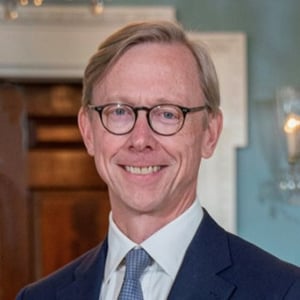
Founder, Latitude, LLC
Brian Hook is the founder of Latitude, LLC, an international strategic consulting firm based in Washington, DC.
Mr. Hook worked on the Romney campaign as senior advisor on foreign policy. He chaired the foreign policy and national security task forces of the Romney Readiness Project. From 2010-2011, he was the foreign policy director of Governor Tim Pawlenty’s presidential campaign.
Mr. Hook served in a number of positions during the Bush Administration, including Assistant Secretary of State for International Organizations; Senior Advisor to the U.S. Ambassador to the United Nations; Special Assistant to the President for Policy, Office of the Chief of Staff; and Counsel, Office of Legal Policy, at the Justice Department.
From 1999-2003, he practiced corporate law at Hogan & Hartson in Washington, D.C.
Before practicing law, he served as a policy advisor to Iowa Governor Terry Branstad and to U.S. Congressman James Leach.
Senior Fellow in National Security, Human Rights First
Heather Hurlburt is a Senior Fellow in National Security at Human RIghts First. Previously, she served as the Executive Director of the National Security Network, an organization whose priorities include working with political leaders, experts, and advocates to create a safer, saner foreign policy. The 2008 presidential election cycle provided the impetus for NSN's progressive national security rapid response structure to augment efforts of candidates and campaigns.
Ms. Hurlburt brings nearly two decades of experience developing, shaping and communicating U.S. foreign policy. For five years she ran her own communications and strategy practice, with a broad client list including individual political, entertainment, and educational leaders, as well as groups such as DATA (Debt AIDS Trade Africa), the Rockefeller Brothers Fund, the Stanley Foundation, and many others. She is a Senior Adviser to the U.S. in the World Project of the New America Foundation.
Ms. Hurlburt served in the Clinton Administration, both in the State Department and as a Special Assistant and Speechwriter to President Clinton. She was the Washington Deputy Director of the International Crisis Group (ICG) and served as a Program Director at the Carnegie Endowment for International Peace. She spent four years as a member of the U.S. delegation to the Organization for Security and Cooperation in Europe (OSCE).
Ms. Hurlburt is co-author of US in the World: Talking Global Issues with Americans, published by the Rockefeller Brothers Fund and the Aspen Institute in 2004 to help foreign policy experts and advocates communicate effectively with American citizens. She has published opinion pieces widely in print and online, comments frequently on presidential speech-making and other topics, and blogs regularly at www.democracyarsenal.org.
She is a graduate of Brown University and the George Washington University and lives in Washington, D.C. with her husband and son.

Fireside Chat with Ambassador Kay Bailey Hutchison
Kay Bailey Hutchison, Nitin R. Nainani
Ambassador Kay Bailey Hutchison served as the U.S. Ambassador to NATO from 2017-2021. From 1993-2013,...
New START, Nuclear Weapons, and the New Landscape: Arms Control and Deterrence Post-Ukraine
Stephen P. Rosen, Daniel G. West
In February 2023, Russian President Vladimir Putin announced that Russia would withdraw from the New...
The Russian Invasion of Ukraine and International Law, Order, and Security
Michael Allen, Marshall S. Billingslea, Charles J. Dunlap, Chad A. Readler, Angela Stent
In February, Russia began a full-scale military action against Ukraine. This war in Ukraine constitutes...
Debate: The Federalist and the Contemporary Debate on Term Limits [Archive Collection]
William L. Garwood, William Kristol, Nelson Polsby
On February 28-29, 1992, the Federalist Society held its eleventh annual National Student Symposium at...
Panel III: The Treaty Power [Archive Collection]
Harold Hongju Koh, John E. Nowak, Grover Joseph Rees, Laurence H. Silberman, Abraham D. Sofaer
On November 6-7, 1987, The Federalist Society held a symposium at the Grand Hyatt Hotel...
The True Extent of Executive Power
Saikrishna Prakash, John C. Yoo
In this Teleforum, two of the nation’s leading scholars of presidential power — and former...
Address by Secretary of Defense Caspar Weinberger [Archive Collection]
Zbigniew Brzezinski, David M. McIntosh, Caspar W. Weinberger
On November 6-7, 1987, The Federalist Society held a symposium at the Grand Hyatt Hotel...
Panel V: The Virtues and Vices of Democracy in Conducting Foreign Affairs [Archive Collection]
Godfrey Hodgson, Charles Krauthammer, Irving Kristol, Gordon Tullock
On November 6-7, 1987, The Federalist Society held a symposium at the Grand Hyatt Hotel...
Congress as "Iran Deal" Enforcer? - Podcast
Alan M. Dershowitz, Dennis Ross, Jamil N. Jaffer
With final congressional review action on the Iran Deal just days away, is Congress empowered...
Dealing with Putin’s Russia: What is the Best Approach? - Podcast
Brian H. Hook, Heather Hurlburt
From the time he entered office after being tapped by Boris Yeltsin to succeed him,...