

Senior Vice President for Legal Studies, Cato Institute
Clark Neily is senior vice president for legal studies at the Cato Institute. His areas of interest include constitutional law, overcriminalization, civil forfeiture, police accountability, and gun rights. Neily is the author of Terms of Engagement: How Our Courts Should Enforce the Constitution’s Promise of Limited Government. His writing has appeared in the Wall Street Journal, Forbes, and National Review Online, as well as various law reviews, including the Harvard Journal of Law and Public Policy, George Mason Law Review, Georgetown Journal of Law and Public Policy, NYU Journal of Law and Liberty, and Texas Review of Law and Politics. Neily is a frequent guest speaker and lecturer for the Federalist Society, Institute for Humane Studies, and American Constitution Society.
Before joining Cato in 2017, Neily was a senior attorney and constitutional litigator at the Institute for Justice and director of the Institute’s Center for Judicial Engagement. He is also an adjunct professor at the University of Texas School of Law, where he teaches constitutional litigation and public-interest law.
Neily served as co-counsel in District of Columbia v. Heller, the historic case in which the Supreme Court held for the first time that the Second Amendment protects an individual right to own a gun for self-defense.
Neily began his legal career as a law clerk to Judge Royce Lamberth on the U.S. District Court for the District of Columbia. After that he spent four years in the trial department of the Dallas-based firm Thompson & Knight. Neily received his undergraduate and law degrees from the University of Texas, where he was Chief Articles Editor of the Texas Law Review.
Senior Vice President for Legal Studies, Cato Institute
Clark Neily is senior vice president for legal studies at the Cato Institute. His areas of interest include constitutional law, overcriminalization, civil forfeiture, police accountability, and gun rights. Neily is the author of Terms of Engagement: How Our Courts Should Enforce the Constitution’s Promise of Limited Government. His writing has appeared in the Wall Street Journal, Forbes, and National Review Online, as well as various law reviews, including the Harvard Journal of Law and Public Policy, George Mason Law Review, Georgetown Journal of Law and Public Policy, NYU Journal of Law and Liberty, and Texas Review of Law and Politics. Neily is a frequent guest speaker and lecturer for the Federalist Society, Institute for Humane Studies, and American Constitution Society.
Before joining Cato in 2017, Neily was a senior attorney and constitutional litigator at the Institute for Justice and director of the Institute’s Center for Judicial Engagement. He is also an adjunct professor at the University of Texas School of Law, where he teaches constitutional litigation and public-interest law.
Neily served as co-counsel in District of Columbia v. Heller, the historic case in which the Supreme Court held for the first time that the Second Amendment protects an individual right to own a gun for self-defense.
Neily began his legal career as a law clerk to Judge Royce Lamberth on the U.S. District Court for the District of Columbia. After that he spent four years in the trial department of the Dallas-based firm Thompson & Knight. Neily received his undergraduate and law degrees from the University of Texas, where he was Chief Articles Editor of the Texas Law Review.
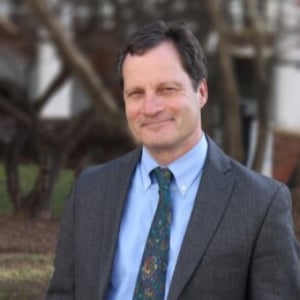
Vice President, Legal & Chief Counsel, Legal, Brady
Jonathan E. Lowy is the Vice President, Legal and Chief Counsel at Brady. Since 1997 Jon has argued in courts across the country to reduce gun violence, providing pro bono legal representation to victims of gun violence in lawsuits to reform dangerous gun industry practices, and assisting governments and public officials in defense of reasonable gun laws. Jon has litigated in over 40 states, successfully arguing several precedent-setting cases in appellate and trial courts establishing gun industry liability and Second Amendment law, obtaining several multi-million dollar settlements, and reforming gun industry practices. Jon has been named one of the 500 Leading Lawyers in America by Lawdragon magazine for the past 10 years, and has published numerous articles on gun litigation and policy including, The Right Not To Be Shot: Public Safety, Private Guns, and the Constellation of Constitutional Liberties in the Georgetown Journal of Law and Policy. He graduated from Harvard College and the University of Virginia School of Law.
Senior Vice President for Legal Studies, Cato Institute
Clark Neily is senior vice president for legal studies at the Cato Institute. His areas of interest include constitutional law, overcriminalization, civil forfeiture, police accountability, and gun rights. Neily is the author of Terms of Engagement: How Our Courts Should Enforce the Constitution’s Promise of Limited Government. His writing has appeared in the Wall Street Journal, Forbes, and National Review Online, as well as various law reviews, including the Harvard Journal of Law and Public Policy, George Mason Law Review, Georgetown Journal of Law and Public Policy, NYU Journal of Law and Liberty, and Texas Review of Law and Politics. Neily is a frequent guest speaker and lecturer for the Federalist Society, Institute for Humane Studies, and American Constitution Society.
Before joining Cato in 2017, Neily was a senior attorney and constitutional litigator at the Institute for Justice and director of the Institute’s Center for Judicial Engagement. He is also an adjunct professor at the University of Texas School of Law, where he teaches constitutional litigation and public-interest law.
Neily served as co-counsel in District of Columbia v. Heller, the historic case in which the Supreme Court held for the first time that the Second Amendment protects an individual right to own a gun for self-defense.
Neily began his legal career as a law clerk to Judge Royce Lamberth on the U.S. District Court for the District of Columbia. After that he spent four years in the trial department of the Dallas-based firm Thompson & Knight. Neily received his undergraduate and law degrees from the University of Texas, where he was Chief Articles Editor of the Texas Law Review.
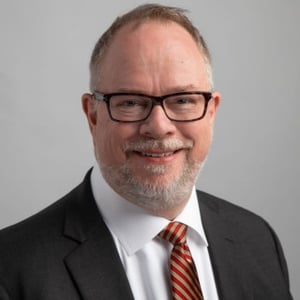
Managing Attorney of the Washington Office, Institute for Justice
William R. Maurer is the Managing Attorney of the Washington state office of the Institute for Justice, which engages in litigation in the areas of economic liberty, private property rights, educational choice, & freedom of speech.
Maurer is an advocate against the criminalization of poverty and the governmental use of the criminal and civil enforcement systems to raise revenue. He was lead counsel in a class action challenging the use of tickets to raise revenue in the city of Pagedale, Missouri. The suit resulted in a federal consent decree that reformed the city’s ticketing and municipal court system. He regularly speaks, teaches, and writes about the abuse of fines and fees in the criminal justice system. He was a participant in summits on taxation by citation put on by the White House and Department of Justice during the Obama Administration. His work on the issue includes serving as an advisory board member of the Fines and Fees Justice Center.
In addition to his work on criminal and civil justice reform, Maurer is a First Amendment litigator. In 2011, he successfully argued before the U.S. Supreme Court that Arizona’s punitive campaign financing regime was unconstitutional. Before the Washington Supreme Court, he successfully argued against efforts to classify radio commentary as a contribution under the state’s campaign finance law.
His cases and advocacy have been covered in the Washington Post, the New York Times, the Economist, the Wall Street Journal, and other major media outlets.
Maurer was named a “Washington Superlawyer” by Washington Law & Politics Magazine for several years. He is a chapter author in numerous legal reference works and has written several articles for law reviews and legal publications across the country.
Prior to joining IJ-WA, Maurer clerked for Washington Supreme Court Justice Richard Sanders and then practiced law at Perkins Coie LLP. Maurer received his law degree in 1994 from the University of Wisconsin – Madison, where he was an editor of the Wisconsin Law Review. He received his BA from Bard College in 1989.
Senior Vice President for Legal Studies, Cato Institute
Clark Neily is senior vice president for legal studies at the Cato Institute. His areas of interest include constitutional law, overcriminalization, civil forfeiture, police accountability, and gun rights. Neily is the author of Terms of Engagement: How Our Courts Should Enforce the Constitution’s Promise of Limited Government. His writing has appeared in the Wall Street Journal, Forbes, and National Review Online, as well as various law reviews, including the Harvard Journal of Law and Public Policy, George Mason Law Review, Georgetown Journal of Law and Public Policy, NYU Journal of Law and Liberty, and Texas Review of Law and Politics. Neily is a frequent guest speaker and lecturer for the Federalist Society, Institute for Humane Studies, and American Constitution Society.
Before joining Cato in 2017, Neily was a senior attorney and constitutional litigator at the Institute for Justice and director of the Institute’s Center for Judicial Engagement. He is also an adjunct professor at the University of Texas School of Law, where he teaches constitutional litigation and public-interest law.
Neily served as co-counsel in District of Columbia v. Heller, the historic case in which the Supreme Court held for the first time that the Second Amendment protects an individual right to own a gun for self-defense.
Neily began his legal career as a law clerk to Judge Royce Lamberth on the U.S. District Court for the District of Columbia. After that he spent four years in the trial department of the Dallas-based firm Thompson & Knight. Neily received his undergraduate and law degrees from the University of Texas, where he was Chief Articles Editor of the Texas Law Review.

Florida Office Managing Attorney, Institute for Justice
Justin Pearson is the Institute’s Florida Office Managing Attorney. He also coordinates aspects of the Institute’s national economic liberty efforts and personally directs IJ’s National Street Vending Initiative. Justin has devoted his career to vindicating the constitutional rights of small-business owners, and he has victoriously litigated on their behalf in trial and appellate courts across the nation.
Justin often wins in novel ways. He was the lead counsel in a federal appellate court victory vindicating the right of a Florida dairy creamery to tell the truth on its labels, which was the first victorious First Amendment challenge to a food standard of identity in U.S. history. His win against Little Rock’s ban on taxi competition was based on a provision in the Arkansas Constitution that had not been successfully relied upon in over half a century. And his victory against Fort Pierce’s food truck ban included the first preliminary injunction ever issued in this type of challenge anywhere in the nation.
In addition to litigation, Justin has testified to Florida Senate and House committees dozens of times, and provisions suggested by Justin have been enacted into law. The successful bills that Justin has actively supported include Florida’s 2021 cottage food, home-based business, and local occupational licensing reforms, Florida’s historic 2020 occupational licensing reform (which repealed the most occupational licensing barriers in U.S. history), Florida’s 2019 repeal of the certificate of need requirement for hospitals, Florida’s 2019 Fresh Start reform making it easier for individuals with criminal records to obtain employment, and Florida’s 2016 overhaul of its civil forfeiture laws.
Justin’s work has appeared in countless media outlets, and Justin has spoken to scores of law schools and attorney organizations across the nation. The law schools that have hosted Justin’s talks include Yale, the University of Chicago, Duke, NYU, Notre Dame, and the University of Michigan, among many others.
Prior to joining IJ, Justin founded and managed his own law practice to advocate for small-business owners, and Justin’s law practice was successful for many years before he made the decision to join IJ in 2012 to better fight against government power gone awry.
Justin received his law degree with honors from the University of Miami in 2002, where he was the Research and Writing Editor for, and was published in, the University of Miami Business Law Review. Justin received his undergraduate degree in business management from North Carolina State University. Justin has been honored by the Daily Business Review and Law.com for being one of South Florida’s “Most Effective Lawyers.”
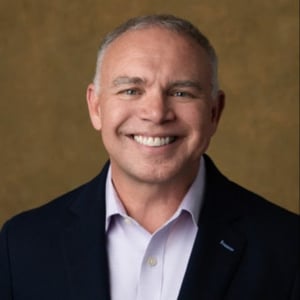
Vice President for Litigation & Strategy, Pacific Legal Foundation
Larry Salzman leads PLF’s litigation program and is responsible for shaping the organization’s overall legal strategy to advance the principles of individual rights and limited government. He oversees the Supreme Court docket at PLF and helps its nearly 75 litigating attorneys and support staff bring cases to secure enduring legal change for liberty.
Larry has been a public interest litigator for nearly two decades, focusing on property rights and economic freedom. Recent highlights include Sheetz v. County of El Dorado and Tyler v. Hennepin County at the Supreme Court. He has been with PLF for more than a decade. Previously, he was a judicial clerk at the U.S. Court of Federal Claims and a litigator at the Institute for Justice.
Between 2007 and 2011, Larry took a hiatus from litigation to work as CEO of an e-commerce company he had co-founded and built while attending law school at night. He loves his current role at PLF because it provides the rare opportunity to continue expressing dual passions for litigation and entrepreneurial management.
Larry’s commitment to liberty crystallized during college by studying philosophy and free-market economics. He experienced the importance of property rights in a very personal way in the 1990s when his family’s auto-repair business was taken by eminent domain and turned over by the city to a private developer on the promise that a big-box store would generate more tax revenue.
He graduated from the University of San Diego School of Law (J.D. 2002), where he was assistant editor of the San Diego Law Review. Larry was inspired in law school to pursue a career in public interest litigation while working as a research assistant to the late Bernard Siegan, a pioneer in the movement to revive constitutional protection for property rights and economic liberty. He also serves on the Board of Directors for the Ayn Rand Institute. When not working, he enjoys travel, an annual pass to Disneyland with family, and learning and growing alongside his daughter.
Larry is a member of the bar only in the state of California.

General Counsel, Center for Individual Rights
Darpana Sheth joined CIR as General Counsel in May 2025. She is a nationally recognized constitutional litigator with over two decades of experience serving in in leadership roles at other nonprofit organizations.
Before joining CIR, Darpana served for four years as Vice President of Litigation for the Foundation for Individual Rights and Expression. Prior to that, Darpana was a Senior Attorney with the Institute for Justice, where she also served as Director of the Institute’s National Initiative to End Forfeiture Abuse.
Before finding her calling as a public-interest attorney, Darpana served as an Assistant Attorney General for the State of New York and worked in private practice as a litigation associate at the Manhattan law firm of Chadbourne & Parke, LLP. She also served as law clerk to the Honorable Jerome A. Holmes of the U.S. Court of Appeals for the Tenth Circuit.
A native of Philadelphia, Darpana graduated from the University of Pennsylvania with a Bachelor of Arts in Political Science and History. She earned her law degree from Georgetown University Law Center.

Are There Rational Basis Tests for the Rational Basis Test? The Constitution and Levels of Scrutiny
Overcriminalization: Incarceration a Fairly Trivial Imposition on Liberty?
The Future of the 2nd Amendment
Philadelphia, PennsylvaniaLitigating for Liberty: School Choice in Louisiana and the Nation
New Orleans, LouisianaCivil Asset Forfeiture
Censorship and Sensibility: A Discussion on the Role of Government in Regulating Commercial Speech
Government Stealing from You: Civil Asset Forfeiture Reform
Occupational Speech: Cutting-Edge First Amendment Issue
Minneapolis, MinnesotaEminent Domain
Civil Forfeiture: Policing for Profit?
Miami Lawyers Chapter
West Palm Beach, FL