
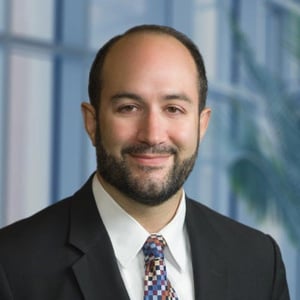
Judge, United States District Court, Northern District of Ohio
Judge J. Philip Calabrese was confirmed to serve on the U.S. District Court for the Northern District of Ohio in December 2020. Previously, he served on the State trial court in the Cuyahoga County Court of Common Pleas. Before taking the bench, he had a complex litigation practice for nearly two decades and was a partner at what is now Squire Patton Boggs and at Porter, Wright, Morris & Arthur, LLP, where he co-chaired the firm’s class action practice. After graduating from Harvard Law School, Judge Calabrese began his legal career as a law clerk to Judge Alice M. Batchelder of the United States Court of Appeals for the Sixth Circuit. He also serves as an adjunct professor at Case Western Reserve University School of Law, where he teaches an advanced course on expert evidence and at the University of Akron School of Law where he teaches the First Amendment’s Speech Clause.
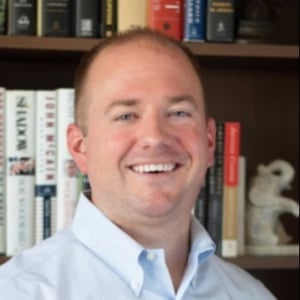
Member, Ohio House of Representatives
State Representative Brian Stewart is currently serving his first term as State Representative for the 78th Ohio House district, which includes Hocking and Morgan Counties, as well as portions of Athens, Fairfield, Muskingum and Pickaway Counties.
In addition to his career in public service, Rep. Stewart maintains a successful law practice representing businesses and individuals with The Law Office of Brian Stewart, LLC.
Rep. Stewart enlisted for active duty in the Army after experiencing 9/11 as a high school senior. He is an infantry veteran of the Iraq War and earned the Combat Infantryman’s Badge (CIB) in addition to twice receiving the Army Commendation Medal. Following his service, he returned to school and earned both his Bachelor’s and law degree from the Ohio State University.
A lifelong resident of Southern Ohio, Rep. Stewart is very active in his community. He is a past Vice President and Spokesman for the Ohio Fallen Heroes Memorial, a statewide memorial dedicated to all Ohio service members killed in the line of duty since 9/11. He has also been a member of the Pickaway County Farm Bureau, the Veterans of Foreign Warns, the Association of Ohio Commodores, the Pickaway County and Ohio State Bar Associations, the Pickaway Senior Center Board of Directors and the Pickaway County Republican Central Committee.
In his free time, Rep. Stewart is a dedicated movie buff, a passionate sports fan and enjoys target shooting, books on American history and the music of Johnny Cash. Rep. Stewart lives in Ashville and attends Village Chapel Church with his wife, Letanya, and their three children.
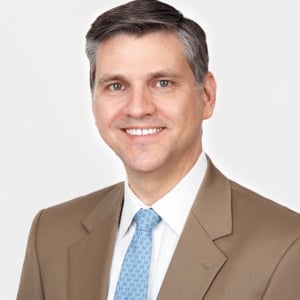
Partner, DiCello Levitt Gutzler LLC
David is a litigator and privacy advocate based in the New York office of DiCello Levitt Gutzler LLC. He is one of the nation’s leading voices for the recognition of property rights in personal data, a 10-year effort culminating in the Ninth Circuit’s landmark April 2020 decision in In re: Facebook Internet Tracking Litigation and the Northern District of California’s March 2021 decision in Calhoun v. Google, both of which he argued. David also successfully argued for the extraterritorial application of the Computer Fraud and Abuse Act in 2019 in In re: Apple Device Performance Litigation, and filed the first-ever data privacy class action under seal to address a dangerous website vulnerability under Court supervision in Rodriguez v. Universal Prop. & Cas. Ins. Co. As M.I.T. Technology Review magazine put it in 2012, David is “something of a pioneer” in the field.
David also frequently teaches, most recently as an adjunct professor at Yeshiva University’s Sy Syms School of Business, teaching Business Law and Ethics every fall semester from 2015 to 2021. Prior to joining DiCello Levitt, David was a partner with Kaplan Fox & Kilsheimer LLP, and helped launch the US offices of London-based Stewarts Law LLP before that, where he was the global head of investor protection litigation. Prior to joining the plaintiffs’ bar, David was an associate with the New York office of Skadden Arps Slate Meagher & Flom LLP. Although not currently an active member, David first joined the Federalist Society in law school in 1994, one of the few Society alums in the plaintiffs’ bar.
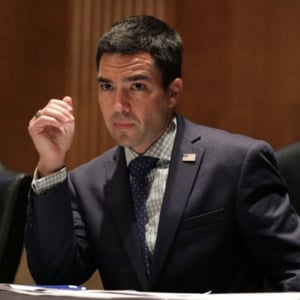
Vice President and General Counsel, NetChoice
Professor of Law and Co-Director, High Tech Law Institute, Santa Clara University School of Law
Eric Goldman is a Professor of Law, and Co-Director of the High Tech Law Institute, at Santa Clara University School of Law. Before he became a full-time academic in 2002, he practiced Internet law for 8 years in the Silicon Valley. His research and teaching focuses on Internet, IP and advertising law topics, and he blogs on these topics at the Technology & Marketing Law Blog [http://blog.ericgoldman.org]. Managing IP magazine has twice named him to a shortlist of North American “IP Thought Leaders,” and he has been named an “IP Vanguard” by the California State Bar’s IP Section.

Senior Fellow and Academic Director, Penn Carey Law School
Gus Hurwitz is a Senior Fellow and the Academic Director of the Center for Technology, Innovation & Competition and the University of Pennsylvania Carey Law School where he is working to develop academic and scholarly programs at the intersecution of law, technology, and policy.
He is also Director of Law & Economics Programs at the International Center for Law & Economics (ICLE), a think tank based in Portland, Oregon, where he directs its law and economics-focused research program and helps to translate academic research into applied policy issues.
Hurwitz's research focuses on the regulation of technology, including administrative and regulatory law, antitrust law, torts and products liability, and media law - alongside cognate fields. Inrecent years he has worked on an AI standardization initiative with Seoul National University, a UNICEF-organized study of broadband deployment to public schools in Rwanda, and a book on conglomerate and ecosystems theories of antitrust.
He has published over 30 articles and book chapters, two books (one on cybersecurity law & policy, one on media regulation in the digital era) and have two more in process, over 100 shorter writings (op-eds, shorter analyses, blog posts, &c), hosted over 100 podcast episodes, and regularly appear or am quoted in popular media (including the NY Times, Wall Street Journal, Washington Post, and Associated Press). His work has been cited by legislators, federal courts of appeals, and federal regulatory agencies.
He was previously a full professor and founding director of the Governance & Technology Center at the University of Nebraska, prior to which he was the inaugural research fellow at the Center for Technology, Innovation & Competition (CTIC). From 2007 to 2010, he was a trial attorney with the U.S. Department of Justice Antitrust Division in the Telecommunications and Media Enforcement Section.
He also is, or has been, affiliated with the Classical Liberal Institute at New York University School of Law, the National Security Institute at George Mason University, and the American Enterprise Institute (AEI).
Before attending law school, Hurwitz worked at Los Alamos National Lab and interned at the Naval Research Lab. During this time his work was recognized by the Federal Laboratory Consortium, Los Alamos National Lab, IEEE & ACM, Corporation for Education Network Initiatives in California, R&D Magazine, and even the Guinness Book of World Records.
A current list of Hurwitz’s publications is available on his website: GusHurwitz.net.

Partner, Covington & Burling
As Partner, Covington & Burling, Lindsey Tonsager helps national and multinational clients in a broad range of industries anticipate and effectively evaluate legal and reputational risks under federal and state data privacy and communications laws. She co-chairs the firm’s Artificial Intelligence Initiative.
In addition to assisting clients engage strategically with the Federal Trade Commission, Federal Communications Commission, the U.S. Congress, and other federal and state regulators on a proactive basis, she has experience helping clients respond to informal investigations and enforcement actions, including by self-regulatory bodies such as the Digital Advertising Alliance and Children’s Advertising Review Unit.
Ms. Tonsager’s practice focuses on helping clients launch new products and services that implicate the laws governing the use of artificial intelligence, data processing for Internet of Things devices, behavioral advertising, endorsements and testimonials in advertising and social media, the collection of personal information from children and students online, e-mail marketing, telecommunications, and new technologies.
Ms. Tonsager also conducts privacy and data security diligence in complex corporate transactions and negotiates agreements with third-party service providers to ensure that robust protections are in place to avoid unauthorized access, use, or disclosure of customer data and other types of confidential information. She regularly assists clients in developing clear privacy disclosures and policies―including website and mobile app disclosures, terms of use, and internal social media and privacy-by-design programs.

H.H. Macaulay Endowed Professor of Economics, Clemson College of Business
Thomas Hazlett is the Hugh H. Macaulay Endowed Professor of Economics at Clemson University. He has previously held faculty positions at George Mason University, the University of California, Davis, and the Wharton School, and served as Chief Economist of the Federal Communications Commission. A noted expert in regulatory economics and information markets, his research has appeared in academic forums such as the Journal of Law & Economics, RAND Journal of Economics, the Journal of Financial Economics, the University of Pennsylvania Law Review and the Columbia Law Review. He has also written for such popular periodicals as the Wall Street Journal, The Economist, Slate, the N.Y. Times, N.Y. Daily News, Reuters.com, Business Week, The New Republic and the Financial Times. His most recent book, The Political Spectrum: The Tumultuous Liberation of Wireless Technology, from Herbert Hoover to the Smartphone, (Yale, 2017), was featured as one of the top tech books of the year at CES 2018.

Executive Vice President, Chief Legal Officer, Gates Corporation
Matthew R. A. Heiman joined the Company in May 2026 and has served as the Company’s Chief Legal Officer and Corporate Secretary since June 2026. As Chief Legal Officer, Mr. Heiman is responsible for all legal functions for Gates, including securities and corporate governance, M&A, litigation, commercial, regulatory, compliance, patents and trademarks, real estate, employment and labor, sustainability and environmental matters. Prior to joining Gates, Mr. Heiman held senior legal leadership roles at Waystar, where he served as Chief Legal & Administrative Officer from 2023 to 2025 and as General Counsel and Corporate Secretary from 2020 to 2023. Prior to that, he was with Johnson Controls, where he served as Vice President, Corporate Secretary, and Associate General Counsel. Mr. Heiman has been a Senior Fellow for the National Security Institute at George Mason University’s Antonin Scalia School of Law since 2018.

Founder and Executive Director, National Security Institute; Assistant Professor of Law, Antonin Scalia Law School, George Mason University
Jamil N. Jaffer is the Founder and Executive Director of the National Security Institute at the Antonin Scalia Law School at George Mason University where he also serves as an Assistant Professor of Law, Director of the National Security Law and Policy Program, and Director of the Cyber, Intelligence, and National Security LLM Program. Jamil also teaches classes on counterterrorism, intelligence, surveillance, cybersecurity, and other national security matters, as well as a summer course held abroad with U.S. Supreme Court Justice Neil M. Gorsuch. Jamil is also affiliated with Stanford University’s Center for International Security and Cooperation and previously served as a Visiting Fellow at the Hoover Institution from 2016 to 2019.
Jamil is also a Venture Partner with Paladin Capital Group, where he assists the firm with investments across the full range of its themes and theses, including a focus on dual-use national security technologies. Jamil also serves on the board of directors of RangeForce, a cybersecurity training and readiness platform startup and Tozny, a digital identity startup, and on the advisory boards of U.S. Strategic Metals, North America’s largest primary producer of cobalt, a critical mineral used in EV batteries, aerospace, and other national security applications; and Constella Intelligence, a deep and dark web intelligence startup. Jamil also serves as an advisor to Beacon Global Strategies, a strategic advisory firm and Duco, a technology platform startup that connects corporations with geopolitical and international business experts. Jamil is also the managing director of Trigraph Caveat Capital, a private investment vehicle.
Among other things, Jamil currently serves on the Board of Directors for the Greater Washington Board of Trade, the Board of Advisors for the Global Cyber Alliance, and the Advisory Board of the Foundation for the Defense of Democracies’ Center on Cyber and Tech Innovation, the Executive Committee of the Reagan Institute Strategy Group. Jamil is also a Fellow at the Academy for Judaic, Christian, and Islamic Studies, an advisor to the Concordia Summit, and is a member of the Board of Directors for the Center for Intelligence Policy, the Board of Directors of Speech First, and the Executive Committee of the International Law and National Security Practice Group of the Federalist Society.
Immediately prior to his current positions, from 2015-2021, Jamil served as a senior business leader at IronNet Cybersecurity, helping take the company from a bootstrapped first-year technology products startup through two rounds of venture capital fundraising, growing from 40 employees to over 300, and through its listing on New York Stock Exchange. In his role as IronNet's Senior Vice President for Strategy, Partnerships & Corporate Development, Jamil worked directly for the co-CEOs of the company, Gen (ret.) Keith B. Alexander, the former Director of the National Security Agency and Founding Commander of U.S. Cyber Command, and Bill Welch, the former COO of Zscaler and Duo; in that role, Jamil led all of the company’s strategic and technology partnership efforts, including developing go-to-market and technology integration plans with some of the largest cloud platforms and cybersecurity companies in the market, evaluating potential acquisition targets, and developing overall corporate strategy and thought leadership around collective security and collaborative defense in the cyber arena.
Prior to his time at IronNet, Jamil served on the leadership team of the Senate Foreign Relations Committee as Chief Counsel and Senior Advisor under Chairman Bob Corker (R-TN), where he worked on key national security and foreign policy issues, including leading the drafting of the proposed Authorization for the Use of Military Force against ISIS in 2014 and 2015, the AUMF against Syria in 2013, and revisions to the 9/11 AUMF against al Qaeda. Jamil was also the lead architect of the Iran Nuclear Agreement Review Act and two sanctions laws against Russia for its first intervention in Ukraine.
Prior to joining SFRC, Jamil served as Senior Counsel to the House Permanent Select Committee on Intelligence under Chairman Mike Rogers (R-MI) where he led the committee’s oversight of NSA surveillance, NRO intelligence issues, and NGA analytic and collection matters, as well as intelligence community-wide counterterrorism issues. Jamil was also the lead architect of the Cyber Intelligence Sharing and Protection Act, the nation’s first cyber threat intelligence sharing legislation that was signed into law in 2015.
In the Bush Administration, Jamil served in the White House as an Associate Counsel to the President, handling Defense Department, State Department, and intelligence community matters, and serving as one of the White House Counsel’s primary representatives to the National Security Council Deputies Committee.
Prior to the White House, Jamil served on the leadership team of the Justice Department’s National Security Division as Counsel to the Assistant Attorney General for National Security, where he focused on counterterrorism and intelligence matters. At NSD, Jamil helped lead the division’s work on In re: Directives, the first ever two-party litigated matter in the FISA Court and the second case before the FISA Court of Review in its 30-year history. Jamil also led NSD’s efforts on the President’s Comprehensive National Cybersecurity Initiative (CNCI), including the drafting of NSPD-54/HSPD-23, and related classified matters, and advised the National Security Agency (NSA) and U.S. Cyber Command’s predecessor organization, the Joint Function Component Command for Network Warfare (JFCC-NW), on matters related to cyber intelligence collection and offensive cyber activities. For his work on these matters, Jamil was awarded the Assistant Attorney General’s Award for Special Initiative and was among the group of lawyers awarded the Director of National Intelligence’s 2008 Legal Award (Team of the Year – Cyber Legal).
Jamil also served in other positions in the Justice Department, including in the Office of Legal Policy, where he worked on the confirmations of Chief Justice John G. Roberts, Jr. and Justice Samuel A. Alito, Jr. to the United States Supreme Court.
Jamil also served as a lawyer in private practice at Kellogg Huber, a Washington, DC-based litigation boutique, as a policy advisor to Congressman Bob Goodlatte (R-VA), and as a staff member or senior advisor on a number of political campaigns, including two presidential campaigns and a presidential transition team. While in law school, Jamil was a member of the University of Chicago Law Review, managing editor of the Chicago Journal of International Law, and National Symposium Editor of the Harvard Journal of Law & Public Policy. Following law school, Jamil served as a law clerk to Judge Edith H. Jones of the United States Court of Appeals for the Fifth Circuit and, later in his career, as a law clerk to then-Judge Neil M. Gorsuch when he first joined the United States Court of Appeals for the Tenth Circuit as well as a law clerk to Justice Neil Gorsuch when he joined the U.S. Supreme Court.
Jamil has published multiple op-eds and academic articles on national security, foreign policy, cybersecurity, counterterrorism, encryption, and intelligence matters, and is the co-author of a book chapter with former NSA Director Gen. (Ret.) Keith B. Alexander on national security and the press in National Security, Leaks, and the Freedom of the Press: The Pentagon Papers Fifty Years On (2021) and a book chapter with former CIA Director Gen. (ret.) Mike Hayden on ISIS, al Qaeda, and other international terrorist groups in Choosing to Lead: American Foreign Policy for a Disordered World (2015). Jamil has also written book chapters on cybersecurity and surveillance, as well as op-eds and policy papers with former Attorney General Michael B. Mukasey, former National Counterterrorism Center Director Matt Olsen, and Congressman Mike Waltz (R-FL), among others.
Jamil has previously taught graduate-level courses in intelligence law and policy at George Washington University’s Elliott School of International Affairs and the National Intelligence University, served an outside advisor to the Cyberspace Solarium Commission, and has recently testified before committees of the U.S. Senate and House of Representatives on China, cybersecurity, counterterrorism, and other national security matters. Jamil has also recently appeared on a range of national television and radio outlets including CNN, Fox News, Fox Business, MSNBC, Bloomberg, PBS, Voice of America, and National Public Radio, and in various print and online publications, including the Wall Street Journal, New York Times, and the Washington Post on a range of national security matters including cybersecurity, counterterrorism, surveillance, encryption, privacy, and foreign policy issues.
Jamil holds degrees from UCLA (BA, cum laude), the University of Chicago Law School (JD, with honors), and the United States Naval War College (MA, with distinction).

Nonresident Senior Fellow, Cyber Statecraft Initiative, Atlantic Council
Megan Stifel is a Nonresident Senior Fellow with the Cyber Statecraft Initiative at the Brent Scowcroft Center on International Security and the Founder of Silicon Harbor Consultants, which provides strategic cybersecurity operations and policy counsel. Prior to founding Silicon Harbor Consultants, she was an attorney in the National Security Division at the U.S. Department of Justice (DOJ). She most recently served on detail as a Director for International Cyber Policy in the National Security Council at the White House. In this role Ms. Stifel developed and implemented policies in connection with Internet governance, cybersecurity, and cybercrime.
Prior to the White House, Ms. Stifel worked at the Computer Crime and Intellectual Property Section (CCIPS). At CCIPS she collaborated with law enforcement agencies to investigate and prosecute computer crime cases, including identity theft, network intrusion, and malware distribution.
Ms. Stifel also previously served as the Director for Cyber Policy at NSD, where she coordinated the Division's policy and legal analysis in connection with the 2009 Cyberspace Policy Review (CSPR) and the 2008 Comprehensive National Cybersecurity Initiative, cyber-related legislative proposals, cybersecurity investigations, cyber operations, and the telecommunications supply chain. She was a member of the interagency group that developed the 2011 International Strategy for Cyberspace and the CSPR.
Ms. Stifel earned her B.A. in International Studies and German, magna cum laude, from the University of Notre Dame and her J.D. from Indiana University.

Panel Three: Tech / Consumer Protection & Data Privacy
J. Philip Calabrese, Brian Stewart, David Straite, Carl M. Szabo
Across the country, states are looking at how to handle the privacy rights of their...
Topics
Remarks on the GDPR & California Consumer Privacy Act
Last month, the Pepperdine Law Review cohosted a symposium with the Regulatory Transparency Project on "Regulating...
Examining the California Consumer Privacy Act
Eric Goldman, Justin (Gus) Hurwitz, Lindsey L. Tonsager
On June 28, 2018, the California legislature enacted the California Consumer Privacy Act of 2018...
What to do about Facebook: On Data Privacy and the Future of Tech Regulation
Thomas Hazlett, Matthew R. A. Heiman, Jamil N. Jaffer, Megan Stifel
Facebook is not getting many "likes" these days following revelations that Cambridge Analytica accessed personal...