

Professor of Law, University of Minnesota Law School
Professor James W. Coleman is a scholar of energy law. He specializes in North American energy infrastructure, transport, and trade. He is also a nonresident senior fellow at the American Enterprise Institute focused on energy policy.
Professor Coleman has testified before Congress on steps to speed up energy infrastructure permits. He also worked with a team of experts as part of Alberta's Royalty Review to revise the Canadian province's management of its vast oil and gas resources.
Before joining Minnesota, Professor Coleman taught at Southern Methodist University's Dedman School of Law, the University of Calgary’s law and business schools, and Harvard Law School. Earlier, he practiced environmental and appellate law at Sidley Austin in Washington, D.C., and clerked for the Honorable Steven M. Colloton of the U.S. Court of Appeals for the Eighth Circuit.
Professor Coleman received two degrees from Harvard University—a J.D. (cum laude) and B.A. in biology (magna cum laude with highest honors in the field). As a result of his undergraduate thesis on butterfly genetics, which required fieldwork in Central Asia, a species of lycaenid butterfly was named after him—Agrodiaetus ripartii colemani.
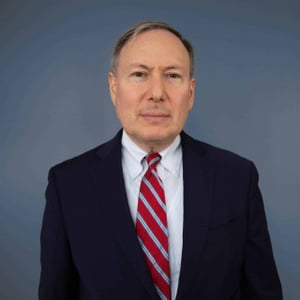
Senior Fellow, Competitive Enterprise Institute
Ben Lieberman is a senior fellow who specializes in environmental policy at the Competitive Enterprise Institute. Lieberman has returned to CEI after serving seven years as a senior counsel on the U.S. House Committee on Energy and Commerce. As a congressional staffer, he worked on a number of issues related to fuels and vehicles, including the Renewable Fuel Standard and Corporate Average Fuel Economy (CAFE) standards. He also worked on energy infrastructure permitting reform, home appliance energy efficiency standards, and the Montreal Protocol on Substances that Deplete the Ozone Layer.
Previously in his career, Lieberman completed a decade-long stint at CEI as well as five years at the Heritage Foundation. He will continue to work on energy and environmental policy issues in his latest position at CEI, with an emphasis on reforming the federal permitting process for projects that are subject to it.
Lieberman has published hundreds of op-eds and articles, including in the Wall Street Journal, the New York Post, Chicago Sun-Times, The Washington Post, Weekly Standard, and National Review. He has appeared on a number of radio and television programs on Fox News, CNN, MSNBC, Bloomberg, and CNBC. He has also testified before Congress on a number of energy and environmental issues.
Lieberman received his undergraduate degree from the University of Maryland, and his law degree from the George Washington University School of Law.

Partner, Earth & Water Law
Susan Bodine is a partner at Earth & Water Law.
Susan Bodine is a former Assistant Administrator for EPA’s Office of Enforcement and Compliance Assurance (OECA). Prior to this position, Susan served as Chief Counsel for the Senate Committee on Environment and Public Works and previously worked for the House Committee on Transportation and Infrastructure.
This is Susan’s second position at EPA, having served as Assistant Administrator for the Office of Solid Waste and Emergency Response (now the Office of Land and Emergency Management) from 2006 to 2009.
Susan has also practiced environmental law at Covington and Burling LLP and at Barnes and Thornburg LLP.
Susan is a graduate of Princeton University and the University of Pennsylvania School of Law.
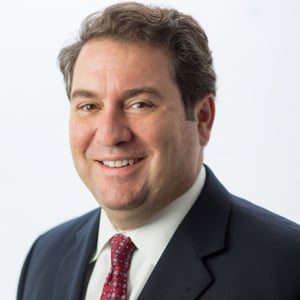
Former Attorney General, State of Arizona
Mark Brnovich served as Arizona's 26th Attorney General from 2015 to 2023. He was first inaugurated in 2015, and again in 2019 after winning re-election. Mark has spent most of his professional life serving as a prosecutor at the local, state, and federal levels. Mark met his wife Susan while they both worked as prosecutors for the Maricopa County Attorney's office. Mark worked in the Gang/Repeat Offender Unit and prosecuted many difficult and high profile cases from 1992 to 1998. He then went on to work as an Assistant Attorney General with the Arizona Attorney General's Office from 1998 to 2003, where he developed an expertise in gambling law. Brnovich later went on to serve as an Assistant United States Attorney for the District of Arizona where he prosecuted public integrity crimes, as well as crimes occurring in Indian Country.
Brnovich has also been a Judge Pro Tem of Maricopa County Superior Court, a Command Staff Judge Advocate in the U.S. Army National Guard, the Director for Constitutional Government at the Goldwater Institute, and the Director of the Arizona Department of Gaming, a law enforcement agency that investigates illegal gambling activity, as well as working with tribal regulators to ensure the integrity of tribal gaming.
Brnovich is known for restoring public confidence in the office of "Arizona's Top Cop" and for assembling some of the nation's most talented public servants for his administration. Mark argued at the United States Supreme Court in defense of the "one-person, one-vote" principle, was featured on 60 Minutes in defense of capital punishment, and has initiated national public education efforts to combat human sex trafficking.
Brnovich has been recognized by the National Federation of Independent Business as a "Champion of Small Business." and was elected by his bi-partisan colleagues to serve as the Chairman of the Conference of Western Attorneys General.
Mark's wife Susan was recently appointed by the United States Senate to serve as a U.S. District Judge for the District of Arizona. He has two teenage daughters and lives in Phoenix.
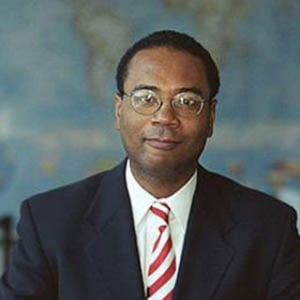
Chairman, Project 21 National Advisory Board, National Center for Public Policy Research
Horace Cooper is a senior fellow with the National Center for Public Policy Research, chairman of the Project 21 National Advisory Board and a legal commentator.
Horace averages over 400 talk radio appearances per year representing the National Center and Project 21, in addition to regular television appearances and interviews by the print media.
Horace taught constitutional law at George Mason University in Virginia and was a senior counsel to U.S. House Majority Leader Dick Armey.
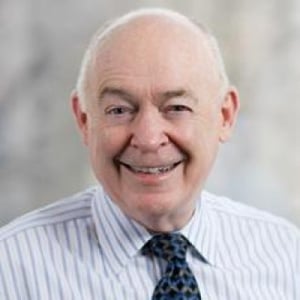
Principal, Beveridge & Diamond, PC
John offers clients the benefit of decades of experience as a top environmental lawyer, a leader of major bar and environmental organizations, and a distinguished military career.
John provides strategic counsel on high-stakes environmental and natural resources litigation, civil and criminal enforcement, and compliance. Working with clients makes the practice of law worthy and valuable to him as they advance strategic needs while protecting human health and the environment.
For more than two decades, John served as a senior leader on environment and natural resource matters at the United States Department of Justice (DOJ), where he supervised some of the department’s most significant litigation, including the Exxon Valdez oil spill, Love Canal, and Bunker Hill litigation. As the Senate-confirmed, Assistant Attorney General, ENRD, John worked on the most high-profile environment cases, and personally negotiated the multi-billion dollar resolutions of the Deepwater Horizon oil spill and the Volkswagen emissions scandal. These cases required a great deal of coordination, expert assistance, and sophisticated management of numerous players to reach successful outcomes. This experience has given John insight into the workings of large corporations, as well as into the challenges that major companies face in lawsuits.
As the former President of the Environmental Law Institute, the former Chair of the American Bar Association (ABA) Section on Environment, Energy, and Natural Resources, and the immediate past President of the American College of Environmental Lawyers, John has led each of the premier environmental organizations in the United States. In addition, he was the first government attorney to be elected and serve as the President of the District of Columbia Bar, now the largest bar in the nation.
Professional Background
John’s leadership is a defining characteristic of his long and distinguished legal career. Before joining the DOJ, John was the Chief Legislative Counsel of the U.S. Army. After graduating from the United States Military Academy at West Point, John served in Airborne, Ranger, and Special Forces units in Germany and Vietnam. His subsequent military assignments include as a criminal prosecutor in Germany and civil trial lawyer in the Pentagon; Chief of Litigation Branch, Europe; General Counsel, Defense Nuclear Agency; Staff Judge Advocate in Germany; and Director of Administrative and Civil Law, Judge Advocate General’s School, Charlottesville, Virginia. His military education includes being a Fellow, Army War College, and the Command and General Staff College. He is a graduate of the University of Santa Clara Law school (summa cum laude) and the University of Virginia (MA with honors).
John’s awards for government and military service include the President Rank Award from three different Presidents, the Bronze Star, Legion of Merit, Defense Meritorious Service Medal, Air Medal with Oak Leaf Clusters, and the Vietnamese Cross of Gallantry with Silver Star.
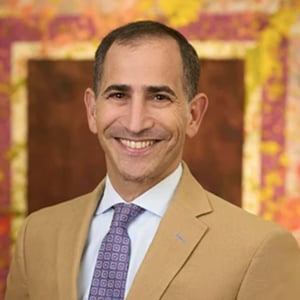
Partner, Arnold & Porter
Brian Israel is Chair Arnold & Porter's Environmental Practice Group, as well as co-lead of the firm’s Environmental, Social and Corporate Governance (ESG) working group. Mr. Israel's practice focuses broadly on environmental litigation and counseling—including climate-related issues—and he is one of the nation's leading lawyers for Natural Resource Damages (NRD) claims. Over the course of his career, Mr. Israel has successfully resolved or litigated over one hundred environmental matters. Among other areas, Mr. Israel specializes in cases brought under federal and state environmental laws related to contaminated sites, including toxic tort lawsuits. Since 2010, Mr. Israel has been lead counsel to BP in relation to Deepwater Horizon NRD claims, and was also one of the trial attorneys at the Deepwater Horizon Clean Water Act (CWA) penalty trial. Mr. Israel represents multiple Fortune 500 companies in some of the largest and most complex environmental matters across the country.
Prior to joining the firm, Mr. Israel was an Honors Trial Attorney in the Environmental Enforcement Section of the US Department of Justice (DOJ). While at the DOJ, he handled several high-profile cases, including the largest NRD trial at the time. Additionally, Mr. Israel was awarded the Distinguished Service Award for his accomplishments in a Clean Air Act jury trial during his time at the DOJ. He also litigated claims on behalf of the US Environmental Protection Agency pursuant to the Clean Water Act; the Resource Conservation and Recovery Act (RCRA); and the Comprehensive Environmental Response, Compensation, and Liability Act (CERCLA).
Mr. Israel has spoken and written extensively about environmental law issues. He is a principal author of "Natural Resource Damages: A Guide to Litigating and Resolving NRD Cases," (ABA, 2019). For the last 15 years, Mr. Israel has maintained and regularly updated the State-by-State Guide to NRD Programs in All 50 States and Puerto Rico. Mr. Israel hosts and chairs the annual Advanced Conference on Litigating Natural Resource Damages (sponsored by Law Seminars International). He is the author of the "Natural Resource Damages" chapter in the Environmental Law Practice Guide (Gerrard, ed.). Mr. Israel has published on many other environmental law topics including environmental enforcement, corporate liability, regulatory reform, trial strategy, and Superfund. Mr. Israel's student note, "An Environmental Justice Critique of Risk Assessment," is published in the NYU Environmental Law Journal.
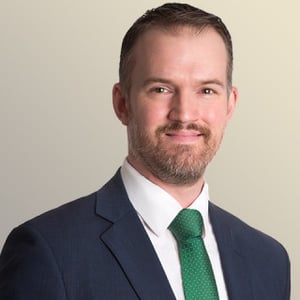
Partner, King & Spalding
Jamieson Greer is a partner in King & Spalding's International Trade practice group where he specializes in trade remedy litigation, export / import compliance, and international trade policy and negotiations. Prior to joining King & Spalding, he served as the Chief of Staff to the U.S. Trade Representative, Ambassador Robert Lighthizer. At USTR, he oversaw the development and implementation of U.S. trade policy for the executive branch. He also was deeply involved in the negotiations of the Phase One trade deal with China and the United-States-Mexico-Canada Agreement. Before working at USTR, Jamieson spent several years in private practice working on trade-related matters and served in the U.S. Air Force Judge Advocate General's Corps.
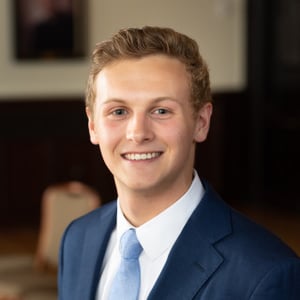
JD Candidate, Harvard Law School
Trevor is a second-year law student at Harvard Law School. Prior to starting law school, he lived in Taiwan as a Fulbright Scholar studying Taiwanese industrial policy, and he worked as a research assistant at a Washington think tank focused on strategic trade controls where he investigated companies involved in the Chinese defense industry.
Partner, King & Spalding
Jamieson Greer is a partner in King & Spalding's International Trade practice group where he specializes in trade remedy litigation, export / import compliance, and international trade policy and negotiations. Prior to joining King & Spalding, he served as the Chief of Staff to the U.S. Trade Representative, Ambassador Robert Lighthizer. At USTR, he oversaw the development and implementation of U.S. trade policy for the executive branch. He also was deeply involved in the negotiations of the Phase One trade deal with China and the United-States-Mexico-Canada Agreement. Before working at USTR, Jamieson spent several years in private practice working on trade-related matters and served in the U.S. Air Force Judge Advocate General's Corps.
JD Candidate, Harvard Law School
Trevor is a second-year law student at Harvard Law School. Prior to starting law school, he lived in Taiwan as a Fulbright Scholar studying Taiwanese industrial policy, and he worked as a research assistant at a Washington think tank focused on strategic trade controls where he investigated companies involved in the Chinese defense industry.

Managing Partner - Washington, D.C., Lewis Brisbois Bisgaard & Smith LLP
Jane Luxton is the Managing Partner of Lewis Brisbois’ Washington, D.C. office, co-chair of the Government Investigations & White Collar Defense Practice, co-chair of the Government Relations Group Leadership, co-chair of the Environmental and Administrative Law Practice, and vice-chair of the Consumer Financial Services Practice. Jane has extensive experience in environmental as well as other federal regulatory, policy, and litigation matters. She advises businesses, associations, and coalitions in navigating all levels of the federal regulatory process, including appellate advocacy.
Recent matters include:
Jane’s knowledge of environmental and administrative law gained key insights from her experience serving in several prominent positions in the U.S. government. From 2007-2009, she served as general counsel of the National Oceanic and Atmospheric Administration, advising the Undersecretary of Commerce for Oceans and Atmosphere on legal and policy issues related to natural resource damages, coastal zone and fisheries management, endangered species and marine mammal protection, and weather and climate change science. In this role, in which she held a top secret/SCI security clearance, Jane was appointed by the President to head the U.S. delegation to the 2008 Western and Central Pacific Fisheries Commission. She also received the U.S. Department of Commerce Gold Medal Award in 2008 and 2009.
Jane’s experience includes “first chair” prosecution of antitrust and other criminal cases at the U.S. Department of Justice and U.S. Attorneys office, Eastern District of Virginia. In private practice, Jane has represented clients in grand jury and other government investigations.

Of Counsel, Covington & Burling LLP
The Honorable Paul J. Ray is currently Of Counsel at Covington & Burling LLP where he advises clients on regulatory opportunities and challenges and helps them formulate and execute advocacy strategies for their regulatory policy priorities before the executive branch and Congress.
During the first Trump Administration, Paul held various senior positions at the Office of Information and Regulatory Affairs (OIRA) within the White House’s Office of Management and Budget, including as acting, and then Senate-confirmed, head of the office. As OIRA Administrator (the "regulations czar"), Paul supervised the review of hundreds of regulations from across the government, drafted numerous executive orders governing the regulatory process, and led the Administration’s regulatory reform effort. As a result of this experience, Paul is well-positioned to help clients understand and achieve regulatory policy priorities in the context of the government’s regulatory agenda and ongoing reform efforts.
Most recently, Paul was also the Director of the Roe Institute for Economic Policy Studies at The Heritage Foundation. In that role, he supervised the formulation of the Foundation’s economic and regulatory policy recommendations and provided technical assistance to congressional committees and staff regarding legislative changes to the regulatory process. In addition to his role at The Heritage Foundation, Paul also served as a Senior Advisor at a strategic advisory firm. Before his time in government, Paul practiced law at a law firm in Washington, specializing in administrative law matters.
Prior to his role at the White House, Paul was Counselor to the Secretary at the U.S. Department of Labor. There he led departmental efforts in high-profile rulemakings and helped formulate the Department’s legal positions and strategy.
Paul served as a law clerk to Supreme Court Justice Samuel Alito and as a law clerk to the Honorable Debra Livingston of the U.S. Court of Appeals for the Second Circuit.
Paul is a thought leader in the conservative legal movement and is a frequent commentator and speaker on regulatory policy and reform matters, including at law schools, professional gatherings, and other venues. He is the Chairman of Innovations in Peacebuilding International and the Regulatory Process Working Group of the Federalist Society’s Regulatory Transparency Project and a public member of the Administrative Conference of the United States. Paul is also an adjunct lecturer at the Hillsdale College School of Government.
JD Candidate, Harvard Law School
Trevor is a second-year law student at Harvard Law School. Prior to starting law school, he lived in Taiwan as a Fulbright Scholar studying Taiwanese industrial policy, and he worked as a research assistant at a Washington think tank focused on strategic trade controls where he investigated companies involved in the Chinese defense industry.
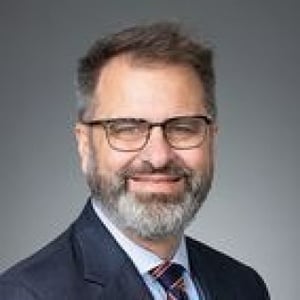
Senior Policy Advisor, Akin Gump LLC
Thomas Krueger advises clients on matters resolving international trade policy matters related to international technology transfers subject to U.S. export, import and investment screening regulations. This includes export control policies and/or economic sanctions with regards to China, Russia and other countries of concern. Thomas has experience with traditional technology fields such as aerospace and defense exports and particular experience with emerging technology policies and regulations such as artificial intelligence, quantum and advanced semiconductor technology. He has conducted numerous risk assessments on cutting-edge technology transfers and advises clients on risk mitigation measures.
Previously, Thomas served as a Director of Strategic Trade and Nonproliferation at the National Security Council. In that role, he was responsible for advising the President and National Security Advisor on technology transfers, as well as coordinating interagency positions on U.S. export controls and technology transfer policies.
Prior to his work in at the National Security Council, Thomas held several positions at the U.S. Department of State, including as a Senior Foreign Affairs Officer. Among other duties, he served as the senior advisor to State Department leadership on export controls and technology transfer policies and regulations. Thomas represented the Department of State’s foreign policy positions on EAR-related technology licenses and regulations to the Department of Commerce. He also led the State Department’s nonproliferation reviews of Committee on Foreign Investment in the United States (CFIUS) filings and sanctions-related export controls policies. Thomas also served as a Defense Trade Controls Analyst in the State Department’s Bureau of Political-Military Affairs. Thomas is a retiree from the U.S. Army.

Partner & Chair, National Security Practice, Wiley Rein LLP
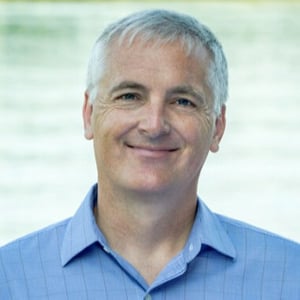
Partner, Donahue & Goldberg LLP
Sean H. Donahue's practice is focused on appellate litigation, including environmental cases in federal and state appellate courts, legal counseling, and helping clients communicate effectively to courts, agencies, and other audiences. He is a member of the bars of the District of Columbia and the State of California.
A 1992 graduate of University of Chicago Law School, Sean served as law clerk to Ruth Bader Ginsburg, then of the U.S. Court of Appeals for the D.C. Circuit, and to Justice John Paul Stevens. He entered private practice at Jenner & Block's Washington office, where he worked on civil matters including in telecommunications and First Amendment law. He then spent four years at the Department of Justice, Environmental and Natural Resources Division, Appellate Section, briefing and arguing cases in the United States Courts of Appeals, and state supreme courts concerning federal environmental and natural resources law, federal property law, takings, and Indian law.
Sean has argued approximately 50 cases in federal and state appellate courts. Since first establishing his own practice in 2002, he has represented environmental and public health organization parties in numerous major environmental and clean energy cases in the Supreme Court and the courts of appeals. His current practice includes representation of public interest organizations, governmental bodies, and private entities in environmental, energy, natural resources, and other cases. Sean has taught courses in environmental law, civil procedure, constitutional law and other subjects at Washington & Lee University School of Law, Iowa College of Law, and Georgetown University Law Center, and currently teaches climate change law and policy as a lecturer at Stanford Law School. He has given presentations at law schools including Berkeley, Columbia, Fordham, Harvard, Duke, Georgetown, Maryland, NYU, Northwestern, Stanford, University of Chicago, University of Florida, Vermont Law School, and Washington & Lee.

Justice William J. Brennan, Jr., Professor of Law, Georgetown University Law Center
Lisa Heinzerling is the Justice William J. Brennan, Jr. Professor of Law at Georgetown University. Her primary specialties are administrative law and environmental law. She is the author of several books, including Priceless: On Knowing the Price of Everything and the Value of Nothing, a critique of the use of cost-benefit analysis in environmental policy. Professor Heinzerling has received the Georgetown University President's Award for Distinguished Scholar-Teachers, the faculty teaching award at Georgetown Law, and several awards related to her scholarship and advocacy in environmental law. She was the lead author of the winning briefs in Massachusetts v. EPA, in which the Supreme Court held that the Clean Air Act gives EPA the authority to regulate greenhouse gases. From January 2009 to July 2009, Heinzerling served as Senior Climate Policy Counsel to the Administrator of the Environmental Protection Agency and then, from July 2009 to December 2010, she served as Associate Administrator of EPA’s Office of Policy. She was a law clerk to Judge Richard A. Posner of the U.S. Court of Appeals for the Seventh Circuit and Justice William J. Brennan, Jr. of the U.S. Supreme Court.

Executive Vice President, The Heritage Foundation
Derrick Morgan has thirty years’ experience in business, government, law, politics, and policy and now serves as the Executive Vice President of The Heritage Foundation, overseeing policy and government relations.
In business, Morgan led the American Fuel and Petrochemical Manufacturers’ (AFPM) advocacy efforts, testified before Congress, and wrote and spoke widely on fuels issues including energy security, fuel prices, and regulatory burdens such as the Renewable Fuel Standard. At AFPM and on the Hill, he opposed electric vehicle mandates and subsidies and warned against conventional wisdom, predicting EV adoption would be far from universal.
In government, law, and politics, Morgan served in all three branches of government including four senators and one representative in roles including campaign aide, counsel to the Senate Republican Policy Committee, and chief of staff to Senator Ben Sasse of Nebraska. In addition, he served as assistant, special counsel, and staff secretary for Vice President Richard B. Cheney, where he traveled frequently with the Vice President as a member of his senior staff and was the final substantive stop for all papers, remarks, and statements. As a leadership staffer for Senator Thune on Capitol Hill, Morgan helped organize opposition to “Card Check” legislation that would have eliminated the secret ballot for workers in union elections and harmful climate legislation like cap-and-trade and carbon taxes. Following law school and between stints at Gibson, Dunn & Crutcher LLP, Morgan clerked for a federal district judge in Texas.
In policy, Morgan previously worked at Heritage, first as Chief of Staff to the organization’s Founder and President, Ed Feulner, and later as Vice President of Domestic Policy. At Heritage, Morgan was privileged to fight “comprehensive” immigration reform that included amnesty for illegal immigrants when the Beltway political class overwhelmingly supported it.
A longtime movement leader on energy, the economy, and immigration, he has appeared on radio and television outlets including Fox News, Fox Business, Newsmax, CNN, CNBC, and C-SPAN. His commentary has been published widely including in The Wall Street Journal, The New York Times, Los Angeles Times, Politico, Real Clear Politics, and USA Today.
Morgan received his undergraduate degree at the University of Texas at Dallas, where he gave the honors commencement address and later received a Distinguished Alumni Award. He holds a JD from The Georgetown University Law Center.
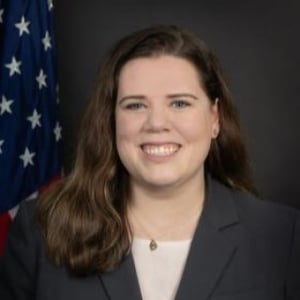
Commissioner, Federal Energy Regulatory Commission
Lindsay S. See joined the Federal Energy Regulatory Commission as a Commissioner in June 2024. Before her current role, Commissioner See served as the Solicitor General of West Virginia, where she managed appellate and high-stakes litigation for the State. With a particular focus on energy and administrative law, her work included leading multi-state and multi-interest coalitions on a variety of national issues. She argued twice before the U.S. Supreme Court, filed multi-state comments in dozens of agency rulemakings, and routinely appeared before the Supreme Court of Appeals of West Virginia and the federal courts of appeals.
Commissioner See previously practiced appellate and administrative law for several years with Gibson, Dunn & Crutcher in Washington, D.C. She graduated magna cum laude from Harvard Law School and clerked for the Hon. Thomas B. Griffith on the U.S. Court of Appeals for the D.C. Circuit. Originally from Michigan, See now considers herself both a proud Michigander and Mountaineer.
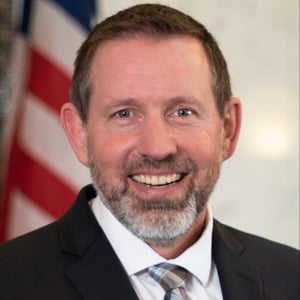
Judge, United States Court of Appeals, Ninth Circuit
Lawrence VanDyke serves as a circuit judge on the U.S. Court of Appeals for the Ninth Circuit. Prior to that appointment in January 2020, he served as a Deputy Assistant Attorney General in the Environment and Natural Resources Division of the United States Department of Justice. Before that, he served consecutively as the Solicitor General of two western states – Nevada and Montana. At the beginning of his legal career, he worked as an attorney in the Appellate and Constitutional Issues practice group at Gibson Dunn & Crutcher, LLP.
Judge VanDyke received his law degree magna cum laude from Harvard Law School, where he was an editor on the Harvard Law Review. He has engineering and theology undergraduate degrees and a masters degree in engineering management. He served as a law clerk to the Honorable Janice Rogers Brown of the United States Court of Appeals for the District of Columbia Circuit. Judge VanDyke and his wife Cheryl live in Reno, Nevada, and they have three children.
Professor of Law, University of Minnesota Law School
Professor James W. Coleman is a scholar of energy law. He specializes in North American energy infrastructure, transport, and trade. He is also a nonresident senior fellow at the American Enterprise Institute focused on energy policy.
Professor Coleman has testified before Congress on steps to speed up energy infrastructure permits. He also worked with a team of experts as part of Alberta's Royalty Review to revise the Canadian province's management of its vast oil and gas resources.
Before joining Minnesota, Professor Coleman taught at Southern Methodist University's Dedman School of Law, the University of Calgary’s law and business schools, and Harvard Law School. Earlier, he practiced environmental and appellate law at Sidley Austin in Washington, D.C., and clerked for the Honorable Steven M. Colloton of the U.S. Court of Appeals for the Eighth Circuit.
Professor Coleman received two degrees from Harvard University—a J.D. (cum laude) and B.A. in biology (magna cum laude with highest honors in the field). As a result of his undergraduate thesis on butterfly genetics, which required fieldwork in Central Asia, a species of lycaenid butterfly was named after him—Agrodiaetus ripartii colemani.
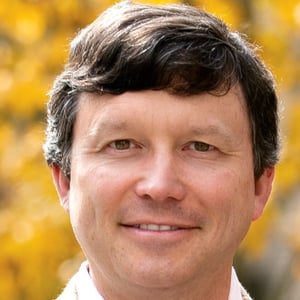
Partner, Baker Botts
George Fibbe represents clients in complex commercial disputes and regulatory matters, focusing on high-stakes matters across the energy sector. Before joining Baker Botts, he served as the Deputy General Counsel for Litigation, Regulation & Enforcement for the U.S. Department of Energy. Mr. Fibbe is a commercial trial attorney who practiced with Yetter Coleman, LLP in Houston for over ten years. He then served as head of litigation for the petroleum division of an international mining corporation. Before joining the Department of Energy, he served as General Counsel for a private solar company.
Managing Director, SCF Partners
Daniel G. West invests in energy services, equipment, and technology companies at SCF Partners in Houston, Texas. He provides equity capital and strategic growth assistance to entrepreneurs and leaders of both start-up ventures and established, growing businesses.
Prior to joining the private sector, Mr. West served as an infantry officer in the United States Marine Corps. As a platoon commander with the 22nd Marine Expeditionary Unit aboard the USS Mesa Verde, he led the Tactical Recovery of Aircraft and Personnel force in support of the NATO aerial campaign over Libya. He then served as executive officer of India Company, 3rd Battalion, 9th Marines as it mentored Afghan forces to assume lead security responsibility and executed counter-narcotics missions in Marjah, Helmand Province, Afghanistan. He also served as a clerk for Judge Laurence H. Silberman on the U.S. Court of Appeals for the D.C. Circuit.
Mr. West holds degrees in law, business administration, and economics from Harvard University, where he served as an editor of the Harvard Law Review and taught undergraduate courses in economics and government. He is a member of the Executive Committee of the International & National Security Law Practice Group of the Federalist Society and a term member of the Council on Foreign Relations.
Partner, King & Spalding
Jamieson Greer is a partner in King & Spalding's International Trade practice group where he specializes in trade remedy litigation, export / import compliance, and international trade policy and negotiations. Prior to joining King & Spalding, he served as the Chief of Staff to the U.S. Trade Representative, Ambassador Robert Lighthizer. At USTR, he oversaw the development and implementation of U.S. trade policy for the executive branch. He also was deeply involved in the negotiations of the Phase One trade deal with China and the United-States-Mexico-Canada Agreement. Before working at USTR, Jamieson spent several years in private practice working on trade-related matters and served in the U.S. Air Force Judge Advocate General's Corps.
JD Candidate, Harvard Law School
Trevor is a second-year law student at Harvard Law School. Prior to starting law school, he lived in Taiwan as a Fulbright Scholar studying Taiwanese industrial policy, and he worked as a research assistant at a Washington think tank focused on strategic trade controls where he investigated companies involved in the Chinese defense industry.

Explainer Episode 57 - Natural Gas Bans, Appliance Efficiency Standards, and Consumer Choice
James W. Coleman, Ben Lieberman
The debate over the electrification agenda and its implications for consumer choice and the environment...
Environmental Justice, Civil Rights, and the Rule of Law
Susan P. Bodine, Mark Brnovich, Horace Cooper, John C. Cruden, Brian D. Israel
This panel will evaluate efforts in the Biden administration, building upon executive actions dating back...
American Trade Law in a Post-WTO Appellate Body World
Jamieson Greer, Trevor R. Jones, David J. Ross
For decades, the WTO Appellate Body regularly ruled that American laws violated the various WTO...
American Trade Law in a Post-WTO Appellate Body World
Jamieson Greer, Trevor R. Jones, David J. Ross
For decades, the WTO Appellate Body regularly ruled that American laws violated the various WTO...
American Trade Law in a Post-WTO Appellate Body World
TeleforumThe SEC’s ESG Reporting Rule: Understanding the Debate over Climate-Risk Disclosure Requirements
Jane Luxton, Paul J. Ray
In March 2022, the Securities and Exchange Commission proposed a new rule that would establish...
America's Expanding Semiconductor Export Controls
Trevor R. Jones, Thomas Krueger, Nazak Nikakhtar
Much of global economic competition today centers around gaining market share in the semiconductor industry....
Topics
A Critique of the ‘Congressional Dysfunction’ Critique of the Major Questions Doctrine
In an essay, “A Major Ruling on Major Questions,” published in The Regulatory Review in...
Environmental Law After West Virginia v. EPA: Can the Biden Administration’s “Whole of Government” Approaches Survive Judicial Review?
Sean H. Donahue, Lisa Heinzerling, Derrick Morgan, Lindsay See, Lawrence VanDyke
The Biden Administration began with executive orders on an environmental policy agenda, directing a “whole...
Energy Security After Ukraine: What are the Challenges and Opportunities for the U.S. and its Allies?
James W. Coleman, George Fibbe, Daniel G. West
Russia’s invasion of Ukraine shocked the world – and directed renewed attention to the global...