
Senior Fellow, Cato Institute
Doug Bandow is a senior fellow at the Cato Institute, specializing in foreign policy and civil liberties. He worked as special assistant to President Reagan and editor of the political magazine Inquiry. He writes regularly for leading publications such as Fortune magazine, National Interest, Wall Street Journal, and Washington Times. Bandow speaks frequently at academic conferences, on college campuses, and to business groups. Bandow has been a regular commentator on ABC, CBS, NBC, CNN, Fox News Channel, and MSNBC. He holds a J.D. from Stanford University.
Trinity College Dublin School of Law
Neville Cox LL.B., Ph.D. is a Fellow of Trinity College Dublin and a practising barrister. He is the author of Blasphemy and the Law (2000) and co-author of Sport and the Law (2004). He is also published on a wide variety of topics in law journals and books. He lectures in the areas of tort law, comparative law and sport and the law. He has been a visting professor in the University of San Francisco and in Autumn of 2006 he will be a scholar-in-residence in Washington & Lee University in Virginia. In 2005 he was awarded a Provost's teaching award.
Harry T. Ice Professor of Law, Indiana University Maurer School of Law
Professor Cripps, an internationally acclaimed scholar and teacher, became the first holder of the Harry T. Ice Chair of Law at Indiana University in 2000. She specializes in intellectual property law and biotechnology. Her book Controlling Technology: Genetic Engineering and the Law, published in 1980, was the first comprehensive treatment of the legal implications of biotechnology. She is also the author of other books, including The Legal Implications of Disclosure in the Public Interest, now in its second edition, and more than 40 articles on intellectual property, privacy law, and biotechnology.
In addition to her years in the faculty of law at Cambridge University, she has regularly taught as a visiting professor at the Cornell Law School and also at the University of Texas at Austin as well as in Paris. Professor Cripps is a barrister in both England and New Zealand, and has served as an advisor on intellectual property law and biotechnology to the House of Lords, on biotechnology issues to the New Zealand Government, on constitutional matters to the Sri Lankan Ministry of Justice, and as a consultant on intellectual property to various law firms and corporations. Her research on bioethics and cloning was cited in the most recent issue of the Harvard Law Review and in "Why can't you buy a kidney to save your life?" Boston Globe, July 1, 2007.
James Louis Calamaras Professor of Law, Indiana University Maurer School of Law
Professor Fidler specializes in international law. He is one of the world's leading experts on international law and global health. Professor Fidler is also an internationally recognized expert on biosecurity threats posed by biological weapons and bioterrorism, the international legal and policy implications of "non-lethal" weapons, counterinsurgency and rule of law operations, and the globalization of baseball.
In addition to his teaching and scholarly activities, Professor Fidler has served as an international legal consultant to the World Bank (on foreign investment in Palestine), the World Health Organization and the U.S. Centers for Disease Control and Prevention (on global health issues), the U.S. Department of Defense's Defense Science Board (on bioterrorism), the Scientists Working Group on Biological and Chemical Weapons of the Center for Arms Control and Non-Proliferation, U.S. Joint Forces Command (on rule of law issues in complex operations), the Interagency Afghanistan Integrated Civilian-Military Pre-Deployment Training Course organized by the Departments of Defense, State, Agriculture and the U.S. Agency for International Development, and various initiatives undertaken by non-governmental organizations in the areas of global health and arms control. He was also the editor for the Insights publication series of the American Society of International Law from 2007-2009.
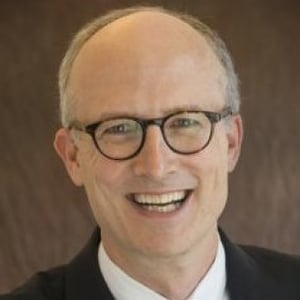
Michael J. Marks Professor of Law, University of Chicago Law School
M. Todd Henderson is the Michael J. Marks Professor of Law at the University of Chicago Law School. Professor Henderson’s research interests include corporations, securities regulation, and law and economics. He has taught classes ranging from Banking Regulation to Torts to American Indian Law.
Professor Henderson received an engineering degree cum laude from Princeton University in 1993. He worked for several years designing and building dams in California before matriculating at the Law School. While at the Law School, Todd was an editor of the Law Review and captained the Law School's all-University champion intramural football team. He graduated magna cum laude in 1998 and was elected to the Order of the Coif. Following law school, Todd served as clerk to the Hon. Dennis Jacobs of the US Court of Appeals for the Second Circuit. He then practiced appellate litigation at Kirkland & Ellis in Washington, DC, and was an engagement manager at McKinsey & Company in Boston, where he specialized in counseling telecommunications and high-tech clients on business and regulatory strategy.
C. Ben Dutton Professor of Law, Indiana University Maurer School of Law
Professor Nagy joined the law school faculty in 2006 as the C. Ben Dutton Professor of Business Law. She began her teaching career in 1994 at the University of Cincinnati College of Law, where she served as Interim Dean from 2004-05 and as Associate Dean for Faculty Development from 2002-04. In Spring 2001, she was a Visiting Professor of Law at the University of Illinois College of Law, and was a Visiting Scholar at the University of Canterbury School of Law in Christchurch, New Zealand in Spring 2002.
Professor Nagy teaches and writes in the areas of securities litigation, securities regulation, and corporations. Her scholarship includes articles in the Cornell Law Review, the Notre Dame Law Review, and the Ohio State Law Journal as well as two co-authored books, one on the law of insider trading and a casebook on Securities Litigation and Enforcement. She is a frequent speaker on securities regulation and litigation topics at law schools and professional conferences. She also served as Chair of the AALS Section on Securities Regulation in 2004-05; as Chair of the AALS Standing Committee on Sections and the Annual Meeting in 2007-08; and as a Vice President and Member of the Board of Trustees of the SEC Historical Society from 2008-11.
Prior to teaching, Professor Nagy was an associate with Debevoise & Plimpton in Washington, D.C., specializing in securities enforcement and litigation. She was named interim executive associate dean for academic affairs in August 2013 and executive associate dean in January 2014.
Indiana University School of Law
Professor Geyh's teaching and scholarship focus on the operation of state and federal courts in relation to the political branches of government and the legal profession. He is the author of "When Courts and Congress Collide: The Struggle for Control of America's Judicial System" (University of Michigan Press 2006), coauthor of "Judicial Conduct and Ethics" (Fourth ed., Lexis Law Publishing 2007) (With Alfini, Lubet and Shaman), and "Disqualification: An Analysis Under Federal Law (2d ed. Federal Judicial Center, forthcoming 2010). His work on judicial independence, accountability, administration and ethics has appeared in over 40 books, articles, book chapters and reports.
Geyh currently chairs the editorial committee for the journalJudicature, and is Director of the ABA Judicial Disqualification Project and has previously served as Reporter to four ABA Commissions (the Joint Commission to Evaluate the Model Code of Judicial Conduct, the Commission on the 21st Century Judiciary, the Commission on the Public Financing of Judicial Campaigns, and the Commission on the Separation of Powers and Judicial Independence). He has likewise served on the Board of Directors of the Justice at Stake Campaign; as Reporter to the Constitution Project Task Force on the Distinction Between Intimidation and Legitimate Criticism of Judges; as Director of the American Judicature Society's Center for Judicial Independence; as Consultant to the Parliamentary Development Project on Judicial Independence and Administration for the Supreme Rada of Ukraine; as assistant special counsel to the Pennsylvania House of Representatives on the impeachment and removal of Pennsylvania Supreme Court Justice Rolf Larsen; as Consultant to the National Commission on Judicial Discipline & Removal; and as legislative liaison to the Federal Courts Study Committee. He is a member of the American Law Institute.
A recipient of the Leon Wallace Teaching Award and a two-time recipient of the IU Trustees' Teaching Award, Geyh teaches courses on civil procedure, legal ethics, federal courts, and the relationship between courts and legislatures.
Following graduation from University of Wisconsin Law School, he clerked for Judge Thomas A. Clark of the U.S. Court of Appeals for the Eleventh Circuit. He then worked as an associate at Covington & Burling in Washington, D.C., and served as counsel to the U.S. House of Representatives Committee on the Judiciary. Professor Geyh began his teaching career in 1991 at the Widener University School of Law and joined the law faculty at Indiana in 1998.
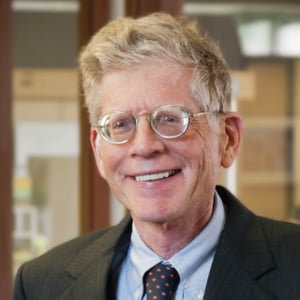
Professor of Law, University of Pittsburgh School of Law
Arthur D. Hellman, a professor of law (emeritus) at the University of Pittsburgh, is a nationally recognized scholar of the federal courts who has also written in the area of the First Amendment. His publications include numerous articles and several books, including casebooks in both areas, Federal Courts: Cases and Materials on Judicial Federalism and the Lawyering Process (5th edition 2022) (with David R. Stras, Ryan W. Scott, F. Andrew Hessick, and Derek T. Muller); and First Amendment Law: Freedom of Speech and Freedom of Religion (5th edition 2022) (with William D. Araiza, Thomas E. Baker, and Ashutosh A. Bhagwat).
In addition to his casebooks and academic writing, Processor Hellman has worked with the Judiciary Committees in the House and Senate in drafting federal courts legislation, including the most recent (2002) revision of the Judicial Conduct and Disability Act (Title 28, Chapter 16). The legislative histories of two major jurisdictional statutes – the Federal Courts Jurisdiction and Venue Clarification Act of 2011 and the “Holmes Group Fix” (enacted as part of the America Invents Act) – acknowledge his contributions.
Professor Hellman has testified as an invited witness at numerous hearings of both Judiciary Committees. His testimony has focused on a wide variety of legislative issues related to the federal courts, including the jurisdiction of the Supreme Court; proposals to divide the Ninth Circuit Court of Appeals; federal judicial discipline; unpublished appellate opinions; and the constitutionality of legislative restrictions on the powers of the federal courts.
In 2005 Professor Hellman was appointed as the inaugural holder of the Sally Ann Semenko Endowed Chair at the University. In 2002 he received the Chancellor’s Distinguished Research Award “as a faculty member who has an outstanding and continuing record of research and scholarly activity.”
United States Court of Appeals, Second Circuit
Dennis Jacobs is the Chief Judge of the United States Court of Appeals for the Second Circuit. He became Chief Judge on October 1, 2006. At the time of his appointment in 1992, he was a partner in the New York law firm of Simpson Thacher & Bartlett.
Judge Jacobs received his B.A. degree from Queens College of the City University of New York in 1964; his M.A. degree from New York University in 1965; and his J.D. degree from the New York University School of Law in 1973.
Judge Jacobs was a lecturer in the English Department of Queens College of the City University of New York from 1967 until 1969. He was in private practice from 1973 with the New York law firm of Simpson, Thacher & Bartlett, serving as a partner there from 1980 until his judicial appointment.
In 1997-2004, Judge Jacobs was a member of the Committee on Judicial Resources of the Judicial Conference of the United States; starting in 1999 he was chair of that committee.
Judge Jacobs is a native of New York City.
Executive Vice President and Director of Litigation, EdChoice Legal Advocates
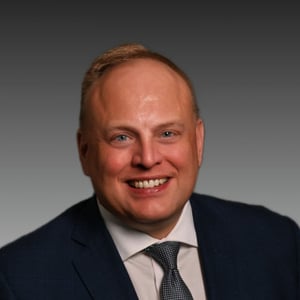
Before founding a public interest law firm at EdChoice, Tom Fisher served as Indiana’s first Solicitor General from 2005-2023. Fisher has argued dozens of high-profile cases before both the Indiana Supreme Court and the Seventh Circuit U.S. Court of Appeals and five cases before the U.S. Supreme Court. A two-time recipient of the National Association of Attorneys General Best Brief Award, Fisher is a Fellow of the American Academy of Appellate Lawyers and a Sagamore of the Wabash. Fisher is a graduate of Wabash College and Indiana University Maurer School of Law, where he serves as an Adjunct Professor of Law.
University of Missouri - Columbia, School of Law
Duane and Kelly Roberts Dean and Professor of Law, Pepperdine University School of Law
Dean Tacha is Duane and Kelly Roberts Dean of the School of Law and professor of law. Previously, she was a Circuit Judge, U.S. Court of Appeals for the Tenth Circuit, since January, 1986. She served as Chief Judge from January 2001 through 2007. Dean Tacha earned her bachelor of arts degree from the University of Kansas in 1968 and her juris doctorate from the University of Michigan in Ann Arbor in 1971, and was a White House Fellow (1971-1972).
She returned to the University of Kansas where she served as associate professor at its School of Law from 1974-1977 and as professor of law from 1977-1985. She served as associate dean from 1977-1979, as associate vice chancellor for Academic Affairs from 1979-1981, and as vice chancellor for Academic Affairs between 1981-1985. In 1992, Dean Tacha received the KU Alumni Association's Fred Ellsworth Medallion for extraordinary service to the university and received its most prestigious award, the Distinguished Service Citation, in 1996. In January of 2010, she was named "Kansan of the Year" by the organization Native Sons and Daughters of Kansas.
Prior to joining the University of Kansas, she practiced law in Washington, D.C. and Kansas, and was for three years Director of the Douglas County Legal Aid Clinic (1974-1977). During her distinguished career, Dean Tacha served as a member of the Judicial Conference of the United States and was named in 2006 by U.S. Supreme Court Chief Justice John Roberts to the Conference's Executive Committee. Previously, Chief Justice Rehnquist appointed her to serve two terms as Chair of the Conference's Committee on the Judicial Branch which oversees the federal judiciary's relationship with Congress and the executive branch. Dean Tacha also was a member of the United States Sentencing Commission which is responsible for studying and making recommendations to Congress about federal sentencing policy.
She has represented the judiciary of the United States internationally on several occasions, including participating in the American College of Trial Lawyers Anglo-American Legal Exchange among members of the bench and bar in the United States and in the United Kingdom. In 1992, the American Bar Association selected Dean Tacha as a member of a delegation of lawyers and judges who traveled to Albania to assist that nation in developing a new constitution and government, and in 2007, Judge Tacha represented American judges in the Canadian-American Legal Exchange.
As a spokesperson for enhanced ethics, professionalism, and civility in the legal profession, Dean Tacha has been active in the American Inns of Court movement. She helped found the Judge Hugh Means American Inn of Court in Lawrence, served on the national Board of Trustees of the American Inns of Court, and was its national president from 2004-2008. Her contributions to the legal profession were recognized when she was named recipient of the Devitt Award in 2007, the highest honor given to a federal judge for distinguished lifetime service. In 2008, she was recipient of the John Marshall Award, which the American Bar Association bestows for positively impacting the justice system.
Dean Tacha holds professional memberships in the American Bar Association, American Bar Foundation (Life Member), American Law Institute, Kansas Bar Association, Phi Beta Kappa, and Order of Coif and she is admitted to the Bar in Kansas, Missouri, and the District of Columbia. Additionally, she is a past chair of the Appellate Judges Conference and a former member of the ABA's Commission on Women in the Profession.
Dean Tacha has held leadership positions in numerous civic and charitable organizations including chairing the Kansas Territorial Sesquicentennial Commission, the Lawrence/Douglas County Heritage Area Commission, and the Freedom's National Heritage Area Board of Trustees. She has served as a member of the board of directors or as a trustee at Kansas State Historical Society, Kansas Health Foundation, Baker University, Saint Paul School of Theology, Lawrence Arts Center, and First United Methodist Church, Lawrence, to name a few.
Indiana University School of Law
Professor Geyh's teaching and scholarship focus on the operation of state and federal courts in relation to the political branches of government and the legal profession. He is the author of "When Courts and Congress Collide: The Struggle for Control of America's Judicial System" (University of Michigan Press 2006), coauthor of "Judicial Conduct and Ethics" (Fourth ed., Lexis Law Publishing 2007) (With Alfini, Lubet and Shaman), and "Disqualification: An Analysis Under Federal Law (2d ed. Federal Judicial Center, forthcoming 2010). His work on judicial independence, accountability, administration and ethics has appeared in over 40 books, articles, book chapters and reports.
Geyh currently chairs the editorial committee for the journalJudicature, and is Director of the ABA Judicial Disqualification Project and has previously served as Reporter to four ABA Commissions (the Joint Commission to Evaluate the Model Code of Judicial Conduct, the Commission on the 21st Century Judiciary, the Commission on the Public Financing of Judicial Campaigns, and the Commission on the Separation of Powers and Judicial Independence). He has likewise served on the Board of Directors of the Justice at Stake Campaign; as Reporter to the Constitution Project Task Force on the Distinction Between Intimidation and Legitimate Criticism of Judges; as Director of the American Judicature Society's Center for Judicial Independence; as Consultant to the Parliamentary Development Project on Judicial Independence and Administration for the Supreme Rada of Ukraine; as assistant special counsel to the Pennsylvania House of Representatives on the impeachment and removal of Pennsylvania Supreme Court Justice Rolf Larsen; as Consultant to the National Commission on Judicial Discipline & Removal; and as legislative liaison to the Federal Courts Study Committee. He is a member of the American Law Institute.
A recipient of the Leon Wallace Teaching Award and a two-time recipient of the IU Trustees' Teaching Award, Geyh teaches courses on civil procedure, legal ethics, federal courts, and the relationship between courts and legislatures.
Following graduation from University of Wisconsin Law School, he clerked for Judge Thomas A. Clark of the U.S. Court of Appeals for the Eleventh Circuit. He then worked as an associate at Covington & Burling in Washington, D.C., and served as counsel to the U.S. House of Representatives Committee on the Judiciary. Professor Geyh began his teaching career in 1991 at the Widener University School of Law and joined the law faculty at Indiana in 1998.
Professor of Law, University of Pittsburgh School of Law
Arthur D. Hellman, a professor of law (emeritus) at the University of Pittsburgh, is a nationally recognized scholar of the federal courts who has also written in the area of the First Amendment. His publications include numerous articles and several books, including casebooks in both areas, Federal Courts: Cases and Materials on Judicial Federalism and the Lawyering Process (5th edition 2022) (with David R. Stras, Ryan W. Scott, F. Andrew Hessick, and Derek T. Muller); and First Amendment Law: Freedom of Speech and Freedom of Religion (5th edition 2022) (with William D. Araiza, Thomas E. Baker, and Ashutosh A. Bhagwat).
In addition to his casebooks and academic writing, Processor Hellman has worked with the Judiciary Committees in the House and Senate in drafting federal courts legislation, including the most recent (2002) revision of the Judicial Conduct and Disability Act (Title 28, Chapter 16). The legislative histories of two major jurisdictional statutes – the Federal Courts Jurisdiction and Venue Clarification Act of 2011 and the “Holmes Group Fix” (enacted as part of the America Invents Act) – acknowledge his contributions.
Professor Hellman has testified as an invited witness at numerous hearings of both Judiciary Committees. His testimony has focused on a wide variety of legislative issues related to the federal courts, including the jurisdiction of the Supreme Court; proposals to divide the Ninth Circuit Court of Appeals; federal judicial discipline; unpublished appellate opinions; and the constitutionality of legislative restrictions on the powers of the federal courts.
In 2005 Professor Hellman was appointed as the inaugural holder of the Sally Ann Semenko Endowed Chair at the University. In 2002 he received the Chancellor’s Distinguished Research Award “as a faculty member who has an outstanding and continuing record of research and scholarly activity.”
United States Court of Appeals, Second Circuit
Dennis Jacobs is the Chief Judge of the United States Court of Appeals for the Second Circuit. He became Chief Judge on October 1, 2006. At the time of his appointment in 1992, he was a partner in the New York law firm of Simpson Thacher & Bartlett.
Judge Jacobs received his B.A. degree from Queens College of the City University of New York in 1964; his M.A. degree from New York University in 1965; and his J.D. degree from the New York University School of Law in 1973.
Judge Jacobs was a lecturer in the English Department of Queens College of the City University of New York from 1967 until 1969. He was in private practice from 1973 with the New York law firm of Simpson, Thacher & Bartlett, serving as a partner there from 1980 until his judicial appointment.
In 1997-2004, Judge Jacobs was a member of the Committee on Judicial Resources of the Judicial Conference of the United States; starting in 1999 he was chair of that committee.
Judge Jacobs is a native of New York City.

The Great Health Care Debate: Is Nationalized Health Care the Cure for America?
Indiana - Bloomington Student Chapter
Bloomington, INSecurities Fraud: Should Congress Overturn Stoneridge and Expose Lawyers & Financial Advisors to More Liability?
Indiana-Bloomington Student Chapter
Bloomington, INProfessional Responsibility: The Disciplining of Federal Judges
Charles Gardner Geyh, Arthur D. Hellman, Dennis Jacobs, David Reinhard
Suddenly, the subject of federal judicial ethics is making news. At least four federal judges...
Professional Responsibility: The Disciplining of Federal Judges
2008 National Lawyers Convention
Washington, DCVoter ID Act Lecture
Bar Watch Bulletin August 7, 2005
The ABA meeting in Chicago, Illinois included several panel discussions, highlights of which we report...
The Future of Federal Sentencing Policy
2000 National Lawyers Convention
Washington, DC