

Former Deputy Attorney General for Virginia
Kennerly Davis has over forty years of experience in corporate management, public service, and the private practice of law. He has held senior executive positions in a Fortune 500 electric and gas company. He has served as Deputy Attorney General for the Commonwealth of Virginia, and as a legislative aide to a U.S. Senator and a U.S. Congressman. He practiced law for 25 years with Hunton Andrews Kurth LLP.
Davis is active in the Federalist Society as a member of the Regulatory Process Working Group of the Regulatory Transparency Project, and as a member of the Execuitve Committee of the Administrative Law and Regulation Practice Group. He is active in the national Alumni Free Speech Alliance, and involved in AFSA-chapter initiatives, including litigation, to publicize and correct the serious legal problems created by university Diversity, Equity, and Inclusion programs and the anonymous bias reporting systems used to enforce those DEI programs.
Davis writes and speaks on a wide variety of topics, including those related to the Founding of America, the natural rights foundation of our Republic, the constitutional rule of law, equal protection and free speech, DEI programs and bias reporting systems, capitalism, regulation and regulatory reform, and economic development. His articles have appeared in The Wall Street Journal, the Washington Examiner, the Richmond Times-Dispatch, The Federalist Society Review, the FedSoc Blog, Real Clear Energy, Townhall, the Daily Caller, reports of the Center for Strategic & International Studies, and other publications. He appears frequently on radio, podcasts, and television.
Davis graduated with honors from Cornell University with an A.B. degree in Government. He earned an M.A. degree from Pembroke College, Oxford, in Philosophy, Politics, and Economics. He was awarded a J.D. degree from Harvard Law School, and an M.B.A. degree from Virginia Commonwealth University.
Davis lives in Richmond, Virginia. He can be contacted by email: j.kendavis@verizon.net, and by phone: (804) 624-8525.
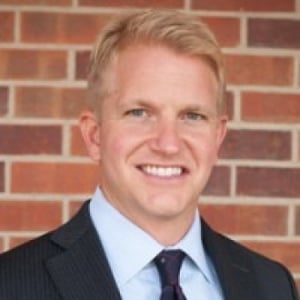
Wall Chair in Corporate Law and Governance and Professor of Law, University of Missouri School of Law
Thom Lambert holds the Wall Family Chair in Corporate Law and Governance at the University of Missouri Law School. He is co-author of a leading antitrust casebook and has published more than two dozen law review articles on antitrust, corporate, and regulatory matters. His most recent book, How to Regulate: A Guide for Policymakers was published by Cambridge University Press in 2017. He is a regular contributor to the law and economics blog, Truth on the Market (www.truthonthemarket.com) and is currently a visiting professor at Washington University Law School.
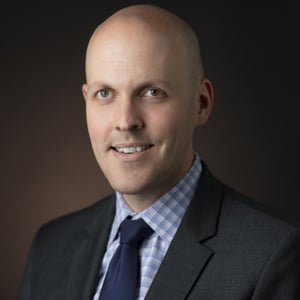
Partner, Barr & Klein PLLC
Steve Klein, a partner at Barr & Klein PLLC, is an experienced free speech attorney who has successfully fought for the First Amendment rights of his clients against local, state and federal regulators. As a lobbyist, Steve’s advocacy has led to the successful amendment of state laws to respect political engagement and prevented the enactment of laws that burden it. Steve has published articles in several legal journals, and his commentary has appeared in The Wall Street Journal, The Washington Times, The Detroit News, and other outlets. Steve earned a bachelors degree in politics at Hillsdale College and a law degree from Ave Maria School of Law, where he served as Managing Editor of the Ave Maria Law Review. He is licensed to practice law in the District of Columbia, Illinois and Michigan.
Senior Fellow, Governance Studies, The Brookings Institution
Jonathan Rauch, a contributing editor of National Journal and The Atlantic, is the author of several books and many articles on public policy, culture, and economics. He is winner of the 2005 National Magazine Award for columns and commentary and the 2010 National Headliner Award for magazine columns.
His latest book is Gay Marriage: Why It Is Good for Gays, Good for Straights, and Good for America, published in 2004 by Times Books (Henry Holt). It makes the case that same-sex marriage would benefit not only gay people but society and the institution of marriage itself. Although much of his writing has been on public policy, he has also written on topics as widely varied as adultery, agriculture, economics, gay marriage, height discrimination, biological rhythms, number inflation, and animal rights.
His multiple-award-winning column, “Social Studies,” was published in National Journal (a Washington-based weekly on government, politics, and public policy) from 1998 to 2010, and his features appeared regularly both there and in The Atlantic. Among the many other publications for which he has written are The New Republic, The Economist, Reason, Harper’s, Fortune, Reader’s Digest, U.S. News & World Report, The New York Times newspaper and magazine, The Wall Street Journal, The Washington Post, The Los Angeles Times, The New York Post, Slate, The Chronicle of Higher Education, The Public Interest, The Advocate, The Daily, and others.
Mr. Rauch was born and raised in Phoenix, Arizona, and graduated in 1982 from Yale University. He went on to become a reporter for the Winston-Salem Journal in North Carolina before moving to Washington in 1984. From 1984-89 he covered fiscal and economic policy for National Journal. In 1990 he spent six months in Japan as a fellow of the Japan Society Leadership Program, and in 1996 he was awarded the Premio Napoli alla Stampa Estera for his coverage, in The Economist, of the European Parliament. His articles appear in The Best American Magazine Writing 2005 and The Best American Science and Nature Writing 2004 and 2007. In 2011 he won the National Lesbian and Gay Journalists Association prize for excellence in opinion writing. He has also won two second-place prizes (2000 and 2001) in the National Headliner Awards. He has appeared as a guest on many television and radio programs.

Founder and Co-Director, James Wilson Institute
Hadley Arkes joined the faculty of Amherst College in 1966. He became the Edward Ney Professor of Jurisprudence in 1987, and held that chair until he retired officially in July 2015. But he has not retired from writing and speaking. He has carried that teaching into a new phase; he has become the Founder and Director of the James Wilson Institute on Natural Rights and the American Founding in Washington, D.C. He has written eight books, mostly with Princeton and Cambridge University Presss. Among the books at Princeton have been: The Philosopher in the City (1981), First Things (1986), Beyond the Constitution (1990), and The Return of George Sutherland (1994). With Cambridge Press he has done Natural Rights and the Right to Choose (2002), and Constitutional Illusions & Anchoring Truths: The Touchstone of the Natural Law (2010). His most recent book, with Regnery Press is Mere Natural Law (2023) His articles have appeared in professional journals, but apart from his writing in more scholarly formats, he has become known to a wider audience through his writings in the Wall Street Journal, National Review, Civitas and First Things, a journal that took its name from his book of that title.
He was the main advocate, and architect, of the bill that became known as the Born-Alive Infants’ Protection Act. The account of his experience, in moving the bill through Congress, is contained as an epilogue or memoir in his book, Natural Rights & the Right to Choose. Arkes first prepared his proposal as part of the debating kit assembled for the first George Bush in 1988. The purpose of that proposal was to offer the “most modest first step” of all in legislating on abortion, and opening a conversation even with people who called themselves “pro-choice.” Professor Arkes proposed to begin simply by preserving the life of a child who survived an abortion–contrary to the holding of one federal judge, that such a child was not protected by the laws. Professor Arkes led the testimony on the bill before the Judiciary Committee of the U.S. House in July 2000, then again in July 2001. The legislative calendar was upended in the aftermath of September 11th, but in March 2002, the bill was brought to the floor of the House, where it passed unanimously. To the surprise of Professor Arkes, the bill was brought to the floor of the Senate on July 18 by the Deputy Majority Leader, Harry Reid, and passed in the same way. On August 5, President Bush signed the bill into law with Professor Arkes in attendance.
Professor Arkes was the founder, at Amherst, of the Committee for the American Founding, a group of alumni and students seeking to preserve, at Amherst, the doctrines of “natural rights” taught by the American Founders and Lincoln. That interest has been carried over now to the founding of a new center for the jurisprudence of natural law, in Washington, D.C.: the James Wilson Institute on Natural Rights and the American Founding, named for one of the premier minds among the American Founders. Professor Arkes has drawn to this project a cluster of accomplished federal judges who have wanted to get a firmer hold on the natural law, and brought them together with some gifted teachers of philosophy and law. The new institute will be sponsoring lectures and seminars in Washington and other parts of the country. The purpose of this new James Wilson Institute is to teach anew, to lawyers, judges, and students those principles of law that furnished the guide to the American Founders as they set about framing a Constitution. And the hope is to restore, to a new generation, the furnishings of mind of the men who formed this regime.

Do Regulatory Reform Efforts Inevitably Entrench the Administrative State?
John Kennerly Davis, Thom Lambert
Government regulation is pervasive, complex and expensive to administer. Americans have a vital interest and...
Political Realism: How Hacks, Machines, Big Money, and Back-Room Deals Can Strengthen American Democracy - Podcast
Stephen R. Klein, Jonathan Rauch
“Political Realism: How Hacks, Machines, Big Money, and Back-Room Deals Can Strengthen American Democracy” (available...
Gonzales v. Carhart: What Hath Kennedy Wrought?
Hadley P. Arkes
Once more the question echoes: What hath Justice Kennedy wrought? This time in the decision...