
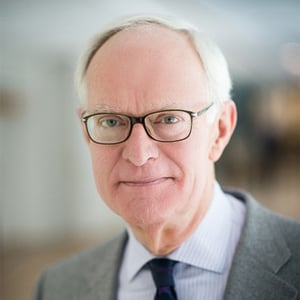
Distinguished Fellow, Hudson Institute
Christopher DeMuth is a distinguished fellow at Hudson Institute. He was president of the American Enterprise Institute for Public Policy Research (AEI) from 1986 to 2008 and was the D.C. Searle Senior Fellow at AEI from 2008 to 2011.
Mr. DeMuth was raised in Kenilworth, Illinois, and attended the Lawrenceville School (1964), Harvard College (A.B. 1968), and the University of Chicago Law School (J.D. 1973). He served as staff assistant to President Richard M. Nixon from 1969 to 1970, working first for Daniel P. Moynihan (then assistant to the President for Urban Affairs) on urban policy matters and then as chairman of the White House Task Force on Environmental Policy. Following law school, he practiced regulatory, antitrust, and general corporate law with Sidley & Austin in Chicago (1973-1976) and was associate general counsel of the Consolidated Rail Corporation (Conrail) in Philadelphia (1976-1977).
From 1977 to 1981, Mr. DeMuth was lecturer in public policy at the Kennedy School of Government at Harvard University, and director of the Harvard Faculty Project on Regulation. There he taught courses on law, economics, and regulatory policy and conducted and sponsored research on health, safety, environmental, and economic regulation.
Returning to Washington in 1981, Mr. DeMuth served as administrator for information and regulatory affairs in the U.S. Office of Management and Budget, and as executive director of the Presidential Task Force on Regulatory Relief during President Ronald Reagan’s first term of office. From 1984 to 1986, he was managing director of Lexecon Inc., a law-and-economics consulting firm; in 1986, he was also publisher and editor-in-chief of Regulation magazine. He was elected president of the American Enterprise Institute in December 1986.
Many of Mr. DeMuth’s articles, lectures, and occasional talks are posted on his website (https://www.ccdemuth.com).
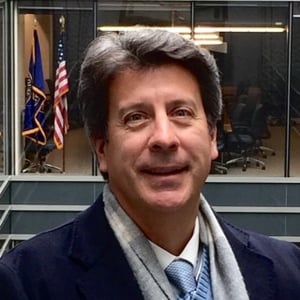
Senior Counsel, Committee on Oversight and Government Reform, U.S. House of Representatives
Daniel Flores is a Senior Counsel on the Republican staff of the Committee on Oversight and Government Reform, U.S. House of Representatives. Prior to his current position, he served in the House as Chief Counsel for the House Judiciary Committee's Subcommittee on Regulatory Reform, Commercial and Antitrust Law. Before coming to the House, he served as an Acting Associate Deputy General Counsel for the U.S. Environmental Protection Agency and in other roles in EPA's Office of General Counsel, as a Senior Trial Attorney for the U.S. Department of Justice, Environment and Natural Resources Division, and as an attorney in private practice in Washington, D.C. He serves as a House liaison to the Administrative Conference of the United States and has served on the Council of the American Bar Association’s Section on Administrative Law & Regulatory Practice.
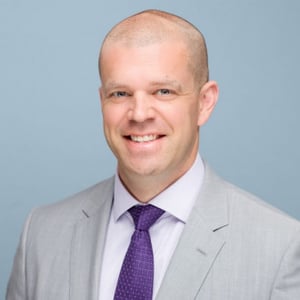
Senior Fellow, Government Affairs Institute at Georgetown University
Matt Glassman, Ph.D., joined the Government Affairs Institute as a Senior Fellow in 2017. He has taught courses on and off the Hill on American government, congressional process, congressional-presidential relations, and congressional leadership.
Prior to joining GAI, Matt worked on the Hill at the Congressional Research Service (CRS) for ten years. His portfolio included congressional operations, separation of powers, appropriations, judicial administration, agency design, and congressional history. He was detailed to the House Committee on Appropriations as professional staff for the Legislative Branch Subcommittee in FY2010 and FY2011.
Education: PhD, Yale University; MA and M.Phil., Yale University; BA, Hamilton College
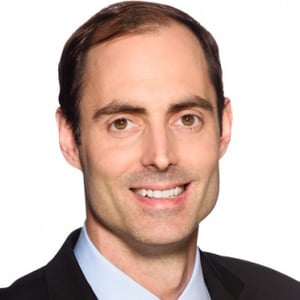
Senior Fellow, R Street Institute
James Wallner is a senior fellow of the R Street Institute and member of R Street’s Governance Project and Legislative Branch Capacity Working Group teams. He researches and writes about Congress, especially the Senate; the separation of powers; legislative procedure; and the federal policy process.
James joined R Street in July 2017 from the Heritage Foundation, where he was group vice president for research. He also serves as an adjunct professor in the politics department and the Congressional and Presidential Studies Program at the Catholic University of America as well as in the Department of Government at American University. Additionally, James is a Fellow at American University’s Center of Congressional and Presidential Studies.
Earlier in his career, he was executive director of the Senate Steering Committee during the chairmanships of Sens. Pat Toomey, R-Pa., and Mike Lee, R-Utah. He also has served as legislative director to Toomey and to former Sen. Jeff Sessions, R-Ala.
He is the author of two books, The Death of Deliberation: Partisanship and Polarization in the United States Senate, published in 2013 and On Parliamentary War: Partisan Conflict and Procedural Change in the United States Senate published in 2017.
James received both his doctoral and master’s degrees in politics from the Catholic University of America. He also holds a master’s in international and European politics from the University of Edinburgh in Scotland, and a bachelor’s in political science from the University of Georgia.
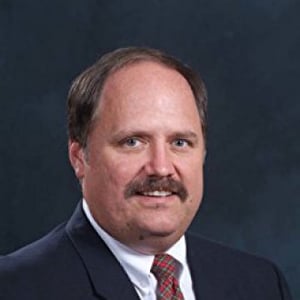
Distinguished Professor of Law, Jamie L. Whitten Chair of Law and Government, University of Mississippi School of Law
Professor Ronald J. Rychlak is the Jamie L. Whitten Chair of Law and Government and Distinguished Professor of Law at the University of Mississippi. He is a legal advisor to the Holy See’s delegation to the United Nations and chair of the Mississippi Advisory Committee to the U.S. Civil Rights Commission. He serves as the university’s Faculty Athletic Representative and is on the executive committee of the Southeastern Conference (SEC). In 2019 he received the university’s highest research and publication recognition, the “Distinguished Research and Creative Achievement Award” based upon his reputation for scholarly activity and leadership roles in professional societies. In 2023, he received the Algernon Sydney Sullivan Award, the University’s highest award in honor of service, for “placing service to others and the community before oneself, while embodying the qualities of honesty, morality, ethics, integrity, responsibility, determination, courage, and compassion.” In 2024, he was voted “Outstanding Law Professor” by the law school student body.
Ron is the author, co-author, or editor of twelve books and over 100 articles. The Congregation for the Causes of Saints at the Vatican called his book, Hitler, the War, and the Pope “definitive” in its response to charges made against the leader of the Catholic Church during World War II. He has been published in Notre Dame Law Review, UCLA Law Review, The Washington Post, The Wall Street Journal, and numerous other periodicals and journals. Media appearances include CNN, ABC, Fox News, The National Geographic TV Network, The Military Channel, C-SPAN, and more.
Ron and his wife Claire are proud of their six children, two sons-in-law, one daughter-in-law, and three granddaughters. They live in Oxford, Mississippi.
Director, Center for Religious Freedom, Hudson Institute
An international human-rights lawyer for over thirty years, Nina Shea joined Hudson Institute as a Senior Fellow in November 2006, where she directs the Center for Religious Freedom. Shea works extensively for the advancement of individual religious freedom and other human rights in U.S. foreign policy as it confronts an ascendant Islamic extremism, as well as nationalist and remnant communist regimes. She undertakes scholarship and advocacy in defense of those persecuted for their religious beliefs and identities and on behalf of diplomatic measures to end religious repression and violence abroad, whether from state actors or extremist groups.
Ms. Shea was appointed by the U.S. House of Representatives to serve seven terms as a Commissioner on the U.S. Commission on International Religious Freedom (June 1999 - March 2012). During the Soviet era, Shea’s first client before the United Nations was Soviet Nobel Peace Laureate Andrei Sakharov. Since then, she has been appointed as a U.S. delegate to the United Nation's main human rights body by both Republican and Democratic administrations. She also served as a member of the Clinton administration's Advisory Committee on Religious Freedom Abroad. In 2009, she was appointed to serve as a member of the U.S. National Commission to UNESCO.
Ms. Shea played a leading role in building grassroot support for the adoption of the International Religious Freedom Act (1998). For seven years ending in 2005, she helped organize and lead a coalition of churches and religious groups that worked to end a religious war against non-Muslims and dissident Muslims in southern Sudan. In 2014, she initiated and helped lead a coalition of hundreds of prominent American religious leaders to issue The Pledge of Solidarity for Persecuted Iraqi, Syrian and Egyptian Christians and Other Minorities, which was released by a bi-partisan Congressional panel on May 7. In summer 2014, she met with Pope Francis to discuss the persecution of Christians in the Middle East.
At Hudson, she has organized conferences for Nigerian schoolgirls and others who survived Boko Haram attacks, Christian converts formerly imprisoned in Iran, Coptic bishops from Egypt, Catholic bishops from China and the Gulf, Muslim scholars, and many others. Ms. Shea advocates in the nation's capital on behalf of a broad range of persecuted religious minorities around the world; and, for such work, was honored by the Ahmadiyya Muslim Community USA with the Community's inaugural "Ahmadiyya Muslim Humanitarian Award."
She has authored and/or edited four widely-acclaimed reports on Saudi state educational materials that promote extremist views and in 2011 had an opportunity to travel to Saudi Arabia and speak directly about her findings with the Ministers of Education, Justice and Islamic Affairs. Her reports include: Ten Years On: Saudi Arabia's Textbooks Still Promote Religious Violence (2011), Update: Saudi Arabia's Curriculum of Intolerance (2008), Saudi Arabia's Curriculum of Intolerance (2006), and Saudi Publications on Hate Ideology Invade American Mosques (2005), all of which translated and analyzed Saudi governmental publications that teach hatred and violence against the religious "other."
She is the co-author of Silenced: How Apostasy & Blasphemy Codes are Choking Freedom Worldwide, with a Foreword by Kyai Haji Abdurrahman Wahid, the former President of Indonesia and head of Nahdlatul Ulama, the world's largest Muslim organization (Oxford University Press, 2011). Her most recent book, which she also co-authored, is Persecuted: The Global Assault on Christians (Thomas Nelson Publishers, 2013). She regularly presents testimony before Congress, delivers public lectures, organizes briefings and conferences, and writes frequently on religious freedom issues. Her writings have appeared in the Wall Street Journal, Washington Post, CQ Researcher, Weekly Standard, National Review Online, CNN, Fox, The Daily Beast, HuffingtonPost, and RealClearWorld, among others.
For the ten years prior to joining Hudson, Ms. Shea worked at Freedom House, where she directed the Center for Religious Freedom, an entity which she had helped found in 1986 as the Puebla Institute.
She is a member of the bar of the District of Columbia. She is a graduate of Smith College, and American University's Washington College of Law.
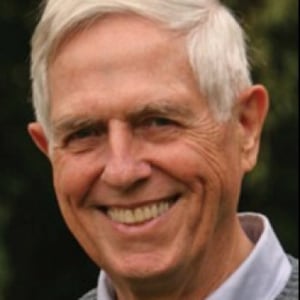
U.S. Court of Appeals for the D.C. Circuit (ret.) and former U.S. Senator
James L. Buckley was born in New York City in 1923, grew up in rural Connecticut, and received his B.A. degree from Yale. Following service as a naval officer in World War II, he returned to New Haven to secure his law degree. After several years in private practice, he joined a group of small companies engaged in oil exploration abroad. He was elected to the United States Senate in 1970 as the candidate of New York's Conservative Party. He failed of re-election; but he has since served as an under secretary of state in the Reagan administration, as president of Radio Free Europe/Radio Liberty in Munich, Germany, and, most recently, as a judge on the U.S. Court of Appeals for the District of Columbia Circuit. He retired in 2000 and now resides in Bethesda, Maryland.
Distinguished Fellow, Hudson Institute
Christopher DeMuth is a distinguished fellow at Hudson Institute. He was president of the American Enterprise Institute for Public Policy Research (AEI) from 1986 to 2008 and was the D.C. Searle Senior Fellow at AEI from 2008 to 2011.
Mr. DeMuth was raised in Kenilworth, Illinois, and attended the Lawrenceville School (1964), Harvard College (A.B. 1968), and the University of Chicago Law School (J.D. 1973). He served as staff assistant to President Richard M. Nixon from 1969 to 1970, working first for Daniel P. Moynihan (then assistant to the President for Urban Affairs) on urban policy matters and then as chairman of the White House Task Force on Environmental Policy. Following law school, he practiced regulatory, antitrust, and general corporate law with Sidley & Austin in Chicago (1973-1976) and was associate general counsel of the Consolidated Rail Corporation (Conrail) in Philadelphia (1976-1977).
From 1977 to 1981, Mr. DeMuth was lecturer in public policy at the Kennedy School of Government at Harvard University, and director of the Harvard Faculty Project on Regulation. There he taught courses on law, economics, and regulatory policy and conducted and sponsored research on health, safety, environmental, and economic regulation.
Returning to Washington in 1981, Mr. DeMuth served as administrator for information and regulatory affairs in the U.S. Office of Management and Budget, and as executive director of the Presidential Task Force on Regulatory Relief during President Ronald Reagan’s first term of office. From 1984 to 1986, he was managing director of Lexecon Inc., a law-and-economics consulting firm; in 1986, he was also publisher and editor-in-chief of Regulation magazine. He was elected president of the American Enterprise Institute in December 1986.
Many of Mr. DeMuth’s articles, lectures, and occasional talks are posted on his website (https://www.ccdemuth.com).
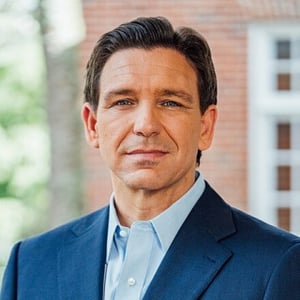
Governor, Florida
Ron DeSantis is the 46th Governor of the State of Florida. Since taking office in January 2019, he has worked hard to expand education opportunities, improve Florida’s water resources and Everglades, champion vocational training, bolster public safety, foster innovation in health care, assist with hurricane recovery, promote infrastructure development and support veterans – all while lowering taxes and being fiscally responsible.
A native Floridian, Governor DeSantis worked his way through Yale University, where he captained the university baseball team and graduated magna cum laude. He also gradated with honors from Harvard Law School. While at Harvard, he earned a commission in the U.S. Navy as a JAG Officer. During his active duty service, then- Lieutenant DeSantis deployed to Iraq as an advisor to a U.S. Navy SEAL Commander in support of the SEAL mission in Iraq. His military decorations include the Iraq Campaign Medal of the Bronze Star Medal (meritorious service).
Prior to serving as Governor, DeSantis served as the U.S. Congressman for Florida’s 6th District. As Chairman of the National Security Subcommittee, DeSantis spearheaded efforts to reform the UA, combat terrorism, identify government waste and relocate the American Embassy in Israel to Jerusalem. As a Congressman, DeSantis championed term limits, fiscal responsibility with a strong national defense.
Governor DeSantis is married to First Lady Casey DeSantis, a former Emmy Award winning television host. They are the proud parents of two children, Madison and Mason. They are the youngest family living in the Florida Governor’s Mansion in nearly fifty years.
Professor of Law, Antonin Scalia Law School, George Mason University
Professor of Law Michael S. Greve joined the faculty of the Antonin Scalia Law School, George Mason University in fall 2012 after having served as John G. Searle Scholar at the American Enterprise Institute (AEI), where he specialized in constitutional law, courts, and business regulation and served as chairman of the Competitive Enterprise Institute. Prior to joining AEI, Greve was founder and co-director of the Center for Individual Rights, a public interest law firm specializing in constitutional litigation.
Greve has served previously as an adjunct professor at a number of universities, including Cornell and Johns Hopkins Universities, and has been a visiting professor at Boston College since 2004. He was awarded a PhD and an MA in government by Cornell University. Greve also earned a Diploma from the University of Hamburg in Germany.
A prolific writer, Greve is the author of nine books and a multitude of articles appearing in scholarly publications, as well as numerous editorials, short articles, and book reviews. He is a frequent speaker for professional and scholarly organizations and has made many appearances on radio and television.
In addition Greve has provided congressional and state legislative testimony, has lobbied and consulted in federal agency proceedings, and has provided litigation services and management in over 30 cases, including matters before the U.S. Supreme Court.
Partner, Gibson, Dunn & Crutcher LLP
Thomas G. Hungar is a partner in the Washington, D.C., office of Gibson Dunn. His practice focuses on appellate litigation, and he assists clients with congressional investigations and complex trial court litigation matters as well. He has presented oral argument before the Supreme Court of the United States in 28 cases, including some of the Court’s most important patent, antitrust, securities, and environmental law decisions, and he has also appeared before numerous lower federal and state courts.
Thomas served as General Counsel to the U.S. House of Representatives from July 2016 until January 2019. As General Counsel, he provided legal advice and litigation representation on a non-partisan basis to the House and its leadership, members, officers, and staff, and he worked closely with numerous House committees in connection with their oversight and investigative activities. Previously, he served as a Deputy Solicitor General of the United States. In that position, he supervised business-related appellate litigation for the federal government, with particular emphasis on patent, antitrust, securities, and environmental appellate cases, and he also oversaw appellate litigation in banking, bankruptcy, tax, government contracts, communications, copyright, labor, trademark, and international trade matters. In private practice, Thomas’s appellate experience has encompassed those areas as well as class actions, constitutional law, employment law, product liability, administrative procedure, insurance coverage and bad faith, and general commercial litigation. He has handled scores of business-related appeals in the Supreme Court and lower appellate courts, and has briefed and argued many high-profile matters.
Thomas is a Fellow of the American Academy of Appellate Lawyers and is a frequent lecturer in his areas of expertise. While at the Department of Justice, he served as Appellate Counsel to the Intellectual Property Task Force Executive Staff, and he was awarded the John Marshall Award for Outstanding Legal Achievement, the Department’s highest award presented to attorneys for contributions and excellence in legal performance, in recognition of his handling of patent-law matters before the Supreme Court.
Most recently, Thomas has garnered national recognition for his Appellate Practice in The Legal 500 – United States, Best Lawyers in America, and in Chambers USA, which has repeatedly highlighted Thomas for his “expertise in appellate litigation” and experience with employment and antitrust disputes, as well as Congressional Investigations. Thomas was also recently named a “Litigation Star” by Benchmark Litigation.
Thomas served as an Assistant to the Solicitor General of the United States from 1992-1994. He also served as a law clerk to Justice Anthony M. Kennedy of the Supreme Court and to Circuit Judge Alex Kozinski of the United States Court of Appeals for the Ninth Circuit. He received his law degree from Yale Law School in 1987, where he was a Senior Editor of the Yale Law & Policy Review. He received his Bachelor of Science degree magna cum laude in mathematics/computer science and economics from Willamette University in 1984.
Thomas is admitted to practice in the District of Columbia.
University of Pennsylvania Law School
Jonathan Klick’s work focuses on identifying the causal effects of laws and regulations on individual behavior using cutting-edge econometric tools. Specific topics addressed by Klick’s work include the relationship between abortion access and risky sex, the health behaviors of diabetics, the effect of police on crime, addiction as rational choice, how liability exposure affects the labor market for physicians, as well as a host of other issues. His scholarship has been published in numerous peer-reviewed economics journals, including The Journal of Economic Perspectives, The Journal of Law & Economics, The Journal of Law, Economics, and Organization, and The Journal of Legal Studies. He has also published papers in The Stanford Law Review, The Columbia Law Review, and The University of Chicago Law Review.
David McIntosh is a leader for the principles of limited constitutional government and individual freedom. He is president of the Club for Growth, the leading advocate for economic liberty.
Former Congressman David McIntosh represented Indiana's 2nd Congressional District in the United States Congress from 1995-2001. As a Freshman, David chaired the Subcommittee on Regulatory Relief. He passed the Congressional Review Act and held extensive oversight and field hearings to build a record of public support for regulatory relief initiatives in energy, biotechnology, pharmaceutical, healthcare, transportation and technology sectors. Another issue that he championed was the elimination of the marriage penalty in the Federal Tax Code.
David served during the Reagan administration as special assistant to Attorney General Edwin Meese III, and as special assistant to President Reagan for Domestic Affairs. During the first Bush administration, he served as executive director of the President's Council on Competitiveness and assistant to the Vice President. The Competitiveness Council coordinated the cost/benefit review of major regulations and promoted legal reform measures.
David is a co-founder of the Federalist Society for Law and Public Policy and serves on the Board of Directors. He remains active with several free market and conservative think tanks and grassroots organizations. David has also had stints at the Hudson Institute and as a Professor of Economics at Ball State School of Business.
Prior to the Club for Growth, David was a partner at Mayer Brown, LLP in Washington, DC.
David graduated from the University of Chicago Law School in 1983, and Yale University, BA, cum laude, in 1980. He and his wife, Ruthie, are the proud parents of Ellie age 17 and Davey age 13.
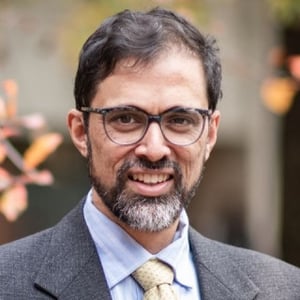
James Monroe Distinguished Professor of Law and Albert Clark Tate, Jr., Professor of Law, University of Virginia School of Law
Professor Saikrishna Prakash’s scholarship focuses on separation of powers, particularly executive powers. He teaches Constitutional Law, Foreign Relations Law and Presidential Powers at the Law School.
Prakash’s most recent book, “The Living Presidency: An Originalist Argument Against Its Ever-Expanding Powers,” was published by Harvard Belknap Press in 2020. He also authored “Imperial from the Beginning: The Constitution of the Original Executive” (Yale University Press, 2015). The former book focuses on the modern presidency while the latter considers the presidency of the Founders.
Prakash has authored over 75 law review articles. Among them are “Of Synchronicity and Supreme Law” in the Harvard Law Review, “The Indefensible Duty to Defend” in the Columbia Law Review, and “50 States, 50 Attorneys General and 50 Approaches to the Duty to Defend” and “The Executive Power Over Foreign Affairs” in the Yale Law Journal.
Prakash has published op-eds in The New York Times, The Wall Street Journal and the Los Angeles Times. At the request of Democrats and Republicans, he has testified before Congress on matters of presidential removal, the Mueller Report and how Congress might better check the presidency. He is currently a Miller Center Senior Fellow. In 2015, he received the Roger Traynor award for faculty scholarship. In the same year, he received an honorable mention from the American Society of Legal Writers for his book “Imperial from the Beginning.” He has given named lectures at William & Mary Law School, Princeton University and Toledo Law School, and keynote addresses at several conferences.
Prakash majored in economics and political science at Stanford University. At Yale Law School, he served as senior editor of the Yale Law Journal and received the John M. Olin Fellowship in Law, Economics and Public Policy. He subsequently clerked for Judge Laurence H. Silberman of the U.S. Court of Appeals for the District of Columbia Circuit and for Justice Clarence Thomas of the U.S. Supreme Court. After practicing in New York for two years, he served as a visiting professor at the University of Illinois College of Law and as an associate professor at Boston University School of Law. He then spent several years at the University of San Diego School of Law as the Herzog Research Professor of Law. Prakash has been a visiting professor at Northwestern University and the University of Chicago. He also has served as a James Madison Fellow at Princeton University and Visiting Research Fellow at the Hoover Institution of War & Peace at Stanford University.
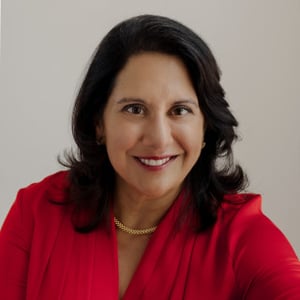
Judge, United States Court of Appeals, District of Columbia Circuit
Judge Rao was appointed to the United States Court of Appeals for the District of Columbia Circuit in March 2019. She graduated from Yale College in 1995 and the University of Chicago Law School in 1999. Following graduation, she served as a law clerk to Judge J. Harvie Wilkinson III of the U.S. Court of Appeals for the Fourth Circuit and, in the 2001 October Term, as law clerk to Justice Clarence Thomas of the U.S. Supreme Court. Between her clerkships, Judge Rao served as counsel for nominations and constitutional law to the U.S. Senate Committee on the Judiciary. In 2002, she joined the international arbitration group of Clifford Chance LLP in London, England. From 2005-2006, she served as Special Assistant and Associate White House Counsel to President George W. Bush. From 2006 to 2017, Judge Rao was a professor at the Antonin Scalia Law School at George Mason University, where she taught constitutional law, legislation and statutory interpretation, and the history and foundations of the administrative state. In 2014, she founded the Center for the Study of the Administrative State, a non-profit Center that promotes academic scholarship and public policy debates about administrative law. In July 2017, she was appointed to serve as the Administrator of the Office of Information and Regulatory Affairs in the Office of Management Budget. She served in this position until her appointment to the D.C. Circuit.
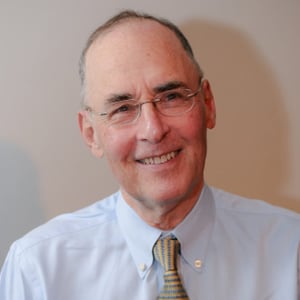
Trustee Professor of Law, New York Law School
From 1972-79, Schoenbrod served as one of the leaders of the Natural Resources Defense Council, where he campaigned to reduce lead in gasoline, resurrect the then-decrepit New York City subway, and protect the environment of Puerto Rico. Previously, he was Director of Program Development at the community development project that Senator Robert Kennedy established in Bedford Stuyvesant. He has also been a senior fellow at the Cato Institute and the American Enterprise Institute.
His books include
D.C. Confidential: Inside the Five Tricks of Washington (Encounter Books, 2017) with forewords by Governor Howard Dean and Senator Mike Lee;
Breaking the Logjam: Environmental Protection That Will Work (Yale University Press, 2010)(with Richard B. Stewart and Katrina M. Wyman);
Saving Our Environment from Washington: How Congress Grabs Power, Shirks Responsibility, and Shortchanges the People (Yale University Press, 2005);
Democracy by Decree: What Happens When Courts Run Government (Yale University Press, 2003) (with Ross Sandler); and
Power Without Responsibility: How Congress Abuses the People Through Delegation (Yale University Press, 1993).
In addition to writing scholarly articles, he has frequently contributed opinion pieces to the Wall Street Journal, The Hill, the New York Times, and other publications.
He has an undergraduate degree from Yale College, a graduate degree in economics from Oxford University, which he attended as a Marshall Scholar, and a law degree from Yale Law School.
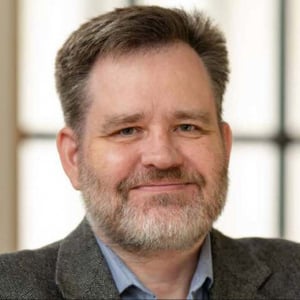
David Boies Professor of Law, Yale Law School
Maurice A. Deane Distinguished Professor of Constitutional Law and Faculty Director of International Programs, Hofstra University School of Law
Professor Ku’s primary research interest is the relationship of international law to constitutional law. He has also conducted academic research on a wide range of topics including international dispute resolution, international criminal law, and China’s relationship with international law. He teaches courses such as U.S. constitutional law, U.S. foreign affairs law, transnational law, and international trade and business law. Since 2014, he has served as the faculty director of international programs, overseeing Hofstra Law’s study abroad, exchange and LL.M. programs. Professor Ku also teaches Constitutional Law in our online degree programs: Master of Laws in American Law and Master of Arts in American Legal Studies. He has also been selected as the John DeWitt Gregory Research Scholar and as a Hofstra Law Research Fellow. He is a member of the American Law Institute.
He is the co-author, with John Yoo, of Taming Globalization: International Law, the U.S. Constitution, and the New World Order (Oxford University Press 2012). He also has published more than 40 law review articles, book chapters and symposia essays. He has given dozens of academic lectures and workshops at major universities and conferences in the United States, Europe and Asia.
He co-founded the leading international law weblog Opinio Juris, which is read daily by thousands worldwide. His essays and op-eds have been published in major news publications such as the Wall Street Journal, the Los Angeles Times, and the NYTimes.com. He has been frequently interviewed for television news programs and quoted in print and electronic media. He has also signed or submitted amicus briefs to national and international courts and served as an expert witness in both domestic and international proceedings.
Before joining the Hofstra Law faculty, Professor Ku served as a law clerk to the Honorable Jerry E. Smith of the U.S. Court of Appeals for the Fifth Circuit and as an Olin Fellow and Lecturer in Law at the University of Virginia Law School. Professor Ku also practiced as an associate at the New York City law firm of Debevoise & Plimpton, specializing in litigation and arbitration arising out of international disputes. He has been a visiting professor at the College of William & Mary Marshall- Wythe School of Law in Williamsburg, Virginia; a Fulbright Distinguished Lecturer in Law at East China University of Political Science and Law in Shanghai, China; and a Taiwan Fellow at National Taiwan University in Taipei, Taiwan. He is a member of the New York Bar and a graduate of Yale College and Yale Law School.

Professor Emeritus of Law, Antonin Scalia Law School, George Mason University
Jeremy A. Rabkin is a Professor Emeritus of Law at the Antonin Scalia Law School, George Mason University. Before joining the faculty in June 2007, he was for over two decades a professor in the Department of Government at Cornell University. Professor Rabkin serves on the board of directors of the Center for Individual Rights, a public interest law firm based in Washington, D.C. Previously he was a board member of the U.S. Institute of Peace and the board of academic advisors of the American Enterprise Institute.
Professor Rabkin’s books include Law Without Nations? (Princeton University Press, 2005). He authored “If You Need a Friend, Don’t Call a Cosmopolitan,” a chapter in Varieties of Sovereignty and Citizenship (Sigal R. Ben-Porath & Rogers M. Smith eds., University of Pennsylvania Press, 2012). His articles have appeared in major law reviews and political science journals and his journalistic contributions in a range of magazines and newspapers, including the Washington Post and the Wall Street Journal.
Director, Center for Religious Freedom, Hudson Institute
An international human-rights lawyer for over thirty years, Nina Shea joined Hudson Institute as a Senior Fellow in November 2006, where she directs the Center for Religious Freedom. Shea works extensively for the advancement of individual religious freedom and other human rights in U.S. foreign policy as it confronts an ascendant Islamic extremism, as well as nationalist and remnant communist regimes. She undertakes scholarship and advocacy in defense of those persecuted for their religious beliefs and identities and on behalf of diplomatic measures to end religious repression and violence abroad, whether from state actors or extremist groups.
Ms. Shea was appointed by the U.S. House of Representatives to serve seven terms as a Commissioner on the U.S. Commission on International Religious Freedom (June 1999 - March 2012). During the Soviet era, Shea’s first client before the United Nations was Soviet Nobel Peace Laureate Andrei Sakharov. Since then, she has been appointed as a U.S. delegate to the United Nation's main human rights body by both Republican and Democratic administrations. She also served as a member of the Clinton administration's Advisory Committee on Religious Freedom Abroad. In 2009, she was appointed to serve as a member of the U.S. National Commission to UNESCO.
Ms. Shea played a leading role in building grassroot support for the adoption of the International Religious Freedom Act (1998). For seven years ending in 2005, she helped organize and lead a coalition of churches and religious groups that worked to end a religious war against non-Muslims and dissident Muslims in southern Sudan. In 2014, she initiated and helped lead a coalition of hundreds of prominent American religious leaders to issue The Pledge of Solidarity for Persecuted Iraqi, Syrian and Egyptian Christians and Other Minorities, which was released by a bi-partisan Congressional panel on May 7. In summer 2014, she met with Pope Francis to discuss the persecution of Christians in the Middle East.
At Hudson, she has organized conferences for Nigerian schoolgirls and others who survived Boko Haram attacks, Christian converts formerly imprisoned in Iran, Coptic bishops from Egypt, Catholic bishops from China and the Gulf, Muslim scholars, and many others. Ms. Shea advocates in the nation's capital on behalf of a broad range of persecuted religious minorities around the world; and, for such work, was honored by the Ahmadiyya Muslim Community USA with the Community's inaugural "Ahmadiyya Muslim Humanitarian Award."
She has authored and/or edited four widely-acclaimed reports on Saudi state educational materials that promote extremist views and in 2011 had an opportunity to travel to Saudi Arabia and speak directly about her findings with the Ministers of Education, Justice and Islamic Affairs. Her reports include: Ten Years On: Saudi Arabia's Textbooks Still Promote Religious Violence (2011), Update: Saudi Arabia's Curriculum of Intolerance (2008), Saudi Arabia's Curriculum of Intolerance (2006), and Saudi Publications on Hate Ideology Invade American Mosques (2005), all of which translated and analyzed Saudi governmental publications that teach hatred and violence against the religious "other."
She is the co-author of Silenced: How Apostasy & Blasphemy Codes are Choking Freedom Worldwide, with a Foreword by Kyai Haji Abdurrahman Wahid, the former President of Indonesia and head of Nahdlatul Ulama, the world's largest Muslim organization (Oxford University Press, 2011). Her most recent book, which she also co-authored, is Persecuted: The Global Assault on Christians (Thomas Nelson Publishers, 2013). She regularly presents testimony before Congress, delivers public lectures, organizes briefings and conferences, and writes frequently on religious freedom issues. Her writings have appeared in the Wall Street Journal, Washington Post, CQ Researcher, Weekly Standard, National Review Online, CNN, Fox, The Daily Beast, HuffingtonPost, and RealClearWorld, among others.
For the ten years prior to joining Hudson, Ms. Shea worked at Freedom House, where she directed the Center for Religious Freedom, an entity which she had helped found in 1986 as the Puebla Institute.
She is a member of the bar of the District of Columbia. She is a graduate of Smith College, and American University's Washington College of Law.
President, Genocide Watch
Gregory H. Stanton is President of Genocide Watch, an organization he founded in 1999. He is also director of the Cambodian Genocide Project and he is Research Professor of Genocide Studies and Prevention at George Mason University. Dr. Stanton served in the State Department (1992-1999), where he drafted the United Nations Security Council resolutions that created the International Criminal Tribunal for Rwanda, the Burundi Commission of Inquiry, and the Central African Arms Flow Commission. He also drafted the U.N. Peacekeeping Operations resolutions that helped bring about an end to the Mozambique civil war. In 1994, Stanton won the American Foreign Service Association’s prestigious W. Averell Harriman award for “extraordinary contributions to the practice of diplomacy exemplifying intellectual courage,” based on his dissent from U.S. policy on the Rwandan genocide. He wrote the State Department options paper on ways to bring the Khmer Rouge to justice in Cambodia.
Distinguished Fellow, Hudson Institute
Christopher DeMuth is a distinguished fellow at Hudson Institute. He was president of the American Enterprise Institute for Public Policy Research (AEI) from 1986 to 2008 and was the D.C. Searle Senior Fellow at AEI from 2008 to 2011.
Mr. DeMuth was raised in Kenilworth, Illinois, and attended the Lawrenceville School (1964), Harvard College (A.B. 1968), and the University of Chicago Law School (J.D. 1973). He served as staff assistant to President Richard M. Nixon from 1969 to 1970, working first for Daniel P. Moynihan (then assistant to the President for Urban Affairs) on urban policy matters and then as chairman of the White House Task Force on Environmental Policy. Following law school, he practiced regulatory, antitrust, and general corporate law with Sidley & Austin in Chicago (1973-1976) and was associate general counsel of the Consolidated Rail Corporation (Conrail) in Philadelphia (1976-1977).
From 1977 to 1981, Mr. DeMuth was lecturer in public policy at the Kennedy School of Government at Harvard University, and director of the Harvard Faculty Project on Regulation. There he taught courses on law, economics, and regulatory policy and conducted and sponsored research on health, safety, environmental, and economic regulation.
Returning to Washington in 1981, Mr. DeMuth served as administrator for information and regulatory affairs in the U.S. Office of Management and Budget, and as executive director of the Presidential Task Force on Regulatory Relief during President Ronald Reagan’s first term of office. From 1984 to 1986, he was managing director of Lexecon Inc., a law-and-economics consulting firm; in 1986, he was also publisher and editor-in-chief of Regulation magazine. He was elected president of the American Enterprise Institute in December 1986.
Many of Mr. DeMuth’s articles, lectures, and occasional talks are posted on his website (https://www.ccdemuth.com).
Director, Center for Religious Freedom, Hudson Institute
An international human-rights lawyer for over thirty years, Nina Shea joined Hudson Institute as a Senior Fellow in November 2006, where she directs the Center for Religious Freedom. Shea works extensively for the advancement of individual religious freedom and other human rights in U.S. foreign policy as it confronts an ascendant Islamic extremism, as well as nationalist and remnant communist regimes. She undertakes scholarship and advocacy in defense of those persecuted for their religious beliefs and identities and on behalf of diplomatic measures to end religious repression and violence abroad, whether from state actors or extremist groups.
Ms. Shea was appointed by the U.S. House of Representatives to serve seven terms as a Commissioner on the U.S. Commission on International Religious Freedom (June 1999 - March 2012). During the Soviet era, Shea’s first client before the United Nations was Soviet Nobel Peace Laureate Andrei Sakharov. Since then, she has been appointed as a U.S. delegate to the United Nation's main human rights body by both Republican and Democratic administrations. She also served as a member of the Clinton administration's Advisory Committee on Religious Freedom Abroad. In 2009, she was appointed to serve as a member of the U.S. National Commission to UNESCO.
Ms. Shea played a leading role in building grassroot support for the adoption of the International Religious Freedom Act (1998). For seven years ending in 2005, she helped organize and lead a coalition of churches and religious groups that worked to end a religious war against non-Muslims and dissident Muslims in southern Sudan. In 2014, she initiated and helped lead a coalition of hundreds of prominent American religious leaders to issue The Pledge of Solidarity for Persecuted Iraqi, Syrian and Egyptian Christians and Other Minorities, which was released by a bi-partisan Congressional panel on May 7. In summer 2014, she met with Pope Francis to discuss the persecution of Christians in the Middle East.
At Hudson, she has organized conferences for Nigerian schoolgirls and others who survived Boko Haram attacks, Christian converts formerly imprisoned in Iran, Coptic bishops from Egypt, Catholic bishops from China and the Gulf, Muslim scholars, and many others. Ms. Shea advocates in the nation's capital on behalf of a broad range of persecuted religious minorities around the world; and, for such work, was honored by the Ahmadiyya Muslim Community USA with the Community's inaugural "Ahmadiyya Muslim Humanitarian Award."
She has authored and/or edited four widely-acclaimed reports on Saudi state educational materials that promote extremist views and in 2011 had an opportunity to travel to Saudi Arabia and speak directly about her findings with the Ministers of Education, Justice and Islamic Affairs. Her reports include: Ten Years On: Saudi Arabia's Textbooks Still Promote Religious Violence (2011), Update: Saudi Arabia's Curriculum of Intolerance (2008), Saudi Arabia's Curriculum of Intolerance (2006), and Saudi Publications on Hate Ideology Invade American Mosques (2005), all of which translated and analyzed Saudi governmental publications that teach hatred and violence against the religious "other."
She is the co-author of Silenced: How Apostasy & Blasphemy Codes are Choking Freedom Worldwide, with a Foreword by Kyai Haji Abdurrahman Wahid, the former President of Indonesia and head of Nahdlatul Ulama, the world's largest Muslim organization (Oxford University Press, 2011). Her most recent book, which she also co-authored, is Persecuted: The Global Assault on Christians (Thomas Nelson Publishers, 2013). She regularly presents testimony before Congress, delivers public lectures, organizes briefings and conferences, and writes frequently on religious freedom issues. Her writings have appeared in the Wall Street Journal, Washington Post, CQ Researcher, Weekly Standard, National Review Online, CNN, Fox, The Daily Beast, HuffingtonPost, and RealClearWorld, among others.
For the ten years prior to joining Hudson, Ms. Shea worked at Freedom House, where she directed the Center for Religious Freedom, an entity which she had helped found in 1986 as the Puebla Institute.
She is a member of the bar of the District of Columbia. She is a graduate of Smith College, and American University's Washington College of Law.
Distinguished Professor of Law, Jamie L. Whitten Chair of Law and Government, University of Mississippi School of Law
Professor Ronald J. Rychlak is the Jamie L. Whitten Chair of Law and Government and Distinguished Professor of Law at the University of Mississippi. He is a legal advisor to the Holy See’s delegation to the United Nations and chair of the Mississippi Advisory Committee to the U.S. Civil Rights Commission. He serves as the university’s Faculty Athletic Representative and is on the executive committee of the Southeastern Conference (SEC). In 2019 he received the university’s highest research and publication recognition, the “Distinguished Research and Creative Achievement Award” based upon his reputation for scholarly activity and leadership roles in professional societies. In 2023, he received the Algernon Sydney Sullivan Award, the University’s highest award in honor of service, for “placing service to others and the community before oneself, while embodying the qualities of honesty, morality, ethics, integrity, responsibility, determination, courage, and compassion.” In 2024, he was voted “Outstanding Law Professor” by the law school student body.
Ron is the author, co-author, or editor of twelve books and over 100 articles. The Congregation for the Causes of Saints at the Vatican called his book, Hitler, the War, and the Pope “definitive” in its response to charges made against the leader of the Catholic Church during World War II. He has been published in Notre Dame Law Review, UCLA Law Review, The Washington Post, The Wall Street Journal, and numerous other periodicals and journals. Media appearances include CNN, ABC, Fox News, The National Geographic TV Network, The Military Channel, C-SPAN, and more.
Ron and his wife Claire are proud of their six children, two sons-in-law, one daughter-in-law, and three granddaughters. They live in Oxford, Mississippi.
Distinguished Fellow, Hudson Institute
Christopher DeMuth is a distinguished fellow at Hudson Institute. He was president of the American Enterprise Institute for Public Policy Research (AEI) from 1986 to 2008 and was the D.C. Searle Senior Fellow at AEI from 2008 to 2011.
Mr. DeMuth was raised in Kenilworth, Illinois, and attended the Lawrenceville School (1964), Harvard College (A.B. 1968), and the University of Chicago Law School (J.D. 1973). He served as staff assistant to President Richard M. Nixon from 1969 to 1970, working first for Daniel P. Moynihan (then assistant to the President for Urban Affairs) on urban policy matters and then as chairman of the White House Task Force on Environmental Policy. Following law school, he practiced regulatory, antitrust, and general corporate law with Sidley & Austin in Chicago (1973-1976) and was associate general counsel of the Consolidated Rail Corporation (Conrail) in Philadelphia (1976-1977).
From 1977 to 1981, Mr. DeMuth was lecturer in public policy at the Kennedy School of Government at Harvard University, and director of the Harvard Faculty Project on Regulation. There he taught courses on law, economics, and regulatory policy and conducted and sponsored research on health, safety, environmental, and economic regulation.
Returning to Washington in 1981, Mr. DeMuth served as administrator for information and regulatory affairs in the U.S. Office of Management and Budget, and as executive director of the Presidential Task Force on Regulatory Relief during President Ronald Reagan’s first term of office. From 1984 to 1986, he was managing director of Lexecon Inc., a law-and-economics consulting firm; in 1986, he was also publisher and editor-in-chief of Regulation magazine. He was elected president of the American Enterprise Institute in December 1986.
Many of Mr. DeMuth’s articles, lectures, and occasional talks are posted on his website (https://www.ccdemuth.com).
Vice President, Networks, The Federalist Society for Law and Public Policy Studies
Nathan Kaczmarek is Vice President for Networks at the Federalist Society. He began his legal career in Detroit representing nationwide clients in all phases of healthcare litigation and complex medical malpractice claims. He has since served as a Senior Legal and Policy Advisor in the U.S. House of Representatives and as Counsel for the Subcommittee on Regulatory Affairs and Federal Management in the U.S. Senate. Prior to overseeing the Networks, he was Director of the Practice Groups, the Regulatory Transparency Project, and the Article I Initiative for the Federalist Society.
Nathan holds degrees from Hillsdale College and Thomas M. Cooley Law School. He is a Liaison Representative for The Administrative Conference of the United States. He also serves as Vice President of the Associates of St. John Bosco, a Virginia based non-profit dedicated to Catholic high school and college students.
Maurice A. Deane Distinguished Professor of Constitutional Law and Faculty Director of International Programs, Hofstra University School of Law
Professor Ku’s primary research interest is the relationship of international law to constitutional law. He has also conducted academic research on a wide range of topics including international dispute resolution, international criminal law, and China’s relationship with international law. He teaches courses such as U.S. constitutional law, U.S. foreign affairs law, transnational law, and international trade and business law. Since 2014, he has served as the faculty director of international programs, overseeing Hofstra Law’s study abroad, exchange and LL.M. programs. Professor Ku also teaches Constitutional Law in our online degree programs: Master of Laws in American Law and Master of Arts in American Legal Studies. He has also been selected as the John DeWitt Gregory Research Scholar and as a Hofstra Law Research Fellow. He is a member of the American Law Institute.
He is the co-author, with John Yoo, of Taming Globalization: International Law, the U.S. Constitution, and the New World Order (Oxford University Press 2012). He also has published more than 40 law review articles, book chapters and symposia essays. He has given dozens of academic lectures and workshops at major universities and conferences in the United States, Europe and Asia.
He co-founded the leading international law weblog Opinio Juris, which is read daily by thousands worldwide. His essays and op-eds have been published in major news publications such as the Wall Street Journal, the Los Angeles Times, and the NYTimes.com. He has been frequently interviewed for television news programs and quoted in print and electronic media. He has also signed or submitted amicus briefs to national and international courts and served as an expert witness in both domestic and international proceedings.
Before joining the Hofstra Law faculty, Professor Ku served as a law clerk to the Honorable Jerry E. Smith of the U.S. Court of Appeals for the Fifth Circuit and as an Olin Fellow and Lecturer in Law at the University of Virginia Law School. Professor Ku also practiced as an associate at the New York City law firm of Debevoise & Plimpton, specializing in litigation and arbitration arising out of international disputes. He has been a visiting professor at the College of William & Mary Marshall- Wythe School of Law in Williamsburg, Virginia; a Fulbright Distinguished Lecturer in Law at East China University of Political Science and Law in Shanghai, China; and a Taiwan Fellow at National Taiwan University in Taipei, Taiwan. He is a member of the New York Bar and a graduate of Yale College and Yale Law School.
Director, Center for Religious Freedom, Hudson Institute
An international human-rights lawyer for over thirty years, Nina Shea joined Hudson Institute as a Senior Fellow in November 2006, where she directs the Center for Religious Freedom. Shea works extensively for the advancement of individual religious freedom and other human rights in U.S. foreign policy as it confronts an ascendant Islamic extremism, as well as nationalist and remnant communist regimes. She undertakes scholarship and advocacy in defense of those persecuted for their religious beliefs and identities and on behalf of diplomatic measures to end religious repression and violence abroad, whether from state actors or extremist groups.
Ms. Shea was appointed by the U.S. House of Representatives to serve seven terms as a Commissioner on the U.S. Commission on International Religious Freedom (June 1999 - March 2012). During the Soviet era, Shea’s first client before the United Nations was Soviet Nobel Peace Laureate Andrei Sakharov. Since then, she has been appointed as a U.S. delegate to the United Nation's main human rights body by both Republican and Democratic administrations. She also served as a member of the Clinton administration's Advisory Committee on Religious Freedom Abroad. In 2009, she was appointed to serve as a member of the U.S. National Commission to UNESCO.
Ms. Shea played a leading role in building grassroot support for the adoption of the International Religious Freedom Act (1998). For seven years ending in 2005, she helped organize and lead a coalition of churches and religious groups that worked to end a religious war against non-Muslims and dissident Muslims in southern Sudan. In 2014, she initiated and helped lead a coalition of hundreds of prominent American religious leaders to issue The Pledge of Solidarity for Persecuted Iraqi, Syrian and Egyptian Christians and Other Minorities, which was released by a bi-partisan Congressional panel on May 7. In summer 2014, she met with Pope Francis to discuss the persecution of Christians in the Middle East.
At Hudson, she has organized conferences for Nigerian schoolgirls and others who survived Boko Haram attacks, Christian converts formerly imprisoned in Iran, Coptic bishops from Egypt, Catholic bishops from China and the Gulf, Muslim scholars, and many others. Ms. Shea advocates in the nation's capital on behalf of a broad range of persecuted religious minorities around the world; and, for such work, was honored by the Ahmadiyya Muslim Community USA with the Community's inaugural "Ahmadiyya Muslim Humanitarian Award."
She has authored and/or edited four widely-acclaimed reports on Saudi state educational materials that promote extremist views and in 2011 had an opportunity to travel to Saudi Arabia and speak directly about her findings with the Ministers of Education, Justice and Islamic Affairs. Her reports include: Ten Years On: Saudi Arabia's Textbooks Still Promote Religious Violence (2011), Update: Saudi Arabia's Curriculum of Intolerance (2008), Saudi Arabia's Curriculum of Intolerance (2006), and Saudi Publications on Hate Ideology Invade American Mosques (2005), all of which translated and analyzed Saudi governmental publications that teach hatred and violence against the religious "other."
She is the co-author of Silenced: How Apostasy & Blasphemy Codes are Choking Freedom Worldwide, with a Foreword by Kyai Haji Abdurrahman Wahid, the former President of Indonesia and head of Nahdlatul Ulama, the world's largest Muslim organization (Oxford University Press, 2011). Her most recent book, which she also co-authored, is Persecuted: The Global Assault on Christians (Thomas Nelson Publishers, 2013). She regularly presents testimony before Congress, delivers public lectures, organizes briefings and conferences, and writes frequently on religious freedom issues. Her writings have appeared in the Wall Street Journal, Washington Post, CQ Researcher, Weekly Standard, National Review Online, CNN, Fox, The Daily Beast, HuffingtonPost, and RealClearWorld, among others.
For the ten years prior to joining Hudson, Ms. Shea worked at Freedom House, where she directed the Center for Religious Freedom, an entity which she had helped found in 1986 as the Puebla Institute.
She is a member of the bar of the District of Columbia. She is a graduate of Smith College, and American University's Washington College of Law.
Professor Emeritus of Law, Antonin Scalia Law School, George Mason University
Jeremy A. Rabkin is a Professor Emeritus of Law at the Antonin Scalia Law School, George Mason University. Before joining the faculty in June 2007, he was for over two decades a professor in the Department of Government at Cornell University. Professor Rabkin serves on the board of directors of the Center for Individual Rights, a public interest law firm based in Washington, D.C. Previously he was a board member of the U.S. Institute of Peace and the board of academic advisors of the American Enterprise Institute.
Professor Rabkin’s books include Law Without Nations? (Princeton University Press, 2005). He authored “If You Need a Friend, Don’t Call a Cosmopolitan,” a chapter in Varieties of Sovereignty and Citizenship (Sigal R. Ben-Porath & Rogers M. Smith eds., University of Pennsylvania Press, 2012). His articles have appeared in major law reviews and political science journals and his journalistic contributions in a range of magazines and newspapers, including the Washington Post and the Wall Street Journal.
President, Genocide Watch
Gregory H. Stanton is President of Genocide Watch, an organization he founded in 1999. He is also director of the Cambodian Genocide Project and he is Research Professor of Genocide Studies and Prevention at George Mason University. Dr. Stanton served in the State Department (1992-1999), where he drafted the United Nations Security Council resolutions that created the International Criminal Tribunal for Rwanda, the Burundi Commission of Inquiry, and the Central African Arms Flow Commission. He also drafted the U.N. Peacekeeping Operations resolutions that helped bring about an end to the Mozambique civil war. In 1994, Stanton won the American Foreign Service Association’s prestigious W. Averell Harriman award for “extraordinary contributions to the practice of diplomacy exemplifying intellectual courage,” based on his dissent from U.S. policy on the Rwandan genocide. He wrote the State Department options paper on ways to bring the Khmer Rouge to justice in Cambodia.

Topics
Building Article I Conservatism
The following blog was originally posted on legbranch.com about the Federalist Society's Article I Initiative...
Senate Reform Proposals
Restoring Article I
Washington, DCRegulation Over the Decades
Christopher C. DeMuth
How have the regulations emanating from Washington changed over the years? Chris DeMuth, Distinguished Fellow...
Article I Initiative Constitution Day Series: Dangers of Legislative Atrophy
The second piece in the Philadelphia Inquirer's Constitution Day Series is about the Legislative branch...
The Persecution and Genocide of Christians in the Middle East: Prevention, Prohibition, & Prosecution - Podcast
Nina Shea, Ronald J. Rychlak
Since the summer of 2014, ISIS has been waging a blitz through Iraq's Nineveh province,...
The Persecution and Genocide of Christians in the Middle East: Prevention, Prohibition, & Prosecution by Ronald J. Rychlak
TeleforumNecessary & Proper Episode 3: Congress and the Dilemma of Fiscal Restraint
Christopher C. DeMuth, Nathan Kaczmarek
Christopher DeMuth, Distinguished Fellow at the Hudson Institute, discusses the current state of the 115th Congress...
Article I Initiative Conference
Washington, DCWe've Said It – Now What? Genocide in the Middle East - Podcast
Julian Ku, Nina Shea, Jeremy A. Rabkin, Gregory H. Stanton
After much prodding from human rights advocates and congressional committees, Secretary of State John Kerry...
We've Said It – Now What? Genocide in the Middle East
Teleforum