
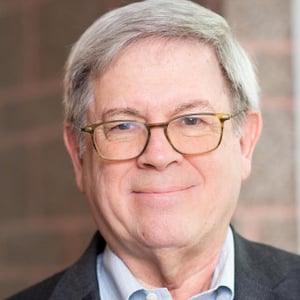
Senior Fellow, Cato Institute
Walter Olson is a senior fellow at the Cato Institute’s Robert A. Levy Center for Constitutional Studies and is known for his writing on the American legal system. His books include The Rule of Lawyers, on mass litigation, The Excuse Factory, on lawsuits in the workplace, and most recently Schools for Misrule, on the state of the law schools. His first book, The Litigation Explosion, was one of the most widely discussed general-audience books on law of its time. It led the Washington Post to dub him “intellectual guru of tort reform.” Active on social media, he is known as the founder and principal writer of what is generally considered the oldest blog on law as well as one of the most popular, Overlawyered.com. He has advised many public officials from the White House to town councils and in 2015 was named by Gov. Larry Hogan to be co-chair of the Maryland Redistricting Reform Commission, which issued its report recommendations later that year to acclaim across the state.
Before joining Cato, Olson was a senior fellow at the Manhattan Institute and an editor at the magazine Regulation, then edited by future Supreme Court Justice Antonin Scalia. Olson’s more than 400 broadcast appearances include all the major networks, NPR, the BBC, The Diane Rehm Show, and Oprah.
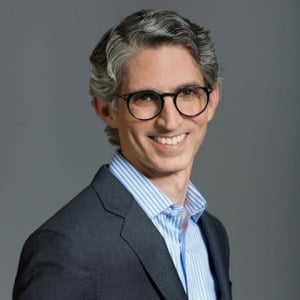
Founder, Paredes Strategies LLC
Troy A. Paredes is the founder of Paredes Strategies LLC. From 2008-2013, Mr. Paredes was a Commissioner of the U.S. Securities and Exchange Commission, having been appointed by President George W. Bush. At the SEC, Mr. Paredes was a strong advocate for small business and the JOBS Act, for solving the information overload problem of securities law disclosure, and for rigorous cost-benefit analysis. He also consistently expressed concerns about the overregulation and overreach of the Dodd-Frank Act. Since leaving government, Mr. Paredes has had an active consulting practice. Mr. Paredes advises on financial regulation, corporate governance, compliance, and governmental and regulatory affairs. He also serves as an expert and adviser in regulatory enforcement investigations and actions and in private litigation involving securities law and corporate law, and he has been an independent compliance consultant/monitor. Before becoming an SEC Commissioner, Mr. Paredes was a professor of law at Washington University in St. Louis and a professor of business (by courtesy) at Washington University’s Olin Business School. Currently, he is the Distinguished Policy Fellow and Lecturer at the University of Pennsylvania Law School and a Lecturer on Law at Harvard Law School. Next year he will be a Distinguished Scholar in Residence at NYU School of Law. Mr. Paredes is the author of numerous academic articles on financial regulation, corporate governance, innovation, and behavioral economics. He also is a co-author (beginning with the 4th edition) of a multi-volume securities regulation treatise with Louis Loss and Joel Seligman entitled Securities Regulation. Mr. Paredes serves on the board of directors of Electronifie Inc. and is a member of the board of advisors of StreetShares, Inc. Mr. Paredes holds a bachelor’s degree in economics from UC Berkeley and earned his J.D. from Yale Law School.
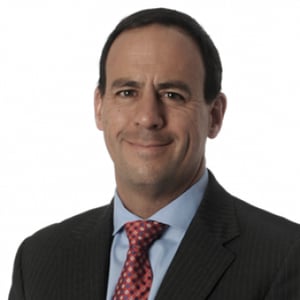
Shareholder, Greenberg Traurig LLP
Troy A. Eid focuses his litigation, mediation and transactional practice on government enforcement, investigations and compliance, environmental law, energy and natural resource development, and Federal Indian law and Native American and Alaska Native tribal law. Troy is a trusted advocate and mediator in the Rocky Mountain West and in federal, state and tribal trial and appellate courtrooms across the country.

Associate Dean for Academic Affairs, Austin E. Owen Research Scholar & Professor of Law, The University of Richmond School of Law
Dean Kristen Jakobsen Osenga teaches and writes in the areas of patent law, antitrust, and legislation and regulation. Some of her recent scholarship focuses on standard development organizations, patent eligible subject matter, patent licensing firms, litigation and remedies for patent infringement, and patent law reform. She has written numerous law review articles on these and other topics, as well as book chapters and op eds on various aspects of patent law. Additionally, she has spoken on these issues at many academic conferences and bar events. Dean Osenga is Chief Policy Counselor for the Inventors Defense Alliance, as well as an active member of the Federal Circuit Bar Association and the American Intellectual Property Law Association.
Dean Osenga received a B.S. degree in Biomedical Engineering from the University of Iowa, an M.S. degree in Electrical Engineering from Southern Illinois University – Carbondale, and a J.D. from the University of Illinois College of Law, where she graduated magna cum laude. After law school, she practiced at the law firm of Finnegan, Henderson, Farabow, Garrett, & Dunner LLP, (now Finnegan) where she did patent prosecution and litigation. She then clerked for the Judge Richard Linn of the U.S. Court of Appeals for the Federal Circuit. After clerking, she entered academia, teaching first at Chicago-Kent College of Law and then at the University of Richmond, where she has been since 2006. She has also been a Visiting Professor at Emory University School of Law and at William & Mary School of Law.
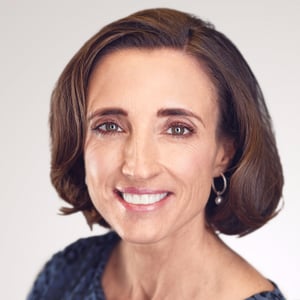
Senior Vice President, Strand Consult
Roslyn Layton, PhD is a leading international expert on technology policy. She is Senior Vice President of Strand Consult, an independent consultancy serving the global mobile telecom industry. She is also a Visiting Researcher at Aalborg University Copenhagen where she earned a doctoral thesis on network neutrality by measuring the outcome of the policy across 53 countries over 5 years. She served on the Presidential Transition Team for the Federal Communications Commission (FCC), and her work was critical to the FCC’s defense for the Restoring Internet Freedom Order. She has testified to the United States Senate and House on multiple topics including spectrum, broadband, mobile mergers, competition, and privacy. She founded the think tank China Tech Threat to study the problems of technology produced by the People’s Republic of China. She serves as the Program Chair for the Telecom Policy Research Conference, the leading interdisciplinary academic gathering. Her recent paper on rural broadband describes the empirical case for policy reform to recover network infrastructure costs from streaming video entertainment providers. She is a Senior Contributor to Forbes.
Partner, O'Melveny & Myers LLP
Gregory Jacob is a partner in O’Melveny’s Washington, D.C. office. Greg Jacob represents financial services companies including banks, investment managers, health care payors, and insurers, as well as other employers, in class action and other litigation concerning ERISA and other labor and employment matters. A former Solicitor of Labor, Greg has extensive knowledge on a wide variety of labor and employment issues including ERISA, FLSA, OFCCP, and whistleblower law. He regularly litigates in federal courts throughout the country, defends clients against Department of Labor investigations, and provides counseling to plans and plan sponsors.
Prior to rejoining O’Melveny in 2021, Greg served as Counsel to Vice President Pence and Deputy Assistant to the President. He directly advised the Vice President on all legal issues relating to the Office of the Vice President, and advised the White House Coronavirus Task Force concerning the Defense Production Act and other legal issues related to bolstering the domestic supply chain.
Professor, University of North Carolina at Wilmington
Mike Adams is a professor at the University of North Carolina at Wilmington (UNCW). He writes a weekly column for The Daily Wire and speaks frequently on First Amendment and pro-life issues. After graduating from Mississippi State University in 1993 with a PhD in Criminology, his research emphasized social psychological causes of crime and delinquency. He won the Faculty Member of the Year Award from the Office of the Dean of Students in 1998 and again in 2000. Later, after his involvement in a free speech controversy in the wake of the 9/11 attack his research emphasis shifted to threats to free speech, due process, and academic integrity in higher education. In 2006, he was denied a promotion full professor and filed suit in federal court alleging that UNCW retaliated against him for his criticism the diversity movement in general as well as his criticism of specific policies within his own university. The retaliation lawsuit set up a legal challenge concerning whether Garcetti v. Ceballos (2006), which denied First Amendment protection to public employees who were commenting about their “official duties,” applied to college professors. In Adams v. UNCW (2011), the 4th Circuit Court of Appeals unanimously ruled in his favor. The ruling set up a federal trial on the issue of retaliation, which he also won before a jury in federal district court in Greenville, North Carolina.

Professor of History, Brooklyn College and the CUNY Graduate Center
KC Johnson is professor of history at Brooklyn College and the CUNY Graduate Center, where he has taught since 1999. He has written 13 books on topics in U.S. political history, U.S. foreign policy, and legal and policy debates surrounding campus due process and civil liberties. His Duke lacrosse case blog, Durham-in-Wonderland, was named ABA Journal’s Best Ethics Blog in 2007; and he continues to blog on higher-ed matters at the blog Minding the Campus.
FIRE

Vice President, Edwin Meese III Institute for the Rule of Law, Advancing American Freedom
John G. Malcolm oversees Advancing American Freedom’s work to increase understanding of the Constitution and the rule of law as Vice President of the organization’s Edwin Meese III Institute for the Rule of Law. Malcolm brings to the challenge a wealth of legal expertise and experience in both the public and private sectors.
Prior to joining Advancing American Freedom in 2025, Malcolm was the Vice President of the Institute for Constitutional Government and the Director of the Meese Center for Legal and Judicial Studies at the Heritage Foundation. Prior to joining Heritage in 2012, Malcolm was general counsel at the U.S. Commission on International Religious Freedom, as well as a distinguished practitioner in residence at Pepperdine Law School. From 2004 to 2009, Malcolm was executive vice president and director of worldwide anti-piracy operations for the Motion Picture Association.
Malcolm served as a deputy assistant attorney general in the Department of Justice’s Criminal Division from 2001 to 2004, where he oversaw sections on computer crime and intellectual property, domestic security, child exploitation and obscenity, and special investigations. Immediately prior to that, he was a founding partner in the Atlanta law firm of Malcolm & Schroeder, LLP.
From 1990 to 1997, Malcolm was an assistant U.S. attorney in Atlanta, assigned to the fraud and public corruption section, and also an associate independent counsel, investigating fraud and abuse in the Department of Housing and Urban Development. He was honored with the Director’s Award for Superior Performance for his work in connection with the successful prosecution of Walter Leroy Moody Jr., who assassinated an 11th Circuit judge and the head of the Savannah chapter of the NAACP.
A graduate of Harvard Law School and Columbia College, Malcolm began his career as a law clerk to a federal district court judge and a federal appellate court judge, and as an associate at the Atlanta-based law firm of Sutherland, Asbill & Brennan (new Eversheds Sutherland).
Malcolm, who resides in Washington, D.C., serves on the Board of Trustees of the Washington National Opera and is a Senate-confirmed member of the Board of Directors of the Legal Services Corporation, the largest funder of civil legal aid in the United States.
Partner, Mayer Brown LLP
Marcia Madsen was Chair of the Government Contracts practice and co-chair of the National Security Practice at Mayer Brown. She represented contractors in regulatory, policy, transactional, litigation, and investigative matters involving virtually every federal agency. Her clients included defense contractors, information technology and systems integrators, telecommunications companies, engineering firms, insurers, and manufacturing companies. Ms. Madsen's practice included defense of False Claims Act matters, internal investigations, audits, bid protests, claims and disputes before administrative forums and in the federal courts. She was a former Chair of the American Bar Association Section of Public Contract Law and currently co-chairs the Section’s Procurement Fraud Committee. She also is a member of the Federalist Society Administrative Law and Regulation Executive Committee. In addition, Marcia was a member of the Court of Federal Claims Advisory Council - Emeritus, and a recipient of the Court's Golden Eagle award. She was a Past President of the Board of Contract Appeals Bar Association. She was appointed by the Executive Office of the President to chair the Section 1423 Panel which recommended revision of the acquisition laws. She spoke and wrote frequently on government contracts and litigation topics.
Georgetown University Law Center, LL.M., 1980
American University - Washington College of Law, J.D., 1976
University of Utah, B.A., 1972
Associate, Mayer Brown
Peter Schmidt is an associate in Mayer Brown's Washington DC office and a member of the Intellectual Property practice. He focuses on the finance, media, and technology industries, advising and representing clients in patent, copyright, and trade secret matters. Peter’s work focuses on cases involving complex technical and financial issues, where he draws on his previous experience both as a software engineer and as a financial consultant for McKinsey and Company. These cases have covered both hardware and software issues in a range of sectors.
Peter has represented clients in a broad range of types and stages of litigation, and has extensive experience in case assessment; complaints and answers; discovery and fact gathering; non-infringement, infringement, invalidity, and validity contentions; claim construction; expert reports; motion practice (including summary judgment and admissibility of evidence); trial; and appeals. He graduated magna cum laude from Harvard Law School and first in his class from Carnegie Mellon University with a degree in Electrical and Computer Engineering; he also holds an MBA from Harvard Business School.
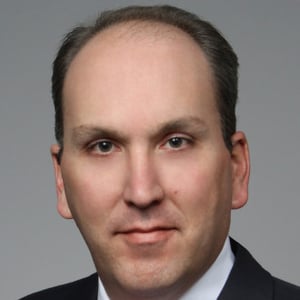
Counsel, Mayer Brown
Luke Levasseur has been representing clients in complex federal litigation for more than 20 years and currently focuses his practice on government contract matters. He represents clients in large contract disputes and bid protests before the US Court of Federal Claims and the Government Accountability Office. He has represented clients in federal and state False Claims Act cases, presenting arguments in federal court and conducting internal investigations for clients. Luke also has experience handling a variety of other federal court litigation for clients, involving such matters as antitrust claims, trademark disputes, and alleged fraud.
Prior to re-joining Mayer Brown in 2006, Luke represented the federal government as an attorney with the Civil Division of the US Department of Justice from 1997-2006. He served as lead counsel for, or had a significant role during the trial and appeal of, several large cases that were part of the Winstar-related litigation, which involved billions of dollars in claims against the government and were based on legislative and regulatory changes in the financial services industry. In those cases, he was responsible for developing and presenting expert opinion testimony from the government’s witnesses, including a Nobel-prize winning economist, and for cross-examining other parties’ experts. Throughout his career, Luke has focused on expert witness issues in complex litigation.
When he was with the Department of Justice, Luke also represented the government in numerous appeals before the US Court of Appeals for the Federal Circuit. He was awarded the John Marshall Award for Outstanding Legal Achievement and a Special Commendation Award for exceptional contributions to the defense of the Winstar cases. Luke continues to be an active part of the Court of Federal Claims bar and served as the President of that Court's Bar Association during 2012.
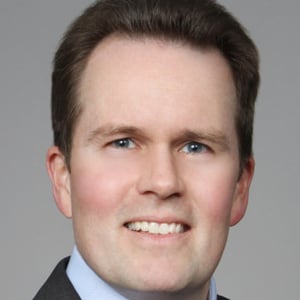
Partner, Mayer Brown
David Dowd is an experienced litigator at Mayer Brown whose practice has a strong emphasis in government contracting issues and controversies. He advises such clients as those involved in health care, information technology, large military systems, engineering services, and other industries regarding federal procurements and related issues. His counsel in this area includes commercial items, conflicts of interest, cost allowability issues, defective pricing, contract and subcontract negotiations, contract financing, assignments and novations, leasing, prime/sub disputes, preparation of claims, and procurement fraud.
David also handles procurement controversies, as he litigates bid protests and disputes before the Government Accountability Office and the Court of Federal Claims, represents contractors in litigation and arbitrations involving government contracts, and tries federal court litigation focused on contract disputes and alleged fraud.
Health care and insurance companies rely on David for advice regarding federal health care and insurance programs, including FEHBA, Medicare, TRICARE, and FEGLI. He represents these industry clients in bid protest and claim litigation regarding federal health care and insurance programs. In related matters, David counsels biotechnology and pharmaceutical companies on biodefense purchasing opportunities and applications, including research and development.
David has more than 20 years of practice experience, having joined Mayer Brown’s Washington, DC office in 2001 after practicing with two other national law firms.
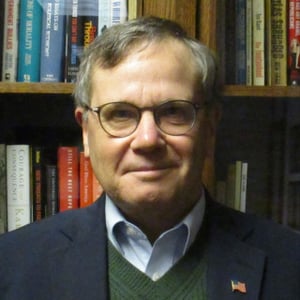
Senior Fellow in Constitutional Jurisprudence, Independence Institute
Professor Robert G. Natelson is a constitutional scholar and author.
Rob’s constitutional scholarship has been cited repeatedly by justices and parties at the U.S. Supreme Court—as well as by federal appeals courts, and at least 18 state supreme courts.
Rob’s research into the Constitution’s original meaning has carried him to libraries throughout the United States and in Britain, including four months at Oxford University. His books and articles span many different parts of the Constitution, including groundbreaking studies of the Necessary and Proper Clause, the Indian Commerce Clause, federalism, Founding-Era interpretation, regulation of elections, and the amendment process of Article V. He created the first-ever online bibliography for 18th century materials used in constitutional research. He is a contributing author to the Encyclopedia of the Supreme Court of the United States (on Magna Carta). He contributed eight essays to the third edition of the Heritage Guide to the Constitution: five on the amendment procedure and one each on the Guarantee Clause, the Postal Clause, and the Recess Appointments Clause.
U.S. Supreme Court justices have relied explicitly on Rob’s research in 41 citations in 13 separate cases.

Lamone v. Benisek [SCOTUSbrief]
Walter K. Olson
When Maryland state officials redrew the map for their state’s federal congressional districts in 2011,...
From Orange Groves to Cryptocurrency: How Will the SEC Apply Longstanding Tests to New Technologies?
Troy Paredes, Scott Kimpel
Note from the Editor: The Federalist Society takes no positions on particular legal and public...
Herrera v. Wyoming [SCOTUSbrief]
Troy A. Eid
When a Crow hunter crossed from the Crow Reservation into Bighorn National Forest, the state...
What Happened to the Public’s Interest in Patent Law?
Kristen Osenga
Note from the Editor: This article discusses the role of the concept of the public...
The GDPR: What It Really Does and How the U.S. Can Chart a Better Course
Roslyn Layton, Julian McLendon
Note from the Editor: This article discusses the European Union’s new General Data Protection Rule...
You’re Not Fired: Do Civil Servants Have a Property Interest in Their Job? [POLICYbrief]
Gregory Frederick Jacob
According to Supreme Court precedent, some civil servants have a property interest in their job...
The Student Right to Counsel
Mike S. Adams, KC Johnson, Adam Kissell
Note from the Editor: This article argues that a student right to counsel in quasi-criminal...
Capital Punishment: A One-Sided Contribution to a Complex Debate
John G. Malcolm
A review of: End of Its Rope: How Killing the Death Penalty Can Revive Criminal Justice, by...
Why DoD Should Adopt a Multi-Cloud IT Strategy
Marcia G. Madsen, Peter O. Schmidt, Luke P. Levasseur, David F. Dowd
Note from the Editor: This article describes how companies approach cloud based services, and it...
Why Constitutional Lawyers Need to Know Latin
Robert G. Natelson
Note from the Editor: This article discusses the role of the Latin language and other...