

Professor of Law, University of San Diego School of Law (Retired)
Gail Heriot is a recently retired law professor from the University of San Diego. She also served as a member of the U.S. Commission on Civil Rights from 2007 to 2025. She is also the chairman of the board of the American Civil Rights Project and the chair emerita of the Civil Rights practice group at the Federalist Society for Law & Public Policy.
Professor Heriot is a prolific writer in the area of civil rights. She is the author of many law review articles. She is also the editor (along with Maimon Schwarzschild) of the 2021 anthology, A Dubious Expediency: How Race Preferences Damage Higher Education. Her upcoming book is entitled, Why We Walk on Eggshell: How Our Civil Rights Laws Helped Bring About the Woke Era—And the Trump Era, Too.
Her writings for a general audience have appeared in the Wall Street Journal, the San Diego Union-Tribune, the National Review and many other newspapers and magazines.
In 1996, she co-chaired the successful “Yes on Proposition 209” campaign, which amended the California Constitution to prohibit state-sponsored discrimination or preferential treatment based on race, sex, color, ethnicity or national origin. In 2020, she co-chaired the “No on Proposition 16” campaign, which successfully prevented Proposition 209’s repeal.
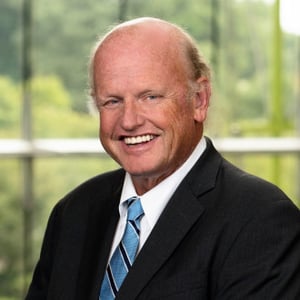
In his 35 years at the Justice Department and in private practice, Mike Carvin was one of the leading appellate and trial lawyers challenging state and federal regulations on constitutional and statutory grounds, with 10 Supreme Court arguments and numerous high-profile victories. In addition to his numerous cases in the United States Supreme Court, he argued in virtually every federal appeals court. His major cases include the recent constitutional challenge to the Affordable Care Act and the decisions invalidating Sarbanes-Oxley's accounting board, preventing the Justice Department from obtaining monetary relief against the tobacco industry under RICO, overturning the federal government's plan to statistically adjust the census, limiting the Justice Department's ability to create "majority-minority" districts, and upholding Proposition 209's ban on racial preferences in California.
Mike was one of the lead lawyers, and argued before the Florida Supreme Court, on behalf of George W. Bush in the 2000 presidential election Florida recount controversy. He also has represented state governments, financial institutions, telecommunications, and energy companies in "takings," First Amendment, civil rights, and statutory challenges to federal government actions.
Professor of Law, University of San Diego School of Law (Retired)
Gail Heriot is a recently retired law professor from the University of San Diego. She also served as a member of the U.S. Commission on Civil Rights from 2007 to 2025. She is also the chairman of the board of the American Civil Rights Project and the chair emerita of the Civil Rights practice group at the Federalist Society for Law & Public Policy.
Professor Heriot is a prolific writer in the area of civil rights. She is the author of many law review articles. She is also the editor (along with Maimon Schwarzschild) of the 2021 anthology, A Dubious Expediency: How Race Preferences Damage Higher Education. Her upcoming book is entitled, Why We Walk on Eggshell: How Our Civil Rights Laws Helped Bring About the Woke Era—And the Trump Era, Too.
Her writings for a general audience have appeared in the Wall Street Journal, the San Diego Union-Tribune, the National Review and many other newspapers and magazines.
In 1996, she co-chaired the successful “Yes on Proposition 209” campaign, which amended the California Constitution to prohibit state-sponsored discrimination or preferential treatment based on race, sex, color, ethnicity or national origin. In 2020, she co-chaired the “No on Proposition 16” campaign, which successfully prevented Proposition 209’s repeal.
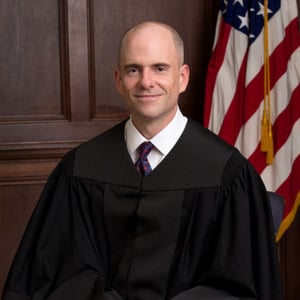
Judge, United States Court of Appeals, Eleventh Circuit
Judge Kevin C. Newsom is a member of the United States Court of Appeals for the Eleventh Circuit. He sits in Birmingham, Alabama.
Before his appointment to the bench, Judge Newsom was the head of the appellate practice group at Bradley Arant Boult Cummings LLP and, before that, the Solicitor General of Alabama. As a practicing lawyer, Judge Newsom argued four cases in the Supreme Court of the United States, and nearly 40 more in the United States Courts of Appeals and state supreme and appellate courts.
Judge Newsom graduated summa cum laude from Samford University and magna cum laude from Harvard Law School, where he was an articles editor on the Harvard Law Review. Following law school, Judge Newsom clerked for Judge Diarmuid F. O’Scannlain of the United States Court of Appeals for the Ninth Circuit and Justice David H. Souter of the Supreme Court of the United States.
Judge Newsom teaches at Harvard Law School, Yale Law School, Stanford Law School, and the University of Chicago Law School. His published work has appeared in the Yale Law Journal and the Harvard Law Review.
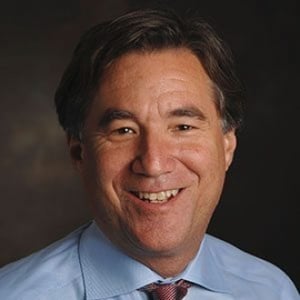
Ashe Family Chair Professor of Law, Georgia State University College of Law
Eric J. Segall graduated from Emory University, Phi Beta Kappa and summa cum laude, and from Vanderbilt Law School, where he was the research editor for the Law Review and member of Order of the Coif. He clerked for the Chief Judge Charles Moye Jr. for the Northern District of Georgia, and Albert J. Henderson of the 11th Circuit Court of Appeals. After his clerkships, Segall worked for Gibson, Dunn & Crutcher and the U.S. Department of Justice, before joining the Georgia State faculty in 1991.
Segall teaches federal courts and constitutional law I and II. He is the author of the books Originalism as Faith and Supreme Myths: Why the Supreme Court is not a Court and its Justices are not Judges. His articles on constitutional law have appeared in, among others, the Harvard Law Review Forum, the Stanford Law Review On Line, the UCLA Law Review, the George Washington Law Review, the Washington University Law Review, the University of Pennsylvania Journal of Constitutional Law, the Northwestern University Law Review Colloquy, and Constitutional Commentary among many others.
Segall’s op-eds and essays have appeared in the New York Times, the LA Times, The Atlantic, SLATE, Vox, Salon, and the Daily Beast, among others. He has appeared on CNN, Fox News, MSNBC, and France 24 and all four of Atlanta’s local television stations. He has also appeared on numerous local and national radio shows.
In his 35 years at the Justice Department and in private practice, Mike Carvin was one of the leading appellate and trial lawyers challenging state and federal regulations on constitutional and statutory grounds, with 10 Supreme Court arguments and numerous high-profile victories. In addition to his numerous cases in the United States Supreme Court, he argued in virtually every federal appeals court. His major cases include the recent constitutional challenge to the Affordable Care Act and the decisions invalidating Sarbanes-Oxley's accounting board, preventing the Justice Department from obtaining monetary relief against the tobacco industry under RICO, overturning the federal government's plan to statistically adjust the census, limiting the Justice Department's ability to create "majority-minority" districts, and upholding Proposition 209's ban on racial preferences in California.
Mike was one of the lead lawyers, and argued before the Florida Supreme Court, on behalf of George W. Bush in the 2000 presidential election Florida recount controversy. He also has represented state governments, financial institutions, telecommunications, and energy companies in "takings," First Amendment, civil rights, and statutory challenges to federal government actions.
Professor of Law, University of San Diego School of Law (Retired)
Gail Heriot is a recently retired law professor from the University of San Diego. She also served as a member of the U.S. Commission on Civil Rights from 2007 to 2025. She is also the chairman of the board of the American Civil Rights Project and the chair emerita of the Civil Rights practice group at the Federalist Society for Law & Public Policy.
Professor Heriot is a prolific writer in the area of civil rights. She is the author of many law review articles. She is also the editor (along with Maimon Schwarzschild) of the 2021 anthology, A Dubious Expediency: How Race Preferences Damage Higher Education. Her upcoming book is entitled, Why We Walk on Eggshell: How Our Civil Rights Laws Helped Bring About the Woke Era—And the Trump Era, Too.
Her writings for a general audience have appeared in the Wall Street Journal, the San Diego Union-Tribune, the National Review and many other newspapers and magazines.
In 1996, she co-chaired the successful “Yes on Proposition 209” campaign, which amended the California Constitution to prohibit state-sponsored discrimination or preferential treatment based on race, sex, color, ethnicity or national origin. In 2020, she co-chaired the “No on Proposition 16” campaign, which successfully prevented Proposition 209’s repeal.
Judge, United States Court of Appeals, Eleventh Circuit
Judge Kevin C. Newsom is a member of the United States Court of Appeals for the Eleventh Circuit. He sits in Birmingham, Alabama.
Before his appointment to the bench, Judge Newsom was the head of the appellate practice group at Bradley Arant Boult Cummings LLP and, before that, the Solicitor General of Alabama. As a practicing lawyer, Judge Newsom argued four cases in the Supreme Court of the United States, and nearly 40 more in the United States Courts of Appeals and state supreme and appellate courts.
Judge Newsom graduated summa cum laude from Samford University and magna cum laude from Harvard Law School, where he was an articles editor on the Harvard Law Review. Following law school, Judge Newsom clerked for Judge Diarmuid F. O’Scannlain of the United States Court of Appeals for the Ninth Circuit and Justice David H. Souter of the Supreme Court of the United States.
Judge Newsom teaches at Harvard Law School, Yale Law School, Stanford Law School, and the University of Chicago Law School. His published work has appeared in the Yale Law Journal and the Harvard Law Review.
Ashe Family Chair Professor of Law, Georgia State University College of Law
Eric J. Segall graduated from Emory University, Phi Beta Kappa and summa cum laude, and from Vanderbilt Law School, where he was the research editor for the Law Review and member of Order of the Coif. He clerked for the Chief Judge Charles Moye Jr. for the Northern District of Georgia, and Albert J. Henderson of the 11th Circuit Court of Appeals. After his clerkships, Segall worked for Gibson, Dunn & Crutcher and the U.S. Department of Justice, before joining the Georgia State faculty in 1991.
Segall teaches federal courts and constitutional law I and II. He is the author of the books Originalism as Faith and Supreme Myths: Why the Supreme Court is not a Court and its Justices are not Judges. His articles on constitutional law have appeared in, among others, the Harvard Law Review Forum, the Stanford Law Review On Line, the UCLA Law Review, the George Washington Law Review, the Washington University Law Review, the University of Pennsylvania Journal of Constitutional Law, the Northwestern University Law Review Colloquy, and Constitutional Commentary among many others.
Segall’s op-eds and essays have appeared in the New York Times, the LA Times, The Atlantic, SLATE, Vox, Salon, and the Daily Beast, among others. He has appeared on CNN, Fox News, MSNBC, and France 24 and all four of Atlanta’s local television stations. He has also appeared on numerous local and national radio shows.
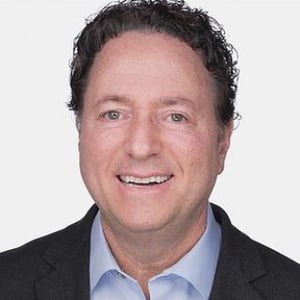
President, Committee for Justice
Curt Levey is President of the Committee For Justice, an organization devoted to advancing constitutionally limited government and individual liberty. He is a veteran of Supreme Court and other judicial confirmation battles and serves on the executive committee of the Federalist Society's Civil Rights Practice Group.
After graduating Harvard Law School with honors and clerking for the U.S. Court of Appeals for the Sixth Circuit, Mr. Levey served as Director of Legal & Public Affairs at the Center for Individual Rights (CIR). There he worked on landmark Supreme Court cases, including the University of Michigan affirmative action cases and the successful constitutional challenge to the Violence Against Women Act. After CIR, Mr. Levey headed the Title IX policy group at the U.S. Department of Education.
Before attending law school, Mr. Levey earned an M.S. and B.A. in computer science from Brown University and worked in the field of artificial intelligence (AI). He invented a new type of AI technology, for which he wrote a successful patent application.
Associate Professor of Legal Studies & Business Ethics, The University of Pennsylvania Wharton School of Business
Amanda Shanor is an Assistant Professor at the University of Pennsylvania Wharton School, where her scholarship focuses on constitutional and administrative law, and in particular the First Amendment.
Shanor is a graduate of Yale Law School and Yale College, and a PhD candidate in law at Yale University. She served as a law clerk to Judges Cornelia T.L. Pillard and Judith W. Rogers on the D.C. Circuit, and Judge Robert W. Sweet in the Southern District of New York. She has taught at both Yale and Georgetown law schools and has published in the New York University Law Review, the Harvard Law Review Forum, and the Yale Law Journal Forum, among others. She is a contributor to Take Care and the co-author of a textbook on counterterrorism law.
Prior to joining the academy, Amanda worked in the National Legal Department of the American Civil Liberties Union on the organization’s Supreme Court litigation, including Masterpiece Cakeshop. Previously, she litigated a number of constitutional and national security cases with Professor David Cole, including Humanitarian Law Project v. Holder, while a fellow at Georgetown.
Assistant Secretary for Civil Rights, U.S. Department of Agriculture
Devon Westhill is the Assistant Secretary for Civil Rights at the U.S. Department of Agriculture. The U.S. Senate confirmed President Donald Trump’s nomination of Westhill on October 7, 2025.
Westhill returns to the USDA where he previously headed the civil rights office as Deputy Assistant Secretary in President Trump’s first term. His previous government appointments also include service at the U.S. Department of Labor, liaison to the Administrative Conference of the U.S., and liaison to the White House Initiative on Historically Black Colleges and Universities. Prior to returning to government service, Westhill was President and General Counsel of a nonprofit civil rights organization.
Westhill has testified on civil rights matters before Congress, federal agencies, and as an expert witness in federal court. He has spoken hundreds of times at college campuses, conferences, and on radio and TV programs, and he is frequently quoted in print publications, and his writing has appeared in numerous national outlets. A U.S. Navy veteran, Westhill earned his BA from the University of North Carolina at Chapel Hill and his JD from the University of Florida.
President, Committee for Justice
Curt Levey is President of the Committee For Justice, an organization devoted to advancing constitutionally limited government and individual liberty. He is a veteran of Supreme Court and other judicial confirmation battles and serves on the executive committee of the Federalist Society's Civil Rights Practice Group.
After graduating Harvard Law School with honors and clerking for the U.S. Court of Appeals for the Sixth Circuit, Mr. Levey served as Director of Legal & Public Affairs at the Center for Individual Rights (CIR). There he worked on landmark Supreme Court cases, including the University of Michigan affirmative action cases and the successful constitutional challenge to the Violence Against Women Act. After CIR, Mr. Levey headed the Title IX policy group at the U.S. Department of Education.
Before attending law school, Mr. Levey earned an M.S. and B.A. in computer science from Brown University and worked in the field of artificial intelligence (AI). He invented a new type of AI technology, for which he wrote a successful patent application.
Associate Professor of Legal Studies & Business Ethics, The University of Pennsylvania Wharton School of Business
Amanda Shanor is an Assistant Professor at the University of Pennsylvania Wharton School, where her scholarship focuses on constitutional and administrative law, and in particular the First Amendment.
Shanor is a graduate of Yale Law School and Yale College, and a PhD candidate in law at Yale University. She served as a law clerk to Judges Cornelia T.L. Pillard and Judith W. Rogers on the D.C. Circuit, and Judge Robert W. Sweet in the Southern District of New York. She has taught at both Yale and Georgetown law schools and has published in the New York University Law Review, the Harvard Law Review Forum, and the Yale Law Journal Forum, among others. She is a contributor to Take Care and the co-author of a textbook on counterterrorism law.
Prior to joining the academy, Amanda worked in the National Legal Department of the American Civil Liberties Union on the organization’s Supreme Court litigation, including Masterpiece Cakeshop. Previously, she litigated a number of constitutional and national security cases with Professor David Cole, including Humanitarian Law Project v. Holder, while a fellow at Georgetown.
Assistant Secretary for Civil Rights, U.S. Department of Agriculture
Devon Westhill is the Assistant Secretary for Civil Rights at the U.S. Department of Agriculture. The U.S. Senate confirmed President Donald Trump’s nomination of Westhill on October 7, 2025.
Westhill returns to the USDA where he previously headed the civil rights office as Deputy Assistant Secretary in President Trump’s first term. His previous government appointments also include service at the U.S. Department of Labor, liaison to the Administrative Conference of the U.S., and liaison to the White House Initiative on Historically Black Colleges and Universities. Prior to returning to government service, Westhill was President and General Counsel of a nonprofit civil rights organization.
Westhill has testified on civil rights matters before Congress, federal agencies, and as an expert witness in federal court. He has spoken hundreds of times at college campuses, conferences, and on radio and TV programs, and he is frequently quoted in print publications, and his writing has appeared in numerous national outlets. A U.S. Navy veteran, Westhill earned his BA from the University of North Carolina at Chapel Hill and his JD from the University of Florida.
President, Committee for Justice
Curt Levey is President of the Committee For Justice, an organization devoted to advancing constitutionally limited government and individual liberty. He is a veteran of Supreme Court and other judicial confirmation battles and serves on the executive committee of the Federalist Society's Civil Rights Practice Group.
After graduating Harvard Law School with honors and clerking for the U.S. Court of Appeals for the Sixth Circuit, Mr. Levey served as Director of Legal & Public Affairs at the Center for Individual Rights (CIR). There he worked on landmark Supreme Court cases, including the University of Michigan affirmative action cases and the successful constitutional challenge to the Violence Against Women Act. After CIR, Mr. Levey headed the Title IX policy group at the U.S. Department of Education.
Before attending law school, Mr. Levey earned an M.S. and B.A. in computer science from Brown University and worked in the field of artificial intelligence (AI). He invented a new type of AI technology, for which he wrote a successful patent application.
Associate Professor of Legal Studies & Business Ethics, The University of Pennsylvania Wharton School of Business
Amanda Shanor is an Assistant Professor at the University of Pennsylvania Wharton School, where her scholarship focuses on constitutional and administrative law, and in particular the First Amendment.
Shanor is a graduate of Yale Law School and Yale College, and a PhD candidate in law at Yale University. She served as a law clerk to Judges Cornelia T.L. Pillard and Judith W. Rogers on the D.C. Circuit, and Judge Robert W. Sweet in the Southern District of New York. She has taught at both Yale and Georgetown law schools and has published in the New York University Law Review, the Harvard Law Review Forum, and the Yale Law Journal Forum, among others. She is a contributor to Take Care and the co-author of a textbook on counterterrorism law.
Prior to joining the academy, Amanda worked in the National Legal Department of the American Civil Liberties Union on the organization’s Supreme Court litigation, including Masterpiece Cakeshop. Previously, she litigated a number of constitutional and national security cases with Professor David Cole, including Humanitarian Law Project v. Holder, while a fellow at Georgetown.
Assistant Secretary for Civil Rights, U.S. Department of Agriculture
Devon Westhill is the Assistant Secretary for Civil Rights at the U.S. Department of Agriculture. The U.S. Senate confirmed President Donald Trump’s nomination of Westhill on October 7, 2025.
Westhill returns to the USDA where he previously headed the civil rights office as Deputy Assistant Secretary in President Trump’s first term. His previous government appointments also include service at the U.S. Department of Labor, liaison to the Administrative Conference of the U.S., and liaison to the White House Initiative on Historically Black Colleges and Universities. Prior to returning to government service, Westhill was President and General Counsel of a nonprofit civil rights organization.
Westhill has testified on civil rights matters before Congress, federal agencies, and as an expert witness in federal court. He has spoken hundreds of times at college campuses, conferences, and on radio and TV programs, and he is frequently quoted in print publications, and his writing has appeared in numerous national outlets. A U.S. Navy veteran, Westhill earned his BA from the University of North Carolina at Chapel Hill and his JD from the University of Florida.
Partner, Kirkland & Ellis LLP
Elyse Dorsey is a partner in the Washington, D.C., office of Kirkland & Ellis LLP. Elyse's practice encompasses a wide array of antitrust and competition matters across the globe. She is uniquely situated to advise clients in domestic and international competition matters, given her combination of government and private practice experience.
Elyse has a focus in cutting edge competition issues, as well as privacy, data security, and consumer protection matters. She has represented clients across levels of government, from state agencies to the U.S. Supreme Court. Prior to joining Kirkland, Elyse served as Counsel to the Assistant Attorney General at the U.S. Department of Justice's Antitrust Division. Her work at the Antitrust Division covered a spectrum of legal and policy matters, including IP and technology issues, the Division's appellate and amicus brief programs, and its international and competition policy efforts. Elyse joined the Division from the U.S. Federal Trade Commission, where she served as Attorney Advisor to Commission Noah Joshua Phillips. While at the Commission, she advised on key cases, matters, and policies affecting industries across the economy--from digital and tech to pharmaceuticals and hospitals and more.
Elyse is a recognized thought leader in the antitrust and competition communities. She has been a frequent nominee and recipient of antitrust writing awards for her scholarship in this space. She has also served as an adjunct professor at George Mason University's Scalia Law School for several years, helping to launch their Antitrust LL.M. program; and she previously served as a visiting scholar at the University of Virginia.
Reporter, SCOTUSblog
Amy Howe is the co-founder of SCOTUSblog, a news site devoted to coverage of the U.S. Supreme Court, and its primary reporter. She was part of the blog team that won a Peabody Award in 2013, as well as a National Press Club Journalism Award for Breaking News. Since the spring of 2025, she has also served as the Supreme Court analyst for the PBS NewsHour. In the fall of 2025, she is a fellow in Georgetown University's Institute of Politics.
Before turning to full-time journalism, Amy was a practicing lawyer and served as a lawyer in over two dozen cases at the Supreme Court, on issues ranging from international child custody to the death penalty, and argued two cases there. She has taught or co-taught courses on Supreme Court litigation at Vanderbilt Law School, Stanford Law School, and Harvard Law School. Amy is a graduate of the University of North Carolina at Chapel Hill and holds a master's in Arab Studies and a law degree from Georgetown University.
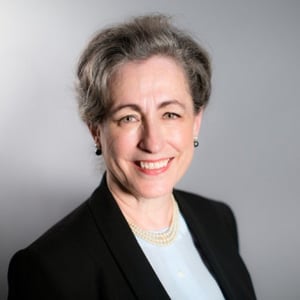
Senior Litigation Counsel, New Civil Liberties Alliance
Peggy Little, Senior Counsel at New Civil Liberties Alliance, a new public interest law firm challenging the administrative state founded in 2017 by Professor Philip Hamburger, has over three decades of experience as a trial and appellate litigator in complex, high-stakes regulatory, mass-tort, class-action, products liability, securities, commercial and civil rights litigation representing individuals and high-profile litigants including Fortune 50 companies, financial institutions, public companies, and universities in state and federal courts, including the United States Supreme Court.
Peggy is a graduate of Yale College and Yale Law School, where she was awarded the Potter Stewart Prize. She was a law clerk to the Hon. Ralph K. Winter on the U.S. Court of Appeals for the Second Circuit. Prior to starting her own trial and appellate law firm in 1997, where she was appellate consulting counsel to the New Haven firefighters in Ricci v.DeStefano, a landmark 2009 United States Supreme Court decision, Peggy was a partner at Tyler, Cooper & Alcorn in New Haven, Connecticut. From 2004 to early 2018, Peggy directed, part-time, the Federalist Society Pro Bono Center.
Peggy has participated in many national conferences and symposia addressing issues of current importance in constitutional law – specifically state and federal constitutional questions regarding the separation of powers and the first amendment – and regularly speaks, blogs and publishes on the topic of the unconstitutional exercise of governmental power. In May of 2017, she presented her paper, Pirates at the Parchment Gates, to a conference of state and federal judges at the Law and Economics Center at the Antonin Scalia Law School. Her work has been published by law reviews, legal publications, the Federalist Society, the Wall Street Journal, Law and Liberty and the Manhattan Institute.
Recent publications include: How the SEC silences its critics, The SEC should listen to Sen. Cotton, Lucia v. SEC, Opening Salvos in the Opioid Litigation Wars, Straight Dope on the Opioid Crisis
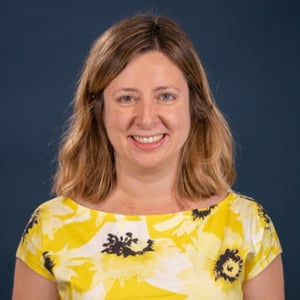
Legal Fellow, Center for the Separation of Powers, Pacific Legal Foundation
Alison Somin joined Pacific Legal Foundation in May 2020 as a legal fellow in the Center for the Separation of Powers and part of the equality before the law practice group.
Before joining the Pacific Legal Foundation team, Alison was a special assistant and counsel for over a decade to Gail Heriot, a member of the bipartisan United States Commission on Civil Rights. She also has deep roots in the liberty movement. Alison was a Koch Associate at the National Federation for Independent Business Legal Foundation and, during law school, completed summer clerkships at the Institute for Justice and the Charles G. Koch Charitable Foundation. She holds a J.D. from Emory University School of Law and an A.B. in history from Dartmouth College.
Her work has been published in the San Francisco Chronicle, the Daily Journal, Texas Journal of Law and Politics, and The Federalist Society’s Engage magazine and blog.
She lives in northern Virginia with her husband Ilya; two children; and golden retriever Willow. In her spare time, she enjoys reading, baking and cooking, children’s art projects, and training and exercising Willow.
Shareholder, Greenberg Traurig
Jennifer Weddle is the Co-Chair of Greenberg Traurig's American Indian Law Practice and has wide-ranging experience in complex regulatory and jurisdictional issues, with a focus in Indian law, handling a variety of matters for tribal and non-tribal clients. She has a dynamic, inter-disciplinary practice that centers on providing strategies for resolving complex jurisdictional problems. Much of her practice focuses in the areas of tribal economic development and natural resources development. Jennifer also has U.S. Supreme Court experience, including serving as one of the attorneys for the respondent in Nevada v. Hicks (2001) and representing the petitioners in Ute Mountain Ute Tribe v. Padilla (2012) and Grand Canyon Skywalk Development, LLC v. Grand Canyon Resort Corporation (2013) and cert stage amici in Saginaw-Chippewa Tribe v. NLRB (2016) and United States v. Cooley (2020) and amici on the merits in Lewis v. Clarke (2017), U.S. v. Washington (2018), Carpenter v. Murphy (2018), McGirt v. Oklahoma (2020), and United States v. Cooley (2021).
Jennifer's work also includes negotiations for mineral leasing employment matters and representation before federal agencies. She has also been involved in civil litigation, working on numerous complex federal, state and tribal litigation matters, including class action tort litigation and large commercial disputes. Her transactional experience includes oil and gas renewables projects throughout the west, as well as Endangered Species Act work. Jennifer frequently assists tribes, banks and non-bank entities with financing and regulatory matters with Indian law components. Jennifer has wide-ranging project siting experience, including the application of NEPA, NHPA, and other environmental laws on tribal and public lands, including with respect to large linear multi-state energy and infrastructure projects. Jennifer has deep transactional, regulatory and litigation experience involving very complex matters with both legal and policy components.
Jennifer is past President of the National Native American Bar Association and past two-term Chair of the Federal Bar Association Indian Law Section. She currently serves as the Tenth Circuit Representative on the American Bar Association Standing Committee on the Federal Judiciary, a role she has held since 2018, spanning the evaluations for more than two dozen federal judicial nominees at every level of the federal courts. She is a ’00 graduate of Harvard Law School and a ’97 graduate of the University of Michigan (Classical Languages and Literature).
Partner, Kirkland & Ellis LLP
Elyse Dorsey is a partner in the Washington, D.C., office of Kirkland & Ellis LLP. Elyse's practice encompasses a wide array of antitrust and competition matters across the globe. She is uniquely situated to advise clients in domestic and international competition matters, given her combination of government and private practice experience.
Elyse has a focus in cutting edge competition issues, as well as privacy, data security, and consumer protection matters. She has represented clients across levels of government, from state agencies to the U.S. Supreme Court. Prior to joining Kirkland, Elyse served as Counsel to the Assistant Attorney General at the U.S. Department of Justice's Antitrust Division. Her work at the Antitrust Division covered a spectrum of legal and policy matters, including IP and technology issues, the Division's appellate and amicus brief programs, and its international and competition policy efforts. Elyse joined the Division from the U.S. Federal Trade Commission, where she served as Attorney Advisor to Commission Noah Joshua Phillips. While at the Commission, she advised on key cases, matters, and policies affecting industries across the economy--from digital and tech to pharmaceuticals and hospitals and more.
Elyse is a recognized thought leader in the antitrust and competition communities. She has been a frequent nominee and recipient of antitrust writing awards for her scholarship in this space. She has also served as an adjunct professor at George Mason University's Scalia Law School for several years, helping to launch their Antitrust LL.M. program; and she previously served as a visiting scholar at the University of Virginia.
Reporter, SCOTUSblog
Amy Howe is the co-founder of SCOTUSblog, a news site devoted to coverage of the U.S. Supreme Court, and its primary reporter. She was part of the blog team that won a Peabody Award in 2013, as well as a National Press Club Journalism Award for Breaking News. Since the spring of 2025, she has also served as the Supreme Court analyst for the PBS NewsHour. In the fall of 2025, she is a fellow in Georgetown University's Institute of Politics.
Before turning to full-time journalism, Amy was a practicing lawyer and served as a lawyer in over two dozen cases at the Supreme Court, on issues ranging from international child custody to the death penalty, and argued two cases there. She has taught or co-taught courses on Supreme Court litigation at Vanderbilt Law School, Stanford Law School, and Harvard Law School. Amy is a graduate of the University of North Carolina at Chapel Hill and holds a master's in Arab Studies and a law degree from Georgetown University.
Senior Litigation Counsel, New Civil Liberties Alliance
Peggy Little, Senior Counsel at New Civil Liberties Alliance, a new public interest law firm challenging the administrative state founded in 2017 by Professor Philip Hamburger, has over three decades of experience as a trial and appellate litigator in complex, high-stakes regulatory, mass-tort, class-action, products liability, securities, commercial and civil rights litigation representing individuals and high-profile litigants including Fortune 50 companies, financial institutions, public companies, and universities in state and federal courts, including the United States Supreme Court.
Peggy is a graduate of Yale College and Yale Law School, where she was awarded the Potter Stewart Prize. She was a law clerk to the Hon. Ralph K. Winter on the U.S. Court of Appeals for the Second Circuit. Prior to starting her own trial and appellate law firm in 1997, where she was appellate consulting counsel to the New Haven firefighters in Ricci v.DeStefano, a landmark 2009 United States Supreme Court decision, Peggy was a partner at Tyler, Cooper & Alcorn in New Haven, Connecticut. From 2004 to early 2018, Peggy directed, part-time, the Federalist Society Pro Bono Center.
Peggy has participated in many national conferences and symposia addressing issues of current importance in constitutional law – specifically state and federal constitutional questions regarding the separation of powers and the first amendment – and regularly speaks, blogs and publishes on the topic of the unconstitutional exercise of governmental power. In May of 2017, she presented her paper, Pirates at the Parchment Gates, to a conference of state and federal judges at the Law and Economics Center at the Antonin Scalia Law School. Her work has been published by law reviews, legal publications, the Federalist Society, the Wall Street Journal, Law and Liberty and the Manhattan Institute.
Recent publications include: How the SEC silences its critics, The SEC should listen to Sen. Cotton, Lucia v. SEC, Opening Salvos in the Opioid Litigation Wars, Straight Dope on the Opioid Crisis
Legal Fellow, Center for the Separation of Powers, Pacific Legal Foundation
Alison Somin joined Pacific Legal Foundation in May 2020 as a legal fellow in the Center for the Separation of Powers and part of the equality before the law practice group.
Before joining the Pacific Legal Foundation team, Alison was a special assistant and counsel for over a decade to Gail Heriot, a member of the bipartisan United States Commission on Civil Rights. She also has deep roots in the liberty movement. Alison was a Koch Associate at the National Federation for Independent Business Legal Foundation and, during law school, completed summer clerkships at the Institute for Justice and the Charles G. Koch Charitable Foundation. She holds a J.D. from Emory University School of Law and an A.B. in history from Dartmouth College.
Her work has been published in the San Francisco Chronicle, the Daily Journal, Texas Journal of Law and Politics, and The Federalist Society’s Engage magazine and blog.
She lives in northern Virginia with her husband Ilya; two children; and golden retriever Willow. In her spare time, she enjoys reading, baking and cooking, children’s art projects, and training and exercising Willow.
Shareholder, Greenberg Traurig
Jennifer Weddle is the Co-Chair of Greenberg Traurig's American Indian Law Practice and has wide-ranging experience in complex regulatory and jurisdictional issues, with a focus in Indian law, handling a variety of matters for tribal and non-tribal clients. She has a dynamic, inter-disciplinary practice that centers on providing strategies for resolving complex jurisdictional problems. Much of her practice focuses in the areas of tribal economic development and natural resources development. Jennifer also has U.S. Supreme Court experience, including serving as one of the attorneys for the respondent in Nevada v. Hicks (2001) and representing the petitioners in Ute Mountain Ute Tribe v. Padilla (2012) and Grand Canyon Skywalk Development, LLC v. Grand Canyon Resort Corporation (2013) and cert stage amici in Saginaw-Chippewa Tribe v. NLRB (2016) and United States v. Cooley (2020) and amici on the merits in Lewis v. Clarke (2017), U.S. v. Washington (2018), Carpenter v. Murphy (2018), McGirt v. Oklahoma (2020), and United States v. Cooley (2021).
Jennifer's work also includes negotiations for mineral leasing employment matters and representation before federal agencies. She has also been involved in civil litigation, working on numerous complex federal, state and tribal litigation matters, including class action tort litigation and large commercial disputes. Her transactional experience includes oil and gas renewables projects throughout the west, as well as Endangered Species Act work. Jennifer frequently assists tribes, banks and non-bank entities with financing and regulatory matters with Indian law components. Jennifer has wide-ranging project siting experience, including the application of NEPA, NHPA, and other environmental laws on tribal and public lands, including with respect to large linear multi-state energy and infrastructure projects. Jennifer has deep transactional, regulatory and litigation experience involving very complex matters with both legal and policy components.
Jennifer is past President of the National Native American Bar Association and past two-term Chair of the Federal Bar Association Indian Law Section. She currently serves as the Tenth Circuit Representative on the American Bar Association Standing Committee on the Federal Judiciary, a role she has held since 2018, spanning the evaluations for more than two dozen federal judicial nominees at every level of the federal courts. She is a ’00 graduate of Harvard Law School and a ’97 graduate of the University of Michigan (Classical Languages and Literature).
In his 35 years at the Justice Department and in private practice, Mike Carvin was one of the leading appellate and trial lawyers challenging state and federal regulations on constitutional and statutory grounds, with 10 Supreme Court arguments and numerous high-profile victories. In addition to his numerous cases in the United States Supreme Court, he argued in virtually every federal appeals court. His major cases include the recent constitutional challenge to the Affordable Care Act and the decisions invalidating Sarbanes-Oxley's accounting board, preventing the Justice Department from obtaining monetary relief against the tobacco industry under RICO, overturning the federal government's plan to statistically adjust the census, limiting the Justice Department's ability to create "majority-minority" districts, and upholding Proposition 209's ban on racial preferences in California.
Mike was one of the lead lawyers, and argued before the Florida Supreme Court, on behalf of George W. Bush in the 2000 presidential election Florida recount controversy. He also has represented state governments, financial institutions, telecommunications, and energy companies in "takings," First Amendment, civil rights, and statutory challenges to federal government actions.
Professor of Law, University of San Diego School of Law (Retired)
Gail Heriot is a recently retired law professor from the University of San Diego. She also served as a member of the U.S. Commission on Civil Rights from 2007 to 2025. She is also the chairman of the board of the American Civil Rights Project and the chair emerita of the Civil Rights practice group at the Federalist Society for Law & Public Policy.
Professor Heriot is a prolific writer in the area of civil rights. She is the author of many law review articles. She is also the editor (along with Maimon Schwarzschild) of the 2021 anthology, A Dubious Expediency: How Race Preferences Damage Higher Education. Her upcoming book is entitled, Why We Walk on Eggshell: How Our Civil Rights Laws Helped Bring About the Woke Era—And the Trump Era, Too.
Her writings for a general audience have appeared in the Wall Street Journal, the San Diego Union-Tribune, the National Review and many other newspapers and magazines.
In 1996, she co-chaired the successful “Yes on Proposition 209” campaign, which amended the California Constitution to prohibit state-sponsored discrimination or preferential treatment based on race, sex, color, ethnicity or national origin. In 2020, she co-chaired the “No on Proposition 16” campaign, which successfully prevented Proposition 209’s repeal.
Judge, United States Court of Appeals, Eleventh Circuit
Judge Kevin C. Newsom is a member of the United States Court of Appeals for the Eleventh Circuit. He sits in Birmingham, Alabama.
Before his appointment to the bench, Judge Newsom was the head of the appellate practice group at Bradley Arant Boult Cummings LLP and, before that, the Solicitor General of Alabama. As a practicing lawyer, Judge Newsom argued four cases in the Supreme Court of the United States, and nearly 40 more in the United States Courts of Appeals and state supreme and appellate courts.
Judge Newsom graduated summa cum laude from Samford University and magna cum laude from Harvard Law School, where he was an articles editor on the Harvard Law Review. Following law school, Judge Newsom clerked for Judge Diarmuid F. O’Scannlain of the United States Court of Appeals for the Ninth Circuit and Justice David H. Souter of the Supreme Court of the United States.
Judge Newsom teaches at Harvard Law School, Yale Law School, Stanford Law School, and the University of Chicago Law School. His published work has appeared in the Yale Law Journal and the Harvard Law Review.
Ashe Family Chair Professor of Law, Georgia State University College of Law
Eric J. Segall graduated from Emory University, Phi Beta Kappa and summa cum laude, and from Vanderbilt Law School, where he was the research editor for the Law Review and member of Order of the Coif. He clerked for the Chief Judge Charles Moye Jr. for the Northern District of Georgia, and Albert J. Henderson of the 11th Circuit Court of Appeals. After his clerkships, Segall worked for Gibson, Dunn & Crutcher and the U.S. Department of Justice, before joining the Georgia State faculty in 1991.
Segall teaches federal courts and constitutional law I and II. He is the author of the books Originalism as Faith and Supreme Myths: Why the Supreme Court is not a Court and its Justices are not Judges. His articles on constitutional law have appeared in, among others, the Harvard Law Review Forum, the Stanford Law Review On Line, the UCLA Law Review, the George Washington Law Review, the Washington University Law Review, the University of Pennsylvania Journal of Constitutional Law, the Northwestern University Law Review Colloquy, and Constitutional Commentary among many others.
Segall’s op-eds and essays have appeared in the New York Times, the LA Times, The Atlantic, SLATE, Vox, Salon, and the Daily Beast, among others. He has appeared on CNN, Fox News, MSNBC, and France 24 and all four of Atlanta’s local television stations. He has also appeared on numerous local and national radio shows.
President, Committee for Justice
Curt Levey is President of the Committee For Justice, an organization devoted to advancing constitutionally limited government and individual liberty. He is a veteran of Supreme Court and other judicial confirmation battles and serves on the executive committee of the Federalist Society's Civil Rights Practice Group.
After graduating Harvard Law School with honors and clerking for the U.S. Court of Appeals for the Sixth Circuit, Mr. Levey served as Director of Legal & Public Affairs at the Center for Individual Rights (CIR). There he worked on landmark Supreme Court cases, including the University of Michigan affirmative action cases and the successful constitutional challenge to the Violence Against Women Act. After CIR, Mr. Levey headed the Title IX policy group at the U.S. Department of Education.
Before attending law school, Mr. Levey earned an M.S. and B.A. in computer science from Brown University and worked in the field of artificial intelligence (AI). He invented a new type of AI technology, for which he wrote a successful patent application.
Associate Professor of Legal Studies & Business Ethics, The University of Pennsylvania Wharton School of Business
Amanda Shanor is an Assistant Professor at the University of Pennsylvania Wharton School, where her scholarship focuses on constitutional and administrative law, and in particular the First Amendment.
Shanor is a graduate of Yale Law School and Yale College, and a PhD candidate in law at Yale University. She served as a law clerk to Judges Cornelia T.L. Pillard and Judith W. Rogers on the D.C. Circuit, and Judge Robert W. Sweet in the Southern District of New York. She has taught at both Yale and Georgetown law schools and has published in the New York University Law Review, the Harvard Law Review Forum, and the Yale Law Journal Forum, among others. She is a contributor to Take Care and the co-author of a textbook on counterterrorism law.
Prior to joining the academy, Amanda worked in the National Legal Department of the American Civil Liberties Union on the organization’s Supreme Court litigation, including Masterpiece Cakeshop. Previously, she litigated a number of constitutional and national security cases with Professor David Cole, including Humanitarian Law Project v. Holder, while a fellow at Georgetown.
Assistant Secretary for Civil Rights, U.S. Department of Agriculture
Devon Westhill is the Assistant Secretary for Civil Rights at the U.S. Department of Agriculture. The U.S. Senate confirmed President Donald Trump’s nomination of Westhill on October 7, 2025.
Westhill returns to the USDA where he previously headed the civil rights office as Deputy Assistant Secretary in President Trump’s first term. His previous government appointments also include service at the U.S. Department of Labor, liaison to the Administrative Conference of the U.S., and liaison to the White House Initiative on Historically Black Colleges and Universities. Prior to returning to government service, Westhill was President and General Counsel of a nonprofit civil rights organization.
Westhill has testified on civil rights matters before Congress, federal agencies, and as an expert witness in federal court. He has spoken hundreds of times at college campuses, conferences, and on radio and TV programs, and he is frequently quoted in print publications, and his writing has appeared in numerous national outlets. A U.S. Navy veteran, Westhill earned his BA from the University of North Carolina at Chapel Hill and his JD from the University of Florida.

Explainer Episode 43 - An Agenda for Congress
Gail L. Heriot
In this episode, Hon. Gail Heriot, discusses her recent article for the New Criterion, An Agenda...
Students for Fair Admissions v. Harvard: Affirmative Action Goes to Court
Michael A. Carvin, Gail L. Heriot, Kevin C. Newsom, Eric J. Segall
The panel is sponsored by our Civil Rights practice group and will focus on the...
Students for Fair Admissions v. Harvard: Affirmative Action Goes to Court
Michael A. Carvin, Gail L. Heriot, Kevin C. Newsom, Eric J. Segall
The panel is sponsored by our Civil Rights practice group and will focus on the...
SFFA v. Harvard - Post-Argument SCOTUScast
Curt Levey, Amanda Shanor, Devon Westhill
On October 31, 2022, the U.S. Supreme Court heard Students for Fair Admissions Inc. v. President...
Students for Fair Admissions v. Harvard: Affirmative Action Goes to Court
2022 National Lawyers Convention
Washington, DCCourthouse Steps Oral Argument: SFFA v. Harvard
Curt Levey, Amanda Shanor, Devon Westhill
On October 31, 2022, the U.S. Supreme Court will hear Students for Fair Admissions Inc....
Courthouse Steps Oral Argument: SFFA v. Harvard
Curt Levey, Amanda Shanor, Devon Westhill
On October 31, 2022, the U.S. Supreme Court will hear Students for Fair Admissions Inc....
Courthouse Steps Oral Argument: SFFA v. Harvard
TeleforumA Seat at the Sitting - November 2022
Elyse Dorsey, Amy Howe, Margaret A. Little, Alison E. Somin, Jennifer H. Weddle
Each month, a panel of experts convenes to discuss the Court’s upcoming docket sitting by...
A Seat at the Sitting - November 2022
Elyse Dorsey, Amy Howe, Margaret A. Little, Alison E. Somin, Jennifer H. Weddle
Each month, a panel of experts convenes to discuss the Court’s upcoming docket sitting by...