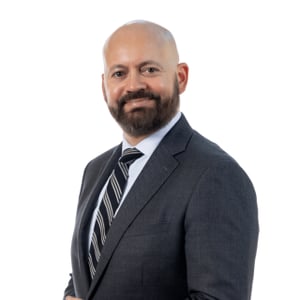
Judge, United States Court of Appeals for the Eleventh Circuit
Andrew Brasher served as a United States District Judge for the Middle District of Alabama. Before taking the bench in May 2019, Judge Brasher was the Solicitor General of the State of Alabama, where he argued cases before the United States Supreme Court, the United States Court of Appeals for the Eleventh Circuit, and the Alabama Supreme Court. He previously served for several years as the Deputy Solicitor General and practiced in the litigation and white-collar criminal defense practice groups in the Birmingham, Alabama office of Bradley Arant Boult Cummings LLP. Upon graduation from law school, Judge Brasher served as a law clerk to Judge William H. Pryor Jr. of the United States Court of Appeals for the Eleventh Circuit. Judge Brasher earned his B.A., summa cum laude, from Samford University and his J.D., cum laude, from Harvard Law School, where he was a member of the Harvard Law Review.
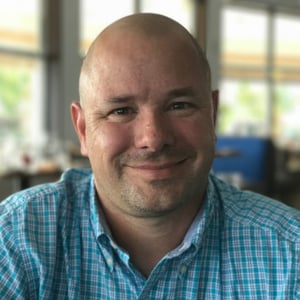
Shareholder, Maynard Cooper & Gale
John Neiman is a go-to lawyer for clients with high-stakes appeals in Alabama and elsewhere. In the last two years, John has helped clients obtain reversals by the Alabama Supreme Court of an $11.4 million verdict in one case and an $18 million verdict in another. In a recent Eleventh Circuit case, he helped a client obtain vacatur of a trial court’s decision not to compel arbitration of a $66.5 million bad-faith insurance claim. He also has served as embedded appellate counsel at a trial, preserving the client’s objections for appeal when the plaintiffs asked the jury for more than $100 million in compensatory and punitive damages. A former U.S. Supreme Court clerk and Solicitor General of Alabama, John chairs an Appellate Practice group that strives to offer the firm’s clients the highest level of appellate advocacy at Alabama-level rates.
At any given time, John has a number of cases pending in the Alabama Supreme Court and Eleventh Circuit, but he also represents clients in a wide array of cases throughout the country. John has appeared for alcohol-industry clients in the Supreme Court and the Fourth, Sixth, Seventh, and Eighth Circuits, and has represented insurance clients in state courts in California, New York, and Kentucky. As state Solicitor General from 2011 to 2014, John argued two merits cases at the United States Supreme Court.
John is a fellow of the American Academy of Appellate Lawyers. Chambers USA: America's Leading Lawyers for Business distinguishes him as a Band 1 leading attorney in the area of Appellate Litigation. Best Lawyers® named him the region's 2017 and 2021 "Lawyer of the Year" for Appellate Practice.
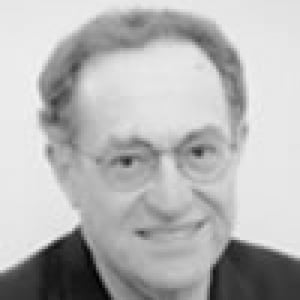
Felix Frankfurter Professor of Law, Harvard Law School
Professor Alan M. Dershowitz is Brooklyn native who has been called “the nation’s most peripatetic civil liberties lawyer” and one of its “most distinguished defenders of individual rights,” “the best-known criminal lawyer in the world,” “the top lawyer of last resort,” “America’s most public Jewish defender” and “Israel’s single most visible defender – the Jewish state’s lead attorney in the court of public opinion.” He is the Felix Frankfurter Professor of Law at Harvard Law School. Dershowitz, a graduate of Brooklyn College and Yale Law School, joined the Harvard Law School faculty at age 25 after clerking for Judge David Bazelon and Justice Arthur Goldberg.
He has also published more than 1000 articles in magazines, newspapers, journals and blogs such as The New York Times Magazine, The Washington Post, The Wall Street Journal, The Harvard Law Review, the Yale Law Journal, Huffington Post, Newsmax, Jerusalem Post and Ha’aretz. Professor Dershowitz is the author of 30 fiction and non-fiction works with a worldwide audience, including The New York Times #1 bestseller Chutzpah and five other national bestsellers. His autobiography, Taking the Stand: My Life in the Law, was published in October 2013 by Crown, a division of Random House. Earlier titles include “an exceptional, action packed book,” The Trials of Zion, a novel which has been called “a thought-provoking page turner;” Rights From Wrong; The Case For Israel; The Case For Peace; Blasphemy; Preemption; Finding Jefferson; and Shouting Fire.
In addition to his numerous law review articles and books about criminal and constitutional law, he has written, taught and lectured about history, philosophy, psychology, literature, mathematics, theology, music, sports – and even delicatessens.
His writing has been praised by Truman Capote, Saul Bellow, William Styron, David Mamet, Aharon Appelfeld, A.B. Yehoshua, Elie Wiesel, Richard North Patterson, and Henry Louis Gate, Jr. More than a million of his books—translated in many languages—have been sold worldwide.
In 1983, the Anti-Defamation League of the B'nai B'rith presented him with the William O. Douglas First Amendment Award for his "compassionate eloquent leadership and persistent advocacy in the struggle for civil and human rights." In presenting the award, Nobel Laureate Elie Wiesel said: "If there had been a few people like Alan Dershowitz during the 1930s and 1940s, the history of European Jewry might have been different." Professor Dershowitz has been awarded the honorary doctor of laws degree by Yeshiva University, Brooklyn College, Syracuse University, Tel Aviv University, New York City College, Haifa University and several other institutions of learning. He has also been the recipient of numerous academic awards including a Guggenheim Fellowship for his work on human rights, a fellowship at The Center for The Advanced Study of Behavioral Sciences and several Dean’s Awards for his books.
He has been the subject of two New Yorker cartoons, a New York Times crossword puzzle, and a Trivial Pursuit question. A sandwich at Fenway Park has been named after him—pastrami, of course. He is married to Carolyn Cohen, a PhD psychologist. He has three children, one a film producer, one a lawyer for the Women’s National Basketball Association and one a professional actor. He also has two grandchildren, one a college junior and the other a college freshman.
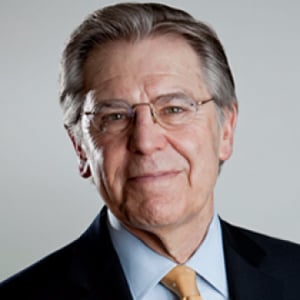
Founder and Executive Director, National Security Institute; Assistant Professor of Law, Antonin Scalia Law School, George Mason University
Jamil N. Jaffer is the Founder and Executive Director of the National Security Institute at the Antonin Scalia Law School at George Mason University where he also serves as an Assistant Professor of Law, Director of the National Security Law and Policy Program, and Director of the Cyber, Intelligence, and National Security LLM Program. Jamil also teaches classes on counterterrorism, intelligence, surveillance, cybersecurity, and other national security matters, as well as a summer course held abroad with U.S. Supreme Court Justice Neil M. Gorsuch. Jamil is also affiliated with Stanford University’s Center for International Security and Cooperation and previously served as a Visiting Fellow at the Hoover Institution from 2016 to 2019.
Jamil is also a Venture Partner with Paladin Capital Group, where he assists the firm with investments across the full range of its themes and theses, including a focus on dual-use national security technologies. Jamil also serves on the board of directors of RangeForce, a cybersecurity training and readiness platform startup and Tozny, a digital identity startup, and on the advisory boards of U.S. Strategic Metals, North America’s largest primary producer of cobalt, a critical mineral used in EV batteries, aerospace, and other national security applications; and Constella Intelligence, a deep and dark web intelligence startup. Jamil also serves as an advisor to Beacon Global Strategies, a strategic advisory firm and Duco, a technology platform startup that connects corporations with geopolitical and international business experts. Jamil is also the managing director of Trigraph Caveat Capital, a private investment vehicle.
Among other things, Jamil currently serves on the Board of Directors for the Greater Washington Board of Trade, the Board of Advisors for the Global Cyber Alliance, and the Advisory Board of the Foundation for the Defense of Democracies’ Center on Cyber and Tech Innovation, the Executive Committee of the Reagan Institute Strategy Group. Jamil is also a Fellow at the Academy for Judaic, Christian, and Islamic Studies, an advisor to the Concordia Summit, and is a member of the Board of Directors for the Center for Intelligence Policy, the Board of Directors of Speech First, and the Executive Committee of the International Law and National Security Practice Group of the Federalist Society.
Immediately prior to his current positions, from 2015-2021, Jamil served as a senior business leader at IronNet Cybersecurity, helping take the company from a bootstrapped first-year technology products startup through two rounds of venture capital fundraising, growing from 40 employees to over 300, and through its listing on New York Stock Exchange. In his role as IronNet's Senior Vice President for Strategy, Partnerships & Corporate Development, Jamil worked directly for the co-CEOs of the company, Gen (ret.) Keith B. Alexander, the former Director of the National Security Agency and Founding Commander of U.S. Cyber Command, and Bill Welch, the former COO of Zscaler and Duo; in that role, Jamil led all of the company’s strategic and technology partnership efforts, including developing go-to-market and technology integration plans with some of the largest cloud platforms and cybersecurity companies in the market, evaluating potential acquisition targets, and developing overall corporate strategy and thought leadership around collective security and collaborative defense in the cyber arena.
Prior to his time at IronNet, Jamil served on the leadership team of the Senate Foreign Relations Committee as Chief Counsel and Senior Advisor under Chairman Bob Corker (R-TN), where he worked on key national security and foreign policy issues, including leading the drafting of the proposed Authorization for the Use of Military Force against ISIS in 2014 and 2015, the AUMF against Syria in 2013, and revisions to the 9/11 AUMF against al Qaeda. Jamil was also the lead architect of the Iran Nuclear Agreement Review Act and two sanctions laws against Russia for its first intervention in Ukraine.
Prior to joining SFRC, Jamil served as Senior Counsel to the House Permanent Select Committee on Intelligence under Chairman Mike Rogers (R-MI) where he led the committee’s oversight of NSA surveillance, NRO intelligence issues, and NGA analytic and collection matters, as well as intelligence community-wide counterterrorism issues. Jamil was also the lead architect of the Cyber Intelligence Sharing and Protection Act, the nation’s first cyber threat intelligence sharing legislation that was signed into law in 2015.
In the Bush Administration, Jamil served in the White House as an Associate Counsel to the President, handling Defense Department, State Department, and intelligence community matters, and serving as one of the White House Counsel’s primary representatives to the National Security Council Deputies Committee.
Prior to the White House, Jamil served on the leadership team of the Justice Department’s National Security Division as Counsel to the Assistant Attorney General for National Security, where he focused on counterterrorism and intelligence matters. At NSD, Jamil helped lead the division’s work on In re: Directives, the first ever two-party litigated matter in the FISA Court and the second case before the FISA Court of Review in its 30-year history. Jamil also led NSD’s efforts on the President’s Comprehensive National Cybersecurity Initiative (CNCI), including the drafting of NSPD-54/HSPD-23, and related classified matters, and advised the National Security Agency (NSA) and U.S. Cyber Command’s predecessor organization, the Joint Function Component Command for Network Warfare (JFCC-NW), on matters related to cyber intelligence collection and offensive cyber activities. For his work on these matters, Jamil was awarded the Assistant Attorney General’s Award for Special Initiative and was among the group of lawyers awarded the Director of National Intelligence’s 2008 Legal Award (Team of the Year – Cyber Legal).
Jamil also served in other positions in the Justice Department, including in the Office of Legal Policy, where he worked on the confirmations of Chief Justice John G. Roberts, Jr. and Justice Samuel A. Alito, Jr. to the United States Supreme Court.
Jamil also served as a lawyer in private practice at Kellogg Huber, a Washington, DC-based litigation boutique, as a policy advisor to Congressman Bob Goodlatte (R-VA), and as a staff member or senior advisor on a number of political campaigns, including two presidential campaigns and a presidential transition team. While in law school, Jamil was a member of the University of Chicago Law Review, managing editor of the Chicago Journal of International Law, and National Symposium Editor of the Harvard Journal of Law & Public Policy. Following law school, Jamil served as a law clerk to Judge Edith H. Jones of the United States Court of Appeals for the Fifth Circuit and, later in his career, as a law clerk to then-Judge Neil M. Gorsuch when he first joined the United States Court of Appeals for the Tenth Circuit as well as a law clerk to Justice Neil Gorsuch when he joined the U.S. Supreme Court.
Jamil has published multiple op-eds and academic articles on national security, foreign policy, cybersecurity, counterterrorism, encryption, and intelligence matters, and is the co-author of a book chapter with former NSA Director Gen. (Ret.) Keith B. Alexander on national security and the press in National Security, Leaks, and the Freedom of the Press: The Pentagon Papers Fifty Years On (2021) and a book chapter with former CIA Director Gen. (ret.) Mike Hayden on ISIS, al Qaeda, and other international terrorist groups in Choosing to Lead: American Foreign Policy for a Disordered World (2015). Jamil has also written book chapters on cybersecurity and surveillance, as well as op-eds and policy papers with former Attorney General Michael B. Mukasey, former National Counterterrorism Center Director Matt Olsen, and Congressman Mike Waltz (R-FL), among others.
Jamil has previously taught graduate-level courses in intelligence law and policy at George Washington University’s Elliott School of International Affairs and the National Intelligence University, served an outside advisor to the Cyberspace Solarium Commission, and has recently testified before committees of the U.S. Senate and House of Representatives on China, cybersecurity, counterterrorism, and other national security matters. Jamil has also recently appeared on a range of national television and radio outlets including CNN, Fox News, Fox Business, MSNBC, Bloomberg, PBS, Voice of America, and National Public Radio, and in various print and online publications, including the Wall Street Journal, New York Times, and the Washington Post on a range of national security matters including cybersecurity, counterterrorism, surveillance, encryption, privacy, and foreign policy issues.
Jamil holds degrees from UCLA (BA, cum laude), the University of Chicago Law School (JD, with honors), and the United States Naval War College (MA, with distinction).
William Davidson Distinguished Fellow and Counselor, The Washington Institute
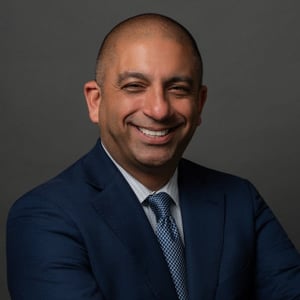
Ambassador Dennis Ross is counselor and William Davidson Distinguished Fellow at The Washington Institute for Near East Policy. Prior to returning to the Institute in 2011, he served two years as special assistant to President Obama and National Security Council senior director for the Central Region, and a year as special advisor to Secretary of State Hillary Rodham Clinton.
For more than twelve years, Ambassador Ross played a leading role in shaping U.S. involvement in the Middle East peace process and dealing directly with the parties in negotiations. A highly skilled diplomat, Ambassador Ross was U.S. point man on the peace process in both the George H. W. Bush and Bill Clinton administrations. He was instrumental in assisting Israelis and Palestinians to reach the 1995 Interim Agreement; he also successfully brokered the 1997 Hebron Accord, facilitated the 1994 Israel-Jordan peace treaty, and intensively worked to bring Israel and Syria together.
A scholar and diplomat with more than two decades of experience in Soviet and Middle East policy, Ambassador Ross worked closely with Secretaries of State James Baker, Warren Christopher, and Madeleine Albright. Prior to his service as special Middle East coordinator under President Clinton, Ambassador Ross served as director of the State Department's Policy Planning Staff in the first Bush administration. In that capacity, he played a prominent role in U.S. policy toward the former Soviet Union, the unification of Germany and its integration into NATO, arms control negotiations, and the 1991 Gulf War coalition.
During the Reagan administration, he served as director of Near East and South Asian affairs on the National Security Council staff and deputy director of the Pentagon's Office of Net Assessment. Ambassador Ross was awarded the Presidential Medal for Distinguished Federal Civilian Service by President Clinton, and Secretaries Baker and Albright presented him with the State Department's highest award.
A 1970 graduate of UCLA, Ambassador Ross wrote his doctoral dissertation on Soviet decisionmaking, and from 1984 to 1986 served as executive director of the Berkeley-Stanford program on Soviet International Behavior. He received UCLA's highest medal and has been named UCLA alumnus of the year. He has also received honorary doctorates from Brandeis, Amherst, Jewish Theological Seminary, and Syracuse University. Ambassador Ross has published extensively on the former Soviet Union, arms control, and the greater Middle East, contributing numerous chapters to anthologies. In the 1970s and 1980s, his articles appeared in World Politics, Political Science Quarterly, Orbis, International Security, Survival, and Journal of Strategic Studies. Since leaving government at the end of 2011, he has authored many op-eds in the New York Times, Washington Post, and Wall Street Journal.
Ross is the author of several influential books on the peace process, most recently Myths, Illusions, and Peace: Finding a New Direction for America in the Middle East, coauthored with Institute peace process expert David Makovsky. An earlier study, The Missing Peace: The Inside Story of the Fight for Middle East Peace (Farrar, Straus, and Giroux, 2004), offers comprehensive analytical and personal insight into the Middle East peace process. The New York Times praised his 2007 publication, Statecraft, And How to Restore America's Standing in the World (Farrar, Straus and Giroux, 2007), as "important and illuminating." He is the author of the forthcoming book, Doomed to Succeed: The U.S.-Israel Relationship from Truman to Obama (Farrar, Straus, and Giroux, October 2015).
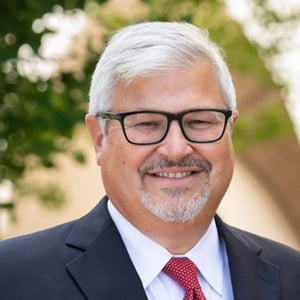
Professor of Political Science, University of Pittsburgh
Chris W. Bonneau is Professor of Political Science at the University of Pittsburgh, where he has been since 2002. His research is primarily in the areas of judicial selection (specifically, judicial elections) and judicial decisionmaking. Professor Bonneau’s work has been supported by the National Science Foundation and he has published numerous articles, including in the American Journal of Political Science and Journal of Politics. He is also the coauthor of three books: Strategic Behavior and Policy Choice on the U.S. Supreme Court (2005), In Defense of Judicial Elections (2009), and the award-winning Voters’ Verdicts: Citizens, Campaigns, and Institutions in State Supreme Court Elections (2015).
Professor Bonneau teaches undergraduate classes in constitutional law, judicial politics, and research methods, as well as graduate classes in judicial politics and research design.
Milton R. Underwood Chair in Free Enterprise, Vanderbilt University Law School
Brian Fitzpatrick is the Milton R. Underwood Chair in Free Enterprise and Professor of Law at Vanderbilt Law School, where his research focuses on class action litigation, federal courts, judicial selection, and constitutional law. He is best known for his empirical studies of class action settlements as well as his book The Conservative Case for Class Actions (University of Chicago Press, 2019). Professor Fitzpatrick joined Vanderbilt's law faculty in 2007 after serving as the John M. Olin Fellow at New York University School of Law. He graduated first in his class from Harvard Law School and went on to clerk for Judge Diarmuid O'Scannlain on the U.S. Court of Appeals for the Ninth Circuit and Justice Antonin Scalia on the U.S. Supreme Court. After his clerkships, Professor Fitzpatrick practiced commercial and appellate litigation for several years at Sidley Austin in Washington, D.C., and served as Special Counsel for Supreme Court Nominations to U.S. Senator John Cornyn. Before earning his law degree, Fitzpatrick graduated summa cum laude with a bachelor's of science in chemical engineering from the University of Notre Dame. He has received the Hall-Hartman Outstanding Professor Award, which recognizes excellence in classroom teaching, for his Civil Procedure and Federal Courts courses.
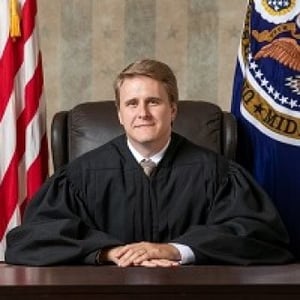
Judge, United States Court of Appeals for the Eleventh Circuit
Andrew Brasher served as a United States District Judge for the Middle District of Alabama. Before taking the bench in May 2019, Judge Brasher was the Solicitor General of the State of Alabama, where he argued cases before the United States Supreme Court, the United States Court of Appeals for the Eleventh Circuit, and the Alabama Supreme Court. He previously served for several years as the Deputy Solicitor General and practiced in the litigation and white-collar criminal defense practice groups in the Birmingham, Alabama office of Bradley Arant Boult Cummings LLP. Upon graduation from law school, Judge Brasher served as a law clerk to Judge William H. Pryor Jr. of the United States Court of Appeals for the Eleventh Circuit. Judge Brasher earned his B.A., summa cum laude, from Samford University and his J.D., cum laude, from Harvard Law School, where he was a member of the Harvard Law Review.
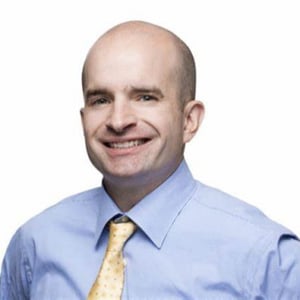
Senior Fellow, Arthur F. Burns Fellow in Financial Policy Studies, American Enterprise Institute
Peter J. Wallison holds the Arthur F. Burns Chair in Financial Policy Studies and is co-director of AEI’s program on Financial Policy Studies. Prior to joining AEI, he practiced banking, corporate and financial law at Gibson, Dunn & Crutcher in Washington, D.C., and New York. Mr. Wallison has held a number of government positions. From June 1981 to January 1985, he was General Counsel of the United States Treasury Department, where he had a significant role in the development of the Reagan Administration's proposals for deregulation in the financial services industry. During 1986 and 1987, Mr. Wallison was White House counsel to President Ronald Reagan, and between 1972 and 1976, he served first as Special Assistant to New York's Gov. Nelson A. Rockefeller and, subsequently, as counsel to Mr. Rockefeller as vice president of the United States.
Mr. Wallison was admitted to practice before the courts of New York and the District of Columbia, and is retired from practice in New York. He continues to be a member of the District of Columbia Bar Association. He received his undergraduate degree from Harvard College in 1963 and law degree from Harvard Law School in 1966.
Mr. Wallison is the author of Ronald Reagan: The Power of Conviction and the Success of His Presidency, published in December 2002 by Westview Press. On campaign finance, he is the author (with Joel Gora) of Better Parties, Better Government, (AEI Press 2009). On financial or regulatory matters, he is the author of Back From the Brink, a proposal for a private deposit insurance system, and co-author of Nationalizing Mortgage Risk: The Growth of Fannie Mae and Freddie Mac; The GAAP Gap: Corporate Disclosure in the Internet Age; Competitive Equity: A Better Way to Organize Mutual Funds; Bad History, Worse Policy: How a False Narrative about the Financial Crisis Led to the Dodd-Frank Act (AEI Press 2013); and Hidden In Plain Sight: What Caused the World’s Worst Financial Crisis and Why it Could Happen Again (Encounter Books 2015). His most recent book is Judicial Fortitude: The Last Chance to Rein in the Administrative State, published by Encounter Books in October 2018.
He testifies frequently before committees of Congress, and is a frequent contributor to the op-ed pages of the Wall Street Journal and other print and online journals. He has also been a speaker at many conferences on financial services, housing, the causes of the financial crisis, the Dodd-Frank Act, accounting, and corporate governance, and was a member of the Shadow Financial Regulatory Committee between 1995 and 2015. He was a member of the SEC Advisory Committee on Improvements to Financial Reporting (2008), co-Chair of the Pew Financial Reform Task Force (2009), and a member of the congressionally- appointed Financial Crisis Inquiry Commission (2009-2011). In May 2011, for his work in financial policy, Mr. Wallison received an honorary doctorate in Humane Letters from the University of Colorado.
Learned Hand Professor of Law, Harvard Law School
Jack Goldsmith is the Learned Hand Professor of Law at Harvard Law School, a non-resident Senior Fellow at the American Enterprise Institute, and co-founder of Lawfare. He teaches and writes about presidential power, national security law, federal courts, conflict of laws, international law, and internet law. Before coming to Harvard, Professor Goldsmith served as Assistant Attorney General, Office of Legal Counsel from 2003-2004, and Special Counsel to the Department of Defense from 2002-2003. He was a Professor at the University of Chicago Law School from 1997-2002, and at the University of Virginia School of Law from 1994-1997. Before entering the academy, Professor Goldsmith was an associate at Covington & Burling in Washington, D.C., from 1992-1994. He clerked for Supreme Court Justice Anthony M. Kennedy from 1990-1991, for Court of Appeals Judge J. Harvie Wilkinson from 1989-1990, and for Judge George Aldrich on the Iran-U.S. Claims Tribunal from 1991-1992. Professor Goldsmith received a B.A. from Washington and Lee University, a B.A. and M.A. from Oxford University, and a J.D. from Yale Law School.
Sidley Austin Professor of Law, Harvard Law School
Jacob Gersen is Sidley Austin Professor of Law at Harvard Law School, Affiliate Professor in the Department of Government, and Director of the Food Law Lab, which supports academic research on the legal treatment of food in society. He is also the co-editor of Food Law & Policy. Before joining the Harvard faculty in 2011, he was Professor of Law at the University of Chicago. He holds a Ph.D. in Political Science and a J.D. from the University of Chicago, and an A.B. in Public Policy from Brown University. His main areas of research and teaching are administrative law, food law, regulation, arbitration, campus sexual misconduct, torts, remedies, and constitutional theory. In addition to publications in law reviews and political science journals, his work has appeared in the New York Times, Wall Street Journal, Time, and Forbes.
Professor Gersen has served as an expert in confidential international arbitration matters, providing testimony related to the structure and content of federal regulation, administrative law, and tort law. He serves as a consulting expert in disputes involving federal administrative agencies, Title IX proceedings in higher education, and food litigation. He also occasionally acts as counsel in matters ranging from defamation, to entertainment law, to contract disputes.
Levin, Mabie & Levin Professor of Law, University of Florida Levin College of Law
Professor Gary Lawson joined the University of Florida Levin College of Law faculty on July 1, 2024, after twenty-four years at Boston University School of Law and eleven years at Northwestern University School of Law. While at Boston University, he was named a William Fairfield Warren Distinguished Professor in 2022 – the highest faculty honor within the university. He has authored or co-authored nine editions of a textbook on administrative law, a textbook on constitutional law, five university press books, one popular press book, and more than one hundred scholarly articles on topics ranging from aspects of constitutional theory and history to the proof of legal propositions. His works have been cited in more than twenty opinions of United States Supreme Court justices. He is a founding member, and serves on the Board of Directors, of the Federalist Society for Law and Public Policy Studies and is on the Editorial Advisory Board of the Heritage Guide to the Constitution.
Solicitor General, Missouri
D. John Sauer has served as the Solicitor General of Missouri since 2017. Before that, he served as a federal prosecutor for five years and spent time in civil practice at boutique law firms, including the firm he founded, the James Otis Law Group. Mr. Sauer has first-chaired many jury and bench trials, and served as lead counsel in many appeals. He has presented oral argument in the U.S. Supreme Court, the U.S. Court of Appeals for the Eighth Circuit, the Supreme Court of Missouri, and many other state and federal appellate courts. Mr. Sauer served as a law clerk to Justice Antonin Scalia of the U.S. Supreme Court and Judge J. Michael Luttig of the U.S. Court of Appeals for the Fourth Circuit. He was a Rhodes Scholar and a magna cum laude graduate of Harvard Law School.
Professor of Law, American University Washington College of Law
Kenneth Anderson is professor of law. He teaches and writes in the areas of business and finance, both domestic and international; law and economics; and public international law, international organizations, human rights, and the laws of war. His current research agenda for 2010-11 focuses on targeted killing and drone warfare in armed conflict, and robotics and the law generally; global governance, global civil society and legitimacy; financial regulation reform (with Steven L. Schwarcz); and concept of proportionality in the law of war, the philosophy of value, and cost-benefit analysis. Professor Anderson's book on UN-US relations, Returning to Earth: What Multilateral Engagement Means in UN-US Relations, will appear in 2011 from The Hoover Institution Press; and together with Duke University's Steven L. Schwarcz, he is at work on "Reforming Financial Regulation" for Oxford University Press. Editorial board member of the Journal of Terrorism and Political Violence and political sciences advisory editor to the Revista de Libros (Madrid), Professor Anderson actively blogs at the Volokh Conspiracy and the international law blog Opinio Juris. He is a contributor to the Times Literary Supplement, Revista de Libros, Wall Street Journal, Weekly Standard, New York Times Magazine, Financial Times, Policy Review, and other general interest reviews. Professor Anderson will be a visiting professor at the University of Virginia School of Law in Spring 2011.
Partner, Arnold & Porter LLP
John Bellinger heads the firm's Global Law and Public Policy practice. He joined the firm in 2009, after holding several senior Presidential appointments in the US government, including as the Senate-confirmed Legal Adviser to the Department of State and Senior Associate Counsel to the President and Legal Adviser to the National Security Council (NSC) at the White House in the George W. Bush Administration.
Mr. Bellinger represents individuals, corporations, and sovereign governments in litigation in US courts and before international institutions. He has extensive experience in US foreign relations litigation involving the Alien Tort Statute, the Foreign Sovereign Immunities Act, the Anti-Terrorism Act, and the diplomatic and official immunities of foreign governments and government officials. He advises clients on other public international law matters, including treaties and international agreements as well as international humanitarian law and human rights law. He also counsels US and foreign clients on national security legal and policy issues, including US and multilateral financial sanctions and asset controls, the extraterritorial application of US criminal and civil laws, and transactions reviewed by the Committee on Foreign Investment in the United States (CFIUS).
Chambers Global ranks Mr. Bellinger among the best international lawyers in the world, reporting that he has "second-to-none experience in public international law, international litigation and foreign sovereign immunity" and that his "experience at the highest levels of the Executive branch...gives him a distinct and important vantage point on legal issues." Chambers adds: "For any cross border work he's just extraordinary, he knows the area inside-out."
Mr. Bellinger was the State Department Legal Adviser–the most senior international lawyer in the US Government–from 2005 to 2009, serving under Secretary of State Condoleezza Rice. He directed more than 170 lawyers on domestic and international law matters affecting US foreign relations. Before joining the State Department, Mr. Bellinger managed Secretary Rice's Senate confirmation process and co-directed her State Department transition team. In 2009, Mr. Bellinger received the Secretary of State's Distinguished Service Award.
Mr. Bellinger has argued cases before the International Court of Justice (Mexico v. United States–(Medellin)) and the Iran-United States Claims Tribunal in The Hague. He has appeared on numerous briefs in US federal courts, including the Supreme Court, in litigation involving international law issues.
As Legal Adviser to the NSC from 2001 to 2005, Mr. Bellinger advised President Bush, Cabinet officials, National Security Advisor Rice, and NSC staff on a wide range of national security and international law issues, including counterterrorism issues after the 9-11 attacks. He was one of the principal drafters of the legislation that created the Director of National Intelligence.
Prior to his service in the Bush Administration, Mr. Bellinger served as Counsel for National Security Matters in the Criminal Division at the US Department of Justice (1997-2001); Of Counsel to the Senate Select Committee on Intelligence (1996); General Counsel of the Commission on the Roles and Capabilities of the US Intelligence Community (1995-1996); and Special Assistant to Director of Central Intelligence William Webster (1988-1991). Mr. Bellinger is an Adjunct Senior Fellow in International and National Security Law at the Council on Foreign Relations. He has testified before Congress on numerous occasions, is quoted regularly in the media on international and national security law matters, and has lectured at numerous US and foreign universities and law schools. He is the author of many law review articles and op-eds on international law, including op-eds in The Washington Post, The New York Times, and The Wall Street Journal. Mr. Bellinger is a senior contributor to the Lawfare blog.
Mr. Bellinger is a member of the Secretary of State's Advisory Committee on International Law. He served from 2005-2019 as one of four US Members of the Permanent Court of Arbitration in The Hague and a member of the US "National Group", which nominates judges to the International Court of Justice. He is also a member of the Council on Foreign Relations and the American Society of International Law. He is a member of the Council of the American Law Institute; the boards of directors of the American Ditchley Foundation, the Salzburg Global Seminar, and the Stimson Center; and the advisory committee of Foreign Affairs magazine.
Mr. Bellinger is a graduate of Princeton University's Woodrow Wilson School of Public and International Affairs, and he holds an MA in Foreign Affairs from the University of Virginia and a JD from Harvard Law School, where he was an editor of the Harvard International Law Journal.
William Cranch Research Professor of Law, The George Washington University Law School
Bradford R. Clark teaches and writes in the areas of civil procedure, constitutional structure, federal courts, and foreign relations. His scholarship has appeared in leading journals including California Law Review, Columbia Law Review, Harvard Law Review, Texas Law Review, University of Chicago Law Review, University of Pennsylvania Law Review, and Virginia Law Review. His book, The Law of Nations and the United States Constitution (co-authored with Anthony J. Bellia Jr.), was published in 2017 by Oxford University Press. Professor Clark has been a visiting professor at Harvard Law School and the University of Michigan Law School. Professor Clark also served as a special master appointed by the Supreme Court to make recommendations in an original action between states, Alabama, et al. v. North Carolina, Orig. No. 132.
Before joining the law school faculty, Professor Clark spent several years practicing law in the Washington, D.C. office of Gibson, Dunn & Crutcher, where he specialized in trial and appellate litigation. Previously, he served as an attorney adviser in the Department of Justice’s Office of Legal Counsel, where he provided legal advice to the president, the attorney general, and the heads of executive departments. Professor Clark also served as a law clerk to The Honorable Robert H. Bork of the U.S. Court of Appeals for the D.C. Circuit and to The Honorable Antonin Scalia of the Supreme Court of the United States.
Assistant Professor of Law, University of Michigan Law School
Prof. Kristina Daugirdas teaches Transnational Law, Environmental Law, and a course and seminar on the United Nations and other international organizations. Her research currently focuses on international organizations from the perspective of both international and U.S. law. In 2014, Prof. Daugirdas was awarded the Francis Deák Prize for an outstanding article published in the American Journal of International Law by a younger author. An earlier article published in the Maryland Law Reviewearned an award from the American Constitution Society's Richard D. Cudahy Writing Competition on Regulatory and Administrative Law. Prof. Daugirdas currently serves as co-editor of the Contemporary Practice of the United States section of the American Journal of International Law. Before joining the Michigan faculty, she was an attorney-adviser at the U.S. Department of State Office of the Legal Adviser. In that role, she provided guidance on the negotiation and implementation of UN Security Council sanctions and amicus participation by the U.S. government in lawsuits with foreign policy implications. Prof. Daugirdas also clerked for the Hon. Stephen F. Williams of the U.S. Court of Appeals for the District of Columbia Circuit. She earned her JD, magna cum laude, from the New York University School of Law, and received several graduation awards including the Paul D. Kaufman Memorial Award for the most outstanding student note published in the NYU Law Review. As a law student she served as senior articles editor for the NYU Law Review. Prof. Daugirdas holds an AB, with honors, from Brown University. Before law school she worked as a research assistant on state and federal welfare and child support policy at the Center on Budget and Policy Priorities. She also completed, with distinction, a yearlong economics program at the London School of Economics.
Dwight D. Opperman Professor of Law; Director, Center for Labor, New York University School of Law
Samuel Estreicher is a nationally preeminent scholar in US and international-comparative labor and employment law and arbitration law. He has authored more than a dozen books, including Beyond Elite Law: Access to Civil Justice in America (with Joy Radice, Cambridge Univ. 2016); leading casebooks on legislation and regulatory state, labor law and employment discrimination and employment law; and published more than 200 articles in professional and academic journals. He served as Chief Reporter for the American Law Institute’s Restatement of Employment Law (2015). After clerking for Judge Harold Leventhal of the US Court of Appeals for the DC Circuit, practicing in a labor law firm, and clerking for Justice Lewis F. Powell Jr. of the US Supreme Court, Prof. Estreicher joined the NYU School of Law faculty in 1978. In addition to serving as counsel to major law firms, he is the former secretary of the Labor and Employment Law Section of the American Bar Association, a former chair of the Committee on Labor and Employment Law of the Association of the Bar of the City of New York.15). He maintains an active appellate and ADR practice. The Labor and Employment Research Association awarded him its 2010 Susan C. Eaton Award for Outstanding Scholar-Practitioner. In recent years, Estreicher also has published work in public international law and authored several briefs in the Supreme Court and US courts of appeals on employment and US foreign relations law issues. Prof. Estreicher received his BA from Columbia College, his MS in industrial relations from Cornell University, and his JD from Columbia Law School, where he was editor-in-chief of the Columbia Law Review. He is a member of the College of Labor and Employment Lawyers and was appointed in 2016 by the UN Secretary General as a member of the UN’s Internal Justice Commission.
Learned Hand Professor of Law, Harvard Law School
Jack Goldsmith is the Learned Hand Professor of Law at Harvard Law School, a non-resident Senior Fellow at the American Enterprise Institute, and co-founder of Lawfare. He teaches and writes about presidential power, national security law, federal courts, conflict of laws, international law, and internet law. Before coming to Harvard, Professor Goldsmith served as Assistant Attorney General, Office of Legal Counsel from 2003-2004, and Special Counsel to the Department of Defense from 2002-2003. He was a Professor at the University of Chicago Law School from 1997-2002, and at the University of Virginia School of Law from 1994-1997. Before entering the academy, Professor Goldsmith was an associate at Covington & Burling in Washington, D.C., from 1992-1994. He clerked for Supreme Court Justice Anthony M. Kennedy from 1990-1991, for Court of Appeals Judge J. Harvie Wilkinson from 1989-1990, and for Judge George Aldrich on the Iran-U.S. Claims Tribunal from 1991-1992. Professor Goldsmith received a B.A. from Washington and Lee University, a B.A. and M.A. from Oxford University, and a J.D. from Yale Law School.
James Madison Distinguished Professor of Law and Class of 1941 Research Professor of Law, University of Virginia School of Law
Professor John C. Harrison is the James Madison Distinguished Professor of Law and Class of 1941 Research Professor of Law at the University of Virginia School of Law. He joined the faculty at University of Virginia in 1993 as an associate professor of law after a distinguished career with the U.S. Department of Justice. His teaching subjects include constitutional history, federal courts, remedies, corporations, civil procedure, legislation and property. In 2008 he was on leave from the Law School to serve as counselor on international law in the Office of the Legal Adviser at the U.S. Department of State.
A 1977 graduate of the University of Virginia, Harrison earned his law degree in 1980 at Yale, where he served as editor of the Yale Law Journal and editor and articles editor of the Yale Studies in World Public Order. He was an associate at Patton Boggs & Blow in Washington, D.C., and clerked for Judge Robert Bork on the U.S. Court of Appeals for the District of Columbia Circuit. He worked with the Department of Justice from 1983-93, serving in numerous capacities, including deputy assistant attorney general in the Office of Legal Counsel (1990-93).
Associate Professor of Law, Notre Dame Law School
Kristine Kalanges is Associate Professor of Law and Concurrent Associate Professor of Political Science at the University of Notre Dame, where her teaching and research interests include: democracy, development and human rights; international and comparative law; international political economy; legal and political philosophy; and religious freedom. Her first book, Religious Liberty in Western and Islamic Law: Toward a World Legal Tradition (Oxford University Press, 2012), explored the comparative effects of religious beliefs and practices on constitutions and international human rights. Her current research, Investing in Human Dignity: A Natural Law Approach to International Political Economy, focuses on ethical issues in global political economic relations (including, for example, international investment and development).
Born and raised in the Pacific Northwest, Professor Kalanges joined the Notre Dame faculty in 2012, where she is on the faculty advisory committee for the Center for Civil and Human Rights and the Center for Ethics and Culture, as well as a faculty fellow in the Kellogg Institute for International Studies and the Kroc Institute for International Peace Studies. Previously, she was an assistant professor of Justice, Law & Society in the School of Public Affairs at American University. She also practiced corporate law in the New York office of Cleary Gottlieb Steen & Hamilton and served in Washington, D.C. as a law clerk for the U.S. Department of Justice.
In 2008, Professor Kalanges received a J.D. from Yale Law School, where she was a John M. Olin Fellow in Law, Economics and Public Policy, and a Ph.D. from Georgetown University, where she was a Graduate Fellow in International Relations. She also holds a M.A. in Government from Georgetown University and a B.A. from the University of Puget Sound, where she majored in International Political Economy. Prior to undertaking graduate studies, she spent two years in Seattle’s private sector, providing research, marketing, and communications services for technology and consulting firms.
Maurice A. Deane Distinguished Professor of Constitutional Law and Faculty Director of International Programs, Hofstra University School of Law
Professor Ku’s primary research interest is the relationship of international law to constitutional law. He has also conducted academic research on a wide range of topics including international dispute resolution, international criminal law, and China’s relationship with international law. He teaches courses such as U.S. constitutional law, U.S. foreign affairs law, transnational law, and international trade and business law. Since 2014, he has served as the faculty director of international programs, overseeing Hofstra Law’s study abroad, exchange and LL.M. programs. Professor Ku also teaches Constitutional Law in our online degree programs: Master of Laws in American Law and Master of Arts in American Legal Studies. He has also been selected as the John DeWitt Gregory Research Scholar and as a Hofstra Law Research Fellow. He is a member of the American Law Institute.
He is the co-author, with John Yoo, of Taming Globalization: International Law, the U.S. Constitution, and the New World Order (Oxford University Press 2012). He also has published more than 40 law review articles, book chapters and symposia essays. He has given dozens of academic lectures and workshops at major universities and conferences in the United States, Europe and Asia.
He co-founded the leading international law weblog Opinio Juris, which is read daily by thousands worldwide. His essays and op-eds have been published in major news publications such as the Wall Street Journal, the Los Angeles Times, and the NYTimes.com. He has been frequently interviewed for television news programs and quoted in print and electronic media. He has also signed or submitted amicus briefs to national and international courts and served as an expert witness in both domestic and international proceedings.
Before joining the Hofstra Law faculty, Professor Ku served as a law clerk to the Honorable Jerry E. Smith of the U.S. Court of Appeals for the Fifth Circuit and as an Olin Fellow and Lecturer in Law at the University of Virginia Law School. Professor Ku also practiced as an associate at the New York City law firm of Debevoise & Plimpton, specializing in litigation and arbitration arising out of international disputes. He has been a visiting professor at the College of William & Mary Marshall- Wythe School of Law in Williamsburg, Virginia; a Fulbright Distinguished Lecturer in Law at East China University of Political Science and Law in Shanghai, China; and a Taiwan Fellow at National Taiwan University in Taipei, Taiwan. He is a member of the New York Bar and a graduate of Yale College and Yale Law School.
Leitner Family Professor of International Law and Co-Founder & Co-Director of the Center on Asian Americans & the Law, Fordham University School of Law
Thomas H. Lee is the Leitner Family Professor of International Law at Fordham, where he teaches civil procedure, constitutional law, federal courts, international law, and the U.S. law of civil-military relations. His meticulously researched and historically-grounded scholarship has argued that the Eleventh Amendment reflected the classical international law principle that only a sovereign state—not its citizens or subjects— has rights against other sovereign states; that the Alien Tort Statute was a national-security peacekeeping statute, not an international human-rights statute, enacted in 1789 when the United States was a militarily weak state; and that the Natural Born Citizen Clause regarding presidential eligibility reflected natural-law principles of membership by descent as well as domestic birthplace. His current research examines the nature of Article III judicial power and the role of the federal courts in American society.
He is Co-Director of the Center on Asian Americans and the Law, Special Counsel at Hughes Hubbard & Reed, and a Member of the American Law Institute. He was Special Counsel to the General Counsel of the U.S. Department of Defense, a Member of the ICSID Panel of Conciliators, Adviser to the Constitutional Court of Korea, and Visiting Professor at Columbia, Harvard, and the University of Virginia law schools, as well as Faculty Director of International and Graduate Studies at Fordham from 2006 to 2019. Before his academic career, Lee clerked for Judge Michael Boudin of the First Circuit and Justice David Souter of the Supreme Court and served as an active-duty U.S. naval cryptology officer, afloat on submarines and surface combatants and ashore in Korea, Japan, and with the National Security Agency. He holds A.B. (summa cum laude), A.M. (Regional Studies—East Asia), and J.D. degrees from Harvard, where he was Articles Chair of the Harvard Law Review and a Ph.D. candidate (ABD) in Government.
Professor of Law; Co-director, National Security and U.S. Foreig, The George Washington University Law School
Gregory E. Maggs joined the George Washington University Law School faculty in 1993. He is a a Co-director of the law school’s National Security and U.S. Foreign Relations LLM program. He was the Interim Dean of the law school from 2010-2011 and from 2013-2014 and the Senior Associate Dean for Academic Affairs from 2008-2010. He teaches mainly in the areas of commercial law, constitutional law, contracts, and counter-terrorism law, and he has written extensively on these subjects. By vote of the graduating class, he received the law school’s Distinguished Faculty Service Award in 1997, 1998, 2004, 2005, 2011, 2012, 2013, and 2014. In 2012, the university gave him the George Washington Award for outstanding service.
Professor Maggs is a graduate of Harvard College and Harvard Law School. He was a law clerk for Justices Clarence Thomas (1991-1992) and Anthony M. Kennedy (1989-1990) of the U.S. Supreme Court and for the late Judge Joseph T. Sneed of the U.S. Court of Appeals for the Ninth Circuit (1988-1989). He also taught for two years as an assistant professor at the University of Texas School of Law. His other past experience includes service as a special master for the U.S. Supreme Court, a consultant to Independent Counsel Kenneth Starr in the Whitewater Investigation, and an assistant to Robert H. Bork in private practice and research. He is a member of the Advisory Board for the Heritage Foundation's Center for Legal and Judicial Studies and a member of the American Law Institute.
Professor Maggs is a colonel in the U.S. Army Reserve, Judge Advocate General’s Corps. He was commissioned in 1990, and has been assigned as a trial or appellate military judge since 2007. He is a graduate of U.S. Army War College, the Military Judge Course, the Command and General Staff Officer Course, the Judge Advocate Officer Advanced and Basic Courses, the Air Assault School, and the Infantry Weapons Specialist Course. He was called to active duty in 2007-2008. In 2002, he received the Judge Advocates Association's Outstanding Career Armed Services Attorney Award.
George C. Dix Professor in Constitutional Law, Northwestern University Pritzker School of Law
John O. McGinnis is a graduate of Harvard College and Harvard Law School where he was an editor of the Harvard Law Review. He also has an MA degree from Balliol College, Oxford, in philosophy and theology. Professor McGinnis clerked on the U.S. Court of Appeals for the District of Columbia. From 1987 to 1991, he was deputy assistant attorney general in the Office of Legal Counsel at the Department of Justice. He is the author of Accelerating Democracy: Transforming Government Through Technology (Princeton 2013) and Originalism and the Good Constitution (Harvard 2013) (with M. Rappaport). He is a past winner of the Paul Bator award given by the Federalist Society to an outstanding academic under 40. He has been listed by the United States on the roster of panelists who may be called upon to decide World Trade Organization Disputes.
Former United States Attorney General
Michael B. Mukasey is the former Attorney General of the United States, the nation’s chief law enforcement officer. As Attorney General from November 2007 to January 2009, he oversaw the U.S. Department of Justice and advised on critical issues of domestic and international law.
From 1988 to 2006, Judge Mukasey served as a district judge in the United States District Court for the Southern District of New York, becoming Chief Judge in 2000.
From 1972 to 1976, Judge Mukasey served as an Assistant United States Attorney for the Southern District of New York, and as Chief of the Official Corruption Unit from 1975 to 1976. His practice consisted of criminal litigation on behalf of the government, including investigation and prosecution of narcotics, bank robbery, interstate theft, securities fraud, fraud on the government and bribery. From 1976 to 1987 and from 2006 to 2007 he was in private practice.
Judge Mukasey has received numerous honors, including the Federal Bar Council’s Learned Hand Medal for Excellence in Federal Jurisprudence. He served as Chairman of the Committee on Public Access to Information and Proceedings of the New York Bar Association from 1984 to 1987. He served on the Federal Courts Committee of the Association of the Bar of the City of New York from 1979 to 1982 and its Communications Law Committee from 1983 to 1986. Judge Mukasey was also a part-time lecturer at Columbia School of Law from January 1993 to May 2007, teaching trial advocacy.
He received his LL.B. from Yale Law School in 1967 and his B.A. from Columbia College in 1963.
Executive Vice President and Senior Counselor to the President, The Federalist Society for Law and Public Policy Studies
B.A., Yale; J.D., University of Chicago. Lee Liberman Otis is the Executive Vice President and Senior Counselor to the President at the Federalist Society. She also serves as a member of the American Law Institute (ALI), a senior fellow of the Administrative Conference (ACUS), and as the co-chair of the National Constitution Center's Coalition of Freedom Advisory Board. She previously was a special assistant and an Associate Deputy Attorney General at the U.S. Department of Justice, General Counsel of the Department of Energy, an associate in the appellate section of Jones, Day, Reavis & Pogue, an associate counsel to President George H.W. Bush, and a law clerk to Associate Justice Antonin Scalia. She also served as an assistant professor of law at George Mason, where she taught legislation, federal jurisdiction, constitutional law, civil procedure, and appellate advocacy. Ms. Otis has been an important member of the Federalist Society team since the organization’s beginnings. Together with David McIntosh, she led the effort to start what became the Chicago chapter of the Society. She also helped organize the Society’s first conference at Yale, its second conference at Chicago, and its first Lawyers Division chapter in Washington DC, as well as the effort to incorporate the Society, recruit its permanent staff, and obtain its early funding. She was a Founding Director of the Federalist Society.
Sudler Family Professor of Constitutional Law, New York University School of Law
Richard H. Pildes is one of the nation’s leading scholars of constitutional law and a specialist in legal issues affecting democracy. He is a Member of the American Academy of Arts and Sciences and the American Law Institute, and has received recognition as a Guggenheim Fellow and a Carnegie Scholar. His acclaimed casebook, The Law of Democracy: Legal Structure of the Political Process (now in its fourth edition), helped create an entirely new field of study in the law schools. The Law of Democracy systematically explores legal and policy issues concerning the structure of democratic elections and institutions, such as the role of money in politics, the design of election districts, the regulation of political parties, the design of voting systems, the representation of minority interests in democratic institutions, and similar issues. He has written extensively on the rise of political polarization in the United States, the Voting Rights Act, the dysfunction of America’s political processes, the role of the Supreme Court in overseeing American democracy, the powers of the American President and Congress, and he has criticized excessively “romantic” understandings of democracy. In addition to his scholarship on these issues, he has written on national-security law, the design of the regulatory state, and American constitutional history and theory.
Respect for his expertise in these areas is reflected in frequent citations of his work in U.S. Supreme Court opinions, the translation of his work into many languages, and his frequent public lectures and appearances around the world, including his nomination with the NBC News Team for an Emmy Award for coverage of the 2000 Presidential election litigation.
His work has been translated and published in Chinese, French, Spanish, and Portuguese. In addition to his scholarship, Professor Pildes plays an active role litigating in these areas. He has won two cases before the United States Supreme Court, including a 2015 victory in Alabama Democratic Conference v. Alabama, a case involving race and redistricting. He served as counsel to a group of former chairmen of the Securities and Exchange Commission in litigation defending the constitutionality of the Sarbanes-Oxley Act; as counsel in election litigation to the Puerto Rico Electoral Commission; as counsel to the government of Puerto Rico; as a federal court-appointed independent expert on voting rights litigation; and as counsel in successful Supreme Court litigation that challenged the way the United States Tax Court operated. He was also a senior legal advisor to the 2008 and 2012 campaigns of President Obama.
Pildes received his A.B. in physical chemistry summa cum laude from Princeton, and his J.D. magna cum laude from Harvard, where he served as Supreme Court Note Editor on the Harvard Law Review. He clerked for Judge Abner J. Mikva of the U.S. Court of Appeals for the District of Columbia Circuit and for Justice Thurgood Marshall of the U.S. Supreme Court. After practicing law in Boston, he began his academic career at the University of Michigan Law School, before joining the NYU School of Law in 2001.
Professor Emeritus of Law, Antonin Scalia Law School, George Mason University
Jeremy A. Rabkin is a Professor Emeritus of Law at the Antonin Scalia Law School, George Mason University. Before joining the faculty in June 2007, he was for over two decades a professor in the Department of Government at Cornell University. Professor Rabkin serves on the board of directors of the Center for Individual Rights, a public interest law firm based in Washington, D.C. Previously he was a board member of the U.S. Institute of Peace and the board of academic advisors of the American Enterprise Institute.
Professor Rabkin’s books include Law Without Nations? (Princeton University Press, 2005). He authored “If You Need a Friend, Don’t Call a Cosmopolitan,” a chapter in Varieties of Sovereignty and Citizenship (Sigal R. Ben-Porath & Rogers M. Smith eds., University of Pennsylvania Press, 2012). His articles have appeared in major law reviews and political science journals and his journalistic contributions in a range of magazines and newspapers, including the Washington Post and the Wall Street Journal.
Professor of Law, Georgetown University Law Center
Nicholas Quinn Rosenkranz teaches constitutional law and federal jurisdiction, and he writes articles for the Harvard Law Review and the Stanford Law Review.
He is currently developing a new theory of constitutional interpretation and judicial review. The first installment, entitledThe Subjects of the Constitution, was published in the Stanford Law Review in May of 2010, and it is among the most downloaded articles about constitutional interpretation, judicial review, and/or federal courts in the history of SSRN. The second installment, The Objects of the Constitution, was published in May of 2011, also in the Stanford Law Review. And the comprehensive version is forthcoming as a book by Oxford University Press.
Rosenkranz has served and advised the federal government in a variety of capacities. He clerked for Judge Frank H. Easterbrook on the U.S. Court of Appeals for the Seventh Circuit (1999-2000) and for Justice Anthony M. Kennedy at the U.S. Supreme Court (October Term 2001). He served as an Attorney-Advisor at the Office of Legal Counsel in the U.S. Department of Justice (November 2002 - July 2004). He often testifies before Congress as a constitutional expert—most recently before the House Financial Services Oversight Subcommittee, regarding the Obama Administration's use of bank settlement agreements to circumvent the Appropriations Clause. He has also filed briefs and presented oral argument before the U.S. Supreme Court. His most recent Supreme Court brief, in Los Angeles v. Patel, was cited by Justice Alito in dissent.
Rosenkranz is a member of the New York Bar and the U.S. Supreme Court Bar. He is a Senior Fellow at the Cato Institute. He serves on the Board of Directors of the Foundation for Individual Rights in Education (FIRE). He is a founding member of Heterodox Academy and a member of its Executive Committee. He also serves on the Board of Directors of the Federalist Society and as the faculty advisor to the Georgetown chapter.
John C. Jeffries, Jr., Distinguished Professor of Law, University of Virginia School of Law
Paul B. Stephan is an expert on international business, international dispute resolution and comparative law, with an emphasis on Soviet and post-Soviet legal systems. In addition to writing prolifically in these fields, Stephan has advised governments and international organizations, taken part in cases in the Supreme Court of the United States, the federal courts, and various foreign judicial and arbitral proceedings, and lectured to professionals and scholarly groups around the world on issues raised by the globalization of the world economy. During 2006-07, he served as counselor on international law in the U.S. Department of State, and in 2020-21 as special counsel to the general counsel in the Department of Defense. He was a coordinating reporter for the American Law Institute’s Restatement (Fourth) of the Foreign Relations Law of the United States.
Stephan received his B.A. and M.A. from Yale University in 1973 and 1974, respectively, and his J.D. from the University of Virginia in 1977. Before returning to Virginia, he clerked for Judge Levin Campbell of the U.S. Court of Appeals for the First Circuit and for U.S. Supreme Court Justice Lewis F. Powell Jr. He has taught as a visiting professor at the Moscow State Institute for International Relations, the University of Vienna, Münster University, Lausanne University, Melbourne University, University of Pantheon-Assas (Paris II), Sciences Po, Paris I, the Interdisciplinary Centre Herzliya, Sydney University, the Peking University School of Transnational Law in Shenzhen, China, the University of Tartu’s Pärna College, and Liverpool University. He also has visited at Columbia Law School and Duke Law School, and served as a scholar in residence in the London office of Wilmer Hale.
After the collapse of the Soviet Union, Stephan took part in a variety of projects involving law reform in former socialist states. He worked in Russia, Georgia, Ukraine, Albania and Slovakia on behalf of the U.S. Treasury and in Kazakhstan and Azerbaijan on behalf of the International Monetary Fund. He also organized training programs for tax administrators and judges from all of the formerly socialist countries under the auspices of the Organization for Economic Cooperation and Development. His casebooks on international business, international trade and investment, and Doing Business in Emerging Markets are used at law schools both in the United States and abroad. He is the co-author, with Robert Scott, of The Limits of Leviathan: Contract Theory and the Enforcement of International Law (Cambridge University Press, 2006), and the author of The World Crisis and International Law: The Knowledge Economy and the Battle for the Future (2023). His current research focuses on the legal issues related to the Russian invasion of Ukraine and legal responses to the rise of big data.
Agnes Williams Sesquicentennial Professor of Federal Courts, Georgetown Law
Stephen I. Vladeck is a professor of law at the Georgetown University Law Center, and is a nationally recognized expert on the federal courts; the Supreme Court; national security law; and military justice.
Vladeck is author of the New York Times bestselling book, “The Shadow Docket: How the Supreme Court Uses Stealth Rulings to Amass Power and Undermine the Republic,” which won the 2023 Writers’ League of Texas Book Award for Non-Fiction and was a finalist for the 2024 ABA Silver Gavel Award for Media and the Arts. Vladeck is also a highly regarded appellate advocate, having argued three cases before the U.S. Supreme Court and over a dozen before various lower federal civilian and military courts. He has received numerous awards for his influential and widely cited legal scholarship, his prolific popular writing, his teaching, and his service to the legal profession—including the 2024 University of Texas President’s Research Impact Award and his selection by the Order of the Coif to serve as its Distinguished Visiting Professor for 2025.
Vladeck is CNN’s Supreme Court analyst and editor and author of “One First,” a popular weekly newsletter about the Supreme Court. Together with Bobby Chesney, Vladeck co-hosts the popular and award-winning “National Security Law Podcast.” He is also a co-author of Aspen Publishers’ leading national security law and counterterrorism law casebooks. And he is a member of the Board of Trustees of EarthJustice—the nation’s premier nonprofit public interest environmental law organization.
Vladeck graduated from Yale Law School in 2004—where he was executive editor of the Yale Law Journal and won the Harlan Fiske Stone Prize for outstanding moot court oralist and shared the Potter Stewart Prize for best moot court team performance. After law school, he clerked for the Honorable Marsha S. Berzon on the U.S. Court of Appeals for the Ninth Circuit and the Honorable Rosemary Barkett on the U.S. Court of Appeals for the Eleventh Circuit. He earned a B.A. summa cum laude with Highest Distinction in History and Mathematics from Amherst College in 2001—where he wrote his senior thesis on “Leipzig’s Shadow: The War Crimes Trials of the First World War and Their Implications from Nuremberg to the Present.” A native New Yorker and hopeless Mets fan, Vladeck lives in the District with his wife, Karen (Founder and Managing Partner of Risepoint Search Partners); their daughters, Madeleine and Sydney; and their eleven-year-old pug, Roxanna.
Edward B. Burling Professor of International Law and Diplomacy, Johns Hopkins University School of Advanced International Studies
Member of the World Bank International Centre for Settlement of Investment Disputes; served on the U.S. Secretary of State’s advisory committees on private and public international law and on the CIA historical review panel; U.S. delegate to the U.N. Human Rights Committee (Geneva and New York, 2003–11); member of U.S. delegations to the Organization for Security and Co-operation in Europe and the Wehrkunde security conference; member of the Pentagon Defense Policy Advisory Board (2003–09) and the Hart-Rudman Commission on National Security in the 21st Century; was independent expert for U.N. criminal tribunal for the former Yugoslavia; formerly director of studies at Hague Academy for International Law, tenured professor at Yale Law School, visiting professor at the University of Paris (Sorbonne) and Charles H. Stockton professor at the U.S. Naval War College; named Berlin Prize Fellow of the American Academy; was vice president of the American Society of International Law, serves as president of the American branch of the International Law Association and vice chair of Freedom House and is on the board of editors for American Journal of International Law, Journal of Strategic Studies, American Interest, World Policy Journal, National Defense University Prism and National Interest; was law clerk to Judge Henry Friendly of the U.S. Court of Appeals (Second Circuit) and U.S. Supreme Court Justice Harry Blackmun; commentator for BBC, NPR and PBS; J.D., Yale University.
Retired Partner, Sullivan & Cromwell LLP
Upon his resignation as the Legal Adviser of the U.S. Department of State in January 1993, Mr. Williamson rejoined Sullivan & Cromwell's Washington, D.C. office. He originally joined the Firm in 1964 after graduating from New York University School of Law, where he was an editor of the Law Review. He became a partner of the Firm in 1971, moved to its London office in 1976, returned to its New York office in 1979, moved to its Washington, D.C. office in 1988 and became Of Counsel in 2007. In 2018, he retired from the firm.
At Sullivan & Cromwell, Mr. Williamson engaged in a broad and wide-ranging domestic and international financing and transactions practice, as well as advice with respect to corporate governance issues, the United States’ economic sanctions laws, the ethics rules applicable to government officials and the immunities of foreign sovereigns and international organizations.
Mr. Williamson has been an active participant on panels and other forums involving public international law and national security issues, such as the domestic and international bases for the use of force, the role of the United States with respect to the International Criminal Court, the law of the sea and the application of international legal principles in the war against terrorism.
Mr. Williamson is a member of the Council on Foreign Relations and a former member of the Executive Council of the American Society of International Law, the Executive Committees of the Business and Advisory Committee (BIAC) to the OECD and the U.S. Council for International Business, the United States Advisory Board of NTT DoCoMo, Inc. and the Board of Directors of Triton Oil & Gas Limited.
Mr. Williamson has served on the Boards of Regents and Trustees of the University of the South and as chair of the Board of Regents. He is currently a member of the Board of Directors of the American Council of Trustees and Alumni, a higher education watchdog.
Emanuel S. Heller Professor of Law, University of California at Berkeley; Senior Research Fellow, School of Civic Leadership, Civitas Institute, University of Texas at Austin; Nonresident Senior Fellow, American Enterprise Institute
John Yoo is the Emanuel Heller Professor of Law. He is also Distinguished Visiting Scholar, School of Civic Leadership and Senior Research Fellow, Civitas Institute, at the University of Texas at Austin. He is also a Nonresident Senior Fellow at the American Enterprise Institute.
His most recent book, The Politically Incorrect Guide to the Supreme Court, co-authored with Robert Delahunty, was published in 2023. Professor Yoo’s other books include Defender-in-Chief: Trump’s Fight for Presidential Power; Striking Power: How Cyber, Robots, and Space Weapons Change the Rules for War, Point of Attack: Preventive War, International Law, and Global Welfare, and Crisis and Command: A History of Executive Power from George Washington to George Bush.
Professor Yoo has published more than 100 articles in academic journals on subjects including national security, constitutional law, international law, and the Supreme Court. He also regularly contributes to the editorial pages of the Wall Street Journal, New York Times, Washington Post, Los Angeles Times, and National Review, among others.
Professor Yoo has served in all three branches of government. He was an official in the U.S. Department of Justice, where he worked on national security and terrorism issues after the 9/11 attacks. He served as general counsel of the U.S. Senate Judiciary Committee. He has been a law clerk for Supreme Court Justice Clarence Thomas and federal appeals Judge Laurence Silberman. He has been a visiting professor at Seoul National University in South Korea, the Interdisciplinary Center in Israel, Keio University in Japan, Trento University in Italy, the University of Chicago, and the Free University of Amsterdam.
Professor Yoo supervises the Public Law and Policy Program and the California Constitution Center. He also serves on the boards of the Pacific Legal Foundation, the Federalist Society’s Separation of Powers and Federalism Division, the Universidad Cientifica del Sur Law School, and the Asia-Pacific Law Institute at Seoul National University. He is a winner of the Federalist Society’s Paul Bator award and been the Edwin Meese III Originalism Lecturer at the Heritage Foundation.
Professor Yoo graduated from Yale Law School and summa cum laude from Harvard College.
Felix Frankfurter Professor of Law, Harvard Law School
Professor Alan M. Dershowitz is Brooklyn native who has been called “the nation’s most peripatetic civil liberties lawyer” and one of its “most distinguished defenders of individual rights,” “the best-known criminal lawyer in the world,” “the top lawyer of last resort,” “America’s most public Jewish defender” and “Israel’s single most visible defender – the Jewish state’s lead attorney in the court of public opinion.” He is the Felix Frankfurter Professor of Law at Harvard Law School. Dershowitz, a graduate of Brooklyn College and Yale Law School, joined the Harvard Law School faculty at age 25 after clerking for Judge David Bazelon and Justice Arthur Goldberg.
He has also published more than 1000 articles in magazines, newspapers, journals and blogs such as The New York Times Magazine, The Washington Post, The Wall Street Journal, The Harvard Law Review, the Yale Law Journal, Huffington Post, Newsmax, Jerusalem Post and Ha’aretz. Professor Dershowitz is the author of 30 fiction and non-fiction works with a worldwide audience, including The New York Times #1 bestseller Chutzpah and five other national bestsellers. His autobiography, Taking the Stand: My Life in the Law, was published in October 2013 by Crown, a division of Random House. Earlier titles include “an exceptional, action packed book,” The Trials of Zion, a novel which has been called “a thought-provoking page turner;” Rights From Wrong; The Case For Israel; The Case For Peace; Blasphemy; Preemption; Finding Jefferson; and Shouting Fire.
In addition to his numerous law review articles and books about criminal and constitutional law, he has written, taught and lectured about history, philosophy, psychology, literature, mathematics, theology, music, sports – and even delicatessens.
His writing has been praised by Truman Capote, Saul Bellow, William Styron, David Mamet, Aharon Appelfeld, A.B. Yehoshua, Elie Wiesel, Richard North Patterson, and Henry Louis Gate, Jr. More than a million of his books—translated in many languages—have been sold worldwide.
In 1983, the Anti-Defamation League of the B'nai B'rith presented him with the William O. Douglas First Amendment Award for his "compassionate eloquent leadership and persistent advocacy in the struggle for civil and human rights." In presenting the award, Nobel Laureate Elie Wiesel said: "If there had been a few people like Alan Dershowitz during the 1930s and 1940s, the history of European Jewry might have been different." Professor Dershowitz has been awarded the honorary doctor of laws degree by Yeshiva University, Brooklyn College, Syracuse University, Tel Aviv University, New York City College, Haifa University and several other institutions of learning. He has also been the recipient of numerous academic awards including a Guggenheim Fellowship for his work on human rights, a fellowship at The Center for The Advanced Study of Behavioral Sciences and several Dean’s Awards for his books.
He has been the subject of two New Yorker cartoons, a New York Times crossword puzzle, and a Trivial Pursuit question. A sandwich at Fenway Park has been named after him—pastrami, of course. He is married to Carolyn Cohen, a PhD psychologist. He has three children, one a film producer, one a lawyer for the Women’s National Basketball Association and one a professional actor. He also has two grandchildren, one a college junior and the other a college freshman.
William Davidson Distinguished Fellow and Counselor, The Washington Institute
Ambassador Dennis Ross is counselor and William Davidson Distinguished Fellow at The Washington Institute for Near East Policy. Prior to returning to the Institute in 2011, he served two years as special assistant to President Obama and National Security Council senior director for the Central Region, and a year as special advisor to Secretary of State Hillary Rodham Clinton.
For more than twelve years, Ambassador Ross played a leading role in shaping U.S. involvement in the Middle East peace process and dealing directly with the parties in negotiations. A highly skilled diplomat, Ambassador Ross was U.S. point man on the peace process in both the George H. W. Bush and Bill Clinton administrations. He was instrumental in assisting Israelis and Palestinians to reach the 1995 Interim Agreement; he also successfully brokered the 1997 Hebron Accord, facilitated the 1994 Israel-Jordan peace treaty, and intensively worked to bring Israel and Syria together.
A scholar and diplomat with more than two decades of experience in Soviet and Middle East policy, Ambassador Ross worked closely with Secretaries of State James Baker, Warren Christopher, and Madeleine Albright. Prior to his service as special Middle East coordinator under President Clinton, Ambassador Ross served as director of the State Department's Policy Planning Staff in the first Bush administration. In that capacity, he played a prominent role in U.S. policy toward the former Soviet Union, the unification of Germany and its integration into NATO, arms control negotiations, and the 1991 Gulf War coalition.
During the Reagan administration, he served as director of Near East and South Asian affairs on the National Security Council staff and deputy director of the Pentagon's Office of Net Assessment. Ambassador Ross was awarded the Presidential Medal for Distinguished Federal Civilian Service by President Clinton, and Secretaries Baker and Albright presented him with the State Department's highest award.
A 1970 graduate of UCLA, Ambassador Ross wrote his doctoral dissertation on Soviet decisionmaking, and from 1984 to 1986 served as executive director of the Berkeley-Stanford program on Soviet International Behavior. He received UCLA's highest medal and has been named UCLA alumnus of the year. He has also received honorary doctorates from Brandeis, Amherst, Jewish Theological Seminary, and Syracuse University. Ambassador Ross has published extensively on the former Soviet Union, arms control, and the greater Middle East, contributing numerous chapters to anthologies. In the 1970s and 1980s, his articles appeared in World Politics, Political Science Quarterly, Orbis, International Security, Survival, and Journal of Strategic Studies. Since leaving government at the end of 2011, he has authored many op-eds in the New York Times, Washington Post, and Wall Street Journal.
Ross is the author of several influential books on the peace process, most recently Myths, Illusions, and Peace: Finding a New Direction for America in the Middle East, coauthored with Institute peace process expert David Makovsky. An earlier study, The Missing Peace: The Inside Story of the Fight for Middle East Peace (Farrar, Straus, and Giroux, 2004), offers comprehensive analytical and personal insight into the Middle East peace process. The New York Times praised his 2007 publication, Statecraft, And How to Restore America's Standing in the World (Farrar, Straus and Giroux, 2007), as "important and illuminating." He is the author of the forthcoming book, Doomed to Succeed: The U.S.-Israel Relationship from Truman to Obama (Farrar, Straus, and Giroux, October 2015).
Founder and Executive Director, National Security Institute; Assistant Professor of Law, Antonin Scalia Law School, George Mason University
Jamil N. Jaffer is the Founder and Executive Director of the National Security Institute at the Antonin Scalia Law School at George Mason University where he also serves as an Assistant Professor of Law, Director of the National Security Law and Policy Program, and Director of the Cyber, Intelligence, and National Security LLM Program. Jamil also teaches classes on counterterrorism, intelligence, surveillance, cybersecurity, and other national security matters, as well as a summer course held abroad with U.S. Supreme Court Justice Neil M. Gorsuch. Jamil is also affiliated with Stanford University’s Center for International Security and Cooperation and previously served as a Visiting Fellow at the Hoover Institution from 2016 to 2019.
Jamil is also a Venture Partner with Paladin Capital Group, where he assists the firm with investments across the full range of its themes and theses, including a focus on dual-use national security technologies. Jamil also serves on the board of directors of RangeForce, a cybersecurity training and readiness platform startup and Tozny, a digital identity startup, and on the advisory boards of U.S. Strategic Metals, North America’s largest primary producer of cobalt, a critical mineral used in EV batteries, aerospace, and other national security applications; and Constella Intelligence, a deep and dark web intelligence startup. Jamil also serves as an advisor to Beacon Global Strategies, a strategic advisory firm and Duco, a technology platform startup that connects corporations with geopolitical and international business experts. Jamil is also the managing director of Trigraph Caveat Capital, a private investment vehicle.
Among other things, Jamil currently serves on the Board of Directors for the Greater Washington Board of Trade, the Board of Advisors for the Global Cyber Alliance, and the Advisory Board of the Foundation for the Defense of Democracies’ Center on Cyber and Tech Innovation, the Executive Committee of the Reagan Institute Strategy Group. Jamil is also a Fellow at the Academy for Judaic, Christian, and Islamic Studies, an advisor to the Concordia Summit, and is a member of the Board of Directors for the Center for Intelligence Policy, the Board of Directors of Speech First, and the Executive Committee of the International Law and National Security Practice Group of the Federalist Society.
Immediately prior to his current positions, from 2015-2021, Jamil served as a senior business leader at IronNet Cybersecurity, helping take the company from a bootstrapped first-year technology products startup through two rounds of venture capital fundraising, growing from 40 employees to over 300, and through its listing on New York Stock Exchange. In his role as IronNet's Senior Vice President for Strategy, Partnerships & Corporate Development, Jamil worked directly for the co-CEOs of the company, Gen (ret.) Keith B. Alexander, the former Director of the National Security Agency and Founding Commander of U.S. Cyber Command, and Bill Welch, the former COO of Zscaler and Duo; in that role, Jamil led all of the company’s strategic and technology partnership efforts, including developing go-to-market and technology integration plans with some of the largest cloud platforms and cybersecurity companies in the market, evaluating potential acquisition targets, and developing overall corporate strategy and thought leadership around collective security and collaborative defense in the cyber arena.
Prior to his time at IronNet, Jamil served on the leadership team of the Senate Foreign Relations Committee as Chief Counsel and Senior Advisor under Chairman Bob Corker (R-TN), where he worked on key national security and foreign policy issues, including leading the drafting of the proposed Authorization for the Use of Military Force against ISIS in 2014 and 2015, the AUMF against Syria in 2013, and revisions to the 9/11 AUMF against al Qaeda. Jamil was also the lead architect of the Iran Nuclear Agreement Review Act and two sanctions laws against Russia for its first intervention in Ukraine.
Prior to joining SFRC, Jamil served as Senior Counsel to the House Permanent Select Committee on Intelligence under Chairman Mike Rogers (R-MI) where he led the committee’s oversight of NSA surveillance, NRO intelligence issues, and NGA analytic and collection matters, as well as intelligence community-wide counterterrorism issues. Jamil was also the lead architect of the Cyber Intelligence Sharing and Protection Act, the nation’s first cyber threat intelligence sharing legislation that was signed into law in 2015.
In the Bush Administration, Jamil served in the White House as an Associate Counsel to the President, handling Defense Department, State Department, and intelligence community matters, and serving as one of the White House Counsel’s primary representatives to the National Security Council Deputies Committee.
Prior to the White House, Jamil served on the leadership team of the Justice Department’s National Security Division as Counsel to the Assistant Attorney General for National Security, where he focused on counterterrorism and intelligence matters. At NSD, Jamil helped lead the division’s work on In re: Directives, the first ever two-party litigated matter in the FISA Court and the second case before the FISA Court of Review in its 30-year history. Jamil also led NSD’s efforts on the President’s Comprehensive National Cybersecurity Initiative (CNCI), including the drafting of NSPD-54/HSPD-23, and related classified matters, and advised the National Security Agency (NSA) and U.S. Cyber Command’s predecessor organization, the Joint Function Component Command for Network Warfare (JFCC-NW), on matters related to cyber intelligence collection and offensive cyber activities. For his work on these matters, Jamil was awarded the Assistant Attorney General’s Award for Special Initiative and was among the group of lawyers awarded the Director of National Intelligence’s 2008 Legal Award (Team of the Year – Cyber Legal).
Jamil also served in other positions in the Justice Department, including in the Office of Legal Policy, where he worked on the confirmations of Chief Justice John G. Roberts, Jr. and Justice Samuel A. Alito, Jr. to the United States Supreme Court.
Jamil also served as a lawyer in private practice at Kellogg Huber, a Washington, DC-based litigation boutique, as a policy advisor to Congressman Bob Goodlatte (R-VA), and as a staff member or senior advisor on a number of political campaigns, including two presidential campaigns and a presidential transition team. While in law school, Jamil was a member of the University of Chicago Law Review, managing editor of the Chicago Journal of International Law, and National Symposium Editor of the Harvard Journal of Law & Public Policy. Following law school, Jamil served as a law clerk to Judge Edith H. Jones of the United States Court of Appeals for the Fifth Circuit and, later in his career, as a law clerk to then-Judge Neil M. Gorsuch when he first joined the United States Court of Appeals for the Tenth Circuit as well as a law clerk to Justice Neil Gorsuch when he joined the U.S. Supreme Court.
Jamil has published multiple op-eds and academic articles on national security, foreign policy, cybersecurity, counterterrorism, encryption, and intelligence matters, and is the co-author of a book chapter with former NSA Director Gen. (Ret.) Keith B. Alexander on national security and the press in National Security, Leaks, and the Freedom of the Press: The Pentagon Papers Fifty Years On (2021) and a book chapter with former CIA Director Gen. (ret.) Mike Hayden on ISIS, al Qaeda, and other international terrorist groups in Choosing to Lead: American Foreign Policy for a Disordered World (2015). Jamil has also written book chapters on cybersecurity and surveillance, as well as op-eds and policy papers with former Attorney General Michael B. Mukasey, former National Counterterrorism Center Director Matt Olsen, and Congressman Mike Waltz (R-FL), among others.
Jamil has previously taught graduate-level courses in intelligence law and policy at George Washington University’s Elliott School of International Affairs and the National Intelligence University, served an outside advisor to the Cyberspace Solarium Commission, and has recently testified before committees of the U.S. Senate and House of Representatives on China, cybersecurity, counterterrorism, and other national security matters. Jamil has also recently appeared on a range of national television and radio outlets including CNN, Fox News, Fox Business, MSNBC, Bloomberg, PBS, Voice of America, and National Public Radio, and in various print and online publications, including the Wall Street Journal, New York Times, and the Washington Post on a range of national security matters including cybersecurity, counterterrorism, surveillance, encryption, privacy, and foreign policy issues.
Jamil holds degrees from UCLA (BA, cum laude), the University of Chicago Law School (JD, with honors), and the United States Naval War College (MA, with distinction).
Supreme Court Round-Up
Birmingham, AlabamaCongress as "Iran Deal" Enforcer? - Podcast
Alan M. Dershowitz, Dennis Ross, Jamil N. Jaffer
With final congressional review action on the Iran Deal just days away, is Congress empowered...
Congress as "Iran Deal" Enforcer?
TeleforumDiscussion on Judicial Selection
Little Rock Lawyers Chapter
Little Rock, ARWeighing the Legal Arguments for Gay Marriage from a Federalism Perspective
Birmingham, AlabamaA Book Event with Peter Wallison
Chicago, IllinoisAnnual BeVier Lecture
Wickard v. Filburn
Liberty Luncheon: Is Common Core Constitutional?
Mississippi Lawyers Chapter
JacksonTreaties and National Sovereignty Conference
Faculty Division and the George Washington Student Chapter
Washington, DC